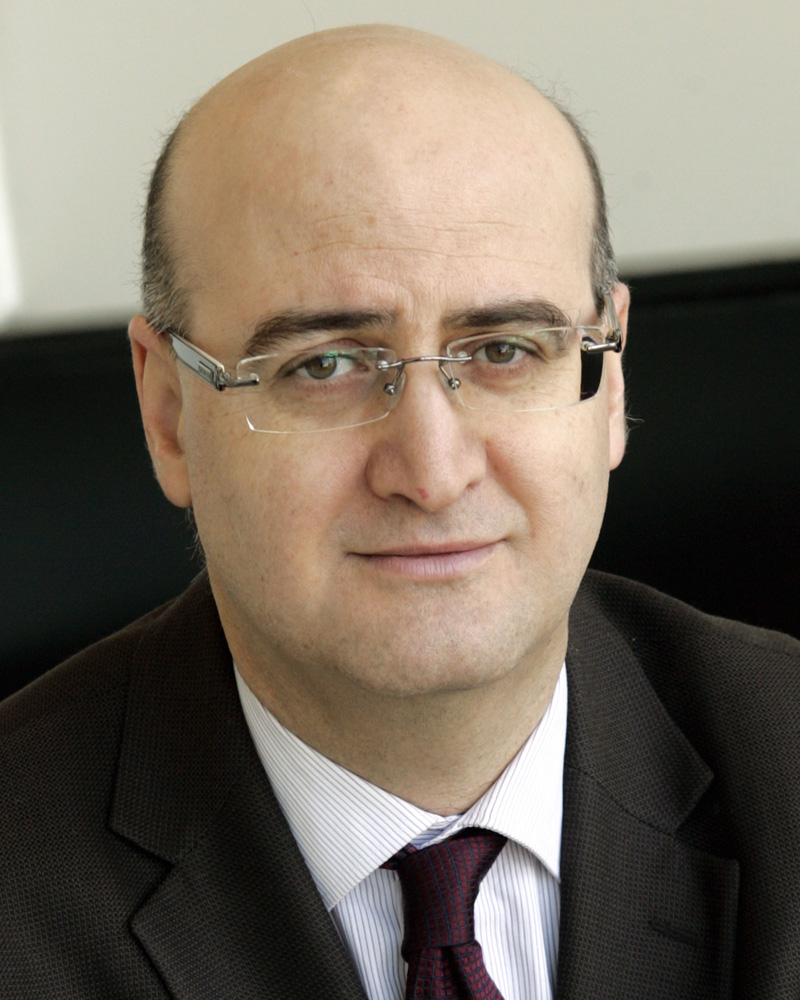
Craig Jin is an Associate Professor at the University of Sydney, leading the CARlab (Computing and Audio Research Laboratory) and Spatial Audio Research initiatives within the School of Electrical and Computer Engineering. He holds a BS from Stanford University, an MS from Caltech, and a PhD from the University of Sydney. His work focuses on immersive audio technologies, biomedical signal processing, and assistive technologies for sensory augmentation. Research interests include spatial audio reproduction, binaural processing, acoustic sensing for accessibility, and machine learning applications in signal processing. Key contributions span HRTF interpolation, noise reduction algorithms, and acoustic touch systems for the visually impaired. Recent projects include real-time MRI analysis of vocal tract dynamics and sparse recovery techniques for sound field reconstruction. His publications span over 150 peer-reviewed articles in journals like IEEE Transactions on Audio, Speech, and Language Processing, and conferences such as ICASSP. He advises four current PhD/Master’s students on projects like predictive gesture tracking, voice disorder classification, and magnetic resonance imaging techniques.
Berrak Sisman is an Assistant Professor in the Department of Electrical and Computer Engineering at Johns Hopkins University, affiliated with the Data Science and AI Institute and the Center for Language and Speech Processing (CLSP). She leads the Speech & Machine Learning Lab (SmILe Lab), focusing on AI-driven speech technologies. She received her PhD from the National University of Singapore in 2020 and was previously a tenure-track faculty member at the University of Texas at Dallas (2022–2024). Research Interests: Her work spans artificial intelligence, speech synthesis, voice conversion, emotion analysis in speech, medical speech applications, and secure speech technology. She develops neural models for expressive and adaptive speech processing. Publications: Her recent articles (2024–2025) emphasize speech emotion recognition, zero-shot prosody control, accent conversion, and disentangled representations in TTS, reflecting a focus on cross-modal learning, robustness, and real-world applications. Awards & Grants: NSF CAREER Award (2024) Amazon Faculty Research Award (2022) Singapore Ministry of Education Award (2021) A*STAR Singapore International Graduate Award (2016–2020) Leadership: She directs the SmILe Lab, recruiting PhD/Master’s students for projects in neural speech modeling. Her grants include NSF and Amazon funding for voice conversion and emotion synthesis research.
Rozenn Dahyot is a Professor of Computer Science at Maynooth University within the Faculty of Science & Engineering. She previously held roles as Assistant and Associate Professor in Statistics at Trinity College Dublin (2008-2021) and Lecturer in Computer Science (2005-2008). Her research interests bridge Digital Signal Processing, Computer Vision, Machine Learning, and Statistical Analysis. She organized the European Signal Processing Conference (EUSIPCO2021) in Dublin and served as President of the Irish Pattern Recognition and Classification Society (IPRCS) from 2014-2020. Her work spans topics like semantic scene understanding, CNN compression, and medical image segmentation. Key contributions include advancements in graph-based image analysis, reinforcement learning optimization, and AI-driven systems for disaster management. Dahyot is a member of IEEE, ACM, and EURASIP, contributing to both academic and industrial collaborations.
Ki-Woong Park is a tenure-track full Professor in the Department of Computer and Information Security at Sejong University. He leads the System Security and Computer Engineering Research (SysCore) Lab, which focuses on system security research with numerous ongoing projects funded by major Korean research institutions including IITP, NRF, and KRIT. Sejong University, Department of Computer and Information Security System Security and Computer Engineering Research (SysCore) Lab Leader Member of IEEE, IEEE Computer Society, and ACM Education: Ph.D. in Electrical Engineering & Computer Science, KAIST (Advisor: Prof. Kyu-Ho Park) M.S. in Electrical Engineering & Computer Science, KAIST (Advisor: Prof. Kyu-Ho Park) B.S. in Computer Science, Yonsei University (Summa Cum Laude) Exchange Student at University of California, Los Angeles (UCLA) Professor Park's research focuses on designing, building, and analyzing secure systems, particularly for cloud computing, networked systems, and embedded systems. His work often involves reevaluating existing security mechanisms and actual system implementations with subsequent evaluation in real computing environments. He has made significant contributions to areas including cloud security, IoT security, ransomware detection, moving target defense, and metaverse security. His research approach emphasizes both theoretical foundations and practical implementation, with numerous publications in top-tier security and systems venues. His recent publications (2023-2024) demonstrate a strong focus on emerging security challenges in modern computing environments, particularly in metaverse platforms, UAV systems, and edge computing. These works span both theoretical security frameworks and practical implementations, with an emphasis on visualization techniques, hardware-based security mechanisms, and AI-enhanced security analysis. His research shows a clear progression from traditional cloud and network security toward next-generation security challenges in immersive virtual environments and cyber-physical systems. Scientific Awards: Microsoft Research Fellowship (2009-2010) Best Poster Gold Award at WISA 2020 Best Paper Award at MobiSec'18 Professor Park actively mentors numerous graduate and undergraduate students through the SysCore Lab, with current members including Ph.D. students, MS students, and undergraduate researchers. His research is supported by multiple significant grants, including the NRF Outstanding Researcher-Mid-career Researcher project, IITP Information Security Core Source Technology Development, and Defense Technology Advancement Research Institute projects. These grants total tens of billions of Korean won and address critical national security challenges in cyber defense, cloud security, and metaverse technologies. The SysCore Lab, under Professor Park's leadership, maintains a strong industry and government collaboration network, with part-time researchers from organizations including Hyundai Duty Free, Astron Security, Korea University, and various military cyber commands. This unique structure enables the lab to address both theoretical security challenges and practical implementation issues in real-world systems.
Richard M. Stern is a Professor of Electrical and Computer Engineering at Carnegie Mellon University (CMU), holding courtesy appointments in the Language Technologies Institute and Department of Computer Science, and serving as an Artist Lecturer in the School of Music since 2007. His interdisciplinary work bridges engineering and music technology through the School of Music's programs. Education: Ph.D. in Electrical Engineering from Massachusetts Institute of Technology (MIT), 1976 Professor Stern's research spans sound, speech, hearing, and music, with core emphases on robust speech processing in variable acoustic environments, music information retrieval, automated accompaniment, and foundational contributions to binaural perception theory. His work integrates psychoacoustic principles with machine learning to address challenges in speech recognition and human-robot interaction. Recent publications (2022-2025) reveal intensified focus on deep learning for speech enhancement in reverberant/noisy conditions, human-robot interaction scenarios, and music tagging—highlighting innovations in beamforming, source separation, and temporal modulation modeling. Awards and Honors: Fellow of the IEEE Fellow of the Acoustical Society of America Fellow of the International Speech Communication Association (ISCA) ISCA Distinguished Lecturer Allen Newell Award for Research Excellence (1992) Lutron Award for Teaching Excellence (2018) Professor Stern has advised numerous graduate students in speech and audio research, though specific names are unlisted in source materials. His grant portfolio includes significant National Science Foundation and industry-funded projects in speech technology, with leadership roles in initiatives like Interspeech 2006. He actively collaborates with CMU's Language Technologies Institute and Music and Technology program. He maintains strong ties to CMU's interdisciplinary ecosystem through the Language Technologies Institute and School of Music's Music and Technology program, contributing to research that merges acoustic engineering with musical applications.
Noah A. Smith is an Adjunct Professor of Computer Science and Engineering at the University of Washington. His work focuses on computational linguistics, machine learning, and natural language processing. He holds a Ph.D. in Computer Science from Johns Hopkins University (2006). His research explores ethical AI applications, multimodal systems, and foundational aspects of language models. Key research areas include: Ethical considerations in NLP, such as detecting rights abuses through text analysis Efficient decoding and alignment strategies for large language models Large-scale evaluation frameworks for multitask and multimodal generation Understanding pretraining dynamics and data composition effects Recent work emphasizes transparency in language models (e.g., tracing outputs to training data) and improving alignment through human feedback. He has contributed to open-source projects like OLMo and Dolma, advancing reproducibility in NLP research. No awards explicitly listed in provided texts. No specific advising or grant details available, though extensive publication output indicates active research involvement.
Bryan Pardo is a Professor of Computer Science at Northwestern University and head of the Interactive Audio Lab. He co-directs the Northwestern Center for Human Computer Interaction + Design and chairs the Computer Science Diversity Committee. He teaches courses in Deep Learning, Machine Learning, Generative Modeling, and Digital Music Instrument Design. PhD in Computer Science and Engineering, University of Michigan MMus in Jazz and Improvisation, University of Michigan MS in Computer Science, Ohio State University BMus in Jazz Composition, Ohio State University His research focuses on machine understanding and manipulation of sound, particularly in music and speech domains. Key areas include Machine Learning (e.g., automated gradient clipping), Signal Processing (e.g., Multi-scale Common-fate Transform), and Human Computer Interaction. Applications involve inclusive audio interfaces, audio search engines, source separation, natural language-controlled audio effects, privacy-preserving adversarial attacks on voice recognition, and music co-creation tools. Recent publications highlight advancements in neural watermarking (MaskMark), masked acoustic modeling (VampNet), and real-time adversarial privacy systems for speech. His lab's work has been applied in Adobe's AI-powered audio editor and Lexie B2 hearing aids. Scientific Awards: $1.8 million NSF Future of Work award $440K NSF grant for accessible music programming $200K Toyota grant $100K Sony grant TorchCrepe pitch tracker: 20 million+ downloads Bryan Pardo advises PhD student Max Morrison and collaborates with researchers like Patrick O'Reilly, Zeyu Jin, and Prem Seetharaman. His lab develops technologies for blind and visually impaired audio creators, including HaptEQ and Eyes-free tools.
Cecilia Mascolo is a Professor of Mobile Systems at the University of Cambridge , specifically in the Department of Computer Science and Technology . She co-directs the Centre for Mobile, Wearable System and Augmented Intelligence and is a Fellow of Jesus College, Cambridge . Her research focuses on mobile systems , machine learning for mobile health , and earable technology . She has been awarded prestigious grants such as the ERC Advanced Research Grant (2019-2025) and the EPSRC Open Research Fellowship (2025-2030). Currently on sabbatical at Harvard University , her work bridges systems and machine learning for health applications. Education: PhD in Computer Science from the University of Bologna, Italy. Previous Affiliation: Faculty at University College London before 2008. Her research spans mobile and wearable systems for health and behavior monitoring, focusing on on-device machine learning , uncertainty-aware models , and audio-based diagnostics . Key areas include federated learning , edge computing , and respiratory disease progression analysis via wearables. She explores earable technology for physiological monitoring, gait analysis, and even toothbrushing tracking using in-ear sensors. Her recent publications highlight advancements in earable-based health monitoring , including heart rate estimation , respiratory rate detection , and ECG analysis using machine learning. She emphasizes longitudinal health data from consumer devices, advocating for scalable diagnostics beyond traditional clinical standards. Scientific Awards: ERC Advanced Research Grant EPSRC Open Research Fellowship Best Paper Award - IEEE Percom 10-Year Impact Award - ACM Ubicomp Computer Laboratory Ring Hall of Fame Best Paper Award Student: Andrea Ferlini - ACM SIGMOBILE Doctoral Dissertation Runner-up She leads the Mobile Systems Research Laboratory , mentoring a team of 15 researchers (postdocs and PhD students), and has graduated over 25 PhD students. Her teaching includes Mobile Health courses at the University of Cambridge, and she serves as Director of Studies for Computer Science at Jesus College.
Professor Moncef Gabbouj is a distinguished academic and researcher currently serving as Professor of Signal Processing at the Department of Computing Sciences, Faculty of Information Technology and Communication Sciences, Tampere University, Finland. Previously, he held the same position at Tampere University of Technology before the merger in 2019. He has also held visiting professorships at prestigious institutions including Hong Kong University of Technology and Science, University of Southern California, and Purdue University. Ph.D. and MSc. in Electrical Engineering from Purdue University, USA (1989 and 1986) B.Sc. in Electrical Engineering from Oklahoma State University, USA (1985) Prof. Gabbouj's research spans multiple domains within signal and image processing, with a strong focus on machine learning applications. His primary research interests include artificial intelligence, machine learning, Big Data analytics, multimedia content-based analysis, indexing and retrieval, nonlinear signal and image processing, voice conversion, and video processing and coding. His work bridges theoretical advancements with practical applications across various industries, particularly in multimedia communications and biomedical applications. His extensive publication record demonstrates a clear evolution from traditional signal processing techniques toward more sophisticated machine learning and deep learning approaches. Recent work shows increasing focus on convolutional neural networks for various applications including ECG classification, video processing, financial time-series analysis, and image recognition tasks, reflecting the broader trend in the field toward deep learning methodologies while maintaining strong foundations in signal processing theory. IEEE Fellow (2011) Member, Finnish Academy of Science and Letters (2014) Knight, First Class, of the Order of the White Rose of Finland (2006) Nokia Foundation Recognition Award (2005) Nokia Foundation Visiting Professor Award (2012) Finnish Cultural Foundation for Art and Science Award (2017) TUT Foundation Grand Award (2015) Prof. Gabbouj has supervised 64 doctoral and 72 Master's theses, demonstrating his significant contribution to academic mentoring. His research has been supported by substantial funding, including research grants totaling 8.5 million Euro (2001-2015). He has served as Academy of Finland Professor during 2011-2015 and has been involved in numerous EU research projects including Horizon, ESPRIT, HCM, IST, COST, Tempus and Erasmus programs. As Editor, Guest Editor or member of the Editorial Board of 6 international scientific journals, he has significantly influenced the academic discourse in his field. He leads the Signal Analysis and Machine Intelligence (SAMI) research group at Tampere University and serves as the Finland Site Director of the NSF IUCRC funded Center for Visual and Decision Informatics. His research unit focuses on applying advanced machine learning techniques to solve complex problems in signal processing, computer vision, and multimedia analytics, with applications ranging from healthcare to multimedia communications and financial analysis.
Melissa C. Smith is a Professor of Electrical and Computer Engineering and Associate Dean for Graduate Studies at Clemson University. She holds a Ph.D. from the University of Tennessee and degrees from Florida State University. Her research focuses on machine learning, reconfigurable computing, and high-performance systems, with applications in embedded systems and interdisciplinary scientific advancements. Before joining Clemson in 2006, she was a research associate at Oak Ridge National Laboratory (ORNL), contributing to projects like the Spallation Neutron Source and PHENIX experiments. Education: Ph.D., Electrical and Computer Engineering, University of Tennessee M.S., Electrical Engineering, Florida State University B.S., Electrical Engineering, Florida State University Research Interests: Machine Learning and AI High-Performance and Reconfigurable Computing System Performance Modeling Embedded Systems Articles Summary: Her recent work spans machine learning applications, GPU/FPGA architectures, speech enhancement, and medical systems. Key themes include optimizing heterogeneous computing for real-time and scientific workloads, and advancing interdisciplinary solutions through architecture-application co-design. Lab & Collaborations: Leads the Future Computing Technologies Lab and collaborates with ORNL and national labs on projects like GEMmaker and HPC-enabled medical systems.
Dr. João F. Henriques is a Research Fellow at the Royal Academy of Engineering and a core member of the Visual Geometry Group (VGG) at the University of Oxford. His work spans the intersection of machine learning , deep learning , and computer vision , with notable contributions to visual tracking , 3D reconstruction , and robotics . He actively mentors DPhil students and collaborates across disciplines including AI safety , NeRFs , and optimisation . Current Students: Marian Longa, Tim Franzmeyer, Dominik Kloepfer, Yash Bhalgat, Shivani Mall, Lorenza Prospero, Mark Eid Graduated Students: Xu Ji, Mandela Patrick, Shu Ishida, Andreea Oncescu Research Trends from his recent work include advances in 3D scene reconstruction (e.g., Flash3D, GST), robotic adaptation (Rapid Motor Adaptation), and multimodal learning (Text2Loc, SCENES). His publications frequently address theoretical guarantees in unsupervised detection and reinforcement learning for POMDP environments. Scientific Recognition includes: Research Fellow, Royal Academy of Engineering CVPR Best Paper Finalist (2012) for Kernelized Correlation Filters (KCF) SIGBOVIK 2020 Most Timely Paper Award for Deep Industrial Espionage He also develops open-source tools like OverBoard , a Python dashboard for deep learning experiment monitoring, and advocates for preregistration workshops to improve machine learning research transparency.
Dr. Bo Liu is an Associate Professor in the School of Computer Science at the University of Technology Sydney (UTS), where he serves as a core member and director of the AI Security and Privacy (AISP) Research Lab at the Australian Artificial Intelligence Institute (AAII). With expertise spanning cybersecurity, privacy protection, AI and machine learning, and wireless communications, Dr. Liu has established himself as a leading researcher in the field of AI security and privacy. Dr. Liu earned his PhD from the Department of Electronic Engineering at Shanghai Jiao Tong University in 2010. His academic journey at UTS has progressed from Senior Lecturer (November 2019-December 2022) to his current position as Associate Professor (January 2023-present). Dr. Liu's research focuses on the critical intersection of artificial intelligence and security, particularly addressing emerging threats in the age of advanced AI systems. His work spans multiple dimensions of security and privacy, including deepfake detection, privacy-preserving data synthesis, AI model security, and fair machine learning. He has pioneered approaches to detect AI-generated content, protect visual privacy through de-identification techniques, and address the complex relationship between algorithmic fairness and privacy preservation. His publication record demonstrates significant contributions across multiple cutting-edge research areas, with particular emphasis on detecting and mitigating threats from generative AI systems. His recent work reveals a strong focus on deepfake detection across multiple modalities (images, video, and audio), privacy-preserving techniques for sensitive data, and the security implications of emerging AI architectures like Retrieval-Augmented Generation systems. Dr. Liu has secured substantial research funding, including as Lead Chief Investigator on multiple ARC Discovery and Linkage Projects, totaling over $3.5 million AUD. His industry collaborations include partnerships with the NSW Department of Planning and the Reserve Bank of Australia, demonstrating the practical applicability of his research. As an academic leader, Dr. Liu serves as Associate Editor for IEEE Transactions on Broadcasting and actively contributes to the academic community through conference organization, peer review for top-tier venues, and assessment for ARC grant schemes. He also teaches courses including Penetration Testing, Ethical Hacking and Offensive Security, and supervises Masters and PhD students in cybersecurity and privacy research.
Shih-Chii Liu holds the rank of Privatdozent (Associate Professor) in the Department of Information Technology and Electrical Engineering at ETH Zürich. He is affiliated with the Institute of Neuroinformatics , a joint institute between the University of Zurich and ETH Zurich. His research focuses on neuromorphic engineering, bio-inspired neural hardware, and edge computing systems, emphasizing energy-efficient algorithms and sensor technologies. Key research areas include neuromorphic sensors for real-time data processing, sparsity-aware neural networks, and adaptive computing architectures for edge devices. His work spans applications such as speech enhancement, wearable health monitoring, and bio-inspired keyword spotting systems. He leads the Sensors Research Group, which develops neuromorphic systems integrating novel sensors, spiking neural networks, and low-power hardware accelerators. Recent projects include the DeltaKWS low-power keyword spotting IC, EFLOP computational cost metrics for spiking networks, and NeuroBench benchmarking frameworks for neuromorphic systems. His contributions emphasize bridging biological neural principles with practical engineering solutions for IoT and embedded systems. Liu teaches courses such as Neuromorphic Engineering I and collaborates on cross-disciplinary projects involving neuroprosthetics, smart wearables, and multimodal sensor fusion. His work is characterized by hardware-software co-design approaches to tackle challenges in real-time, low-latency, and energy-constrained computing environments.
Benoît Sagot is a Senior Researcher in Natural Language Processing and Computational Linguistics at Inria , currently holding the 2023-2024 Informatics and Digital Sciences Annual Chair at Collège de France. He directs the ALMAnaCH research team and contributes to the PRAIRIE Institute for AI research. Research Focus: His work spans neural language models, machine translation, text simplification, multimodal NLP, and lexical resource development for French and low-resource languages. He explores computational morphology, etymology, and historical linguistics, with applications in opinion mining and computational oenology. Recent Articles emphasize language model interpretability, cross-lingual transfer, and multimodal integration (speech, image). Tools & Resources: He has developed morphological lexicons (Le fff, Alexina), corpora (OSCAR, CAMEMBERT), and parsing pipelines (SxPipe). Projects: Involved in initiatives like ANR BASNUM (Furetière's dictionary digitization) and 3IA PRAIRIE (AI research). His career combines foundational work in syntactic analysis with evolving deep learning approaches.
Abhinav Shrivastava is an Associate Professor in the Department of Computer Science at University of Maryland, College Park, with a joint appointment in the Institute of Advanced Computer Studies (UMIACS). Previously, he served as an Assistant Professor at the same institution from August 2018 to June 2024, and spent one year as a Visiting Research Scientist at Google Research from September 2017 to August 2018. His educational background includes: PhD in Robotics and Artificial Intelligence from Carnegie Mellon University (2017), advised by Abhinav Gupta, with thesis titled 'Discovering and Leveraging Visual Structure for Large-scale Recognition' MS in Artificial Intelligence from Carnegie Mellon University (2011), supervised by Alyosha Efros and Martial Hebert BTech in Computer Science and Engineering from Jaypee Institute of Information Technology (2010) Professor Shrivastava's research focuses on computer vision and machine learning, with particular expertise in object detection, image recognition, and neural representations. His work bridges theoretical advances with practical applications, exploring how visual systems can discover and leverage structure in large-scale recognition problems. He has made significant contributions to understanding the role of supervision in vision transformers, developing novel approaches for object-state composition recognition, and creating efficient neural representations for videos and 3D scenes. His research often addresses fundamental challenges in visual recognition, including handling novelty in open-world environments and improving the efficiency of visual systems. An analysis of his recent publications reveals a strong emphasis on neural representations, particularly for dynamic content like videos and 3D scenes. His work demonstrates increasing sophistication in handling open-world vision problems, with research spanning object discovery, localization, and representation learning. The publications show a clear progression toward more efficient and scalable models, with recent work focusing on model compression, sparse representations, and addressing the challenges of working with limited annotations. His scientific contributions have been recognized with several prestigious awards: Best Paper Award (Applications) at IEEE Winter Conference on Applications of Computer Vision (2020) Microsoft Research PhD Fellowship (2014-2016) Best Student Paper Award at IEEE Winter Conference on Applications of Computer Vision (2014) Outstanding Reviewer Award at IEEE CVPR (2015) Professor Shrivastava has successfully mentored numerous graduate students, many of whom have become prominent researchers in computer vision. His Amazon Research Awards (2020 and 2023) have supported innovative projects including 'The pursuit of knowledge: discovering and localizing new concepts using dual memory' and 'Audio-conditioned Diffusion Models for Generating Lip-synchronized Videos.' He has served as Area Chair for major conferences including ICCV, CVPR, and AAAI, demonstrating his leadership in the computer vision community. His research has attracted significant funding from both academic and industry sources, supporting his exploration of fundamental questions in visual recognition and representation learning.