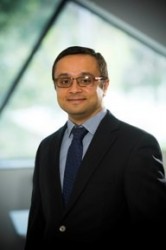
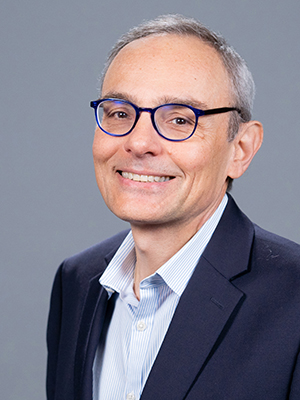
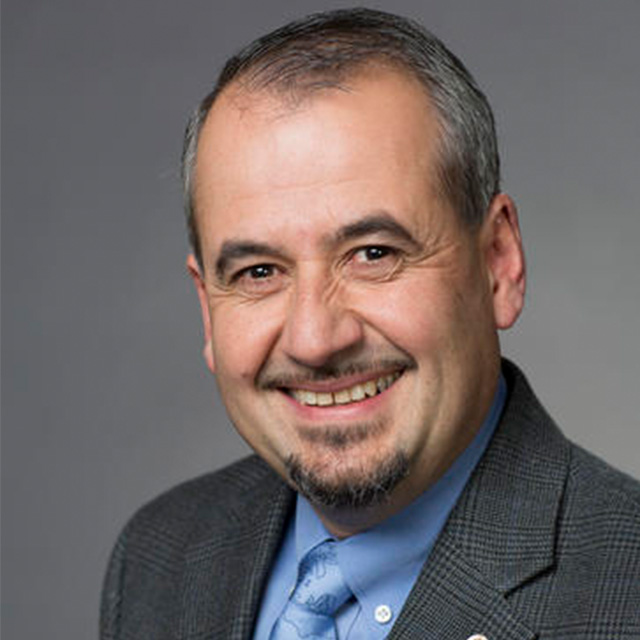
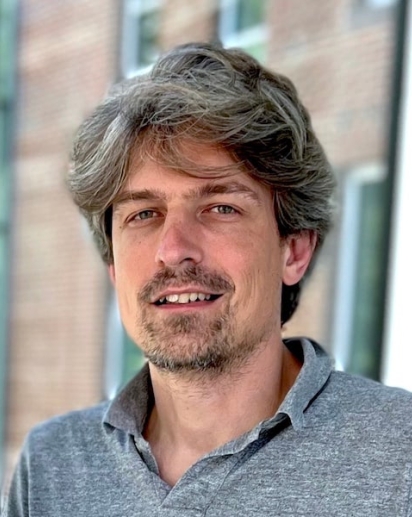
Professor Nikhil Medhekar is a faculty member in the Department of Materials Science and Engineering at Monash University, Australia. He holds a PhD from Brown University and has extensive expertise in computational materials science, focusing on energy storage, nanotechnology, and sustainable engineering. His research employs advanced simulations to design novel materials for next-generation technologies, including batteries and optoelectronics. He is an active member of the ARC Centre of Excellence in Future Low Energy Technologies (FLEET) and the ARC Industrial Transformation Research Hub on Advanced Manufacturing of Two-Dimensional Materials (AM2D). Education: PhD in Engineering, Brown University, USA Sc. M. in Applied Mathematics, Brown University, USA M.Tech in Mechanical Engineering, IIT Bombay, India B.Eng in Mechanical Engineering, University of Pune, India Research Interests: Computational mechanics, nanoscale materials, quantum dots, nanowires, graphene, and energy applications. His work integrates quantum mechanical simulations, molecular dynamics, and phase-field modeling. Grants & Collaborations: Current projects include investigations into magnesium batteries, solid-state precipitates in aluminum alloys, and 2D materials manufacturing. He leads or co-leads six major research projects funded by the Australian Research Council and industry partners. Awards: 2014 Young Tall Poppy Award, 2008 Materials Research Society Silver Award, and 2008 William N. Findley Award. Labs & Teams: Leads the Computational Materials Lab at Monash, focusing on atomistic simulations and materials design. Collaborates with global institutions like MIT, Tsinghua University, and the Max Planck Society.
Dr. Chong Liu is an Assistant Professor of Computer Science at the State University of New York at Albany (SUNY Albany) in the College of Nanotechnology, Science, and Engineering. He received his PhD in Computer Science from UC Santa Barbara in 2023 and completed a postdoctoral fellowship at the University of Chicago's Data Science Institute (2023-2024). His research focuses on Machine Learning and AI for Science, particularly Bayesian optimization, bandit algorithms, generative models, and AI applications in drug discovery. He has received the SUNY IITG/OER Impact Grant and serves as Associate Editor for IEEE-TNNLS, Area Chair for ICML/AISTATS, and editorial board reviewer for JMLR. PhD: UC Santa Barbara (2023), advised by Yu-Xiang Wang Postdoc: University of Chicago Data Science Institute (2023) Research Interests : Broad: Machine Learning, Optimization, AI for Science Specific: Bayesian optimization, Bandit algorithms, Active learning, Experimental design, Generative models, AI for drug discovery Applications: Binding affinity prediction, Drug screening, Policy optimization Recent Article Trends : His 2024-2025 publications focus on extending Bayesian optimization theory under practical constraints, quantum-accelerated bandit methods, and multi-objective optimization for drug discovery. Earlier works include private learning frameworks and human-in-the-loop systems. Scientific Awards : 2025: SUNY IITG/OER Impact Grant Professional Activities : Organized NeurIPS workshops on AI for Drug Discovery (2023, 2025), co-organizing INFORMS sessions, and serving on program committees for ICML, NeurIPS, ICLR, and AAAI. He has given invited talks at institutions including University of Chicago, UC Santa Barbara, and Genentech. Teaching : Teaching courses like Numerical Methods (CSI 401) and Machine Learning (CSI 436/536) with syllabi spanning 2024-2025 semesters.
Dr David Cooke is a Subject Area Leader in Chemistry & Chemical Engineering at the Department of Physical and Life Sciences, School of Applied Sciences, University of Huddersfield. He is a member of the Structural, Molecular and Dynamic Modelling Centre and Associate Member of multiple research centers including the Centre for Functional Materials and Catalysis Research Centre. Background: PhD in Computational Solid State Chemistry (Prof SC Parker, University of Bath) Postdoctoral Research: University of Bath and Materials Science department at the University of Cambridge Research Interests: Computational Solid State Chemistry, mineral surface modeling, biomineralization processes, crystal growth, and surface defect analysis. His work aligns with UN Sustainable Development Goals for environmental and health applications. Publications: 15 recent works focus on cerium oxide interfaces, plutonium hydration, oxide-polymer composites, and defect dynamics using Density Functional Theory and Molecular Dynamics. Key collaborations include M. Molinari, L. Gillie, and S. Parker. Scientific Activities: Active in research output since 2001 (50+ publications) 5 supervised works 35+ research activities including oral presentations
Dr. Triratna Muneshwar is an Assistant Professor in the Department of Metallurgical Engineering and Materials Science at the Indian Institute of Technology Bombay (IIT Bombay), where he has been serving since November 2021. His research focuses on advanced thin film deposition techniques, particularly atomic layer deposition (ALD) and atomic layer etching (ALE), for next-generation semiconductor devices. Ph.D. in Materials Engineering, University of Alberta, Canada (2014) Dual Degree (B.Tech & M.Tech) in Metallurgical Engineering and Materials Science, IIT Bombay (2009) His research interests lie at the intersection of materials science and semiconductor technology, with a strong emphasis on modeling and experimental analysis of vacuum thin film processes. He investigates atomic layer deposition of oxides, nitrides, and metals, surface reaction kinetics , dopant distribution in thin films , and parasitic reactions in high-aspect-ratio structures . His work bridges lab-scale innovation to industrial fabrication (Lab-to-Fab). Dr. Muneshwar's publications reveal a consistent focus on improving the precision, efficiency, and scalability of ALD processes. His work spans plasma-enhanced ALD , precursor chemistry , in-situ characterization , and numerical modeling of growth mechanisms. Key themes include precursor utilization optimization, nucleation control, and material characterization for logic and memory applications. Scientific recognitions include: Featured Article, Journal of Applied Physics (2016) Editors Pick, Journal of Applied Physics (2018) U.S. Patent on precursor utilization in pulsed ALD processes Dr. Muneshwar has mentored research at the postdoctoral and associate levels and continues to build a research program involving graduate students and collaborative projects. His prior experience includes a Postdoctoral Research Fellowship and Research Associate role at the University of Alberta. He is actively involved in advancing ALD/ALE technologies with industrial relevance. His research is conducted within the MEMS department at IIT Bombay, leveraging advanced fabrication and characterization facilities. He collaborates with teams working on semiconductor materials, nanofabrication, and process modeling, contributing to India's growing expertise in microelectronics and advanced materials.
Panayiotis Papadopoulos is a Professor and the Byron and Elvira Nishkian Chair in Structural Engineering at the University of California, Berkeley. He serves as Director of the CoE Aerospace Engineering Programs and contributes to the Computational Solid Mechanics Lab. Education: Ph.D. in Civil Engineering, University of California, Berkeley (1991) M.S. in Civil Engineering, University of California, Berkeley (1987) Dipl. in Civil Engineering, Aristotle University, Thessaloniki, Greece (1986) Research Interests: Professor Papadopoulos specializes in computational mechanics, solid mechanics, biomechanics, and applied mathematics. His work bridges theoretical modeling with advanced numerical methods, focusing on multiscale analysis, thermomechanical coupling, and material failure mechanisms. Publication Trends: His recent research emphasizes multiscale finite element methods, thermomechanical analysis of deformable solids, and biomechanical modeling. Key themes include contact mechanics, phase transformations in shape-memory alloys, and computational approaches for microstructural analysis. Scientific Awards: Byron and Elvira Nishkian Chair in Structural Engineering Labs and Teams: He leads the Computational Solid Mechanics Lab, which develops advanced numerical frameworks for material behavior under complex thermomechanical conditions.
Ville Jantunen is a Researcher and Supervisor in the Doctoral Programme in Materials Research and Nanosciences. His research focuses on atomistic simulations of materials under extreme conditions, including ion irradiation effects, defect evolution in fusion materials, and nanoparticle dynamics. He is actively involved in the SPATEC project (2022–2026), funded by the Academy of Finland, which explores time and spatial dependence of cascade damage in materials under pulsed ion beams. Key research areas include computational materials science, radiation effects in nanomaterials, and predictive modeling of electronic/atomic phenomena. His work spans both fundamental and applied aspects, with contributions to quantum technology through spin-qubit array studies and fusion energy via tungsten defect analysis. Collaborations include international teams on nanoparticle shape transformation mechanisms and kinetic Monte Carlo simulations. He has organized educational outreach activities like the LEGO lab workshop at Helsinki Natural Science Lyceum (2018), demonstrating engagement in science communication. Publications emphasize interdisciplinary approaches, combining computational methods with experimental insights to address challenges in nanotechnology, fusion materials, and radiation physics.
Victor Vasquez is a Professor and Chair of the Chemical and Materials Engineering Department at the University of Nevada, Reno (UNR). He holds a PhD in Chemical Engineering from UNR (1999) and focuses on thermodynamics, atomistic modeling, and process systems engineering for extreme materials. Key projects include Metal hexaboride research for neutron detection Reverse micellar systems for nanoparticle synthesis Lithium and cobalt supply chain analysis via complex networks Geothermal energy life cycle analysis Thermal pretreatment of lignocellulosic biomass Research keywords include: Materials Science Thermodynamic Modeling Molecular Dynamics Machine Learning Environmental Engineering Supply Chain Optimization Scientific awards: DELTA New Department Leaders Institute (2023) Faculty Academic Leadership Program (2019) He mentors graduate and undergraduate students, particularly from diverse backgrounds, and serves as adviser for UNR's AIChE and SHPE student chapters. Collaborations span UC San Diego, Alfred University, and Latin American institutions. Leadership roles include AIChE NORCAL section director (2010-2017) and ABET symposium participation (2021).
Geoffroy Hautier serves as Adjunct Associate Professor of Engineering at Dartmouth College's Thayer School of Engineering within the Physics and Astronomy Department. His research bridges computational materials science with practical energy applications through high-throughput methodologies and machine learning integration. Previously holding positions at MIT and ULB, he maintains active collaborations across international research networks including the psi-k society. His research expertise spans computational materials design with emphasis on ab initio and high-throughput computing approaches. Key focus areas include opto-electronic properties of materials, transparent conducting oxides, thermoelectrics, photovoltaics, and high entropy alloys for energy applications. His group develops advanced computational frameworks for materials discovery, particularly targeting energy production and storage solutions through quantum mechanical simulations. Analysis of recent publications reveals strong trends in quantum materials discovery (2022-2024), sustainable magnet development (2023), and hydrogen storage technologies (2024). His work consistently integrates machine learning with first-principles calculations to accelerate materials design cycles across photovoltaics, quantum information science, and sustainable energy systems. Scientific recognition includes: Chemistry of Materials Reviewer Excellence Award (2018, 2019) Finalist for Rising Star in Computational Materials Science (2018) Marie Curie Fellowship (2012) As group leader, Hautier mentors multiple PhD students and postdoctoral researchers while directing projects funded by DOE and other agencies. His research portfolio includes significant grants for quantum materials ($2.7M DOE grant), sustainable magnets, and hydrogen storage frameworks. The Hautier Research Group maintains active collaborations with national laboratories and industry partners through the Materials Project initiative. The group operates within Dartmouth's advanced computational infrastructure, focusing on quantum defect engineering for silicon photonics, 2D material design for electrocatalysis, and rare-earth-free permanent magnet development. Current efforts emphasize scalable quantum technologies and decarbonization pathways through advanced materials discovery.
Wolfgang Windl is a Professor in the Department of Materials Science and Engineering at The Ohio State University with a joint appointment in Physics. He co-founded Goniotech LLC and previously worked at Motorola as a Principal Staff Scientist. He holds a doctoral degree in physics from the University of Regensburg and completed postdoctoral research at Los Alamos National Laboratory and Arizona State University. His research specializes in computational materials science, focusing on: Atomistic simulations and density-functional theory Machine learning applications in materials design Semiconductor transport and layered materials (e.g., Dirac semimetals) Atom probe tomography and characterization techniques Analysis of his 15 most recent publications (2023-2025) reveals dominant themes: advanced simulations of field evaporation, topological quantum materials (PtTe 2 , PdTe 2 ), and computational frameworks for materials characterization. His work frequently integrates spectroscopy, tomography, and Bayesian methods to study alloys, 2D materials, and additive manufacturing defects. Awards and Honors Fraunhofer-Bessel Research Award (2006) Four Lumley Research Awards Boyer Award for Teaching Excellence (2015) Faculty Diversity Excellence Award (2020) Two Mars Fontana Best Teacher Awards (2006, 2015) ASEE Best Paper & Diversity Awards (2019) He advises 11+ graduate students (7 alumni, 5 current) and leads the Windl Group research team focused on computational materials modeling. His group develops simulation tools for atomic-scale characterization and collaborates with national laboratories.
Johann Guilleminot is an Associate Professor in the Thomas Lord Department of Mechanical Engineering and Materials Science at Duke University. He joined Duke in 2017 after a Maître de Conférences position at Université Paris-Est. His research bridges computational mechanics, materials science, and uncertainty quantification, with applications in additive manufacturing, biomedical implants, and naval systems. Education: M.S. in Theoretical Mechanics, Lille University of Science and Technology (2005) Ph.D. in Theoretical Mechanics, Lille University of Science and Technology (2008) Habilitation in Mechanics, Université Paris-Est (2014) His work focuses on probabilistic methods for heterogeneous materials, stochastic solvers, and scientific machine learning. Recent projects include data-driven uncertainty quantification in molecular dynamics and additive manufacturing simulations, funded by the Army Research Office, NSF, and national laboratories. Scientific Awards: No specific awards listed in the provided text. Lab & Collaborations: Leads the Guilleminot Lab at Duke, collaborating with Sandia National Laboratories and the U.S. Naval Research Laboratory. Research spans atomistic-to-continuum coupling, inverse problems, and stochastic modeling for predictive simulations.
Michael Herbst is an Assistant Professor (tenure-track) at EPFL, holding a joint appointment in the School of Basic Sciences (SB) and the School of Engineering (STI). He leads the Mathematics for Materials Modelling (MatMat) research group, focusing on error control in atomistic simulations, density-functional theory (DFT), and interdisciplinary computational methods. His work bridges mathematics, materials science, and computer science, emphasizing robust algorithms and Julia-based software development. Herbst holds a PhD from Heidelberg University and has held postdoctoral positions at RWTH Aachen and Inria Paris. He is a core member of the MARVEL and CESMIX research centers. Education: 2018: Dr. rer. nat. (magna cum laude), Heidelberg University 2009–2013: BA and MSci (1st class) in Natural Sciences, University of Cambridge 2008–2009: Studies in Mathematics/Physics, TU Kaiserslautern Research Interests : Herbst's research centers on developing reliable computational methods for materials modeling, including error estimation in DFT, black-box SCF algorithms, and Julia-based tools like the Density-Functional Toolkit (DFTK). His work addresses challenges in high-throughput simulations, numerical stability, and interdisciplinary collaboration across mathematics, physics, and computer science. Grants & Projects : MARVEL Center for Computational Design (EPFL) CESMIX Center for Extreme-Scale Simulations (MIT) EMC² Project (Sorbonne/Inria/École des Ponts) Awards : HGS MathComp PostDoc Fellowship (2018–2021) DAAD Travel Funding (2018) Exploratory Research Space Fund (RWTH Aachen, 2022) Labs & Teams : Head of the MatMat group at EPFL, focusing on error-controlled simulations and open-source software development.
Major Timothy S. Wolfe is an Assistant Professor of Electrical Engineering at the Air Force Institute of Technology (AFIT), Wright-Patterson AFB, OH, within the Graduate School of Engineering and Management. He holds a PhD in Electrical Engineering from Purdue University (2021), a Master’s from AFIT (2015), and a Bachelor’s from Boston University (2011). Commissioned in 2011 via AFROTC, his career spans technical intelligence, program management, and research leadership at AFRL. BS, Electrical Engineering – Boston University, 2011 MS, Electrical Engineering – Air Force Institute of Technology, 2015 PhD, Electrical Engineering – Purdue University, 2021 His research focuses on atomistic modeling of high-power electronic materials , directed energy systems , and wide bandgap semiconductor devices , particularly photoconductive switches used in pulsed power and RF applications. His work integrates computational physics with engineering design to enhance device performance and reliability. The recent publications show a strong trend in computational modeling of semiconductor materials and high-power switching systems, emphasizing reliability, waveguide effects, and optoelectronic integration. These works span journals like IEEE Transactions on Plasma Science and Modelling and Simulation in Materials Science and Engineering , highlighting interdisciplinary research bridging materials science, electromagnetics, and power electronics. His scientific recognition includes: GSEM’s Academic Year 2022/2023 Dean’s Distinguished Teaching Professors 2023 AFA Wright Memorial Chapter Gage H. Crocker Outstanding Professor Award Maj Wolfe actively contributes to engineering education and research at AFIT, likely advising students through thesis projects and research collaborations. His work is supported by Air Force research initiatives, particularly in directed energy and high-power electronics, though specific grants are not detailed. He is an active member of the IEEE Dayton Chapter and the Eta Kappa Nu honor society, reflecting professional engagement. His research is conducted within AFIT’s engineering research infrastructure, likely in collaboration with the Air Force Research Laboratory (AFRL) Directed Energy Directorate, where he previously served as Deputy High Power Electromagnetics Core Tech Lead. This suggests integration with larger DoD efforts in directed energy and high-power systems.
Dr. Soheil Solhjoo is an Assistant Professor at the University of Groningen (UG) within the Engineering Systems and Design (ESD) group, part of the Engineering and Technology Institute Groningen (ENTEG) at the Faculty of Science and Engineering. His research focuses on model-based engineering design, physics-based deep learning, and digital twins, with expertise in constitutive modeling, molecular dynamics simulations, contact mechanics, and physics-informed neural networks. Prior to UG, he conducted postdoctoral research in European projects like VMAP and UPSIM, contributing to multiscale material modeling and hyperelastic material development for soft biological tissues. He holds a PhD from the University of Groningen (2017), where his thesis addressed nanotribological studies, including contact area measurement in atomistic simulations and continuum mechanics applications in nanocontacts. Academic Role: Assistant Professor (since 2024) Institution: University of Groningen Department: Engineering Systems and Design (ESD) Research Interests Dr. Solhjoo's research spans materials science and mechanical engineering, emphasizing: Constitutive modeling of metallic materials Molecular dynamics and statics simulations Contact mechanics at atomic and macro scales Integration of physics-based principles into neural networks Multiscale material characterization Publications Trends His articles predominantly address material deformation mechanisms, constitutive model validation, and nanoscale contact analysis. Key themes include hot deformation behavior of metals, computational methods for material characterization (e.g., HDFT tool), and bridging atomistic simulations with continuum mechanics. Awards & Grants No specific awards listed, but contributions to collaborative EU projects (VMAP, UPSIM) highlight his grant-funded research activities. Actively involved in educational grants for mechanical and industrial engineering curriculum innovation. Labs & Teams Part of the ESD group and ENTEG, collaborating with academic and industrial partners in EU frameworks. Maintains a research portal with open-access tools like the Hot Deformation Fitting Tool (HDFT).
Inna Ponomareva is Professor and Director of Graduate Admissions in Physics at the University of South Florida. She leads the Computational Nanoscience Lab, specializing in ferroic materials using atomistic simulations and machine learning. Research explores phase transitions, nanoscale phenomena, and caloric effects in functional materials. Current group includes 4 researchers focusing on: Halide perovskite spin physics Ultra-thin ferroelectric behavior Multicaloric effects Recent publications demonstrate advances in controlling spin textures via strain and intercalation in 2D materials. Teaches quantum mechanics and computational physics courses. Recognized with SIGMOD Distinguished Reviewer Award and ELIDEK grants.
Christoph Dellago is a full Professor of Computational Physics at the Faculty of Physics of the University of Vienna, where he has been a faculty member since 2003. He currently serves as Director of the Erwin Schrödinger Institute for Mathematics and Physics, Head of the Computational and Soft Matter Physics Group, and Project lead of EuroCC Austria - National Competence Centre for Supercomputing. Previously, he served as Dean of the Faculty of Physics (2009-2012) and Coordinator of the Doctoral College Advanced Functional Materials (DCAFM). Full Professor, Faculty of Physics, University of Vienna (2003-present) Director, Erwin Schrödinger Institute for Mathematics and Physics (2017-present) Head, Computational Physics and Soft Matter Group (2024-present) Coordinator, Doctoral College Advanced Functional Materials (DCAFM) Austrian Representative, Council of CECAM Dellago received his PhD in Physics from the University of Vienna in 1996, followed by postdoctoral research at UC Berkeley as a Schrödinger Fellow of the Austrian Science Foundation. His research focuses on developing computational methods to study rare events in condensed matter systems, particularly transition path sampling methodology for simulating nucleation, chemical reactions, and biomolecular reorganizations. He has pioneered the application of machine learning to molecular structure recognition and potential energy surfaces. Recent work examines self-assembly of nanocrystals, biopolymer folding, aqueous interfaces, phase separation in alloys, thermo-polarization, cavitation, and freezing phenomena. Analysis of Dellago's recent publications (2023-2025) reveals a strong emphasis on machine learning applications in computational physics, particularly neural network potentials for simulating water interfaces, crystal defects, and phase transitions. His work bridges traditional statistical mechanics with modern computational techniques, creating powerful tools for studying complex dynamical processes that occur on timescales far beyond conventional molecular dynamics simulations. The publications demonstrate increasing integration of machine learning with rare event sampling methods, reflecting the cutting-edge direction of computational statistical mechanics. Förderpreis der Stiftung Futura zur Förderung junger Südtiroler im Ausland (1997) The Raymond and Beverly Sackler Prize in the Physical Sciences (2005) UNIVIE Teaching Award of the University of Vienna (2014) Dellago leads an active research group with multiple PhD students and postdocs, focusing on computational statistical mechanics. His group develops trajectory-based sampling methods and machine learning approaches for molecular simulation. He has secured significant funding through EuroCC Austria and various research platforms including the Research Platform Accelerating Photoreaction Discovery and the Research Platform Erwin Schrödinger International Institute for Mathematics and Physics. His research has been supported by numerous grants enabling advanced computational infrastructure for high-performance simulations. The Dellago Group operates within the Computational and Soft Matter Physics division at the University of Vienna, with strong connections to the Research Network Data Science. The group collaborates extensively with international research institutions and maintains close ties with the Erwin Schrödinger Institute, which Dellago directs. Their research environment combines theoretical physics, computational chemistry, and machine learning expertise to tackle fundamental questions in condensed matter physics and soft matter systems.