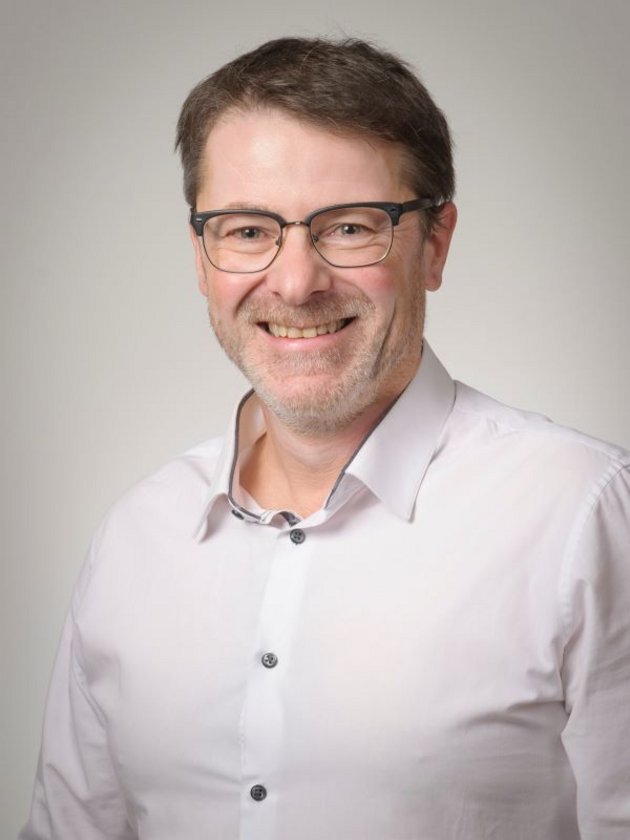
Karsten ReuterView profile
Professor
Karsten Reuter is a Director at the Fritz-Haber-Institut der Max-Planck-Gesellschaft in Berlin. His research spans multiple disciplines within computational chemistry and materials science, with a strong focus on heterogeneous catalysis, surface science, and energy conversion processes. With over 32,000 citations and an h-index of 91, he is a highly influential researcher in his field. Dr. Reuter's research interests primarily revolve around multiscale modeling , machine learning applications in materials science , surface science , heterogeneous catalysis , and energy conversion . His work bridges theoretical approaches with practical applications in catalysis and materials design. He has made significant contributions to the development of computational methods for studying surface reactions and catalytic processes at the atomic level. An analysis of his recent publications reveals a strong trend toward integrating machine learning with traditional computational chemistry methods. His work spans from fundamental surface science studies to practical applications in energy conversion and storage. The publications cover diverse subfields including catalysis modeling, quantum chemistry methods, surface adsorption phenomena, and materials informatics. His research increasingly focuses on multiscale approaches that connect atomic-scale simulations with macroscopic phenomena. Dr. Reuter has received numerous citations for his methodological contributions, particularly in kinetic Monte Carlo simulations, first-principles thermodynamics, and the development of computational frameworks for studying heterogeneous catalysis. His work on the 'ab initio molecular simulations with numeric atom-centered orbitals' has been particularly influential with over 3,000 citations. Throughout his career, Dr. Reuter has collaborated extensively with leading researchers in computational chemistry and materials science, including Matthias Scheffler, Volker Blum, and Harald Oberhofer. His research has been supported by various grants focused on advancing computational methods for materials discovery and catalysis research.