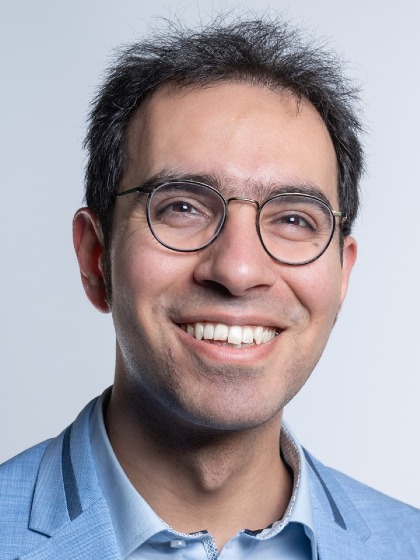
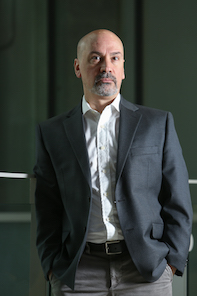
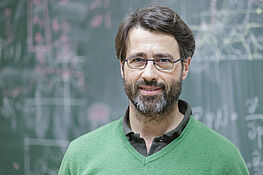
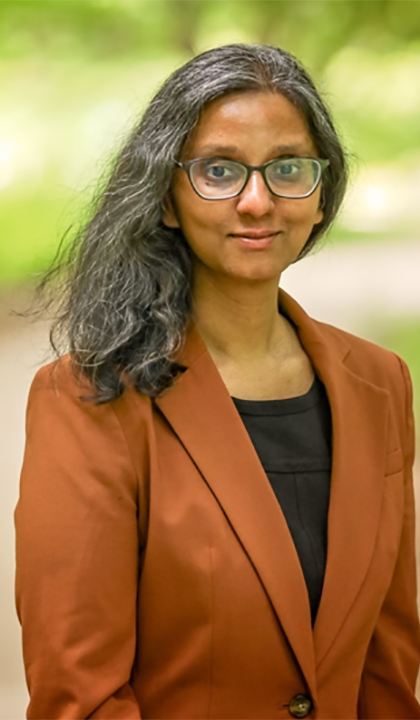
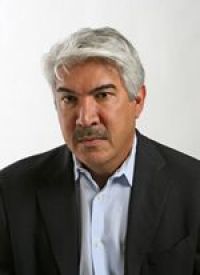
Prof. Dr. Marco Cicalese is a Professor of Mathematical Continuum Mechanics at the Technical University of Munich (TUM), holding a position in the Department of Mathematics within the TUM School of Computation, Information and Technology. He has been at TUM since 2012, following roles as an Assistant Professor at the University of Naples (2005–2012) and a researcher at SISSA (2004–2005). His research focuses on variational analysis of atomistic and continuous systems, multiscale problems, and geometric inequalities. Education: PhD in Applied Mathematics from the University of Naples (2004), MSc in Physics (details not specified). His editorial roles include Associate Editorships at Acta Applicandae Mathematicae and Mathematics in Engineering . Research interests encompass calculus of variations, nonlinear elasticity, and phase transitions, with contributions to discrete-to-continuum limits and stability of geometric inequalities. Teaching includes courses on partial differential equations, calculus of variations, and mathematical modeling. His work often bridges discrete and continuous models, with applications to materials science and continuum mechanics. Recent publications explore topics like Wulff crystal emergence, fractional vortices, and surfactant effects in phase transitions.
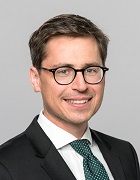
Dr. Soheil Solhjoo is an Assistant Professor at the University of Groningen (UG) within the Engineering Systems and Design (ESD) group, part of the Engineering and Technology Institute Groningen (ENTEG) at the Faculty of Science and Engineering. His research focuses on model-based engineering design, physics-based deep learning, and digital twins, with expertise in constitutive modeling, molecular dynamics simulations, contact mechanics, and physics-informed neural networks. Prior to UG, he conducted postdoctoral research in European projects like VMAP and UPSIM, contributing to multiscale material modeling and hyperelastic material development for soft biological tissues. He holds a PhD from the University of Groningen (2017), where his thesis addressed nanotribological studies, including contact area measurement in atomistic simulations and continuum mechanics applications in nanocontacts. Academic Role: Assistant Professor (since 2024) Institution: University of Groningen Department: Engineering Systems and Design (ESD) Research Interests Dr. Solhjoo's research spans materials science and mechanical engineering, emphasizing: Constitutive modeling of metallic materials Molecular dynamics and statics simulations Contact mechanics at atomic and macro scales Integration of physics-based principles into neural networks Multiscale material characterization Publications Trends His articles predominantly address material deformation mechanisms, constitutive model validation, and nanoscale contact analysis. Key themes include hot deformation behavior of metals, computational methods for material characterization (e.g., HDFT tool), and bridging atomistic simulations with continuum mechanics. Awards & Grants No specific awards listed, but contributions to collaborative EU projects (VMAP, UPSIM) highlight his grant-funded research activities. Actively involved in educational grants for mechanical and industrial engineering curriculum innovation. Labs & Teams Part of the ESD group and ENTEG, collaborating with academic and industrial partners in EU frameworks. Maintains a research portal with open-access tools like the Hot Deformation Fitting Tool (HDFT).
Pablo D. Zavattieri is the Jerry M. and Lynda T. Engelhardt Professor in Civil Engineering at the Lyles School of Civil Engineering, College of Engineering, Purdue University. His research focuses on solid mechanics applied to the multiscale modeling of advanced and innovative engineering materials, with emphasis on bridging between atomistics to continuum-based models and combining computational tools with experimental validation. Education: B.S./M.S., Instituto Balseiro, Argentina, 1995 Ph.D., Purdue University, 2000 Professor Zavattieri's research spans solid mechanics applied to multiscale analysis and design of advanced architectured materials, interfaces, and complex structures. His work lies at the intersection of Solid Mechanics and Materials Engineering, focusing on developing novel materials with exceptional properties inspired by natural systems. His contributions include micromechanical models for polycrystalline materials, new fracture models for thin-walled structures, and pioneering work on biomimetic materials using 3D printing technology. Current projects investigate the multiscale modeling of heterogeneous and hierarchical materials, micro and nanomechanics of biological materials, bioinspired materials, architectured materials, micropatterned interfaces, and smart materials. His publication record demonstrates a strong focus on understanding natural materials like chiton radular teeth, nacre, and mantis shrimp structures, translating these biological designs into engineered solutions. His recent work spans biological materials characterization, phase-transforming cellular materials, cellulose nanocrystal composites, and 3D printing of cementitious materials, consistently combining computational modeling with experimental validation across multiple length scales. Scientific Awards and Recognitions: NSF CAREER award (2013) Roy E. & Myrna G. Wansik Research Award (2013) Purdue University Faculty Scholar (2015-2020) Kavli Frontier of Science Fellow of the National Academy of Science (2015) National Academy of Engineering US Frontier of Engineering Symposium attendee (2014) Engineering Fracture Mechanics Journal Most Cited Articles award (2005-2009 period) Second Most Cited Journal of the Mechanics and Physics of Solids Article (2007-2012) Cover page of Cellulose journal (2013) Cover page of Advanced Functional Materials journal (2014) Professor Zavattieri has mentored numerous graduate students who have received prestigious awards including William and Mary Goetz Graduate Scholarships, William L. Dolch Graduate Scholarships, Purdue Doctoral Fellowships, and SURF Research Symposium awards. His research has been supported by NSF, AFOSR, INDOT/JTRP, Forest Product Laboratory, General Motors, Velcro, and the Purdue Research Foundation. Notable projects include a $7.5M DoD/MURI award for 'Convergent Evolution to Engineering: Multiscale Structures and Mechanics in Damage Tolerant Functional Bio-Composite and Biomimetic Materials' and multiple NSF grants focusing on biomimetic materials and 3D printing of civil infrastructure. He directs the Multi-Scale Mechanics and Materials by Design Lab at Purdue University, which maintains a strong collaborative network with institutions including UC Riverside (David Kisailus' group), UC San Diego, Northwestern University, and UC Berkeley. The lab has produced significant research on biological materials like chiton radular teeth, mantis shrimp structures, and nacre, translating these natural designs into engineered solutions for applications in infrastructure, lightweight structural materials, and energy absorption systems.
Christoph Dellago is a full Professor of Computational Physics at the Faculty of Physics of the University of Vienna, where he has been a faculty member since 2003. He currently serves as Director of the Erwin Schrödinger Institute for Mathematics and Physics, Head of the Computational and Soft Matter Physics Group, and Project lead of EuroCC Austria - National Competence Centre for Supercomputing. Previously, he served as Dean of the Faculty of Physics (2009-2012) and Coordinator of the Doctoral College Advanced Functional Materials (DCAFM). Full Professor, Faculty of Physics, University of Vienna (2003-present) Director, Erwin Schrödinger Institute for Mathematics and Physics (2017-present) Head, Computational Physics and Soft Matter Group (2024-present) Coordinator, Doctoral College Advanced Functional Materials (DCAFM) Austrian Representative, Council of CECAM Dellago received his PhD in Physics from the University of Vienna in 1996, followed by postdoctoral research at UC Berkeley as a Schrödinger Fellow of the Austrian Science Foundation. His research focuses on developing computational methods to study rare events in condensed matter systems, particularly transition path sampling methodology for simulating nucleation, chemical reactions, and biomolecular reorganizations. He has pioneered the application of machine learning to molecular structure recognition and potential energy surfaces. Recent work examines self-assembly of nanocrystals, biopolymer folding, aqueous interfaces, phase separation in alloys, thermo-polarization, cavitation, and freezing phenomena. Analysis of Dellago's recent publications (2023-2025) reveals a strong emphasis on machine learning applications in computational physics, particularly neural network potentials for simulating water interfaces, crystal defects, and phase transitions. His work bridges traditional statistical mechanics with modern computational techniques, creating powerful tools for studying complex dynamical processes that occur on timescales far beyond conventional molecular dynamics simulations. The publications demonstrate increasing integration of machine learning with rare event sampling methods, reflecting the cutting-edge direction of computational statistical mechanics. Förderpreis der Stiftung Futura zur Förderung junger Südtiroler im Ausland (1997) The Raymond and Beverly Sackler Prize in the Physical Sciences (2005) UNIVIE Teaching Award of the University of Vienna (2014) Dellago leads an active research group with multiple PhD students and postdocs, focusing on computational statistical mechanics. His group develops trajectory-based sampling methods and machine learning approaches for molecular simulation. He has secured significant funding through EuroCC Austria and various research platforms including the Research Platform Accelerating Photoreaction Discovery and the Research Platform Erwin Schrödinger International Institute for Mathematics and Physics. His research has been supported by numerous grants enabling advanced computational infrastructure for high-performance simulations. The Dellago Group operates within the Computational and Soft Matter Physics division at the University of Vienna, with strong connections to the Research Network Data Science. The group collaborates extensively with international research institutions and maintains close ties with the Erwin Schrödinger Institute, which Dellago directs. Their research environment combines theoretical physics, computational chemistry, and machine learning expertise to tackle fundamental questions in condensed matter physics and soft matter systems.
Premila P. Samuel Russell is an Assistant Professor of Chemistry at Saint Louis University (SLU), within the School of Science and Engineering. Her research focuses on computational modeling of human cell environments to study biomolecular dynamics and hidden states inaccessible via traditional experiments. She integrates in silico simulations with experimental assays for validation. Education: B.A. in Chemistry, Berea College, Kentucky, 2012 Ph.D. in Biochemistry, Rice University, Texas, 2017 Research Interests: Computational Chemistry: Developing atomistic models of cytoplasmic environments to simulate protein behavior. Biophysics: Exploring protein folding, misfolding, and interactions in cellular contexts. Protein Dynamics: Investigating enzyme choreography and metabolon formation through all-atom simulations. Drug Design: Analyzing hemoglobin structure for therapeutic applications like Voxelotor. Her recent work emphasizes 'cells-on-computers' simulations and high-throughput experimental assays, addressing limitations in spatial-temporal resolution of conventional methods. Awards: Cooley’s Anemia Foundation Research Fellowship (2023) D.E. Shaw Research Women’s Fellowship (2021) Rice University’s George J. Schroepfer Awards for Thesis and Research Excellence (2017–2018) Her lab (Premila Research Group) bridges computational and experimental approaches to advance understanding of biomolecular systems. Contact: premila.russell@slu.edu at Monsanto Hall, SLU.
Dr. Manuel Garcia-Pérez is a Professor and Department Chair in the Department of Biological Systems Engineering at Washington State University (WSU), affiliated with the College of Agricultural, Human, and Natural Resource Sciences (CAHNRS). His research focuses on thermochemical conversion of biomass to produce biofuels, bio-oils, and biochars, addressing global energy and environmental challenges. He holds a Ph.D. in Chemical Engineering from Université Laval and has held postdoctoral positions at Monash University, the University of Georgia, and other institutions. His work emphasizes sustainable aviation fuels, biochar applications in soil fertility, and environmental impact mitigation. Dr. Garcia-Pérez leads the Bioproducts Science and Engineering Laboratory (BSEL) at WSU Tri-Cities, advancing bio-refinery concepts and reactor design. He collaborates internationally, including projects in Haiti and the Dominican Republic to develop sustainable biomass industries. His research spans analytical chemistry, reactor engineering, and interdisciplinary partnerships in forestry, soil science, and sociology. He has authored nearly 130 peer-reviewed publications and serves on the Biomass Research Development Initiative Technical Advisory Committee. Key achievements include developing pyrolysis oil characterization methods, optimizing biochar for carbon sequestration, and advancing sustainable aviation fuel (SAF) production. His grants and industry partnerships support innovative technologies for waste-to-energy conversion and environmental remediation. Future work targets integrating biomass resources with aviation fuel supply chains and enhancing biochar's role in climate resilience.
Jiahui Zhang is a Postdoctoral Researcher in the field of Materials Science and Environmental Engineering, focusing on computational and molecular dynamics studies of amorphous materials. Her work primarily explores plasticity mechanisms in oxide glasses under varying conditions. Research Areas: Amorphous Materials, Plasticity, Computational Materials Science, Molecular Dynamics, Structural Analysis Key Topics: Glass Transition, Room-Temperature Plasticity, Cooling Rate Effects, Amorphous Aluminum Oxide, Amorphous Gallium Oxide The recent publications highlight trends in computational modeling of microscale mechanical behavior in non-crystalline oxides. Collaborative efforts include co-authors like Frankberg, Kuronen, and Zhao, indicating interdisciplinary approaches to understanding material deformation. No awards or grants are explicitly mentioned in the provided data.
Julia Wiktor is an Associate Professor at the Department of Condensed Matter and Materials Theory at Chalmers University of Technology. She joined Chalmers in May 2019. Her academic journey includes a M.Sc. from Grenoble INP (France) and Gdańsk Technical University (Poland), followed by PhD studies on nuclear materials at CEA Cadarache (France), awarded by Aix-Marseille University in 2015. She completed a postdoctoral fellowship at École Polytechnique Fédérale de Lausanne (EPFL) in Switzerland, focusing on solar materials. Her research focuses on novel photoabsorbing materials for solar devices, leveraging advanced electronic structure methods to study atomic-scale phenomena impacting solar device efficiency. Key interests include perovskites, photocatalysts, and 2D materials. She has published extensively in top journals like Nano Letters , Advanced Materials , and ACS Energy Letters , with over 39 publications since 2019. Her work spans computational studies of charge localization, defect engineering, and device optimization. Wiktor leads projects such as "Harnessing Localized Charges for Advancing Polar Materials Engineering (POLARISE)" (2025–2029, EU-funded) and "Atomistic Design of Photoabsorbing Materials" (2020–2023, VR-funded). Her research bridges theory and application, addressing challenges in renewable energy and materials innovation.
Prof. Dr. Marialore Sulpizi is a Professor of Theoretical Physics of Electrified Liquid-Solid Interfaces at Ruhr-University Bochum, Germany, and a core member of the RESOLV Cluster of Excellence. Previously, she served as Junior Professor (2010–2017) and Adjunct Professor (2017–2021) at Johannes Gutenberg University Mainz. Her research focuses on molecular-scale understanding of electrified solid-liquid interfaces using ab initio and atomistic simulations, addressing phenomena like charge/mass transport in energy conversion and biomembrane systems. She holds a Laurea (M.Sc.) in Theoretical Physics from Università di Roma La Sapienza (1997) and a PhD in Condensed Matter Theory from SISSA (2001), followed by postdoctoral work at EPFL/ETHZ (Switzerland) and the University of Cambridge (UK). Research interests span interfacial electrochemistry, nanomaterials, and environmental interfaces. She explores how interfacial structure influences reactivity in systems like platinum electrodes, gold nanoparticles, and silicate surfaces. Key contributions include modeling electrolyte double layers, nanoparticle growth mechanisms, and surface acidity effects. Publications (2021–2025) highlight advancements in interfacial dynamics, ionic liquid confinement, and biomolecular solvation. Her work bridges fundamental physics with applied challenges in energy storage and biointerfaces. Collaborations with experimental groups enable validation of simulation predictions. Current projects investigate non-equilibrium interface behavior and solvent roles in chemical reactions.
Dr. Luiz Felipe Aguinsky is a Lecturer in Computational Nanoelectronics and Deputy Group Leader of the DeepNano Research Group at the University of Glasgow. He holds a PhD (Dr. techn.) from TU Wien, Austria, where he specialized in semiconductor fabrication process modeling. As an Erwin Schrödinger Fellow at ETH Zurich, he developed machine learning-enhanced models for memristors. His research focuses on computational nanoelectronics, combining advanced simulation techniques with cutting-edge materials science. Education: PhD (Dr. techn.) in Microelectronics, TU Wien (Austria), 2019 (with distinction) Erwin Schrödinger Fellowship at ETH Zurich's Computational Electronics Group (2021–2023) Research Interests: His work integrates machine learning with atomistic simulations to address challenges in semiconductor manufacturing. Key areas include: High-performance TCAD for nanofabrication processes Quantum transport and neuromorphic computing Applied computer graphics for nonimaging applications Level-set methods for surface evolution modeling Publications Trends: Recent work emphasizes knudsen diffusion modeling for nanofabrication, atomic layer deposition simulations, and plasma etching optimization. Cross-disciplinary methods like ray tracing and machine learning feature prominently in his latest projects. Awards & Fellowships: EUROSOI-ULIS Best Poster Award (2021) Erwin Schrödinger Fellowship (FWF, 2023–2025) Professional Activities: Active member of IEEE Nanotechnology Council's Modelling & Simulation Technical Committee. Co-author of over 15 peer-reviewed publications since 2019, with contributions to IEEE NANO, SISPAD, and EuroSOI conferences. Labs/Teams: Leads computational modeling efforts in the DeepNano Research Group, collaborating globally on TCAD innovations for next-generation semiconductor devices.
Jacob Fish holds the Rosalind and John J. Redfern Jr. Chair in Engineering at Columbia University's Department of Civil Engineering and Engineering Mechanics within the Fu Foundation School of Engineering and Applied Science. His research program focuses on computational mechanics and multiscale modeling with applications across material science and structural engineering. His research interests center on developing advanced computational frameworks for multiscale analysis of heterogeneous materials. Key areas include computational continua, atomistic-to-continuum coupling, fracture mechanics of composites, and thermomechanical modeling of advanced materials. His work bridges theoretical developments with practical engineering applications through reduced-order modeling and data-physics integration. His recent publications demonstrate strong trends in multiscale computational engineering, particularly in homogenization techniques, phase-field fracture modeling, and data-driven approaches for material behavior prediction. The research spans from atomistic simulations to structural-scale analysis with emphasis on computational efficiency and physical fidelity. Fellow, U.S. Association for Computational Mechanics (USACM) Computational Structural Mechanics Award, 2005 Fellow, International Association for Computational Mechanics (IACM), 2002 National Science Foundation Presidential Young Investigator Award, 1992 Walter P. Murphy Fellowship, Northwestern University, 1986 Fish serves as Editor-in-Chief of the International Journal for Multiscale Computational Engineering and has secured numerous research grants focused on multiscale modeling of advanced materials. His collaborative network spans multiple institutions and disciplines, particularly in computational mechanics and material science. His laboratory develops computational frameworks for multiscale analysis with applications in structural engineering, material science, and biomechanics, focusing on efficient algorithms for complex material behavior prediction.
Kurt Kremer serves as Director and Scientific Member of the Theory Department at the Max Planck Institute for Polymer Research (MPI-P) in Mainz, Germany, a position he has held since 1995. His leadership oversees a multidisciplinary research group focused on computational soft matter physics, with close collaboration from senior scientists including Dr. D. Andrienko, PD Dr. Kostas Daoulas, and Dr. R. Cortes-Huerto. His research spans statistical physics , computational methods , and multiscale modeling of soft matter systems, with emphasis on polymers, biopolymers, membranes, organic electronics, and glassy dynamics. The group develops advanced simulation techniques like adaptive resolution methods and coarse-grained modeling to study structure-process-property relationships in synthetic and biological materials. Analysis of his co-authored publications (2015–2019) reveals dominant trends in free energy calculations , finite-size effects in simulations , and mesoscale self-assembly phenomena , particularly in conjugated polymers and nematic systems. Keywords consistently include computational physics, thermodynamics, and polymer science with subfields spanning adaptive resolution frameworks, solvation thermodynamics, and charge transport mechanisms. Key recognition includes membership in the German National Academy of Sciences (Leopoldina). Notable alumni from his research group include Prof. B. Baumeier (TU Eindhoven) and Prof. D. Donadio (UC Davis), who have established independent careers in biophysics and materials science. Kremer mentors a team of senior scientists and postdoctoral researchers, driving projects funded through Max Planck Society resources and collaborative grants. Current work emphasizes bridging atomistic simulations with continuum models for organic electronic materials and nonequilibrium molecular dynamics.
H.S. Udaykumar is the Associate Dean for Research and Faculty and Roy J. Carver Professor of Engineering in the University of Iowa's College of Engineering, with a primary appointment in Mechanical Engineering. He also serves as a Faculty Research Engineer at IIHR—Hydroscience and Engineering. He joined the university in 1999 and holds leadership roles in research administration and academic governance. Education: PhD in Mechanical Engineering, University of Florida, 1994 MS in Mechanical Engineering, University of Florida, 1990 Bachelor of Technology in Mechanical Engineering, Indian Institute of Technology Madras, 1988 Research Focus: Dr. Udaykumar specializes in computational fluid dynamics (CFD), biofluid mechanics, and multi-scale modeling of energetic materials. His work emphasizes developing numerical methods for simulating shock-induced phenomena in complex materials, including pore collapse dynamics, shear band formation, and hotspot ignition. He integrates machine learning and AI to bridge atomistic, meso-scale, and continuum models for predictive material behavior analysis. Key Contributions: His recent work explores AI-driven frameworks for synthetic microstructure design, physics-aware neural networks for multiphase flows, and high-fidelity simulations of shock initiation in materials like HMX and RDX. He also investigates the application of heat pumps in decarbonization strategies for building thermal control. Awards & Memberships: Active member of the American Society of Mechanical Engineers (ASME), American Institute of Aeronautics and Astronautics (AIAA), and Biomedical Engineering Society. His research has been published in over 200 peer-reviewed articles, with an h-index of 42 and 10,000+ citations (Google Scholar). Grants & Labs: Leads multi-million-dollar research projects funded by the U.S. Department of Energy, Defense Threat Reduction Agency, and Office of Naval Research. His lab focuses on computational methods, experimental validation, and AI integration in materials science and engineering.
Ramon Ravelo is an Associate Professor in the Department of Physics at the University of Texas at El Paso (UTEP), with a strong focus on computational science and material behavior under extreme conditions. He is based in the College of Science and conducts research at the intersection of physics, materials science, and high-performance computing. His research interests lie in understanding material response to high pressures, temperatures, and strain rates, particularly those induced by shock waves. Employing advanced computational techniques, his work addresses: Shock-induced plasticity and material strength Stress-induced phase transformations and melting Development and validation of classical interatomic force-field models Large-scale atomistic simulations of extreme environments Applications of density functional theory and non-equilibrium statistical mechanics The body of work suggests a strong emphasis on predictive simulation methods in materials physics, leveraging advances in computational power to model complex physical phenomena. Although specific publications are not listed, the research keywords indicate active contributions in computational condensed matter physics and planetary science contexts. Scientific Awards: No awards listed in the provided text. Dr. Ravelo advises students in computational and materials physics, though specific advisees are not named. There is no mention of external grants or funding sources in the available content. He is involved in research networks related to planetary science and astrobiology, suggesting interdisciplinary collaborations. His work supports both fundamental science and potential applications in defense, geophysics, and space science.
Prof. Dr. David Egger is an Associate Professor at the Technical University of Munich (TUM) , leading the Associate Professorship of Theory of Functional Energy Materials under the TUM School of Natural Sciences . He joined TUM in 2019 as a Rudolf Mößbauer Professor and was promoted to Associate Professor in 2023. His work focuses on atomistic theories of energy materials , particularly solar cells , using electronic-structure and molecular-dynamics techniques to study molecules , solid-state materials , and nanoscale interfaces . His research interests span Halide Perovskites , Density Functional Theory , Machine Learning in Materials Science , and Optoelectronic Properties . Recent publications highlight advancements in machine-learning force fields for predicting dielectric properties and ion migration in energy materials, alongside studies on perovskite surface dynamics and phonon effects in solar energy conversion. Scientific Awards : Sofja-Kovalevskaja Award (2017) Best Thesis Award of TU Graz (2015) Koshland Prize (2014) Erwin Schrödinger Fellowship (2014) DOC Fellowship (2010) Teaching and Leadership : Prof. Egger teaches Computational Materials Physics and Advanced Topics in Theory of Functional Energy Materials . He serves as Executive Director of the Atomistic Modeling Center , fostering interdisciplinary research in energy materials.