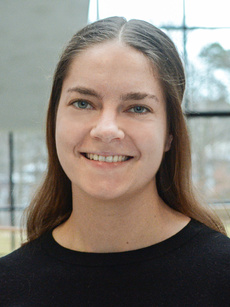
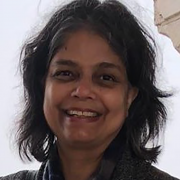
Megan Parker is a Research Fellow at the Institute of Nanotechnology (INT) within the Karlsruhe Institute of Technology (KIT), Germany, affiliated with the Cluster-Based Materials research unit. Her research specializes in synthesizing bismuth-based nanomaterials using atomically precise zero-dimensional (0D) molecular precursors. This work bridges nanomaterials engineering, inorganic cluster chemistry, and advanced materials design, focusing on bottom-up fabrication techniques for novel functional materials. Based at Hermann-von-Helmholtz-Platz 1 in Eggenstein-Leopoldshafen, she operates from room 0-318 with direct contact via phone (+49 721 608-26418) and email.
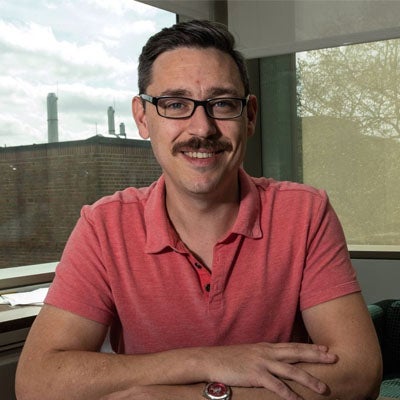
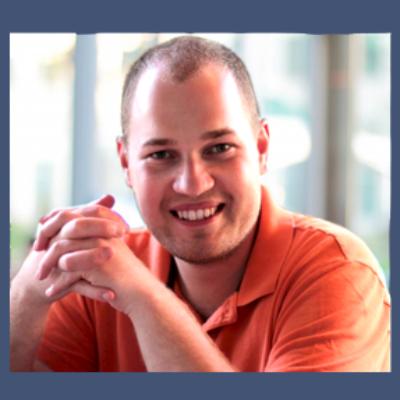
Kaden Hazzard is an Associate Professor at Rice University's Department of Physics and Astronomy. His work bridges theoretical atomic, molecular, and optical physics with quantum computing and condensed matter physics. He leads the Hazzard Research Group, focusing on quantum simulation, synthetic dimensions, and far-from-equilibrium dynamics. Education : BS in Physics & Math (2004) and PhD in Physics (2010), both from Ohio State and Cornell University. Hazzard's research explores emergent phenomena in ultracold systems, including SU(N) symmetry, quantum criticality, and topological phases. His group develops novel theoretical frameworks for quantum simulation, leveraging synthetic dimensions and Rydberg atoms to study many-body physics. Recent publications highlight advancements in quantum vacuum dynamics, SU(N) magnetism, and programmable quantum simulators. His work has been recognized with an NSF CAREER Award (2019), supporting algorithms to simulate ultracold matter and redefine low-temperature frontiers. He mentors graduate and undergraduate students at Rice and has supervised numerous alumni now in academia, industry, and quantum technology sectors. Collaborations with experimentalists at JILA, NIST, and international institutions drive his research agenda.
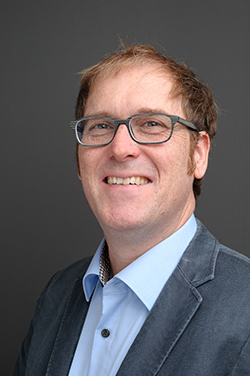
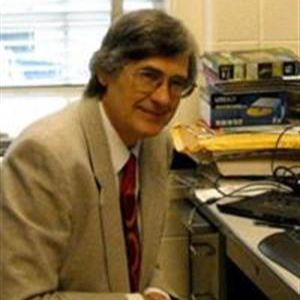
Professor Randolf Pohl is affiliated with the Johannes Gutenberg University Mainz (JGU) under the Cluster of Excellence PRISMA since 2016. His research focuses on experimental atomic physics, precision spectroscopy, and fundamental physical constants. 2016: Professor for Experimental Atomic Physics, PRISMA, JGU 2011–2016: ERC Research Group Leader, Max Planck Institute for Quantum Optics 2005–2010: Postdoctoral Researcher, Max Planck Institute for Quantum Optics 1997–2001: PhD at ETH Zurich and Paul-Scherrer-Institute His groundbreaking work on muonic atoms has led to discoveries like the proton radius puzzle , challenging Standard Model predictions. He employs laser spectroscopy to study hydrogen, deuterium, and helium nuclei, aiming to refine fundamental constants like the Rydberg constant. Scientific accolades include the ERC Starting Grant (2011), Gustav-Hertz Award (2012), Francis M. Pipkin Award (2013), and Fellow of the American Physical Society (2014). Current projects at JGU involve muonic hydrogen spectroscopy, helium-3 studies, and hydrogen atomic clock development. His work bridges quantum electrodynamics, nuclear physics, and precision measurement.
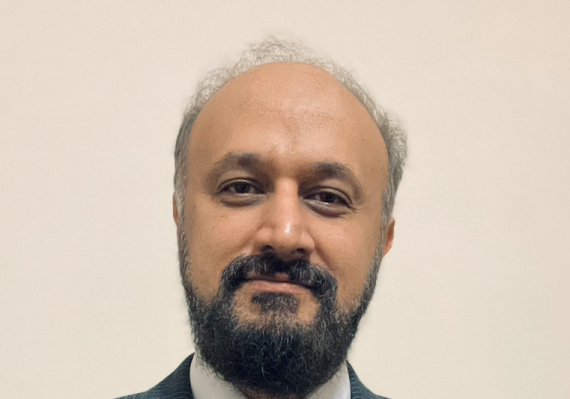
Qianyan Zhang is a Professor at the School of Chemistry and Chemical Engineering of Xiamen University since 2022, with prior roles as Associate Professor at the same institution (2012-2022). His research focuses on: Fullerene organic modification Organic synthesis of carbon nanotubes and graphene-like fragments Research Trends: Recent publications highlight his work on nitrogen/sulfur-doped helicenes, corannulene-based solar cell materials, and curved carbon structures with heptagons. These studies span organic synthesis, materials engineering, and low-pressure combustion methods. Laboratory Collaborations: Active in multidisciplinary teams at Xiamen University and Boston College, with contributions to journals like Journal of the American Chemical Society and Angewandte Chemie International Edition .
Peter Graham is a Professor of Physics at Stanford University's Department of Physics. He serves as Associate Director of the Stanford Institute for Theoretical Physics (since 2018) and Director of Undergraduate Studies in the Physics Department (since 2018). His research focuses on fundamental questions in theoretical physics beyond the Standard Model, including dark matter, cosmology, and gravitational physics. Research Focus Professor Graham investigates theoretical frameworks extending beyond the Standard Model, emphasizing: Dark matter models and detection techniques Novel experiments for discovering new physics (axions, gravitational waves) Cosmological implications of particle physics Quantum gravity and astrophysical phenomena He co-leads the Cosmic Axion Spin Precession Experiment (CASPEr) and DM Radio experiment, developing innovative methods using nuclear magnetic resonance and precision magnetometry for dark matter detection. Education Ph.D. in Physics, Stanford University (2007) A.M. in Physics, Harvard University (2002) A.B. in Physics, Harvard University (2002) Awards & Recognition Frontiers of Science Award (2024) Simons Investigator (2021) New Horizons Prize in Physics (2017) DOE Early Career Award (2014) Hellman Faculty Scholar (2013) Terman Fellowship Harvard's Sanderson Award (2002) Research Leadership Leads a large research group including 22+ doctoral students and postdoctoral researchers. Current projects span theoretical particle physics, experimental dark matter detection, and gravitational wave measurement techniques including atom interferometry applications.
Christine L. Heinecke is an Associate Professor in the Department of Chemistry at Loyola University New Orleans . Her multidisciplinary expertise spans organic, inorganic, and biological chemistry, with a focus on nanomaterials for biomedical applications and catalysis. Ph.D. in Chemistry (North Carolina State University, 2009) B.S. in Chemistry (James Madison University, 2004) Research interests include: Synthesis of nanomaterials for drug delivery and catalysis Development of gold nanoclusters and investigation of their structural dynamics Toxicological evaluation ( in vitro / in vivo ) for biomedical safety Ligand exchange mechanisms on metal clusters Her publications highlight work on gold nanocluster catalysis , polymorphism in atomic clusters , and ligand-based structural modeling , bridging synthetic chemistry and biomedical engineering. Scientific awards : Renan Bu Contreras and Monica LeDee Distinguished Professor in Chemistry Students include Nicholas Milosch , Rachel E. Dufour , and Mario A. Rodriguez , who co-authored studies on nanocluster applications. She teaches General Chemistry , Organic Chemistry , and Nanochemistry courses.
Jiří Klimeš is an Associate Professor at the Faculty of Mathematics and Physics , Charles University , Prague, where he leads the APES group in the Department of Chemical Physics and Optics . He is the Principal Investigator of the ERC-funded project APES: Accuracy and precision for molecular solids . His expertise lies at the intersection of quantum chemistry, materials science, and computational physics. Education & Career: PhD in Theoretical Chemistry, University College London (UCL) , with Prof. Angelos Michaelides Post-doctoral research, University of Vienna , with Prof. Georg Kresse Marie Skłodowska-Curie Fellow, Heyrovsky Institute of Physical Chemistry , Prague Research Interests: Development of highly-accurate, low-scaling quantum-chemical methods (RPA, GW, MP2) Non-covalent interactions and van der Waals forces in molecular solids, surfaces, and confined systems Crystal-structure prediction and polymorphism of molecular crystals Adsorption on porous and layered materials (zeolites, graphene, TMDCs) Phase transitions and freezing of confined water Machine-learned potentials for molecular interactions Scientific Awards & Funding: European Research Council (ERC) Starting Grant APES (2020–2025) Marie Skłodowska-Curie Individual Fellowship, European Commission Supervision & Teaching: Current PhD students: Kyrylo Prokofiev, Pham Ngoc Khanh Former PhD student: Jaroslav Hofierka (MSc 2017 → PhD 2019) Post-doctoral researchers: Dr. Sirous Yourdkhani (current), Dr. Marcin M. Modrzejewski, Dr. Lu Ding (former) Lecture courses: Ab-initio methods for periodic systems , Introduction to quantum mechanics , Basics of quantum mechanics tutorials Labs & Facilities: The APES group operates a dedicated high-performance computing cluster funded by the ERC project, enabling routine RPA and GW calculations on systems with hundreds of atoms.
Professor Merlyne De Souza is a Chair in Microelectronics at the University of Sheffield's School of Electrical and Electronic Engineering. Her research spans multi-disciplinary microelectronics, focusing on GaN CMOS, neuromorphic computing, RF power amplifiers, and healthcare sensors. University of Sheffield (2007-) De Montfort University (2003-2007) Research Interests: GaN-based CMOS and power devices Magnetic materials for power management Memristive neuromorphic systems Perovskite solar cells Scientific Trends: Recent publications emphasize GaN device architectures, solid electrolyte transistors for neural networks, and sustainability in semiconductor materials through graphene oxide recycling and thermoelectric composites. Awards: No specific awards mentioned in the text. Advising: Supervised 7 PhD/MPhil students including Balakrishnapillai P, Casterman D, and Rasheduzzaman M. Secondary supervision of Baltynov T and Unni V.
Oskar J. Painter is the John G. Braun Professor of Applied Physics and Professor of Physics at the California Institute of Technology. He leads the Quantum Photonics Group (QPG), which focuses on quantum photonic devices, superconducting quantum circuits, and precision optomechanical sensors. Education: B.S. from University of British Columbia (1994), M.S. (1995), and Ph.D. (2001) from Caltech. His research spans superconducting metamaterials , hybrid quantum circuits , and optomechanical systems . The QPG explores the integration of microwave-frequency acoustic phonons with superconducting qubits to enable novel quantum transducers and memory elements. They also investigate non-Markovian dissipative environments for quantum state engineering. The QPG's work includes advancements in cavity QED with atomic-like mirrors , telecom-band quantum optics , and hypersonic crystal electromechanics . Their research aims to realize scalable platforms for quantum information processing and many-body physics simulations using superconducting qubit chains.
Mukesh Singhal serves as a Professor in the Department of Electrical Engineering at the University of California Merced, where he maintains an active research program and teaching responsibilities. His contact information includes office email msinghal@ucmerced.edu and phone number (209) 228-4344. Professor Singhal's research spans critical areas in computational science with primary focus on Machine Learning, Distributed Systems, and Cybersecurity. His work pioneers optimization techniques for deep learning (including quasi-Newton methods and cubic regularization), Byzantine fault-tolerant protocols, and adversarial defense mechanisms in artificial intelligence. He has developed significant contributions to secure distributed systems, machine learning interpretability, and applications in agricultural technology such as irrigation efficiency modeling. His interdisciplinary approach bridges theoretical computer science with practical engineering solutions across multiple domains. Analysis of his 2022-2025 publications reveals three dominant research trajectories: (1) Fundamental advances in optimization for deep learning (e.g., Symmetric Rank-One Quasi-Newton and Quasi-Adam), (2) Breakthroughs in Byzantine agreement protocols achieving optimal communication efficiency (e.g., Slim-ABC and Prioritized-MVBA), and (3) Cross-domain applications including adversarial defense in computer vision and precision agriculture. His work consistently emphasizes algorithmic efficiency, security guarantees, and real-world applicability, with increasing focus on environmental sustainability through agricultural technology. While specific advising records and grant details remain unspecified in available sources, Professor Singhal's extensive publication record across top venues indicates active leadership in multiple collaborative research projects. His work shows no indication of laboratory-specific infrastructure but demonstrates strong engagement with interdisciplinary teams through co-authored publications spanning computer vision, distributed systems, and agricultural informatics. Current research directions appear to be converging toward secure, efficient AI systems with tangible societal impact in cybersecurity and sustainable resource management.
Dr. Alexander Spokoyny is a Professor in the Department of Chemistry and Biochemistry at the University of California, Los Angeles (UCLA), specializing in Inorganic Chemistry, Nanoscience, and Bioconjugation. His research bridges organometallic chemistry, materials science, and systems biology through innovative boron cluster chemistry and molecular design. Fields of Interest: Organometallic Chemistry, Inorganic Chemistry, Nanoscience, Materials Science, Bioconjugation, Boron Cluster Chemistry Spokoyny’s work focuses on synthesizing atomically precise hybrid nanomaterials and developing organometallic reagents for bioconjugation. His recent studies explore charge transport in doped polymers, polaron dynamics in graphene nanoribbons, and boron cluster-based ionophores for ion sensing and medical applications. His 15 most recent publications highlight interdisciplinary trends in materials design, including semiconductor doping, bioconjugation strategies, and boron cluster functionalization. These works span computational modeling, electrochemical synthesis, and experimental validation of novel nanomaterials and reagents. Scientific Recognition: NSF CAREER Award (2019) for phosphorescent OLED materials using carborane ligands While no direct student list is provided, Spokoyny actively mentors through undergraduate research programs and contributes to teaching initiatives. His collaborations with nanotechnology and biochemistry groups underscore his role in advancing synthetic methods for biomedical and electronic applications.
Prof. Vladimír Kellö serves as a Professor at the Department of Physical and Theoretical Chemistry within the Faculty of Natural Sciences, Comenius University in Bratislava. His office is located in room CH1-325 with contact email vladimir.kello@uniba.sk and telephone +421-2-90149-9553. His research spans quantum chemistry with specialized focus on ab initio calculations, relativistic effects, electron correlation, nuclear quadrupole moments, and molecular electrical properties. He has pioneered methodologies for accurate prediction of molecular behavior through diagrammatic many-body perturbation theory and relativistic quantum mechanical frameworks. Analysis of his publication history reveals consistent innovation in relativistic quantum chemistry since the 1980s, progressing from foundational correlation energy calculations to precise determination of nuclear properties and molecular spectroscopy applications. His work demonstrates systematic integration of relativistic corrections with high-accuracy electron correlation treatments. Prof. Kellö currently leads significant research initiatives including APVV-15-0105 on non-covalent interactions in complex systems and VEGA 1/0777/19 for reference calculations of chemical reactivity and molecular properties, bridging theoretical models with experimental validation.
Krzysztof Szalewicz is the Richard B. Murray Professor of Physics & Astronomy at the University of Delaware's College of Arts & Sciences. His research focuses on theoretical and computational studies of atomic, molecular, and chemical systems, with emphasis on intermolecular forces, molecular simulations, and first-principles-based predictions of molecular properties. He joined UD in 1988 after earning his MS (1973), PhD (1977), and DSc (1984) from the University of Warsaw. His research interests span intermolecular interactions, rovibrational spectra, molecular collisions, and predictions of molecular crystal structures. He has pioneered methods like symmetry-adapted perturbation theory (SAPT) for calculating intermolecular energies and developed flexible-monomer potentials for liquids and solids. His work bridges theoretical chemistry and experimental physics, with applications ranging from planetary atmospheres to pharmaceutical crystal engineering. Key achievements include receiving the 2014 Benjamin Franklin Medal in Physics for contributions to molecular physics. His lab has advanced computational tools like the SAPT2016 program and autoPES package for automating potential energy surface generation. Recent work emphasizes precision metrology of fluid properties and understanding quantum effects in helium clusters. Notable grants include funding for computer clusters supporting crystal structure predictions. He advises doctoral students in theoretical chemistry and collaborates internationally on topics like water's thermophysical properties and exotic molecule dynamics. Szalewicz leads the Theoretical Chemistry group at UD, contributing to initiatives like the sixth blind test of crystal structure prediction methods. His lab integrates high-performance computing with quantum mechanical models to address challenges in materials science and astrochemistry.
Vitaly Kresin is Professor of Physics and Astronomy at the University of Southern California, where he directs research on nanoparticles, size-selected atomic/molecular nanoclusters, and quantum-fluid nanodroplets. His laboratory investigates fundamental properties of finite quantum systems using precision beam spectroscopy techniques. Research emphases include: Formation and characterization of metal nanoclusters Superfluid helium nanodroplets as cryogenic matrices Electric and magnetic properties of free clusters Dynamics of water clusters and solvation processes Honors include APS Fellowship and the PhD Mentoring Award. He has published over 100 peer-reviewed articles on topics spanning cluster plasmonics, electron attachment dynamics, and nanodroplet behavior.
Tamer Kahveci is a Professor and Associate Chair of Academic Affairs in the Department of Computer and Information Science and Engineering at the University of Florida. He holds a Ph.D. in Computer Science from the University of California, Santa Barbara (2004). His research focuses on bioinformatics, with contributions to biological network analysis, computational genomics, and quantum computing applications in biology. His work includes developing algorithms for sequence alignment, protein structure indexing, and motif detection in complex systems. Affiliations: Bioinformatics Lab, University of Florida. Education: Ph.D. in Computer Science, UC Santa Barbara (2004). Research Interests: Bioinformatics, computational biology, network biology, quantum computing for biological data, and systems pharmacology. His methods address challenges in genomic data analysis, drug discovery, and biological network modeling. Publications Trends: Recent work emphasizes quantum algorithms for bioinformatics (e.g., QOMIC, ATOM), drug interaction prediction (PartialFibers), and multilayer network analysis (DANTE). Themes include integrating genomic and clinical data for disease modeling and developing scalable solutions for high-dimensional biological datasets. Awards: NSF Career Award (2009), ACM-BCB Honorary Best Paper (2011), BiCoB Best Paper (2018). Service: Served as PC co-chair for ACM BCB (2012, 2017), member of ACM SIGBIO governing board, and editorial roles in journals like IEEE/ACM Transactions on Computational Biology and Bioinformatics. Active in organizing computational biology workshops and conferences. Labs/Teams: Leads the Bioinformatics Lab, focusing on interdisciplinary projects at the intersection of computer science and life sciences.