John Yukich is an Associate Professor of Physics at Davidson College, where he teaches courses ranging from introductory classes to advanced theoretical and experimental physics. His research spans atomic, molecular, and optical (AMO) physics and biophysics, involving hands-on experimental work with lasers, optics, and ultra-high vacuum systems. Ph.D. from University of Virginia B.S. from Kenyon College In AMO physics, Yukich conducts fundamental spectroscopy experiments on negative ions, collaborating with institutions like Denison University and Bard College. In biophysics, he investigates physical properties of Chlamydomonas reinhardtii algae and Nephila clavipes spider silk, mentoring students in both areas. He emphasizes mathematical rigor in advanced courses and engages non-science majors through general-education offerings.
Seth Aubin is a Professor of Physics at the College of William & Mary, affiliated with the College of Arts & Sciences. His research focuses on experimental atomic, molecular, and optical physics, with emphases on precision measurements and quantum phenomena. Key projects include developing atom chip technologies for trapping ultracold atoms, Rydberg atom-based sensors for charged particle diagnostics, and francium spectroscopy for weak interaction studies. Education: License de Physique (ENS Paris/MIP), 1994 B.Sc. in Physics, Yale University, 1995 Ph.D. in Physics, SUNY Stony Brook, 2003 Research Themes: Quantum Trapping Techniques: Innovations in AC Zeeman atom chip traps and RF microtraps to suppress potential roughness Rydberg Atom Sensors: Pioneering applications in electron beam profiling and electromagnetic field imaging Franium Spectroscopy: Collaborative work on parity-violation measurements and isotope shift analyses Recent Article Trends: Recent work emphasizes practical implementations of quantum sensors (e.g., charged particle beam diagnostics) and foundational trapping technology advancements. Over 30 peer-reviewed publications since 2018 reflect sustained contributions to atom chip systems and precision measurements. Awards: American Physical Society Fellow (APS Fellow) Grants & Collaborations: Lead PI on atom chip-based interferometry projects Contributing member to the FrPNC collaboration at TRIUMF (atomic parity violation studies) Developed hybrid optical dipole traps for magnetometry applications Labs & Infrastructure: Manages state-of-the-art atomic physics labs at W&M, including ultrahigh-vacuum systems for francium trapping and laser stabilization setups. Active in developing microwave/radio-frequency atom chip platforms for next-generation quantum sensors.
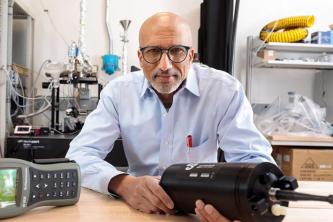
Supratik Guha is a Professor at the Pritzker School of Molecular Engineering and Senior Advisor to Argonne National Laboratory's Physical Sciences and Engineering directorate. His work bridges industrial R&D with academic and national lab research, focusing on quantum computing , semiconductor materials , and sensor networks for water and soil monitoring. Guha leads Argonne’s quantum information science strategy and serves as Faculty Director for the University of Chicago Center in Delhi. Education: PhD in Materials Science (USC, 1991), BTech in Engineering Physics (IIT Kharagpur, 1985) Research interests span multiple domains: Quantum technologies focusing on erbium-doped oxides for quantum memory and quantum interconnects Sensor networks for soil and water quality monitoring using cyberphysical systems Nanofabrication techniques including controlled spalling for heterogeneous material integration Advanced memory technologies exploring ferroelectric and optically addressable memory at atomic scales Scientific awards include: Election to National Academy of Engineering (2015) APS Prize for Industrial Applications of Physics (2015) Vannevar Bush Faculty Fellow (2018) Fellow of Materials Research Society and American Physical Society IBM Corporate Award (2013) Advising notable students like Manish Kumar Singh (co-founder memQ ), Cheng Ji (now at Intel), and Vamsi Nittala (now at Micron Technology). His group contributes to major DOE , NSF , and USDA funded projects including: Q-NEXT - DOE National Quantum Information Center AIFARMS - NSF/USDA AI for Agriculture Institute Thoreau Project - Geospatial sensor networks Labs and teams operate across University of Chicago and Argonne National Lab , with facilities for molecular beam epitaxy , nanofabrication , and optical/electrical characterization . The group has spawned startups like memQ (quantum networking) and K1 Semiconductors (wide-bandgap material transfer).
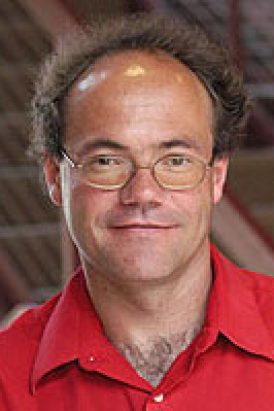
Alexey Gorshkov is an Adjunct Professor at the University of Maryland (UMD) affiliated with the Joint Quantum Institute (JQI) and the Quantum Information and Computer Science Laboratory (QuICS). His primary academic role is in theoretical physics, focusing on quantum optics, quantum information science, and condensed matter physics. He leads a research group exploring quantum magnetism with alkaline-earth atoms, driven-dissipative systems, topological matter, and strongly interacting photons. His work bridges AMO (atomic, molecular, and optical) systems with high-energy and condensed matter physics, emphasizing quantum simulation and novel quantum technologies like precise clocks and quantum computers. Education details are not explicitly listed, but his research collaborations with institutions like JQI and UMD suggest advanced academic training in theoretical physics. His research interests revolve around understanding and controlling quantum many-body systems, particularly in far-from-equilibrium scenarios, entanglement dynamics, and dissipation effects. He has contributed to studies on Rydberg atoms, quantum routing protocols, and error mitigation in quantum simulators. Recent articles highlight his work on quantum protocols for verifying speedups, time-independent information flow, and entanglement dynamics. His group's achievements include demonstrating one-dimensional anyons and developing methods for correlated noise estimation with quantum sensors. Awards and grants are not explicitly mentioned in the provided text, but his prolific publication record indicates sustained research impact. Labs and teams associated with him include the JQI and QuICS, where he collaborates on experimental and theoretical projects. Graduate student and postdoc positions are available in his group, focusing on areas like quantum magnetism and topological systems. His work often involves close ties with experimental groups, emphasizing practical applications of theoretical breakthroughs.
Jungsang Kim is the Schiciano Family Distinguished Professor of Electrical and Computer Engineering and Professor of Physics at Duke University. He serves as Associate Director of the Duke Quantum Center and leads the Multifunctional Integrated Systems Technology group. Quantum Computing with Trapped Ions Quantum Information Science Photonic Device Development Quantum Communication Networks His research focuses on scalable quantum information processors using trapped atomic ions and advanced photonic technologies. Key innovations include microfabricated ion traps, optical MEMS, and cryogenic systems for quantum integration. Recent publications highlight trapped ion quantum simulation, high-fidelity gate design, and photonic error mitigation. His group develops practical quantum hardware and co-founded IonQ, the first publicly traded pure-play quantum computing company. Fellow, American Physics Society (2021) Stansell Family Distinguished Research Award (2016) Fellow, National Academy of Inventors Fellow, Optica (formerly OSA) Kim's work bridges quantum physics and engineering, with over 80 patents and leadership in Duke's quantum computing initiatives. He recently stepped down as IonQ's CTO while maintaining active research and strategic roles at Duke.
Georg Raithel is a Professor in the Department of Physics at the University of Michigan, Ann Arbor, where he has been a faculty member since 1997 following postdoctoral research at NIST as an Alexander von Humboldt Fellow. His research focuses on experimental atomic, molecular, and optical physics, specializing in Rydberg atom systems for quantum sensing and precision measurement applications. His academic background includes: Habilitation, University of Munich, Germany (1995) Ph.D., University of Munich, Germany (1990) Diploma, University of Munich, Germany (1987) Raithel's work centers on Rydberg atoms and their applications in quantum sensing, precision spectroscopy, and quantum information. His group investigates electromagnetically induced transparency in vapor cells, atom interferometry, ultracold plasmas, and Rydberg-atom-ion molecules. Recent breakthroughs include tractor atom interferometry for rotation sensing and SI-traceable electric field probes, bridging fundamental physics with practical quantum technologies. His publication trends show increasing focus on applied quantum systems, particularly Rydberg-atom-based sensors for electromagnetic field measurement, quantum communication protocols, and precision metrology devices. This evolution reflects a strategic shift from fundamental Rydberg physics toward engineered quantum solutions for real-world measurement challenges. Major scientific recognitions include: Fellow of the American Physical Society Alexander von Humboldt Foundation Fellowship Raithel has mentored approximately thirty Ph.D. students who now hold positions across academia, industry, and government laboratories. His research has been supported by sustained funding from the National Science Foundation and Department of Energy, enabling development of advanced laser systems for cold atom manipulation and quantum control. The Raithel laboratory, housed in Homer A. Neal Laboratory (rooms SB149, SB283, SB290), maintains multiple experimental setups for laser cooling, optical trapping, and vapor-cell spectroscopy. His group actively collaborates with industry through Rydberg Technologies Inc., which he co-founded to commercialize atom-based sensing technology.
David Allcock is an Assistant Professor in the Department of Physics at the University of Oregon, part of the College of Arts and Sciences. His research focuses on ion trapping, quantum computing, and hybrid quantum systems, with an emphasis on manipulating atomic and molecular systems using electric and magnetic fields for quantum information applications. He leads the Ion Trapping Lab at UO, where he develops scalable quantum technologies and open-source control systems like ARTIQ and Sinara. His work bridges experimental physics with engineering, addressing challenges in qubit control, error mitigation, and large-scale quantum computer design. Education: MPhys from the University of Oxford (2007), D.Phil. in Physics from Oxford (2012). Prior to UO, he was a Lindemann Fellow at the National Institute of Standards and Technology (NIST) in Boulder, CO. His research includes innovations in trapped-ion qubit control, including laser-free entangling gates, scalable architectures, and applications in quantum sensing and dark matter detection. Key research themes include metastable qubit systems, photon scattering error mitigation, and the integration of superconducting detectors for state readout. He collaborates on open-source hardware-software stacks for quantum experiments and mentors students in quantum engineering through programs like the Quantum Technology Master’s Internship. Current projects explore hybrid quantum-classical interfaces and ultra-stable ion trap fabrication. His lab’s contributions span theoretical and experimental domains, with recent advances in geometric phase gates, microwave-driven control, and error-resilient qubit operations. The group also engages in interdisciplinary work linking quantum computing with precision measurement, such as SPUD (SPectroscopy for Ultralight Dark matter) and bosonic sensing tools.
Christoph F. Schmidt is the Hertha Sponer Distinguished Professor of Physics at Duke University with cross-appointments in the Thomas Lord Department of Mechanical Engineering and Materials Science, Biology, and Biomedical Engineering. He serves as Co-Director of the Duke Materials Initiative and leads an active research program at the intersection of physics and biology. His educational background includes a D.R. from the Technical University of Munich (Germany) in 1988. Schmidt has established himself as a leading researcher in biophysics through decades of innovative work. Professor Schmidt's research spans multiple scales of biological organization, from single molecules to whole organisms. His lab investigates cellular mechanics using advanced techniques including optical trapping, atomic force microscopy, and microrheology. A significant innovation from his group involves single-walled carbon nanotubes for high-bandwidth intracellular tracking. Current research focuses on cardiomyocyte mechanics, Drosophila tissue dynamics, and computational analysis of complex biological systems. His work on motor proteins like Eg5 and ncd has provided fundamental insights into cellular division mechanics. His recent publications (2021-2025) demonstrate increasing integration of computational approaches with experimental biophysics, particularly in analyzing cardiac tissue mechanics and Drosophila sensory systems. The work shows progression from fundamental biophysical measurements toward applications in understanding disease mechanisms and biological function. Professor Schmidt teaches several courses including PHYSICS 995 (Graduate Training Internship), PHYSICS 493 (Research Independent Study), PHYSICS 415 (Biophysics II), PHYSICS 174 (Introduction to Frontiers of Biophysics), and BIOLOGY 425 (Biophysics II). He has successfully mentored numerous graduate students to completion, including recent PhD graduates Dr. Mingru Li and Dr. Xiaoxuan Jian. The Schmidt Lab, part of Duke's Physics Department and the Duke Soft Matter Center, maintains state-of-the-art equipment for optical trapping, atomic force microscopy, and advanced light microscopy. The lab participates in the Triangle Soft Matter Workshop, fostering collaborations with researchers from Duke, UNC Chapel Hill, and NC State University. Current research directions include mechanical responses of suspended cells, tracking non-equilibrium cellular fluctuations, nuclear mechanics, and bacterial membrane mechanics under turgor pressure.
University of Illinois Urbana-ChampaignUnited States
Professor Brian Leeds DeMarco is a leading academic in the Department of Physics at the University of Illinois Urbana-Champaign (UIUC), serving as the IQUIST Director and Bardeen Faculty Scholar. He specializes in Atomic, Molecular, and Optical Physics, with a focus on quantum simulation using ultracold atoms in optical lattices to address problems in condensed matter physics. His research has led to groundbreaking discoveries, including the first quantum-degenerate Fermi gas and three-dimensional Anderson localization of matter, earning him prestigious awards like the NSF CAREER Award and Sloan Fellowship. DeMarco holds a B.A. in Physics from SUNY Geneseo (1996) and a Ph.D. from the University of Colorado Boulder (2001). His postdoctoral work at NIST with David Wineland advanced quantum computing with trapped ions. At UIUC since 2003, he has held roles such as Associate Head for Undergraduate Programs and currently chairs NASA's Fundamental Physical Sciences Standing Review Board. His research explores quantum simulation, quantum computing architectures, and ultracold matter. Notable achievements include identifying phase-slip crossover in optical lattices and pioneering 3D Anderson localization. He has published over 30 high-impact articles, with recent work focusing on quantum simulators and hybrid quantum systems. Awards: APS Fellow, University of Illinois Scholar, NASA Review Board Chair, Defense Sciences Study Group member. Grants: NSF, ONR, Sloan Foundation support for quantum simulation and ultracold atom research. DeMarco leads the DeMarco Group, advancing quantum technologies and training students in experimental physics. His lab’s work on quantum testbeds and trapped ion processors positions him at the forefront of quantum information science.
David Goldhaber-Gordon is a Professor in the Department of Physics at Stanford University, specializing in nanoscale electron behavior and quantum effects. His research spans nanofabrication, materials growth, low-temperature measurements, and scanning probe techniques, focusing on materials like graphene, carbon nanotubes, and topological insulators. Harvard AB in Physics (1994) Harvard AM in History of Science (1994) MIT PhD in Physics (1999) His work explores electron organization and flow in nanoscale systems, emphasizing quantum effects and interactions. Research areas include twisted bilayer graphene, helical trilayer platforms, and topological insulator applications for quantum devices and energy technologies. Recent publications focus on strain effects in twisted graphene, moiré superlattice engineering, and quantum anomalous Hall integration. Themes include topological phases, correlated insulators, and metrology advancements. Co-founder and Director, Center for Probing the Nanoscale (NSF Center) Junior Fellow, Harvard Society of Fellows He teaches advanced physics labs, independent research, and dissertation courses at Stanford. His group collaborates with materials scientists, engineers, and chemists to develop novel electronic applications.
Jiwoong Park is Professor of Chemistry and Chair of the Department of Chemistry at the University of Chicago, and simultaneously Professor of Molecular Engineering in the Pritzker School of Molecular Engineering. His interdisciplinary research group, the Park Group, is jointly affiliated with the James Franck Institute and the Materials Research Science and Engineering Center (MRSEC) at UChicago, and operates from the Gordon Center for Integrative Science. Education & Training Ph.D., University of California, Berkeley (2003) B.S., Seoul National University (1996) Junior Fellow, Rowland Institute, Harvard University (2003–2006) Assistant → Associate Professor, Department of Chemistry and Chemical Biology, Cornell University (2006–2016) Research Interests Park’s research centers on the science and technology of precisely engineered nanomaterials, particularly atomically-thin two-dimensional (2D) crystals and van der Waals solids. Spanning chemistry, physics, materials science and electrical engineering, his group develops novel synthetic, imaging and characterization techniques to uncover new physical phenomena and translate them into scalable device technologies. Key thrusts include growth of wafer-scale molecular crystals, optical and transport spectroscopy of 2D semiconductors, mechanical behavior of polycrystalline nanomembranes, and integration of these materials into photonic, electronic and energy-harvesting devices. Scientific Awards Elected Fellow of the American Physical Society (2022) – “for the development of synthetic, imaging, and characterization techniques of atomically thin materials and the discovery of novel properties of van der Waals solids.” Clarivate Highly Cited Researcher (2023) – recognition for multiple papers ranking in the global top 1% by citations in Materials Science and Chemistry. Group & Collaborations The Park Group is an interdisciplinary team of postdocs, graduate researchers and undergraduates housed in the Gordon Center for Integrative Science. The group actively collaborates with colleagues across the Department of Chemistry, Department of Physics, and the Pritzker School of Molecular Engineering, leveraging shared facilities at the James Franck Institute and MRSEC to push the frontiers of 2D material science.
Julia A. Mundy is the John L. Loeb Associate Professor of the Natural Sciences and Engineering and Applied Sciences at Harvard University. Her research focuses on designing quantum materials at the atomic scale using molecular-beam epitaxy (MBE) to synthesize metastable thin films. She leads the Mundy Group, which explores superconductors, frustrated magnets, and oxide interfaces for quantum and energy applications. Her work bridges materials synthesis, characterization, and fundamental physics. Affiliations: Harvard University, School of Engineering and Applied Sciences, Applied Physics Department Labs: Mundy Group (LISE 7th floor) Research interests include MBE growth of novel oxides, thin film superconductors, and 2D electronic systems. She has pioneered methods for creating room-temperature multiferroics and discovered superconductivity in layered nickelates. Her group uses advanced tools like aberration-corrected electron microscopy and synchrotron-based spectroscopy. Key achievements include the 2024 Moore Inventor Fellowship, NSF CAREER Award, and Packard Fellowship. Her work on transparent superconductors and fluoride-ion battery materials highlights interdisciplinary impact. Notable Grants: DOE Early Career Award, NSF MRI funding for LEEM/PEEM microscopy Team: 15+ current members including graduate students, postdocs, and undergraduates
State University of New York at BuffaloUnited States
Jun Liu is an Assistant Professor in the Department of Mechanical and Aerospace Engineering at the School of Engineering and Applied Sciences, University at Buffalo. His research focuses on advanced energy materials, nano/micro-mechanics, and self-powered systems, with applications in triboelectric energy harvesting and scanning probe microscopy. Education: PhD, Materials Engineering, University of Alberta (2018) MS, Materials Science, Shanghai University (2015) BE, Materials Science and Engineering, Nanchang University (2012) Research Interests: Development of tribovoltaic and triboelectric systems for self-powered electronics Mechanical energy harvesting via dynamic heterojunctions and Schottky contacts 3D-printed hydrogel structures for energy absorption and flexible electronics Nanoscale characterization using atomic force microscopy Design of nanocomposite sensors and catalytic materials Publication Trends: His work emphasizes triboelectricity, nanoscale energy conversion, and sustainable materials. Recent articles explore bionic tactile sensing, tunable hydrogels, and quantum dynamics in sliding interfaces. Awards: SONY Faculty Innovation Award (2021) Nature Springer MINE Young Scientist Award (2020) International Contest of Applications in Nano/Micro Technology Prize (2013) Laboratory: Advanced Energy Materials and Nanomechanics Lab at University at Buffalo.
Dr. Longji Cui is an Assistant Professor in the Thermo Fluid Sciences, Materials, and Micro/Nanoscale disciplines at the University of Colorado Boulder, affiliated with the Department of Mechanical Engineering within the College of Engineering and Applied Science. His laboratory focuses on high-precision instrumentation and computational techniques to explore energy transport, conversion, and dissipation at extreme scales, including scanning thermal microscopy, picowatt-resolution sensors, and nanophotonics. Lab Location: ECME 1B66F / ECME 108 Office Location: ECME 267B Research Interests: Dr. Cui's work spans thermal energy sciences, ultrahigh-resolution sensing, scanning probe microscopy, nano-optics, and quantum engineering. His interdisciplinary projects address critical challenges in sustainable energy systems, next-generation microelectronics, and advanced sensor technologies for high-performance applications. Notable contributions include innovations in thermophotovoltaic systems, molecular-scale thermal transport, and plasmonic light emission mechanisms. Recent publications emphasize near-field thermal radiation, quantized thermal transport in single-atom junctions, and enhanced energy conversion through nanoscale engineering. These studies bridge fundamental physics with practical applications in renewable energy and nanotechnology. Awards: 2025 CEAS Innovation & Entrepreneurship Fellow 2024 ASME Rising Star Award 2023 NSF CAREER Award 2023 CU Boulder Lab Venture Challenge Award His research group collaborates across disciplines to advance instrumentation for atomic-scale thermal measurements and develop novel materials for energy applications. Ongoing efforts include optimizing thermophotovoltaic devices and exploring hot-carrier dynamics in plasmonic systems.
University of California , Santa Barbara (UCSB)United States
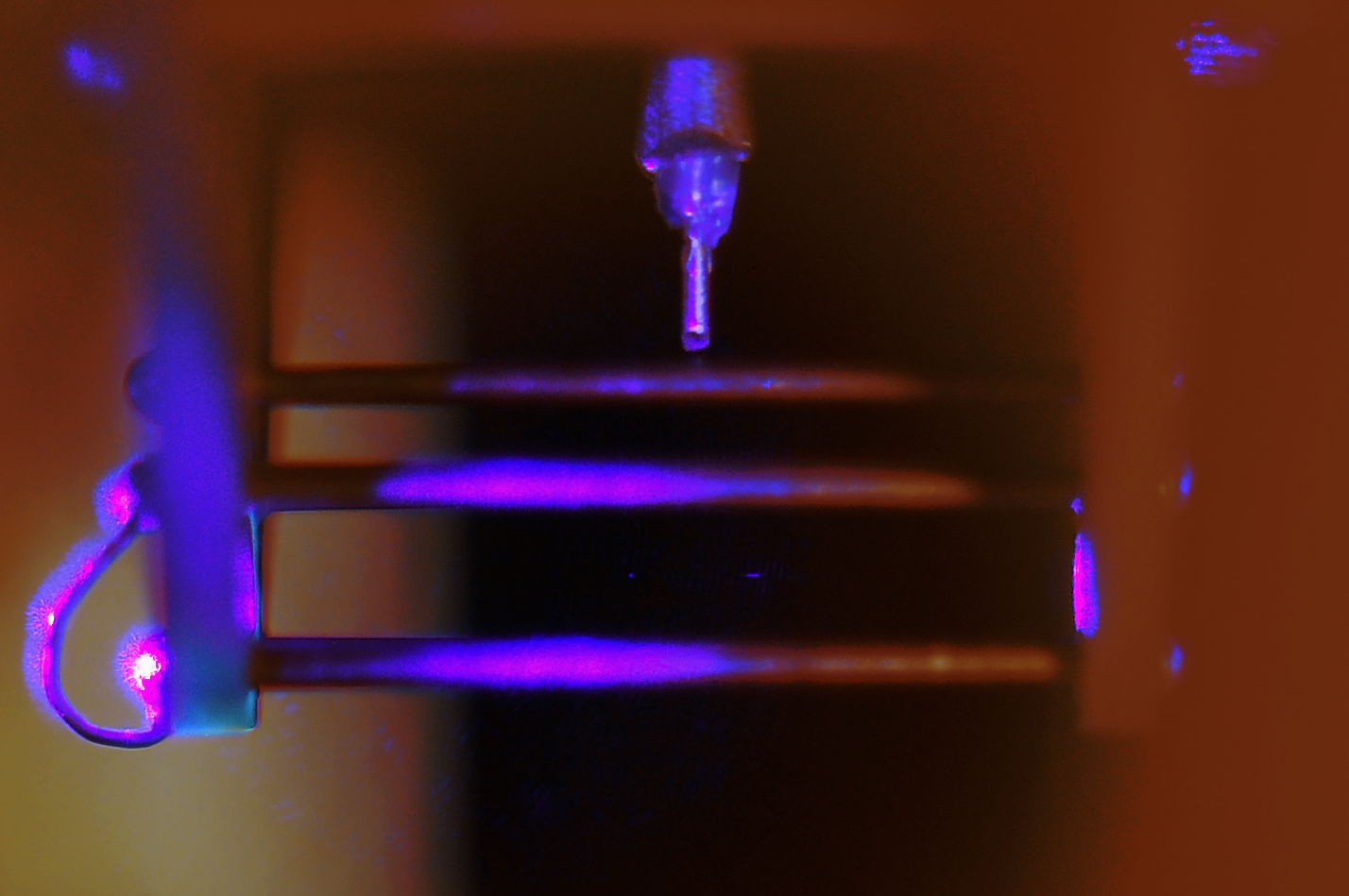
David Patterson is an Associate Professor in the Department of Physics at the University of California Santa Barbara (UCSB). His research focuses on extending atomic, molecular, and optical (AMO) physics tools to prepare polyatomic molecules in single quantum states for the first time. Key areas of interest include quantum information systems, high precision spectroscopy, parity violation in molecular spectra, and single-molecule chemical/chiral analysis. Developed single molecule inelastic recoil spectroscopy for ultraprecise analysis Created non-destructive single molecule infrared spectroscopy (2022 breakthrough) Engineered a "ping-pong" double-well ion trap for Sr+ atoms and molecular ions Collaborates with the Schlemmer group (Cologne) on Doppler-limited spectroscopy The group's work aims to achieve unprecedented resolution (2-3 orders of magnitude improvement) in polyatomic molecule spectroscopy, addressing fundamental questions in nanoanalytics.