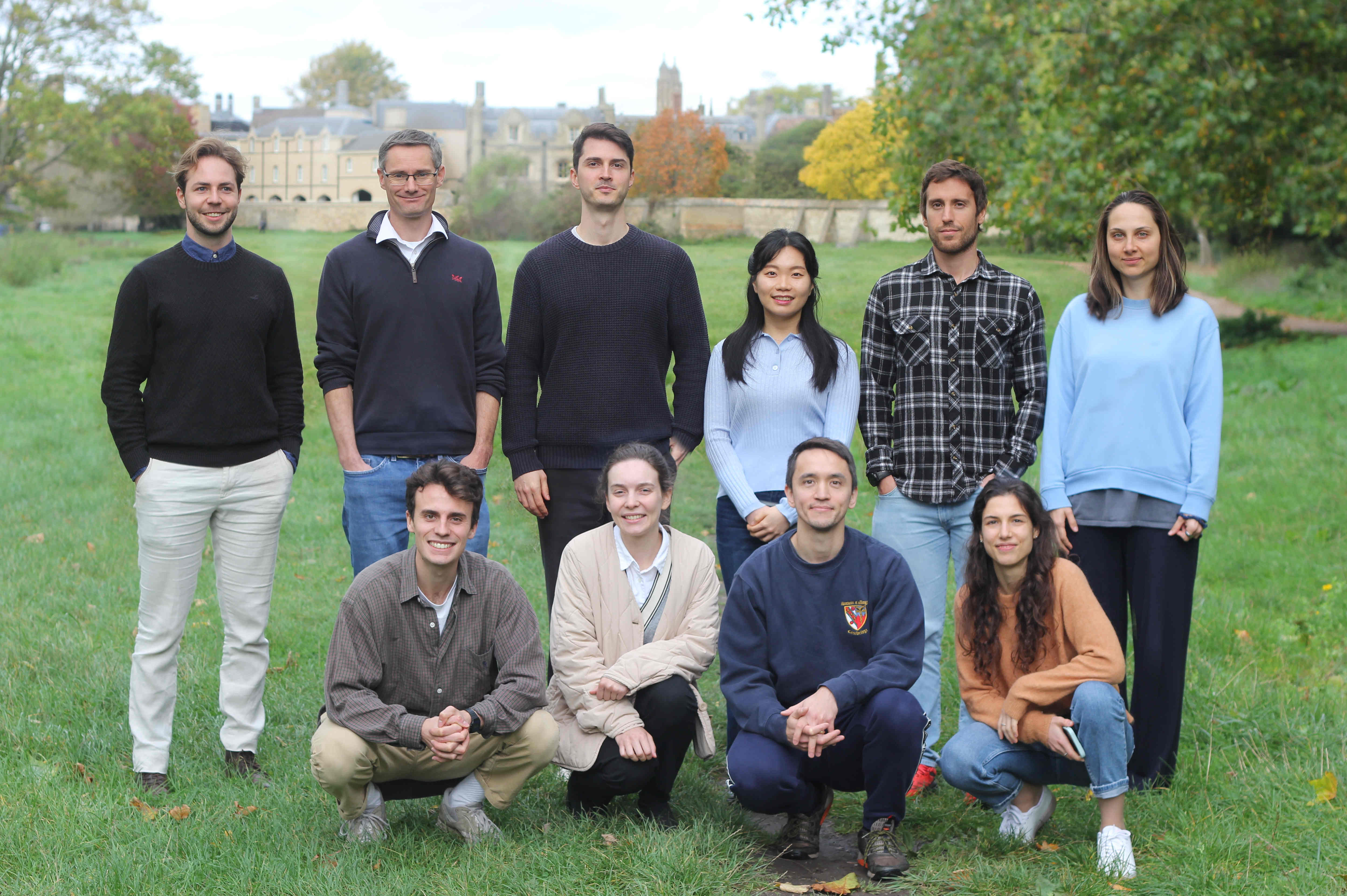
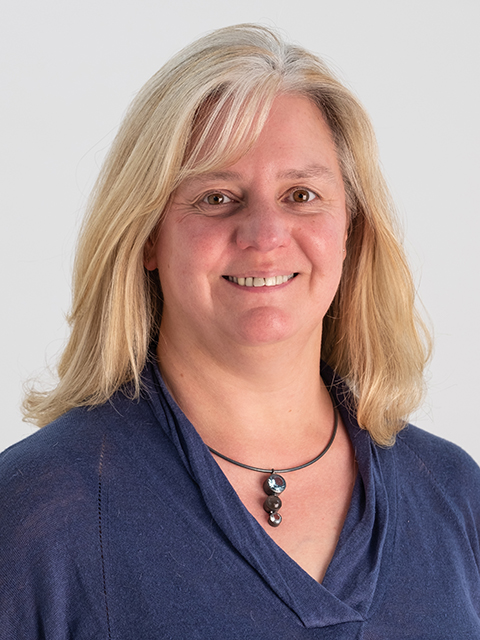
Dr Henry Moss is a Researcher at the Department of Applied Mathematics and Theoretical Physics within the School of Physical Sciences at the University of Cambridge. His work focuses on machine learning applications in climate modeling, Bayesian optimization, and Gaussian processes, bridging computational mathematics with environmental science and chemistry. His research interests include: Bayesian optimization for environmental and chemical systems Reinforcement learning in climate modeling Gaussian processes for molecular property prediction High-throughput machine learning in scientific domains Interpretable AI for coastal flooding prediction Hybrid ML-physics modeling Dr Moss's publications highlight his contributions to federated learning for climate models, sparse Gaussian process techniques, and multi-objective optimization frameworks. These works span applications in weather prediction, chemical engineering, and oceanography. Email: hwm26@cam.ac.uk
Richard E. Turner is a Professor of Machine Learning at the University of Cambridge's Department of Engineering and Research Lead for AI for Weather Prediction at the Alan Turing Institute. He serves as Cambridge Lead for the EPSRC Probabilistic AI Hub and previously held roles including Visiting Researcher at Microsoft Research, Co-Director of the AI4ER CDT, and Course Director for the Machine Learning and Machine Intelligence MPhil program. Current research focuses on probabilistic machine learning fundamentals, environmental prediction (weather/climate), and spatio-temporal modeling combining deep learning with Bayesian methods Supervised 26 PhD students (13 graduated) and 7 research assistants/associates Secured over £30M in research funding from EPSRC, Microsoft, Toyota, Google, DeepMind, Amazon, and Improbable Featured in BBC Radio 5 Live's The Naked Scientist, BBC World Service's Click, and Wired Magazine His recent publications demonstrate expertise in diffusion models for PDE simulations, Gaussian Processes for environmental applications, and Bayesian methods for spatio-temporal forecasting. Key trends include climate modeling using ML, neural PDE solvers, and scalable probabilistic inference. Awards : Cambridge Students' Union Teaching Award for Lecturing; supervised Qualcomm Innovation Fellowship winner Collaborations : Microsoft Research (AI4Science), Alan Turing Institute, EPSRC Probabilistic AI Hub Turner leads the Turner Group within Cambridge's Machine Learning Group, focusing on uncertainty-aware ML for scientific applications. Current research assistants work on topics like meta-learning, Bayesian inference, and climate science applications.
Professor Ana Mijic is a leading academic in water systems integration at Imperial College London's Department of Civil and Environmental Engineering (Faculty of Engineering). Her work focuses on developing systems tools to balance economic growth with sustainable water use, flood management, and water quality under future uncertainties. She leads high-profile projects like the EPSRC VENTURA initiative and the NERC CAMELLIA impact programme, emphasizing adaptive planning and grey/green infrastructure integration in urban systems. Education: BEng (First Class) in Civil Engineering from the University of Belgrade (Serbia), MSc (Distinction) in Hydrology for Environmental Management, and PhD in Earth Science & Engineering from Imperial College London (2013). Previously served as a teaching assistant in Fluid Mechanics and Hydrometry at Belgrade University. Research interests include whole-water system modelling, socio-hydrological interactions, and nature-based solutions for resilient urban water systems. Her work bridges academia and practice through partnerships with regulators like the UK Environment Agency and global initiatives like the IAHS HELPING programme. Awards include the Satish Dhawan Visiting Chair Professorship (2022) and the 2019 Imperial President’s Award for Excellence in Research (as part of her Hydrology team). She co-leads Imperial’s Transition to Zero Pollution (TZP) Urban Ecosystems theme and serves on editorial boards for journals like Water Security . Her contributions span over 50 peer-reviewed articles (2020–2025), focusing on integrated water management frameworks, AI-driven monitoring, and systemic approaches to urban resilience. She advocates for participatory decision-making and policy coherence in water governance.
Daria Frank is a Senior Teaching Associate in Computational Mathematics at the Department of Applied Mathematics and Theoretical Physics (DAMTP), University of Cambridge, a position held since 2023. Previously, she served as Sultan Qaboos Early-Career Research Fellow and College Lecturer in Mathematics at Corpus Christi College (2020-2023), Director of Studies in Mathematics at Selwyn College (2019-2020), and Research Associate in Fluid Mechanics at DAMTP (2015-2019). Her academic foundation includes a PhD from DAMTP, University of Cambridge (2012-2015), Part III Mathematical Tripos at Cambridge (2009-2010), Diploma in Mathematics from Friedrich-Alexander-University of Erlangen-Nuremberg (2010-2011), and undergraduate studies in Mathematics and Physics at the same institution (2006-2009). Dr. Frank's research centers on complex fluid phenomena with emphasis on buoyancy-driven environmental flows , rotating plume dynamics , and practical engineering applications . Her work investigates pollution dispersal mechanisms, tornado formation processes, and energy-efficient building systems through rigorous theoretical and experimental frameworks. Key contributions address multiphase interactions in stratified environments and vortex behavior under rotational forces, bridging fundamental fluid dynamics with real-world environmental challenges. Publication trends reveal consistent focus on geophysical and environmental fluid mechanics, with recurring themes of density stratification effects, multiphase plume behavior, and rotational influences across atmospheric, oceanic, and built environments. Her work demonstrates strong interdisciplinary connections between theoretical modeling and practical engineering solutions. Dr. Frank held the prestigious Sultan Qaboos Early-Career Research Fellowship, supporting her investigations into fluid mechanics phenomena. Her academic service includes significant teaching responsibilities as Director of Studies in Mathematics at Corpus Christi College. As Director of Studies, she oversees undergraduate mathematics education while conducting research within DAMTP's fluid dynamics community. Her Sultan Qaboos Fellowship provided dedicated research time for fluid mechanics investigations, complementing her teaching role through integration of cutting-edge research into pedagogy. Current work continues to explore environmental fluid dynamics with potential applications in climate modeling and sustainable engineering.
Sebastian Schemm is a Heisenberg Fellow at the Department of Applied Mathematics and Theoretical Physics (DAMTP), University of Cambridge, a position regarded as equivalent to a non-permanent Associate Professor. He leads research within the Atmosphere-Ocean Dynamics group and previously held an ERC Starting Grant-funded Assistant Professorship (without tenure track) at ETH Zurich. Education and Career Path PhD (2013) and MSc (2010), ETH Zurich, Switzerland Postdoctoral researcher, University of Bergen, Norway (2014–2017) Postdoctoral researcher, Laboratoire de Météorologie Dynamique, ENS Paris (2017–2018) Assistant Professor (ERC Starting Grant), ETH Zurich (2020–2024) Heisenberg Fellow, DAMTP, University of Cambridge (2025–present) Research Focus Schemm’s work centres on atmospheric and climate dynamics, spanning turbulence to planetary scales. Core themes include the physics of extratropical cyclone life cycles, jet-stream and storm-track dynamics, Rossby waves and teleconnection patterns, high-resolution atmospheric modelling, and the integration of machine-learning techniques for parameter estimation, data assimilation, and kilometre-scale global simulations. He also contributes to large-scale initiatives such as ECMWF’s WeatherGenerator. Scientific Awards and Editorial Service DFG Heisenberg Fellowship (2025) ERC Starting Grant (2020–2024) European Meteorological Society Young Researcher Medal (2019) Co-Editor, Weather and Climate Dynamics (EGU) Co-Editor, Quarterly Journal of the Royal Meteorological Society PhD Supervision & Funding He currently supervises PhD students at both Cambridge and ETH Zurich, with funding streams including the Cambridge CREATES Doctoral Training Partnership and Swiss/EU grants. Ongoing students explore reinforcement-learning parameterisations, jet-stream–storm-track relationships, mid-latitude eddy energetics, machine-learning ensemble forecasting, and Bayesian parameter estimation in LES. Active Projects EU Horizon project WeatherGenerator (led by ECMWF) PASC HiRAD-Gen : High-Resolution Atmospheric Downscaling Using Generative Models
Andrew Friend is a Researcher at the University of Cambridge , affiliated with the Department of Geography . His work focuses on terrestrial ecosystem dynamics, particularly the interplay between vegetation, carbon fluxes, and climate systems. He develops process-based computer models to simulate vegetation growth, competition, and carbon cycle responses, while also conducting experimental and field studies in collaboration with institutions like the Sainsbury Laboratory, NIAB, and Forestry England. Friend’s research integrates plant physiological knowledge with global vegetation modeling . Key interests include source-sink carbon interactions, physiological diversity in ecosystems, and the impact of climate extremes on forest resilience. His models address challenges such as drought, temperature changes, and deforestation, with applications in predicting future carbon balances and informing climate mitigation strategies. The 15 most recent articles highlight his contributions to understanding Amazon deforestation tipping points , wood formation mechanisms , and fire/disturbance impacts on ecosystems . These works span climate science , forest ecology , and biogeochemical cycles , emphasizing multi-scale approaches from cellular processes to global systems. Friend collaborates with institutions like Forestry England (Thetford Forest studies), Sainsbury Laboratory , and the C-CLEAR Doctoral Training Partnership . His work bridges computational modeling, experimental validation, and field data to advance terrestrial carbon cycle science.
Dr. Christian Onof is an Associate Professor (Reader) in Stochastic Environmental Systems at Imperial College London's Department of Civil and Environmental Engineering (Faculty of Engineering). He holds affiliations with the Centre for Systems Engineering and Innovation, Environmental and Water Resource Engineering group, and the Grantham Institute. After completing undergraduate studies in Mathematics and Engineering in Paris and Hanover, he earned his PhD at Imperial College and began his academic career as a lecturer in 1994. Education: BSc in Mathematics/Engineering (Paris/Hanover), PhD in Environmental Systems (Imperial College London) His research focuses on stochastic rainfall modeling for hydrological simulations and flood design, particularly at fine time-scales, with emphasis on climate change impact assessment and development of downscaling tools. Recent work explores statistical/machine learning approaches for convective rainfall forecasting. Teaching responsibilities include pioneering courses in Statistics (MEng Year II), Operational Research (MEng Year IV), and Stochastic Hydrology (MSc). He has taught over a dozen undergraduate modules and contributed to international collaborations, including a course at École des Ponts ParisTech via the European Athens Network. As former Course Director of the MSc in Systems Engineering and Innovation, he has actively promoted student exchange programs, establishing partnerships with universities in Melbourne, Hong Kong PolyU, Barcelona, Queensland, and California. No scientific awards or specific grants are explicitly listed, though his research contributions are notable in environmental systems engineering.
Dr. Zhifu Mi is a Professor of Climate Change Economics at the Bartlett School of Sustainable Construction , University College London. His research focuses on carbon footprint analysis, climate change economics, air pollution and health, sharing economy sustainability, and input-output modeling. He has published extensively in top journals like Nature Sustainability , Lancet , and Science Advances . Co-Editor-in-Chief, Structural Change and Economic Dynamics (2020–present) Executive Editor, Journal of Cleaner Production (2019–present) President, Chinese Economic Association (UK/Europe) Council Member, International Input-Output Association Fellow of the Royal Geographical Society His research explores: Carbon Footprints: Economic development and emission convergence in Chinese households Climate-Health Linkages: Air pollution impacts, ultra-low emission policies Sharing Economy: Sustainable societies through shared micro-mobility Policy Analysis: Synergies between environmental regulations Recent publications analyze decarbonization employment gaps, polycentric urban structures, and health-environment policy intersections. Awards include the World Sustainability Award (2018), multiple Clarivate Highly Cited Researcher honors, and UCL's Outstanding Research Supervision Award (2022). He teaches modules on construction economics and input-output analysis.
Professor Joanna Bullard is a leading academic in Physical Geography at Loughborough University, specializing in aeolian processes, climate-landscape interactions, and dust dynamics. She holds adjunct roles at Griffith University, Australia, and has served in key leadership positions including Associate Dean (Teaching) and President of the International Society for Aeolian Research. Her work integrates field observations, remote sensing, and experimental methods to study dust emissions, microplastic transport, and environmental change in polar and arid regions. Bullard has received prestigious awards such as the EGU Ralph Alger Bagnold Medal (2021) and the Philip Leverhulme Prize (2004). Education: PhD from University of Sheffield Her research focuses on Arctic ecosystems, high-latitude dust pathways, and the geomorphic impacts of climate change. Recent work explores microplastic degradation via wind abrasion and the biogeochemical role of dust in Greenland’s lakes. Bullard’s teaching innovations include augmented reality tools for geomorphology education and crowd-sourced meteorological data projects. Awards: EGU Bagnold Medal, British Society for Geomorphology Fellowship, HEA Principal Fellowship Publications emphasize dust-climate feedbacks, aeolian sediment dynamics, and interdisciplinary methodologies. She leads international collaborations on dust cycle modeling and Arctic environmental monitoring.
Elisa B Schweiger is a Senior Lecturer (equivalent to Associate Professor) in Marketing at King’s Business School, King’s College London. She specializes in retailing, AI applications in marketing, multi-sensory marketing, and pricing strategies. Her research employs behavioral experiments, field studies, and text mining. Education: PhD in Consumer Psychology from the University of Bath. She also holds a background in psychology and marketing. Research Interests: Elisa’s work focuses on retail innovation, AI-driven consumer interactions, luxury branding, and the psychological underpinnings of consumer decisions. She explores how technology (e.g., voice assistants, mixed reality) impacts customer journeys and brand relationships. Her research bridges theory and practice, addressing topics like AI ethics, retail atmospherics, and consumer risk perceptions in energy technologies. Publications: Her work appears in top journals such as the Journal of the Academy of Marketing Science , Journal of Retailing , and Journal of Business Research . Recent topics include voice assistant evaluations, AI in lateral markets, and digital retailing trends. Awards: Recipient of the Dean’s Award for Early Career Researcher of the Year (2022), Journal of Retailing Davidson Best Paper Award Runner-up, and MMA Teaching Excellence Award. Teaching & Engagement: Teaches Marketing Analytics, Retailing, and research methods in graduate and executive programs. She serves on the editorial boards of Journal of Retailing and Journal of Business Research , and reviews for top marketing journals. Labs/Teams: Active in King’s Business School’s marketing research teams, focusing on innovation in retail and AI applications.
John F. Rudge is a Professor of Geodynamics at the Bullard Laboratories, Department of Earth Sciences, University of Cambridge , and a Fellow and Dean of Trinity College. His research focuses on the dynamics of Earth's interior, including mantle convection, magma transport, and the geochemical evolution of the planet. He employs continuum mechanics, numerical analysis, and statistical methods to address questions about melt dynamics, mantle heterogeneity, and the surface expressions of geophysical processes. Education includes a mathematics undergraduate degree and a PhD in Earth Sciences and Applied Mathematics from Cambridge. He held postdoctoral positions at institutions like ETH Zürich, Yale, and Columbia University before joining Cambridge as a University Lecturer in 2010 and being promoted to Professor in 2022. Key research areas include: Transport of melts and volatiles in the mantle Evolution of Earth's interior from accretion to present Dynamic topography and inner core dynamics Publications span over two decades, with recent works addressing melt rheology, mantle mineralogy, and interdisciplinary applications in oncology. He has supervised numerous PhD students and postdocs, including David Rees Jones, Isarapong Eksinchol, and Laura Alisic. Awards include the Philip Leverhulme Prize and Geological Society President’s Award. Teaching responsibilities include courses on geophysics, magma dynamics, and supervisions in Natural Sciences at Trinity College. Research tools include finite element modeling and collaborations with computational scientists.
Dr. Alex S Clark is an Associate Professor in Quantum Technologies at the University of Bristol's School of Physics, where he serves as a Senior Lecturer and Royal Society University Research Fellow. He is a key member of the Quantum Engineering Technology Labs (QETLabs) and leads the Interfaces Work Package in the EPSRC Programme Grant 'Quantum Science with Ultracold Molecules (QSUM).' Additionally, he holds a Visiting Academic position at Imperial College London and serves as Honorary Secretary for the QQQ Group at the Institute of Physics. His research focuses on Solid State Quantum Nanophotonics, exploring the use of atoms, molecules, and solid state defects to develop quantum technologies. Dr. Clark's work spans quantum imaging, quantum sensing, and quantum information processing, with particular emphasis on creating on-demand photon sources, quantum memories, photonic quantum gates, and hybrid interfaces to link disparate quantum systems. His research integrates experimental and theoretical approaches across quantum photonics, nanophotonics, and quantum technology. Analysis of his recent publications reveals a strong trend toward practical quantum applications, particularly in quantum sensing and imaging using undetected light. His work demonstrates increasing focus on real-world applications including methane sensing, medical diagnostics, and environmental monitoring, while maintaining fundamental research in quantum optics and nanophotonics. The interdisciplinary nature of his research bridges physics, engineering, and materials science. Among his notable achievements is the prestigious Royal Society University Research Fellowship, recognizing his significant contributions to quantum technology research. His work has resulted in numerous publications and patents in quantum photonics and related fields. Dr. Clark leads multiple major research initiatives, including the Quantum Positioning, Navigation, and Timing Hub (2024-2029) and the Integrated Quantum Networks project. His research has secured substantial funding through EPSRC grants and other sources, supporting a vibrant research group focused on advancing quantum technologies from fundamental principles to practical applications. Within the Quantum Engineering Technology Labs (QETLabs), Dr. Clark's research group works at the intersection of quantum optics, nanophotonics, and quantum information science. His team develops novel photonic platforms for quantum applications, with particular expertise in quantum imaging with undetected photons, quantum sensing, and integrated quantum photonics.
Aurora Maccarone serves as an RAEng Research Fellow within the Institute of Photonics and Quantum Sciences at Heriot-Watt University's School of Engineering & Physical Sciences. Her work focuses on advanced photonics applications for challenging environments, particularly underwater and obscured conditions. Her research expertise spans: Single-photon LiDAR systems for underwater 3D imaging Photon-counting detector arrays for depth profiling Real-time reconstruction algorithms for obscurant-penetrating imaging Quantum sensing applications in marine environments Recent publications demonstrate consistent innovation in single-photon imaging techniques, with emphasis on underwater applications (2023-2024) and obscurant penetration (2022). Her work shows strong interdisciplinary connections between optical engineering, computational imaging, and environmental sensing. Key publications reveal growing impact in underwater LiDAR technology, with multiple high-citation papers on photon-efficient imaging systems. Dr. Maccarone actively supervises PhD students and has created significant research datasets. Her collaborations span international institutions, with notable contributions to sensor hardware development and computational imaging algorithms. Recent work shows increasing integration of machine learning techniques with traditional photon-counting approaches.
Moira Jardine is Professor of Astronomy at the University of St Andrews School of Physics and Astronomy, where she became the first female physics professor in 2010. Education: Ph.D. Applied Mathematics, University of St Andrews B.Sc. Astronomy and Astrophysics, University of St Andrews Research investigates stellar magnetic activity to understand planetary habitability and solar system evolution. Uses magnetic field measurements to model stellar winds, coronal X-ray emissions, and their impact on planetary atmospheres. Work supports exoplanet detection initiatives including JWST, GAIA, and WFIRST. Publications focus on stellar coronae, magnetic confinement processes, star-planet interactions, and coronal rain dynamics. Current projects model magnetic interactions in systems like AB Dor and HD 189733. Collaborates with international consortia including MagIcS and Bcool for stellar magnetic field surveys. Awards: Fellow of the Royal Society of Edinburgh and Suffrage Science Award (2019).
London School of Economics and Political Science (LSE)United Kingdom
Thomas Smith is an Associate Professor in Environmental Geography at the London School of Economics (LSE), specializing in wildland fires, tropical environmental change, and peatland management. He joined LSE in 2018 after lecturing at King’s College London and has held visiting fellowships at institutions including the National University of Singapore and Monash University Malaysia. His research focuses on biomass burning’s role in the Earth system, particularly greenhouse gas emissions from tropical peatlands and savannas. Smith’s expertise includes infrared spectroscopy, wildfire modeling, and land management decision support. He emphasizes interdisciplinary approaches to address fire emissions, agricultural practices, and their environmental impacts. Notable awards include being Highly Commended for Research Guidance & Support at the LSESU Teaching Excellence Awards 2019. His recent work involves field experiments (e.g., GAMBUT project) and citizen science initiatives to measure air pollution. Collaborative research spans global wildfire dynamics, climate change impacts, and policy interventions in Southeast Asia’s haze season. Smith contributes to both academic discourse and practical solutions for sustainable land use and climate resilience.