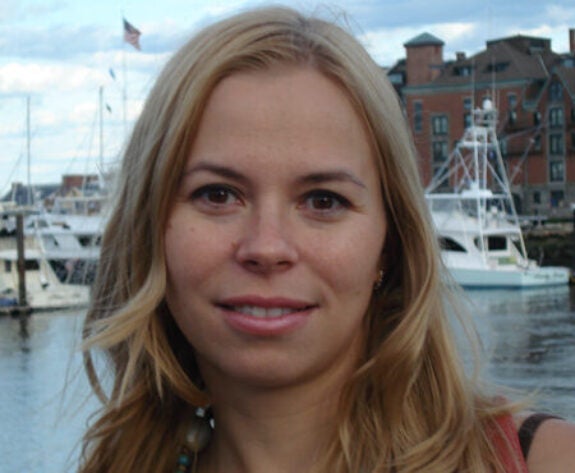
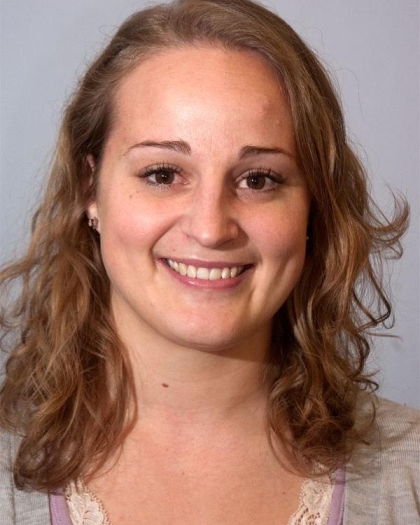
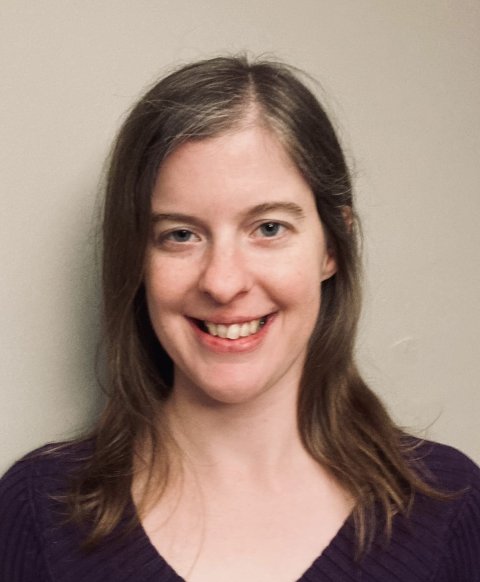
Irina Marinov is an Associate Professor in the Department of Earth and Environmental Sciences at the University of Pennsylvania. She specializes in climate science, focusing on the critical role of oceans in global climate dynamics and carbon cycling. Her research integrates Earth system models and satellite data to study phenomena such as Southern Ocean convection, phytoplankton ecology, and the impact of climate change on oceanic processes. Marinov’s research spans biogeochemical cycles, marine ecology, and climate modeling, with a particular emphasis on Southern Ocean dynamics. She explores teleconnections between tropical atmospheric systems and Southern Ocean processes, polynya variability, and the use of satellite data to understand phytoplankton biomass and carbon distribution. Her recent publications (2024-2025) highlight the Southern Ocean’s influence on multidecadal climate variability, nonlinear CO2 dynamics, and the development of the GLOBAL CLIMATE SECURITY ATLAS. These works bridge climate modeling, satellite remote sensing, and policy applications. Scientific Awards: Undergraduate Research Mentorship award First woman to be tenured in the Earth and Environmental Sciences Department at Penn
Dr. Florian Börgel is a Senior Research Scientist and leader of the Junior Research Group Large-Scale Circulation and North European Climate Variability at the Leibniz Institute for Baltic Sea Research (IOW) in Warnemünde. He holds a Dr. rer. nat. in Physical Oceanography (2020) from IOW, an M.Sc. in Engineering Physics from the University of Oldenburg (2017), and a B.Eng. from the University of Applied Sciences Münster (2014). His research focuses on large-scale ocean-atmosphere interactions, regional climate dynamics in Northern Europe and the Baltic Sea, and the application of machine learning to improve climate models and river runoff forecasting. Key areas include Atlantic Multidecadal Variability (AMV), teleconnections between the North Atlantic and regional climates, and the impacts of climate drivers on marine environments. Notable achievements include the Outstanding Early Career Scientist Award (EGU 2023) and membership in expert groups such as the UN’s World Ocean Assessment III and the CMIP7 Data Analysis Working Group. He co-leads the Baltic Earth Teleconnections Working Group, focusing on North Atlantic-Baltic Sea linkages. Awards: EGU Early Career Award (2023), Fulbright Scholarship (2015-16) Grants/Positions: IOW appointee to Deutsches Klima-Konsortium (DKK), Parental Leave (2019-2020) Labs/Teams: Leads the Large-Scale Circulation group; contributes to the Baltic Sea Model Intercomparison Project (BMIP) and Validator tool development
Stephen J. Burns is a Professor in the Department of Geosciences at the University of Massachusetts Amherst, within the College of Natural Sciences. His research centers on paleoclimatology using speleothems as high-resolution archives of continental climate change. He investigates stable isotopes and trace elements to reconstruct past precipitation and monsoon dynamics, with a focus on tropical and subtropical regions such as Mexico, Madagascar, South America, and Southeast Asia. Education: Ph.D., Duke University, 1987 (Dolomite Geochemistry) M.S., University of North Carolina (Carbonate Sedimentology) B.A., Rice University Post-11 years at University of Bern, Switzerland His research focuses on understanding climate variability on orbital to decadal timescales, especially in continental regions where data are sparse. He uses speleothems—cave deposits like stalagmites—as 'underground ice cores' to extract paleoclimate signals from oxygen and carbon isotopes. His work explores climate-culture interactions, including links between climate shifts and the decline of the Mayan civilization and Madagascar's megafauna. He has led major projects in the Yucatan, Peruvian Andes, Oman, Yemen, Brazil, and Vietnam, often in collaboration with anthropologists and international climate scientists. The recent publications reflect a strong trend in tropical paleoclimatology, with emphasis on monsoon systems, interhemispheric climate dynamics, and human-environment interactions during the Holocene and Late Pleistocene. His work frequently appears in top-tier journals such as Science , PNAS , and Geophysical Research Letters , demonstrating both methodological rigor and broad scientific impact. Scientific Awards: No awards explicitly mentioned in the text. Stephen J. Burns actively mentors students and leads interdisciplinary research teams. He has secured sustained funding for field expeditions and laboratory analyses, though specific grants are not listed. His collaborations span departments (e.g., Anthropology at UMass) and institutions (e.g., MIT, Duke, international universities). He is currently engaged in three major speleothem-based projects: (1) climate variability in the Yucatan and its link to Mayan cultural evolution, (2) environmental history of Madagascar and megafaunal extinction, and (3) climate change in Vietnam with David McGee (MIT). These efforts are supported by advanced geochemical facilities and fieldwork logistics. Labs and Research Teams: Geochemistry and Paleoclimate Laboratory at UMass Amherst (implied through research activity) Collaborative network with stable isotope labs (e.g., Cheng/Edwards lab for U-Th dating) Field teams in tropical cave systems across multiple continents Interdisciplinary group including anthropologists and climate modelers
Johann Jungclaus is a Senior Scientist and Group Leader in the Department of Climate Variability at the Max Planck Institute for Meteorology (MPI-M), Hamburg. He leads the Director's Research Group (CVR) and has been a key contributor to the development of Earth System Models such as MPI-ESM and ICON-ESM. He has coordinated MPI-M’s contributions to CMIP6 and PMIP, and is actively involved in high-resolution climate modeling using ICON-Sapphire. PhD in Physical Oceanography, Hamburg University, 1994 Diploma in Physical Oceanography, Hamburg University, 1989 His research focuses on climate variability across decadal to centennial timescales, particularly the Atlantic Meridional Overturning Circulation (AMOC) and Atlantic Multidecadal Variability (AMV). He investigates ocean-atmosphere interactions, the effects of volcanic eruptions on climate, and near-term climate predictions. His work integrates paleoclimate modeling with modern observations and high-resolution simulations to understand long-term climate evolution. His recent publications span topics such as tropical ocean mixing, Holocene climate variability, land heat uptake, and high-resolution climate modeling. The articles reflect a strong trend toward integrating observational data with advanced Earth System Models to improve climate projections and understand past climate dynamics. Johann Jungclaus has not been listed with any formal scientific awards in the provided text. He has supervised numerous PhD students and postdoctoral researchers, though specific names are not listed. He has been involved in significant research grants through international programs such as CMIP6, PMIP, and FAFMIP, and has contributed to major modeling initiatives funded by the Max Planck Society and international collaborations. He is part of the Director's Research Group within the Department of Climate Variability and contributes to the MPI-M’s modeling efforts, including the ICON and MPI-ESM frameworks. His work is closely tied to the institute’s focus on Earth System Modeling, paleoclimate simulations, and high-resolution climate dynamics.
Dr. Lea Svendsen is an Associate Professor at the Geophysical Institute , University of Bergen, Norway. She specializes in climate dynamics, with particular focus on internal climate variability across multiple timescales (interannual to multidecadal), inter-basin interactions, and climate prediction systems. Her work connects tropical and extratropical climate phenomena, particularly examining Pacific-Atlantic-Arctic linkages and their implications for global climate patterns. Education: PhD in Climate Dynamics (2016, University of Bergen) Key Collaborations: University of Bergen, Norwegian Research Center (NORCE), Universidad Complutense de Madrid Research Interests : Dr. Svendsen's work investigates: Mechanisms of internal climate variability across timescales Teleconnection patterns between tropical and high-latitude regions Inter-basin interactions (Pacific-Atlantic-Arctic) Norwegian Climate Prediction Model (NorCPM) development and application Climate services for renewable energy applications Publication Trends : Her 15 most recent publications (2021-2025) demonstrate consistent focus on: Pacific and Atlantic contributions to Arctic warming Monsoon variability and ocean-atmosphere coupling Model uncertainty quantification in climate science Climate prediction systems and reanalysis development ENSO-Atlantic interactions under changing climate Climate services applications for societal sectors Scientific Engagements include: Academic and popular science lectures on Arctic warming and climate change Media interviews about El Niño impacts and climate trends Conference presentations at Ocean Sciences Meeting, Japan Geophysical Union, SPARC General Assembly Contributions to CMIP6 DCPP decadal prediction framework
Prof. Markus Meier is a leading academic in physical oceanography and climate modeling, affiliated with the Leibniz Institute for Baltic Sea Research (IOW) and the University of Rostock. He holds a professorship at Rostock and leads the Department of Physical Oceanography at IOW. His work focuses on numerical modeling of the Baltic and Arctic Seas, climate change impacts, and biogeochemical cycles. Key roles include Head of the Oceanographic Research Unit (2006–2015) and adjunct professorships at Stockholm University (2006–2015). Education highlights include a Ph.D. in theoretical oceanography from the University of Kiel (1996) and extensive postdoctoral research at the Rossby Centre (SMHI). His research spans sea ice modeling, saltwater inflows, and hypoxia dynamics, with a focus on regional climate system interactions. Key research interests include: numerical ocean modeling, climate variability, Baltic Sea ecosystem dynamics, and deoxygenation processes. Recent studies address future climate projections, marine heatwaves, and the impact of anthropogenic and natural drivers on marine systems. Publications highlight contributions to understanding Baltic Sea oxygen depletion, Atlantic climate influences, and coupled climate system modeling. He chairs major initiatives like Baltic Earth, advancing interdisciplinary Earth system research in the region.
Elizabeth Wallace is an Assistant Professor of Coastal Geology and Climate Science at Old Dominion University's College of Sciences. She is affiliated with the Coastal Climate Hazards Lab and focuses on paleoclimatology, coastal geomorphology, and paleotempestology. Her work integrates sediment core analysis with climate models to study long-term coastal climate extremes like hurricanes and nor'easters, particularly their links to sea level rise and ecosystem impacts. Education: B.S. in Civil Engineering and Philosophy from University of Virginia (2015); Ph.D. in Paleoceanography from MIT/Woods Hole Oceanographic Institution (2020). Postdoctoral research at Rice University. Research emphasizes reconstructing historical storm activity through blue hole sediment records in the Bahamas and Caribbean, analyzing hydroclimate dynamics in the Mississippi River Basin, and developing proxy systems combining tree-ring data with coastal sediments. Her studies address climate change impacts on coastal processes and inform risk assessment strategies. Her publications span over 20 peer-reviewed articles since 2015, focusing on multi-century hurricane frequency patterns, climate variability drivers, and coastal sedimentary archives. Ongoing projects include assessing storm surge risks using integrated climatological-hydrodynamic models and refining paleohurricane reconstruction methodologies.
Dr. Alexander J. Baker is a Senior Research Scientist at the National Centre for Atmospheric Science (NCAS) and the University of Reading's Department of Meteorology. His research focuses on high-resolution climate modeling, particularly examining tropical cyclones, North Atlantic climate variability, and paleoclimate reconstruction through stable water isotopes. Senior Research Scientist, NCAS High-Resolution Climate Modelling group member Project Manager, Huracan project Co-organizer, NCAS Climate Modelling Summer School Dr. Baker's research interests span: Tropical and post-tropical cyclones Global km-scale climate model evaluation Air-sea interactions in cyclones Atmospheric circulation patterns North Atlantic climate extremes Paleoclimatology using speleothems He supervises: Lewis Grant (PhD 2025-2028): High-resolution sub-seasonal tropical cyclone predictions Elliott Sainsbury (PhD 2019-2022): Post-tropical cyclones in European extreme weather His publication record (2014-2025) reveals: Leading research in tropical cyclone modeling Expertise in global storm-resolving climate models Major contributions to understanding Atlantic Multidecadal Variability Current focus on model resolution impacts on climate simulations Interdisciplinary work combining meteorology and paleoclimatology Industry collaboration through Insurance Special Interest Group Scientific contributions: Advancing High-Resolution Climate Modelling group's research Website administrator for HRCM research group Co-organizer of influential climate seminars
Øyvind Geelmuyden Grøn is a Professor at the University of Oslo , affiliated with the Department of Physics. His research spans General Relativity , Gravitation , and Cosmology , with notable work on the ΛCDM model, cosmic inflation, and the cosmological constant. Education: Dr. Philos in Physics (1990) and Cand. Real in Meteorology (1973) from the University of Oslo His recent publications focus on cosmological tensions, gravitational theory, and interdisciplinary climate-ocean dynamics. Collaborative works with Knut Lehre Seip and Hui Wang explore teleconnections, climate cycles, and CO2-temperature relationships in paleoclimatology. Scientific Honors HM the King's Gold Medal (1988) Illustrated Science Research Award (1988) Oslo University College's Research Prize (2004) Oslo University College's Communication Award (2009) Honorary Member of the Norwegian Astronomical Society (2010) Member of the Royal Norwegian Society of Science (2005–)
Dani Jones is an Associate Research Scientist at the Cooperative Institute for Great Lakes Research (CIGLR) within the University of Michigan's School for Environment and Sustainability (SEAS). They lead the Great Lakes Artificial Intelligence Laboratory, focusing on applying machine learning and artificial intelligence to environmental challenges, particularly climate change adaptation in coastal regions. Education: Ph.D. in Atmospheric Science (Oceanography), Colorado State University (2013) M.S. in Mathematical Sciences, Georgia Southern University (2009) M.S. in Physics, University of Kentucky (2007) B.S. in Physics, Georgia Southern University (2005) Dani's research program centers on data science, machine learning, and artificial intelligence as applied to physical limnology, weather forecasting, water cycle predictions, and observing system design. Their work aims to advance societal adaptations to climate change effects, including coastal and river flooding. With a background in physical oceanography, they specialize in adjoint modeling for sensitivity analysis and unsupervised classification techniques, previously applied to the North Atlantic and Southern Ocean. Dani is establishing CIGLR's Artificial Intelligence Laboratory, leveraging the institute's observing assets, datasets, and partnerships. Analysis of Dani's 15 most recent publications reveals a strong interdisciplinary focus at the intersection of machine learning and environmental science. Their work consistently applies unsupervised classification and neural network techniques to oceanographic and climate problems, with particular emphasis on the Southern Ocean, North Atlantic, and Great Lakes regions. A notable trend is the increasing application of AI to climate adaptation challenges, alongside continued fundamental research in physical oceanography. Scientific Awards: Laws Prize, British Antarctic Survey (2021) UKRI Future Leaders Fellowship (2020-2023) Going the Extra Mile (GEM) Award, British Antarctic Survey (2020) Best Student Presentation Award, Colorado State University Research Symposium (2010) Dani has supervised undergraduate, graduate, and postdoctoral researchers across multiple institutions including Georgia Southern University, University of Cambridge, and British Antarctic Survey. Their supervision spans oceanography, physics, and mathematics, with focus on computational techniques for environmental science. They have received significant research funding including the UKRI Future Leaders Fellowship (SO-WISE project) and have been involved in numerous collaborative projects including C-STREAMS, OceanBound, and DeCAdeS. Dani is also Co-chair of the Observing System Design Capability Working Group for the Southern Ocean Observing System. Dani leads the Great Lakes Artificial Intelligence Laboratory at CIGLR, which integrates machine learning expertise with environmental observation systems. They are also affiliated with the Department of Mathematical Sciences at Georgia Southern University as Affiliate Faculty and holds an Honorary Researcher position at the British Antarctic Survey. Their work bridges computational science with practical environmental applications, particularly in climate change adaptation.
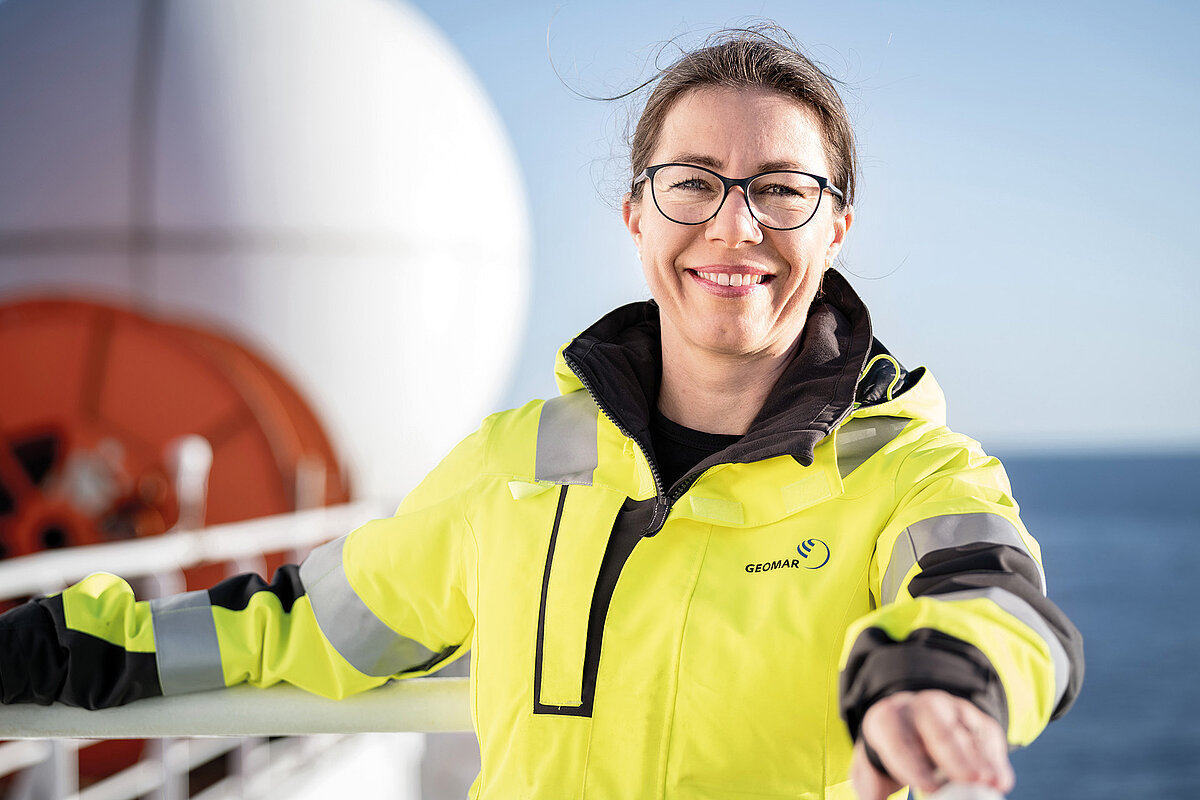
Katja Matthes serves as Director of the GEOMAR Helmholtz Centre for Ocean Research Kiel and holds a W3 Professorship in Atmospheric Physics at both GEOMAR and Kiel University. Her leadership spans multiple research areas including ocean circulation, climate dynamics, and atmospheric physics, with significant contributions to international climate research initiatives. Director of GEOMAR Helmholtz Centre for Ocean Research Kiel (since October 2020) W3 Professor at GEOMAR and Kiel University (since 2012) Head of Working Group 'Physics of the Atmosphere' Co-author of the 6th IPCC Assessment Report (2019) Member of multiple international scientific committees including POGO, EMB, and IOC-UNESCO Dr. Matthes' research focuses on the complex interactions between the atmosphere, ocean, and climate system. Her work particularly emphasizes stratosphere-troposphere-ocean modeling, climate-chemistry interactions, and the role of solar variability in climate change. She investigates decadal climate variability mechanisms and contributes to international model intercomparison projects that advance our understanding of natural and anthropogenic climate influences. Her expertise in middle atmosphere dynamics and sun-climate interactions has positioned her as a leading voice in climate science. Analysis of her recent publications reveals a strong focus on ocean-based climate solutions, with particular emphasis on carbon sequestration mechanisms, marine heatwaves, and the role of ocean circulation in climate predictability. Her work increasingly addresses policy-relevant questions about the ocean's contribution to achieving climate targets and developing sustainable ocean management strategies. The integration of physical oceanography with atmospheric science characterizes her interdisciplinary approach to understanding Earth's climate system. Co-author of the 6th IPCC Assessment Report (WG I, Chapter 2) Member of AcademiaNet (2010), recognizing excellence in female scientists Recipient of the Ernst Reuter Prize from Free University of Berlin (2004) Selected participant in Helmholtz Mentoring Program for Women (2009-2010) Prize for young scientists from Foundation for Environment and Damage Prevention (2001) Professor Matthes leads significant research initiatives including the Helmholtz KLIMA Steering Board and serves as Vice President for the Helmholtz Research Field Earth and Environment. Her leadership extends to numerous international collaborations, particularly through the Partnership for Observation of the Global Ocean (POGO) and the European Marine Board. As Director of GEOMAR, she oversees Germany's premier marine research institution with a strategic focus on the UN Ocean Decade goals and sustainable ocean management. Her work with the German Alliance for Marine Research shapes national marine science policy while her international committee memberships influence global ocean governance frameworks.
Vittal Hari is a Researcher at the Helmholtz Centre for Environmental Research (UFZ) in Leipzig, Germany. He contributes to the XEROS (eXtreme European Droughts) project, analyzing drought genesis and climate change impacts across Europe. His work bridges climate dynamics with hydrological modeling, focusing on Indian summer monsoon systems and their global teleconnections. Education : PhD in Environmental Engineering (IIT Bombay), M.Tech in Water Resources (NIT Karnataka), B.Tech in Civil Engineering (SJCE Mysore) Research Interests span: Drought characterization using long-term climate data Monsoon rainfall dynamics and large-scale atmospheric circulations Climate change impacts on hydro-meteorological extremes Computational hydrosystem modeling Compound environmental risks Publications (2022-2025) reveal a focus on: North Pacific influences on Indian heatwaves Atlantic Meridional Mode's role in monsoon prediction Multi-decadal drought trends in Europe Teleconnections between oceanic variability and precipitation extremes Climate change attribution in hydrological systems Urban heat island effect diagnostics Scientific Recognition : Fulbright-Kalam Fellowship (2018) for postdoctoral climate research at University of Iowa IITB Award for Excellence in Ph.D. Thesis (2015-2017) for monsoon-climate research Collaborative Work includes projects with international teams on: Operational drought forecasting systems Climate model evaluation (CMIP6) Hydrological ensemble modeling Global climate risk frameworks
Aiguo Dai is a Distinguished Professor in the Department of Atmospheric & Environmental Sciences at the University at Albany. His research focuses on Arctic climate change, climate variability, hydroclimate, and climate model evaluation, with notable contributions to understanding precipitation patterns, drought, and the global water cycle. He has authored over 180 journal articles, achieving an H-index of 82 and an annual citation rate exceeding 6,000 as of 2022. Education: PhD in Atmospheric Science, Columbia University (1996) MS in Atmospheric Science, Institute of Atmospheric Physics, Chinese Academy of Sciences (1988) BS in Atmospheric Science, Nanjing University (1985) Research Interests: Arctic climate feedback mechanisms and amplification Climate change impacts on hydrology and extreme weather Role of ocean-atmosphere interactions in multidecadal variability Climate model evaluation and reanalysis datasets Key Contributions: His work on Arctic sea ice loss, ENSO teleconnections, and the Atlantic Multidecadal Oscillation has refined understanding of climate extremes and future projections. The CONUS404 dataset, developed under his leadership, provides high-resolution hydroclimate data for the contiguous U.S., enhancing climate service applications. Awards & Recognition: Web of Science Highly Cited Researcher (2014–present) Ranked top 2% globally in Meteorology/Atmospheric Science (Ioannidis et al., 2019) Grants & Advising: While specific grant details are not listed, his extensive publication record reflects sustained research funding. No advisees are listed in the provided text.
Rowan Sutton is Professor of Climate Science at the University of Reading, specializing in climate dynamics, predictability, and extreme events. His extensive publication record addresses Atlantic Ocean circulation, climate model evaluation, and regional climate impacts. Recent research focuses on Earth's energy imbalance, European warming mechanisms, and predictability challenges in climate modeling. His 2024-2025 publications examine AMOC variability, signal-to-noise paradoxes in forecasting, and new approaches for reducing uncertainty in regional climate projections through physical and socio-economic constraints.
Hagen Radtke is a Researcher at the Leibniz Institute for Baltic Sea Research (IOW) under the University of Rostock's Faculty of Mathematics and Natural Sciences . His work focuses on physical and biogeochemical modeling of the Baltic Sea , with emphasis on salinity dynamics , sediment-water interactions , and element cycling in marine ecosystems. Key Research Areas: Decadal variability in Baltic Sea salinity Mechanistic sediment process modeling Element tagging methods for nutrient pathways Numerical stability in ecosystem models Code generation tools for marine simulations Model validation through "Validator" software Publication Trends demonstrate expertise in Baltic Sea climate projections , microplastics transport , and coupled atmosphere-ocean modeling . His work intersects oceanography , biogeochemistry , and environmental informatics , with significant contributions to ERGOM SED (a benthic-pelagic coupled model) and BMIP (Baltic Model Intercomparison Project). Teaching includes "Fundamentals of Marine Biology - Oceanography" in the University of Rostock's Master's program, covering physical oceanography principles. He developed open-source model validation tools and pioneered mechanistic sediment modules for marine ecosystem projections.