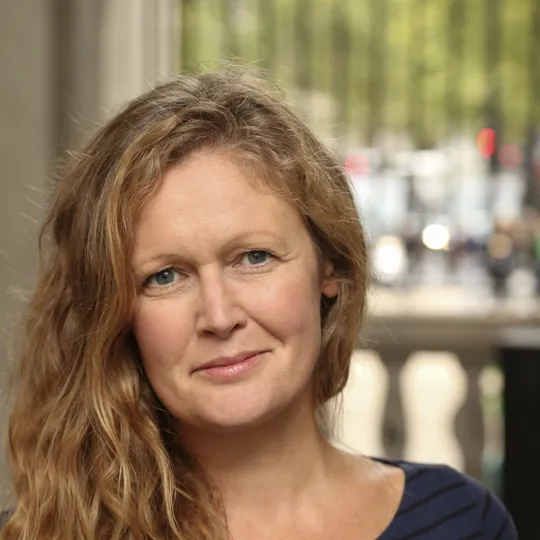
Professor Polly Low is a faculty member in the Department of Classics and Ancient History at Durham University. Her research focuses on Greek political history, historiography (particularly Thucydides), and epigraphy. She holds a PhD from Cambridge and previously worked at the University of Manchester and Christ's College, Cambridge. Specializes in Classical Greek history and epigraphy Contributes to interdisciplinary collaborations via epigraphic studies Active in academic outreach, offering talks on topics like the Persian Wars and Thucydides Her recent publications emphasize the use of inscriptions in reconstructing historical narratives and analyzing Athenian imperialism through theoretical frameworks. She supervises postgraduate research projects in Greek political history and historiography.
Dr. Christopher De Lisle is an Assistant Professor in the Department of Classics and Ancient History at Durham University. He specializes in Hellenistic and Roman Greek history, with expertise in epigraphy and numismatics. His research focuses on Athenian inscriptions, Roman Athens, and ancient Sicily. He is the chief editor of Attic Inscriptions Online , a key resource for translated and analyzed Athenian texts. His 2021 monograph, Agathokles of Syracuse , examines the transition from tyranny to Hellenistic kingship. Recent work includes analyses of the ephebate system in Roman Athens and contributions to understanding Athenian coinage and political dynamics. De Lisle holds a DPhil from the University of Oxford, followed by postdoctoral research at University College Oxford before joining Durham in 2021. Education: Victoria University of Wellington (Undergraduate) University of Oxford (DPhil, 2017) Research Interests: Dr. De Lisle’s work centers on epigraphic and numismatic evidence to explore political, social, and cultural history. Key areas include Athenian epigraphy from Hellenistic to Roman periods, numismatic evidence for political transitions, and the role of institutions like the ephebate in shaping civic identity. Publications: His recent scholarship spans book chapters, journal articles, and reviews, reflecting deep engagement with Athenian and Sicilian history. Notable works include analyses of inscriptions from Delphi, Roman Athens’ civic structures, and Seleucid coinage. Awards: None explicitly mentioned in the text. Advising/Grants: Supervises Pietro Cannatella as a Teaching Assistant. No specific grants detailed in provided text. Labs/Teams: Leads the Attic Inscriptions Online project, collaborating with institutions like the University of Heidelberg to digitize and analyze Athenian inscriptions.
Hugh Bowden is Professor of Ancient History and Head of the Arts Cluster at King's College London. He leads research on ancient Greek religion, Alexander the Great, and cognitive approaches to classical studies, with particular expertise in oracular practices and mystery cults. Bowden joined King's in 1989 after earning his DPhil from Oxford examining religion in Herodotus. His current work applies cognitive science frameworks to analyze ancient religious experiences including sacrifice, epiphany narratives, and oracular consultation. Research combines historical analysis with insights from psychology and anthropology. Publications examine Delphi's political role, Alexander's religious strategies, and cognitive dimensions of Greek ritual. Recent projects include the Virtual Reality Oracle (VRO) initiative recreating ancient divination experiences through immersive technology. Academic Leadership: Bowden heads the Arts Cluster encompassing Classics and Cultural & Creative Industries. He previously directed the Centre for Hellenic Studies (2012-2018) and contributed to the redevelopment of the London Mithraeum archaeological site. Awards: Fellow of the British Academy since 2013.
Justine McConnell is a Reader in Comparative Literature and Classical Reception at King’s College London, based in the Faculty of Arts & Humanities within the Department of Languages, Literatures and Cultures. She holds a BA in Classics from the University of Cambridge, an MPhil in English Literature from the University of Bristol, and a PhD from Royal Holloway, University of London. Her research focuses on Caribbean and African diaspora literature, ancient Greek literature, and their interconnections, particularly exploring myth syncretism and classical literature as a tool of resistance. She also examines performance receptions of Graeco-Roman epic across media like theatre and film. McConnell’s scholarly contributions include monographs such as Black Odysseys (2013), Performing Epic or Telling Tales (2020, co-authored with Fiona Macintosh), and Derek Walcott and the Creation of a Classical Caribbean (2023). She co-edited volumes on topics like ancient slavery, Greek drama in the Americas, and global mythic fiction. Her work bridges classical studies with postcolonial and performance studies. Her articles analyze postcolonial reinterpretations of classical myths, such as Toni Morrison’s Sula and Junot Díaz’s works, alongside explorations of Caribbean drama and avant-garde epic performances. She actively engages with the arts through theatre collaborations, poetry curation, and BBC radio documentaries. Key awards include the Leverhulme Early Career Fellowship (University of Oxford). McConnell supervises research in classical reception, diaspora literatures, and performance studies. She is co-editor of the Routledge series Classics and the Postcolonial and participates in interdisciplinary initiatives like the Empires and Decolonizations Research Hub at King’s.
Clare Rowan is a Professor and Director of Education at the University of Warwick, specializing in Classics and Ancient History. She is based in the Faculty of Arts Building and leads significant research projects on ancient numismatics and tokens. Her work bridges historical, archaeological, and anthropological approaches to understanding ancient monetary systems and material culture. Her educational background includes: BA from Macquarie University, Sydney MPhil from University of Cambridge (Cantab.) PhD from Macquarie University, Sydney Professor Rowan's research focuses on the potential of numismatic evidence for understanding broader historical and archaeological questions. She is particularly influenced by anthropological research in her approach to money, examining how ancient coinage functioned as a medium for negotiating power, expressing identity, and serving as a point of commensuration between different ancient cultures. She also investigates coinage in non-economic contexts (rituals, mementoes, decoration, public records) and works broadly on Roman visual culture, imperial and Republican history, and the Roman economy. Her groundbreaking 'Token Communities in the Ancient Mediterranean' project, funded by a European Research Council Starting Grant, provides the first comprehensive analysis of tokens in the ancient world, examining their role in cultural, religious, political, and economic life. Professor Rowan has received significant recognition for her scholarly contributions: Warwick University Award for Teaching Excellence (2015) European Starting Grant for research on ancient tokens She actively supervises doctoral students and teaches courses including Introduction to Roman History, The Roman Empire from Antoninus Pius to Constantine, The Roman Everyday, and The Hellenistic World. Her leadership extends to professional associations as Editor (ancient numismatics) for The Numismatic Chronicle, Council member of the Royal Numismatic Society, and member of the editorial board of the Journal of the Numismatic Association of Australia. Her ERC-funded Token Communities project brings together an interdisciplinary team examining tokens across the ancient Mediterranean, focusing on periods of highest token usage during the Hellenistic period and Roman world.
Aneurin Ellis-Evans is an Associate Professor in Ancient History and the George Cawkwell Tutorial Fellow in Ancient History at University College, Oxford. He holds a DPhil from New College, Oxford, and previously served as a Junior Research Fellow in Classics at The Queen’s College (2013-2016). His academic journey includes a BA in Ancient and Modern History (2005-2008), an MPhil in Greek and Roman History at Balliol College (2008-2010), and a DPhil focused on regional integration in Lesbos and the Troad. His research spans Greek history from 800 BC to AD 300, with a particular emphasis on historical geography, numismatics, and the interplay between literature and politics in ancient city-states. Notable projects include analyzing coinages of the north-east Aegean and a social/cultural history of Hellenistic literary production. He teaches Greek and Roman history papers across Oxford colleges, convening the final-year paper on Sexuality and Gender in Greece and Rome . Collaborations include co-authored works with Jonathan Kagan and Ute Wartenberg on numismatic studies in Asia Minor. His research integrates archaeological evidence, epigraphic documents, and literary sources to explore regional dynamics and imperial influences in the ancient world.
Dr Leah Lazar is a Postdoctoral Researcher at the Centre for the Study of Ancient Documents (University of Oxford), funded by the ERC CHANGE project, and a Research Associate at Corpus Christi College, Oxford. She holds a DPhil in Ancient History from Oxford (2016-2019) and has taught at Oxford and Cambridge. Her research focuses on the political economy of the Greek world, with expertise in epigraphy and numismatics. Academic Background: BA Classics (New College, Oxford, 2011-2015); MSt Greek and Roman History (2015-2016); DPhil in Ancient History (2016-2019). Previously a stipendiary lecturer at Corpus Christi College and lecturer at Cambridge’s Faculty of Classics. Research Interests: Athenian imperial power, ancient Anatolia’s economies, and the interplay between empires and civic autonomy. Her forthcoming monograph Athenian Power in the Fifth Century BC (Oxford UP, 2024) challenges traditional views of Athenian imperialism. Current work explores imperial and civic economies in Asia Minor under the CHANGE project. Teaching: Specializes in Greek history (650-336 BC), Athenian democracy, Thucydides, and social topics like gender and slavery. Taught at Oxford colleges and Cambridge. Grants: ERC-funded CHANGE project (2021-2025). Labs/Teams: Part of the Centre for the Study of Ancient Documents, collaborating on epigraphic and numismatic research.
Professor Lisa Irene Hau is a faculty member at the University of Glasgow in the Department of Classics within the College of Arts . She holds the academic rank of Professor and serves as Postgraduate Convener for Classics, overseeing the MSc in Classics and MSc in Ancient Cultures programs. Her research focuses on ancient historiography , particularly Greek and Roman narrative techniques , moral-didactic literature , and fragmentary texts . She employs narratology and cognitive theory in her analyses. Her publications and edited volumes, including the monographs Moral History from Herodotus to Diodorus Siculus (2016) and Rethinking Hellenistic Historiography (2025), examine the evolution of Greek historiography under the Roman Empire and the use of immersive narrative strategies. She has held an Alexander von Humboldt Senior Research Fellowship (2017-18) and received teaching and conference grants from the University of Glasgow. Hau supervises postgraduate research in historiography , moral concepts , and narrative theory , currently guiding a PhD project on the philosophical foundations of universal history and an MRes on combat trauma in Roman poetry. Her teaching spans postgraduate courses on Thucydides and Greek political thought, Honours-level Greek and Classical Civilization courses, and pre-Honours lectures on Herodotus, Greek warfare, and Athenian democracy.
Timothy Duff is Professor of Greek at the University of Reading, Department of Classics, within the Faculty of Arts, Humanities and Social Sciences. He serves as Director of Postgraduate Research, Director of the Centre for Hellenic Studies, and Coordinator of Modern Greek in the Department of Languages and Cultures. He is also the University’s academic lead for Arts and Humanities Research Council (AHRC)-funded doctoral awards. His academic qualifications include an MA and PhD from the University of Cambridge, Christ's College. He is a Fellow of the Royal Historical Society (FRHistS) and a Senior Member of Wolfson College, Cambridge. Professor Duff's research centers on Greek history, historiography, and prose literature of the Roman Imperial period, with a particular focus on Plutarch. His work explores narrative structure, intertextuality, generic enrichment, moral philosophy, and the educational function of ancient biography. He examines how Plutarch constructs character, uses language, and engages with philosophical and literary traditions to shape the reader's moral and political understanding. His recent publications reveal a sustained scholarly engagement with Plutarch’s narrative techniques, ethical aims, and literary complexity. Themes such as the role of comparison (syncrisis), the construction of the reader, the use of tense and aspect, and the blending of genres are recurrent in his work. His research demonstrates a deep command of both philological detail and broader literary theory. Visiting Professorship at Shanghai University (2016) Visiting Professorship at Princeton University's Seeger Center for Hellenic Studies (2016) Research Fellowship at Freie Universität Berlin (2007–2009, Alexander von Humboldt Foundation) Research Fellowship at the Australian National University (2006) Visiting Fellowship at Wolfson College, Cambridge (2005) Research Fellowship at Harvard University's Center for Hellenic Studies (2004) Research Fellowship at the University of Cincinnati (2002) UK AHRC Research Leave Award (1999–2000) Fellow of the Royal Historical Society Senior Member of Wolfson College, Cambridge Professor Duff actively supervises postgraduate research students in his areas of expertise. He has held significant leadership roles in research funding and academic coordination. His work bridges classical scholarship with contemporary literary and philosophical inquiry, contributing to both specialized and interdisciplinary audiences. He is associated with the Centre for Hellenic Studies at the University of Reading, which promotes research and public engagement in Greek language, history, and culture across periods. His collaborative projects and editorial work reflect a commitment to advancing the field through international scholarly networks.
Professor Polly Low is a historian of ancient Greece specializing in political history, historiography, and epigraphy. She holds a professorship at Durham University's Department of Classics and Ancient History. Her research focuses on Classical Greek interstate relations, Thucydides' work, and commemoration practices in antiquity. Education: BA from Oxford University, PhD from the University of Cambridge. Previously served as Rouse Research Fellow at Christ's College, Cambridge, and taught at the University of Manchester before joining Durham in 2018. Research interests include Athenian imperialism, Greek historiography, and the social impact of inscribed monuments. She edits the Attic Inscriptions Online project and has published extensively on Greek political thought and epigraphical analysis. Supervises doctoral research on Greek political history and Thucydides. Engages in outreach through school talks on topics like Athenian democracy, Spartan society, and Thucydides' historiography. Labs/Teams: Collaborates with the Attic Inscriptions in UK Collections project, co-editing volumes on inscriptions from museums across Britain.
Dr. John Holton is a Lecturer at Newcastle University, specializing in Ancient History and Classics. His research focuses on the Hellenistic Period, particularly the political ideologies and power structures of Macedonian and Seleucid dynasties following Alexander the Great's empire. Dr. Holton's work explores topics such as co-kingship, ruler cults, and the historiographical influences of Diodorus Siculus. He has contributed to debates on Athenian democracy and the reception of Alexander in the Ptolemaic Dynasty, often analyzing ideological continuity and transformation in ancient Mediterranean societies. His publications include critical reviews of modern scholarship on Hellenistic figures like Antigonus Gonatas and Hannibal. Despite a research-intensive profile, no formal details about teaching roles, grants, or laboratory affiliations are provided in the available data.
Dr. Christopher De Lisle is an Assistant Professor in the Department of Classics and Ancient History at Durham University. He specializes in Hellenistic and Roman Greek history, with a focus on epigraphy and numismatics. He serves as chief editor of Attic Inscriptions Online , a digital resource for Athenian inscriptions. His first book, Agathokles of Syracuse: Sicilian Tyrant and Hellenistic King , examines the transition to Hellenistic rule in Sicily through numismatic and literary evidence. Current research includes Athens under Roman rule, particularly the ephebate system, and a new edition of Inscriptiones Graecae II/III 3 covering Athenian decrees from 86 BCE to 267 CE. De Lisle earned his degrees from Victoria University of Wellington and the University of Oxford (2017). After postdoctoral fellowships at University College Oxford, he joined Durham in 2021. His work integrates epigraphic, numismatic, and historical methodologies to explore socio-political dynamics in antiquity. Key areas include Athenian civic institutions, Roman provincial administration, and the cultural legacy of Sicily. His research outputs include monographs, edited volumes, and over 20 peer-reviewed articles/chapters. Notable projects involve analyzing Athenian inscriptions in UK collections and investigating the role of epigraphic evidence in reconstructing ancient benefaction practices. He collaborates internationally on digital humanities initiatives to preserve and contextualize classical inscriptions.
Leah Lazar is a Lecturer in Hellenistic Culture at the Department of Classics, Ancient History & Egyptology, Oxford University. Her research focuses on political and economic history of the ancient Greek world, particularly the dynamics between empires and subject communities. She holds a PhD from Oxford University (2019) and has held postdoctoral and lecturing roles at Oxford and the University of Cambridge. Her first monograph, Athenian Power in the Fifth Century BC (2024), challenges traditional narratives of Athenian imperialism by emphasizing negotiated power relationships and regional diversity. She co-leads the ERC-funded CHANGE project, analyzing ancient Anatolia’s monetary and economic history through numismatic and epigraphic big data. Current projects include interdisciplinary studies on Athenian empire dynamics and co-editing a volume on Hellenistic monetary economies. Her research outputs span books, peer-reviewed articles, and datasets, with recent works exploring Athenian inscriptions, comedy’s political role, and cross-cultural economic impacts. Lazar’s work bridges textual analysis, material evidence, and innovative methodological approaches to ancient history.
Dr Andrew Bayliss serves as Associate Professor in Greek History and Head of the Department of Classics, Ancient History and Archaeology at the University of Birmingham. With expertise spanning Spartan society, Athenian politics, and the Hellenistic period, he emphasizes how ancient source analysis develops critical thinking skills applicable to modern information landscapes. His academic foundation includes: PhD in Ancient History from Macquarie University First Class Honours Degree in History (majoring in Ancient History) Diploma of Education Bayliss's research centers on Classical Spartan society, particularly Spartan citizen psychology through a database of ancient references to emotions and behaviors. His work extends to helot studies in Spartan rural territories. Previous scholarship covers Greek oaths, Athenian epigraphy, Alexander's Successors, and 18th-century perceptions of antiquity, reflecting interdisciplinary depth in historical methodology. Recent publications reveal a concentrated Spartan focus in books like The Spartans: A very short introduction (2022) and encyclopedia contributions spanning Greek comedy and political systems. The output demonstrates evolving attention to Spartan emotional frameworks while maintaining core interests in Athenian governance and Hellenistic transitions. Bayliss mentors doctoral candidates in Spartan society, Athenian politics, Alexander the Great, and early Hellenistic studies. He teaches core modules including 'The Greek World' and 'Rethinking the Ancient World,' while coordinating specialized courses like 'The Spartan kosmos.' His leadership of the departmental Study Tour to Greek archaeological sites underscores commitment to experiential learning.
School of Advanced Study, University of LondonUnited Kingdom
Emiliano Buis is a distinguished Professor at the University of Buenos Aires with dual appointments as Chair of Public International Law at the Faculty of Law and Professor of Ancient Greek in the Department of Classics. He also serves as Professor of International Law and Human Rights at Central University (UNICEN) in Azul, and is a Permanent Researcher at CONICET (Argentina's National Scientific and Technical Research Council). His academic profile spans two seemingly distinct fields that he masterfully connects: Ancient Greek literature and law, and contemporary international legal frameworks. Professor Buis's research focuses on the intersection of emotional studies, political theory, and legal history. His current project, 'Representing Pathos: Emotional Dynamics and Affective Regulations in Literary and Iconographic Testimonies of Ancient Greece' (2020-2024), examines how emotions functioned as political and legal tools in ancient Greek society. He has published extensively on Greek comedy (particularly Aristophanes and Eupolis), ancient legal practices, international humanitarian law, and nuclear disarmament. His recent publications reveal a consistent pattern of connecting ancient and modern legal frameworks. He has explored topics including emotional politics in Greek comedy, international treaty law from ancient to contemporary contexts, nuclear facility protection during armed conflict, and Latin American perspectives on nuclear disarmament. Professor Buis frequently analyzes how material culture and physical objects mediated legal concepts in ancient Athens, and how these historical frameworks inform modern international relations. Chair of Public International Law at University of Buenos Aires Law School Professor of Ancient Greek at Department of Classics, University of Buenos Aires Professor of International Law and Human Rights at Central University (UNICEN) Permanent Researcher at CONICET Associated Member of ANHIMA Center in Paris Professor Buis's advising and research activities demonstrate his commitment to interdisciplinary approaches that bridge classical studies and contemporary legal challenges. His work on emotional dynamics in ancient legal contexts has opened new avenues for understanding the psychological dimensions of international relations. His leadership in research projects examining both historical and contemporary legal frameworks positions him as a unique voice connecting classical scholarship with pressing international legal issues. His laboratory of inquiry centers on the research project UBACYT 20020190100205BA, which brings together scholars examining emotional frameworks in ancient Greek culture through literary, historical, and material evidence. This project has produced numerous publications exploring how emotions were regulated, represented, and instrumentalized in ancient legal and political contexts, with implications for understanding contemporary emotional dynamics in international relations.