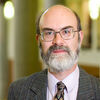
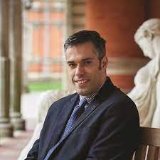
Dr. Guy Westwood is an Associate Professor in Greek Language and Literature at the University of Oxford, affiliated with Lady Margaret Hall as a Fellow and Tutor in Classics. He holds an MA, MSt, and DPhil from Oxford, with academic roles spanning Balliol, Merton, and Birmingham. His research focuses on classical Greek and Roman rhetorical prose, particularly Athenian democratic oratory, exploring how historical narratives shaped political persuasion. He has authored a monograph on Demosthenes and Aeschines and published widely on topics such as Athenian lawcourt rhetoric, intertextuality in poetry, and ancient historiography. Teaching encompasses Greek language, literature, and history at both undergraduate and graduate levels, with supervision in ancient rhetoric and related fields. He encourages graduate applications in Greek rhetoric and comedy. His work bridges rhetoric with drama and historiography, reflecting a broad engagement with fifth and fourth-century Greek studies. Publications highlight themes like legal oratory's performative aspects, intertextual poetic analysis, and the role of memory in persuasion. His career includes fellowships at Merton and teaching roles at Birmingham, showcasing a trajectory of academic leadership in classical studies.
Federica Carugati is a Senior Lecturer in History and Political Economy at King's College London, serving as program director for the undergraduate major in History and Political Economy. She previously held roles at Stanford University’s Center for Advanced Study in the Behavioral Sciences and Indiana University’s Ostrom Workshop. Her research focuses on ancient democratic institutions, institutional analysis, and the intersection of history, politics, and economics. Carugati holds a BA and MA in Philosophy from the University of Bologna and a joint PhD/MA in Classics and Political Science from Stanford University. Her publications include *A Moral Political Economy: Present, Past and Future* (2021) and *Creating a Constitution: Law, Democracy and Growth in Ancient Athens* (2019). She is currently working on two book projects: *Governance Archaeology: Collective Governance in Global History* and *Information and the State*, exploring historical and digital-era governance dynamics. Research Groups: Comparative Politics, Politics, Philosophy & Economics (PPE), History and Political Economy Affiliations: Society for Institutional and Organizational Economics (SIOE) Secretary, Metagoverance Project Research Director Awards: KCL Recognition Award (2022), HEA Fellowship (2022) Her teaching spans courses on institutional development, historical political economy, and global economic history. She emphasizes skills in analytical writing and communication.
Dr. Frisbee Sheffield is a Fellow in Classics at Downing College and a University Associate Professor in Classics at the University of Cambridge. Her academic work centers on Greek philosophy, with a focus on ethics, moral psychology, aesthetics, politics, and the reception of ancient Greek philosophy—particularly in the writings of Hannah Arendt. University of Cambridge - Associate Professor in Classics Downing College - Fellow in Classics Sheffield's research explores the intersections of Platonic ethics, political philosophy, and aesthetic theory. Her work also investigates the philosophical underpinnings of friendship, desire, and virtue in classical texts, alongside their modern interpretations. Recent publications emphasize Platonic dialogues like the Symposium , Gorgias , and Phaedrus , with a growing focus on bridging ancient thought with contemporary political theory. Sheffield’s edited works include The Routledge Companion to Ancient Philosophy (2013) and contributions to critical editions of Plato’s works. Her current projects include a book-length study of Plato’s Phaedrus and critical analyses of Socratic concepts in Arendt’s philosophy.
Dr. Roel Konijnendijk is the Darby Fellow in Ancient History at Lincoln College, University of Oxford. He holds a BA and MPhil from Leiden University (Netherlands) and a PhD from University College London (UCL). His research focuses on Greek warfare, its socio-political dimensions, and interactions between Greek and Persian military systems. Key interests include historiography, democracy, and the history of scholarship on ancient warfare. Teaching responsibilities include courses on Greek and Roman history, Athenian democracy, Spartan traditions, and the Achaemenid Persians. He contributes to the CAAH Greek Core class on aristocracy and democracy (550–450 BC). Recent publications include The Economics of War in Ancient Greece (2025) and Between Miltiades and Moltke (2023), exploring German historiography and Greek military thought. His work bridges military history with cultural and intellectual analysis, examining how modern scholarship shapes perceptions of ancient warfare. He has held academic roles at institutions like Birkbeck, Warwick, and Edinburgh, emphasizing interdisciplinary approaches to classical studies.
George Tridimas is Professor of Political Economy at Ulster University Business School, Department of Accounting, Finance & Economics. He holds a prominent position in political economy research with an extensive publication record spanning several decades. His educational background includes a Bachelor's degree in Economics from the University of Athens, and both Master's and Doctoral degrees in Economics from the University of Oxford. Prior to his current position, he held academic appointments at the University of Witwatersrand in South Africa and the University of Reading in England. PhD, University of Oxford (Award Date: January 25, 1991) Master, University of Oxford (Award Date: November 6, 1982) Bachelor, University of Athens (Award Date: July 10, 1979) Professor Tridimas's research focuses on political economy, public economics, and law and economics, with particular emphasis on collective decision-making mechanisms including elections, referendums, and power-sharing arrangements in divided societies. His work uniquely bridges ancient historical contexts (particularly ancient Athens and Sparta) with contemporary political economy questions. His research methodology combines theoretical modeling, policy analysis, and applied econometrics while maintaining a strong interdisciplinary approach that incorporates insights from history, political science, and law. His recent publications demonstrate a consistent trajectory examining ancient Greek political and economic systems through a modern political economy lens, with particular focus on democratic institutions, conflict resolution mechanisms, and institutional design. These works reveal his distinctive scholarly contribution connecting historical institutional analysis with contemporary political economy questions. His scholarly recognition includes the Elsevier Reviewer Recognition award (2018). He serves on the editorial boards of the European Journal of Political Economy and Constitutional Political Economy, and is Co-Editor-in-Chief of the German-Greek Yearbook of Political Economy. Professor Tridimas has received research funding from prestigious organizations including the British Academy and the Economic and Social Research Council (ESRC). His academic reach extends internationally through visiting fellowships in Canada, the Czech Republic, Romania, and the USA. He is also a Fellow of the Higher Education Academy, recognizing his contributions to academic teaching and learning.
Timothy E. Duff is Professor of Greek in the Department of Classics at the University of Reading. He holds additional significant roles as Director of Postgraduate Research, Director of the Centre for Hellenic Studies, and Coordinator of Modern Greek in the Department of Languages and Cultures. He also serves as the University's academic lead for Arts and Humanities Research Council (AHRC)-funded doctoral awards. Professor Duff completed his MA and PhD at the University of Cambridge, Christ's College, establishing the foundation for his distinguished career in classical studies. His academic journey has included numerous prestigious fellowships and visiting positions at institutions worldwide, reflecting his international standing in the field. Duff's research centers on Greek history, Greek and Roman historiography and biography, Greek prose literature, and particularly the Greek literature of the Roman Imperial Period with special focus on Plutarch. His work explores the intricate relationship between literary form and historical content, examining how ancient biographers like Plutarch constructed narratives that served moral, political, and educational purposes. His scholarship reveals how Plutarch's works engage with philosophical traditions, particularly Platonic thought, while adapting these ideas for practical application in leadership and character formation. Analysis of Duff's extensive publication record shows a consistent focus on Plutarchan studies, with particular attention to narrative structure, intertextuality, and the moral dimensions of ancient biography. His work demonstrates how Plutarch's Lives function not merely as historical accounts but as sophisticated literary constructions designed to shape readers' ethical understanding and political judgment. Recent publications continue this trajectory while expanding into areas of classical reception, examining how ancient texts resonate in later periods and cultures. Senior Member of Wolfson College, Cambridge Fellow of the Royal Historical Society (FRHistS) Visiting Professorships and Fellowships at Shanghai University, Princeton, Freie Universität Berlin, Australian National University, Wolfson College Cambridge, Harvard University, University of Cincinnati, and British School at Athens UK Arts and Humanities Research Council (AHRC) Research Leave award As Director of Postgraduate Research and academic lead for AHRC-funded doctoral awards, Professor Duff plays a crucial role in mentoring the next generation of classicists. His supervisory approach emphasizes the integration of philological precision with broader theoretical frameworks, encouraging students to explore the intersections between ancient literature, history, and philosophy. His own research has been supported by numerous prestigious grants, reflecting the significance of his contributions to classical scholarship. Through his leadership of the Centre for Hellenic Studies, Duff fosters interdisciplinary research on Greek culture across historical periods. His work bridges traditional philological approaches with contemporary theoretical perspectives, creating a dynamic environment for exploring the enduring relevance of ancient Greek thought and literature.
Amy Smith is a Professor at the University of Reading , affiliated with the Department of Typography and Graphic Communication . She specializes in Greek art , classical archaeology , and digital humanities , with particular focus on personification in art , Athenian pottery , and museum technology . Her work bridges traditional art historical analysis with modern digital applications, including tools like VLMA for virtual museum collections. Research Interests : Classical archaeology, personification studies, Athenian vase painting, digital humanities, and museum engagement. Publications : Over 20 contributions to journals and edited volumes, including analyses of Boeotian cups , Thessalian lekythoi , and Winckelmann’s reception of Greek art. Museum Work : Co-developer of VLMA (2008) for virtual collections and coordinator of Ure Museum conservation projects (2004–2008). Academic Contributions : Editor of Under the Greek Sky (2022) and co-editor of Brill’s Companion to Aphrodite (2010).
Professor Isabel A Ruffell is Professor of Greek Drama and Culture in the Department of Classics within the School of Humanities at the University of Glasgow, where she has been teaching since 2001 after completing her studies at Oxford. Her work bridges classical scholarship with contemporary social issues, particularly focusing on gender, sexuality, and political theory in ancient contexts. Ruffell's research interests span Greek drama (both comedy and tragedy), ancient technology, transgender studies in classics, and queer theory. She approaches classical texts through modern theoretical frameworks, examining how ancient representations of gender and sexuality can inform contemporary discussions. Her work on ancient automata, particularly Hero of Alexandria's treatises, combines technical analysis with cultural interpretation. Her recent publications reveal a strong thematic focus on the intersections of gender, politics, and technology in classical contexts. Ruffell has been increasingly exploring transgender perspectives in classical reception, with multiple articles examining queer interpretations of Greek drama. Her work on ancient automata represents a sustained interest in reconstructing and understanding ancient technological achievements within their cultural contexts. The political dimension of her scholarship consistently examines how ancient comedy functioned within democratic Athens as both reflection and critique of contemporary society. Ruffell has secured significant research funding, including a £282,881 Leverhulme Trust Research Project Grant (2014-18) for 'Hero of Alexandria and his Theatrical Automata' and multiple smaller grants from classical associations. She actively supervises doctoral students working on diverse topics including Greek drama, gender studies, and ancient technical writing. Her teaching portfolio includes specialized courses on ancient technology, gender in classical Athens, and comedy theory, with options for study in original Greek. She is also engaged in practical applications of classical scholarship, having provided literal translations for theatrical productions including David Greig's adaptations of Aeschylus' Suppliant Women (2016) and Euripides' Bacchae (2007), which were performed internationally including at the Edinburgh International Festival.
Dr. Andrea Giannotti is a Teaching Professor in the Department of Classics & Ancient History at Durham University, where he earned his PhD in 2019. His research focuses on Greek tragedy, ancient history, and epigraphy, with recent work exploring cognitive studies and digital humanities in Classics. He previously held a postdoctoral position at the Italian Institute for Historical Studies in Naples and currently serves as an Executive Member of the International Center for Studies in Ancient Theater at the University of Turin. His publications include a commented edition of Euripides' Suppliant Women (2023) and contributions to volumes on Athenian honorific practices and ancient theater. Giannotti also collaborates on projects like the Axon Epigraphic Project and Attic Inscriptions Online. His academic interests span Greek tragedy’s political dimensions, Athenian civic rituals, and the intersection of classical studies with modern methodologies. Recent articles include re-evaluations of Sophocles’ Ajax and analyses of fifth-century Athenian honorific decrees. His work bridges textual analysis with epigraphic evidence, emphasizing the social and political contexts of ancient Greek drama. Giannotti's teaching and research are complemented by active participation in academic networks and editorial roles, including editing special issues on Greek drama and politics. Office hours are held weekly, and he supervises students in classical studies.
Dr Leah Lazar is a Postdoctoral Researcher at the Centre for the Study of Ancient Documents (University of Oxford), funded by the ERC CHANGE project, and a Research Associate at Corpus Christi College, Oxford. She holds a DPhil in Ancient History from Oxford (2016-2019) and has taught at Oxford and Cambridge. Her research focuses on the political economy of the Greek world, with expertise in epigraphy and numismatics. Academic Background: BA Classics (New College, Oxford, 2011-2015); MSt Greek and Roman History (2015-2016); DPhil in Ancient History (2016-2019). Previously a stipendiary lecturer at Corpus Christi College and lecturer at Cambridge’s Faculty of Classics. Research Interests: Athenian imperial power, ancient Anatolia’s economies, and the interplay between empires and civic autonomy. Her forthcoming monograph Athenian Power in the Fifth Century BC (Oxford UP, 2024) challenges traditional views of Athenian imperialism. Current work explores imperial and civic economies in Asia Minor under the CHANGE project. Teaching: Specializes in Greek history (650-336 BC), Athenian democracy, Thucydides, and social topics like gender and slavery. Taught at Oxford colleges and Cambridge. Grants: ERC-funded CHANGE project (2021-2025). Labs/Teams: Part of the Centre for the Study of Ancient Documents, collaborating on epigraphic and numismatic research.
Dr. Roger Brock is a Senior Lecturer in Classics at the University of Leeds' School of Languages, Cultures and Societies. His expertise spans Greek historiography (particularly Herodotus), ancient Greek politics, citizenship studies, and the role of wine in antiquity. He holds a DPhil and MA in Literae Humaniores from Oxford, with postdoctoral research at Ohio State University. Editor of the Journal of Hellenic Studies (2011–2016) Chair of the British School at Athens Publications Committee Co-editor of Alternatives to Athens (OUP, 2000) and Defining Citizenship in Archaic Greece (OUP, 2018) His research explores non-Athenian political models, oligarchic governance, and the socio-cultural significance of wine. Teaching focuses on Greek language, literature, and history, often collaborating with interdisciplinary colleagues. Current projects include reconstructing ancient Greek wine practices using modern oenology.
Royal Holloway, University of LondonUnited Kingdom
Christos Kremmydas is a Professor of Classics at Royal Holloway, University of London, serving as Head of the Department of Classics and affiliated with the Centre for Oratory and Rhetoric and the Hellenic Institute. His research focuses on Greek social, political, and legal history, oratory, rhetoric, historiography, epigraphy, and papyrology. He has held prestigious fellowships, including the Elizabeth and J. Richardson Dilworth Fellowship at the Institute for Advanced Study, Princeton (2017), and was elected as a Council Member of the International Society for the History of Rhetoric (2017). Professor Kremmydas has authored and edited numerous books, including Commentary on Demosthenes Against Leptines (2012) and contributed to seminal volumes like Hellenistic Oratory: Continuity and Change (2013). His work explores ancient rhetorical practices, forensic strategies, and the interplay between ethos and logos in classical texts. Recent research includes analyses of Thucydides' Assembly debates and Dio Chrysostom's civic orations, emphasizing narrative suspense and argumentative frameworks in ancient oratory. His scholarly contributions span articles in journals like Greek, Roman, and Byzantine Studies and collaborative projects, including a Humboldt Foundation Senior Research Fellowship (2018–2020). Kremmydas has engaged in public outreach, such as radio appearances discussing ancient oratory’s relevance to modern discourse, and has advised three graduate students in his field.
Dr. Andrea Giannotti is a Teaching Fellow in the Department of Classics & Ancient History at Durham University, where he earned his PhD in 2019 with a thesis on Athenian Dionysia ceremonies. He previously held a postdoctoral position at the Italian Institute for Historical Studies 'Benedetto Croce' and currently serves as an Executive Member of the International Center for Studies in Ancient Theater (University of Turin) and a Teaching Assistant at the University of Turin's Department of Humanities. His research focuses on Greek tragedy, ancient history, epigraphy, and digital humanities. Giannotti has published widely on topics like Athenian civic rituals, tragic intertextuality, and honorific decrees. His recent works include a commented edition of Euripides' Suppliant Women (2023) and a co-authored study on Pseudo-Euripides' Letters (forthcoming 2025). He contributes to projects like the Axon Project and Attic Inscriptions Online. Research interests span Greek tragedy’s political dimensions, cognitive approaches to classical texts, and digital methodologies. His publications analyze Athenian theatrical ceremonies, Thucydides-Euripides intertextuality, and honorific practices in fifth-century Athens. Giannotti’s work bridges textual analysis with material culture, emphasizing civic identity and ritual performance. Notable collaborations include co-editing Il teatro della πόλις (2020) and contributing to Primerjalna književnost and Mnemosyne . His current projects involve recontextualizing Athenian dramatic festivals and exploring digital tools for epigraphic research.
Professor Edith Hall is a leading scholar in Classics at Durham University, specializing in ancient Greek and Roman literature, performance culture, and the reception of classical antiquity. She holds a Professorship in the Department of Classics and Ancient History and has held academic positions at Oxford, Cambridge, and other institutions. Her research explores themes of gender, ethnicity, slavery, and social class in antiquity and their modern legacies. Education: BA/MA and DPhil from Oxford University. Awards include the 2023 British Academy Fellowship, 2022 Durham Honorary Doctorate, and 2015 Erasmus Prize. She co-leads the 'Advocating Classics Education' initiative and has advised theatre companies, contributed to BBC documentaries, and campaigned for Classics access in UK state schools. Research Interests: Ancient Theatre and Performance Classical Reception in Modern Media Ethnicity and Identity in Greek Tragedy Class and Social Mobility in Antiquity Supervision: Over 30 doctoral students advised, with a 2021 KCL Supervisory Excellence Award. Current students include Anactoria Clarke and Devan Turner. Active in interdisciplinary projects like the Leverhulme-funded 'Aristotle beyond the Academy.' Public Engagement: Runs a fortnightly blog 'Edithorial' and collaborates with the National Theatre. Member of Durham's Centre for Classical Reception and Ancient Philosophy groups.
Professor Lisa Irene Hau is a faculty member at the University of Glasgow in the Department of Classics within the College of Arts . She holds the academic rank of Professor and serves as Postgraduate Convener for Classics, overseeing the MSc in Classics and MSc in Ancient Cultures programs. Her research focuses on ancient historiography , particularly Greek and Roman narrative techniques , moral-didactic literature , and fragmentary texts . She employs narratology and cognitive theory in her analyses. Her publications and edited volumes, including the monographs Moral History from Herodotus to Diodorus Siculus (2016) and Rethinking Hellenistic Historiography (2025), examine the evolution of Greek historiography under the Roman Empire and the use of immersive narrative strategies. She has held an Alexander von Humboldt Senior Research Fellowship (2017-18) and received teaching and conference grants from the University of Glasgow. Hau supervises postgraduate research in historiography , moral concepts , and narrative theory , currently guiding a PhD project on the philosophical foundations of universal history and an MRes on combat trauma in Roman poetry. Her teaching spans postgraduate courses on Thucydides and Greek political thought, Honours-level Greek and Classical Civilization courses, and pre-Honours lectures on Herodotus, Greek warfare, and Athenian democracy.