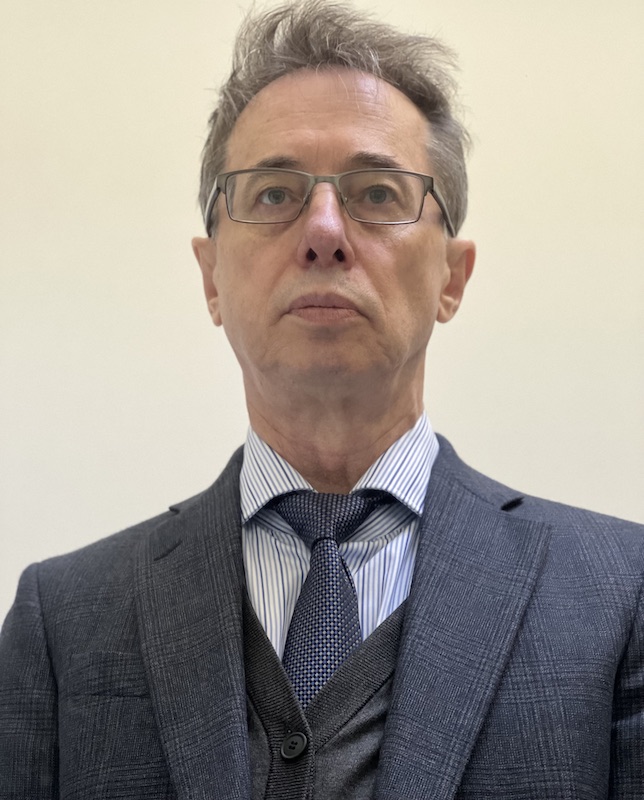
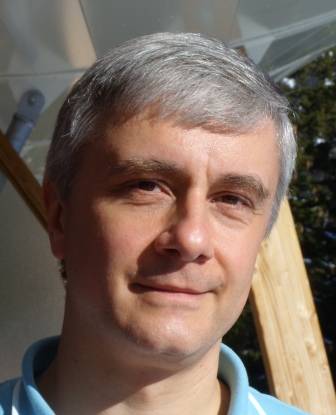
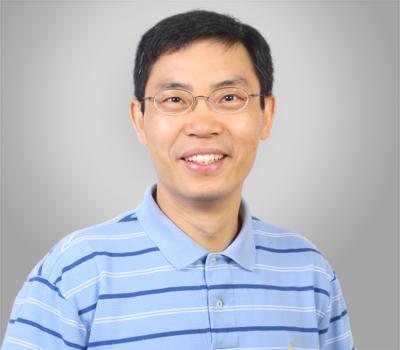
Mikhail Dorojevets is an Associate Professor in the Department of Electrical and Computer Engineering at Stony Brook University , New York. His research focuses on parallel computer architecture, high-performance systems design, and superconductor processors . He has contributed extensively to RSFQ (Rapid Single Flux Quantum) and RQL (Resonator Quantum Logic) technologies for ultra-high-speed computing systems. Key areas of expertise include: Superconducting electronics for energy-efficient computing High-frequency (GHz-scale) processor design Architectures for parallel and wave-pipelined systems FPGA-based hardware acceleration for network processing His work spans both theoretical and applied aspects, including: Design of RSFQ arithmetic logic units (ALUs) and multipliers Development of 20+ GHz microprocessor prototypes Optimization of energy consumption in superconductor-based systems Publications emphasize advancements in: Superconductor VLSI implementation High-performance storage architectures Multi-port register file designs Integration of satisfiability solvers with hardware
Nicole McFarlane is an Associate Professor in the Min H. Kao Department of Electrical Engineering and Computer Science at the University of Tennessee, Knoxville (UTK), where she also holds the TCE Advance Professor title. She is affiliated with the Tickle College of Engineering and leads the Micro-Bio-Electronics Group (MLAB), focused on advanced sensor technologies. Education: Nicole McFarlane earned a PhD in Electrical Engineering from the University of Maryland, College Park (2010), and dual bachelor's (BS, 2001) and master's (MS, 2003) degrees in Electrical Engineering from Howard University, Washington D.C. Research Interests: Her work centers on developing compact, efficient sensor systems using mixed-signal CMOS strategies and nanotechnology. Applications span electrochemical biosensors, point-of-care medical devices, nuclear imaging panels, and hardware security for embedded systems. The MLAB lab emphasizes cost-effective, scalable solutions for healthcare, military, and research domains. Article Trends: Recent publications (2024) highlight innovations in perimeter-gated SPAD arrays for cryptographic security, silicon photomultipliers for nuclear imaging, and asynchronous readout architectures. 2023 work includes multimodal gesture recognition systems and pH sensors with integrated encryption. These studies reflect her focus on merging cutting-edge CMOS technologies with secure, multifunctional sensor design. Scientific Awards: No awards explicitly listed in the provided texts. Advising & Grants: Nicole advises students in the Kao Department's graduate and undergraduate programs. While specific advisee names are not provided here, her research is supported by grants in microelectronics and sensor integration. She has pioneered portable biosensor systems, including wireless pH-impedance devices and encryption architectures for wearable health monitors. Labs & Teams: As founder/leader of the Micro-Bio-Electronics Group (MLAB), she oversees projects combining CMOS fabrication with nano/micro-fabrication techniques. The lab explores applications ranging from implantable medical sensors to battlefield-ready detection systems, emphasizing interdisciplinary collaboration.
LODOVICO RATTI is a Full Professor of Electronics at the University of Pavia's Department of Electrical, Computer and Biomedical Engineering. He leads the Electronic Instrumentation Group and Laboratory, and holds roles such as Secretary of the IEEE Radiation Instrumentation Steering Committee and Chair of the IEEE Nuclear and Plasma Sciences Italy Section. His research focuses on low-noise analog circuits for radiation detectors, semiconductor device noise characterization, and radiation effects in microelectronics. He has contributed to major international projects including CMS, RD53, and PixFEL, developing pixel detectors for high-luminosity environments. His work spans technologies like CMOS, JFET, and SPADs, with emphasis on radiation hardness and detector optimization. Ratti has authored over 300 publications (h-index 24), and has led teaching initiatives in Electronics and Industrial Measurements. He also serves on editorial boards and conference committees, advancing both academic and applied research in his field. Key collaborations include CERN, Fermilab, and Argonne National Laboratory. His research impacts particle physics, synchrotron light sources, and medical imaging through innovations in detector design and radiation tolerance. Current projects include 28 nm CMOS front-ends for future colliders and pixel sensor upgrades for Belle II and FCC-ee experiments.
Miljana L. Milić is a Full Professor at the Faculty of Electronics, University of Niš, Serbia, Department of Electronics. She has been an integral part of this institution since earning her degrees and advancing through academic ranks, culminating in her appointment as full professor in 2024. Education: PhD in Electronics, Faculty of Electronics, University of Niš (2009) Master’s in Electronics, Faculty of Electronics, University of Niš (2005) Bachelor’s in Electronics, Faculty of Electronics, University of Niš (2001) Her research interests span a broad spectrum of electronics engineering, with emphasis on VLSI design, analog and digital circuit diagnosis, cryptographic hardware security, timing analysis under aging, and performance optimization in neural prediction systems. She applies simulation, statistical methods, and AI techniques to solve complex problems in electronic systems design and reliability. The analysis of her recent publications reveals a strong focus on hardware-level innovation, including secure cryptographic cells, fault diagnosis in analog circuits, performance modeling under fading and shadowing, and timing degradation in VLSI systems. Her work bridges theoretical analysis with practical implementation in electronic design and communication systems. She leads the Laboratory for Design of Electronic Processes, Circuits and Automatic Control Systems, and is currently involved in one national research project. Her contributions include over 10 journal publications in high-impact venues. Scientific Contributions: Head of Laboratory for Design of Electronic Processes, Circuits and Automatic Control Systems Active participant in national research projects Author/co-author of 10+ journal papers with impact factor She mentors students through research supervision and contributes to academic leadership within her department. Her work continues to influence both academic research and practical applications in electronic systems engineering.
Radu Mateescu is a Research Director at Inria Grenoble - Rhône-Alpes where he heads the CONVECS research team. He has been with Inria since 1998, previously working as a researcher in the VASY project-team. His research focuses on formal methods, particularly model checking and verification of concurrent systems. Mateescu holds a PhD in Computer Science from INPG (Institut National Polytechnique de Grenoble) with a thesis on "Verification of the temporal properties of parallel programs". His educational background includes a graduate engineer diploma from the POLITEHNICA University of Bucharest in Automatic Control and Computers. He has been instrumental in developing several formal verification tools including XTL, CAESAR_SOLVE, EVALUATOR, and BISIMULATOR. His research interests span formal specification and verification of temporal properties of concurrent systems, temporal logics extended with data-handling primitives, on-the-fly model checking, equivalence checking, diagnostic generation, partial order reduction, and massively parallel verification. He served as chairman of the FMICS (Formal Methods for Industrial Critical Systems) Working Group of ERCIM from 2011 to 2014. Mateescu has published extensively in formal methods, with recent work focusing on applications in autonomous vehicles, IoT systems, and hardware verification. His publications show a consistent trend toward applying formal verification techniques to increasingly complex real-world systems, particularly in safety-critical domains. Test-of-Time Tool Award at ETAPS'2023 Inria - Académie des Sciences - Dassault Systèmes Innovation Prize Information Technology Award from Fondation Rhône-Alpes Futur Mateescu has taught courses at ENSIMAG (Grenoble), ESIREM (Dijon), and the University of Savoie. He has contributed to major research projects involving industrial applications of formal methods, particularly through the CADP toolbox which has been used to verify numerous critical systems including the IEEE-1394 FireWire protocol, Bull's cluster file system, and autonomous vehicle systems. His work bridges theoretical formal methods with practical industrial applications.
Dominique Ginhac is a Professor of Electrical Engineering at the Laboratory of Electronics, Informatics and Image (Le2i UMR 6306) at the University of Burgundy in Dijon, France. He joined Le2i as an assistant professor in 2000 and was promoted to professor in 2009, also becoming head of the Sensors & Hardware Architectures team. In 2010, he became head of the Electronic department of Le2i, and in 2011, he was appointed Deputy Director of Le2i, overseeing approximately 200 people across three scientific departments: Computer Sciences, Vision, and Electronic. Ginhac holds a Master's Degree in Engineering from Polytech Clermont-Fd (1995) and a PhD in Computer Vision from Blaise Pascal University (1999). In 2008, he received his Habilitation qualification (Accreditation to supervise research) from the University of Burgundy. From 2007 to 2009, he was a visiting professor at Université Libre de Bruxelles in the Consciousness, Cognition & Computation lab, expanding his expertise into cognitive science applications for imaging systems. His research focuses on the development of smart imaging technology where sensing and processing are integrated as closely as possible to achieve low cost, low power, and high processing capabilities. His work spans hardware design of smart vision systems, implementation of real-time image processing applications, VLSI CMOS imaging technology, and embedded image processing on DSP/FPGA platforms. His research activities represent the crossroads between algorithmic and hardware solutions dedicated to real-time embedded image processing applications. An analysis of Ginhac's recent publications reveals a strong focus on smart camera and sensor development, particularly in high dynamic range imaging, single-photon detection, and configurable hardware accelerators. His work shows a clear trajectory from fundamental VLSI image sensor design toward increasingly sophisticated integrated systems combining sensing, processing, and specialized applications in medical imaging and real-time vision. His interdisciplinary approach bridges electronics, computer vision, and application-specific system design. Throughout his career, Ginhac has supervised 8 PhD students and published 20 papers in international peer-reviewed journals, 3 book chapters, and more than 50 conference papers. His research has resulted in several significant projects including VerIDIS (Vertically Integrated Digital Image Sensor), CAPTIvA (Asynchronous Photon-counTing Image sensor Architecture), HDR-ARtiSt (High Dynamic Range Adaptive Real-time Smart camera), and ASTICO (Assistance Textile Cognitive). Ginhac leads the Electronic department at Le2i, which is part of a research laboratory under the supervision of the University of Burgundy and the CNRS. His work involves close collaboration with industry partners and has resulted in practical implementations of smart imaging systems for applications ranging from medical monitoring to automotive vision systems. His current research continues to push the boundaries of integrated vision systems, with particular emphasis on 3D-stacked image sensors and photon-counting technologies.
Sebastian Michael Wiedemann is a PreDoc Researcher at the Vienna University of Technology, affiliated with the Embedded Computing Systems group. His research focuses on hardware acceleration, asynchronous circuit design, and software-hardware integration techniques. He holds a Diplom-Ingenieur (Dipl.-Ing.) degree and a BSc in Electrical Engineering. His recent work includes publications at the Austrochip Workshop on Microelectronics and a diploma thesis on high-level synthesis tools for asynchronous circuits. His research interests span hardware modeling, GPU computing, and FPGA optimization. Publications highlight advancements in vendor-agnostic preemption mechanisms and asynchronous circuit synthesis methodologies. As a PreDoc Researcher, he contributes to academic projects and teaches courses such as Hardware Modeling and HW/SW Codesign .
Peter O'Reilly is a Teaching Professor in the Multidisciplinary Graduate Engineering Programs at Northeastern University, where he has directed the MS in Telecommunications Networks since 2002 and developed the MS in Cyber-Physical Systems program. His career bridges industry leadership and academic innovation in networking technologies. His educational background includes: PhD in Electrical Engineering, Georgia Institute of Technology (1983) MS in Applied Mathematics, Georgia Institute of Technology MS in Electrical Engineering, Colorado State University BE in Electrical Engineering (First Hons), University College Dublin Dr. O'Reilly's research centers on telecommunications infrastructure, network architecture evolution, and cyber-physical system integration. His work addresses fundamental challenges in burst switching, ATM protocols, fiber bandwidth utilization, and LAN performance optimization. The textbook Performance Analysis of Local Computer Networks established foundational methodologies for network simulation and traffic modeling. His publication history (1984-1996) reveals a consistent trajectory from early LAN performance studies through burst switching innovations to advanced telecommunications architecture. This body of work demonstrates exceptional continuity in solving practical engineering problems while anticipating industry transitions from circuit-switched to packet-based networks. Major recognitions include: Warner Award (twice at GTE, the company's highest technical honor) 2024 Faculty Research Team Award at Northeastern University As program director for two flagship MS degrees, he has shaped curricula that integrate industry co-ops with academic rigor, producing graduates who excel at companies like Arista Networks, Ericsson, and Palo Alto Networks. His editorial leadership as Editor-in-Chief of IEEE Network (2000-2003) and technical editor for premier journals established him as a key knowledge disseminator in networking research. His IEEE Network editorial tenure and guest editorship for the IEEE Journal on Selected Areas in Communications on Circuit Switching reflect deep engagement with the field's evolution. As a Life Senior Member of IEEE, he maintains active connections between academic research and industrial implementation through the College of Engineering's industry partnerships.
Huaping Liu is a Professor in the School of Electrical Engineering and Computer Science at Oregon State University (College of Engineering). He holds a Ph.D. in Electrical Engineering from New Jersey Institute of Technology (1997) and previously worked at Lucent Technologies (1997–2001). His research focuses on wireless communication systems, including MIMO systems, ultrawideband technologies, spread spectrum systems, and channel coding. He has contributed to applications in healthcare monitoring and industrial automation. Education: Ph.D., Electrical Engineering, New Jersey Institute of Technology (1997) M.S., Electrical Engineering, Nanjing University of Posts and Telecommunications (1990) B.S., Electrical Engineering, Nanjing University of Posts and Telecommunications (1987) Research Interests: Wireless communication theories and systems Embodied intelligence and multi-agent robotics Tactile sensing and large-area robotic skin Autonomous navigation and vision-language models Awards and Recognition: 2017 IEEE UEMCON Best Paper Award 2015 OSU College of Engineering Research Collaboration Award 2011 DesignCon Best Paper Award 2010 IEEE VTS Best Paper Award 2007 & 2004 EECS IEEE Professor of the Year Advising and Grants: Dr. Liu emphasizes student-driven learning, fostering critical thinking through inquiry-based teaching. His work involves collaborative projects in robotics, cybersecurity, and sensor systems, supported by grants and industry partnerships. Labs/Teams: Active in developing embodied intelligence frameworks, robotic tactile sensing systems, and cybersecurity solutions for digital twins and vehicular networks. Collaborates on simulation platforms for human-robot collaboration (e.g., HumanTHOR).
Davide Bertozzi is a Reader in Advanced Processor Technology at the University of Manchester. His expertise spans Neuromorphic Computing , Computer Architecture , and Electronic Design Automation . He actively supervises PhD students in areas such as interconnect technologies for neuromorphic systems, elastic computing, and silicon nanophotonic networks. Education: PhD in Electrical and Computer Engineering, Universita Degli Studi Bologna (2000-2003) Research Focus: Dr. Bertozzi's recent work emphasizes neuromorphic processor design , adaptive edge AI , and asynchronous NoC synthesis . His projects address challenges in energy efficiency, scalability, and reliability for emerging computing paradigms. Collaborations: He contributes to multi-partner initiatives like TWIN-RELECT, focusing on reliable electronics, and collaborates with institutions including IHP Microelectronics (2023-present) and Universita Degli Studi Bologna. Advising: Dr. Bertozzi accepts PhD students in neuromorphic computing and related fields.
Yinghui Hu is a Research Assistant at the Photonics & Terahertz Technology group, Ruhr University Bochum , Faculty of Electrical Engineering and Information Technology. She contributes to advanced THz generation and spectroscopy systems. Research Focus : Her work bridges terahertz technology , semiconductor lasers , and optoelectronic devices , with applications in spectroscopy, material analysis, and industrial sensing. Key projects involve VCSEL-based THz sources and asynchronous sampling techniques . Publications : Recent outputs highlight compact THz systems for water absorption studies and paper sorting, alongside laser-driven integrated photonic circuits for high-frequency stability.
Nils Surkamp is a Researcher at Ruhr University Bochum's Faculty of Electrical Engineering and Information Technology, working within the Photonics and Terahertz Technology department. His work bridges semiconductor laser physics with practical applications in terahertz spectroscopy and photonic manufacturing. Key research areas: Terahertz technology, mode-locked diode lasers, photonic integrated circuits, two-photon polymerization, optical metrology Recent trends: Focus on compact and portable THz systems, monolithic laser integration, high-precision manufacturing applications Cooperations: International collaborations with institutions in France, Japan, and the USA
Alexander Ivanovich Legalov is a Professor at the Department of Software Engineering within the Faculty of Computer Science at the National Research University Higher School of Economics (HSE). He has been working at HSE since 2020, bringing 47 years of scientific and teaching experience to his role. Prior to joining HSE, he served as a Professor at the Siberian Federal University from 2006 to 2020. Professor Legalov earned his Candidate of Technical Sciences degree in 1983 and was awarded the academic title of Associate Professor in 1987. He achieved the Doctor of Technical Sciences degree in 2005 and was granted the academic title of Professor in 2007. His educational background includes a specialization in "Design and production of radio equipment" with the qualification of "Engineer-designer-technologist of radio equipment" from the Krasnoyarsk Polytechnic Institute in 1978. Professor Legalov's research focuses on programming technologies, particularly architecture-independent parallel programming and evolutionary software development. His work explores innovative approaches to parallel programming, including procedural-parametric programming paradigms and functional-dataflow models. He has made significant contributions to language design and transformation, particularly in extending C language capabilities and developing tools for parallel program development. His research demonstrates a consistent trajectory toward creating more flexible and efficient programming paradigms that can adapt to different architectural constraints. HSE University Honorary Diploma (May 2025) Gratitude from the Faculty of Computer Science, National Research University Higher School of Economics (August 2022) Badge of honor "For the development of students' research work" (October 2006) Professor Legalov actively supervises student research, currently guiding Kosov P.V. in dissertation research for the degree of candidate of sciences on "Language and instrumental means of evolutionary development of programs based on the procedural-parametric programming paradigm." He teaches courses on Computer Architecture and Operating Systems for second-year students in the Software Engineering bachelor's program at HSE. Professor Legalov participates in editorial boards of several scientific journals, including "Systems Management, Communications and Security" since 2017, and "Reports of the Russian Academy of Higher School Sciences" since 2010. His technical contributions include multiple registered software programs for functional-dataflow parallel programming languages.
Kathy Engisch, PhD, serves as Associate Professor in the College of Science and Mathematics at Wright State University, where her research investigates fundamental mechanisms of synaptic plasticity and neurotransmitter release. Her laboratory employs electrophysiological approaches across multiple model systems including mouse neuromuscular junctions, adrenal chromaffin cells, and cortical neuron cultures to elucidate molecular processes underlying neural adaptation. Her educational foundation includes a Ph.D. in Neural Science from Washington University in St. Louis and a B.A. in Chemistry from Johns Hopkins University. These credentials underpin her interdisciplinary research bridging cellular physiology and molecular neuroscience. Dr. Engisch's research program centers on activity-dependent synaptic plasticity, with particular emphasis on homeostatic mechanisms that maintain neuronal function during injury or inactivity. Her work demonstrates how proteins like Rab3A regulate vesicle release kinetics and quantal parameters during repetitive stimulation, while recent investigations examine miniature synaptic event amplification following activity blockade. This research employs voltage clamp, patch clamp, and carbon fiber amperometry techniques to dissect presynaptic mechanisms at cellular resolution. Analysis of her publication record reveals consistent focus on synaptic scaling phenomena, with recent work (2020-2023) exploring GABAergic scaling mechanisms and divergent plasticity responses in neuronal cultures. Her studies often integrate molecular genetics with electrophysiology to establish causal relationships between protein function and synaptic behavior. Dr. Engisch mentors graduate researchers in neuroscience through hands-on laboratory training, though specific student names aren't listed in current profiles. Her laboratory operations are supported by research funding enabling advanced electrophysiological investigations, though grant details aren't specified in available materials. Housed in Wright State's NEC Building, her laboratory maintains three primary experimental preparations for studying synaptic transmission: neuromuscular junction preparations for in vivo plasticity studies, adrenal chromaffin cell cultures for single-vesicle release analysis, and cortical neuron systems for network-level plasticity investigations. Current projects focus on neural adaptation mechanisms following injury, particularly the Rab3A-dependent regulation of miniature synaptic events.
Andreas Steininger is an Associate Professor in the Department of Embedded Computing Systems at TU Wien. His primary research focuses on fault-tolerant computing, asynchronous logic, and dependable systems. He leads the Embedded Computing Systems group and serves as Director of the Curriculum Commission for Computer Engineering. His work emphasizes resilient hardware architectures, radiation effects in microelectronics, and timing domain interfacing. He has contributed to numerous projects with industry partners like Intel and TTTech Auto AG, addressing challenges in trustworthy autonomous systems and robust distributed algorithms. Key research interests include asynchronous circuits, clockless processors, and error detection mechanisms. He has over 50 publications in top-tier conferences and journals, including IEEE Transactions and ASYNC. Notable contributions include methodologies for mitigating single-event transients in QDI logic and fault-tolerant clock generation schemes. He teaches advanced courses in digital design, computer engineering, and scientific research methods. His projects span radiation-hardened ASIC design, metastability analysis in FPGAs, and secure IoT architectures. He actively collaborates with automotive and aerospace industries to develop solutions for embedded systems reliability. Recent work explores fault resilience in neural networks and energy-efficient asynchronous microprocessors.