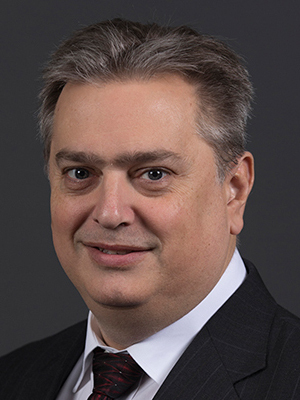
Dr. David Woodruff is a Distinguished Professor and Associate Dean for Faculty and Research at UC Davis's Graduate School of Management. His research addresses computational aspects of optimal decision-making under uncertainty. His work develops algorithms for multistage stochastic programming, optimization methods for supply chain resilience, and data-driven approaches for uncertainty quantification. Key contributions include projective hedging algorithms, importance sampling techniques, and parallel optimization frameworks. Recent publications focus on catastrophe insurance modeling, bootstrap methods for stochastic programming, and parallel hub-and-spoke systems for large-scale scenario optimization. His Pyomo optimization software won the INFORMS Computing Society Prize (2019). Honors include: R&D 100 Award (2016) INFORMS Computing Society Prize (2019) Best Paper Award in Computational Management Science (2011) Dr. Woodruff teaches Data Analysis for Managers and advises doctoral students in operations research. He leads Department of Energy projects on power grid optimization under renewable energy uncertainty and develops computational tools for forest fire management planning.
Nils Vu is a Sherman Fairchild Postdoctoral Scholar Research Associate in Theoretical Astrophysics at the California Institute of Technology (Caltech), working within the Division of Physics, Mathematics and Astronomy. His research focuses on theoretical astrophysics, gravitational physics, and numerical relativity, with particular expertise in black hole physics and gravitational waves. His research interests include: Theoretical modeling of black hole mergers and gravitational wave emissions Numerical relativity techniques for simulating strong-field gravity Gravitational wave memory effects and their detection Black hole spectroscopy through ringdown analysis Development of computational methods for relativistic astrophysics Applications to gravitational wave astronomy and data analysis Dr. Vu's recent work demonstrates significant contributions to numerical relativity, particularly in developing high-precision models for binary black hole systems. His research bridges theoretical physics with practical applications for gravitational wave observatories like LIGO and future missions like LISA. He has made notable contributions to the SpECTRE numerical relativity code and the SXS Collaboration's catalog of binary black hole simulations. His publications reveal a focus on horizon tracking in black hole simulations, quantum gravity signatures in gravitational wave memory, and advanced computational techniques for analyzing quasinormal modes. His work often addresses fundamental challenges in numerical relativity while maintaining relevance to observational gravitational wave astronomy. As a Sherman Fairchild Postdoctoral Scholar, Dr. Vu is part of Caltech's prestigious research program supporting exceptional early-career scientists in theoretical and experimental physics.
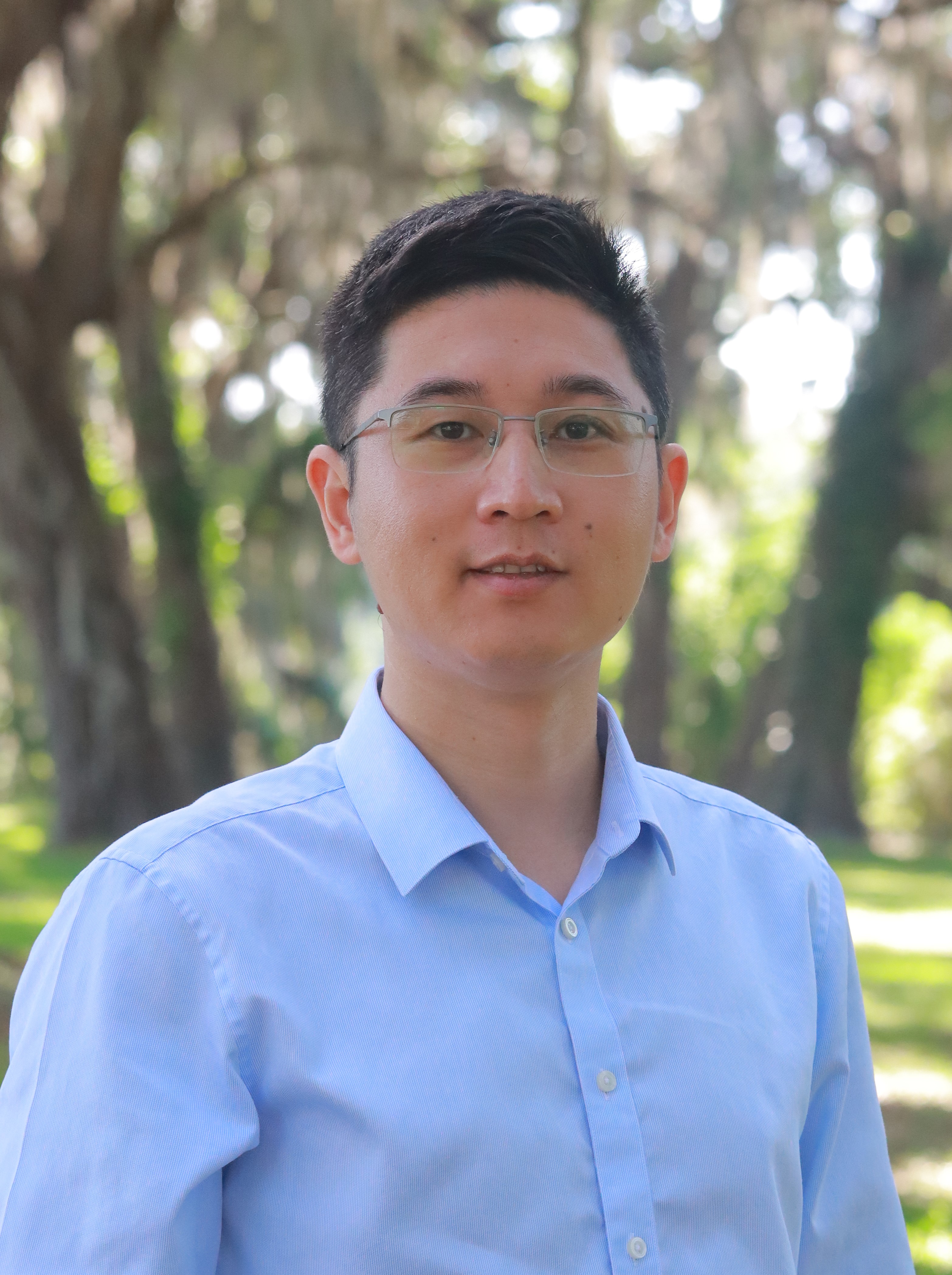
Dr. Guang Wang is an Assistant Professor at the Department of Computer Science at Florida State University (FSU). He holds a Ph.D. in Computer Science from Rutgers University and was a Postdoctoral Research Associate at MIT. His research focuses on cyber-physical systems, spatiotemporal data mining, and human-centered AI, addressing societal challenges in mobility, energy, disaster resilience, and healthcare. He leads projects on fairness-aware ride-hailing systems, equitable post-disaster power restoration, and AI-enhanced logistics systems. Education: Ph.D. in Computer Science, Rutgers University Postdoctoral Research, MIT (with Prof. Sandy Pentland) Research Interests: Generative AI for trajectory prediction and logistics Trustworthy machine learning in urban systems Fairness-aware optimization for mobility and energy systems Data-driven decision-making in disaster response Recent Article Trends: Focus on fairness-aware algorithms, spatiotemporal AI, and large-scale graph mining. Recent work includes optimizing post-disaster power restoration, improving ride-hailing fairness, and developing generative models for asynchronous trajectories. Scientific Awards: FSU CS Department Faculty Research Award (2025) National AI Research Resource Pilot Award (2024) CPS Rising Star (2022) Outstanding Paper Award at IEEE RTSS 2021 Advising & Grants: Advising 4 PhD, 2 MS, and 3 undergraduate students in AI and data science Lead PI on NSF-funded projects on sustainable mobility and disaster resilience Recipient of FSU Sustainability & Climate Solutions Grant ($150K) Labs & Collaborations: Directs the EV Simulation Lab and collaborates on projects like the National AI Research Resource. Leads the Data Science for Smart Cities initiative at FSU.
Prof. Weikuan Yu is a Professor in the Department of Computer Science at Florida State University. His research focuses on computer architecture, high-performance computing (HPC), cloud computing, parallel file systems, and deep learning applications. He holds the role of Chair and can be contacted via yuw@cs.fsu.edu or (850) 644-5442. His expertise includes optimizing storage systems and I/O behaviors in scientific workflows, developing scalable distributed systems, and applying machine learning to improve computational efficiency. Notable projects include work on burst buffer systems (e.g., BurstFS, TRIO), persistent memory management (PHAST), and distributed deep learning frameworks (e.g., compression techniques for time-evolutionary data). Recent research trends emphasize enhancing HPC storage efficiency through novel file systems and I/O emulation, as well as leveraging machine learning for fault tolerance and configuration tuning. His work bridges hardware-software co-design to address challenges in exascale computing and big data analytics. Prof. Yu has contributed to multiple open-source projects and frameworks, including OpenSHMEM-based key-value stores and MapReduce optimizations. His publications highlight advancements in parallel processing, distributed algorithms, and energy-efficient memory architectures.
Tobias Höllerer is a Professor of Computer Science at the University of California, Santa Barbara (UCSB). He leads the Imaging, Interaction, and Innovative Interfaces research group, focusing on novel user interfaces, augmented reality (AR), virtual reality (VR), and immersive visualization technologies. His work emphasizes 'Anywhere Augmentation' in AR and contributions to the Allosphere project, a three-story immersive visualization environment. Education: PhD in Computer Science, Columbia University MS in Computer Science, Columbia University Diplom (MSc equivalent), Technische Universität Berlin Research Interests: Höllerer explores AR/VR interfaces, spatial computing, human-computer interaction (HCI), and data visualization for analyzing large-scale information networks. His group develops solutions for 3D reconstruction, multimodal interaction, and applications in fields like digital fabrication, assistive technologies, and immersive storytelling. Publications Trends: Recent work spans AR navigation aids for visually impaired users, cognitive load analysis in VR, multimodal AI for spatial awareness, and creative applications like textile crafting and music instruments in AR. Scientific Awards: NSF Early Career Development Award Grants & Labs: Active in NSF-funded projects and directs the UCSB Allosphere Research Group. His lab collaborates on projects like Attention-Aware Mixed Reality Interfaces and Large-Scale Real-Time Information Visualization . Labs/Teams: Oversees the Allosphere, a unique immersive platform for data-driven exploration, and leads interdisciplinary teams advancing HCI and AR/VR technologies.
Dr. Rigoberto Burgueño is a Professor and Chair of the Department of Civil Engineering at Stony Brook University since 2018. Previously, he served as a Professor at Michigan State University's Department of Civil and Environmental Engineering. He earned a Ph.D. in Structural Engineering from the University of California, San Diego, and his work focuses on leveraging elastic instabilities for smart structures, AI-driven structural health monitoring (SHM), and energy dissipation systems. Research Highlights: Adaptive materials/structures, self-powered SHM using machine learning, earthquake engineering, and composite material characterization. Funding: National Science Foundation (NSF), Federal Highway Administration (FHWA), Michigan Department of Transportation (MDOT), Precast/Prestressed Concrete Institute (PCI). Leadership: Chair of Civil Engineering at Stony Brook, active member of the American Concrete Institute (ACI), editorial board member of the Journal of Composites for Construction . His publications focus on seismic performance, post-buckling behavior of cylindrical shells, self-powered sensors, and machine learning frameworks for damage identification. Collaborative efforts include developing pendulum shear walls and energy-efficient SHM systems for bridges and aircraft structures.
Hartwig Anzt is a Research Associate Professor in the Min H. Kao Department of Electrical Engineering and Computer Science at the University of Tennessee, and Director of the Innovative Computing Lab (ICL). He holds a Senior Research Scientist position at the Steinbuch Centre for Computing at Karlsruhe Institute of Technology (KIT), where he previously held an Early Career Award and a Junior Professorship. He earned a Diploma in Industrial Mathematics (2009) and a PhD in Applied Mathematics (2012) from KIT, with a year of studies at the University of Ottawa. His research focuses on algorithm engineering for computational mathematics, particularly numerical linear algebra, GPU computing, and mixed-precision methods. Key areas include asynchronous algorithms, communication-avoiding techniques, and sustainable software engineering for exascale computing. He leads development of the Ginkgo library, designed for high-performance numerical linear algebra on heterogeneous architectures. Anzt's work emphasizes practical software solutions for scientific computing, including sparse linear algebra, batched solvers, and FAIR-compliant research software practices. His contributions span fusion plasma simulations, cardiac electromechanics, and scalable data compression techniques for extreme-scale systems. Education: Diploma (2009), PhD (2012) in Applied Mathematics from KIT Key Roles: ICL Director, xSDK Multiprecision Project Lead Software Contributions: Ginkgo Library, JuMonC Tool, Compressed Basis GMRES
Dr. Robert Woodley is an Associate Teaching Professor and Advising and Recruiting Specialist in the Department of Electrical and Computer Engineering at Missouri University of Science and Technology (Missouri S&T). He joined the faculty in January 2018, bringing 14 years of industry experience including co-founding a company. His role emphasizes academic advising, course redesign, and student recruitment. He holds a PhD, MS, and BS in Electrical Engineering from Missouri S&T. Research interests include Computational Intelligence, Embedded Systems, Digital Logic, and Control Systems. He co-authored a textbook for CpE 2210 and developed an online lab for digital logic courses. Dr. Woodley restructured the CpE 2210 course into an online format during the pandemic, introduced entrepreneurial components in senior design projects, and uses Kahoot! for interactive circuits education. He serves as IEEE Rolla Subsection treasurer and has received notable awards: 2023 Dean’s Educator Award, 2022 IEEE Outstanding Educator, and 2022 Missouri S&T Faculty Achievement Award. His industry roles include Senior Scientist at Triplet Tech Corporation and 21st Century Systems, Inc.
Dr. Dunwei Wen is Associate Professor and Chair at the School of Computing and Information Systems within Athabasca University's Faculty of Science and Technology. With academic credentials from Ph.D. in Pattern Recognition and Intelligent Systems (Central South University) M.Sc. in Computer Science (Tianjin University) B.Eng. in Electrical Engineering (Hunan University) , he bridges theoretical AI research with practical implementations in information systems. His research program focuses on statistical learning and deep learning for Natural language processing Sequential data analysis Multimodal content understanding with applications spanning education, healthcare, and industrial domains. Publication trends show increasing emphasis on deep learning architectures for medical image analysis (SRTNet 2024), contextual topic modeling in education (2013-2015), and multimodal systems combining text/image analysis (2015-2018). Recent projects (2021-2022) center on self-supervised learning for natural language understanding. Professional engagements include Member, AAAI (Association for the Advancement of Artificial Intelligence) Member, ACM and ACM SIGAI Senior Member, IEEE Former CAAI Board Member (2001-2010) As academic advisor, he has supervised over 25 graduate students and interns, including Co-supervised 4 PhD candidates (Jilin University) Mentored 12+ Master's students (AU, Jilin University) Hosted 6 MITACS Globalink Research Interns with projects spanning from cardiac detection systems to educational data mining.
Arne Koors serves as a scientific Assistant at the Department of Computer Science , University of Hamburg , under the Faculty of Mathematics, Informatics and Natural Sciences (MIN) . His research focuses on discrete-event simulation optimization , financial market modeling , and ERP system integration . He has contributed to 9 Bachelor's and 5 Diplom theses as primary supervisor. Education & Teaching: He teaches courses including Mathematics for Computer Science , Introduction to Computer Science , and Simulation Projects . His teaching spans topics like cryptography, network systems, and simulation seminars. Research Contributions: His work emphasizes performance optimization of simulators, priority queue algorithms, and simulation-ERP system interaction. Notable achievements include a Best Paper Award at ESM 2014 for Analysis by State: An Alternative View on Discrete Event Time Series . Practical Experience: He led project management for 75 manufacturing companies in ERP implementation and developed a globally used sales planning software deployed in 250 firms. His invited talks include presentations on ERP systems in education and sales planning strategies. Key Projects: Development of the DESMO-J simulation framework, integration of financial risk metrics into discrete-event systems, and asynchronous RNG methods for performance enhancement.
Sylvain Sené is a Professor of Computer Science at Aix-Marseille University (AMU), affiliated with the Department of Computer Science and Interactions (DII) and the Computer Science and Systems Laboratory (LIS). He leads the ANR-funded project FANs (Foundations of Automata Networks) and focuses on discrete mathematics, theoretical computer science, and computational properties of automaton networks. His research bridges abstract computational models with applications in biology, particularly gene regulatory networks and cellular reprogramming. Research Interests: Automaton networks, Boolean networks, and cellular automata Computational complexity and dynamical systems Discrete mathematics and theoretical computer science Applications in systems biology and genetic networks Key Projects: Principal investigator of the ANR project FANs (2019–2023), focusing on advancing automata network theory Collaborations with CNRS, Chilean universities, and international institutions Advising & Grants: Directed PhD students including Pacôme Perrotin and Martín Ríos Wilson Secured funding through ANR and other national/international grants Labs & Teams: LIS (Computer Science and Systems Laboratory), collaborating with interdisciplinary teams in biology and mathematics.
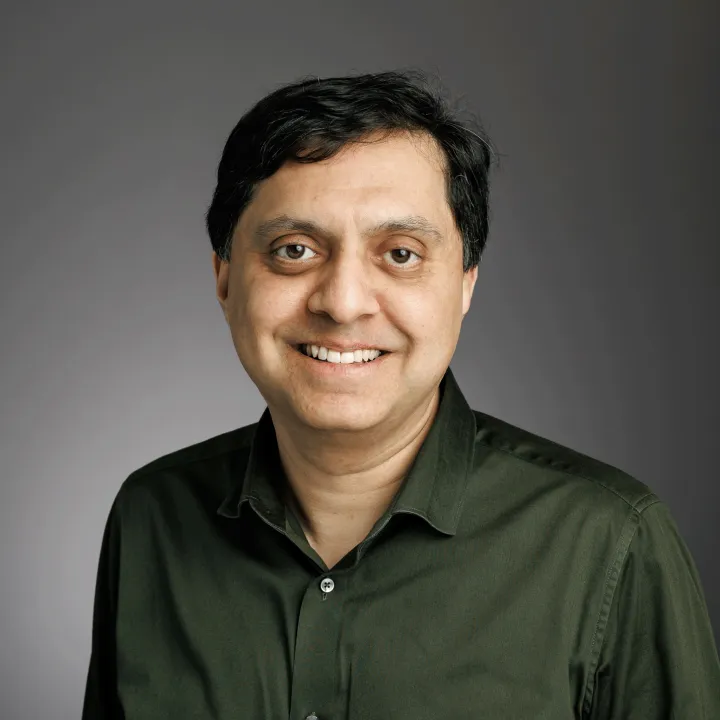
Rajit Manohar is the John C. Malone Professor of Electrical & Computer Engineering at Yale University, with appointments in Applied & Computational Mathematics and Computer Science. He is a core member of the interdisciplinary Computer Systems Lab (CSL), which bridges ECE and CS departments. His research focuses on asynchronous VLSI design, neuromorphic computing, and hardware-software co-design. Education: Manohar holds a B.S., M.S., and Ph.D. from the California Institute of Technology. His academic career spans over two decades, with notable contributions to asynchronous circuit theory and neuromorphic engineering. Research Interests: Manohar's work emphasizes energy-efficient asynchronous architectures, concurrency control, and biologically inspired computing. He explores topics like formal methods for circuit verification, cognitive systems, and dynamic sensor networks. His lab develops tools like Fluid (asynchronous synthesis) and Neurobench (neuromorphic benchmarking). Publications: Recent work includes advancements in asynchronous logic synthesis (Maelstrom), neuromorphic frameworks (Neurobench), and scalable brain-computer interfaces (SCALO). His research often intersects NSF-funded projects in energy-aware computing and neuromorphic systems. Awards: Inaugural Misha Mahowald Prize (2025), MIT TR35 (2000s), IBM Goldberg Award (2023) Grants & Labs: Manohar leads NSF-supported initiatives in carbon-aware networking and neuromorphic hardware. The Computer Systems Lab collaborates across disciplines to advance sustainable computing and neuro-inspired architectures.
Konstantinos Chorianopoulos is an Associate Professor at Ionian University's Department of Informatics, specializing in Human-Computer Interaction and Multimedia Software Technology. PhD in Administrative Science and Technology, Athens University of Economics and Business MSc in Marketing and Communication Diploma in Electronic and Computer Engineering, Technical University of Crete His research bridges computer science and communication, focusing on: Interactive systems for health informatics Video processing algorithms Educational game mechanics Ubiquitous computing interfaces Social media analytics Mobile communication platforms Recent publications demonstrate expertise in interdisciplinary applications combining data science with user experience design , particularly in epidemiological tracking , serious games , and video interaction systems . He teaches advanced courses in: Human-Computer Communication (THE-400) Information Visualization (HY-645) Mobile and Social Media (HY-665)
Ruth Misener is a Professor in the Department of Computing at Imperial College London, where she leads the Computational Optimization Group and holds the BASF/RAEng Research Chair in Data-Driven Optimization (2022–2027). She is affiliated with the Faculty of Engineering and contributes to interdisciplinary research institutes including the Data Science Institute, the Institute for Molecular Science and Engineering, and the Sargent Centre for Process Systems Engineering. Her research lies at the intersection of numerical optimization, operations research, and machine learning, with applications in chemical engineering, bioprocess optimization, energy systems, and industrial scheduling. She develops global optimization algorithms for mixed-integer nonlinear programs (MINLP), focusing on real-world challenges such as heat recovery network design, petrochemical process optimization, and robust bioreactor operation. A key innovation is her work on optimizing over machine learning surrogates, including tree ensembles and neural networks, enabling data-driven decision-making under uncertainty. Her recent publications demonstrate a strong trend toward integrating Bayesian optimization with active learning, explainable AI, and industrial applications, particularly in collaboration with BASF, Royal Mail, and Eli Lilly. She develops and maintains open-source optimization tools such as ROmodel, OMLT, and ENTMOOT, which are publicly available on GitHub. STEM for Britain acceptance Runner-Up Presentation Award at PSE@ResearchDayUK Best Quality Poster to Simon Olofsson 1st Poster Prize at UK/Ireland Annual Meeting of the Society for Industrial & Applied Mathematics (2018) 2nd Poster Prize at Centre for Process Systems Engineering Industrial Consortium Meeting (2017) 1st Poster Prize at 2nd PSE@ResearchDayUK (2017) 2nd Presentation Prize at Department of Computing Research Associate Symposium (2017) Runner-Up for May Hicks Award (via student Natasha Page) Ruth supervises a dynamic research team and has examined and mentored numerous PhD students, including Jean Kossaifi, Robert Walecki, Alexander Thebelt, and Toby Boyne. She leads major research grants, including the BASF/RAEng Research Chair and the IConIC Prosperity Partnership, and collaborates with industry partners to advance continuous manufacturing and data-driven process optimization. Her team actively disseminates work through open-access publications, video presentations, and social media.
Hugo Gimbert is a CNRS Researcher at LaBRI (Laboratoire Bordelais de Recherche en Informatique), affiliated with the University of Bordeaux, where he serves as a PhD advisor and contributes to the Formal Methods research team. His work bridges theoretical computer science with practical applications in diverse domains. His research spans Algorithmic Game Theory, Stochastic Games, Distributed Systems, and Robotics, with current focus on stochastic games with partial observation, decidability of distributed games, and applications in precision agriculture. He explores intersections with social choice theory, probabilistic logics, and humanoid robot control using Markov Decision Processes. Publications from 2010-2017 reveal consistent contributions to game theory foundations (stochastic/mean-payoff/parity games), automata theory (decidability problems, stabilization monoids), and applied robotics (vineyard trellising systems). His work demonstrates a trajectory from pure theoretical results toward real-world implementations in agriculture and education systems. Gimbert actively mentors PhD candidates including Soumyajit Paul, Simon Mauras, and Edon Kelmendi. He leads critical national projects: serving as Chargé de mission for Parcoursup (France's centralized college admission platform) since 2018, developing its core algorithms with Claire Mathieu to handle quotas, housing constraints, and transparency requirements. He also co-founded the Rhoban System spin-off applying robotic control algorithms to precision agriculture. As a core member of the Rhoban robotics project, he develops real-time image processing systems for robot soccer competitions. His software contributions include Stamina (automata theory toolkit), Marmotte (CNRS committee management system), and BipBip (ROS-based weeding robot for vineyards), demonstrating commitment to translating research into tangible societal impact.