Thomas Müller is a Research Fellow at the Haus der Astronomie (House of Astronomy) in Heidelberg since April 2016. He previously worked as a postdoc at the Visualization Institute of the University of Stuttgart (2006–2015) and developed software for planetariums at ColorPhysics GmbH (2006–2009). His academic journey includes a physics degree and doctorate from the University of Tübingen, with a thesis on Visualization in Relativity Theory . Education: Physics degree and PhD from University of Tübingen (1995–2006). Previous Roles: Postdoc at University of Stuttgart, software developer at ColorPhysics GmbH. Müller specializes in the visualization of astronomical, astrophysical, and relativistic phenomena. His work spans software development for planetariums, digital terrain models, and educational tools. His research bridges theoretical physics, computational modeling, and public outreach, particularly in relativity theory and cosmology. His publications focus on relativistic visualization, 3D Lyα forest tomography, and software solutions like Gaia Sky and GeoViS. These contributions highlight interdisciplinary expertise in astronomy, computer graphics, and physics education. Müller has contributed to the Fulldome Festival in Jena and developed touchtable applications for the Fascination of Astronomy exhibition. His projects include co-developing TerrainView for large digital terrain models and creating exhibits for Einstein-related exhibitions in Ulm (2004) and Bern (2005).
Dr. Andreas Kelz serves as Section Head of the 3D and Multi Object Spectroscopy programme at the Leibniz Institute for Astrophysics Potsdam (AIP), where he has led instrumental development since joining in 2000. His work focuses on advancing astronomical instrumentation for major international observatories including ESO, HET, LBT, and CAHA. His academic background includes: Physics degree from Technische Universität Darmstadt PhD in Astrophysics from University of Sydney (1999) Dr. Kelz specializes in the research and development of 3D integral-field spectrographs and multi-object spectrographs, with particular expertise in optical fibre technologies. His instrumentation enables large-scale spectroscopic surveys that investigate cosmic evolution from stellar populations to galaxy formation. His contributions bridge engineering innovation with astrophysical discovery, facilitating breakthroughs in observational capabilities. Analysis of his publication record reveals dominant themes in integral-field spectroscopy development and application. His work consistently advances data processing pipelines, calibration techniques, and survey methodologies for flagship projects like HETDEX, MUSE, and CALIFA. These efforts support diverse scientific investigations ranging from low-metallicity galaxy evolution to stellar archaeology in the Milky Way. Dr. Kelz secures substantial research funding through international collaborations including the Hobby-Eberly Telescope Dark Energy Experiment (HETDEX), Multi Unit Spectroscopic Explorer (MUSE), and Calar Alto Legacy Integral Field Area survey (CALIFA). His leadership in these consortia drives technological innovation while fostering global scientific partnerships across Europe and Australia. He heads the 3D and Multi Object Spectroscopy section within AIP's Development of Research Technology division, overseeing a multidisciplinary team that integrates mechanical engineering, astrophotonics, and computational expertise. This section serves as a critical hub for next-generation instrumentation development, directly supporting AIP's research infrastructure for extragalactic astrophysics and stellar physics.
Professor Peter Schilke is a distinguished astrophysicist at the University of Cologne's Institute of Physics I, where he has been faculty since March 2009. He serves as chair of the Bachelor of Science Examination Board and leads an active research group focused on high-mass star formation and astrochemistry. His work involves advanced observational techniques across multiple wavelengths and sophisticated modeling approaches. PhD from University of Bonn (1992) Research Fellow at Caltech (1992-1995) Postdoc at I. Physikalisches Institut (1995-1997) Scientist at Max-Planck-Institut for Radioastronomy (1997-2009) Professor Schilke's research focuses on the formation processes of high-mass stars, astrochemistry, and the evolution of molecular clouds. His work particularly emphasizes the modeling of observational data to understand physical and chemical processes in star-forming regions. He investigates how material is transported from large-scale molecular clouds to dense cores, how feedback mechanisms from newly-born stars affect this process, and how chemistry evolves from the diffuse interstellar medium to dense star-forming regions. His group has expanded studies to include clusters surrounding high-mass stars and extragalactic star formation in the Large Magellanic Cloud. Analysis of his recent publications reveals a strong focus on large-scale observational programs, particularly the ALMAGAL survey using ALMA to study high-mass protocluster formation across the Galaxy. His work combines observations from multiple facilities including ALMA, APEX, IRAM instruments, SOFIA, and SMA. The research spans both observational and computational approaches, with significant emphasis on developing software tools for data analysis and modeling. Albertus-Magnus teaching award in physics (2020) Professor Schilke actively mentors PhD students, with current advisees including Akash Gupta, Han-Tsung Lee, and Eleonore Rodrigues da Costa, among others. He has successfully supervised recent PhD graduates including Fanyi Meng, Mahya Sadaghiani, and Andreas Schwörer. His research is supported by multiple significant grants, including leadership of Project C3 in the SFB 956, involvement in projects A4 and A6, and participation in the ALMAGAL large program. He previously served as co-I of Herschel/HIFI and was involved in the HEXOS and CHESS key programs. His research group develops and maintains several important astronomical software packages including STATCONT for continuum level determination, MAGIX for model optimization, and XCLASS for spectral line analysis. The group actively participates in major observational campaigns using ALMA, planning for CCAT-prime, and analyzing data from previous missions like Herschel. They maintain strong collaborations with international partners through projects like the SFB 956 and various ALMA committees.
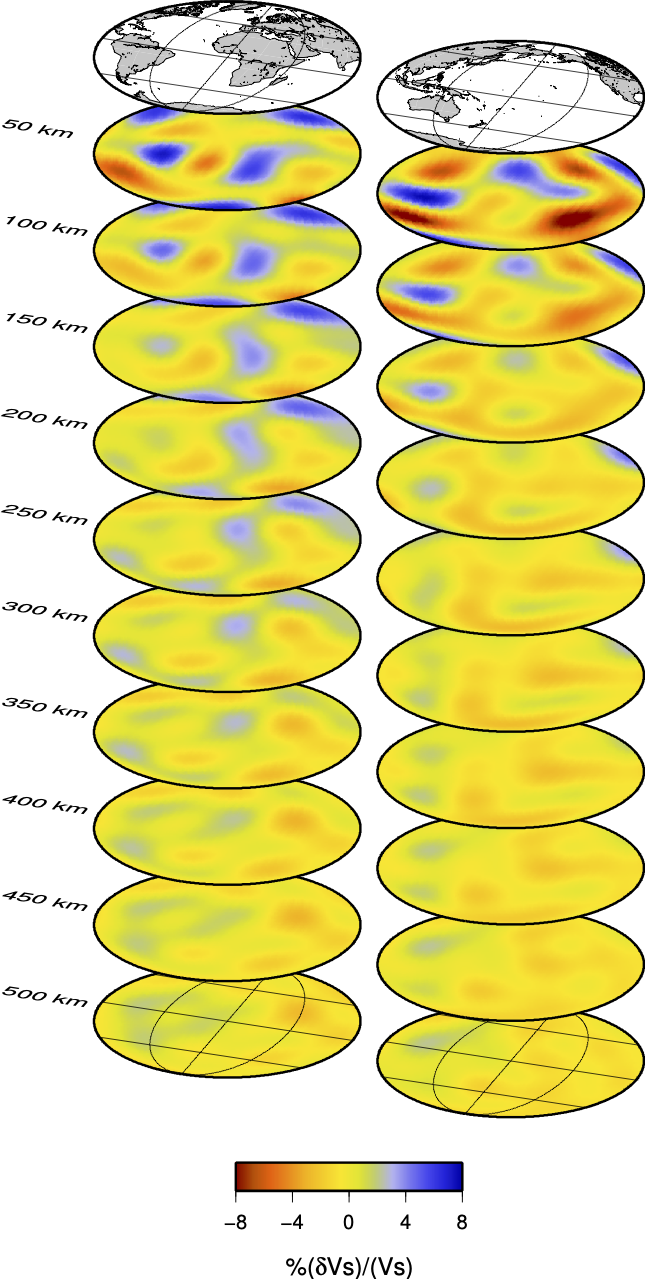
Dr Andrew Valentine is currently an Associate Professor in the Department of Earth Sciences at Durham University, a position he has held since 2023. Previously, he served as Assistant Professor at Durham (2021-2023), Fellow at the Research School of Earth Sciences at The Australian National University (2016-2021), and Postdoctoral Researcher at Utrecht University (2011-2016). He holds significant leadership roles including Director of Education for the Department of Earth Sciences (2025-present) and Secretary of the IUGG Commission on Mathematical Geophysics (2023-present). DPhil in Earth Sciences, University of Oxford (2006-2010), supervised by Prof. J.H. Woodhouse BA/MSci in Natural Sciences (Physics), University of Cambridge (2002-2006) Valentine's research focuses on mathematical and statistical tools for extracting information from observational data, with expertise in geophysical inverse theory, global seismology, and machine learning applications in Earth Sciences. His work bridges theoretical mathematics with practical geophysical problems, developing novel approaches to data analysis and interpretation. He has made significant contributions to probabilistic inversion methods, seismic tomography, and the application of deep learning to geoscience problems. Analysis of his recent publications reveals a strong trend toward integrating machine learning with traditional geophysical methods. His work spans from theoretical developments in Bayesian inference and optimal transport to practical applications in seismic modeling, mantle dynamics, and volcanic processes. A notable pattern is his focus on uncertainty quantification in geophysical models and the development of efficient computational frameworks for complex inverse problems. His research increasingly incorporates neural networks and other AI techniques to address longstanding challenges in Earth Sciences. Harold Jeffreys Lectureship, Royal Astronomical Society (2025) ARC DECRA Fellowship (2018-2021) Multiple Geophysical Journal International Outstanding Reviewer citations Geophysical Journal International Student Author Award (2010) Valentine has supervised numerous PhD students including Buse Turunçtur, Matthias Scheiter, Suzanne Atkins, Paul Käufl, and Ralph de Wit, with thesis topics spanning sparsity-constrained inversion, Monte Carlo methods, mantle convection patterns, and probabilistic source inversion. His supervision extends to current students Arijit Chakraborty, Charlotte Aulton, Hanna-Riia Allas, Isaac Abbott, and Ugurcan Cetiner. He has served on various editorial boards including as Editor for Geophysical Journal International (2020-2025) and has been involved in major collaborative projects through organizations like CIG. As Director of InLab since 2018, Valentine leads a research group focused on developing innovative computational approaches to geophysical problems. His team has produced influential open-source software like pyprop8 for seismic modeling and has pioneered applications of deep learning to problems ranging from glacial isostatic adjustment to volcanic glass properties. The group maintains strong international collaborations, particularly with researchers at The Australian National University where Valentine holds an Honorary Senior Lecturer position (2021-2025).
Bernhard Beck-Winchatz is a Professor of Physics & Astrophysics at DePaul University's College of Science and Health. He holds several leadership positions including Interim Director of the STEM Center, Graduate Program Director for Physics & Astrophysics, and Campus Director of the Illinois Space Grant Consortium. His academic responsibilities span teaching and program development across multiple levels of science education. His research focuses on innovative STEM education methodologies, particularly in astronomy and physics pedagogy. Key interests include: Developing practical classroom applications for astronomy concepts Designing high-altitude balloon experiments for educational settings Creating assessment tools for science literacy Implementing technology-enhanced learning in earth/space science Teacher training programs for urban and K-12 environments Beck-Winchatz's publications consistently explore science education techniques, with strong emphasis on: Hands-on experimental learning (particularly balloon-based projects) Integration of digital tools like Google Sky and GPS in curriculum Assessment of non-science majors' understanding Development of accessible urban astronomy programs His work frequently appears in education-focused journals like The Classroom Astronomer and conference proceedings.
Markus Pössel serves as Managing Scientist at Haus der Astronomie (House of Astronomy), Senior Outreach Scientist at the Max Planck Institute for Astronomy, and Director of the International Astronomical Union's Office of Astronomy for Education. Based at the MPIA Campus in Heidelberg, he has dedicated his career to astronomy education and outreach since completing his PhD in quantum gravity in 2003. His research interests focus on effective methods for teaching complex astrophysical concepts to non-specialists, with particular expertise in relativity physics, cosmology education, and science communication. Pössel has developed numerous educational resources and regularly contributes to teacher training programs through Heidelberg University partnerships. His recent publications reveal a consistent focus on making advanced astronomical concepts accessible, with work spanning gravitational waves, black holes, cosmic expansion models, and astronomy education methodology. The publications demonstrate his dual commitment to theoretical understanding and practical educational application. Hanno and Ruth Roelin Prize for Science Communication (2007) As an educator, Pössel mentors pupils during research internships and actively participates in teacher training events. His YouTube series 'Faszination Astronomie Online' (330 episodes), 'Fragen ans Universum' (34 episodes), and 'Astro & Co.' have reached wide audiences. He also contributes to the Einstein Online portal and maintains the 'Relativ einfach' blog. At Haus der Astronomie, Pössel oversees a variety of outreach activities including guided tours, educational resources for media and planetaria, and collaborations with Heidelberg University on teacher training programs for physics educators.
Dr. Carolin Liefke serves as Deputy Managing Scientist at the Haus der Astronomie (Center for Astronomy Education and Outreach) in Heidelberg and Deputy Director of the International Astronomical Union Office of Astronomy for Education. With over 20 years of experience in astronomy education and outreach, she has been a research associate at Haus der Astronomie since 2010 and became Germany's National Outreach Coordinator for the IAU in 2020. Dr. Liefke's work focuses on bridging professional astronomy with educational practice through multiple initiatives including astronomy courses for pre-service physics teachers at the University of Heidelberg, the 'Telescope Driver's Licence' teacher training program, the HdA partner school network, and the IASC Pan-STARRS asteroid search program that enables students to discover asteroids using telescope time in Hawaii. She also coordinates programs for gifted students, high school research opportunities, and public events at Haus der Astronomie. Her research background in stellar activity and X-ray astronomy informs her educational approach, though her current work emphasizes translating astronomical research into accessible educational content. The 15 most recent publications in her portfolio demonstrate a clear shift from refereed astronomy research papers to educational materials, reflecting her career transition toward specializing in astronomy education. National Outreach Coordinator for Germany of the International Astronomical Union (since 2020) Executive board member of Vereinigung der Sternfreunde (German amateur astronomy association) Regular contributor to astronomy education journals and publications Author of numerous educational materials for teachers and students Active science communicator through social media and public events Dr. Liefke teaches multiple seminars annually at the University of Heidelberg for pre-service physics teachers, covering topics from basic astronomy concepts to current research headlines. Her educational philosophy emphasizes hands-on experience with real astronomical data and equipment, as evidenced by her development of the 'Telescope Driver's Licence' program that trains teachers to use school telescopes effectively. At Haus der Astronomie, she works within the MPIA-Campus infrastructure to create educational experiences that connect students and teachers with cutting-edge astronomical research while making complex concepts accessible to diverse audiences.
Dr. Thomas Müller is Scientific Staff at Haus der Astronomie (House of Astronomy) in Heidelberg, Germany, a center for astronomy education and outreach affiliated with the Max Planck Institute for Astronomy. He has held this position since April 2016, following a PostDoc at the Visualization Research Center of the University of Stuttgart from 2006-2015. Dr. Müller's research focuses on visualization of astronomical and astrophysical phenomena, with particular expertise in: Visualization in Relativity (both special and general) Planetarium visualization techniques Geomorphology visualization Scientific software development for education and public outreach His work bridges complex theoretical physics concepts with accessible visual representations, making advanced astronomical phenomena understandable to diverse audiences. Dr. Müller develops specialized software tools that enable interactive exploration of astronomical data and relativistic effects. Dr. Müller's publication record demonstrates consistent contributions to astronomical visualization, with recent work focusing on: Navigation of the Gaia catalog through the Gaia Sky software Relativistic ray tracing in four-dimensional spacetimes Visualization techniques for rotating wormholes and other exotic spacetimes As an educator and outreach specialist, Dr. Müller has contributed to major exhibitions including the Einstein exhibition in Ulm (2004) and Bern (2005), and has developed TouchTable applications for the 'Faszination Astronomie' exhibition. His monograph 'Spezielle und allgemeine Relativitätstheorie' (2015) has become a valuable resource for understanding relativistic visualization techniques.
Heidi Korhonen serves as Head of the Technical Departments, Project Coordinator, and Astronomer at the Max Planck Institute for Astronomy (MPIA) in Heidelberg, Germany. She leads critical technical divisions including Engineering Design, Precision Mechanical Workshop, Electronics, Software, and Instrumentation, providing essential infrastructure for astronomical research. Her professional focus centers on enabling observational astronomy through advanced technical systems development: Astronomical Instrumentation Precision Engineering for telescope components Electronics integration in observational hardware Specialized software for astronomical data acquisition General astronomy support systems Dr. Korhonen's work directly facilitates MPIA's research capabilities by maintaining cutting-edge technical resources and instrumentation for observational projects.
Pierre-Antoine Thouvenin is an Assistant Professor at Centrale Lille, a prestigious engineering school within the University of Lille community in France. He is a member of the SigMA team from the CRIStAL laboratory (Centre de Recherche en Informatique, Signal et Automatique de Lille), where he conducts research on inverse problems with applications to remote sensing and astronomy. His academic journey began with an Engineering degree in Electronics and Signal Processing from INP - ENSEEIHT Toulouse in 2014, followed by a Master of Science in "Signal, Image, Acoustics" from the same institution. He completed his Ph.D. in "Signal, Image, Acoustics" from Institut National Polytechnique de Toulouse between 2014 and 2017, with research focused on modeling spatial and temporal variabilities in hyperspectral image unmixing. Thouvenin's research interests span several interconnected areas in signal processing and computational imaging. His primary focus is on solving inverse problems, particularly in the context of radio-interferometric imaging for astronomy and hyperspectral image unmixing for remote sensing applications. He has made significant contributions to developing advanced algorithms for handling spectral variability in hyperspectral data and for image reconstruction in radio astronomy. His work often combines Bayesian statistical methods with optimization techniques to address challenging high-dimensional problems. A distinctive aspect of his research is the development of distributed and parallel computational methods that enable processing of extremely large datasets that would be intractable with conventional approaches. An analysis of his recent publications reveals a strong trend toward developing distributed and parallel computational methods for large-scale inverse problems. His work increasingly integrates machine learning approaches, particularly neural networks, with traditional signal processing techniques. There's a clear progression from theoretical developments in hyperspectral unmixing to practical applications in astronomy, particularly through his involvement in the ORION-B project where he applies statistical methods to infer physical conditions in star-forming regions. His most recent work demonstrates sophisticated integration of spatial regularization techniques with Bayesian inference for astrophysical parameter estimation. Prix Léopold Escande from Institut National Polytechnique de Toulouse (2017) - awarded to the best PhD theses defended at INPT Prix de l'Institut National Polytechnique de Toulouse (2014) - awarded for outstanding academic achievement during engineering studies Thouvenin is actively involved in mentoring the next generation of researchers. He currently co-supervises the PhD thesis of Pierre Palud on "Statistical methods for model inversion and spatial distribution of physico-chemical properties of the molecular cloud Orion B" as part of the CNRS 80|Prime project OrionStat. His research is supported through various academic collaborations and projects, including the ORION-B project led by Jérôme Pety, which involves molecular line observations from the IRAM-30m Large Program. He has established productive international collaborations, particularly with researchers at Heriot-Watt University in Edinburgh where he worked as a Research Associate from 2017-2019. Thouvenin is a key member of the SigMA team within the CRIStAL laboratory, a joint research unit between Centrale Lille, INRIA, and University of Lille. His work often intersects with the ORION-B project, where he collaborates with astrophysicists to develop statistical methods for inferring properties of Galactic and extra-galactic star forming regions. This interdisciplinary environment fosters innovation at the intersection of signal processing, statistics, and astronomy. He has developed expertise in translating complex statistical methodologies into practical computational tools that address real-world challenges in both remote sensing and astronomical imaging.
Dr. Peter Weilbacher is a Scientific Staff member at the Leibniz Institute for Astrophysics Potsdam (AIP), working within the 3D and Multi Object Spectroscopy research group. His work focuses on integral field spectroscopy and its application to various astronomical objects including starburst galaxies, interacting and merging galaxies, and dwarf galaxies. Dr. Weilbacher specializes in integral field spectroscopy with particular expertise in data reduction methods and software . His research interests span galaxy evolution studies, instrument development, and data visualization techniques. He has made significant contributions to major astronomical instrumentation projects, particularly the MUSE spectrograph where he designed its data reduction software and wrote most of the code. His recent publication record demonstrates expertise across multiple domains of observational astrophysics, with a strong emphasis on using integral field spectroscopy to study galaxy structures, kinematics, and evolution. His work spans from nearby galaxies like the Orion Nebula and Antennae Galaxy to distant quasars and the circumgalactic medium, showing both depth in specific systems and breadth across cosmic time. Dr. Weilbacher is currently leading AIP's contribution to the development of the BlueMUSE integral-field spectrograph while also contributing to the commissioning of the 4MOST spectrograph and studies for the Wide-Field Spectroscopic Telescope. His work bridges instrumental development with cutting-edge astrophysical research, making him a key figure in advancing observational capabilities in extragalactic astronomy.
Nikolai Piskunov is a Professor in the Department of Physics and Astronomy at Uppsala University, Sweden, specializing in high-resolution spectroscopy applications for stellar and exoplanetary research. His work bridges observational astronomy, theoretical modeling, and instrument development. His primary research interests include: Stellar spectroscopy and atmospheric analysis Exoplanet detection and characterization Stellar magnetic field mapping and analysis Doppler imaging techniques for stellar surface mapping Development of spectroscopic instrumentation and data analysis methods Chemical abundance studies of various stellar types Professor Piskunov's recent publications reveal a strong focus on cutting-edge research using instruments like CRIRES+ on the Very Large Telescope. His work spans from detailed studies of stellar magnetic fields in chemically peculiar stars to groundbreaking analyses of exoplanet atmospheres, particularly ultra-hot Jupiters. His research group has made significant contributions to understanding atmospheric dynamics, chemical compositions, and temperature structures in both stellar and planetary systems. He has developed or contributed to several important software tools for astronomical spectroscopy, including the widely used Spectroscopy Made Easy (SME) package and its Python implementation PySME. His work on optimal extraction of echelle spectra has significantly improved data reduction methodologies in the field. Professor Piskunov maintains extensive international collaborations across Europe and has contributed to major instrumentation projects including CRIRES+ and future instruments for the Extremely Large Telescope. His research continues to evolve with current trends in astronomy, particularly in the rapidly developing field of exoplanet characterization where high-resolution spectroscopy provides unprecedented insights.