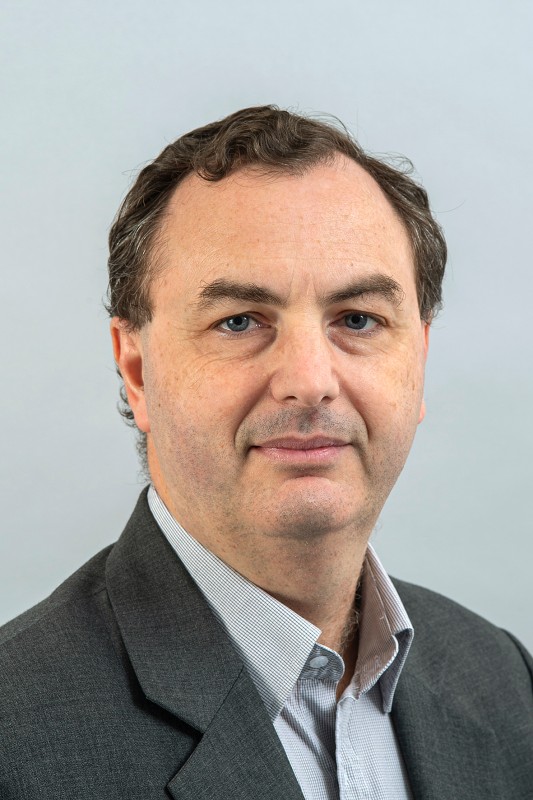
Morgan Fouesneau is an Astrophysicist and Senior Data Scientist at the Max Planck Institute for Astronomy (MPIA), holding a tenure position since 2021. He leads the Astronomy Data Science Department, focusing on advancing data-driven approaches in astrophysics. His roles include supporting cutting-edge research, developing foundational coding skills, and fostering collaborations in data science. Education: PhD in Astrophysics, University of Strasbourg (2010) Master's in Astrophysics, University of Strasbourg (2007) Engineer degree in Fundamental Physics, Télécom Physique Strasbourg (2007) Research Interests: Fouesneau's work bridges astrophysics and data science, emphasizing large-scale data analysis (terabyte datasets), machine learning applications, and probabilistic modeling. Key areas include star formation in galaxies, Galactic structure, and cosmological context through chemical patterns. He contributes to major projects like Gaia and 4MOST, leading software development and parameter estimation. Recent Projects: Validation of Gaia astrophysical parameters (CU8 team) 4MOST classification pipeline development (4CP) Bayesian Extinction and Stellar Tool (BEAST) Labs/Teams: Part of the Data Science Group at MPIA, contributing to interdisciplinary collaborations in nuclear physics, solar weather, and organic solar cell modeling.
Dr. Francesco Biscani is a Research Fellow in the Theory of Planet and Star Formation group at the Max Planck Institute for Astronomy. His research focuses on computational astrophysics, specifically N-body simulations of celestial mechanics and the formation/evolution of small solar system bodies. He investigates planetesimal formation mechanisms, cometary dynamics, and Kuiper Belt object evolution through advanced numerical modeling techniques. Research interests include: High-performance computing applications in astrophysics Formation mechanisms of planetesimals and comets Dynamical evolution of Kuiper Belt objects and Trojans Numerical methods for gravitational simulations As an active contributor to scientific computing communities, Dr. Biscani collaborates on interdisciplinary projects involving open-source software development for astronomical simulations. His work supports the SPP 1833 research network 'Building a Habitable Earth'. Contact: Königstuhl 17, 69117 Heidelberg, Germany.
Dr. Karol Fitzgerald is a Lecturer in the Department of Computer and Software Engineering at EURECOM. Her interdisciplinary research bridges computer science and astronomy, developing computational tools for astrophysical modeling and analysis. She created the PYCROSS software for 3D ionization modeling of nebulae and has contributed to computer vision systems for material science applications. Her publications demonstrate expertise in both astronomical data processing and practical engineering solutions, with recent work focusing on spin-orbit dynamics in binary star systems and precision measurement techniques for smart materials.
John Beaver is a Professor at the Fox Cities Campus of the University of Wisconsin–Oshkosh, specializing in the intersection of photography, physics, and art. His research explores interdisciplinary methodologies that bridge scientific principles with artistic expression, particularly focusing on light physics, detector technologies, and DIY photographic processes. He has authored numerous works analyzing the philosophical and technical dimensions of photography, including its historical techniques and modern digital advancements. Research Interests include the geometry of light, energy dynamics in photography, and the material science of photographic processes. His recent work emphasizes 'ephemeral process' photography and the artistic representation of scientific concepts like energy and exposure. He has also contributed to astronomical photography and detector technology research. Publications span 40+ years, with a focus on 2022-2024 articles exploring light physics, art-science synthesis, and detector innovation. His early works include studies on comets and open star clusters, demonstrating a sustained engagement with both artistic and scientific domains. Awards : No awards explicitly mentioned in the provided texts. Grants & Labs : No specific grants or lab affiliations detailed in the text. His work often involves low-cost experimental setups, such as DIY spectrometers and pinhole cameras.
Dr Megan Schwamb is a Senior Lecturer at the Queen's University Belfast , affiliated with the Archaeology Research Centre and School of Mathematics and Physics . Her research spans planetary formation, Solar System dynamics, and citizen science applications. Specializes in Kuiper Belt and Centaur population studies Develops community tools for the Rubin Observatory Extensive media engagement on planetary science topics Research Trends in her recent work include: LSST survey simulations and data analysis Cometary activity onset mechanisms Randomization control in astronomical models Citizen science pipeline development Scientific Awards Carl Sagan Medal (2017) for public communication AURA Science Award (2019) for innovation NSF Postdoctoral Fellowship (2010) Academia Sinica Fellowship (2013) She actively supervises PhD students in planetary astronomy and Mars seasonal processes, while organizing QUB Astronomy Day and mentoring underrepresented groups through initiatives like Girls in Maths and Physics .
David Hobbs is a Professor in the Department of Physics at Lund University, specializing in astrometry and space missions. He is a key contributor to the European Space Agency's Gaia mission, focusing on astrometric data processing and fundamental physics applications. His research includes developing algorithms for the Astrometric Global Iterative Solution (AGIS) and analyzing Gaia's data to study galactic structure, exoplanets, and stellar dynamics. Hobbs has also proposed the GaiaNIR mission, aiming to expand astrometry into near-infrared wavelengths. Earlier work includes software development for XMM-Newton and Integral observatories, as well as spacecraft attitude control algorithms for Herschel and Planck missions. Research interests include: High-precision astrometry and mission design Galactic structure analysis using Gaia data Exoplanet detection via astrometric methods Near-infrared astrometry for obscured regions Data processing algorithms for large astronomical surveys Recent articles highlight advancements in Gaia DR3 data exploitation, including chemical cartography of the Milky Way and discovery of black holes via astrometric techniques. Future work focuses on GaiaNIR's development to enhance astrometric capabilities for 12 billion stars.
Falk Herwig is a Professor and Director of the Astrophysical Research Center (ARC) at the University of Victoria's Department of Physics and Astronomy. His research focuses on stellar hydrodynamics, nucleosynthesis, and the origin of elements. He leads the Computational Stellar Astrophysics (CSA) group, which conducts large-scale 3D hydrodynamics simulations of stellar convection and nucleosynthesis processes. The CSA group collaborates with the NSF Physics Frontier Center Joint Institute for Nuclear Astrophysics (JINA-CEE) and the NuGrid collaboration, leveraging high-performance computing resources like the Niagara supercomputer. Herwig's work includes studying convection-nuclear burning interactions in massive and binary stars, nucleosynthesis in diverse astrophysical environments, and the chemical evolution of galaxies. He has pioneered methods to model stellar yields and integrate computational models with observational data. His research spans topics from core convection in massive stars to the physics of merging white dwarfs and nova explosions. Herwig has contributed significantly to advancing computational infrastructure for astrophysics, including the development of tools like SYGMA for galactic chemical evolution modeling. His projects are supported by Compute Canada and involve collaborations with international institutions. Recent research highlights include investigating the role of neutron capture processes in element formation and refining models of white dwarf cooling and stellar evolution.
Stefan M. Wild serves as Director of the Applied Mathematics and Computational Research (AMCR) Division and Senior Scientist at Lawrence Berkeley National Laboratory, while holding an adjunct faculty position in the Industrial Engineering and Management Sciences (IEMS) department at Northwestern University's McCormick School of Engineering. He also serves as a Senior Fellow at NAISE (Northwestern Initiative for AI and Society). Dr. Wild earned his Ph.D. and M.S. in Operations Research from Cornell University (2009, 2007) and his M.S. and B.S. in Applied Mathematics from the University of Colorado, Boulder (2003, 2002). His academic journey includes an Argonne Director's Postdoctoral Fellowship (2008-2010) and the DOE Computational Science Graduate Fellowship (2005-2008). His research program focuses on developing numerical optimization and automated learning algorithms for challenging science and engineering problems at interfaces involving computer simulations, complex data, and physical experiments. Dr. Wild leads multiple community software projects including BAND, parMOO, libEnsemble, deepHyper, NUCLEI, POptUS, and surmise, with applications spanning nuclear physics, materials science, and astrophysics. His work bridges derivative-free optimization, uncertainty quantification, high-performance computing, and scientific machine learning. Dr. Wild has advised numerous postdocs who have established successful careers at national laboratories and academic institutions. His editorial responsibilities include Mathematical Programming Computation, INFORMS Journal on Computing, Data Science in Science, and SIAM Review. U.S. Department of Energy Early Career Research Award (2020) STS Forum Future Leader (2018) IDC HPC Innovation Excellence Award (2015) SIAM SIGEST Award (2014) Strategic Laboratory Leadership Program (UChicago Booth School) (2013) DOE Computational Science Graduate Fellowship (2005-2008) As AMCR Division Director, he leads a diverse team of applied mathematicians, computational scientists, and software engineers addressing some of the world's most challenging computational problems across scientific and engineering disciplines. His leadership emphasizes both technical excellence and commitment to inclusion, diversity, equity, and accountability in scientific research.
Philip Mocz is a computational research scientist at the Flatiron Institute's Center for Computational Astrophysics, part of the Simons Foundation. His work focuses on developing scalable, high-performance multiphysics simulation software with a growing emphasis on integrating modern AI techniques and automatic differentiability. Previously, he was a Computational Physicist at Lawrence Livermore National Laboratory, where he specialized in designing high-order Arbitrary Lagrangian-Eulerian (ALE) finite element methods for magnetohydrodynamics (MHD) simulations on heterogeneous computing architectures as part of the Multiphysics on Advanced Platforms Project (MAPP). Dr. Mocz earned his Ph.D. in Astrophysics from Harvard University in 2017 under Lars Hernquist, where he developed a finite-volume moving mesh magnetohydrodynamics algorithm applied to study structure formation and magnetic field amplification, integrating his solvers into the Arepo simulation code. Prior to his doctorate, he received an A.B. in Mathematics and Astrophysics from Harvard in 2012. His research spans multiphysics simulations, cosmology, galaxy formation, black hole physics, turbulence, numerical methods, and AI integration in computational astrophysics. A significant focus involves cosmological simulations of alternative dark matter candidates, particularly fuzzy dark matter. His work bridges theoretical astrophysics with high-performance computing, developing novel simulation frameworks that incorporate modern computational techniques. Dr. Mocz's publication record reveals a strong trajectory in computational methods for astrophysical problems, with increasing integration of AI techniques in recent years. His research demonstrates expertise across multiple domains including quantum mechanics applications to cosmology, turbulence modeling, and the development of advanced simulation algorithms. The interdisciplinary nature of his work connects astrophysics with computer science and applied mathematics. He maintains an active educational presence through his blog featuring approximately 100-line Python tutorials on scientific computing at the undergraduate level, published on Medium and followed on Twitter. His educational materials cover fundamental computational methods including finite difference approaches, Riemann solvers, and differentiable simulations using JAX. Dr. Mocz has served as a Teaching Fellow for Harvard courses including Astronomy 151 (Astronomical Fluid Dynamics), Applied Computation 274 (Computational Fluid Dynamics), and Applied Mathematics 205 (Advanced Scientific Computing). His outreach activities include mentoring for the LLNL DSTI Research Program, NASA Cosmic Origins Transitional Leadership Team, and Princeton Astrophysics Undergraduate Summer Research Program. Originally from Hawaii, he enjoys outdoor activities when not working. His professional presence includes active GitHub repositories (pmocz), a personal website (pmocz.github.io), and engagement on Bluesky (@philipmocz.bsky.social), where he shares insights about computational physics and scientific software development.
Prof. Alexandre Refregier is a Full Professor at the Department of Physics, ETH Zürich. He leads research in cosmology and astrophysics, focusing on dark energy, dark matter, and large-scale structure analysis using observational, theoretical, and instrumental approaches. His work spans gravitational lensing, cosmic microwave background, and galaxy cluster studies. He has contributed to major projects like the Dark Energy Survey and Euclid mission, leading instrumental development and data analysis efforts. Refregier holds a PhD from Columbia University (1997) and has held positions at institutions including Princeton University and the University of Cambridge. Education: PhD in Physics, Columbia University, 1997 M.Phil. and M.A. in Physics, Columbia University, 1992–1993 B.S. in Physics (Summa cum Laude), University of Texas at Austin, 1991 Research Interests: Dark energy/dark matter dynamics, weak lensing, baryon acoustic oscillations, cosmic microwave background analysis, and cosmological probes. His interdisciplinary methods combine theoretical modeling with cutting-edge observational techniques and instrument design. Key Contributions: Over 200 published papers (e.g., on Euclid mission instrumentation, joint lensing-CMB analyses, and baryonic feedback modeling). Active in developing simulation tools like PyCosmo and GalSBI for cosmological inference. Awards/Grants: Not explicitly listed, but his leadership in major collaborations implies significant funding and recognition. Active in Simons Foundation-supported research. Labs/Teams: Leads the Cosmology Group at ETH Zurich, involved in Euclid's science and instrument teams, and collaborates on projects like HIRAX and SKA simulations.
Rocio Kiman is a Sherman Fairchild Postdoctoral Scholar and Research Associate in Astronomy at the California Institute of Technology (Caltech), within the Division of Physics, Mathematics and Astronomy. Her research focuses on stellar astrophysics, brown dwarf studies, and exoplanet characterization, leveraging advanced observational facilities like the James Webb Space Telescope (JWST). She specializes in analyzing spectral energy distributions, stellar dynamics, and magnetic phenomena in low-mass stars and substellar objects. Key research areas include the evolution of cold worlds such as brown dwarfs and exoplanets, the application of machine learning to stellar pulsation studies, and the exploration of comoving stellar groups like the Oceanus moving group. Her work bridges observational astronomy with theoretical modeling, contributing to catalogs such as VizieR and developing tools like the Spectral Energy Distribution Analyzer (SEDA). Rocio's affiliations include collaborations with Caltech's Infrared Processing and Analysis Center (IPAC) and contributions to citizen science projects like Backyard Worlds: Planet 9. Her email is rkiman@caltech.edu .
Chi Nguyen is a Researcher in the Division of Physics, Mathematics and Astronomy at the California Institute of Technology (Caltech). They specialize in astrophysical instrumentation and observational cosmology, focusing on projects like the Cosmic Infrared Background ExpeRiment (CIBER) and SPHEREx. Their work involves analyzing extragalactic background light, developing advanced infrared detectors, and calibrating space-based instruments. Research interests include studying the cosmic infrared background radiation, intra-halo light in galaxies, and improving observational techniques for large-scale structure formation. Nguyen has contributed to rocket-borne experiments and the Event Horizon Telescope collaboration, advancing our understanding of black holes and cosmic structures. Publications highlight expertise in instrument calibration (e.g., SPHEREx focal plane), data analysis for intensity mapping, and polarization measurements of zodiacal light. Their work bridges theoretical cosmology with applied instrumentation development, addressing challenges in precision astrophysical measurements. No scientific awards or grants are explicitly mentioned in the provided materials. Collaborative projects with the CIBER and SPHEREx teams suggest involvement in large-scale astronomical initiatives.
Ting Lei is an Associate Professor in the Department of Geography at the University of Kansas, located in Malott Hall #1021. His primary research interests focus on Geographic Information Science (GIS), including algorithmic development, geospatial computational methods, network analysis, location theory, and web GIS. He also explores remote sensing applications and advancements in GIS technology such as data structures, databases, computational geometry, and open-source software. His teaching covers GIS principles, transportation geography, and geo-computational methods. Dr. Lei's publications emphasize spatial data conflation, transportation network vulnerability, and optimization models for facility location. Recent works include studies on optimal spatial data matching, hub center interdiction problems, and unified location-allocation approaches integrating GIS and distributed computing. His research addresses real-world challenges in urban planning, water resources management, and celestial imaging analysis. Key research trends in his articles include computational GIS advancements, transportation infrastructure resilience, and interdisciplinary applications of geospatial technologies. No specific scientific awards are listed, though his extensive publication record highlights scholarly contribution. Advising and grants details are not provided in the text, but his active research in multiple geospatial domains indicates engagement with academic and applied projects.
Dr Michael Cowley is a Senior Lecturer in the School of Chemistry & Physics at Queensland University of Technology (QUT), Faculty of Science. He leads the QUT Astrophysics Research Group and serves as the Academic Lead of Learning and Teaching. His research spans extragalactic astrophysics, galaxy evolution, and physics education, with strong involvement in major surveys such as ZFOURGE, ZFIRE, TAIPAN, and ASKAP-EMU. Research Interests: Dr Cowley's work focuses on the co-evolution of galaxies and supermassive black holes, using multi-wavelength data to study star formation, AGN activity, and quenching mechanisms across cosmic time. He also investigates physics and astronomy education, with a commitment to embedding Indigenous knowledges in science curricula. Publication Trends: His recent publications (2020–2025) reflect a strong focus on high-redshift galaxy populations, radio surveys (EMU), source detection algorithms (Hydra), and the integration of observational data with simulations. There is a clear trajectory toward large-scale data analysis, collaborative survey science, and methodological innovation in source finding and galaxy characterisation. Scientific Awards: Vice-Chancellor's Award for Excellence (2022) Faculty of Science's Educator of the Year (2021) Research Centre for Astronomy, Astrophysics and Astrophotonics Observing Funding Award (2015) Member of the International Astronomical Union (2019) Member of the Astronomical Society of Australia (2014) Member of the Australian Institute of Physics (2010) Member of the Institute of Physics (2010) Supervision and Grants: Dr Cowley supervises Honours, Masters, and PhD students in areas such as star formation rate estimation, galaxy evolution, and radio survey analysis. He is actively involved in education leadership and curriculum development. While specific grants are not listed, his leadership in major surveys implies significant research funding and collaboration. Labs and Teams: He leads the QUT Astrophysics Research Group and is a key member of international collaborations including the ZFOURGE, ZFIRE, TAIPAN, and EMU surveys, contributing to large-scale data analysis and scientific interpretation.
Dr.-Ing. Jan Kodet is a researcher at the Geodetic Observatory Wettzell, affiliated with the Technical University of Munich (TUM), specifically within the Engineering Institute for Astronomical and Physical Geodesy. His work centers on advanced instrumentation and measurement techniques in space geodesy, including satellite laser ranging, VLBI, and ring laser interferometry for monitoring Earth's rotation. University: Technical University of Munich Research Institute: Engineering Institute for Astronomical and Physical Geodesy Observatory: Geodetic Observatory Wettzell Email: jan.kodet@tum.de His research interests span space geodesy, ring laser interferometry, time and frequency transfer, satellite tracking, and geodetic instrumentation. He develops high-precision systems for optical timing, photon counting, and co-location of geodetic techniques. His work contributes to global geodetic reference systems and fundamental metrology. The recent publications highlight a strong focus on measuring Earth's rotation using large ring lasers (e.g., ROMY), developing optical event timers for satellite ranging, and advancing VLBI techniques for satellite tracking. There is a clear trend toward integrating multiple geodetic techniques and achieving sub-picosecond timing precision for improved geodetic accuracy. Dr. Kodet has supervised master’s students, including Hanna, Maria (2022) on clock comparisons using event timers and Wong, Siow Kay (2018) on atomic clock synchronization via GNSS. His collaborative research involves institutions and projects like ESA, DFG (NEROGRAV, UPLIFT), and international geodetic networks. He is a key contributor to projects involving the Wettzell observatory, such as VGOS and fundamental station development. His work is supported by involvement in major research initiatives including the DFG Research Unit NEROGRAV and the DFG Research Training Group UPLIFT, indicating active grant funding and participation in structured research programs.