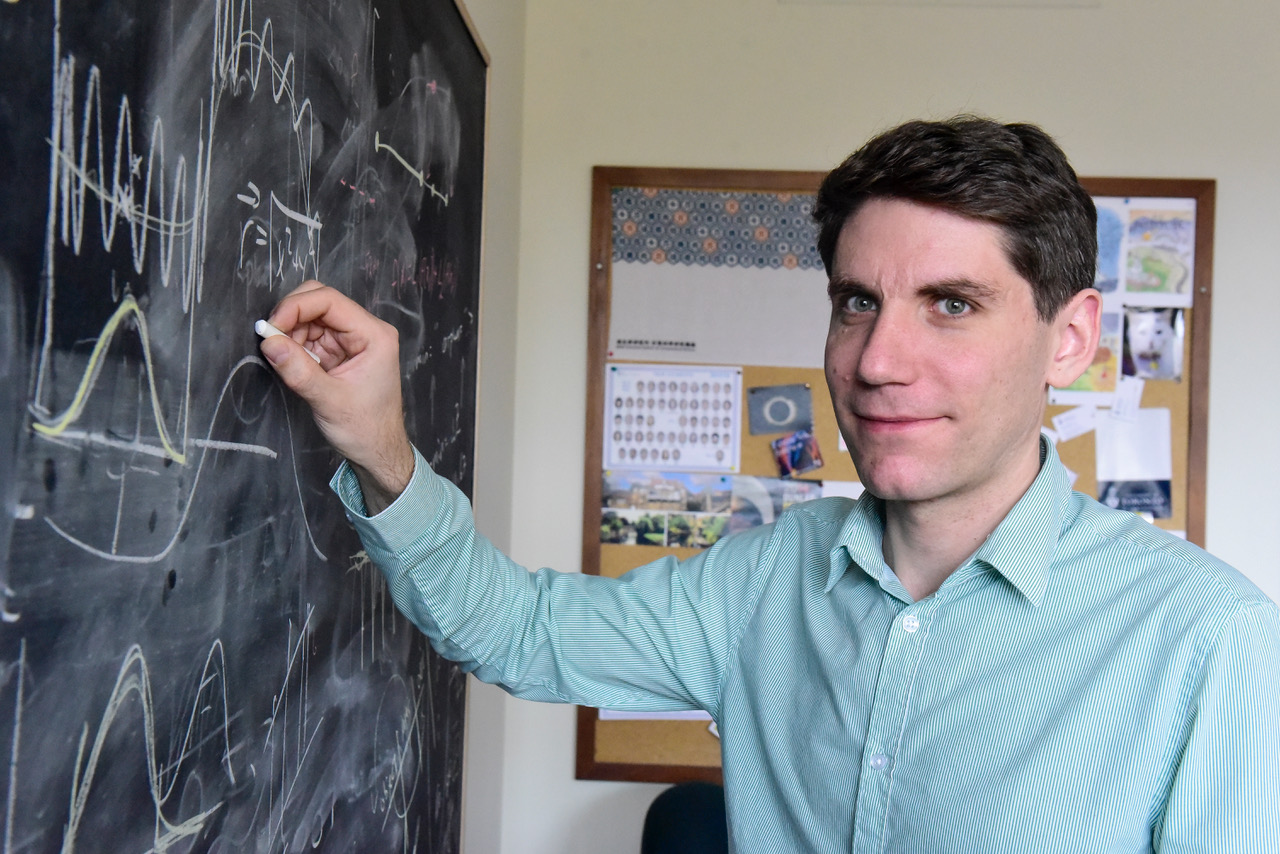
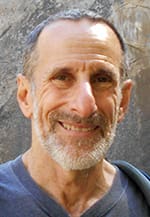
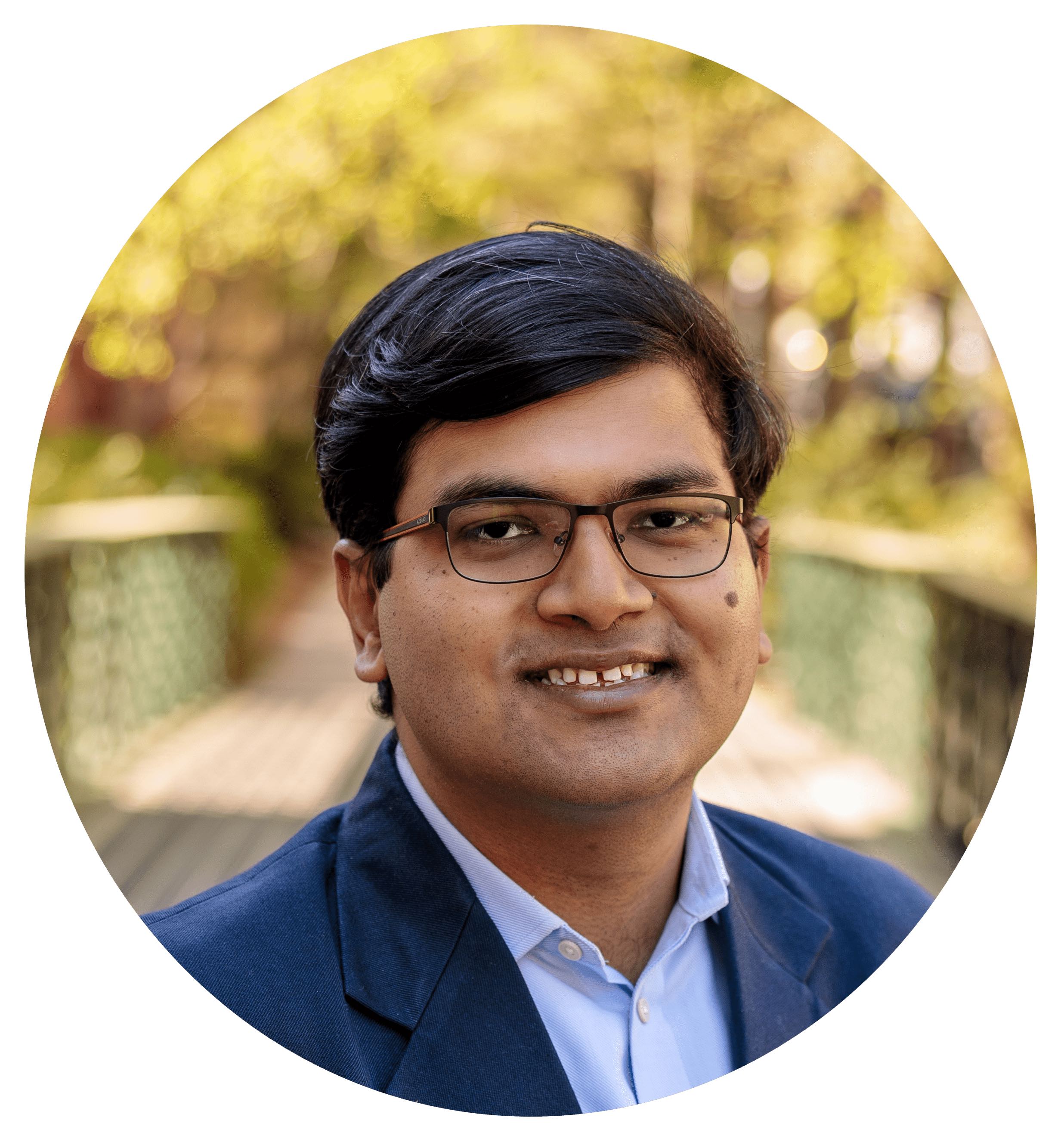
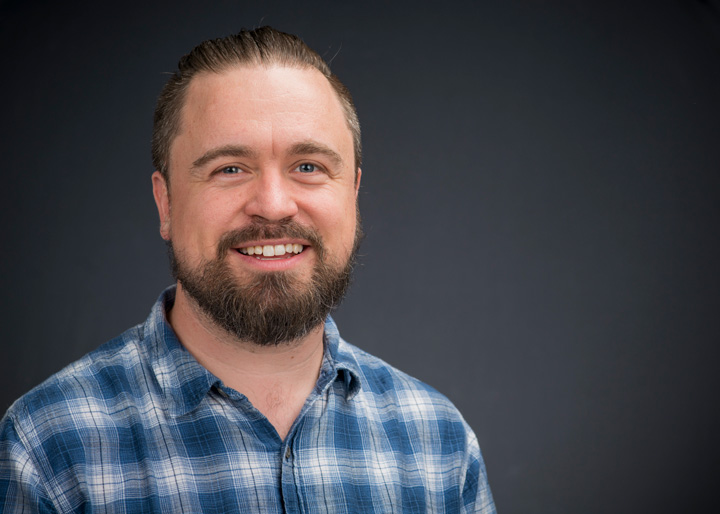
Cornelia C. Lang is a Professor in the Department of Physics and Astronomy at the University of Iowa, serving as Associate Dean for Undergraduate Education in the College of Liberal Arts and Sciences (CLAS). Her research focuses on galactic center astrophysics, utilizing radio and X-ray telescopes such as the Very Large Array (VLA) and Chandra X-ray Observatory. She holds a PhD from the University of California, Los Angeles. Her research interests include radio astronomy, X-ray astronomy, and observational studies of the interstellar medium and galactic center phenomena. She has secured funding from the National Science Foundation, NASA, and UI Internal Grants. Lang is committed to teaching, having received multiple awards for excellence in instruction, and leads initiatives in general education curriculum development through her roles in CLAS committees and the UI Path Forward's Student Success Working Group. Lang’s outreach efforts have earned recognition, including the CLAS Outreach Award (2018). She mentors students in data analysis techniques using software like IDL and collaborates with radio astronomers at the VLA. Her administrative roles include former Director of Undergraduate Studies for Physics and Astronomy and chair of the International Astronomical Union’s Galactic Center Working Group.
Matthew J. Turk is an Associate Professor at the University of Illinois at Urbana-Champaign with appointments across multiple institutions: the School of Information Sciences, the Astronomy Department, the National Center for Supercomputing Applications (NCSA), and the Center for Social & Behavioral Science. His academic journey includes a BA from Northwestern University in 2003 and a PhD from Stanford University in 2009. His office is located at 4038 NCSA, 1205 W. Clark St., Urbana, with contact number 217-333-9880. BA from Northwestern University (2003) PhD from Stanford University (2009) Turk's research spans the intersection of astrophysics and computational science, focusing on the formation of the first stars and galaxies, primordial chemistry, high-performance computing and computational simulations, and the analysis and visualization of astrophysical data. His work is deeply connected to the Event Horizon Telescope project, where he contributes to black hole imaging and analysis. He has developed significant computational tools like yt for data analysis and visualization, which are widely used in the astrophysics community. His research fingerprint shows strong connections to Event Horizon Physics (100%), Star Formation Physics (89%), Event Horizon Telescope Keyphrases (85%), Population III Stars Physics (60%), Black Hole Physics (59%), Galaxies Keyphrases (50%), Halo Keyphrases (46%), and Magnetic Field Physics (45%). Analysis of Turk's recent publications reveals a dual focus: cutting-edge black hole research through the Event Horizon Telescope collaboration and innovative work in data science and information studies. His astrophysics work centers on black hole imaging, polarization studies, and theoretical interpretations of supermassive black holes, while his information science contributions focus on data storytelling, visualization tools, and library science applications. This interdisciplinary approach bridges theoretical astrophysics with practical computational methods. Turk has made significant contributions to the Event Horizon Telescope collaboration, with numerous high-impact publications in Astronomy and Astrophysics and The Astrophysical Journal Letters. His work has been widely recognized, with research outputs picked up by over 100 news outlets, blogged about extensively, and shared across social media platforms. His work on the yt analysis and visualization toolkit has become foundational in computational astrophysics. As an advisor and collaborator, Turk works with researchers across multiple domains, from theoretical astrophysics to information science. His computational tools like yt have enabled numerous research projects across scientific disciplines. He has been involved in developing data storytelling toolkits for libraries and educational contexts, demonstrating his commitment to making complex data accessible. Turk is deeply integrated with the National Center for Supercomputing Applications (NCSA) at the University of Illinois, where he leverages high-performance computing resources for his research. He collaborates extensively with international teams through the Event Horizon Telescope project and maintains connections with the Center for Social & Behavioral Science, reflecting his interdisciplinary approach to research that spans physical sciences and information studies.
Johannes Ulf Lange is an Assistant Professor in the Department of Physics at American University's College of Arts and Sciences since 2024. His research bridges cosmology, galaxy formation, and machine learning through analysis of large astronomical datasets from major surveys including DESI, Dark Energy Survey, Hyper Suprime-Cam, and Kilo-Degree Survey. His educational background includes a PhD in Astronomy from Yale University under Frank van den Bosch, an MSc in Physics from Heidelberg University, and a BSc in Physics from Free University of Berlin, with exchange programs at UC Santa Barbara and Chinese University of Hong Kong. Prior to AU, he held postdoctoral fellowships as a Cosmology Fellow jointly appointed by UC Santa Cruz and Stanford University, followed by a Leinweber Fellowship at the University of Michigan's Leinweber Institute for Theoretical Physics. Lange's research focuses on fundamental cosmological questions: properties of dark energy and dark matter, validity of general relativity on cosmological scales, and the galaxy-halo connection. He employs advanced statistical methods including galaxy clustering, redshift-space distortions, and gravitational lensing on nonlinear scales. His recent publications demonstrate strong integration of machine learning techniques with cosmological analysis, particularly through his development of the NAUTILUS Bayesian inference sampler. His software contributions include major open-source projects: nautilus - Neural Network-Boosted Importance Nested Sampling dsigma - Galaxy-Galaxy Lensing Pipeline halotools - Large-Scale Structure Analysis Package TabCorr - Tabulated Correlation Functions These tools have become widely adopted in cosmological research. Lange actively mentors undergraduate researchers at American University, with current students investigating gravitational lensing, FLAMINGO simulations, and DESI data analysis. His former students have pursued diverse projects in galaxy-quenching mechanisms, control variates for simulations, and neural network applications in cosmology. His teaching includes PHYS-230 (Changing Views of Universe) and PHYS-396 (Data Mining/Machine Learning for Natural Sciences), with exceptional student evaluations highlighting his expertise in statistical methods and coding instruction.
Roberto Abraham is a Professor and Chair of the David A. Dunlap Department of Astronomy and Astrophysics at the University of Toronto, affiliated with the Faculty of Arts and Science. He holds a PhD from the University of Oxford (1992) and has conducted postdoctoral research at the National Research Council of Canada and Cambridge University. His research focuses on galaxy evolution, observational cosmology, and developing novel instruments like the Dragonfly Telephoto Array. He has led projects such as the Gemini Deep Deep Survey (GDDS), discovering high-redshift galaxies and pioneering automated galaxy classification systems (e.g., CAS and Gini-M20 parameters). Abraham has received prestigious awards including the Jackson-Gwilt Medal (Royal Astronomical Society), P. G. Martin Award, and Killam Research Fellowship. He has served on advisory boards for NASA’s James Webb Space Telescope and international observatories. His work combines observational astronomy with instrument innovation, addressing questions about galaxy morphology, dark matter content, and low-surface-brightness phenomena. He actively engages in public outreach, serving as Honorary President of the Royal Astronomical Society of Canada’s Toronto Centre. Abraham’s research group uses the Dragonfly Array to study ultra-diffuse galaxies and their dark matter properties, as well as leveraging JWST and Keck observations. His grants include funding from the Canada Foundation for Innovation for expanding the Dragonfly Spectral Line Mapper. He advises graduate students exploring galaxy evolution, instrument design, and computational astronomy techniques.
Hanno Rein is an Associate Professor at the University of Toronto Scarborough (UTSC), where he holds a faculty position in the Department of Physical and Environmental Sciences. He is also affiliated with the University of Toronto's Department of Astronomy and Astrophysics and Department of Physics. His primary research involves developing numerical methods and N-body codes, most notably the REBOUND package, which enables precise simulations of planetary systems and astrophysical phenomena. Rein's work focuses on topics such as stochastic processes in planetary migration, celestial mechanics, and the dynamics of Saturn's rings. Education: PhD in Astrophysics from the University of Cambridge (2010), Master of Advanced Study (MASt) in Mathematics from the University of Cambridge (2007), and undergraduate studies in Mathematics and Physics at the University of Tübingen (2006). Research Interests: Numerical methods (including symplectic integrators), planetary system formation, stochastic migration, high-performance computing applications in astrophysics, and collisional dynamics. He is particularly known for advancing computational tools like REBOUND and its integrators (e.g., WHFast, IAS15), and for studying resonant systems and their stability. Grants & Awards: Major funding includes NSERC Discovery Grants (2020–2026, 2014–2020), the Connaught New Researcher Award (2014), and grants supporting his REBOUND development and UTSC Observatory initiatives. His work on the Exoplanet app earned recognition from the Royal Astronomical Society. Advising & Grants: Supervises graduate and undergraduate students in astrophysical simulations and computational projects. Past students have contributed to REBOUND development and studies of planetary systems. Collaborates widely with institutions like CITA, Princeton University, and international research groups. Labs/Teams: Former director of UTSC Observatory (currently non-operational due to construction). Leads the REBOUND development community, fostering open-source tools for the astrophysics community.
Prof Jon Lawrence is a distinguished academic and Head of Instrumentation at AAO-Macquarie, affiliated with Macquarie University. He leads a multidisciplinary team advancing astronomical instrumentation for premier telescopes, focusing on optical, mechanical, and software engineering. His research spans telescopes, spectrographs, and photonic technologies for capturing and analyzing astronomical light. Major projects include the Gemini North Adaptive Optics Bench (GNAO), GHOST spectrograph, and MANIFEST instrument for the Giant Magellan Telescope. He collaborates globally on adaptive optics systems and next-generation instrumentation. Key research interests include astronomical instrumentation development, photonics, optical engineering, and spectrograph design. Projects emphasize high-resolution spectroscopy, adaptive optics, and instrument integration for large telescopes. His work bridges engineering and astrophysics, enabling breakthroughs in observational astronomy. Collaborations span institutions like Gemini Observatory, Swinburne University, and international teams. Recent publications focus on commissioning results from GHOST (Gemini South), chemodynamical studies of Milky Way satellites, and foundational work on future instruments like MANIFEST and GNAO. Awards and recognitions include his role as Distinguished Professor (Technical/Commercial), reflecting industry-impactful research. Leadership roles include managing large-scale projects and teams in instrument R&D. His contributions advance both technical capabilities and our understanding of galaxies, stellar populations, and cosmic evolution.
Massimo Robberto is a Researcher at Johns Hopkins University (Department of Physics and Astronomy) and an AURA Observatory Scientist affiliated with the Space Telescope Science Institute (STScI) in Baltimore. He specializes in astronomical instrumentation, star formation (particularly in the Orion Nebula Cluster), and galaxy evolution. Previously, he held roles including Branch Manager for the JWST's NIRCam instrument, instrument scientist for Hubble's WFC3, and contributed to missions like the Frontier Fields and the ATLAS probe concept. Robberto earned a Summa cum Laude degree and PhD in Astronomy from the University of Torino. His work spans instrument development (e.g., SCORPIO for Gemini South) and observational studies using HST, Spitzer, and VLT/SPHERE. Key achievements include leading Hubble Treasury Programs on Orion and discovering brown dwarf companions to A-type stars. He has served on Decadal Survey panels and contributed to over 100 publications. Education: PhD in Astronomy, University of Torino (Italy) Summa cum Laude Degree in Physics, University of Torino Research Interests: His research focuses on instrumentation for space and ground telescopes, star formation processes (e.g., Orion Nebula), and cosmological studies using galaxy surveys. He has pioneered techniques in high-contrast imaging for exoplanets and developed software tools like TA-DA for astrophysical data analysis. Articles Overview: Recent work includes studies on exoplanet demographics around A-type stars, the Initial Mass Function in Orion, and instrument design for Gemini South's SCORPIO. His publications blend observational astronomy with instrumental innovation, emphasizing large-scale surveys and cosmic evolution. Grants & Advising: Robberto has secured significant funding for HST Treasury Programs and led international collaborations. While no formal awards are listed, an asteroid (2008 QE12) bears his name. He mentors projects on instrument development and observational strategies, contributing to the next generation of space missions like JWST and WFIRST. Labs/Teams: He leads teams at STScI and JHU, coordinating efforts for instruments like NIRCam and SCORPIO. His lab focuses on cutting-edge spectrograph design and multi-wavelength observational techniques.
Richard Wilton is an Associate Research Scientist at Johns Hopkins University, affiliated with Alex Szalay's computing research group within the Institute for Data-Intensive Engineering and Science (IDIES). He joined Johns Hopkins in 2008 after previously serving as an associate professor in general pediatrics at UCLA. Dr. Wilton's research spans multiple domains at the intersection of computing and biology. His work involves: Performance optimization of algorithms for biological sequence alignment Efficient archival and retrieval of DNA short read data Optimal integration of sequence alignment tools in genomic data analysis pipelines Software development for patient data tracking in clinical settings Design and implementation of data archives for scientific projects like the PanSTARRS survey telescope His expertise bridges big data technologies with bioinformatics applications, focusing on creating efficient computational solutions for complex biological data challenges. Dr. Wilton's work demonstrates the growing convergence between astronomical data processing techniques and genomic data analysis. Dr. Wilton received his MD from the University of California, Los Angeles where he later became an associate professor in general pediatrics with both clinical and research responsibilities before transitioning to his current research-focused role at Johns Hopkins.
Laurent Mirioni is a CNRS Research Engineer affiliated with the Plasma Physics Laboratory (LPP) UMR7648 , a joint unit of Ecole Polytechnique (Palaiseau CEDEX) and Sorbonne University (Paris). His primary role involves managing the ground segment for magnetometers on major space missions including THEMIS (NASA), MMS (NASA), BepiColombo (ESA/JAXA), JUICE (ESA), and HelioSwarm (NASA). He holds memberships in key academic and research organizations: the National Committee for Scientific Research (CoNRS) as a Section 17 office member (Solar system and distant universe), and the Steering Committee of the PICo-DevLog regional network . Education: Engineer degree from INSA Lyon Doctor of Astrophysics from the Strasbourg Astronomical Observatory Research Focus: Specializing in space plasma physics with an emphasis on mission instrumentation and spatial data processing. His work bridges astrophysical data analysis and technical software support, contributing to both the Space Plasmas team and IT infrastructure at LPP. He is actively involved in developing tools for processing spatial data and advising on mission engineering challenges. Advising & Grants: Oversees thesis and internship proposals related to space plasma missions and IT support for scientific research. While no specific advisees are listed, his role directly impacts graduate training through proposal guidance and technical mentorship. Labs & Teams: Core member of the Space Plasmas team at LPP, responsible for instrumentation and mission analysis, and collaborates with the IT team to maintain software and data infrastructure for the laboratory.
Prof. Franz Kerschbaum is a University Professor and Vice Dean of the Faculty of Earth Sciences, Geography and Astronomy at the University of Vienna. He holds a position in the Department of Astrophysics and is actively involved in teaching, including courses such as 'Space Instrumentation' and 'Observational Lab Course'. His research focuses on evolved stars (especially AGB stars), mass-loss processes, and the development of astronomical instrumentation for space missions like PLATO, CHEOPS, ARIEL, and SPICA. He has contributed to studies involving the Herschel, GALEX, and ALMA observatories, emphasizing interdisciplinary approaches to stellar evolution and exoplanet detection. Key research themes include the dynamics of circumstellar envelopes, dust formation mechanisms, and the application of advanced imaging techniques (e.g., interferometry). He collaborates with international teams on projects such as DEATHSTAR (studying AGB stars) and the EBLM Project (characterizing exoplanet hosts). His work bridges observational astronomy with technological innovation in space instrumentation. Prof. Kerschbaum has published extensively on topics ranging from AGB star mass-loss asymmetries to mission-critical software for space telescopes. His educational contributions include pioneering courses on space instrumentation and observational astronomy, reflecting his dual commitment to research and academic training.
Mark J. Bentum is a Full Professor in Radio Science and Dean of the Electrical Engineering Department at Eindhoven University of Technology (TU/e). He leads the radio group at the Netherlands Foundation for Research in Radio Astronomy (ASTRON) and is a key figure in the OLFAR project, developing space-based radio telescopes. His research focuses on low-frequency radio astronomy, antenna systems, and signal processing for deep space observation. Education: MSc in Electrical Engineering (University of Twente, 1991) PhD in Electrical Engineering (University of Twente, 1995) MBA from Nyenrode Business Universiteit (2002) Research Interests: Radio astronomy, particularly low-frequency observations Space-based telescopes (e.g., OLFAR) Antenna design and calibration Signal processing for radio interferometry Projects: Space-based Radio Astronomy (2018–2022): Explored space-based telescopes and ionospheric effects. NESTOR Projects (2017–2022): Focused on wireless systems for biomedical applications and transceiver design. Labs/Teams: EM for Radio Science Lab Center for Wireless Technology Eindhoven Center for Astronomical Instrumentation
Melissa L. Graham (she/her) is a Research Scientist in the Department of Astronomy at the University of Washington (2016–present). She contributes to the Vera C. Rubin Observatory’s Legacy Survey of Space and Time (LSST) as a Data Management Science Analyst during construction and as the Lead Community Scientist for operations. Her work centers on supernovae, particularly Type Ia, and their role in cosmological studies of dark energy. Ph.D., Astrophysics, University of Victoria (2010) B.Sc.H., Astrophysics, Queen’s University (2004) As a Data Management Science Analyst, Graham evaluates LSST data management plans, provides feedback on pipeline design, and produces technical notes for the astronomical community. Her role as Lead Community Scientist involves building documentation, tutorials, and support infrastructure for scientists and students using LSST data products. She emphasizes inclusivity and sustainability in community engagement. Graham’s research leverages observatories like Hubble, Keck, Gemini, and Las Cumbres to study Type Ia supernovae, focusing on their thermonuclear explosions and applications as cosmological standard candles. She also contributes to software and algorithm development for time-domain astronomy and cosmology. Professional affiliations include the American Astronomical Society (AAS), Canadian Astronomical Society (CASCA), LSST Transients and Variable Stars Science Collaboration, and LSST Dark Energy Science Collaboration.
Aritra Ghosh is a Research Fellow and Postdoctoral Scholar at the University of Washington Astronomy Department and the DiRAC Institute, supported by the LSST-DA Catalyst Prize Fellowship and UW Data-Science Fellowship. His research focuses on leveraging machine learning and large astronomical surveys to study galaxy formation, evolution, and the role of AGN. He holds a Ph.D. in Astrophysics from Yale University (2023), an M.Sc. in Physics from the University of Groningen (2017), and a B.Sc. in Physics from Presidency University, Kolkata (2015). He has conducted research in computational astrophysics during his undergraduate summers and pursued graduate studies in both Europe and the U.S. His current work includes analyzing ∼3 million Hyper Suprime-Cam galaxies to demonstrate with >5σ confidence that galaxies in dense environments are up to 25% larger than those in less dense regions. This work connects galaxy structure with dark matter halos and merger histories, resolving decades of conflicting results. The findings were featured in space.com and phys.org . Research interests include developing bespoke machine learning tools for astrophysical applications, such as uncertainty-calibrated CNN frameworks for galaxy morphology catalogs. These tools have enabled novel insights into AGN-host galaxy interactions and cosmological processes. Collaborations span UW e-Science Institute and Meg Urry's group at Yale. For personal projects and further details, visit his website .
Prof. Wim Ubachs is a Visiting Fellow at the Faculty of Science of Vrije Universiteit Amsterdam, affiliated with the Quantum Metrology & Laser Applications department and the LaserLaB - Physics of Light research group. His work contributes to UN Sustainable Development Goals related to climate action and innovation. Research focuses on precision spectroscopy, molecular beam dynamics, and laser-based measurement techniques. Key areas include high-resolution studies of hydrogen isotopologues, molecular interactions, and astrophysical spectroscopic modeling. Collaborations span international teams like the NL-eEDM collaboration. He has supervised 58 PhD theses and contributed to 15 datasets/software, including work on molecular absorption lines and Rayleigh-Brillouin scattering. His experimental setups involve advanced laser systems and precision measurement tools.
William Parker, PhD, is an Associate Professor of Physics at the University of Wisconsin-Parkside, affiliated with the Department of Mathematics and Physics within the College of Natural and Health Sciences. He earned his PhD from The Ohio State University in 2010. His research focuses on theoretical and computational electronic structure methods to predict material properties, with contributions to quantum Monte Carlo simulations and open-source software like QMCPACK. His teaching emphasizes making physics accessible and engaging for students. Key research areas include electronic structure calculations, computational material physics, and science education innovation. He has been recognized with the 2023 WiSys Innovation Champion Award for contributions to innovation, education, and Wisconsin communities. Parker serves as Program Coordinator for Physics Program Assessment and advises the Society of Physics Students. He also contributes to professional networks like the Regional Materials and Manufacturing Network and engages in public service as an officer at the Hawthorn Hollow Nature Sanctuary. Parker teaches a diverse range of courses, including College Physics, Scientific Programming, Classical Mechanics, and courses integrating Native American astronomy (ETHN/PHYS 120). His work bridges computational physics with practical applications, from astronomical observation software (pysky) to high-pressure material simulations.