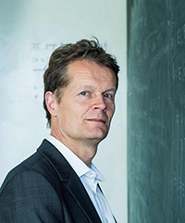
Aad van der Vaart is a Professor of Stochastics at Leiden University's Mathematical Institute. He was awarded the prestigious NWO Spinoza Prize in 2015 for groundbreaking work in mathematical statistics, particularly Bayesian methods applied to medical imaging, genetic data, and complex models. His research bridges pure mathematical theory with applied domains like neuroscience and astronomy. Research Interests : Van der Vaart focuses on infinite-dimensional Bayesian statistics, nonparametric models, and statistical genetics. His work emphasizes rigorous mathematical analysis of prior distributions and their impact on data-driven conclusions. Applications include gene network modeling and PET scan image reconstruction. Key Contributions : Authored influential books on estimation theory; pioneered modern Bayesian approaches to high-dimensional data. His Spinoza Prize funds will support interdisciplinary research and hiring new talent in statistical methods. Awards : NWO Spinoza Prize (2015), recognized as a global leader in statistical theory. Future Directions : Expanding into astronomical data analysis and medical applications, leveraging Bayesian frameworks for big datasets.
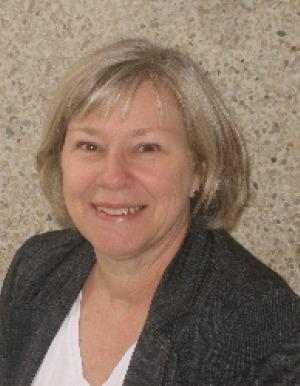
Marilyn J Smith is the David S. Lewis Professor and Director of the Vertical Lift Research Center of Excellence (VLRCOE) at the Georgia Institute of Technology's Daniel Guggenheim School of Aerospace Engineering. She leads a seven-university consortium conducting vertical lift research for the U.S. Army, Navy, and NASA, and has secured over $200 million in collaborative research funding. Computational Nonlinear Computational Aeroelasticity Lab Director NASA FUN3D development team contributor Aerospace Systems Design Lab (ASDL) affiliate Her research spans unsteady aerodynamics, computational aeroelasticity, and sustainable energy applications across rotary-wing, fixed-wing, and launch vehicles. She serves on the Vertical Lift Consortium (VLC) Board of Directors and Vertical Flight Society (VFS) Board, while acting as VFS Deputy Technical Director for Aeromechanics and leading international NATO AVT panels on UAV aerodynamics. Recent publications focus on galaxy cluster cosmology, ship-helicopter dynamic interface modeling, and Type Ia supernova analysis. She has won prestigious awards including the AIAA Aerodynamics Award and multiple American Helicopter Society honors for research, mentoring, and service. 2022 AIAA Aerodynamics Award 2015 Best Paper Awards at AHS Forum 2014 & 2012 AHS Agusta-Westland International Fellowships Her laboratory work integrates high-performance computing with aerospace design and develops advanced turbulence models through partnerships with Georgia Tech Research Institute (GTRI). She contributes to public science communication with appearances on National Geographic, PBS, NPR, and local media.
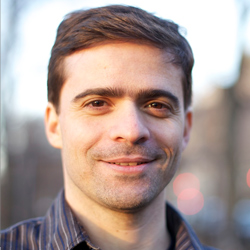
Oliver S. Cossairt is an Adjunct Associate Professor at Northwestern University's departments of Computer Science and Electrical and Computer Engineering. He leads the Computational Photography Lab , focusing on computational imaging, optics, and display technologies. His work bridges computer vision, graphics, and optical engineering to design novel imaging systems with applications in medical, astronomical, and scientific domains. Education: Ph.D. Computer Science, Columbia University (2011) M.S. Media Arts and Sciences, MIT Media Lab (2003) B.S. Physics, Evergreen State College (2003) Research Interests: Cossairt develops imaging systems that combine optical innovations with computational methods to enhance performance and functionality. Key areas include computational displays, depth sensing, and high-precision 3D imaging. His work emphasizes practical applications like medical imaging, holography, and non-line-of-sight sensing. Awards: NSF CAREER Award (2015–2020) Best Paper Award at ICCP 2011 NSF Graduate Research Fellowship (2008–2011) Teaching & Funding: Taught courses on computational photography and computer vision. Secured grants from NSF, NIH, and industry partners (e.g., Samsung, Omron) for projects like Coherent Computational Imaging and Snapshot 3D Holographic Microscope . Labs & Teams: Directs the Computational Photography Lab, collaborating with institutions like Argonne National Labs and museums for projects in cultural heritage imaging.
Tamás Budavári is an Associate Professor in the Department of Applied Mathematics and Statistics at Johns Hopkins University (JHU), with joint appointments in Physics and Astronomy and a secondary appointment in Computer Science. He is affiliated with the Whiting School of Engineering and the Institute for Data-Intensive Engineering and Science (IDIES). His research focuses on computational and statistical methods for big data in astronomy and interdisciplinary applications such as urban blight analysis. Education: PhD in Astrophysics (2001), Eötvös Loránd University, Budapest Master’s in Theoretical Physics (1997), Eötvös Loránd University Research Interests: Budavári develops algorithms for handling large astronomical datasets, including Bayesian inference, streaming algorithms, and GPU-accelerated processing. His work includes SkyQuery (an online astronomy data tool), photometric redshift estimation, and cross-matching catalogs. He also applies computational methods to urban planning, such as optimizing strategies to address vacant housing in Baltimore City. Publications & Tools: Budavári’s recent work spans topics like deep learning for astronomical image restoration, combinatorial optimization for urban policy, and probabilistic catalog matching. His tools, such as CUDAHM and NWAY, enable scalable analysis of multi-epoch survey data and N-way catalog cross-identification. Awards & Grants: Recipient of the Gordon and Betty Moore Fellowship and SAMSI Research Fellowship Funded by NSF, STScI, NIH, and others Leadership & Outreach: He serves on the Steering Committee of the 21st Centuries Cities Initiative and is a founding editor of the Journal of Astronomy and Computing. His interdisciplinary work bridges astrophysics, data science, and urban systems.
Prof. Dr. Raphael Sznitman serves as Director of the ARTORG Center for Biomedical Engineering Research and Head of the Artificial Intelligence in Medical Imaging group at the University of Bern, Switzerland, holding a Full Professor position in AI for Medical Imaging since 2015. Education: PhD in Computer Science, Johns Hopkins University (2011) MSc in Computer Science, Johns Hopkins University (2009) BSc in Cognitive Systems, University of British Columbia (2007) Research Interests: Sznitman's work centers on computational vision , probabilistic methods , and statistical learning applied to medical imaging challenges. His group develops AI algorithms for ophthalmic diagnostics, surgical robotics, and medical image analysis, with emphasis on OCT, surgical phase recognition, and domain adaptation techniques. Key application areas include retinal disease detection and cataract surgery automation. Publication Trends: His 2021-2025 publications reveal concentrated efforts in deep learning for medical imaging , particularly in ophthalmology (OCT analysis) and surgical video understanding. Emerging themes include LLM applications for clinical monitoring, unsupervised out-of-distribution detection for surgical safety, and physics-informed AI for multimodal medical data fusion. Research Leadership: As ARTORG Center Director, Sznitman oversees interdisciplinary research bridging computer science and clinical medicine. His group collaborates extensively with Bern University Hospital clinicians on translational projects, securing funding for AI-driven diagnostic tools and surgical assistance systems. Current initiatives focus on real-time intraoperative guidance and spaceflight ophthalmology applications. Laboratory: The Artificial Intelligence in Medical Imaging group operates within ARTORG's dedicated facilities, maintaining partnerships with surgical robotics labs and ophthalmology departments for clinical validation of AI systems. Their work integrates multimodal data streams including OCT, VR perimetry, and surgical video feeds.
Cecilia R. Aragon is a Professor in the Department of Human Centered Design & Engineering at the University of Washington, where she also serves as an Adjunct Professor in Computer Science & Engineering, Electrical and Computer Engineering, and the Information School. She is additionally a Senior Data Science Fellow at the eScience Institute. Aragon directs the Human-Centered Data Science Lab and has made significant contributions at the intersection of human-computer interaction and data science. Her research interests focus on human-centered data science, human-centered artificial intelligence, human-centered machine learning, human-computer interaction (HCI), computer-supported cooperative work (CSCW), visual analytics, aviation and astronautics sociotechnical systems, and emotion in informal text communication. Aragon's work bridges technical and social aspects of data science, particularly examining how humans interact with and gain insight from large datasets through both quantitative and qualitative methods. Aragon's recent publications demonstrate a strong focus on understanding online communities, sentiment analysis, distributed mentoring systems, and the ethical implications of AI. Her work spans multiple disciplines including social computing, data visualization, and astrophysics data analysis, showing her interdisciplinary approach to human-centered data science. Presidential Early Career Award for Scientists and Engineers (PECASE) 2008 Fulbright Fellowship 2017-18 HCDE Faculty Innovator in Research Award, University of Washington, 2015 Distinguished Alumni Award, Computer Science, University of California, Berkeley, 2013 Top 25 Women of the Year, Hispanic Business Magazine, 2009 Aragon has secured over $28 million in research funding from organizations including the National Science Foundation, National Institute of Standards and Technology, Department of Energy, Gordon and Betty Moore Foundation, Alfred P. Sloan Foundation, Washington Research Foundation, and industry partners like Microsoft and Intel. Her educational background includes a Ph.D. in Computer Science from UC Berkeley (2004), an M.S. in Computer Science from UC Berkeley, and a B.S. with Honors in Mathematics from Caltech. She leads the Human-Centered Data Science Lab and is affiliated with the eScience Institute, the Nearby Supernova Factory, and various research groups focused on data-intensive scientific collaborations. Her work on collaborative visual analytics systems like Sunfall has had significant impact in both academic and applied settings.
Anjalie Field is an Assistant Professor in the Computer Science Department at the Whiting School of Engineering, Johns Hopkins University. She is also affiliated with the Data Science and AI Institute and the Center for Language and Speech Processing (CLSP). Dr. Field completed her PhD at the Language Technologies Institute at Carnegie Mellon University under Yulia Tsvetkov, where she was a member of TsvetShop. Prior to joining Johns Hopkins, she was a postdoctoral researcher in the Stanford NLP Group and at the Stanford Data Science Institute, working with Dan Jurafsky and Jennifer Eberhardt. She also spent time as a visiting student at the University of Washington from 2021 to 2022. Her research focuses on the ethics and social science aspects of natural language processing, developing computational models to address societal issues like discrimination and propaganda while critically assessing and improving privacy, transparency, and fairness in AI pipelines. Her work spans social media analysis, bias detection in multilingual content, police accountability systems, and ethical considerations in large language model applications. Dr. Field's publications demonstrate a consistent focus on identifying and addressing biases in language technologies, with particular attention to racial, gender, and cultural dimensions. Her recent work has expanded into domain-specific applications of NLP in astronomy, healthcare, and social justice contexts, showing the breadth of impact that ethical AI considerations can have across disciplines. Among her notable recognitions are: AI2050 Fellow by Schmidt Sciences 2022 Wikimedia Foundation Research Award of the Year Best Paper nomination at Socinfo (2020) Dr. Field teaches AI Ethics and Social Impact (Fall 2023; Fall 2024) and NLP for Computational Social Science (Spring 2024; Spring 2025). She plans to take PhD students for the 2024-2025 admissions cycle. Her work bridges technical NLP research with important social considerations, making significant contributions to both the technical community and broader societal discourse around AI ethics. She is an active member of the Center for Language and Speech Processing, where she collaborates with researchers working at the intersection of language technologies and real-world applications. Her research focuses on developing methods that not only advance NLP capabilities but also ensure these technologies serve diverse communities equitably.
Marc HON is an Assistant Professor at the National University of Singapore (NUS) under the NUS Presidential Young Professorship, specializing in time-domain astronomy and machine learning applications for NASA missions including Kepler, TESS, and the Roman Space Telescope. His work focuses on characterizing stellar populations and discovering novel astrophysical phenomena through data-driven methodologies. His research spans asteroseismology for probing stellar interiors and Galactic archaeology to map the Milky Way's evolution using variable stars, alongside exoplanetary science investigations into planetary system evolution, habitable worlds, and James Webb Space Telescope atmospheric characterization. A core methodology involves developing machine learning frameworks like deep learning classifiers and generative models for large-scale astronomical datasets. HON's publication trends (2018-2024) reveal consistent innovation at the astrophysics-ML intersection, with emphases on red giant asteroseismology, exoplanet dynamics, and scalable analysis pipelines for space telescope data. Key contributions include flow-based stellar evolution emulators, deep learning oscillation detectors, and large-scale TESS Galactic archaeology studies. Scientific recognition includes: NASA Hubble Fellowship (2020) He actively contributes to major international collaborations as a member of both the TESS and Kepler Asteroseismic Science Consortia, with direct involvement in MIT's TESS mission operations and data pipelines.
National Graduate School of Mechanics and AerotechnicsFrance
Amin Mesmoudi serves as Associate Professor in Data Engineering at the University of Poitiers' IUT (Institut Universitaire de Technologie), with dual laboratory affiliations at LIAS-ENSIP (Poitiers campus) and LIAS-ISAE-ENSMA (Chasseneuil campus). His research bridges theoretical database systems with practical large-scale data engineering challenges, particularly in semantic web technologies and machine learning applications. The laboratory maintains physical presences at both ENSIP's Bâtiment B25 in Poitiers and ISAE-ENSMA's Téléport 2 facility in Chasseneuil, facilitating cross-institutional collaboration. Mesmoudi's research program centers on scalable data management systems, with three interconnected pillars: (1) RDF and graph-based query optimization techniques for billion-triple datasets, (2) machine learning integration for spatial query performance and anomaly detection, and (3) explainability frameworks for complex black-box models. His work demonstrates consistent evolution from foundational database systems (2011-2016) toward contemporary AI-driven data engineering, particularly evident in his 2023-2025 publications on temporal dependency preservation and co-selection explainability. The Data Engineering team within LIAS laboratory provides the primary research context for these investigations. Publication analysis reveals strong methodological continuity in addressing scalability bottlenecks across database paradigms. Early work focused on SQL-on-MapReduce benchmarking for astronomy databases (2015-2016), transitioning to specialized RDF processing frameworks (2019-2021), and culminating in current hybrid approaches combining temporal modeling with machine learning (2023-2025). Key technical themes include fragmentation strategies for distributed data, optimizer feedback mechanisms, and graph-based query acceleration - all targeting real-world performance constraints in big data environments. As a core member of LIAS laboratory's Data Engineering team, Mesmoudi contributes to France's national research infrastructure in computer science and automation systems. The laboratory's dual-university structure enables unique cross-pollination between University of Poitiers' academic programs and ISAE-ENSMA's engineering specialization, with Mesmoudi's work exemplifying this synergy through applications spanning astronomy databases to wireless sensor networks.
Professor Wes Armour is a Professor of Scientific Computing at the University of Oxford and serves as the Associate Head of Department for Research in the Department of Engineering Science. He previously directed the Oxford e-Research Centre, an interdisciplinary research center within the Engineering Science Department. With over £31 million secured as PI or Co-I, his work spans supercomputing, signal processing, machine learning, computational fluid dynamics, and protein crystallography. Professor Armour's research focuses on extracting science from data through fundamental challenges in modeling, simulation, and data processing. His work draws from numerical analysis, signal processing, and machine learning to develop technologies enabling future scientific discoveries, particularly for the Square Kilometre Array (SKA) telescope. Key interests include GPU computing, high performance computing, and machine learning applications across diverse domains from radio astronomy to finance. As Director and Principal Investigator of JADE and JADE2, a 700-GPU machine, he established the UK's first national High Performance Computer facility dedicated to advancing Artificial Intelligence and Machine Learning. His research group has pioneered GPU applications across multiple fields, including Square Kilometre Array data processing, protein crystallography, and graphene simulations. Current projects span energy-efficient machine learning, stock price prediction in finance, prime number prediction in cryptography, and multi-modal CCTV data analysis. Professor Armour has been instrumental in developing real-time signal processing techniques for astronomical observations, including the ARTEMIS system for millisecond radio transient detection. His publications demonstrate consistent innovation in GPU-accelerated computing dating back to early work in 2008 on accelerating conjugate gradient routines for electron transport in graphene.
Jean Ponce is a Professor of Computer Science at Ecole Normale Superieure (ENS) in Paris and a Part-Time Global Distinguished Professor at New York University's Courant Institute of Mathematical Sciences and Center for Data Science (CDS). He previously served as Director of the ENS Computer Science Department (2011-2017) and held positions at Inria (2017-2022), University of Illinois at Urbana-Champaign (1998-2006), MIT, Stanford, and Inria (1982-1985). Academic Leadership: Scientific Director of PRAIRIE Interdisciplinary AI Research Institute in Paris Startup Involvement: Co-founder and CEO of Enhance Lab (2022) Editorial Roles: Senior Editor-in-Chief of International Journal of Computer Vision (2019-2022) Conference Leadership: Chair of IEEE CVPR (1997,2000), ECCV (2008), and upcoming ICCV (2023) Research Focus: Computer vision, machine learning, robotics, and AI with applications in exoplanet imaging, 3D reconstruction, and image quality assessment. His work bridges statistical learning and deep learning approaches. Awards: IEEE Fellow (2003) ELLIS Fellow (2019) ERC Advanced Grant (2011) IEEE CVPR Longuet-Higgins Prizes (2016,2020) ICML Test-of-Time Award (2019) Patents & Publications: Co-author of influential textbook Computer Vision: A Modern Approach (translated into Chinese, Japanese, Russian). Holds two US patents and one pending French patent. Google Scholar h-index of 78 with over 55,000 citations.
Kobus Barnard is a Professor in the Department of Computer Science at the University of Arizona, with his office located in GS 708. His research bridges computer vision, machine learning, and interdisciplinary scientific applications across diverse domains. Education: Ph.D. from Simon Fraser University (1999) His research interests focus on extracting meaningful insights from complex data through computer vision and probabilistic modeling. Key areas include machine learning for environmental monitoring (flood detection, plant disease analysis), social dynamics (interpersonal coordination, emotional coregulation), astronomy (transient classification), and multimodal learning (visual-linguistic integration). His work consistently applies deep learning to real-world problems requiring high-resolution data interpretation. Analysis of his 2022-2025 publications reveals three dominant trends: (1) Environmental applications using satellite imagery for flood mapping and agricultural monitoring, (2) Cognitive modeling of human teams and emotional dynamics through probabilistic frameworks, and (3) Astronomical data analysis leveraging host galaxy properties for transient classification. These threads demonstrate his commitment to solving practical scientific challenges through computational innovation. While scientific awards aren't documented in available sources, his leadership in projects like FloodPlanet and ToMCAT indicates significant contributions to data infrastructure. His advising and grant activities remain unreported in the source material, though his extensive interdisciplinary collaborations suggest substantial mentorship impact. Barnard's work operates at the intersection of multiple scientific communities, evidenced by applications spanning neuroscience, agriculture, astronomy, and social science. His current focus on high-resolution data fusion and multimodal modeling positions him at the forefront of real-world AI deployment.
Timothy A. McKay serves as the Arthur F. Thurnau Professor of Physics, Astronomy, and Education at the University of Michigan's College of Literature, Science, and the Arts (LSA), where he also holds the administrative role of Associate Dean for Undergraduate Education. His dual expertise bridges astrophysics research and educational innovation, with significant contributions to both observational cosmology and learning analytics. His educational background includes: B.S. in Physics from Temple University (1986) Ph.D. in Physics from the University of Chicago (1992) McKay's research spans two interconnected domains. In observational cosmology, he pioneered work with major astronomical surveys including the Sloan Digital Sky Survey (SDSS), Robotic Optical Transient Search Experiment (ROTSE), and Dark Energy Survey (DES), focusing on galaxy clusters, cosmic rays, and large-scale structure. Since 2015, he has strategically shifted toward learning analytics, applying data science to transform STEM education. His innovative projects include E 2 Coach (a personalized student support system) and the NSF-funded REBUILD initiative, which creates intergenerational research teams to develop evidence-based teaching practices across physics, chemistry, astronomy, biology, and mathematics. Analysis of his publication trajectory reveals a deliberate pivot from astrophysics to educational research around 2015. While his early work centered on galaxy clusters and cosmological phenomena, recent publications (2020-2024) overwhelmingly focus on systemic equity gaps in STEM education, data-driven interventions, and multi-institutional collaborations. This evolution demonstrates how his data science methodology transitions seamlessly between cosmic structures and educational ecosystems. His scientific recognition includes: Prestigious Arthur F. Thurnau Professorship (awarded for exceptional undergraduate teaching) McKay directs the NSF-funded REBUILD project and the Digital Innovation Greenhouse, securing substantial research funding while mentoring undergraduate and graduate students in interdisciplinary teams. His work with the Big Ten Academic Alliance (CIC) has generated cross-institutional studies on grading patterns, performance disparities, and student support systems, with practical applications implemented across multiple universities. He actively collaborates with faculty across STEM disciplines to develop scalable educational technologies. His research infrastructure includes the Digital Innovation Greenhouse (an educational technology incubator) and REBUILD project teams, which integrate undergraduates, graduate students, postdocs, and faculty in evidence-based educational research. These teams operate at the intersection of data science and pedagogy, developing tools that analyze institutional datasets to personalize student support while maintaining rigorous scientific methodology.
Dr. Arwa Dabbech is an Assistant Professor at Heriot-Watt University's School of Engineering & Physical Sciences, affiliated with the Institute of Sensors, Signals & Systems. Her research focuses on radio interferometric imaging, combining machine learning, optimization algorithms, and computational methods to advance astronomical data analysis. Key areas include high-dynamic range imaging, algorithm scalability, and deep neural networks like R2D2 for precision imaging. Her work emphasizes innovative techniques such as Faceted HyperSARA and parallel processing frameworks, addressing challenges in wideband imaging and large-scale data handling. Collaborations involve advanced telescopes like the VLA and ASKAP, contributing to datasets that validate novel algorithms. Dr. Dabbech’s research bridges theoretical developments with practical applications, enhancing the resolution and accuracy of radio astronomical observations. Notable projects include R2D2’s application to Cygnus A imaging and uncertainty quantification, demonstrating real-time imaging capabilities. Her contributions span algorithm design, AI integration, and scalable solutions for modern radio interferometry, positioning her at the forefront of computational astrophysics.
Jonathan Blazek is an Assistant Professor of Physics at Northeastern University's College of Science, specializing in observational and theoretical cosmology. His research focuses on large-scale astronomical surveys to understand cosmic structure and dark energy, particularly through galaxy clustering and weak gravitational lensing. He is a key member of the Dark Energy Survey and Vera C. Rubin Observatory collaborations, leading efforts to combine multi-wavelength datasets for cosmological insights. Blazek earned his Ph.D. from UC Berkeley and completed postdoctoral fellowships at EPFL (Switzerland) and Ohio State University. Education: Ph.D. in Physics, University of California, Berkeley Postdoctoral Fellowships: EPFL (Switzerland), Ohio State University Research Interests: His work centers on cosmological modeling using galaxy surveys, particularly refining analytic and numerical methods to connect observations with theoretical frameworks. Key areas include: Weak gravitational lensing and galaxy clustering Combined-probe cosmology (integrating datasets across wavelengths) Dark matter and dark energy dynamics Large-scale structure formation Publications & Grants: Blazek has authored over 50 peer-reviewed articles, including foundational work on intrinsic alignment modeling and cosmic shear analysis. He leads the NSF CAREER grant project exploring dark sector physics with galaxy surveys. His recent publications address baryonic feedback effects, CMB lensing cross-correlations, and next-generation survey methodologies. Labs & Collaborations: He contributes to the Northeastern Cosmology Group and the Dark Energy Science Collaboration, advancing projects like the Legacy Survey of Space and Time (LSST) at Vera Rubin Observatory.