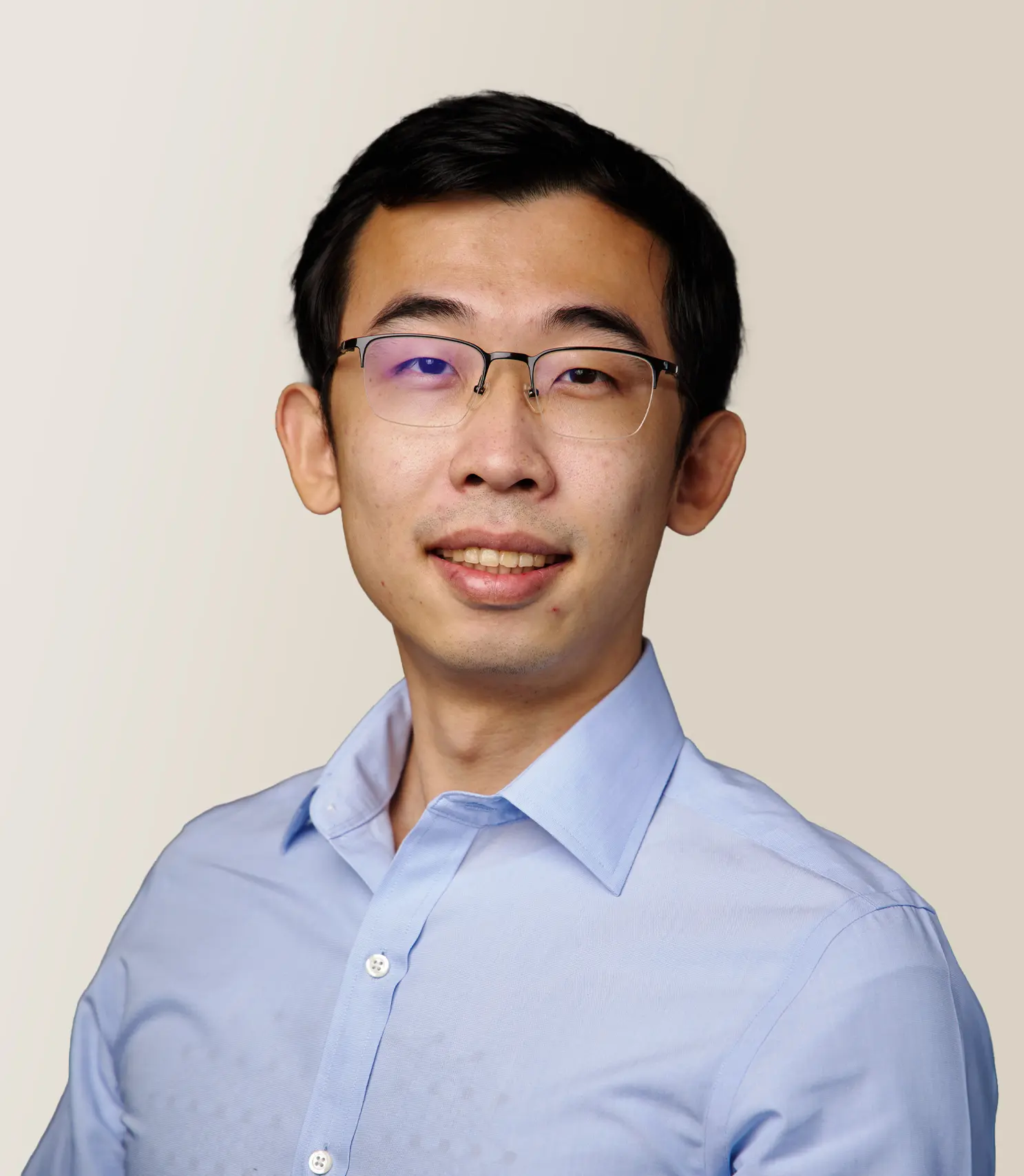
Isik Bicer is an Associate Professor of Operations Management and Information Systems at the Schulich School of Business, York University. His research focuses on analyzing how operational factors impact financial parameters and designing strategies for customer fulfillment using methods from corporate finance, quantitative finance, and optimization theory. His primary research areas include business analytics, demand fulfillment optimization, operational performance analysis, and supply chain management under uncertainty. He has developed decision tools for supply chain valuation and lead time optimization. Bicer's publications focus on supply chain finance, demand volatility modeling, inventory optimization, and disruption risk mitigation. His work integrates operational strategies with financial outcomes to enhance supply chain resilience and efficiency. He maintains research collaborations with institutions including Rotterdam School of Management and the Swiss Federal Institute of Technology (EPFL).
Detelina Stoyanova is an Associate Teaching Professor and Assistant Area Director for Analytics, Information, and Operations at the University of Kansas School of Business. She specializes in computational science, data visualization, and 3D-scan data analysis. Her research focuses on age-at-death estimation using pubic symphysis scans and computational methods. Prior to KU, she worked as a senior data scientist at Lowe’s Companies Inc., developing algorithms for assortment optimization and recommender systems. Stoyanova holds a Ph.D. and M.S. in Computational Science from Florida State University and a B.S. in Mathematics and Computer Science from Ramapo College of New Jersey. Her educational background includes roles at UNC Charlotte’s Department of Mathematics and Statistics. Her research articles from 2013–2019 emphasize interdisciplinary applications of computational methods in forensic anthropology, biomedical engineering, and international business. Key themes include 3D laser scanning techniques, algorithmic age estimation frameworks, and population variability studies. Though no explicit awards are listed, her work demonstrates expertise in both academic and industry data science contexts. Stoyanova’s teaching includes courses like Foundations of Business Analytics and Data Visualization for the MS in Business Analytics program. Her work bridges computational science with practical business analytics, reflecting her dual experience in academia and corporate data science.
Arnaud DUPUY is a Full Professor of Economics and Vice-Dean of the Faculty of Law, Economics and Finance (FDEF) at the University of Luxembourg. He holds a Ph.D. from Maastricht University and has held prior academic roles including Assistant Professor at Maastricht University (2004–2012) and Head of the Labor Market Department at LISER (2013–2016). He has also served as a visiting researcher at institutions such as Yale University and the IMF. His research focuses on labor economics, migration, public economics, and development economics, with notable contributions to topics like resource windfalls, optimal public investment, and cognitive development effects of retirement. Education: Ph.D., Maastricht University (2004) Econometrics and Applied Economics, Grenoble, France Research Interests: Labor market dynamics and monopsony modeling Migration intentions and economic drivers Public policy impacts of resource windfalls Retirement's cognitive effects Matching markets in taxation and marriage His work bridges theoretical models with empirical analysis, often employing econometric techniques to study structural economic issues. Grants & Collaborations: FNR CORE grants supporting projects on migration decision-making, skills-job matching, and child development Research fellow at IZA Institute of Labor Economics Labs/Teams: Active in interdisciplinary research networks including the Luxembourg Institute of Socio-Economic Research (LISER) and collaborates with global institutions like the IMF and World Bank on policy-relevant studies.
Hyun-Soo Ahn is a Professor of Technology and Operations and Ford Motor Co. Director of the Tauber Institute for Global Operations at the University of Michigan's Stephen M. Ross School of Business. His research focuses on supply chain management, service operations, pricing strategies, and value chain innovations, supported by NSF and Department of Energy grants. He teaches business analytics, machine learning, and consulting methodologies across EMBA, MBA, MSCM, and BBA programs, along with executive education for firms like ICBC and Bank of America. Education: PhD in Technology and Operations, University of Michigan (2001) MSE, University of Michigan (1997) BSE in Engineering, KAIST (1994) His research interests emphasize data-driven decision-making in supply chains, dynamic pricing models, and collaborative strategies. Notable contributions include work on subsidy policies for innovation, capacity investment collaboration, and pandemic control through multi-model integration. He leads the Supply Chain Consulting Studio, guiding over 70 projects with companies such as Amazon, Google, and General Motors. Teaching and Awards: Six teaching excellence awards (student-voted) and the 2019 Ross Researcher of the Year Award highlight his dual impact in education and research. His executive education focuses on digital transformation and business analytics. Key Projects: Consulting for 70+ companies across sectors Founder of Ross MSCM's Supply Chain Consulting Studio
Lennart Baardman is an Assistant Professor of Technology & Operations at the University of Michigan's Ross School of Business. His research focuses on retail analytics, applying optimization, machine learning, and statistical methods to address revenue management and supply chain challenges in retail. He collaborates with companies like Amazon Fresh, Adobe, and Hello Fresh. His educational background includes a PhD in Operations Research from MIT (2019), an MASt in Mathematics from the University of Cambridge (2014), and a BSc in Econometrics and Operations Research from the University of Groningen (2013). Education: PhD in Operations Research, MIT (2019) MASt in Mathematics, University of Cambridge (2014) BSc in Econometrics and Operations Research, University of Groningen (2013) His research interests emphasize solving practice-driven problems through mathematical modeling and data analytics. He has published in top journals like Manufacturing & Service Operations Management and Management Science , and his work has received awards including the POMS College of Supply Chain Management Best Student Paper Award (2019) and MIT Sloan Excellence in Teaching Award (2018). Teaching includes courses on big data tools, data exploration, and doctoral seminars in operations management. He advises PhD students at Michigan and has supervised students at MIT and Dartmouth College.
Professor Ahmed Ghoniem holds a full professorship in the Department of Operations & Information Management at the Isenberg School of Management, University of Massachusetts Amherst. He earned his PhD from Virginia Tech (2007) and holds additional MSc degrees from Ecole des Mines de Nantes (France) and Virginia Tech. His academic career includes roles as Associate Professor (2015–present) and Assistant Professor (2008–2015) at UMass Amherst, alongside a postdoctoral appointment at Virginia Tech's Industrial & Systems Engineering department. Research focuses on Retail Analytics , Supply Chain Management , Airport Operations , and Optimization Methodologies . Notable projects include FIFA World Cup infrastructure planning, food bank distribution optimization, and drone-integrated delivery systems. His work combines mathematical modeling with real-world applications in manufacturing, logistics, and aviation. Teaching spans doctoral courses on Integer Programming , master's Deterministic Models , and undergraduate modules in Operations Management and Supply Chain Strategy . Awards include the 2012 Isenberg Outstanding Teaching Award and IIE Transactions Best Paper Prize (2012). He has secured over $1.5M in research funding from Qatar National Research Fund and other grants. Publications emphasize optimization algorithms (e.g., branch-and-price, heuristic methods) applied to vehicle routing, aircraft sequencing, and retail space allocation. Current research trends include integrating drones into delivery networks and analyzing cross-selling dynamics in multi-category retail environments. Awards and grants highlight contributions to both academic and practical domains, with active involvement in aviation capacity management and humanitarian logistics solutions.
Marina Halac is the Stanley B. Resor Professor of Economics at Yale University, affiliated with the Cowles Foundation for Research in Economics (Director 2020–2023). She holds editorial roles at Econometrica and Theoretical Economics . Her research focuses on game theory, fiscal/monetary policy, and mechanism design, addressing topics like fiscal responsibility regimes, central bank incentives, and organizational monitoring. She earned her Ph.D. in Economics from UC Berkeley (2009). Education: Ph.D. in Economics, UC Berkeley (2009) Her work explores strategic interactions in fiscal policy, optimal contractual frameworks for innovation and experimentation, and the dynamics of managerial attention. Key contributions include models of fiscal crisis transitions, team incentive structures, and central bank accountability under political pressures. Awards include the Elaine Bennett Research Prize (AEA) and fellowships from the Econometric Society and阿根廷国家经济科学院. Her research integrates political economy, mechanism design, and empirical policy analysis to address macroeconomic governance challenges. Labs/Teams: Cowles Foundation, Yale Economics Department research groups
Lasse Leskelä is an Associate Professor at Aalto University's Department of Mathematics and Systems Analysis, School of Science. His research focuses on random networks, stochastic processes, and network statistics. He holds a Doctoral degree in Engineering and Technology from Helsinki University of Technology (2005) and a Master's degree (1999). Research interests include stochastic network models, epidemic modeling, and community detection in complex networks. His work bridges probability theory, applied mathematics, and data science, with applications in epidemiology, transportation systems, and network reliability. Recent contributions analyze cross-border mobility impacts on pandemics, optimal intervention strategies, and hypergraph clustering methods. He has led projects like NordicMathCovid (2020–2022), developing mathematical models for pandemic preparedness. Awards include the McKinsey Prize (2000) and the Varma-Sampo MSc thesis prize (2000). Grants: NordicMathCovid (EU funding, 2020–2022) Labs/Teams: Involved in Aalto's Statistics and Mathematical Data Science groups
Zachary Szpiech serves as an Assistant Professor in the Department of Biology at Pennsylvania State University, with external affiliations at the Huck Institutes of the Life Sciences. His laboratory operates at the intersection of computational biology and evolutionary genomics, focusing on population-level genetic phenomena. His educational background includes a BS in Mathematics, MS in Bioinformatics, and PhD in Bioinformatics from the University of Michigan, followed by postdoctoral training at the University of California, San Francisco and Auburn University. Research interests center on evolutionary biology and population genetics, specifically investigating how demographic history, inbreeding, and natural selection shape genetic variation within and between populations. His work leverages mathematical modeling, large-scale simulations, and genomic data analysis to address questions relevant to medical genetics, anthropological history, and conservation biology. Key methodologies include developing computational tools for selection scans and analyzing admixture patterns. Recent publications (2023-2025) demonstrate consistent focus on genomic consequences of demographic events, with recurring themes including admixture history (São Tomé, Cabo Verde), inbreeding effects in endangered species, adaptation to environmental stressors, and software development for population genomic analysis. His work spans diverse taxa from humans and apes to birds and reptiles, reflecting interdisciplinary applications. Lab operations are supported by external funding sources though specific grants aren't detailed in available materials. The Szpiech Lab maintains active external presences through dedicated lab website, Twitter, and Google Scholar profiles.
Will Ma is the Roderick H. Cushman Associate Professor of Decision, Risk, and Operations at Columbia Business School, Columbia University. He is an affiliated member of the Data Science Institute's Foundations of Data Science and Financial and Business Analytics centers. His academic appointment involves full-time research and teaching responsibilities with no indication of part-time status or retirement. Ma's research centers on e-commerce optimization, addressing both supply-side challenges (inventory management, fulfillment logistics) and demand-side opportunities (personalized product assortments). His work specializes in designing real-time algorithms that emphasize simplicity and robustness, with applications spanning revenue management, online matching, dynamic pricing, and data-driven decision-making. Key methodologies include stochastic optimization, algorithmic game theory, and combinatorial design. Analysis of his 15 most recent publications (2024-2025) reveals dominant themes in online optimization under uncertainty, including prophet inequalities, contention resolution schemes, assortment planning, and network revenue management. These contributions consistently bridge theoretical computer science and operations research, with practical applications in logistics, game design, and pricing strategies. Awards and Recognition: Operations Research Reviewer Meritorious Service Award (2025) While specific student advising relationships and grant details are not documented, Ma maintains an active research lab focused on algorithmic solutions for operational challenges. His industry background includes professional poker, video-game startups, and entrepreneurship, enriching his academic work with practical perspectives.
Ralf Seifert is a Full Professor of Technology & Operations Management (TOM) at the College of Management of Technology (CDM) of the Swiss Federal Institute of Technology Lausanne (EPFL) since 2003. He also serves as a Professor of Operations Management at IMD. His research focuses on operations management, supply chain strategy, technology network management, and sustainability. Education: PhD and MS in Management Science, Stanford University Diplom Ingenieur in Mechanical Engineering, Karlsruhe Institute of Technology (KIT) Master's in Integrated Manufacturing Systems Engineering, North Carolina State University Research Areas include supply chain finance, technology entrepreneurship, mass customization, RFID applications, and resilience in logistics. His work bridges quantitative models with industry practice, particularly in omnichannel retail and disruption mitigation. Recent Publications demonstrate expertise in network flow models, inventory optimization, and sustainable operations. Notable journals include European Journal of Operational Research , Production and Operations Management , and Sustainability . Awards: EFMD Case Awards (2018, 2012, 2009, 2003) ECCH Case Awards (2011, 2006) POMS Case Award (2004) Teaching encompasses supply chain management, mathematical models, and technology entrepreneurship. He has advised numerous PhD students and contributed to case study development globally.
Goker Aydin serves as Vice Dean for Faculty and Research and Professor of Operations Management & Business Analytics at Johns Hopkins Carey Business School, a position held since 2017. Previously, he was faculty at Indiana University's Kelley School of Business and the University of Michigan's Department of Industrial and Operations Engineering. His academic credentials include: Ph.D. in Industrial Engineering from Stanford University M.S. in Industrial Engineering from Purdue University B.S. in Industrial Engineering from Bogazici University Dr. Aydin's research addresses demand-supply uncertainty through inventory and pricing models, with recent focus on social responsibility initiatives in supply chains. His work bridges theoretical operations management with practical applications in ethical sourcing, risk mitigation, and sustainable operations, contributing actionable insights for retailers and suppliers navigating volatile markets. His publications (2013-2022) reveal evolving expertise from foundational pricing strategies to contemporary supply chain ethics. Key trends include dual-channel retail optimization, conflict mineral governance, and remanufacturing economics, consistently emphasizing how social responsibility metrics enhance network resilience and performance. Major honors include: Multiple Indiana University teaching awards (2011-2015) Management Science Distinguished Service Award (2014) Consecutive Meritorious Service Awards from Management Science and M&SOM (2008-2018) INFORMS JFIG Paper Competition recognition (2009) University of Michigan teaching accolades (2008) As an educator, he pioneered experiential courses combining classroom instruction with international client projects and directed the MS in Business Analytics & Risk Management program. His editorial leadership includes Associate Editor roles for Manufacturing & Service Operations Management and former Senior Editor positions at Production and Operations Management. Though not explicitly detailing dedicated labs, his research integrates with industry through client-sponsored analytics projects, focusing on real-world supply chain challenges in developing economies and digital retail environments.
George John is a Professor at the University of Minnesota's Carlson School of Management, holding the General Mills-Gerot Chair in Marketing. He previously held positions at the University of Wisconsin and received his PhD in Marketing from Northwestern University's Kellogg School of Management. Education: BTech in Aeronautical Engineering, Indian Institute of Technology, Madras MBA, University of Illinois at Urbana-Champaign PhD in Marketing, Kellogg School of Management, Northwestern University John's research focuses on industrial marketing , marketing channels , and high-tech marketing , with an emphasis on governance choices, efficiency, and strategic alignment. His work spans sales compensation design, property rights sharing, and durable goods market dynamics. Recent publications examine sales force incentive structures , private label supply chains , and strategic fit in industrial alliances . His research methodology often involves large-scale field experiments and empirical analysis . Scientific Awards: American Marketing Association award for PhD dissertation Highly Cited Researcher in Business/Economics by Thomson Reuters Web of Science
Jinglong Zhao is an Assistant Professor in the Department of Operations and Technology Management at Boston University's Questrom School of Business. He holds the Dean’s Research Scholar title and maintains an office at 615C, Rafik B. Hariri Building, 595 Commonwealth Avenue, Boston, MA 02215. Education: PhD from Massachusetts Institute of Technology (2021) B.Eng. from Tsinghua University (2016) Research Interests: Zhao specializes in operations management and dynamic pricing strategies, with expertise in experimental design and statistical modeling. His work explores algorithmic pricing under static calendars, causal inference in sequential experiments, and balanced design frameworks for online matching. Publication Trends: Zhao's research focuses on quantitative methods for pricing optimization, experimental design in dynamic environments, and statistical approaches to sequential decision-making. His work bridges operations management with machine learning techniques for market analysis.
Laurent Lehmann is a Full Professor at the University of Lausanne, holding a position in the Department of Ecology and Evolution within the Faculty of Biology and Medicine. He has served as director of the master's program 'Behaviour, Economics, and Evolution' since 2015. Previously, he was an Assistant Professor at the University of Lausanne (2011-2015) and the University of Neuchâtel (2009-2011). His academic journey includes postdoctoral research at Stanford University with Prof. Marc Feldman, Cambridge University with Dr. François Balloux, and the University of Helsinki with Prof. Hanna Kokko. Lehmann's research focuses on mathematical and simulation models to study the evolution of social behaviors, including cooperation, altruism, and learning. His work spans three primary areas: individual decision processes, life-history evolution, and the transition to large-scale human societies. His theoretical approach addresses fundamental questions about how social behaviors evolve through natural selection, with particular attention to the roles of kinship, spatial structure, and cultural transmission. Analysis of his recent publications reveals a strong emphasis on mathematical modeling of social evolution, with recurring themes including Hamilton's rule, kin selection, cultural transmission, and evolutionary game theory. His work bridges theoretical biology with anthropological questions about human social evolution, particularly examining how large-scale cooperation emerged in human societies. Recent papers demonstrate increasing integration of cultural evolution with traditional population genetic approaches. As an academic mentor, Lehmann has supervised doctoral students including Fumagalli E. (2014), with research focusing on information sharing and social network dynamics. His work has received funding from major research agencies including ERC and SNSF Starting Grants, as noted on his departmental profile. Lehmann leads a research group within the Department of Ecology and Evolution that develops mathematical models to understand social behavior evolution. His group collaborates across disciplinary boundaries, connecting evolutionary theory with economics, anthropology, and cognitive science to address fundamental questions about human sociality and cooperation.