Associate Professor with Habilitation at the School of Engineering, University of Minho , where he also serves as a Senior Researcher at Centro ALGORITMI. Member of both the IEM R&D Group and LPSL R&D Lab. Education: Degree in Production Engineering (1989) - University of Minho MSc in Computer Integrated Manufacturing (1992) - Loughborough University Ph.D. in Scheduling and Process Planning Integration (1997) - University of Nottingham His research spans Lean Approaches across diverse environments including industry, healthcare, construction, offices, and education. Key focus areas include pull flow methods for complex production environments, stable continuous improvement systems , and the integration of Scrum methodology in educational settings. Recent publications show a clear trend toward applying lean principles in retail logistics, healthcare operations, and sustainability frameworks, with increasing emphasis on performance measurement systems and Science-Based Targets. He has authored the book "Continuous Improvement in Organizations" and published over 100 scientific articles with an h-index of 17 and 1131 citations. His current projects include "HOMLean - Hospital Operations Management" and a Smart Retail initiative with Sonae company funded by PRR program. He actively applies his expertise through project-based learning approaches in engineering education, having documented over ten years of experience with PBL at the University of Minho. His work bridges academic research with practical industry applications, particularly in lean manufacturing implementation across various sectors.
Teresa Cristina de Freitas Gonçalves is an Associate Professor at the Department of Informatics, School of Sciences and Technology, University of Évora, where she has been employed since 1999. She serves as an integrated researcher at the ALGORITMI research centre and is the Director of the VISTA Lab (Video, Image, Speech and text Analysis Lab), the unit of the ALGORITMI research centre at University of Évora. Her leadership roles include Director of the Master programme in Informatics Engineering and deputy Director of both the Master programme in Artificial Intelligence and Data Science and the Doctoral program in Computer Science. She earned her PhD in Computer Science from University of Évora and a MSc degree in Informatics Engineering from New University of Lisbon. Her academic journey at University of Évora has included significant leadership positions including Head of the Computer Science Department (2011-2015), Director of the Bachelor programme in Informatics Engineering (2016-2021), and Deputy Director roles for various undergraduate and graduate programs. Dr. Gonçalves' research focuses on intelligent systems, particularly Machine Learning approaches, with substantial contributions in evolutionary algorithms, information extraction and retrieval, and supervised learning across multiple data modalities including tabular data, text (in both Portuguese and English), and images (medical and satellite). Her work bridges theoretical advances with practical applications in healthcare, remote sensing, and natural language processing. She has successfully supervised 6 doctoral theses, 19 master theses, and 3 postdocs, and currently mentors 5 doctoral and 6 master students from diverse international backgrounds including Bangladesh, Cabo Verde, Nepal, Philippines, India, Sri Lanka, China, Mongolia, and Portugal. Her publication record includes over 100 scientific articles indexed by Scopus with 640 citations and an h-index of 12, demonstrating significant international impact with 56% of her work involving international collaboration. Her recent research shows a strong trend toward applying advanced machine learning techniques to healthcare applications, information retrieval systems, and remote sensing analysis, with particular emphasis on transformer networks, learning-to-rank methodologies, and multimodal data analysis. Dr. Gonçalves has made substantial contributions to the academic community through her service as a reviewer for over 50 articles in prestigious international journals and conferences, and as chair for major international conferences including IDEAL 2023, PROPOR 2020, SKIMA 2017 and 2018, and CLEF 2016. She serves on the board of APRP (Associação Portuguesa de reconhecimento de Padrões) and as a jury member for APRP prizes for best MSc and PhD theses. Her current research portfolio includes coordination of the Horizon Europe MSCA Staff Exchange HarmonicAI project and local coordination of WP6 in the NewSpace Portugal mobilising agenda. She is also actively involved in numerous other international research initiatives including Interreg VI-B Sudoe SenforFire, PRR CANTE, La Caixa INCOME, Erasmus+ KA220-HED REDINEST, Interreg POCTEP TID4AGRO, and ATTRACT DIH projects. Previously, she led the FCT AI in the Public Administration SNS24.Scout.IA project and coordinated the FEDER R&D NIIAA project. As Director of the VISTA Lab, Dr. Gonçalves leads a dynamic research team focused on video, image, speech, and text analysis. The lab serves as the Évora hub of the ALGORITMI research centre and has established strong international collaborations. Under her leadership, the VISTA Lab has developed innovative approaches in medical image analysis, natural language processing for Portuguese, and satellite image classification, with applications spanning healthcare, environmental monitoring, and public administration.
Simon Levis Sullam is a Full Professor of Contemporary History at Ca' Foscari University of Venice, Department of Humanities. He maintains an active teaching schedule across multiple programs including History, Letters, Cultural Anthropology, and Italian Philology. His academic profile shows consistent engagement with the university community through office hours scheduled for the 2025 spring semester. Levis Sullam earned his BA and PhD in History from Ca' Foscari University after studying at UCLA and the EHESS in Paris. His academic journey includes prestigious fellowships at Columbia University, UC Berkeley, the European University Institute, and the University of Oxford. He has held visiting positions at Sciences Po in Paris and the University of Cambridge. His research focuses on the intersection of Italian history, Jewish history, and the study of antisemitism and the Holocaust. Levis Sullam examines 19th- and 20th-century Italian political and cultural history with particular attention to intellectual history, the history of ideas, and the historical development of antisemitic thought. His work bridges methodological approaches from both Italian and international historiography. His recent publications demonstrate a sustained engagement with the history of antisemitism, Holocaust studies, and the intellectual history of fascism and its aftermath. Levis Sullam's scholarship shows a methodological sophistication that combines close textual analysis with broader historical contextualization, particularly evident in his work on the language of antisemitism and the representation of Jews in historical discourse. Fellow of the Einaudi Foundation in Turin (2000) Research Associate Fellow at the Italian Academy of Columbia University (2005-6) Andrew W. Mellon Postdoctoral Fellow at UC Berkeley (2006-8) Max Weber Postdoctoral Fellow at the European University Institute (2008-9) Leverhulme Research Fellow at Oxford University (2009-10) Polonsky Fellow at Oxford University (2016-17) Rita Levi Montalcini Young Researchers Program recipient (2011-15) Levis Sullam has taught extensively across multiple degree programs at Ca' Foscari, supervising numerous theses and contributing to curriculum development in contemporary history, historiography, and European history. His teaching portfolio demonstrates a commitment to interdisciplinary approaches, connecting historical methodology with broader questions of cultural and political development in modern Europe.
Andreina Lavagetto is an Associate Professor in the Department of Humanities at Ca' Foscari University of Venice, specializing in German Literature (SSD GERM-01/B). She has been a faculty member at Ca' Foscari since 2001, after previously serving as an Associate Professor at the University of Ferrara (1998-2001). Her academic career spans over three decades, with institutional responsibilities including coordinator of the master's degree program in European, American and Postcolonial Languages and Literatures, member of various teaching committees, and involvement in PhD programs. Lavagetto's research spans several interconnected fields centered around German literature and its intersections with philosophy, cultural studies, and Jewish thought. Her primary interests include the works of Rainer Maria Rilke, Franz Kafka, and Martin Buber; the German-Jewish cultural symbiosis from the late 18th century to 1933; Holocaust studies; biopolitics and literature; and the theory and practice of literary translation. She has made significant contributions to the historical-critical edition of German literary works and has explored the relationship between mysticism, theology, and modern thought. Her recent publications demonstrate a consistent scholarly trajectory with increasing focus on German-Jewish intellectual history, particularly examining how Italian Germanists navigated the racial laws of Fascist Italy. Her work shows expertise across literary criticism, translation, and editorial scholarship, with particular attention to German-Italian cultural relations and the transmission of philosophical ideas across linguistic boundaries. The recurring themes in her research include the relationship between aesthetics and politics, the representation of historical trauma, and the philosophical dimensions of literary form. National scientific qualification for full professor (2018) DAAD Scholarships for study in West Berlin (1983-1987) Coordinator of Unit 2 of the ARCGER award project (2015-2022) Co-director of the scientific journal "Annali di Ca' Foscari" (2015-2016) Member of the scientific committee of "Prospero. Journal of Foreign Literature, Comparative Literature and Cultural Studies" Lavagetto serves as a referee for national and international research projects, including the ARCGER Project on German studies archives in Italy (1930-1955). She has held visiting positions at the University of Augsburg (2017) and the Deutsches Literaturarchiv in Marbach am Neckar (2019). Her research funding includes projects from the Italian Institute of Germanic Studies, focusing on the archives of German studies in Italy and the history of Italian Germanistics during the Fascist period.
Kuniaki Yabe is an Associate Professor at Waseda University's Research Institute for Advanced Networked and Collaborative Research Organization for Smart Society (RIANT, ACROSS) since August 2016. He also holds a concurrent position as a Visiting Professor at Tokyo University of Agriculture and Technology since April 2014. His academic career follows extensive industry experience at Tokyo Electric Power Company where he worked from 1980 to 2009 in various technical and management roles. Education: Ph.D. in Engineering (2012.03) from Tokyo University of Agriculture and Technology Bachelor's degree in Electrical Engineering from The University of Tokyo (1975-1980) Research Interests: Professor Yabe specializes in power systems engineering with a focus on smart grid technologies, power system operation and planning, renewable energy integration, storage battery systems, and economical evaluation of energy systems. His work addresses critical challenges in transitioning to sustainable energy systems while maintaining reliability and economic efficiency. Research Trends: Professor Yabe's recent publications (2017-2024) demonstrate a strong focus on integrating renewable energy sources into power systems, with particular emphasis on battery storage solutions, hydrogen energy systems, and policy mechanisms like CO 2 reduction surcharges. His work combines detailed power system modeling with economic and environmental analysis to provide comprehensive evaluations of energy transition pathways, with significant attention to frequency control requirements and curtailment issues in high renewable penetration scenarios. Professional Activities: Member of Japan Society of Energy and Resources Member of Japan Society for Simulation Technology Member of The Institute of Electrical Engineers of Japan Former board member and vice president of Japan Society for Simulation Technology (2006-2012) Former board member and vice president of Japan Society for Applied Mathematics (2005-2012) Current Projects: Professor Yabe is involved in research projects related to renewable energy integration, including work with NEDO on "Advanced Measures for Renewable Energy Grid Connection Expansion" (2016-2018). He also serves as a Concurrent Researcher at Waseda Center for a Carbon Neutral Society (2024-2026) and teaches "Advanced Electrical Energy Systems" at Waseda University's Graduate School of Advanced Science and Engineering.
Jonathan Clarke is Associate Professor of Finance and Senior Associate Dean for Strategic Initiatives at the Scheller College of Business, Georgia Institute of Technology. He has held key leadership roles including Associate Dean for Undergraduate Programs (2012–2018), Senior Associate Dean of Programs (2020–2023), and Interim Dean in 2023. He earned his Ph.D. in Finance from the University of Pittsburgh and holds undergraduate degrees in Mathematics and Economics from Indiana University. Ph.D., University of Pittsburgh B.A., Indiana University Dr. Clarke's research centers on finance, particularly analyst behavior, investment banking, corporate finance, and capital markets. His work explores how information is generated, disseminated, and priced in financial markets, with a focus on empirical analysis of market efficiency, disclosure practices, and institutional influences. He has made significant contributions to understanding insider trading, seasoned equity offerings, analyst forecasting, and corporate governance. The 15 most recent articles reflect a consistent focus on empirical finance, with strong emphasis on the role of financial analysts, information intermediaries, and market structure. His publications span top journals in finance and management, indicating interdisciplinary reach, especially in information systems and organizational behavior. The research trend shows deep engagement with real-world financial phenomena such as IPOs, M&A, executive compensation, and media effects on markets. Dr. Clarke has received numerous accolades for teaching and research: William F. Sharpe Award (2001) Poets&Quants Top 50 Undergraduate Professors (2018) MBA Core Professor of the Year (2009, 2013, 2021) Hesburgh Teaching Fellow (2009) James F. Frazier, Jr. Award for Teaching Excellence (2010) As an advisor and educator, Dr. Clarke has influenced countless students through classroom teaching and executive education programs for companies like Home Depot, Coca-Cola, NCR, Clorox, Georgia-Pacific, Lockheed Martin, and the NFL. His leadership in academic administration has elevated Scheller’s rankings, including a #11 undergraduate ranking by Poets&Quants. He served as President of the Eastern Finance Association and on the Georgia Tech Athletic Association Board of Trustees for six years, demonstrating broad institutional and professional engagement. While no formal lab or research team is mentioned, his extensive publication record and administrative leadership suggest a strong collaborative network across finance and business disciplines.
Souadou Lagdaf is an Associate Professor of History of Islamic Countries at the Department of Humanities, University of Catania, where she also contributes to the PhD program in Heritage and Cultural Production Sciences. Since 2024, she has held a collaborative role at the Institute of Mediterranean Studies (ISMED) of the National Research Council (CNR). She previously served as Vice President of the Special Teaching Structure of Foreign Languages and Literatures of Ragusa (2020–2022) and has held research positions at the University of Catania since 2011. Education: Bachelor’s Degree in Political Science – International Politics, University of Catania, 2004 (110 cum laude) PhD in Contemporary History, Department of Analysis of Political, Social and Institutional Processes, University of Catania, 2008 National Scientific Qualification as Associate Professor (Sector 10/N1), 2018 Her research focuses on Western Sahara, the Sanusiyya brotherhood in Libya, the social anthropology of customs and religious commandments in Mauritanian society, gender studies, and immigration. She employs interdisciplinary methods combining historical analysis, oral history, and anthropological fieldwork. Her work emphasizes marginalized voices, particularly women in conflict zones and postcolonial societies. The trends in her recent publications reflect a sustained engagement with gender, decolonization, and religious interpretation in North Africa. She frequently analyzes how sacred texts are used to justify gender hierarchies and explores the socio-political dimensions of Islamic practices in postcolonial contexts. Her scholarship bridges historical inquiry with contemporary social issues, particularly in Libya, Western Sahara, and Mauritania. Scientific Memberships and Editorial Roles: Editorial Board, Meridiana (2024) Member, Centro Universitario de estudios sobre el Sahara Occidental (CESO), University of Santiago de Compostela (2022) Board of Directors, Sicilian Institute for the History of Contemporary Italy Carmelo Salanitro (ISSICO) (2018) Member, Western Sahara International Academic Observatory (OUISO) (2017) Co-Director, Editorial Series Intelligere: mediare tra identità e alterità , Agorà & Co, Lugano (2016) Lagdaf has secured multiple research grants and leads projects on gender, migration, and decolonization. She has advised students on topics such as Islamic pillars and has conducted extensive field research, including oral history collection in Sahrawi refugee camps (Algeria) and Mauritania. She actively organizes academic events, particularly on women’s issues in Islamic societies. Laboratories and Research Groups: Collaborative researcher at CNR-ISMed (Institute of Mediterranean Studies) Member of research teams on gender, migration, and postcolonial studies at the University of Catania Coordinator of the "Voci di Donne" conference series on women, peace, and subordination
Sonia Freire Trigo serves as Lecturer in Urban Planning at The Bartlett School of Planning, University College London (UCL) since December 2018. With professional training in architecture (Universidade da Coruña, 2004) and advanced degrees in urban planning (MSc, Universidad Politécnica de Madrid, 2010; PhD, UCL, 2018), she combines academic rigor with practical experience from Spain-based planning consultancies and real estate appraisal work. PhD in Urban Planning (2018), UCL MSc in Urban Planning (2010), Universidad Politécnica de Madrid BArch in Architecture (2004), Universidade da Coruña Her research focuses on the governance of urban regeneration processes, particularly examining interactions between planning regulation, land markets, and land policy. Current projects analyze the regulation of affordable housing, strategic planning tools like London's Opportunity Areas, and temporal dimensions in planning processes that affect regeneration delivery. Recent publications reveal consistent exploration of regulatory capitalism (2017-2023), housing association governance (2023), virtual statecraft mechanisms (2022), and brownfield land policies (2022). Her work combines institutional analysis with critical planning theory to address urban inequalities and development challenges. Associate Fellow, Higher Education Academy (2015-present) Postgraduate Fellowship, Royal Geographical Society (2013-2016) Active in teaching and program leadership, she directs UCL's MSc Urban Regeneration program since 2019 and teaches regeneration delivery modules at postgraduate level. Earlier teaching experience at London South Bank University focused on housing and property development topics.
Florian Haas is a Senior Lecturer in Linguistics at the Institute for English and American Studies , Friedrich Schiller University Jena , where he has taught since 2009 across BA, MA, and teacher training programs. His research focuses on recent morphosyntactic changes in English , contrastive linguistics , typology , and usage-based construction grammar , with a notable Habilitation thesis on the history of human impersonal pronouns in English. Education : PhD in Linguistics (2008, Free University of Berlin, summa cum laude), MA in European Master's Degree in Linguistics (2002), MA in English Studies (2002). His research interests span corpus-driven analysis of language change, cross-linguistic contrasts (particularly English-German), and cognitive approaches to grammar. His publications emphasize diachronic shifts in pronouns, genre-specific linguistic patterns, and constructionist analyses of syntax. He has supervised numerous student theses on topics like political framing, bilingualism, and sociolinguistic variation in English. Academic service includes roles as Erasmus coordinator, reviewer for journals like Journal of Pragmatics , and memberships in societies such as the Association for Linguistic Typology .
Elizabeth Leisy Stosich serves as Associate Professor and Associate Chair of the Division of Educational Leadership, Administration, and Policy at Fordham University's Graduate School of Education. Since joining the faculty in 2017, her research examines collaborative leadership practices that strengthen educational equity and student learning opportunities across district, school, and teacher levels, with particular focus on high-poverty urban contexts and ambitious academic standards implementation. Her educational background includes advanced degrees from Harvard University: Ed.D. in Education Policy, Leadership, and Instructional Practice Ed.M. in Education Policy and Management M.A. in Teaching and Multiple Subjects (University of San Francisco) B.A. in Spanish and Portuguese (UC Berkeley) Stosich's research centers on education policy, school/district leadership, teacher professional development, and research-practice partnerships. She investigates how leaders create coherence among complex policies like Common Core standards and accountability systems, emphasizing collaborative structures that enable educators to improve instructional practices. Her work consistently addresses equity challenges in resource-constrained urban schools through frameworks like the Internal Coherence Framework. Analysis of her 15 most recent publications reveals persistent themes: leadership practices that bridge policy expectations with classroom realities, the critical role of social networks in policy implementation, and strategies for building sustainable improvement capacity. Her scholarship demonstrates methodological diversity including social network analysis, design-based implementation research, and qualitative case studies, predominantly focused on urban educational settings where equity considerations drive leadership decisions. Her significant scholarly recognition includes: 2022 AERA Division A Emerging Scholar Award 2016 AERA Leadership for School Improvement SIG Dissertation of the Year Award Stosich teaches courses including Community of Inquiry, Implementation Research, Leading Instructional Improvement, and Urban Education. Prior to Fordham, she served as a research fellow at Stanford's Center for Opportunity Policy in Education and taught elementary school in Oakland. Her co-authored book "The Internal Coherence Framework" is widely adopted in leadership programs, reflecting her commitment to bridging research and practice through ongoing partnerships with school districts. Her current work extends through research-practice partnerships where she collaborates with districts to implement leadership frameworks that foster organizational coherence, strengthen instructional systems, and develop sustainable capacity for continuous improvement in diverse educational settings.
Siriana Sgavicchia is an Associate Professor in the Department of Italian Language, Literature, and Arts in the World (LILAIM) at the University for Foreigners of Perugia. She holds a PhD in Italian Studies from Sapienza University of Rome and has been a faculty member since 2006, first as a Researcher and then as Associate Professor from 2015 onward. She teaches Contemporary Italian Literature across multiple degree programs including Digital Humanities for Italian, Italian for Teaching Foreigners, and International Communication and Advertising. Her research focuses on Modern and Contemporary Italian Literature and Gender Studies , with deep engagement in 20th-century authors known for linguistic and expressive experimentation. She has made significant editorial contributions to the works of Stefano D'Arrigo, Carlo Emilio Gadda, and Elsa Morante. Her monograph Il folle volo. Lettura di Horcynus Orca (2005) and the first edition of Horcynus Orca (2000, with A. Cedola) are landmark studies. She continues to publish critical editions, including the 2024 release of D'Arrigo's Compratore di anime and the 2025 BUR edition of Horcynus Orca with new apparatus. The recent scholarly output shows a consistent focus on philological editing , literary commentary , and narrative innovation in 20th-century Italian literature. Her works bridge critical theory , spatial analysis of texts , and genre studies , often emphasizing gender and regional identity. The keywords across her articles reflect deep expertise in Italian modernism , avant-garde movements , and female authorship . Academic Service and Recognition: Deputy Editor, "L'Illuminista" (Sapienza University) Member, Jury of the "Elio Pagliarani" Poetry Prize Siriana Sgavicchia advises on literary research and editorial projects, particularly in the areas of unpublished texts and critical reevaluations of modern Italian authors. Though no formal students are listed, her editorial mentorship and academic leadership suggest advisory roles. She has not received explicitly named scientific awards in the provided text. She is actively engaged in research teams and editorial boards, particularly through her ongoing work with major publishing houses like Rizzoli and BUR, and academic journals such as "L'Illuminista." Her collaborations, especially with A. Cedola, indicate strong team-based scholarly efforts in reconstructing and interpreting complex literary works.
Professor Elżbieta Rydz at the John Paul II Catholic University of Lublin (KUL) serves in the Department of Developmental Psychology within the Faculty of Social Sciences. Her academic career spans interdisciplinary research at the intersection of developmental psychology, religious identity, and interreligious dialogue. Key affiliations: Polish Society for the Psychology of Religion and Spirituality; Polish Association of Human Developmental Psychology (Board member) Research focuses: Religious identity consolidation, moral/spiritual intelligence, interreligious dialogue readiness, aging psychology, and developmental analysis of religious coping mechanisms Her recent publications (2022-2024) explore: Mediation effects of forgiveness/hope in religiosity-life satisfaction relationships Personality correlates with spiritual/moral intelligence in early adulthood Developmental differences in supernatural mind understanding Intersections between self-compassion and religious help-seeking stigma in adolescents Major awards include: 2024: Silver Medal for Long-Term Service 2023: Rector of KUL Individual Award, First Degree 2016: Prof. Joseph Sidorowski Award 2011: National Education Commission Medal She has demonstrated extensive grant leadership in projects such as: "BEZPIECZNA RODZINA" (2020): Social innovation program with international cooperation "Quality of Life and Its Determinants in the Context of War Experiences" (2022): Research with Ukrainian refugee populations
Elizabeth Vargis is an Associate Professor in Biological Engineering at Utah State University's College of Engineering. She serves as the faculty advisor for the Society of Women Engineers and maintains an active research laboratory focused on biomedical engineering applications. Her work bridges engineering principles with biological systems to address significant medical challenges. Dr. Vargis received her educational training from prestigious institutions: BS in Bioengineering from UC Berkeley MS in Biomedical Engineering from Vanderbilt University PhD in Biomedical Engineering from Vanderbilt University Postdoctoral training at Oak Ridge National Lab and UT Knoxville Her research spans three primary domains with significant clinical relevance. In biophotonics, she develops Raman spectroscopy applications for disease detection, including work on cervical cancer screening and bacterial identification. Her retinal tissue engineering research focuses on creating in vitro models to understand age-related macular degeneration and diabetic retinopathy, with particular emphasis on the role of mechanical stress and cell detachment. Additionally, her work on muscular atrophy investigates the effects of microgravity on muscle tissue, with applications for both space travel and terrestrial medical conditions. Her lab employs a combination of experimental techniques and computational modeling to advance these research areas. Analysis of her recent publications reveals a strong trend toward increasingly sophisticated in vitro models of retinal diseases, with growing integration of microfluidic technologies and biomimetic materials. Her work has evolved from basic characterization studies to complex disease modeling systems that incorporate mechanical, biochemical, and structural components of retinal pathologies. The interdisciplinary nature of her research is evident in the diverse range of journals where she publishes, spanning biomedical engineering, ophthalmology, and space medicine. Dr. Vargis has received numerous prestigious awards recognizing both her research and mentorship excellence: Outstanding Graduate Mentor of the Year (2018, USU College of Engineering) Outstanding Researcher of the Year (2018, Department of Biological Engineering) Ralph E. Powe Junior Faculty Enhancement Award (2015, ORAU) Multiple Research Catalyst Awards from Utah State University National Science Foundation recognition and NIH fellowships She has successfully mentored numerous graduate students to completion of their degrees, with many going on to successful careers in industry and academia. Her research has been supported by diverse funding sources including the Nuclear Regulatory Commission, NIH, Oak Ridge Associated Universities, NASA Space Grant Consortium, and private foundations like the BrightFocus Foundation and Knights Templar Eye Foundation. She actively promotes undergraduate research opportunities through USU's URCO program and the College of Engineering's EURP program. The Vargis Lab operates as a dynamic, interdisciplinary research environment with multiple concurrent projects. Current work includes developing microfluidic platforms for retinal disease modeling, creating biomimetic materials using spider and hagfish silk proteins, and investigating the combined effects of microgravity and radiation on biological systems. The lab maintains strong collaborations with researchers in Electrical and Computer Engineering, particularly with Dr. Zhen Zhang on computational modeling of blood vessel growth. Lab meetings are held weekly during academic terms, fostering a collaborative environment where students present their work and receive feedback.
Prabhat Barnwal is an Associate Professor in the Department of Economics at Michigan State University's College of Social Science. His research focuses on development economics, energy and environment, and public economics, with particular emphasis on improving public programs in developing countries, understanding the impact of modern agricultural technologies, and assessing environmental information's role in household decision-making. Dr. Barnwal's educational background includes: Ph.D. in Sustainable Development from the School of International and Public Affairs at Columbia University (2010-2015) M.A. from the International University of Japan Bachelor's degree from the National Institute of Technology - Surat, India His research employs experimental and quasi-experimental methodologies to address critical questions in economic development and environmental economics. Dr. Barnwal's work spans multiple dimensions of development challenges, with a strong focus on energy transition, environmental risk mitigation, and public program efficiency in low-income settings. His research often combines field experiments with rigorous econometric analysis to provide evidence-based policy recommendations. A significant portion of his work examines energy transition challenges in developing countries, particularly India, analyzing subsidy design, electrification sustainability, and the efficiency of energy programs. His environmental research focuses on localized environmental risks, particularly water quality issues and household responses to environmental information. His development economics work investigates welfare delivery systems, bureaucratic incentives, and the impact of agricultural technologies on human welfare. Dr. Barnwal has received recognition for his research, including: Global Drinking Water Best Paper Award 2020 from TU Delft His research has been published in top economics journals including the American Economic Review, Review of Economics and Statistics, Journal of Development Economics, Journal of Health Economics, and JAMA Network Open. His work often involves collaborations with researchers across multiple institutions and countries, reflecting the international scope of his research interests. Dr. Barnwal's projects frequently address pressing policy questions related to poverty reduction, environmental sustainability, and effective governance in developing contexts. Dr. Barnwal maintains active research collaborations and has several ongoing projects examining women's work and energy efficiency, ICT for environmental adaptation, household investment against environmental risks, and bureaucracy and governance issues. His research demonstrates a consistent commitment to addressing real-world development challenges through rigorous empirical analysis.
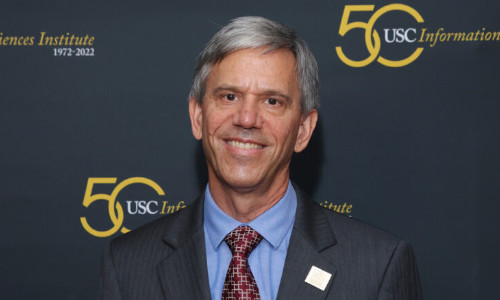
Craig Knoblock serves as the Keston Executive Director of the Information Sciences Institute (ISI) at the University of Southern California, Vice Dean of Engineering for the Viterbi School of Engineering, and Research Professor of both Computer Science and Spatial Sciences. He also directs USC's Data Science Program and leads the Center on Knowledge Graphs as Research Director. Dr. Knoblock's research focuses on techniques for describing, acquiring, and exploiting the semantics of data. His extensive work spans source modeling, schema and ontology alignment, entity and record linkage, data cleaning and normalization, extracting data from the Web, and building comprehensive knowledge graphs. With over 300 published works in these areas, his research has significantly advanced the field of semantic data integration. His work demonstrates strong trends toward practical applications of knowledge graphs across diverse domains including cultural heritage, geospatial information systems, human trafficking detection, and sensor networks. The evolution of his publications shows a progression from foundational ontology alignment techniques to sophisticated knowledge graph applications addressing real-world challenges. Fellow of the Association for the Advancement of Artificial Intelligence (AAAI) Fellow of the Association of Computing Machinery (ACM) Past President and Trustee of the International Joint Conference on Artificial Intelligence (IJCAI) Recipient of the 2014 Robert S. Engelmore Award Seven best paper awards for his research contributions As Executive Director of USC's Information Sciences Institute, Dr. Knoblock leads one of the world's premier research centers in computer science and information technology. His leadership extends to directing the Center on Knowledge Graphs and serving as Associate Director of the Informatics Program at USC. His educational background includes a Bachelor of Science from Syracuse University and Master's and Ph.D. degrees in Computer Science from Carnegie Mellon University.