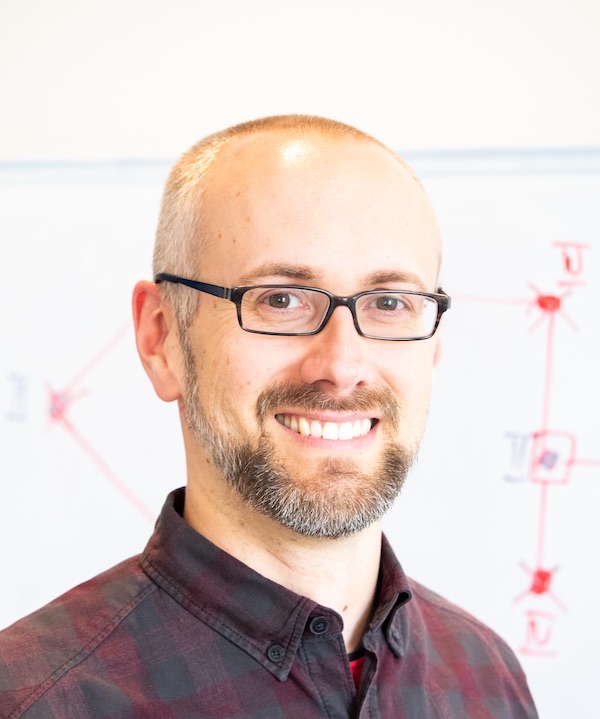
Yu-Fang Chen is a research professor at Academia Sinica, Taiwan, active across premier programming-languages venues such as PLDI, POPL, OOPSLA, SAS, APLAS and VMCAI. His work sits at the intersection of program verification , automata theory and constraint solving , with recent emphasis on quantum-circuit verification and string-number constraint solving . Research interests revolve around rigorous methods to ensure software reliability: developing novel automata models (level-synchronized tree automata, position-constrained string automata), building practical solvers that blend length, substring and numeric constraints, and extending automated reasoning to the quantum domain. His papers consistently introduce new decision procedures, learning algorithms and tool-chains that improve the scalability of static analysis and formal verification. Between 2017 and 2025 he (co-)authored more than a dozen peer-reviewed papers and served on over thirty program committees, including steering and organization chair roles for VMCAI 2026 and SAS 2023 . No doctoral students or funded-grant details are disclosed in the supplied sources.
Prof. Dr. Daniel H. Scheible is a full Professor of Business Administration and Intercultural Competence at the Faculty of Communication and Environment, Rhine-Waal University of Applied Sciences, Kamp-Lintfort, Germany. He has been in this position since 2010 and continues to be actively involved in teaching and research. Prior to this, he served as Professor of Management in Intercultural and Social Contexts at Fresenius University of Applied Sciences (2008–2010) and as a Research Associate there from 2006 to 2008. His educational background includes a Doctorate in Economics (Dr. rer. pol.) from Witten/Herdecke University (2003–2006), preceded by studies in Economics at Witten/Herdecke University and Universidad Benito Juárez de Oaxaca, Mexico (1998–2003). He also completed vocational training as a wholesale and foreign trade merchant at Schwabe Handels KG, Witten (1994–1997). Prof. Scheible’s research centers on intercultural competence, expatriate management, diversity in global organizations, and the cultural dimensions of digital and cyber-physical systems. His work explores how cultural factors influence team dynamics, organizational innovation, and international business practices. He has published extensively in journals and edited volumes, with a strong focus on practical applications in multinational corporations, particularly in the pharmaceutical and automotive industries. His recent publications (2017–2022) show a growing interest in the intersection of culture and technology, especially in cyber-physical systems and digital production. These works reflect a shift toward understanding socio-technical systems through a cultural lens, bridging management theory with emerging industrial paradigms. While no formal awards or fellowships are listed, his sustained academic output and professional engagement indicate significant contributions to the field of intercultural business administration. Freelance Consultant and Trainer since 2003 for international corporations in pharmaceutical and automotive sectors Lecturer at Witten/Herdecke University, Cardiff University, and BiTS Iserlohn (2003–2010) Office hours held online via Webex; appointments scheduled through Moodle He is affiliated with research networks such as the International Society for Diversity Management and has collaborated on interdisciplinary projects involving healthcare, rehabilitation, and regional economic development. His work demonstrates a strong commitment to applied research and real-world impact.
Prof. Dr. Michael Elberfeld is a faculty member at the Technical University of Central Hesse , affiliated with the Department of Mathematics, Natural Sciences and Computer Science . His research focuses on theoretical computer science, particularly in computational and parameterized complexity, logic in computer science, and algorithmic meta-theorems. Education : Doctorate in Theoretical Computer Science from the University of Lübeck (2012); Diploma (MSc) in Computer Science from the University of Lübeck (2007). His work explores the intersection of graph theory , logic , and space-bounded computation , with groundbreaking contributions to problems on bounded tree-width structures and order-invariant logics . He has developed logspace algorithms for graph canonization and studied succinctness tradeoffs in logical formalisms. Key publications include analyses of parameterized space complexity , algorithmic meta-theorems , and applications to bioinformatics like haplotype inference and network orientation. His research is supported by the European Commission through grants 648276 and P 28699 . He collaborates extensively with researchers such as Martin Grohe , Pascal Schweitzer , and Till Tantau , bridging theoretical logic with practical applications in staff rostering and biological network analysis .
Slaheddine Mestiri is a Researcher at the Chair of Material Handling and Logistics (Lehrstuhl für Fördertechnik Materialfluss Logistik) at the Technical University of Munich (TUM), located at Boltzmannstraße 15, Garching. Holding an M.Sc. degree, he actively contributes to logistics research through publications and the PlaKAT project, focusing on simulation-based solutions for transport systems and warehouse automation. Research Profile His work centers on discrete-event simulation, data-driven modeling, and AI applications in logistics. Key contributions include developing frameworks for material handling system modeling, transport system dimensioning, and order assignment strategies for heterogeneous fleets. Recent publications demonstrate increasing focus on warehouse AI scalability and feasibility assessment. Publication Trends Analysis of his 2021-2025 publications reveals consistent methodology: simulation-driven approaches applied to material flow challenges. Dominant themes include transport system optimization (43% of works), warehouse innovation (29%), and decision-support tool development (28%). His research shows progressive integration of AI concepts, particularly in 2024-2025 works addressing warehouse automation scalability. Projects & Collaboration Primary contributor to PlaKAT project (funded by German Federal Ministry for Economic Affairs and Climate Action) developing a transport means selection compass Regular collaborator with Prof. Johannes Fottner and researchers including Soufi, David, and Küster Publications presented at German Material Flow Congress and in journals like Flexible Services and Manufacturing Journal Research Infrastructure Mestiri operates within TUM's Chair of Material Handling and Logistics, a research unit specializing in material flow systems. The chair maintains industry partnerships for applied logistics research, with Mestiri focusing on simulation model development and transport system analysis within this ecosystem.
Ruben Portugues is a Professor at the Technical University of Munich (TUM) within the Institute of Neuroscience, part of the TUM School of Medicine. His academic journey includes a PhD in theoretical physics from the University of Cambridge, followed by postdoctoral research in neurobiology at Harvard University and the Max Planck Institute of Neurobiology. He leads the Focus Group on 'Brain Circuit Function and Dysfunction.' His research focuses on understanding how the brain encodes sensory information and translates it into motor actions. Using zebrafish as a model organism, he employs advanced techniques like whole-brain calcium imaging, electrophysiology, and computational modeling to study sensorimotor integration and neural circuit dynamics. Key projects involve mapping neural activity during behaviors, analyzing cerebellar circuits, and investigating mechanisms of learning and adaptation. Portugues has contributed to breakthroughs in understanding rheotaxis, optomotor responses, and the neural basis of decision-making. His lab develops tools like the stytra software for behavioral experiments and collaborates on anatomical atlases using brainrender . His work bridges theoretical physics and experimental neuroscience, emphasizing interdisciplinary approaches. He holds the Rudolf Mößbauer Tenure Track Fellowship and has mentored numerous researchers. His lab is affiliated with the TUM Institute for Advanced Study (TUM-IAS), contributing to initiatives in advanced computation and neuroscience.
Dr. Sven Jäger is a Researcher at the Department of Mathematics, Faculty of Mathematics and Natural Sciences, Technical University Berlin. His office is located at MA 668 in the Mathematics Building at Straße des 17. Juni 136, 10623 Berlin, Germany. He can be reached by telephone at +49 30 314 23189 and by email at jaeger@math.tu-berlin.de, maintaining a professional presence through his personal website at https://sven-jaeger.gitlab.io . Dr. Jäger's research spans discrete mathematics and optimization with particular expertise in scheduling theory, algorithms, and their cross-disciplinary applications. His work bridges theoretical computer science with practical operations research challenges, evidenced by publications in top-tier venues including Mathematical Programming, European Journal of Operational Research, and SODA. He has developed significant theoretical contributions to non-clairvoyant scheduling, including competitive kill-and-restart strategies and proportional fairness analysis under polyhedral constraints. His research extends to quantum computing applications for discrete optimization and transportation network problems, demonstrating versatility across theoretical and applied domains. Analysis of his publication trajectory reveals three interconnected research streams: (1) theoretical scheduling algorithms with competitive ratio guarantees, (2) quantum-inspired optimization techniques applied to real-world problems like transport robot scheduling, and (3) transportation science applications including user equilibrium modeling and energy-efficient timetabling. His combinatorial work on symmetric chain decompositions and Gray codes provides foundational contributions to discrete mathematics. Dr. Jäger actively contributes to education as a teaching assistant for Analysis II for Engineering Sciences and Computer-Oriented Mathematics II at TU Berlin. While his publication record demonstrates significant scholarly impact across multiple domains, no specific scientific awards are mentioned in the available information. His collaborative work with researchers including Guillaume Sagnol, Anita Schöbel, and Nicole Megow spans theoretical computer science, operations research, and transportation applications, reflecting the interdisciplinary nature of his research program.
Prof. Dr. Dirk Sliwka is Professor of Personnel Economics and Chair of Corporate Development at the University of Cologne, Faculty of Economics and Social Sciences. His research lies at the intersection of personnel economics, organisational design and strategic management, with a particular focus on how incentives, delegation and organisational structures affect individual behaviour and firm performance. Research Interests Personnel economics: design of pay-for-performance, tournaments and incentive contracts Organisational control: delegation of authority, responsibility allocation and governance structures Theory of the firm: boundaries, vertical integration and strategic decision making Behavioural labour economics: reciprocity, fairness, envy and compassion in employment relations Across more than two decades of scholarship, his empirical and theoretical work spans laboratory experiments, theoretical principal-agent models and large-scale organisational studies. Recent publications examine career concerns in labour markets, the role of responsibility in organisations and strategic delegation in oligopolistic contests, reflecting a consistent interest in how psychological and economic forces shape organisational outcomes. Scientific Awards HR Award 2010 – awarded for outstanding contributions to human resource management research Nominated ten times in HR magazine’s list of “The 40 Leading HR Minds” Grants & Doctoral Training Prof. Sliwka is an active member of the Cologne Graduate School in Management, Economics and Social Sciences (CGS), which provides doctoral training within the Faculty of Economics and Social Sciences. His chair is also closely linked to the ECONtribute Cluster of Excellence “Markets & Public Policy”, a joint initiative of the Universities of Cologne and Bonn funded under the German Excellence Strategy. Laboratory & Collaboration Research at the chair is conducted in close collaboration with the Cologne Laboratory for Economic Research (CLER) and benefits from interdisciplinary ties to behavioural economics and psychology institutes across the university.
Martin Hoefer is a full Professor (Universitätsprofessor) at RWTH Aachen University, Germany, where he holds the Chair of Algorithms and Complexity (Computer Science 1) since 2024. Previously, he was a Professor at Goethe University Frankfurt (2017–2024), Research Group Leader at Saarland University (2012–2016), and Senior Researcher at MPI Informatik. He earned his Dr. rer. nat. in Computer Science from the University of Konstanz in 2007 and a Dipl.-Inf. from TU Clausthal in 2004. Current Position: Professor, RWTH Aachen University (2024–present) Previous Positions: Professor, Goethe University Frankfurt (2017–2024); Research Group Leader, Saarland University (2012–2016); Senior Researcher, MPI Informatik (2013–2016); Assistant Professor, RWTH Aachen (2011–2012) Education: Doctorate (2007), University of Konstanz; Diplom (2004), TU Clausthal His research lies at the intersection of algorithms, game theory, and distributed systems, with a focus on algorithmic game theory, computational social dynamics, optimization under uncertainty, and market design. He investigates coordination problems in decentralized environments, including opinion formation, financial networks, fair division, and mechanism design. His work combines theoretical rigor with applications in economics and multi-agent systems. The recent publications reflect a strong trend in algorithmic economics, particularly in persuasion, information design, contract theory, and financial network stability. His work spans top venues in theoretical computer science (STACS, SODA, ICALP), artificial intelligence (AAMAS, IJCAI), and economics (EC, GEB). He frequently publishes in journals such as Mathematics of Operations Research , ACM Transactions on Economics and Computation , and Journal of Artificial Intelligence Research . Best Paper Award, Track C, ICALP 2011 Best Paper Award, Track C, ICALP 2014 Martin Hoefer is the Spokesperson of the DFG Research Unit ADYN since 2020 and has served on numerous program committees including EC, STOC, FOCS, SODA, AAAI, IJCAI, AAMAS, and WINE. He has co-chaired major conferences such as WINE 2020 and SAGT 2015 and edited special issues in ACM TEAC , ACM TALG , and Theory of Computing Systems . He leads a research group at RWTH Aachen and has advised several students. His work is supported by German research foundations and collaborative projects.
Prof. Dr. Stephan Lauermann is a faculty member in the Department of Economics at the University of Bonn , affiliated with the Institute of Microeconomics , ECONtribute , Hausdorff Center for Mathematics , and CRC TR 224 . His research focuses on Bargaining, Auctions, Search Theory, and Matching Theory , with applications to market design and information aggregation. Research Trends: Recent articles (2022-2025) emphasize information aggregation in elections and frictions in matching and auction models . Older works (2012-2017) address adverse selection in auctions, price discovery in search markets, and foundational matching theory. Subfields span dynamic matching , strategic voting , common-value auctions , and equilibrium analysis . Contact: Email: s.lauermann@uni-bonn.de , Phone: +49 228 73-6327, Room 3.004, Adenauerallee 24-42, Bonn.
Veronika Lesch is a Professor and Head of the Applied Computer Science program at DHBW Mosbach. Previously, she served as a post-doctoral research group leader and doctoral researcher at the University of Würzburg's Chair of Computer Science II (Software Engineering Group). Her research focuses on self-aware computing systems, cyber-physical systems, and intelligent transportation logistics. She has supervised numerous theses on topics like platooning coordination and warehouse optimization. Notable awards include being a nominee for the 'Ingenieurinnen Preis Bayern' and recipient of the 'Würzburg Software Engineering Award'. Education: She holds a Bachelor's (2015) and Master's (2017) in Computer Science from the University of Würzburg, followed by a PhD and postdoc at the same institution. Professional roles include teaching coordination of MINT courses and supervision of software projects. Research interests span IoT, Industry 4.0 logistics, and autonomous systems optimization. Over 20 peer-reviewed publications since 2017 address challenges in adaptive systems, vehicle routing, and meta-optimization strategies. Active in reviewing for top journals/conferences like IEEE Transactions on ITS and ICPE. Supervised 15+ student theses (2018-2021) Developed FADE framework for adaptive distance estimation Contributed to Combench communication protocol benchmarking Labs/Teams: Previously part of the Software Engineering Group at Würzburg, now leading applied CS initiatives at DHBW Mosbach.
Prof. Dr.-Ing. Jörg M. Haake is a full Professor of Cooperative Systems at the Faculty of Mathematics and Computer Science, FernUniversität in Hagen (since 2001). He serves on the Executive Board of the CATALPA Research Center, where he previously held the position of Deputy Scientific Director (2021-2024). His research develops adaptive collaborative learning environments for diverse learners. Education: Doktor-Ingenieur (PhD equivalent) with distinction, Computer Science, Technische Universität Darmstadt (1995) Diplom-Informatiker (MSc equivalent) with distinction, Computer Science, Universität Dortmund (1987) Research Focus: Haake specializes in adaptive educational technologies for collaborative learning and working environments. His work emphasizes: 1) Dynamic support for diverse learners through personalized assignments and group processes, 2) Interdisciplinary collaboration frameworks for complex problem-solving, and 3) Scalable solutions for distance education. His LA-DIVA project exemplifies this through adaptive group formation algorithms and feedback systems. Publication Trends: Recent work (2020-2025) demonstrates strong focus on educational technology innovations: 62% of publications address self-assessment systems and feedback mechanisms, while 38% explore collaborative learning dynamics. Key methodological themes include learning analytics, automated item generation, and interaction pattern analysis in digital environments. Awards & Honors: Diploma in Computer Science with distinction (Universität Dortmund) Doctor of Engineering with distinction (TU Darmstadt) Leadership & Projects: Leads the CATALPA-funded LA-DIVA project and previously directed APLE I/II initiatives. Manages research teams developing Moodle plugins for self-assessment and collaborative writing tools. Holds leadership roles in the German Computer Society's Educational Technology division.
Prof. Thorsten Bach is a distinguished Professor of Organic Chemistry at the Technical University of Munich (TUM), where he leads the Chair of Organic Chemistry I within the TUM School of Natural Sciences. With an academic career spanning over three decades, Bach has established himself as a leading figure in synthetic organic chemistry, particularly in the development of innovative photochemical methods and catalytic transformations. His research group is internationally recognized for pioneering work in enantioselective photochemistry and C-H activation methodologies. Prof. Bach's educational background includes studies at the University of Heidelberg and the University of Southern California, followed by a doctorate from the University of Marburg in 1991. His postdoctoral work was conducted at Harvard University under the supervision of DA Evans. After completing his habilitation at the University of Münster (1992-1996), he taught at the University of Marburg (1997-2000) before joining TUM in 2000, where he has remained since. His research interests focus on developing new synthetic methods in organic chemistry, with particular emphasis on photochemical approaches and catalytic reactions including C-H activation, oxidation catalysis, and Lewis acid catalysis. A major thrust of his work involves the enantioselective formation of complex molecules using catalytic approaches based on chiral sensitizers and chiral acids, with visible light serving as the ideal energy source. His group has also made significant contributions to the total synthesis of complex natural products such as GE 2270 A, meloscin, podophyllotoxin, and punctaporonin C. Prof. Bach's publication record demonstrates a consistent trajectory of high-impact research, with recent work focusing on photochemical deracemization, stereoselective transformations via hydrogen atom transfer, and the development of novel catalytic systems for enantioselective synthesis. His research bridges fundamental photochemical principles with practical synthetic applications, creating new pathways for complex molecule construction. Gottfried Wilhelm Leibniz Prize of the German Research Foundation (2020) Horst Pracejus Prize of the German Chemical Society (2017) European Research Council (ERC) Advanced Grant (2015) Degussa Award for Chirality in Chemistry (2006) Novartis European Young Investigator Award (2004) Prof. Bach has trained numerous graduate students and postdoctoral researchers who have gone on to successful careers in academia and industry. His research has been supported by prestigious grants including the ERC Advanced Grant. His laboratory at TUM maintains active collaborations with research groups across Europe and beyond, focusing on interdisciplinary approaches to challenging problems in synthetic methodology and natural product synthesis. The Bach research group operates state-of-the-art facilities for organic synthesis, photochemistry, and analytical characterization. Their work sits at the intersection of fundamental physical organic chemistry and practical synthetic applications, with particular emphasis on sustainable methodologies that minimize waste and energy consumption. Current research directions include the development of new photocatalytic systems, mechanistic studies of photochemical transformations, and applications of their methodologies to biologically active compounds.
Pia Ammann, M.Sc., is a research associate and doctoral candidate at the Chair of Operations Management at Technische Universität München (TUM) since 2019. She is associated with the RTG 'Advanced Optimization in a Networked Economy' (AdONE) and holds the GOR Master’s Thesis Prize 2020 and the Heureka Student Award 2019. B.Sc. and M.Sc. in Management and Technology at TUM (2012–2019) Study abroad at National Taiwan University (2016) Scholar of the Academic Training Program (Dieter Schwarz Stiftung) since 2021 Her research focuses on mathematical modeling and optimization in transportation and logistics, particularly addressing vehicle routing and scheduling challenges. She has explored synchronization constraints, automated truck platooning, and real-world multi-attribute problems using advanced heuristics like Adaptive Large Neighborhood Search. Her publications span journals like Transportation Research Part B: Methodological, arXiv working papers, and conference contributions at events such as Operations Research (2023), VeRoLog (2022), and the International Conference on Operations Research (2021). She is currently on parental leave until March 2025. GOR Master’s Thesis Prize (2020) Heureka Student Award (2019)
Prof. Dr. Silke Neuhaus-Eckhardt is a Junior Professor for Higher Education Mathematics at the Julius-Maximilians-Universität Würzburg , holding her position at the Institute of Mathematics within the Chair of Mathematics V (University Didactics). Since 2022, she has been leading the junior professorship, focusing on enhancing university-level mathematics education through research and innovative teaching methodologies. Education: PhD in Mathematics Education (2021) from Otto von Guericke University Magdeburg Master of Science in Mathematics with a minor in Computer Science (2011-2016) from Leibniz Universität Hannover Research Interests: Her research delves deeply into mathematics education with a particular emphasis on proof comprehension among university students. She investigates students' expectations of success and their value beliefs towards mathematics, both at school and university levels. Additionally, she explores the effectiveness of exercises and homework in mathematics studies and their correlation with academic success. Her work also examines linguistic and formal conventions in student-written proofs and the role of examples in proof construction. Publications and Contributions: Prof. Neuhaus-Eckhardt has an extensive publication record, including articles in high-impact journals such as Journal für Mathematikdidaktik and mathematica didactica . Her work spans from theoretical explorations of proof understanding to practical applications in university teaching. She has contributed to numerous conference proceedings, including the International Group for the Psychology of Mathematics Education (PME) and the International Congress on Mathematical Education (ICME), presenting findings on proof strategies, student motivation, and educational innovations. Scientific Awards and Recognitions: While specific awards are not detailed, her prolific publication record and active participation in leading international conferences underscore her recognition within the mathematics education community. Advising and Grants: She has collaborated extensively with researchers such as Stefan Rach, leading to multiple co-authored publications. Her involvement in organizing mini-symposia and working groups, such as the "Psychology and Mathematics Education" working group, highlights her leadership in fostering collaborative research environments. Labs and Teams: Prof. Neuhaus-Eckhardt is an integral part of the University Didactics team at the Institute of Mathematics, actively contributing to the development of innovative teaching strategies and research initiatives in mathematics education.
Mark de Berg is a Professor at Eindhoven University of Technology, The Netherlands, specializing in computational geometry, algorithms, and graph theory. His research focuses on geometric optimization problems, including the Traveling Salesman Problem (TSP), dominating set algorithms, motion planning, and Voronoi games. Recent publications highlight his work on stable approximation algorithms, geometric intersection graphs, and motion planning in rectilinear environments. Collaborations include researchers like Arpan Sadhukhan, Frits C. R. Spieksma, and Boris Aronov. Scientific awards: No awards explicitly mentioned in the provided data. Advising: No student names listed in the provided records.