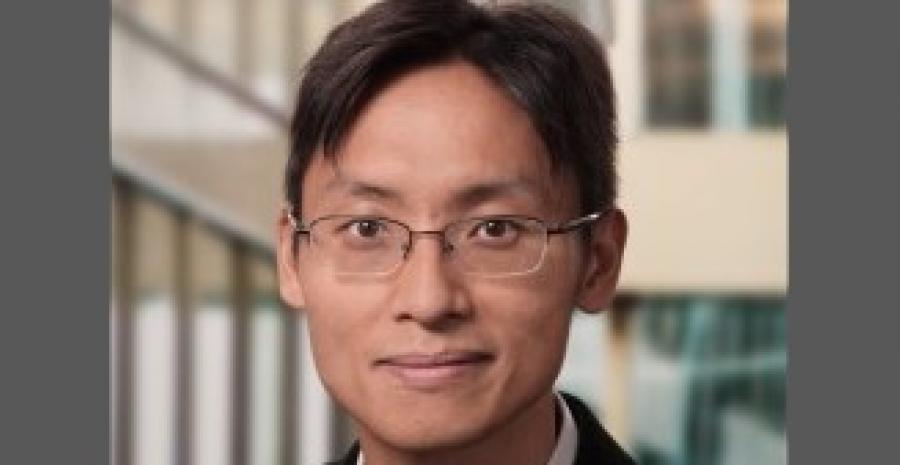
Charles Martineau is an Associate Professor of Finance at the University of Toronto-Scarborough and holds a cross-appointment at the Rotman School of Management. He serves as Associate Director of Research at the Rotman Financial Innovation Hub (FinHub). University : University of Toronto School : University of Toronto-Scarborough Department : Finance Academic Rank : Associate Professor Research Interests : Martineau specializes in information economics, focusing on: Price discovery mechanisms in financial markets Investor attention to macroeconomic news Asset pricing anomalies Behavioral responses to financial disclosures Market microstructure dynamics Risk premia quantification Recent Publications : His 2017-2024 work explores: Conditional CAPM applications Earnings announcement drift FOMC-induced market reversals Social media's impact on price revelation Bond market excess returns News-driven trading behavior Grants & Collaborations : Funded by SSHRC, Toronto-Montreal Exchange, NASDAQ Educational Fund, and Canadian Securities Institute. Collaborates with scholars like Vincent Gregoire, Adlai Fisher, and Marius Zoican. Leads data science initiatives including open-source macroeconomic attention indices.
David Ardia is a Full Professor in the Department of Decision Sciences at HEC Montréal, promoted to this position on June 1, 2025. Previously, he served as an Associate Professor from June 2020 to May 2025. He holds the Research Professorship in Sentometry and is a member of the Study and Research Group on Decision Analysis (GERAD) and the International Statistical Institute. Ardia is also an elected member of the ISI Louis Bachelier Fellow and serves as Associate Editor for both the International Journal of Forecasting and the Journal of Statistical Software. His educational background includes a Ph.D. in Financial Econometrics from the University of Fribourg, a Master of Applied Sciences in Quantitative Finance from the Swiss Federal Institute of Technology Zurich and University of Zurich, and a Master of Science in Financial Engineering from the University of Neuchâtel. Ardia's research focuses on the intersection of quantitative finance, machine learning, and natural language processing, with particular emphasis on sentometrics (textual sentiment analysis in finance), risk management, and climate finance. His work spans financial econometrics, volatility modeling, and the application of advanced statistical methods to asset allocation and economic forecasting. He has pioneered methods for analyzing climate change concerns in financial markets and has made significant contributions to understanding green versus brown stock performance. His publication record shows a strong trajectory in high-impact finance and statistics journals, with recent work examining Robinhood trading patterns, cryptocurrency markets, climate finance, and innovative methodological approaches to financial time series analysis. His research demonstrates increasing focus on sustainability applications within quantitative finance. Prix de la qualité des données ouvertes 2024 (Canadian Open Data Community) Prix de recherche pour les professeures et professeurs agrégés (HEC Montréal, 2024) Prix pour l'excellence en pédagogie (HEC Montréal, 2022) Best Paper Award at the 38th International Conference of the French Finance Association Best Paper Award 2018-2019 from International Journal of Forecasting eRum 2020 COVID19 contest winner for the COVID-19 Data Hub Ardia actively supervises numerous graduate students, with over 70 mentorship activities documented in the past five years, spanning both thesis supervision and supervised projects. His research is supported by collaborations with institutions including IVADO, the R Consortium, and the University of Lugano. He co-created the influential COVID-19 Data Hub platform, which integrates epidemiological data with policy measures and spatial databases to analyze pandemic impacts. His research group focuses on developing computational tools for financial analysis, particularly through R packages like MSGARCH for Markov-switching GARCH models and sentometrics for textual sentiment analysis. This work bridges academic research with practical applications in financial institutions and policy analysis.
Prosper Dovonon is Full Professor of Economics at Concordia University, Montréal, Canada, where he holds the Tier 1 Concordia University Research Chair in Econometrics of Large Datasets . He is concurrently Adjunct Professor at the University of Adelaide, Australia, and has previously served as Associate and Assistant Professor at Concordia, Visiting Professor at HEC Montréal, and Assistant Vice-President at Barclays Wealth in London. Education Ph.D. in Economics, Université de Montréal (2007) M.Sc. in Statistics and Economics, ENSEA, Abidjan, Côte d’Ivoire (2000) M.Sc. in Mathematics, Université Nationale du Bénin, Abomey-Calavi, Benin (1996) Research Interests Professor Dovonon’s research lies at the intersection of theoretical econometrics and financial data applications . He focuses on developing robust inferential procedures for moment-condition models, bootstrap techniques for high-frequency data, identification issues in GMM, and volatility modeling with factor structures that accommodate skewness and leverage effects. His work on large-dimensional datasets emphasizes scalable methods for estimation and testing in big-data environments. Scientific Awards & Recognition Concordia University Research Chair, Tier 1, in Econometrics of Large Datasets (2022–present) Collaborations & Affiliations Beyond Concordia and the University of Adelaide, he is affiliated with the Centre Interuniversitaire de Recherche en Économie Quantitative (CIREQ) in Montréal and has collaborated with leading scholars across North America, Europe, and Australia. His research is frequently cited in top econometrics and statistics journals, attesting to its broad impact.
Jan Bena is an Associate Professor and Chair of the Finance Division at the Sauder School of Business, University of British Columbia. He holds dual PhDs in Finance (London School of Economics) and Economics (CERGE-EI). His research focuses on innovation, corporate finance, and entrepreneurship, with notable contributions to understanding corporate innovation dynamics, ownership structures, and the interplay between finance and global markets. He leads initiatives such as the Portfolio Management Foundation Program and advises the UBC SWIFT: Sauder Women in Finance Training Program. He also holds the Bank of Montreal Chair in International Finance. His research interests span corporate innovation (process and technological), decentralized finance (DeFi), private equity ownership structures, and the impact of global factors on firm behavior. He has developed influential datasets, including the Global Corporate Patent Dataset and Process Innovation Patent Dataset, which analyze innovation trends across industries and countries. His work frequently addresses topics like multinational corporation strategies, labor market interactions, and financial market dynamics. Key contributions include studies on how employment protection laws influence innovation, the propagation of economic downturns through multinational firms, and the long-term effects of foreign institutional ownership. His articles consistently address critical questions in corporate finance, combining theoretical models with empirical evidence from large datasets. He teaches courses on entrepreneurial finance and private equity, reflecting his expertise in these areas. Bena collaborates with leading institutions and scholars globally, contributing to both academic discourse and practical frameworks for financial decision-making. His work bridges theoretical innovation with real-world applications, influencing policy and business strategies in areas like sustainability, technological transition, and corporate governance.
Vincent Grégoire is a Full Professor in the Department of Finance at HEC Montréal. He holds a Ph.D. in Finance from the University of British Columbia, M.Sc. degrees in Financial Engineering and Electrical Engineering from Université Laval, and is a Chartered Financial Analyst (CFA). His research focuses on information economics, market microstructure, financial big data analytics, cybersecurity in finance, and machine learning applications in finance. Grégoire is affiliated with the Multidisciplinary Institute for Cybersecurity and Cyber Resilience (IMC²) and IVADO, and collaborates with Fin-ML. He co-chaired the Northern Finance Association in 2024-2025. His recent work includes groundbreaking studies on market microstructure dynamics, passive investing trends, and the implications of cybersecurity on financial systems. His research has been recognized with awards such as the 2022 Best Paper Award in Asset Pricing (Northern Finance Association) and the 2022 Chenelière Éducation/Gaëtan Morin Research Prize from HEC Montréal. Grégoire has supervised over 25 master’s theses and projects, covering topics like cryptocurrency diversification, ESG risk exposure, and fintech-driven solutions for sustainable practices. In teaching, he instructs courses such as Empirical Finance and Investment Analysis. His methodologies emphasize reproducibility and cutting-edge tools like Python for financial data analysis.
Dr. Magdy Salama is a Professor in the Department of Electrical and Computer Engineering at the University of Waterloo, with dual professional engineering registrations in Ontario and Egypt. His research focuses on power systems, smart grid technologies, renewable energy integration, and medical imaging. He holds over 460 publications, including 215 journal articles, and has developed specialized labs in areas like Power Quality and Ultrasound Imaging. Recognized in the 1991 National Encyclopedia of Egyptian Scientists, he also teaches courses such as ECE 192, 390, and 462, emphasizing engineering economics and design. Education: PhD, Electrical Engineering, University of Waterloo (1977) MSc, Electrical Engineering, Cairo University (1973) BSc, Electrical Engineering, Cairo University (1971) Research Interests: Power quality and distribution system automation Smart grid and renewable energy analysis Medical image processing (e.g., sleep staging, neuromodulation) Electric energy storage and fault detection Asset management and risk analysis Labs & Innovation: He leads labs in Power Quality, Electric Vehicle Power Electronics, Ultrasound Imaging, and Sleep Staging. His patents include high-voltage power supplies for automotive and aerospace applications. Awards: Listed in the 1991 National Encyclopedia for Distinguished Egyptian Men of Science . Teaching & Grants: Recently taught courses like Distribution System Engineering (ECE 6606PD) and Electric Safety Design (ECE 6616PD). His work spans academic-industrial partnerships, though specific grants are not detailed in the text.
Claire Celerier is an Associate Professor of Finance at the Joseph L. Rotman School of Management , University of Toronto, and holds the Canada Research Chair in Household Finance . Her research spans household finance, banking, behavioral economics, and financial history , with a focus on how financial innovation impacts household risk-taking and inclusion. Education: PhD in Finance (Toulouse School of Economics), M.Sc. Economics (Paris School of Economics), M.Sc. Management (HEC Paris) Her work on capital guarantee products and security design has been published in top journals like the Journal of Finance and Review of Financial Studies , showing how product complexity affects investor behavior. Recent papers examine racial disparities in financial markets (with Purnoor Tak) and tax policy impacts on bank leverage (with Thomas Kick). Awards: Canada Research Chair in Household Finance (2023) Bank of Canada Governor’s Award (2022) Petro Canada Young Innovators Award (2021) Multinational grants from Banque de France, CEPR, and Marianne and Marcus Wallenberg Foundation
Dr. Juliane Proelss serves as Associate Professor of Finance and Jacques Ménard-BMO Professor in Capital Markets at Concordia University's John Molson School of Business. Her research spans corporate finance, sustainable finance, AI applications in financial markets, and cryptocurrency systems, with expertise in alternative investments, risk management, and Chinese capital markets. She earned her doctorate from the European Business School (EBS), a postgraduate commerce diploma from Lincoln University (New Zealand), and business administration studies at Katholische Universität Eichstaett-Ingolstadt. Prior academic roles include professor of business administration at Trier University of Applied Sciences, following industry experience in Santander Consumer Finance's Risk Management Department. Her publication record features high-impact work in the Journal of Corporate Finance, Strategic Management Journal, and European Financial Management. Recent research demonstrates increasing focus on ESG integration in digital assets, SPAC market dynamics, and AI-driven financial innovation, while maintaining strong contributions to cryptocurrency analysis and sustainable finance frameworks. Dr. Proelss has secured competitive funding including CAD 74,674 from SSHRC (2025-2028) as principal investigator for digital asset pricing research, CAD 148,500 from Autorité des Marchés Financiers (2016-2019) for corporate fraud studies, and CAD 47,126 from FRQ-SC for China innovation research. She co-founded the annual AI in Finance Conference and serves as Associate Editor for the Journal of Sustainable Finance & Investment, actively bridging academic research with industry applications in emerging finance domains.
Lynda A. Khalaf is a Full Professor and Co-Director of the CMFE at Carleton University's Department of Economics, part of the Faculty of Public and Global Affairs. She holds a B.A. and M.B.A. from Beirut and a Ph.D. from Université de Montréal. Her research focuses on econometrics, energy econometrics, and financial econometrics, with expertise in simulation-based inference, identification-robust methods, and multivariate models. Khalaf has over 40 publications in top journals like the Journal of Econometrics and Review of Economic Studies, and her work has been cited over 1,300 times. She served as Canada Research Chair (Tier II, 2004–2008), and her contributions include groundbreaking work on Monte Carlo tests and exact simulation-based inference. She has advised numerous students, many of whom have won awards for their thesis work. Khalaf has held editorial roles, organized major conferences, and chaired committees such as the SSHRC Adjudication Committee for Economics. Her research addresses challenges in financial, macroeconomic, and environmental models, emphasizing methodological innovations and practical applicability.
Valentina Galvani is a Professor and Chair of the Economics Department at the University of Alberta's Faculty of Arts. She holds a Ph.D. in Economics from Purdue University (2005), an MSc in Economics (2003), a Doctoral Degree in Mathematical Finance (2002) from the University of Brescia (Italy), and a Laurea (BS+MS) in Mathematics. Her research focuses on financial markets microstructure, energy economics, and corporate bond markets, with a strong emphasis on momentum investing and data-driven industry collaborations. Dr. Galvani has led MITACS-accelerated research projects with Alberta's banking sector since 2013, applying machine learning and model development to commercial finance challenges. Her early work included foundational contributions to general equilibrium theory in infinite-dimensional asset markets (Lp spaces). She joined the University of Alberta in 2005 and assumed the Chair position in 2022. Her research interests span financial economics, including market-state effects, corporate bond predictability, and energy market dynamics. Recent work addresses geopolitical conflicts' impact on oil markets, U.S. strategic petroleum reserves, and Saudi Arabia's competitive positioning under sanctions. She teaches graduate-level directed research and undergraduate courses in labor economics and personnel economics. Dr. Galvani's MITACS collaborations span 12 consecutive years (2013–2024), reflecting her industry engagement. While no specific awards are listed, her extensive publication record and leadership roles highlight her academic impact. She advises on energy diversification, market liquidity, and policy interventions in financial systems.
Jonathan Yu-Meng Li is an Associate Professor and holder of the RBC Financial Group Professorship in Financial Risk Analytics at the Telfer School of Management , University of Ottawa. He serves as Principal Coordinator of the Center for Responsible Wealth Transition and leads the Risk Intelligence and Resilient Solutions cluster. B.Sc. in Electrical Engineering from National Sun Yat-Sen University M.A.Sc. in Electrical and Computer Engineering from McMaster University Ph.D. in Operations Research (Financial Engineering specialization) from the University of Toronto Specializing in quantitative methodologies , his research focuses on: Optimization and machine learning tools for data-driven decisions Financial risk analytics (portfolio management, asset pricing, fraud detection) Operations management (inventory control, revenue management) Healthcare analytics (clinical risk assessment, patient triage) Climate risk modeling and technology disruption management His recent publications demonstrate an evolving research trajectory : 2024: Distributional robustness under distorted expectations 2023: Deep reinforcement learning for financial derivatives 2022: Equal risk pricing with convex measures 2018-2021: Inverse optimization and robust modeling Key scientific awards include: Emerging Researcher Award at Telfer First place in CORS Paper Competition Finalist in INFORMS Financial Services Section Major funded research projects: 2023-2029: NSERC-funded framework for robust machine learning 2023-2026: Telfer School grant on decentralized finance security 2022-2024: SSHRC-funded research on DeFi criminal activity detection 2014-2019: NSERC grant on risk measure modeling
Dr. Felipe Aguerrevere is Associate Professor and Chair of Finance at the University of Alberta's Alberta School of Business. His research examines real options valuation, commodity markets, and asset pricing in competitive environments. Research Contributions: Developed equilibrium models for investment strategies under uncertainty, analyzing interactions between product market competition and asset returns. His work provides frameworks for strategic decision-making in volatile commodity markets. Teaching: Instructs courses in Risk Management (FIN 413) and Derivative Securities, integrating theoretical models with practical financial applications. Recognized with Doctoral Research Paper Award for foundational work in real options.
Anthony Sanford is an Assistant Professor in the Department of Finance at HEC Montréal. He holds a PhD in Economics from the University of Washington, an MSc in Finance from Seattle University, and a BComm in Finance and Economics from Concordia University. His research focuses on forecasting asset returns using options, portfolio construction methodologies, and understanding firm responses to uncertainty. He collaborates with the Machine Learning in Finance (Fin-ML) CREATE program. Teaching responsibilities include Macro Asset Pricing (PhD), Financial Econometrics (MSc), and Portfolio Management (BBA) at HEC Montréal, alongside prior teaching roles at the University of Maryland and University of Washington in courses like Macroeconomics, Microeconomics, and Computational Finance. His research spans asset pricing, behavioral finance, and econometric modeling. Recent work examines gender dynamics in board changes' market reactions, compares analyst forecasts with option-derived predictions, and explores volatility jumps via Twitter sentiment analysis. His portfolio optimization studies emphasize forward-looking risk metrics and ESG integration. He has advised 2 master's theses and 6 supervised projects on topics such as board gender diversity impacts, robust estimator distortions, climate risk interactions, and neural network portfolio strategies. No scientific awards explicitly listed, though his work has been published in journals like the Journal of Finance and Journal of Corporate Finance. His academic activities include research on R&D capital complementarity effects on corporate investment and methodological contributions to state price density estimation through multivariate Markov chains.
Aerambamoorthy Thavaneswaran is a Professor in the Department of Statistics at the University of Manitoba , specializing in inference for stochastic processes and dynamic data science applications. His research bridges financial economics, machine learning, and fuzzy logic to develop innovative volatility models and trading strategies. University: University of Manitoba Department: Statistics Email: Aerambamoorthy.Thavaneswaran@umanitoba.ca Research Interests: His work focuses on neuro volatility models, financial network analysis, and fuzzy logic applications in portfolio optimization. Recent projects include hybrid deep learning architectures for cryptocurrency prediction and dynamic covariance modeling. Publications (2023-2025): His articles highlight advancements in volatility forecasting, algorithmic trading strategies, and neuro-fuzzy systems. Key topics include transformer networks for stock markets, adaptive fuzzy adjacency matrices, and Kalman filter integration for cryptocurrency trading.
Jonathan Chiu is a Senior Research Advisor at the Bank of Canada within the Banking and Payments Department (BAP), holding an adjunct academic appointment as an Adjunct Assistant Professor of Economics at Queen’s University. His research focuses on monetary theory, CBDCs, decentralized finance (DeFi), and financial infrastructure modernization. Education: Ph.D. in Economics from the University of Western Ontario (2005). He teaches monetary theory at Queen’s University alongside his research role at the Bank of Canada. Research Interests: Dr. Chiu’s work explores the intersection of central bank digital currencies, payment systems, and financial stability. Recent studies include analyzing CBDC impacts on traditional banking, modeling DeFi ecosystem dynamics, and evaluating risks in decentralized lending platforms. His research frequently addresses policy challenges in modernizing payment systems and regulating emerging digital assets. Publications: Over 20 peer-reviewed papers and staff publications since 2011, including influential analyses on CBDC design, DeFi fragility, and BigTech payment strategies. His work bridges theoretical frameworks with practical policy implications for central banks and financial regulators. Awards & Grants: No specific awards/grants mentioned in provided texts. Labs/Teams: Active in the Bank of Canada’s research teams focusing on digital currencies, financial stability, and payment system innovation, contributing to policy discussions on Canada’s monetary framework.