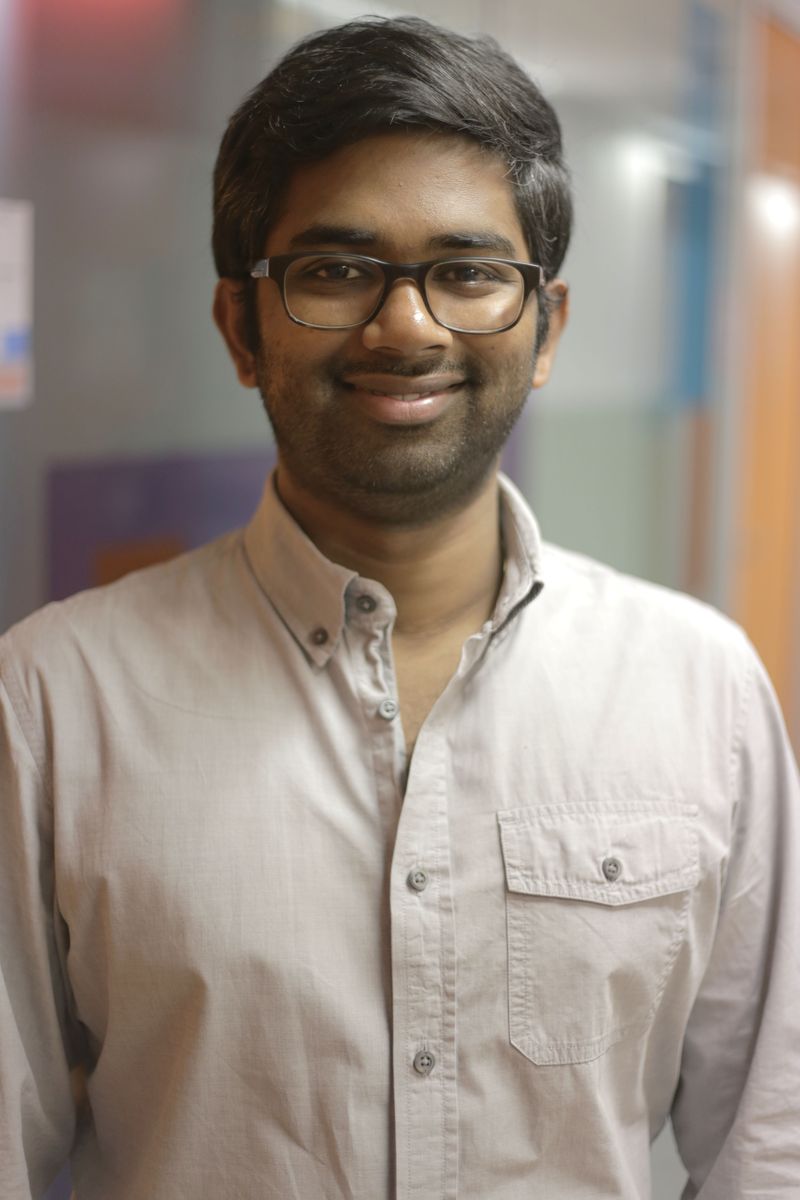
Dr. Emiliano A. Carlevaro is a Lecturer in the School of Economics and Public Policy at the University of Adelaide, within the Faculty of Arts, Business, Law and Economics. He is eligible to supervise Masters and PhD students as a Co-Supervisor, focusing on topics related to banking, monetary policy, and corporate governance. His research interests center on financial stability, banking systems, corporate governance practices in financial institutions, and the interplay between monetary and fiscal policies. He has conducted extensive analysis on Argentina's banking sector, including solvency, liquidity provision mechanisms, and network effects during financial crises. Dr. Carlevaro’s publications explore themes such as the impact of board independence on bank performance, inflation compensation in bond markets, and systemic risk propagation through interbank networks. His work combines empirical analysis with theoretical frameworks to address real-world economic challenges in both developed and emerging markets.
Dr. Chelsea Yao is an Associate Professor (Senior Lecturer) in Accounting and Finance and Director of the PhD program at Lancaster University Management School. She holds a Visiting Research Professor position at New York University Stern School of Business (2015, 2019–present). Her research focuses on ESG ratings, AI-driven financial analysis, momentum strategies, and seasonality effects in markets. Yao earned her PhD in Finance from the University of Melbourne and a Master's in Finance from Durham University. Education: PhD in Finance (University of Melbourne, Australia), MSc Finance (Durham University, UK). Research interests span ESG disclosure mechanisms, climate-related financial reporting, and the application of textual analysis to mutual fund disclosures. Notable work explores how corporate social responsibility correlates with executive horizons and how profitability changes influence stock returns. Her studies often address market anomalies like January seasonality and mutual fund performance cycles. Awards include the CFA Asia-Pacific Research Exchange Award Finalist (2024), multiple research grants from Lancaster University Management School, and semifinalist placements at the Financial Management Association (2020, 2016). She has presented at leading conferences such as the European Finance Association and AFA Annual Meetings. Advising and grants: Active in PhD supervision and has secured funding for projects on ESG rating determinants and ETF rebalancing impacts. Her work frequently intersects with industry, as seen in collaborations with asset managers like Quoniam and presentations at investment forums. Labs/teams: Engaged with Lancaster's finance research groups and co-organizes quantitative finance workshops with Manchester University. Her research network includes NYU Stern and Tsinghua University.
Dr. Donald Warsing is an Associate Professor of Operations and Supply Chain Management in the Department of Business Management at North Carolina State University's Poole College of Management. He holds a Ph.D. in Operations Management from UNC Chapel Hill, an M.S. in Management from NC State, and a B.S. in Industrial Engineering from Ohio State University. His research focuses on developing analytical tools for managing inventory, logistics, and business operations, with expertise in production/inventory management, additive manufacturing, and logistics/distribution. Dr. Warsing bridges academic research and industry practice through his work with the Supply Chain Resource Cooperative (SCRC), where he advises student teams solving real-world supply chain challenges. Prior to academia, he held engineering and management roles at IBM Corporation. His research has been published in leading journals including Production and Operations Management, Journal of Operations Management, and Decision Sciences. He co-authored the graduate textbook Supply Chain Engineering: Models and Applications .
Faisal Khan is Professor and Department Head of Chemical Engineering at Texas A&M University, holding the Mike O'Connor Chair II. He directs the Mary Kay O'Connor Process Safety Center and Ocean Energy Safety Institute, with affiliations in Industrial & Systems Engineering, Multidisciplinary Engineering, Ocean Engineering, and Petroleum Engineering. Education: Ph.D. in Environmental Engineering, Pondicherry University (1998) M.E. in Chemical Engineering, University of Roorkee (1994) B.S. in Chemical Engineering, Aligarh Muslim University (1992) Research centers on offshore safety, risk engineering, and sustainable energy systems, including hydrogen production safety, CO2 sequestration risks, and cyber-physical system resilience. His work integrates machine learning with process safety frameworks. Publications demonstrate a strong trend toward AI-driven risk assessment for energy transition technologies, with recurring themes in offshore wind-hydrogen integration, battery safety, and decarbonization challenges. Recent articles emphasize computational methods for dynamic risk management in renewable systems. Awards and honors: Fellow of Canadian Academy of Engineering (2021) Fellow of Engineering Institute of Canada (2018) Fellow of Canadian Society of Chemical Engineering (2017) SPE Health, Safety, Environment Award (2016) President’s Award for Outstanding Research (2012) As director of the Mary Kay O'Connor Process Safety Center, he leads industry-academic partnerships on safety standards. Current grants support hydrogen infrastructure risk modeling and Arctic marine transportation safety. Advises graduate students in multi-disciplinary energy projects. The Ocean Energy Safety Institute facilitates collaborative research with DOE and industry partners on offshore renewable energy systems, focusing on risk assessment protocols for emerging technologies.
Yuhang Xing is an Associate Professor of Finance at the Jones Graduate School of Business, Rice University since 2003. She holds a PhD in Finance (Columbia University, 2003), MS in Decision Science (Northwestern, 1998), and BA in Economics (Peking University, 1997). Her research focuses on empirical asset pricing and corporate finance, with notable contributions to understanding risk management, investor behavior, and municipal bond markets. Education: PhD in Finance, Columbia University (2003, with distinction) M.S. in Decision Science & Economics, Northwestern University (1998) B.A. in Economics, Peking University (1997, with distinction) Research Interests: Her work examines corporate distress risk, idiosyncratic volatility dynamics, managerial behavior effects, and market efficiency mechanisms. Recent studies address green municipal bonds and strategic risk-shifting behaviors. Publications: Over 30 peer-reviewed articles in finance journals. Recent themes include environmental finance innovation, cross-border equity momentum effects, and clinical trials for cardiac treatments (collaborative work). Awards/Grants: No specific awards or grants listed in the provided materials. Her work has been supported through Rice University's research infrastructure.
Prof. René Sieber is a Full Professor of Finance at the University of Geneva (UNIGE) and Adjunct Professor of Fixed Income. He holds dual roles as an academic leader and资深 financial professional with over 35 years in asset management and institutional finance. His expertise spans Fixed Income, Portfolio Insurance (CPPI), and Sustainable Finance, particularly in ESG integration and responsible investment strategies. He currently chairs the jury for the Swiss Sustainable Funds Awards and serves on the Scientific Advisory Board of the Zurich Sustainable Finance Competence Center. Academically, he teaches Fixed Income & Credit Risk in the Wealth Management Master’s program and co-directs the DAS in Asset Management at UNIGE’s Geneva Finance Research Institute (GFRI). He also lectures at the Swiss Training Center for Investment Professionals (AZEK) and the University’s Continuing Education Center (CFCD). Prof. Sieber’s career includes co-founding the asset management firm Dynagest SA (1993–2018), managing over CHF 5 billion in assets and pioneering Swiss portfolio insurance solutions. He served on the Ethos Services SA board (2002–2022), driving ESG fund development, and advises institutional investors through board roles at Vaudoise Assurances and other entities. His research focuses on quantitative risk management techniques, currency/equity overlay strategies, and sustainable finance standards. He has authored numerous articles in finance journals and presented at global conferences on topics like asymmetric risk management and ESG compliance.
Larry Miller is a Clinical Professor and Executive Director of the Sony Audio Institute for Music Business and Technology at New York University's Steinhardt School. He also directs the Music Business Program and serves as an adjunct faculty member. With an MBA from Columbia Business School, his expertise spans music entrepreneurship, analytics, valuation, and strategic marketing. He advises music creators, rights holders, and tech firms on policy, litigation, and growth strategies. Professor Miller has held leadership roles at L.E.K. Consulting and MediaNet, and founded Or Music, a Grammy-winning record label. He contributes to media through his Musonomics podcast and voice-over work, including a Clio-winning performance. His research focuses on music industry transformation, streaming economics, and metadata foundations. Key achievements include the 2024-25 Music Business Association Educator of the Year award and expert testimony before the Copyright Royalty Board. His work bridges academia, industry, and innovation, addressing global challenges in music business and technology.
Paul Schneider is a Full Professor in the Faculty of Economic Sciences at the University of Italian Switzerland (USI), where he has been a faculty member since 2012. He is affiliated with the Institute of Finance (IFin) and the Euler Institute (EUL), contributing to interdisciplinary research in quantitative finance and econometrics. His research focuses on financial econometrics, asset pricing, and statistical methods in finance, with an emphasis on extracting latent market information under minimal assumptions. He integrates techniques from engineering, mathematics, and data science to develop robust models for financial markets. His work spans risk premia, ambiguity in investment decisions, nonlinear pricing, and model-free recovery methods. His recent publications (2023–2024) in journals such as Review of Finance , Management Science , and SIAM Journal on Mathematics of Data Science highlight trends in adaptive learning, empirical scenario generation, constrained likelihood estimation, and optimal investment under ambiguity . These reflect a strong focus on data-driven, computationally efficient, and theoretically sound approaches to financial modeling. Adaptive joint distribution learning Fast empirical scenarios Optimal Investment under Ambiguity Constrained polynomial likelihood Dispersion of Beliefs and Sentimental Recovery Scientific Awards: No specific awards or fellowships are mentioned in the provided text. Advising and Grants: While no formal list of advisees is provided, Paul Schneider has collaborated extensively with researchers such as Damir Filipovic, Fabio Trojani, and Christian Wagner, suggesting a strong mentorship and collaborative role. He has contributed to funded research projects, particularly in financial modeling and econometrics, though specific grant names are not detailed. Labs and Research Teams: He is actively involved with the Institute of Finance (IFin) and the Euler Institute at USI, which support interdisciplinary research in finance, mathematics, and data science. He has also developed computational tools such as the KDM R package for kernel density machines, indicating engagement with data science and open research practices.
Curtis Hays Whitson is a Professor at the Institute of Geo Sciences, NTNU, affiliated with the Petroleum Technical Center. His research focuses on reservoir fluid characterization, CO2 sequestration, unconventional reservoirs, and enhanced oil recovery (EOR). He has advised numerous PhD students and contributed to over 100 peer-reviewed publications since 1980, including seminal works on PVT modeling, diffusion mechanisms, and shale gas optimization. His recent work emphasizes field-scale EOR optimization and CO2 injection in fractured systems. Whitson has supervised doctoral theses on topics like CO2-EOR in Iran’s Haft Kel field and gas-cycling benchmarking. His research integrates reservoir simulation, material balance analysis, and multiphase flow dynamics. Key research themes include: (1) CO2 injection in chalk and unconventional reservoirs, (2) diffusion-driven recovery mechanisms, (3) shale gas depletion performance, and (4) integrated field optimization. His articles span fluid property characterization, numerical modeling of transport phenomena, and production optimization strategies. Whitson collaborates widely with industry partners on projects involving experimental fluid analysis and reservoir-plant integration.
Eero Pätäri is a Professor in Finance at the School of Business and Management, Lappeenranta University of Technology (LUT University), where he has been employed since March 2003. He is affiliated with the Business Studies department and actively contributes to research in quantitative finance and investment strategies. His research interests center on value investing , momentum strategies , portfolio optimization , and performance evaluation in equity markets. He applies quantitative models and empirical analysis to examine anomalies, trading rules, and financial decision-making, with a focus on Finnish, German, Russian, and U.S. stock markets. The recent trend in his publications shows a strong emphasis on combining financial ratios, multicriteria decision-making (e.g., data envelopment analysis), and technical trading rules to enhance portfolio performance. His work bridges finance and operations research, particularly in evaluating hedge funds and mutual funds, and synthesizing the value premium literature. Scientific Awards: No awards explicitly mentioned. Dr. Pätäri has not listed any formal advisees or students in the provided texts, but his extensive collaboration with researchers such as Timo Leivo, Pasi Luukka, and Sheraz Ahmed suggests a strong advisory or mentoring role in research. There is no mention of external grants in the text. While no specific lab or research team is named, his consistent output in finance journals indicates leadership in a research group focused on empirical asset pricing and investment strategies.
Kwamie Dunbar is a tenured Professor of Finance at WPI and currently serves as the Interim Dean of The Business School and Director of the FinTech Program. He holds a PhD in Financial Economics from Fordham University, an MS in Mathematics from Fairfield University, an MBA in Economics and Finance from Sacred Heart University, and a BS from the University of the West Indies. His research focuses on FinTech innovation, cryptocurrency markets, blockchain assets for social good, and the impact of environmental policies on investment. He has published in leading journals such as Quantitative Finance , Economic Modelling , and International Review of Financial Analysis , with notable contributions to topics like CBDC implications, climate finance, and DeFi governance. Dr. Dunbar actively engages with industry through collaborations with Fortune 500 companies and serves on editorial boards for journals like Heliyon and I-Science . His work aligns with UN Sustainable Development Goals 4 (Quality Education), 7 (Clean Energy), 9 (Innovation), 11 (Sustainable Cities), 12 (Responsible Consumption), and 13 (Climate Action). Professional affiliations include the American Finance Association, Eastern Finance Association, and Financial Management Association. He has received media attention for insights on cryptocurrency in retirement portfolios and WPI’s pioneering FinTech programs.
Professor Lakshithe WAGALATH is an Associate Professor at IÉSEG School of Management, specializing in Finance with a focus on systemic risk, financial markets, and regulatory frameworks. He holds a Ph.D. in Applied Mathematics from University Pierre et Marie Curie (Paris VI) and has extensive teaching experience across institutions including IÉSEG, ESILV, and Lycée Stanislas. His research interests include financial risk management, systemic risk contagion, derivatives pricing, and the impact of institutional investors on market dynamics. He has published extensively in top journals such as Mathematical Finance , International Journal of Theoretical and Applied Finance , and Risk , addressing topics like regulatory arbitrage, liquidation risk adjustments, and fire-sale forensics. WAGALATH’s work spans theoretical and applied finance, with a particular emphasis on developing analytical frameworks for understanding market instability and regulatory challenges. His academic contributions bridge mathematical modeling and real-world financial phenomena, offering insights into systemic risk measurement and management strategies.
Ying Zhang, PhD, is an Assistant Professor in the Department of Pathology at the University of California, Irvine (UCI) School of Medicine. Her research focuses on digital libraries, usability evaluation, metadata frameworks, and information systems. She has contributed to studies on digital humanities integration, search algorithm optimization, and user interaction design in digital environments. Her work frequently addresses challenges in library systems, search functionality, and metadata standards for moving image collections. Key areas of interest include improving digital library interfaces, analyzing user behavior in web searches, and developing holistic evaluation models for digital infrastructure. Her research spans topics like neural network applications for clickthrough prediction and the impact of field weights on search performance. She has also explored cultural aspects of librarianship, such as technologies in Chinese librarianship and cross-cultural digital resource management. Dr. Zhang's publications reflect a focus on bridging technical systems with user-centric needs, emphasizing both theoretical models and practical applications in digital information management. She has consistently engaged with issues of usability, metadata efficacy, and the evolving role of libraries in the digital age.
Douglas K. Schneider is a Professor and holds the Edwin B. Jones Family Endowed Professorship in Accounting at East Carolina University's College of Business. He is a licensed CPA and actively contributes to both academic research and professional accounting standards development. His educational background includes a PhD from the University of Georgia, a Master of Science in Accounting (MSA) from the University of Virginia, and a BS from Bentley University. Dr. Schneider’s research focuses on financial accounting, reporting, taxation, and accounting education. He has published over fifty scholarly articles and presented at more than thirty academic conferences. His work spans international financial reporting standards, CPA exam design, ethical decision-making, digital transformation in accounting, and sustainability reporting. He has made significant contributions to petroleum accounting and tax policy analysis. The recent trends in his publications reflect a strong engagement with evolving accounting standards (GAAP/IFRS), technological disruption (blockchain, AI), and pedagogical innovation. His scholarship bridges theory and practice, often addressing real-world challenges in regulation, ethics, and global finance. Distinguished Professor for Teaching Award by the UNC Board of Governors (2015) College of Business Faculty Fellowship Edwin B. Jones Family Endowed Professorship in Accounting ECU’s Scholar-Teacher Award Recipient Student Activities Academic Advisor of the Year ECU Panhellenic Outstanding Faculty Advisor Award (multiple times) Finalist for the University Alumni Award for Outstanding Teaching Finalist for the Board of Governors Award for Excellence in Teaching Dr. Schneider has advised numerous students through formal recognition such as Hooder and Marshal roles at graduation ceremonies. He frequently writes recommendation letters for students pursuing graduate studies, scholarships, and employment. He has served on key departmental committees including Personnel and Promotion & Tenure. His service extends to professional organizations and Greek life governance, where he acts as Treasurer and Faculty Advisor for Alpha Delta Pi and the East Carolina Greek Alumni Alliance. He is a co-founding advisor of Beta Alpha Psi and the National Association of Black Accountants at ECU, demonstrating a strong commitment to student development and diversity in the accounting profession.
Giulio Zotteri is a Full Professor at the Interuniversity Department of Territorial Sciences, Planning and Policies (DIST) within Politecnico di Torino. He is a member of the FULL Interdepartmental Center - Future Urban Legacy Lab and operates under the scientific disciplinary sector IEGE-01/A - Economic and Management Engineering (Area 0009 - Industrial and Information Engineering) . Teaches Marketing (2025/26 to 2019/20) and Urban and Regional Economics (2022/23 to 2019/20) in the College of Management and Production Engineering Supervises PhD student Marco Del Nibletto in Urban and Regional Development (37th cycle, ongoing) His research focuses on Urban Planning , Logistics Optimization , and Supply Chain Dynamics , particularly analyzing the Bullwhip Effect , Retail Accessibility , and Overtourism Impact . Recent publications examine: Retail accessibility's influence on housing markets (2024) Geographical retailer distribution analysis (2021) Cultural heritage reactivation challenges (2020) Overtourism vs. undertourism dilemmas (2020-2019) Inventory rationing strategies (2017) Lead time optimization in retail (2016) Prof. Zotteri leads multiple commercial research projects including logistics hub optimization, vehicle routing strategies, and market revitalization initiatives. He has conducted consultancy work for companies like The Winesider and participated in sustainability projects using serious games.