Dr. Hooman Foroughmand Araabi is a Senior Lecturer in Urban Planning and Design at the University of the West of England (UWE) , affiliated with the Faculty of Environment and Technology and the Department of Architecture and the Built Environment . His work bridges critical theory and creative urban design, focusing on the alignment of criticality and creativity to enhance public spaces. Research Interests: Urban design theory, inclusivity in the built environment, decolonising urbanism, beauty in urban design, and governance of design. He also explores urbanism in Iran and the Middle East, emphasizing sociopolitical frameworks and localized design knowledge. Publication Trends: His 15 most recent articles (2011–2025) highlight themes like urban design theory, critical methodologies, participatory design, and regional urbanism. Notably, he develops a Deleuzoguattarian approach for urban design and examines the ethics of beauty in public spaces.
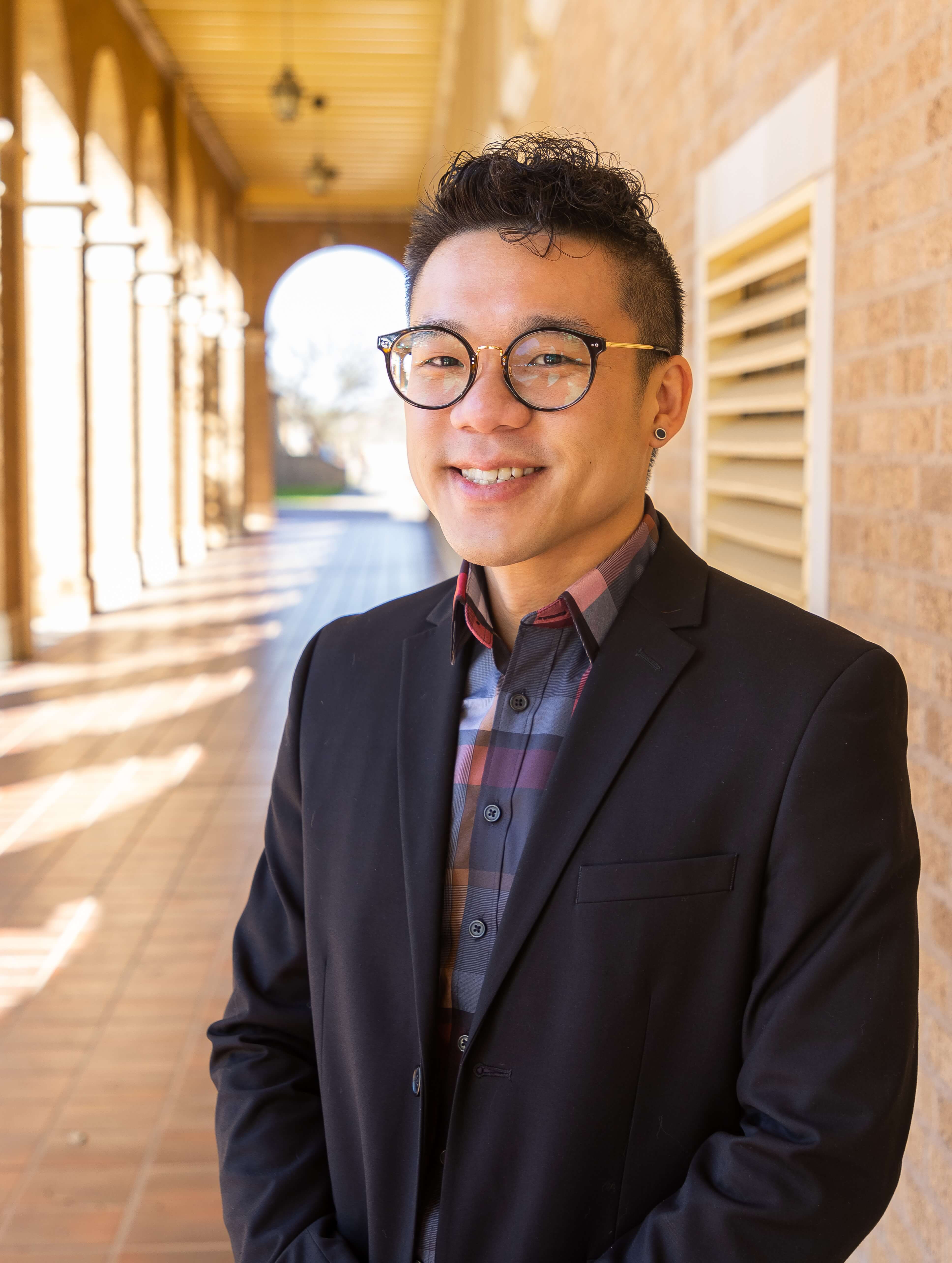
Jason Tham is an Associate Professor and Assistant Chair in the Department of English at Texas Tech University, where he teaches undergraduate and graduate courses in UX research, information design, instructional design, and digital rhetoric. His research focuses on design thinking, user experience, emerging technologies, and technical communication pedagogy. He directs the UX Research Lab and serves as faculty sponsor for the TTU Society for Technical Communication Student Chapter. PhD in Rhetoric & Scientific & Technical Communication, University of Minnesota (2019) MA in English: Rhetoric & Writing, St. Cloud State University (2014) MS and BS in Mass Communication, St. Cloud State University Tham's research explores the intersection of design thinking, immersive technologies, and equitable pedagogy. Current projects include studies on AI user experience, collaborative writing in virtual reality, and the social justice implications of design thinking methodologies. He has received awards such as the Ellen Nold Award for Computers and Composition, TTU's Excellence in Research Award, and the Frank R. Smith Outstanding Article Award. Tham serves as Vice President of the Council for Programs in Technical and Scientific Communication and will assume the editorship of Computers and Composition in 2025.
Luke Miratrix serves as Assistant Professor at Harvard Graduate School of Education and affiliate faculty in Harvard Department of Statistics. His methodological expertise centers on causal inference applications in educational research, particularly treatment effect heterogeneity and cluster-randomized trial evaluation. His academic background includes a Doctorate in Statistics from University of California, Berkeley (2012), Master of Science in Computer Science from M.I.T., Bachelor of Science in Computer Science from California Institute of Technology, and Bachelor of Arts in Mathematics from Reed College. Prior to academia, he spent seven years as a high school teacher and tutor. Miratrix's research prioritizes minimal-assumption statistical approaches to validate data-driven arguments. Key interests include developing methods for characterizing variation in treatment impacts, analyzing post-treatment subgroups, and applying high-dimensional techniques to text summarization in legal, journalistic, and educational contexts. His work consistently bridges theoretical statistics with practical implementation challenges in real-world settings. Analysis of his recent publications (2023-2025) reveals three dominant trends: advancement of matching methodologies (e.g., synthetic controls, caliper matching), refinement of heterogeneous treatment effect estimation across multisite trials, and integration of machine learning with human coding for efficient text-based inference in educational assessments. These efforts demonstrate increasing focus on scalable, accessible tools for applied researchers. He contributes to methodological infrastructure through the CARES Lab and software packages like 'matchMulti' and 'textreg', providing practical implementation guides for complex statistical techniques. His work emphasizes translating advanced causal inference methods into usable frameworks for education researchers and policymakers.
Yuzhe Yang is an Assistant Professor of Computational Medicine and Computer Science at UCLA, with a visiting research scientist role at Google Health. He holds a PhD in Computer Science from MIT (2024), advised by Dina Katabi, and a B.S. with honors from Peking University. Research Focus: Machine learning for healthcare, medical AI fairness, and AI-driven biomedical discovery Key Contributions: Ten Notable Advances (Nature Medicine) and Ten Crucial Advances (The Lancet Neurology) His lab develops Trustworthy Learning Algorithms and Generalist Health Models that integrate Multimodal Data for personalized health coaching. Notable projects include AI-based Parkinson's Disease Biomarkers via nocturnal breathing and Foundation Models for Equitable Medicine . Recent publications at ICLR 2025 (wearable foundation models), Nature Medicine 2024 (medical AI fairness), and Science Advances 2025 (vision-language medical bias) highlight his interdisciplinary work. He serves on ML4H workshops and reviews for top conferences like NeurIPS and ICML. Awards include Forbes 30 Under 30 , Takeda Fellowship , and Baidu PhD Fellowship . Advising opportunities: Recruiting PhD students (CS/CompMed) and postdocs in AI for health. Lab: Health Intelligence Lab (HAIL)
Sarah Blodgett Bermeo is an Associate Professor in the Sanford School of Public Policy and Associate Professor of Political Science at Duke University, serving as Director of Graduate Studies for the Master of International Development Policy program and affiliate of the Duke Center for International Development. Her academic credentials include: Ph.D. in Political Science, Princeton University (2008) M.A. in Political Science, Princeton University (2006) M.P.A., Princeton University (2001) B.A., University of Rochester (1997) Bermeo specializes in political economy at the intersection of international relations and development studies, with core expertise in industrialized-developing country relations. Her research examines strategic allocation of foreign aid, trade agreements, and climate finance through the lens of self-interested yet development-oriented donor behavior. Recent work intensively explores climate migration dynamics, health aid transitions, and the geopolitical implications of economic shifts in major donor countries like China. She investigates how negative spillovers from underdevelopment drive industrialized states to target assistance while protecting their own interests. Publication trends reveal consistent focus on aid allocation mechanisms since 2009, evolving from foundational work on democratization and trade adjudication toward contemporary climate migration and health system vulnerabilities. Her scholarship demonstrates increasing integration of environmental and health crises into development policy frameworks, with notable emphasis on data-driven analysis of donor behavior during global disruptions. Her scholarly recognition includes: Robert O. Keohane Award from International Organization (2016) for "Aid Is Not Oil" Bermeo directs externally funded research initiatives including a 2023-2024 USAID-focused study on China's economic slowdown implications and a 2020 SDG2 Leaders Alliance viability assessment. She mentors students through Bass Connections research teams and teaches graduate courses in globalization, policy analysis, and international political economy across Public Policy, Political Science, and International Comparative Studies departments. As MIDP Director of Graduate Studies, she leads curriculum development while collaborating with the Duke Center for International Development on practitioner-oriented research. Her Bass Connections teams specifically address technology-society intersections within migration and development contexts, producing policy-relevant outputs for international organizations.
Anjalie Field is an Assistant Professor in the Computer Science Department at the Whiting School of Engineering, Johns Hopkins University. She is also affiliated with the Data Science and AI Institute and the Center for Language and Speech Processing (CLSP). Dr. Field completed her PhD at the Language Technologies Institute at Carnegie Mellon University under Yulia Tsvetkov, where she was a member of TsvetShop. Prior to joining Johns Hopkins, she was a postdoctoral researcher in the Stanford NLP Group and at the Stanford Data Science Institute, working with Dan Jurafsky and Jennifer Eberhardt. She also spent time as a visiting student at the University of Washington from 2021 to 2022. Her research focuses on the ethics and social science aspects of natural language processing, developing computational models to address societal issues like discrimination and propaganda while critically assessing and improving privacy, transparency, and fairness in AI pipelines. Her work spans social media analysis, bias detection in multilingual content, police accountability systems, and ethical considerations in large language model applications. Dr. Field's publications demonstrate a consistent focus on identifying and addressing biases in language technologies, with particular attention to racial, gender, and cultural dimensions. Her recent work has expanded into domain-specific applications of NLP in astronomy, healthcare, and social justice contexts, showing the breadth of impact that ethical AI considerations can have across disciplines. Among her notable recognitions are: AI2050 Fellow by Schmidt Sciences 2022 Wikimedia Foundation Research Award of the Year Best Paper nomination at Socinfo (2020) Dr. Field teaches AI Ethics and Social Impact (Fall 2023; Fall 2024) and NLP for Computational Social Science (Spring 2024; Spring 2025). She plans to take PhD students for the 2024-2025 admissions cycle. Her work bridges technical NLP research with important social considerations, making significant contributions to both the technical community and broader societal discourse around AI ethics. She is an active member of the Center for Language and Speech Processing, where she collaborates with researchers working at the intersection of language technologies and real-world applications. Her research focuses on developing methods that not only advance NLP capabilities but also ensure these technologies serve diverse communities equitably.
Dr. Tristan A.F. Long is an Associate Professor in the Department of Biology at Wilfrid Laurier University's Faculty of Science in Waterloo, Ontario. A behavioral ecologist and evolutionary geneticist, he focuses on sexual selection and the role of female mate preference variation in evolutionary change. With teaching responsibilities for large introductory biology courses like BI111 and BI393, he has developed innovative active learning techniques using playing cards, iClickers, and role-playing games to teach population genetics and ecological principles. University of Western Ontario - BSc in Honours Ecology and Evolution (1999) University of Guelph - MSc in Zoology (2001) Queen’s University - PhD in Biology (2005) University of California Santa Barbara - Postdoctoral Fellow (2005-2009) University of Toronto - Postdoctoral Fellow (2009-2010) His research examines how female Drosophila melanogaster vary in their mating preferences and how these differences shape evolutionary trajectories. He has published extensively on reproductive plasticity, sexual conflict, and environmental interaction effects. His laboratory combines experimental evolution with computational modeling to explore genetic trade-offs and behavioral adaptations. Scientific awards include the Laurier Teaching Award for Sustained Excellence (2017). He has developed innovative classroom techniques like the Battle of the Beaks exercise for teaching adaptive evolution and an iClicker-based population genetics simulation using playing cards. His 2024 BI393 biostatistics course policy strongly discourages generative AI use due to concerns about educational integrity and environmental impact.
Nathalie Frascaria-Lacoste is a Professor at AgroParisTech and Director of the UMR ESE (Ecology, Society, Evolution) since 2022. She previously served as Assistant Professor at ENGREF (Paris/Nancy) and Deputy Director of UMR CNRS/UPS/AgroParisTech 8079 for nearly two decades. Her research focuses on three core areas: (1) socio-ecosystem dynamics related to biodiversity and climate change, (2) environmental assessment processes in French public policies, and (3) urbanization impacts on biodiversity with decision-making tools. She has coordinated interdisciplinary projects like the « Manuel de la Grande Transition » and serves on scientific councils for institutions like the Yves Rocher Foundation and Campus de la Transition. Current affiliations: AgroParisTech, UMR ESE, Université Paris-Saclay Former affiliations: ENGREF, CNRS Noteworthy grants include VINCI Chairs (2009-2012, 2014-2019), LabEx funding (INDISS/ACT), ITTECOP grants, and ANR EVNATURB. Her editorial roles include the NSS journal and scientific councils at INRAE and ACT department. Prominent scientific award: Chevalier in the National Order of Merit (2016). Supervision includes 5 current PhD students and 6 former PhD/postdocs. She collaborates with institutions like INRAE, CNRS, and the Yves Rocher Foundation.
Prof. Dr.-Ing. Jörg Knieling (HafenCity University Hamburg) specializes in Urban Planning and Regional Development , focusing on sustainable metropolitan governance, climate resilience, and land use policy. As co-chair of Hamburg's Senate Climate Advisory Board , he drives policy recommendations on net-zero land consumption , climate action plans , and spatial governance reform . Co-chair, Hamburg Climate Advisory Board (2021–present) Member, Advisory Council for Spatial Development, German Federal Ministry Co-leader, DFG Research Training Group 'City Science Lab' Coordinator, EU projects 'SMARTilience', 'RESCUE', 'Area21' His research explores climate-resilient urban governance through comparative studies of cities like Halle (Saale) and Mannheim , emphasizing collaborative planning and smart city technologies . Recent work addresses heat action planning , spatial equity , and digital policy tools for sustainable development. Key publication trends include land consumption reduction (30 ha/day target), urban-rural partnerships , and AI in spatial planning . His Urban Governance Toolbox project (2023) exemplifies solutions for municipal climate resilience. Students under his supervision include: Leon Thümer (B.Sc., 2020 - 'Co-Creation in Real Estate') Laura-Darleen Klein (M.Sc., 2023 - 'Age-Friendly Cities') Charlotte Muhl (M.Sc., 2018 - 'Urban Commons') He leads the Urban Planning and Regional Development department, mentoring 12+ research associates and coordinating interdisciplinary projects with institutions like Goldsmiths University , Leuphana University , and Georgia Tech .
Jacques Gautier is an Assistant Professor in Geovisualization at LASTIG, part of the French National Geographic Institute (IGN France) since September 2020. He is a member of the GEOVIS research team focusing on advanced geovisualization techniques for spatio-temporal data analysis. Prior to his current position, he served as a Postdoctoral Researcher at LASTIG working on the Urclim European project, developing geovisualization methods for climate data in urban environments. His educational background includes a PhD in Geography from Université Grenoble Alpes (2015-2018), where his dissertation focused on "GrAPHiST: An exploratory analysis approach for identifying the dynamics of spatio-temporal phenomena," and an Engineering degree in Geographical Information Science from ENSG (2009-2012). Dr. Gautier's research focuses on innovative approaches to visualize complex spatio-temporal data across multiple domains. His expertise spans meteorological data visualization, epidemiological data visualization, 2D/3D geovisualization techniques, and exploratory data analysis of spatio-temporal phenomena. He has developed specialized methods for identifying cyclic patterns in time-series data, visualizing uncertainty in ensemble forecasting systems, and creating interactive visualization environments for domain experts in urban planning, public health, and emergency response. Analysis of Dr. Gautier's publication record reveals a consistent focus on developing visualization techniques that bridge theoretical advances with practical applications. His work spans urban climate analysis, pandemic response (particularly during COVID-19), and mountain rescue operations. A distinctive aspect of his research is the integration of harmonic analysis with visual exploration to identify cyclic patterns in spatio-temporal data, as demonstrated in his GrAPHiST framework. Dr. Gautier has been actively involved in several significant research projects including ORACLES (focusing on ensemble forecasts of marine submersion), Urclim (aiming to develop integrated Urban Climate Services), and Choucas (an interdisciplinary project to assist mountain rescue operations). These projects highlight his ability to translate visualization research into practical decision-support tools for critical situations. As a member of the GEOVIS research team, Dr. Gautier contributes to advancing geovisualization methodologies through both theoretical development and practical implementation. His work on mixed temporal diagrams, helical time representations, and uncertainty visualization has provided new approaches for exploring complex spatio-temporal datasets across multiple disciplines.
Etienne Ollion is a Professor of Sociology at École Polytechnique and a Research Director at the Centre national de la recherche scientifique (CNRS). He maintains dual appointments that position him at the intersection of traditional political sociology and emerging computational methods. His academic work spans both French and international institutions, with teaching invitations at ENS-Paris, Berkeley, University of Chicago, Sciences Po Paris, and other leading universities worldwide. His research program focuses on two interconnected domains: the sociology of politics and power, and computational social sciences. Ollion's work examines political professionalization, parliamentary dynamics, and the transformation of political fields, particularly through his ethnographic study of the 2017 French National Assembly documented in his book The Candidates: Amateurs and Professionals in Politics (Oxford University Press, 2024). Simultaneously, he pioneers methodological innovations applying machine learning and natural language processing to social science research. Ollion's recent publications reveal a trajectory increasingly focused on the intersection of AI and social science methodology, with numerous 2024-2025 publications addressing LLM applications, text annotation, and the ethical considerations of proprietary AI systems in research. His work demonstrates how computational methods can enhance traditional social science approaches while maintaining critical awareness of technological limitations. As an academic leader, Ollion directs the Computational Social Sciences initiative at the IPP and has developed educational resources including online courses and the aweSOM software for data analysis. He regularly organizes summer schools (SICSS-Paris) and workshops to disseminate computational methods across the social sciences. Ollion serves on the editorial board of Actes de la recherche en sciences sociales and maintains an active public presence through media appearances, including a notable interview on France Inter about AI and Social Sciences in September 2024. His upcoming book talk at The Seminary Co-op in Chicago on March 7, 2025 further demonstrates his active engagement with the international academic community.
Omobolanle Ogunseiju is an Assistant Professor in the School of Building Construction at Georgia Institute of Technology . She holds a Ph.D. in Environmental Design and Planning from the Department of Building Construction at Virginia Tech. Education: Ph.D. in Environmental Design and Planning, Virginia Tech Current Role: Assistant Professor, Georgia Tech School of Building Construction Her research focuses on integrating wearable robotics and Artificial Intelligence (via digital twin , cyber-physical systems , and data sensing ) to improve construction workforce safety, health, and well-being . She explores ethical implications of automation in construction, particularly in human-technological dynamics. Key research trends include: Advancing smart communities through robotics and AI Exoskeleton evaluation for ergonomic risk reduction Mixed reality environments for construction education Data analytics for cognitive and physical risk assessment Professional identity development in construction engineering students Industry-academia alignment for sensing technology integration Scientific awards: Outstanding Doctoral Candidate, Myers-Lawson School of Construction Outstanding Doctoral Student, College of Architecture and Urban Studies at Virginia Tech Teaching philosophy emphasizes experiential learning , engagement techniques , and hierarchical assessments . She developed the Construction Cost Management course at Georgia Tech and will lead Construction Technology courses. Previously, she taught Smart Construction , Building Systems Technology , and Wireless Sensing in Construction Management at Virginia Tech.
Jennifer Kaiser is an Associate Professor at Georgia Institute of Technology, affiliated with the School of Civil and Environmental Engineering and Earth and Atmospheric Sciences . Her research focuses on air pollutant formation, particularly volatile organic compounds (VOCs), and their impacts on air quality and climate. Endowed Position: Greene Early Career Professor (2024) Key Projects: Emissions from agriculture/oil-gas, biosphere-atmosphere interactions, satellite data validation Tools: CMAQ modeling, TROPOMI satellite analysis, low-cost sensor networks Her work spans instrument development to global chemistry-transport modeling, with recent emphasis on satellite-based monitoring and health risk assessment. She leads the Kaiser Group , which investigates VOC dynamics in urban and wildfire-affected regions. Scientific Awards: NOAA Grant (2021) Greene Early Career Professor (2024) Contact: jennifer.kaiser@ce.gatech.edu | Office: Ford Environmental Science & Technology Building, Room 3224
Johan Meyers is a full Professor at KU Leuven's Faculty of Engineering Science, Department of Mechanical Engineering, where he heads the Applied Mechanics and Energy conversion (TME) research unit. He serves as a contact person for TME and is an active member of the KIES – KU Leuven Institute for Energy and Society. His administrative roles include membership on the Council of the Faculty of Engineering Science, the Mechanical Engineering Department Council and Board, and chairing the HPC Steering Committee. Professor Meyers' research focuses on turbulent flow simulation and optimization, with particular emphasis on wind energy applications, atmospheric pollutant dispersion, and computational methods. His work spans Direct Numerical Simulation (DNS), Large-Eddy Simulation (LES), and model reduction techniques for applications in energy engineering. Current research categories include flow control & optimization, wind farm engineering, and atmospheric pollutant dispersion modeling, with specific applications in radioactive release scenarios and wind turbine system optimization. His recent publications demonstrate a strong trend toward wind energy applications, particularly in optimizing wind farm layouts and operations through advanced computational methods. The research shows significant emphasis on Large-Eddy Simulation techniques to study atmospheric boundary layer interactions with wind farms, with growing interest in hybrid wind-solar energy systems and the effects of surface temperature heterogeneity on flow patterns. His work increasingly integrates machine learning approaches to enhance computational efficiency in wind farm modeling. Professor Meyers actively supervises numerous PhD students including Bon, T., Janssens, N., Jamaer, S., and ALREWENY, A., among others. His research is supported by multiple ongoing projects through 2028, including 'Wind-farm co-design in the North-Sea basin given climate and market uncertainty' and 'Reconstruction of turbulence from partial observations,' primarily funded by research councils and industry partnerships. He leads the Turbulent Flow Simulation and Optimization (TFSO) research group, which develops efficient supercomputing simulation tools for turbulent flow applications in energy engineering. The group specializes in wind farm optimization, atmospheric pollutant dispersion modeling, and airborne wind energy systems, with a particular focus on LES studies of wind farm interactions with the atmospheric boundary layer.
Dr. Geoffrey L. Herman serves as the Severns Teaching Professor in the School of Computing and Data Science at the University of Illinois at Urbana-Champaign. He earned his Ph.D. in Electrical and Computer Engineering from UIUC as a Mavis Future Faculty Fellow and completed postdoctoral research at Purdue University's School of Engineering Education. His research focuses on understanding how students learn engineering and computing concepts and developing systemic approaches to improve teaching methods in higher education. With over $7 million in research funding and more than 120 peer-reviewed publications, his work spans educational technology, cognitive aspects of learning, and faculty development initiatives. His recent publications demonstrate a consistent focus on evidence-based instructional practices, assessment methodologies, and collaborative learning approaches, with particular emphasis on computer science education, proof writing tools like Proof Blocks, and mastery learning techniques. These works collectively advance the understanding of effective educational strategies in STEM fields. IEEE Education Society Mac Van Valkenburg Early Career Teaching Award Scott H. Fisher Computer Science Teaching Award Best paper award in the first 50 years of the ACM Special Interest Group, Computer Science Education As a mentor, Dr. Herman guides graduate students interested in engineering and computing education research, focusing on designing better instruction. He also works with undergraduates on improving educational experiences through platforms like PrairieLearn. His leadership extends to founding the Grainger College of Engineering's Strategic Instructional Innovations Program, which has secured millions in external funding. He serves on the Computer Research Association Education committee and as associate editor for the Journal of Engineering Education. Dr. Herman leads national workshops on professional development for computer science teaching faculty and has created peer mentoring networks through the Teaching Professionals Program, significantly impacting faculty development in engineering education.