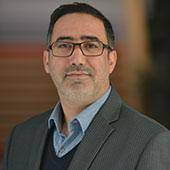
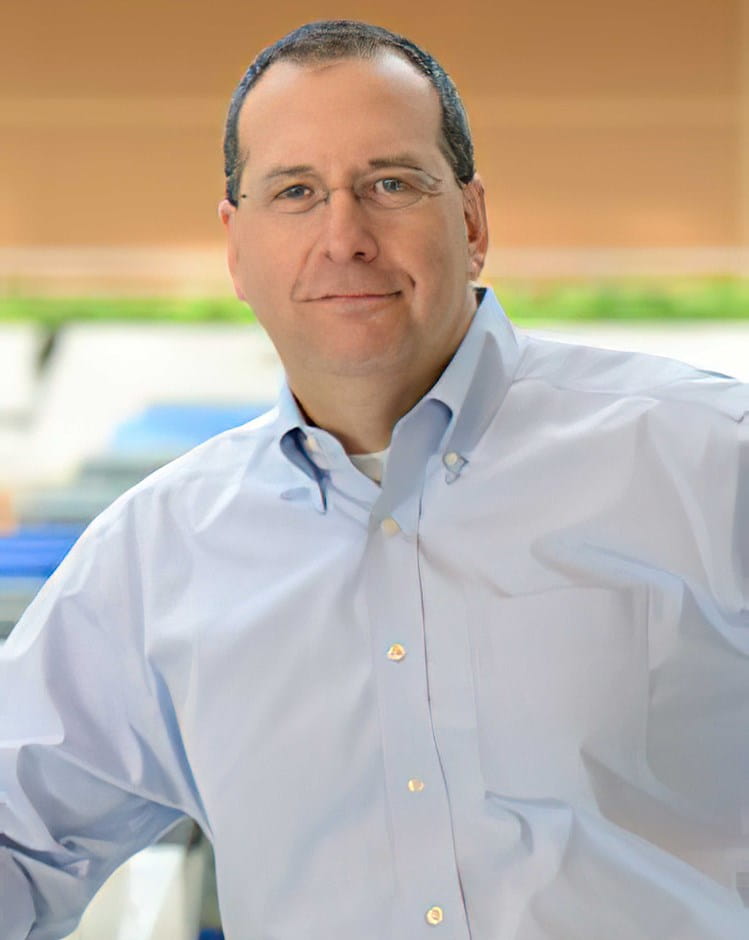
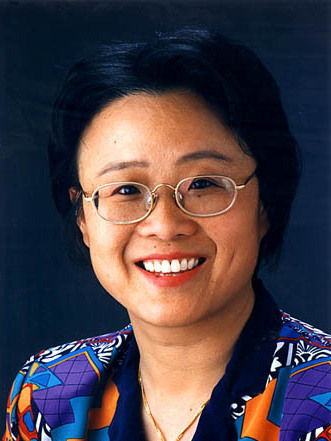
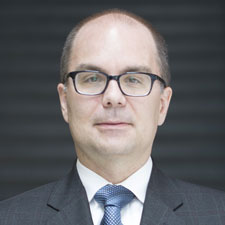
Andreas Dagman is a Senior Lecturer in Product Development at Chalmers University of Technology, Sweden. His research spans sustainability , robust design , variation simulation , and Computer-Aided Design (CAD) , with a focus on integrating industrial practices into academic frameworks. Key projects: DigiGeo (2019) for geometry data management Academic leadership: Co-authored 30+ publications (2002-2024), including studies on tolerance optimization and XR-based quality evaluation His work emphasizes multi-objective design balancing economic, ecological, and social sustainability. Recent studies explore AI tools in education and pandemic-era CAD teaching , while early research focused on automotive split-line design and geometrical variation .
Dr. Zouhair Laarraf serves as an Associate Professor at Excelia Business School in La Rochelle, France, where he has taught since 2008. His academic expertise spans Human Resources Management, Organizational Behavior, and Corporate Social Responsibility (CSR), with specialized focus on Small and Medium Enterprises (SMEs). He previously led the MSc Sustainable Development Strategies and Environment program and has directed research initiatives for corporate chairs of Fleury Michon and Inter mutuelles assistance (IMA) groups. His educational credentials include: Doctorate in Management Sciences (Human Resources specialization) from CNAM, Paris (2010) Master of Business Administration in Human Resources from IAE de Caen Basse-Normandie (2003) Specialized Master in Management from IAE de Caen Basse-Normandie (2002) Dr. Laarraf's research critically examines Management of People in Small Structures , Agility in SMEs , and Corporate Social Responsibility implementation . His work investigates ethical dilemmas in business, sustainable development frameworks, and competitive intelligence applications in high-technology firms. Published in journals like Business Process Management and Human System Management, his research bridges theoretical management concepts with practical organizational challenges. Analysis of his 2021-2025 publications reveals a significant shift toward technology-integrated sustainability solutions, particularly in construction waste management and neural network applications for risk assessment, while maintaining core focus on SME ethics and CSR adoption. This interdisciplinary approach combines operations management, environmental science, and ethical frameworks. As an active research collaborator, Dr. Laarraf contributes to scholarly networks including ADERSE, IAS, and IRGO, advancing studies in management science and social auditing through cross-institutional partnerships.
Alexandre Dolgui is Distinguished Professor and Head of the Department of Automation, Production and Computer Sciences at IMT Atlantique in Nantes, France. He serves as Editor-in-Chief of the International Journal of Production Research and has established himself as a leading researcher in production and supply chain optimization. His academic career spans multiple institutions including Jean Monnet University and University of Lorraine Mines Nancy, with a visiting professorship at the Chinese Academy of Sciences. PhD in Industrial Engineering, University of Technology of Compiègne (2000) Doctorate in Computer Science and Control, National Academy of Sciences of Belarus (1990) Bachelor in Automated Data Processing and Management Systems, Belarusian State University of Informatics and Radioelectronics (1986) Dolgui's research primarily focuses on manufacturing line design, production planning and scheduling, and supply chain optimization. His work bridges theoretical operations research with practical industrial applications, particularly in the context of Industry 4.0 and sustainable manufacturing. He has pioneered approaches to address challenges in assembly line balancing, reconfigurable manufacturing systems, and resilient supply chain design under uncertainty. His research integrates mathematical programming, optimization techniques, and increasingly, artificial intelligence methodologies to solve complex production and logistics problems. An analysis of his recent publications reveals a strong emphasis on supply chain resilience, particularly regarding the ripple effect of disruptions, digital supply chain twins, and sustainable manufacturing practices. His work increasingly incorporates AI and machine learning techniques while maintaining strong theoretical foundations in operations research. The interdisciplinary nature of his research connects industrial engineering with computer science, economics, and environmental sustainability. Highly Cited Researcher 2022, 2023, and 2024 by Clarivate Best Paper Award for 2023 by Omega Fellow of IISE (Institute of Industrial and Systems Engineers) As Editor-in-Chief of the International Journal of Production Research, Dolgui has significantly influenced the field's research direction and quality standards. His leadership extends to organizing major conferences including the IFAC Symposium on Information Control Problems in Manufacturing (INCOM). His research group maintains strong international collaborations, particularly with researchers from China, Russia, and other European institutions, securing funding for projects addressing contemporary manufacturing and supply chain challenges. Dolgui leads the Alexandre Dolgui Lab at IMT Atlantique, which focuses on production systems engineering and supply chain management. The lab maintains strong industry partnerships and participates in European research networks addressing advanced manufacturing challenges. Current research directions include Industry 5.0 applications, human-robot collaborative systems, and sustainable supply chain design, reflecting the lab's commitment to addressing both theoretical and practical challenges in modern production environments.
Dr. Celso Gustavo Stall Sikora is a Researcher at the Institute for Operations Research within the University of Hamburg Business School at the University of Hamburg. His work focuses on advanced manufacturing systems, particularly in assembly line balancing, logistics optimization, and stochastic modeling. He holds an office at Moorweidenstr. 18, Room 4001, and can be reached via email celso.sikora@uni-hamburg.de or phone +49 40 42838 5518 . His research emphasizes optimizing assembly line operations under uncertainty, integrating robotics, buffer management, and decomposition algorithms. Key areas include mixed-model production planning, last-mile logistics via innovative infrastructure (e.g., cargo tunnels), and real-time resequencing strategies. He has contributed to both theoretical advancements, such as chance-constrained stochastic balancing, and practical case studies involving robotic assembly line design and industrial collaboration. Publications span 2015–2025, reflecting sustained engagement with topics like Benders’ decomposition for balancing problems, cyclic scheduling, and maintenance-integrated production systems. His work bridges academic rigor and industrial application, addressing challenges in automotive manufacturing, renewable energy systems, and buffer-aware line configurations. No academic awards or formal student advisees are listed, but his contributions to operations research and manufacturing efficiency are evident through his prolific publication record. His office hours are by appointment, indicating a focus on project-based or collaborative research activities.
Dr. Samira Keivanpour is an Associate Professor in the Department of Mathematical and Industrial Engineering at Polytechnique Montréal. She holds a Ph.D. in Industrial Engineering from Laval University, an MBA in Operation Management from Iran, and a B.Sc. in Electrical Engineering from Iran. Prior to joining Polytechnique Montréal, she was a faculty member at Thompson Rivers University and completed her postdoctoral fellowship at Laval University's Department of Mechanical Engineering (2015-2017). Her research focuses on Circular Economy & End-of-Life Product Management, Sustainable & Circular Supply Chains, Human-Robot Collaboration & Smart Automation in Logistics, and AI for Sustainable Operations. Her work bridges theoretical frameworks with practical applications in sustainable manufacturing and logistics. Her recent publications demonstrate a strong trend toward integrating artificial intelligence, particularly fuzzy logic and reinforcement learning approaches, with sustainable operations management. Her work spans multiple domains including circular supply chains, human-robot collaboration, and sustainable manufacturing systems, with particular emphasis on aerospace applications and end-of-life product management. Dr. Keivanpour actively supervises graduate students, with eight completed theses (one Ph.D. and seven Master's) between 2021-2024, focusing on sustainable manufacturing, circular economy, and smart logistics applications. She holds significant research affiliations as a Co-investigator with the Safran Industrial Chair on Multifunctional Passive Acoustic Treatments for Turbofan Composite Structures (TAPPIS) and the Institutional Research Chair on Additive Manufacturing technologies (FACMO 2), and is a member of both the Research Group in Decision Analysis (GERAD) and the Interuniversity Research Centre on Enterprise Networks, Logistics and Transportation (CIRRELT).
Professor Celia Glass is a faculty member at Bayes Business School (formerly Cass), City, University of London, where she holds the title of Professor of Management Science within the Faculty of Actuarial Science and Insurance. She has been at the institution since 1999 and was awarded a personal Chair in 2003 for Operational Research and later in 2016 for Management Science. She earned her BSc and PhD from King's College London. She has held visiting appointments at Queen Mary University of London and has been actively involved in professional societies. Her research focuses on Management Science and Operations Research , particularly in scheduling, optimization, and logistics. Key areas include doctor and nurse rostering for the NHS, call centre tour scheduling, optimization in telecommunications (wireless mesh and optical networks), combinatorics of acyclic graphs, and production logistics in food safety laboratories. Her work is often supported by EPSRC grants and has practical industrial applications. Her recent publications demonstrate a consistent trend in combinatorial optimization and scheduling theory , with applications spanning healthcare , telecommunications , and manufacturing . Her work frequently involves developing and analyzing algorithms for complex scheduling problems, often with real-world constraints like perishability, employee preferences, and network limitations. Fellow, Operational Research Society Fellow, London Mathematical Society Fellow, Institute of Mathematics and its Applications Member, EPSRC College She has supervised numerous PhD students, including Robert Schumacher, Roger Knight, and Ian B. Davies, on topics related to scheduling and optimization. She has secured research funding and performed significant consultancy work for organizations such as the NHS (Whittington Hospital), OfCom, and the Registered Nursing Homes Association, translating her academic research into practical solutions. She has also co-organized workshops and served on editorial boards for journals like European Journal of Operational Research and Operations Research for Health Care . Professor Glass is a key member of research teams focused on applying operational research to healthcare planning and industrial optimization. Her spin-out company, Nightglass Medical Rostering Ltd., provides customized rostering software for the NHS, showcasing the direct impact of her research.
Dr. Jalal Ashayeri is a Professor of Quantitative Supply Chain Management at TIAS Business School, part of Utrecht University. Previously, he held a position in Tilburg University's School of Economics and Management (Department of Econometrics and Operations Research) until 2016. With over 35 years of experience, he focuses on advancing supply chain design, facility automation, and operational efficiency in manufacturing and service industries. His work bridges academic research with practical applications, addressing challenges like supply chain flexibility, quality management, and sustainable development. Research Interests : He specializes in Health Care Management, Business Intelligence, Operations Research, and Sustainable Supply Chains . Recent projects include optimizing pharmaceutical R&D portfolios, designing smart supply chain systems, and improving manufacturing line efficiency. His contributions span over 110 refereed articles, emphasizing robust optimization and closed-loop logistics. Professional Contributions : Dr. Ashayeri has led 120+ industry projects across manufacturing and service sectors. He actively engages in academic leadership, including designing MScBA specialization tracks at TIAS and maintaining collaborations with global research institutes. His expertise in Big Data analytics and disruptive innovation is highlighted in his articles on strategic decision-making and project management.
Manuel Chica Serrano is a Senior Researcher at the University of Newcastle (Australia) and a Ramon y Cajal Senior Researcher at the University of Granada (Spain). He holds an Adjunct Lecturer position at the School of Information and Physical Sciences, University of Newcastle, where he conducted an Endeavour Research Fellowship (2016-2017). His interdisciplinary work bridges artificial intelligence , agent-based simulation , and marketing analytics . Education : BSc/MSc in Computer Science (University of Granada), PhD cum laude (University of Granada 2011) Research Areas : Metaheuristics, Machine Learning, Complex Systems, Agent-Based Modeling, Multiobjective Optimization With over 100 JCR publications (40+ Q1 journals) and 1.4k+ Google Scholar citations (h=20), his work focuses on evolutionary game theory applications in tourism sustainability, tax fraud detection, and maritime decarbonization. Recent studies include WPT retrofit modeling , startup user retention , and tax fraud dynamics . He supervises five PhD students and co-invented two international patents in AI applications. Scientific Contributions : CTO of ZIO Analytics , commercializing AI solutions Principal Investigator for €3M+ in R&D projects (including 2 EU-funded) 2017 Best Paper Award (IEEE CEC track) 2-year postdoctoral at four international institutions
Donald D. Eisenstein is a Professor of Operations Management at the Booth School of Business, University of Chicago. He joined the faculty in 1992 and specializes in services, logistical systems, health-care operations, and public transportation scheduling. Education: Bachelor's in Engineering Management and Mathematical Science (1982), Southern Methodist University Master's in Operations Research (1983), Georgia Institute of Technology PhD in Industrial and Systems Engineering (1992), Georgia Institute of Technology His research focuses on self-organizing systems like bucket brigades for assembly lines and bus route coordination. He has explored public sector logistics, including hospital operations and Chicago's public school warehousing systems. Current projects include revenue management for hospitals and reducing bus bunching through dynamic scheduling. He has received the Hillel J. Einhorn Excellence in Teaching Award and the 1999 Operations Research Meritorious Service Award. Professional affiliations include INFORMS, Production and Operations Management Society, and Council of Logistics Management. Eisenstein developed the BeamerLecture LaTeX macros for creating multi-version teaching slides and authored the Riverside Fashions case study on apparel manufacturing inefficiencies. His research has been funded by IBM and the National Science Foundation.
Sami Cherif is a Lecturer at the University of Picardie Jules Verne, specializing in Optimization and Cryptography, AI - OCIA . His research focuses on advanced applications of Constraint Programming and Max-SAT in solving complex industrial and cryptographic problems. PhD in Computer Science (2022, Aix-Marseille University) Key collaboration networks: Chu-Min Li, Sorina Ionica, Corinne Lucet Research Interests Dr. Cherif’s work bridges Artificial Intelligence with Cryptography , emphasizing: Max-SAT resolution techniques Energy-efficient manufacturing systems Conference scheduling optimization Cryptographic attack modeling Publication Trends His recent publications (2025–2024) highlight Max-SAT as a central method for: Self-stabilization analysis Assembly line energy optimization Cryptographic problem solving Conference scheduling Academic Collaborations Active collaborations in constraint programming include co-authors such as Chu-Min Li , Sorina Ionica , and Corinne Lucet , with applications spanning from industrial engineering to cryptanalysis.
Seyyed Ehsan Hashemi-Petroodi serves as an Assistant Professor in Production Systems and Industry 4.0 at the Department of Operations Management and Information Systems within KEDGE Business School. His academic background includes a PhD in Industrial Engineering and Operations Research from IMT Atlantique (Institut Mines Telecom), Nantes campus, France, completed in 2021. His research focuses on combinatorial optimization, robust optimization, assembly line design and balancing, workforce and process planning, and decision support systems. Dr. Hashemi-Petroodi's work primarily employs integer mathematical programming methods and their intelligent integration with heuristic approaches to address complex manufacturing challenges. His publication record demonstrates strong expertise in manufacturing systems optimization, with articles appearing in leading journals including the International Journal of Production Economics, International Journal of Production Research, and Omega - The International Journal of Management Science. His research trajectory shows consistent focus on assembly line optimization problems, evolving from foundational work on reconfigurable assembly lines during his PhD to more recent applications involving human-robot collaboration and risk-aware supply chain coordination. From 2021 to 2023, he served as a postdoctoral researcher and lead for process planning optimization in the European project ASSISTANT - Learning and robust decision support systems for agile manufacturing environments - which involved 12 industrial and academic partners. He has also contributed to other national and European projects focused on reconfigurable manufacturing systems and logistics.
Alexander Pahr is a doctoral candidate and research associate at the Chair of Production & Supply Chain Management at the Technical University of Munich (TUM). He has been actively involved in academic research since March 2019, contributing to areas such as mathematical modeling, inventory optimization, and deep reinforcement learning applications in food industry contexts. B.Sc. in Information Systems (2019), TUM M.Sc. in Management and Technology (2019), TUM B.Sc. in Global Business Management (2016), University of Augsburg His research focuses on mathematical modeling and optimization , deep reinforcement learning , and food industry supply chains , particularly for managing ameliorating inventory in perishable product environments like port wine and cheese aging. Publications highlight trends in deep reinforcement learning for inventory systems, dynamic scheduling under uncertainty, and stochastic optimization in food industry applications. He has supervised numerous academic projects including Master’s theses on blood platelet inventory, constraint programming for biopharma, and reinforcement learning applications, as well as Bachelor’s theses on perishable inventory management and stochastic programming for assembly lines.
Omar El Khatib is an Assistant Professor in the Department of Mathematics and Computer Science at Loyola University New Orleans, where he joined in Fall 2017. Previously, he served as an Assistant Professor at Taif University for seven years and as a Software Developer at Epic Systems Corporation in Madison, WI for two years. His educational background includes: Ph.D. in Computer Science from New Mexico State University (2007) Dr. El Khatib's research focuses on Artificial Intelligence with specialized expertise in Answer Set Programming, Machine Learning, and Deep Learning. His work applies declarative programming techniques to solve complex combinatorial optimization challenges across industrial domains. His publication history reveals a sustained emphasis on Answer Set Programming applications, addressing problems like assembly line balancing, pixel puzzle resolution, and job shop scheduling. These works demonstrate the versatility of logic-based approaches for modeling constrained real-world systems in manufacturing and computational problem-solving. Scientific awards: No scientific awards mentioned in the provided text Student advising and grant details are not specified in the source material. The text also contains no references to research laboratories, collaborative teams, or ongoing funded projects.
Prof. Leyuan Shi is a Professor in the Department of Industrial and Systems Engineering at the University of Wisconsin-Madison. Her primary affiliation is with the College of Engineering, and she holds additional affiliations with the Manufacturing Systems Engineering Program. Her research focuses on developing theory and methodology for designing and optimizing complex systems, including supply chain networks, manufacturing systems, and communication networks. Her work spans three key areas: semantic modeling/design of systems, sensitivity analysis via discrete-event simulation, and control/optimization frameworks. Her research interests include scheduling optimization, robust optimization, simulation-based decision-making, and applications in healthcare logistics (e.g., radiation therapy planning) and semiconductor manufacturing. She has contributed significantly to methods like the nested partitions algorithm and evolutionary heuristics for solving challenging scheduling problems. Recent publications emphasize optimization in multi-stage production systems, dynamic sampling for feasibility determination, and integration of production and transportation scheduling. Her work bridges theoretical advancements with real-world applications in manufacturing, healthcare, and emergency logistics planning. Her expertise spans algorithm design, stochastic systems, and complex system modeling. Prof. Shi’s research also addresses practical challenges such as wafer defect inspection optimization, machine learning in treatment planning, and emergency material distribution strategies under uncertainty. She collaborates across disciplines to tackle large-scale optimization problems in both academic and industrial contexts.
J. Christopher Beck is a Professor in the Department of Mechanical & Industrial Engineering at the University of Toronto. He holds a PhD in Computer Science from the University of Toronto (1999), focusing on knowledge-based heuristic search algorithms. His research integrates optimization, constraint programming, and scheduling, with applications in manufacturing, healthcare, and artificial intelligence. **Research Interests**: Optimization, heuristic search, constraint programming, scheduling, hybrid algorithms, dynamic and uncertain problems, problem modeling. His work emphasizes combining mixed-integer programming and constraint programming, optimization under uncertainty, and multi-agent negotiation for combinatorial problems. **Recent Focus**: Recent articles emphasize reinforcement learning, quadratic traveling salesman problems, multicommodity flows, and domain-independent dynamic programming. His work bridges theoretical advances with practical applications in healthcare scheduling, quantum computing, and robotic task planning. **Affiliations**: Director of the Toronto Intelligent Decision Engineering Laboratory (TIDEL), part of the Faculty of Applied Science and Engineering. Active in international conferences like CP (Constraint Programming) and ICAPS (International Conference on Automated Planning and Scheduling). **Advising & Grants**: Advises graduate students in optimization and scheduling. Research supported by grants focusing on constraint programming, cloud computing optimization, and wind farm layout design.