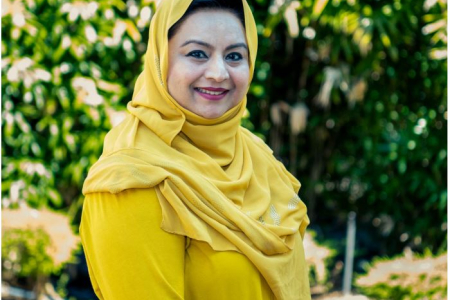
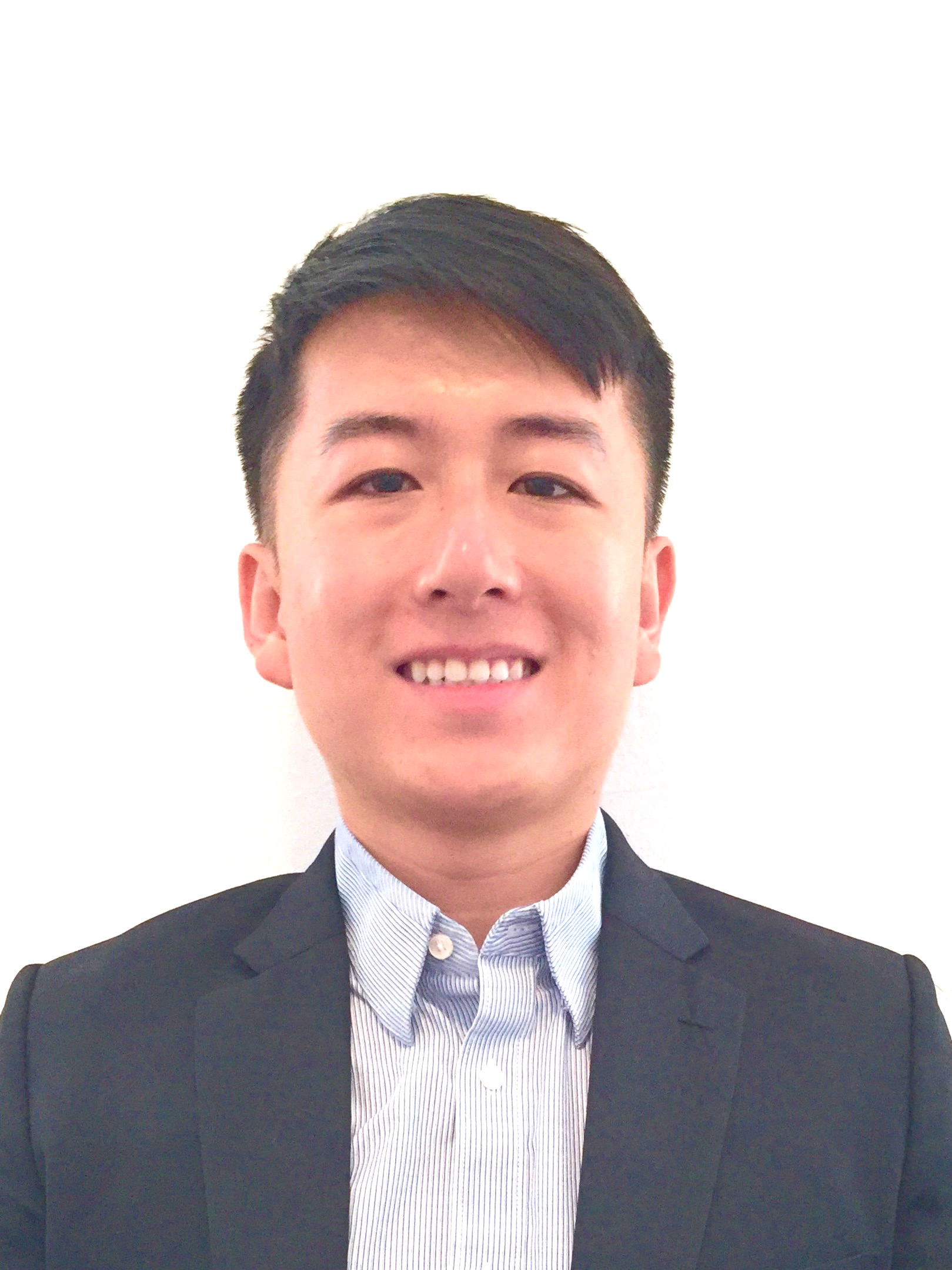
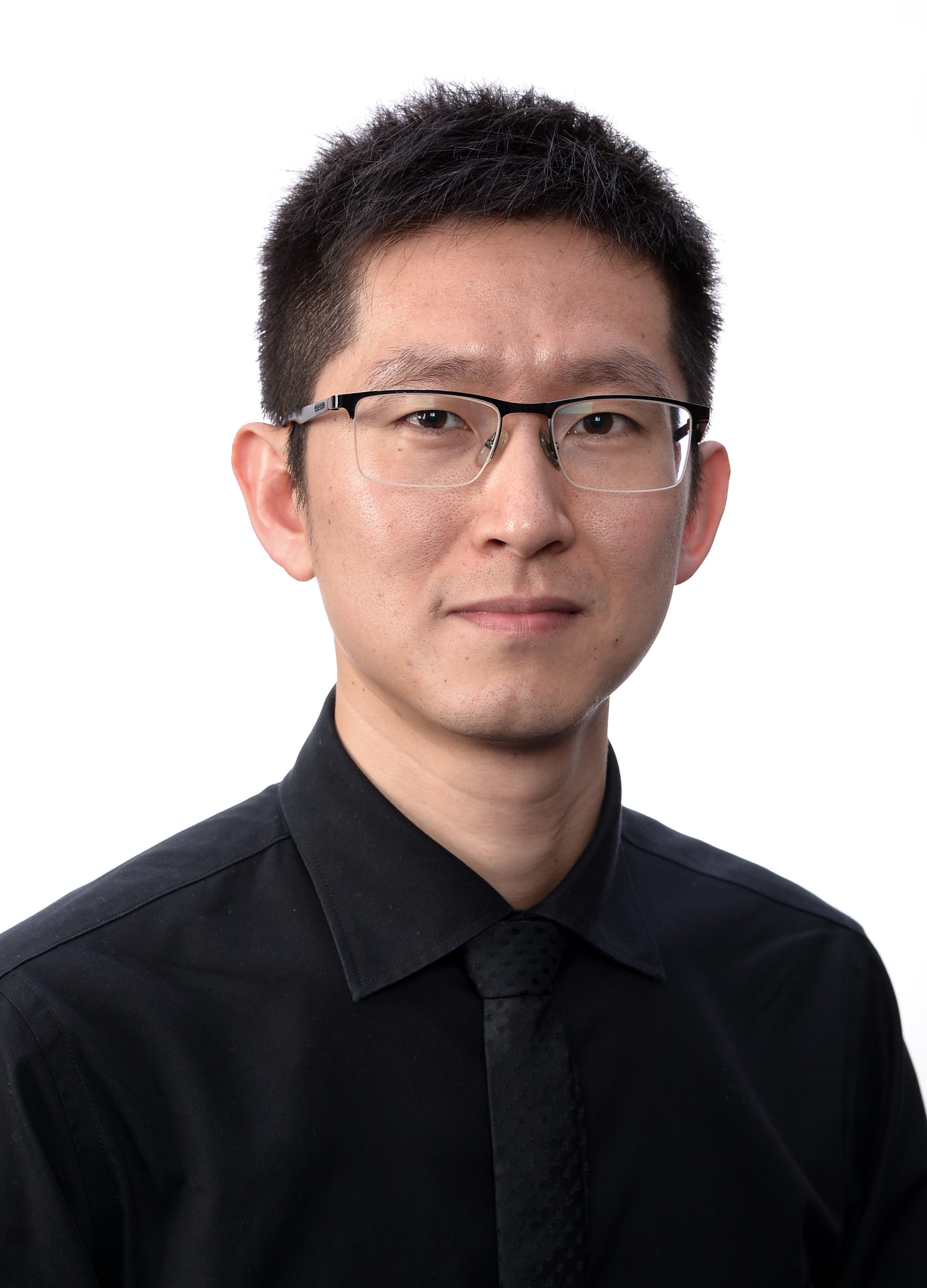
Professor Adam Yuet Chau is a Fellow and Director of Studies at St John's College and holds the Professor of the Anthropology of China position at the Faculty of Asian and Middle Eastern Studies, University of Cambridge . His academic journey includes training at Stanford University (PhD in Anthropology, 2001) and teaching roles at Oxford and SOAS before joining Cambridge in 2008. Focus on Chinese religions and their social dimensions Specializes in ritual theory and cultural transformations Develops comparative frameworks for understanding religious practices His research spans religion under socialism , hosting in political/religious contexts , and ritual polytropy . Recent projects include editing Chinese Religious Culture in 100 Objects and analyzing 'spheres' (界) in Chinese society . Publications like Miraculous Response (2006) and Religion in Contemporary China (2011) establish him as a key figure in religious anthropology. Current and past PhD/MPhil students explore topics from temple festivals in Taiwan to religious subjectification . He actively reviews for leading presses (Cambridge, Oxford, Harvard) and journals ( Ethnos , Modern China ), and participates in international academic workshops.
Dr. Farha Sattar is a Lecturer in Education (Mathematics) at the Faculty of Arts and Society, Charles Darwin University. With over thirty years of teaching experience in Mathematics, Science education, GIS, Remote Sensing, and e-Learning technologies at undergraduate and postgraduate levels, Dr. Sattar brings extensive expertise to her academic role. She holds a PhD in Geospatial Science from Charles Darwin University, focusing on Spatial Mathematical Modelling for 3D Gully Mapping and Erosion Quantification. Her educational background includes: PhD in Geospatial Science (Three Dimensional Gully Mapping and Erosion Quantification within a Geoinformatics Framework), Charles Darwin University (2012) Prior academic experience at several Asian and European universities Dr. Sattar's research spans multiple interdisciplinary fields with a strong focus on the intersection of education and technology. Her primary research interests include Mathematics Education, STEM Education, Geoscience Education, Spatial Mathematical Modelling, Drone Technology, Remote Sensing, Geographic Information Systems, and Innovative Pedagogies such as experiential learning and inquiry-based approaches. She has developed expertise in cognitive development, particularly in fostering critical and creative thinking skills through iSTEM approaches. An analysis of Dr. Sattar's recent publications reveals a consistent trajectory toward integrating emerging technologies like drones, augmented reality, and geospatial artificial intelligence into educational contexts. Her work demonstrates a progression from foundational geospatial research on erosion mapping to innovative applications in STEM education. Recent publications increasingly focus on drone technology for educational purposes, spatial data infrastructure for policy development, and computational thinking development through technology-enhanced learning. Dr. Sattar has received numerous accolades for her contributions to education and research: NT Science Week Awards – Inspired NT STEM Hero of the Year award (2021) Long Service Recognition Award (2023) Finalist, CDU Alumni Award (2023) Multiple Best Presentation Awards (2008, 2010, 2017) Australian College of Educators - 2021 College Medal Nominee As a supervisor, Dr. Sattar mentors postgraduate research students including Ayesha Farhan, who is working on "A Framework for Cognitive Development: Fostering Critical and Creative Thinking Skills, Using iSTEM Approach." She actively secures research funding through various projects such as "DBELaSTEM: Drone-Based Experiential Learning and STEM Education," "STEM_D & VR: Youth STEM Learning and Empowerment with Drones and VR," and "CodProg Drone Lab." Her research is supported by grants from NT Government projects and other external funding sources. Dr. Sattar leads the CodProg Drone Lab, an innovative research space exploring drone technology applications in education. She is a certified drone pilot and aeronautical radio operator, which enables her to bridge theoretical knowledge with practical applications. Her work with the "Flying Forward: Drones, STEM Equity, and Indigenous Empowerment" initiative demonstrates her commitment to community engagement and addressing educational disparities through technology.
Dr. Ian Yi Han is an Assistant Professor at the Saw Swee Hock School of Public Health, National University of Singapore (NUS), and Co-Director of the Center for Health Intervention and Policy Evaluation Research (HIPER). His research focuses on evaluating community-based health interventions, telehealth programs, and the impact of built environments on health behaviors. He holds a Ph.D. in Behavioral Nutrition from Columbia University, an M.A. in Psychology in Education, and a B.Sc. in Neural Science & Psychology from New York University. Key research areas include programme evaluation, population health, health services research, and dietary behaviors. He explores how interventions can improve patient experiences and population health outcomes, particularly through telemedicine and lifestyle modifications. His work has been published in journals like npj Digital Medicine, Metabolism, and the Journal of Nutrition Education and Behavior. Notable projects include studies on blood pressure telemonitoring, diabetes management during the pandemic, and supermarket intervention strategies for obesity prevention. Dr. Han has contributed to policy initiatives through roles such as Senior Research Fellow at the National University Health System and Lecturer at Columbia University. He advises on primary care research and collaborates on global health projects, emphasizing interdisciplinary solutions to public health challenges.
Anirban Acharya, Ph.D., is a Professor of Political Science at Le Moyne College. His research focuses on political power's impact on markets, neoliberalism, and South Asia. He holds degrees from Jadavpur University (B.A., M.A. Economics), Indira Gandhi Institute of Development Research (M.Phil. Development Studies), and Syracuse University (M.A., Ph.D. Political Science). His areas of specialization include International Political Economy, International Relations, and US Foreign Policy. He has received several awards such as the 2018 Le Moyne College Faculty Spotlight and the 2017 Ignatian Mission Award. His media engagements include panel discussions on PBS-WCNY and interviews on topics like Afghanistan's political landscape. Acharya has published works like Right to Sell: Markets, Capitalism, and Urban Space in India (2022) and contributed to edited volumes analyzing South Asian politics. His research has been supported by grants from Syracuse University’s Maxwell School and others. Beyond academia, he is an avid cook, chess player, violinist, and spice enthusiast.
Mauro Barelli is Professor of International Law at The City Law School, City, University of London. He holds a PhD from Cardiff University and an LLM from the University of Bristol, and has been a faculty member at City since 2009, progressing from Lecturer to Professor in 2024. He teaches Advanced Issues of International Law, International Human Rights Law, and a course on Minority and Indigenous Peoples' Rights. He has held visiting positions at the University of Cambridge (Lauterpacht Centre), Nanjing University, the University of Iceland, and the University of Trento. His research focuses on: Rights of ethno-cultural and indigenous peoples Law on the use of force Chinese perspectives on international law Soft law and normative development Minority rights and litigation His publications include four books and numerous articles in leading journals such as Journal of Conflict and Security Law , Human Rights Quarterly , and Asian Journal of International Law . His recent work analyzes China’s engagement with international law, the UK’s relationship with the ICJ, and the synchronization of biodiversity protection with indigenous rights. Key scientific recognitions include: Higher Education Academy Fellow (since 2012) He is an experienced PhD supervisor, having chaired and served on numerous doctoral committees, including as PhD Programme Director. His advisee Engin Firat is currently a research student at City. He has also served in administrative roles such as Assistant Dean (Research). His expertise has been sought by national governments, parliaments, and international NGOs. He is an active participant in international academic events, particularly through the European China Law Studies Association.
Timothy Webster serves as Professor of Law and Associate Dean for Faculty Research and Development at Western New England University's School of Law, with prior academic appointments at Yale Law School, Case Western Reserve University, and international institutions including University of Paris—Dauphine and National Taiwan University. His educational qualifications include: B.A., Yale University M.A., Yale University J.D., Cornell Law School LL.M., Cornell Law School Webster's research focuses on intersections between international law and East Asian domestic legal systems (China, Japan, Korea, Taiwan), examining human rights frameworks, international trade mechanisms, foreign investment regulations, and transnational litigation strategies. His scholarship demonstrates deep engagement with historical justice issues and contemporary legal challenges in the region, delivered through presentations at over 175 international conferences conducted in English, French, Japanese, and Mandarin. Analysis of his recent publications reveals consistent thematic concentration on war reparations, state immunity doctrines, corporate liability frameworks, and civil society's role in transnational redress movements, with empirical studies of litigation patterns across East Asia forming a distinctive methodological thread. His professional recognition includes: Catherine Jones Professor of the Year award (2023 and 2024) Asia Scholars Network fellowship (Luce Foundation) U.S.-Japan Network for the Future membership (Mansfield Foundation) Public Intellectuals Program selection (National Committee on U.S.-China Relations) As Associate Dean, Webster mentors law students in international legal studies while directing faculty development initiatives. His research is substantially supported by elite fellowships from the Luce Foundation, Mansfield Foundation, and National Committee on U.S.-China Relations, enabling extensive international collaboration. Webster has testified before Congress regarding China's WTO compliance and contributes legal analysis to major media outlets including The Conversation, South China Morning Post, and Los Angeles Times.
Giuseppe Fontana is an Associate Professor of Political Economy (SECS-P/01) at the University of Sannio (UNISANNIO) in the Department of Law, Economics, Management and Quantitative Methods (DEMM). He has maintained an active research profile for over two decades, establishing himself as a significant contributor to Post-Keynesian economics and monetary theory. His research interests include: Post-Keynesian Economics Monetary Theory and Endogenous Money Macroeconomic Policy and Financial Stability Financialization and Socioeconomic Impacts Economic Methodology and History of Economic Thought International Trade and Exchange Rate Theory Stock-Flow Consistent Modeling Fontana's scholarly trajectory demonstrates a consistent focus on heterodox economic approaches, particularly Post-Keynesian theory. His work evolved from theoretical contributions in the early 2000s to increasingly policy-relevant analyses of contemporary economic challenges. His recent publications show special attention to the Eurozone crisis, the impact of the COVID-19 pandemic on European economies, and the theoretical foundations of monetary production. He frequently employs stock-flow consistent modeling to provide comprehensive analyses of macroeconomic phenomena, challenging mainstream economic frameworks with alternative theoretical perspectives. Fontana has established important collaborations with scholars like Emiliano Brancaccio, Riccardo Realfonzo, and Marc Lavoie, demonstrating his integration within international networks of heterodox economists. His work has been published in leading heterodox economics journals including the Cambridge Journal of Economics, Journal of Post Keynesian Economics, and Review of Political Economy, as well as in edited volumes with major academic publishers like Palgrave Macmillan and Edward Elgar.
Alexander Key is an Associate Professor of Comparative Literature at Stanford University, specializing in Classical Arabic literature and the intellectual history of Arabic and Persian-speaking worlds from the 7th century onwards. His scholarship focuses on the philosophy of language, literary theory, and cross-cultural translation. Ph.D. in Arabic and Islamic Studies from Harvard University (2012) Current research: Arabo-Persian linguistic intersections, poetics in translation, and pre-modern theories of syntax and affect His articles span diverse eras and topics, including: Medieval Arabic language philosophy (5th–11th century) Modern Arabic political poetry analysis (20th–21st century) Comparative methodologies bridging Islamic and Western traditions A key editorial role includes: Board Member of Stanford University Press Advisory roles at Habib University and Stanford’s Markaz Resource Center His work bridges academic publication with public discourse through: Contributions to Arcade Colloquy Interviews on poetics, religion, and contemporary politics Podcasts and literary salon discussions
Vinit Mukhija is a Professor of Urban Planning at the University of California, Los Angeles (UCLA), affiliated with the Luskin School of Public Affairs. He previously chaired the Department of Urban Planning and holds a courtesy appointment in Asian American Studies. His research focuses on housing, urban informality, and the built environment, with a particular emphasis on informal housing in both Global South and Global North contexts. He leads UCLA’s efforts to develop a new graduate program in real estate development, integrating equity, sustainability, and policy analysis. Education: Ph.D. in Urban Development and Planning, MIT MUD (Urban Design), University of Hong Kong M.Arch., University of Texas at Austin B.Arch., School of Planning and Architecture, New Delhi Research Interests: His work examines informal housing in Mumbai, unpermitted U.S. housing (e.g., garage apartments, trailer parks), and strategies for equitable urban development. He advocates for urban design approaches that prioritize publicness and spatial justice, as detailed in his books Remaking the American Dream and Just Urban Design . Awards: UCLA Teaching Awards (2007, 2009, 2013) Advising & Community Work: He advises organizations like Pacoima Beautiful and serves on boards of urban nonprofits. His teaching includes courses on physical planning, informal cities, and urban design for justice. Labs/Teams: Collaborates with interdisciplinary teams on projects such as urban informality studies in Los Angeles and Vancouver, emphasizing community-driven solutions.
Jennifer A. Smith, PhD, MPH is an Associate Professor of Epidemiology and Research Associate Professor of Survey Research at the University of Michigan School of Public Health . She also serves as Director of the Certificate in Public Health Genetics and is Assistant Director of the Cohort Development working group for U-M Precision Health and the Michigan Genomics Initiative. Education: PhD, Epidemiology, University of Michigan (2011) MA, Statistics, University of Michigan (2009) MPH, Health Management and Policy, University of Michigan (2005) BS, Biological Sciences, Cornell University (2001) Research Interests: Dr. Smith is a genetic epidemiologist whose work lies at the intersection of genomics, epigenomics, and social epidemiology . She investigates how genetic, epigenetic, and transcriptomic variation influence age-related chronic diseases such as cardiovascular disease, hypertension, dementia, and cognitive decline. A major focus is understanding how social, psychosocial, and neighborhood determinants interact with genetic risk to shape socioeconomic and racial/ethnic health disparities . Research Projects: Her work leverages large, multi-ethnic cohorts including the Health and Retirement Study (HRS), GENOA, SWAN, MESA, and LASI. She is a core faculty member of the Center for Social Epidemiology and Population Health (CSEPH) , and affiliated with MiCDA, the Center for Midlife Science, and the PNG Program . She also collaborates with leading consortia such as CHARGE and TOPMed. Selected Trends in Publications: Her recent work (2022–2025) emphasizes epigenetic mediation of social determinants on cardiovascular and cognitive health, polygenic risk scores across diverse ancestries , and multi-omics integration in aging and disease. These studies consistently highlight how social environments and genetic architecture jointly influence health outcomes across populations. Contact: Email: smjenn@umich.edu Office: 734-615-9455 Address: 2631 SPH I, 1415 Washington Heights, Ann Arbor, MI 48109
Dr. Geng Guoqing is an Assistant Professor in the Department of Civil and Environmental Engineering at the National University of Singapore (NUS). He holds concurrent roles as East Asian Regional Convener for RILEM and board member of ACI-Singapore Chapter. His research focuses on sustainable construction materials, particularly durability, microstructural characterization, and waste material utilization. Geng earned his PhD from UC Berkeley (2017), followed by postdoctoral research at the Paul Scherrer Institute (Switzerland). He has authored over 50 papers and leads multiple projects funded by Singapore’s Ministry of Education, Energy Center, and National Research Foundation. Education: Bachelor of Engineering, Southeast University, China (2010) Master of Science, UC Berkeley, USA (2013) PhD, UC Berkeley, USA (2017) Research interests center on sustainable construction materials, multi-scale characterization, and material durability . Key themes include recycling low-grade materials, mitigating degradation in concrete, and developing high-performance binders like LC3. His work employs advanced techniques like molecular modeling, X-ray diffraction, and NMR. Recent articles explore hydration kinetics, CSH matrix mechanics, and waste clay applications. Awards include the 2023 RILEM Medal and multiple teaching excellence recognitions. Current projects address CO 2 absorption, sustainable cement blends, and resilient façade materials. Professional service includes editorial roles at Cleaner Materials and Frontiers in Materials , plus organizing the 2022 EASEC Conference. His lab focuses on bridging microstructural insights with macro-scale material performance.
Terrence Chapman is a Professor of Government at the University of Texas at Austin, affiliated with the Robert S. Strauss Center for International Security and Law, Center for European Studies, and Clements Center on History Strategy, and Statecraft. His research focuses on international organizations, conflict resolution, and political economy frameworks. Key research areas include: International institutional legitimacy Global regulatory regimes Public opinion in international affairs Conflict management mechanisms Formal modeling of diplomatic interactions Recent scholarly trends reveal expertise in climate governance negotiations, digital surveillance politics, and regulatory effectiveness. His work spans theoretical modeling and empirical analysis of international collaboration dynamics. Scientific recognition includes: 2011-2012 APSA Conflict Processes Section Book Award Teaching portfolio covers: Science Fiction and Politics International Organization and Law Research Methods in International Politics Previously served as associate/senior editor for International Studies Quarterly .
Claudia R. Binder is Full Professor at EPFL's School of Architecture, Civil and Environmental Engineering, leading the Laboratory for Human-Environment Relations in Urban Systems (HERUS) since 2016. Previously, she held professorships at the University of Munich (2011-2016), University of Graz (2009-2011), and University of Zurich (2006-2009). She served as Dean of EPFL's ENAC School from 2020-2023 and holds advisory roles with Swiss federal institutions including the Mercator Foundation since 2024. Her academic foundation includes a Biochemistry degree and PhD in Environmental Sciences from ETH Zurich, followed by postdoctoral research at the University of Maryland. This interdisciplinary background underpins her research approach spanning natural and social sciences. Professor Binder's work centers on urban sustainability transitions, examining urban metabolism dynamics through systems science frameworks. She investigates energy-food-transport interdependencies in cities using transdisciplinary methods that integrate material flow analysis, spatial modeling, and socio-technical assessments. Her research particularly emphasizes regulatory mechanisms and transformation drivers in human-environment systems, with case studies across Swiss and global urban contexts. Recent publications reveal evolving focus from foundational urban metabolism studies toward actionable transition strategies. Her 2024-2025 work increasingly addresses social tipping dynamics, circular decarbonization, and spatially explicit waste management, demonstrating methodological innovation through geo-referenced material flow analysis and participatory backcasting frameworks. Key thematic clusters include energy innovation diffusion, plastic waste governance, and demand-side flexibility in residential systems. She actively mentors 7 current PhD candidates while supervising 11 graduates since 2018, with research spanning urban metabolism modeling, sustainability assessment, and transition governance. Her leadership extends to Swiss National Science Foundation committees and National Research Program 71 on energy consumption management. At EPFL, she directs the HERUS laboratory which develops the Sustainability Solution Space methodology for urban assessment. The lab operates at the intersection of data science, environmental engineering, and social theory, maintaining strong field connections in Switzerland, Indonesia, and Germany for empirical validation of transition models.
Professor Alison G. Salvesen (University of Oxford, Asian and Middle Eastern Studies) is a leading scholar in Early Judaism and Christianity, affiliated with the Oxford Centre for Hebrew and Jewish Studies and Mansfield College. Her work bridges textual criticism, translation history, and reception studies. Current Projects: Hexapla Institute Executive Committee (electronic database of Origen's Old Testament), monograph on Jacob of Edessa (d. 708 CE) Teaching: Septuagint studies, Patristic texts, Textual criticism, Syriac literature Specializing in ancient Hebrew Bible interpretations, she examines Greek (Septuagint), Aramaic (Targums), Syriac (Peshitta), and Latin (Vulgate) traditions. Her research spans rabbinic Judaism and early Christian exegesis. Scientific leadership includes co-editing major reference works and directing the Polonsky Fellowship. Current DPhil students include Joel Bell, Yael Krämer, and Paul Ulishney. Key grants/awards: Polonsky Fellow in Early Judaism and Christianity
Dr. Miemie Winn Byrd is an Adjunct Professor at the Daniel K. Inouye Asia-Pacific Center for Security Studies (DKI APCSS), where she researches, teaches, and publishes on security dynamics in Myanmar/Burma & Southeast Asia, economics & security linkages, and organizational development. A retired US Army Lieutenant Colonel with 28 years of distinguished service, she brings extensive experience from military, private sector, and nonprofit organizations to her academic work. Dr. Byrd earned her educational credentials from prestigious institutions: Bachelor of Arts in Economics and Accounting from Claremont McKenna College Master of Business Administration with emphasis in Asia-Pacific Economics and Business from University of Hawaii Doctorate in Education Leadership from the University of Southern California Her research focuses on the complex interplay between security, economics, and social development in Southeast Asia, with particular expertise in Myanmar's political and security landscape. Dr. Byrd examines how civil-military operations, women's roles, and educational approaches impact socioeconomic development and security outcomes in the region. She investigates the strategic implications of Myanmar's internal conflicts for broader Indo-Pacific security dynamics, and analyzes how private sector engagement can contribute to poverty alleviation and stability. Dr. Byrd serves on multiple advisory boards that extend her influence in policy and research: Board of Governors of the Keck Center for International and Strategic Studies at Claremont McKenna College Regional Advisory Committee for Knowledge for Democracy Myanmar Initiative of the Asia Regional Office, International Development Research Centre The Oxford-Thanakha International based in Chiang Mai, Thailand Myanmar Policy Institute based in Washington, D.C. Her military career included significant roles such as Deputy Economic Advisor and Civil-Military Operations Plans Officer at U.S. Pacific Command, where she supported Operations Enduring Freedom. She served as a linguist and cultural advisor for U.S. delegations at the Association of Southeast Asian Nations Regional Forum and during POW/MIA recovery negotiations in Myanmar. Her civilian career spans 16 years in auditing, accounting, and financial management with multinational corporations.