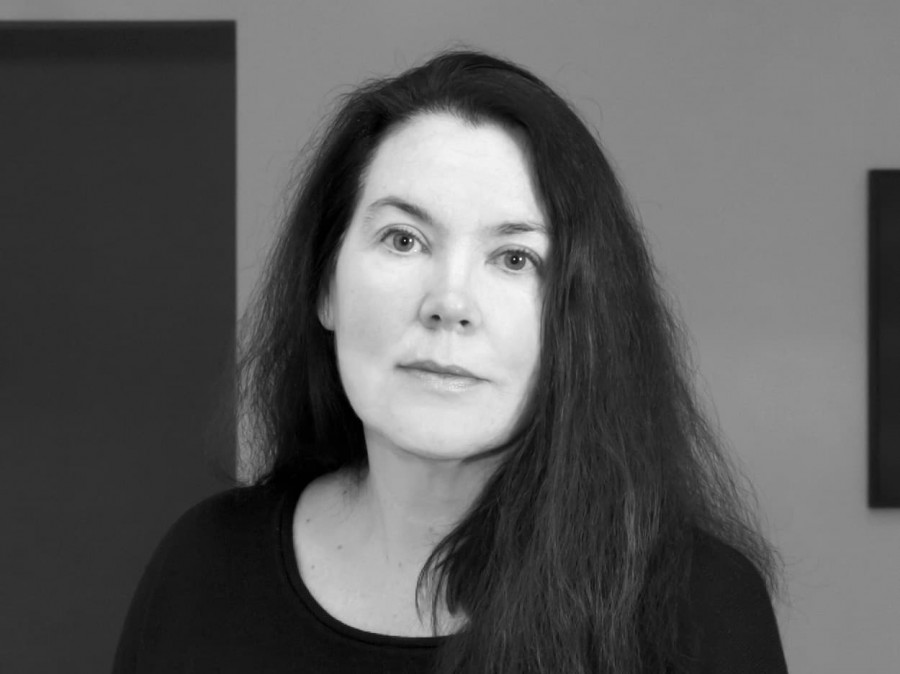
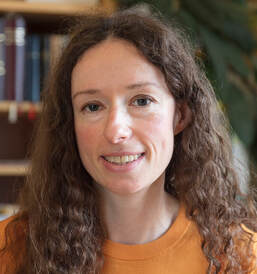
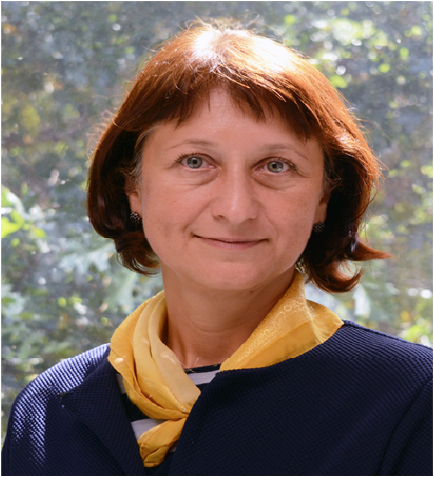
Prof. Dr.-Ing. Ahmad Osman is a Professor at the Saarland University of Applied Sciences (htw saar), specializing in Test Technologies and Test Methods within the Faculty of Engineering. He also holds an Adjunct Professor position at Laval University in Quebec, Canada, in the Department of Electrical Engineering and Computer Science. His research focuses on Artificial Intelligence applications in Signal and Image Processing for Non-destructive Testing (NDT) , with extensive work on Deep Learning , 3D Ultrasound Tomography , and Sensor Data Fusion in industrial contexts. Engineering Artificial Intelligence Signal Processing Image Processing Non-destructive Testing Quality Control Augmented Reality Osman leads the AutomaTiQ research group and serves as Head of the Algorithms/Signal and Data Processing Department at Fraunhofer IZFP . His recent publications (2017–2022) emphasize Deep Learning for defect detection in CFRP , Terahertz Imaging for artwork diagnostics, and Acoustic Sensors for agricultural quality control. He has organized international conferences on Structural Health Monitoring and contributed to Springer books on NDT technologies. His projects include ComforTex-AI (2024) and development of 3D positioners for ultrasound measurements. Collaborations span institutions in Germany, Canada, Italy, and Brazil, with advisory roles in the German Society for NDT and technical committees for conferences in Montreal and Egypt.
Brigid Doherty is Associate Professor jointly appointed in German and Art & Archaeology at Princeton University. She directs the Program in European Cultural Studies and serves on executive committees for Media + Modernity and international teaching initiatives. Her scholarship examines 20th-century German modernism through interdisciplinary approaches connecting art, literature, and psychoanalytic theory. Her research investigates relationships between aesthetic objects and psychological phenomena, with projects on Rainer Maria Rilke's writings, Rosemarie Trockel's artworks, and theories of projective identification. Current work includes a monograph on Trockel's Rorschach Pictures and a book project 'Homesickness for Things' exploring fantasies of return in German modernism. Professor Doherty has held fellowships at Radcliffe Institute, Courtauld Institute, and Zentrum für Literaturforschung. She participated in Manifesta 7 with her exhibition 'Learning Things' and received Princeton's President's Award for Distinguished Teaching in 2019. Her co-edited volume on Walter Benjamin's media writings is widely used in humanities curricula.
Aaron Shugar is a Professor and current Bader Chair in Art Conservation at Queen’s University. With a background in archaeometallurgy and conservation science, he specializes in non-destructive analysis techniques for cultural heritage, including X-ray fluorescence (XRF), Raman spectroscopy, and hyperspectral imaging. His work bridges art history, material degradation, and technological innovation. Honours H.B.A. in Anthropology and Law & Society from York University M.S. in Archaeological Materials from the University of Sheffield Ph.D. in Archaeometallurgy from University College London His research focuses on historic artist’s pigments , ancient metallurgy , and technical history of artifacts , with particular interest in degradation pathways and manufacturing processes. Recent publications highlight trends in AI integration with XRF analysis and preservation of modern materials in art conservation. Bader Chair in Art Conservation Mellon Foundation Professor in Conservation Science Aaron co-directed the Archaeometallurgy Laboratory at Lehigh University, served as a guest scientist at NIST, and remains a research associate at the Smithsonian Institution. He actively contributes to TEFAF’s Scientific Vetting Committee and acts as a forensic materials expert for the Court of Arbitration for Art.
Asya Passinsky is an Assistant Professor of Philosophy at Central European University in Vienna. Her research focuses on metaphysics, social philosophy, and feminist philosophy, with a particular emphasis on social ontology and the metaphysics of social objects. She holds a PhD from New York University, a BPhil from the University of Oxford (Rhodes Scholarship), and a BA from UC Berkeley. Passinsky's work explores the nature of social entities such as borders, currencies, and institutions through neo-Aristotelian frameworks, addressing issues like social construction, essentialism, and normative grounding. She co-founded the annual Social Metaphysics Workshop and leads the ISOS Mentorship Scheme to support early-career scholars in social ontology. Education: PhD in Philosophy, New York University BPhil in Philosophy, University of Oxford (Rhodes Scholar) BA in Political Economy and Slavic Languages, UC Berkeley Her recent publications examine cryptocurrency ontology, feminist essentialism, and normative hylomorphic theories of social objects. She critiques traditional money theories and advocates for hybrid accounts accommodating digital currencies. Passinsky's hybrid framework integrates material and normative components to explain social object creation and persistence. Awards: Rhodes Scholarship Her current projects include a book on social object metaphysics and collaborative work on feminist metaphysics. She teaches at CEU and previously held positions at UNC Chapel Hill, Dartmouth College, and NYU.
Lilah Fowler is a British-Japanese artist and Associate Professor at the Slade School of Fine Art, University College London, where she has taught Fine Art Sculpture across undergraduate, MA, and PhD levels since 2010. She is also an external examiner for BA(Hons) Fine Art at Goldsmiths, University of London, and has served as a visiting lecturer at institutions including Wimbledon School of Art, University for the Creative Arts, UCL's Department of Mathematics, and Hong Kong Baptist University. As a Fellow of The Higher Education Academy since 2014, she bridges academic rigor with contemporary art practice. Fowler's research explores the intersection of digital, analogue, and organic methods, moving fluidly between hand-weaving, ceramics, algal growths, and bespoke image-generating software. Her work investigates the geopolitics of hyper-landscapes, focusing on how infrastructure shapes our environment and experience. She examines the potential for abstraction inherent in any medium and the possibilities of translation between materials along the spectrum from plastic to pixel. Her practice is deeply collaborative, frequently engaging with researchers from diverse fields including mycology, plant science, biochemistry, quantum physics, computer programming, mathematics, and traditional weaving. Analysis of Fowler's recent exhibitions reveals consistent themes of material transformation, cultural hybridity, and the relationship between digital systems and physical landscapes. Her work often draws on Japanese arts and crafts traditions while addressing contemporary issues of identity, colonial legacies, and environmental change. The progression from early explorations of spatial perception to more recent large-scale public commissions demonstrates an evolving focus on community engagement and the political dimensions of public space. Fowler's teaching and practice are characterized by a commitment to interdisciplinary collaboration and experimental methodologies. She has developed significant partnerships with institutions including Meta (for the 'Cloudbursts' commission), Firstsite Colchester, and various public spaces across the UK. Her public artworks, such as 'Migrations' in Cambridge (2024), 'Commonplace' in London (2017), '14537/9431' in Bristol (2017), and 'Lantern Forest' at Whipps Cross Hospital (2020), demonstrate her ability to create meaningful interventions in diverse urban contexts. Her studio practice operates at the intersection of traditional craft techniques and cutting-edge digital technologies, creating installations that challenge viewers' perceptions of space, materiality, and cultural identity. Fowler's work frequently explores the imprint of time on objects and how this influences our relationship to both physical and digital environments. Through her teaching and practice, she continues to push the boundaries of contemporary sculpture and installation art.
Oksana Zavalina is a Professor at the University of North Texas, specializing in information organization, metadata standards, and digital library systems. She holds a Ph.D. and M.L.I.S. from the University of Illinois (Urbana-Champaign) and a B.S. in Library and Information Science from Kiev State Institute of Culture. Her work focuses on metadata quality evaluation, digital language archives, and interdisciplinary collaboration in cultural heritage preservation. Her research interests include information retrieval systems, semantic web technologies, and the application of metadata standards in diverse contexts. Notable projects include the LAMlang Arc Training Project and studies on AI-generated metadata accuracy. She has also explored metadata practices in Arabian Gulf academic libraries and audiovisual resources in Kuwaiti institutions. Zavalina has published extensively on metadata change analysis, digital library infrastructure, and user interactions with digital collections. Her work bridges library science, linguistics, and technology to address challenges in knowledge representation and preservation. She actively contributes to workshops on historical linguistic datasets and digital archive stewardship, emphasizing education and community engagement in archival practices.
Raphael van Riel is a Professor in Theoretical Philosophy at the University of Duisburg-Essen , holding a Chair since July 2022. His academic journey includes a Senior Lecturer (Akademischer Rat auf Lebenszeit) position from October 2018 to March 2024, and roles at institutions such as Ruhr-University Bochum, Philipps-University Marburg, and LOGOS Group in Barcelona. He is affiliated with projects like "A Study in Explanatory Power" and contributes to global cooperation research as a KHK Fellow (2023-2024). Research Interests bridge Philosophy of Science , Metaphysics , and Epistemology , focusing on topics like reduction, emergence, representationalist physicalism, free will, and social functions. His work explores how inadequate representations can yield understanding (e.g., "Understanding through Modeling: The Explanatory Power of Inadequate Representation" , 2015) and critiques theories of lying and mental disorder classification. Education includes a Doktor phil. (summa cum laude) from Ruhr-University Bochum (2010) and a Magister Artium in Philosophy (with minors in Political Sciences and Social Psychology) from University of Hamburg (2006). He studied at Sorbonne, Paris, and Ruhr-University Bochum, integrating interdisciplinary perspectives.
Prof. Aldo Romani is a Professor leading the Materials for Artworks' Conservation research group within an academic department offering degrees in Chemistry, Biological Sciences, and Biotechnology. His work focuses on applying chemical and physical methodologies to cultural heritage conservation, with emphasis on non-destructive analysis and development of portable instrumentation for in-situ studies without artwork sampling or movement. Research interests center on chemical and physical behavior of materials in artworks, including structure/composition analysis for conservation diagnosis, degradation mechanisms of heterogeneous materials, and protection of porous heritage objects. The group utilizes synchrotron radiation, micro-FT-IR, micro-Raman, XRF, XRD, UV-VIS-NIR spectroscopy, GC-MS, and other advanced techniques. Key specialties include micro-spectroscopy for cross-sectional material distribution, contemporary art materials analysis, and emergency conservation protocols. Recent publications reveal strong focus on pigment analysis, varnish degradation, and non-invasive imaging of paintings/manuscripts using hyperspectral techniques. The research demonstrates integration of art historical context with materials science, particularly in Modernist paintings, medieval manuscripts, and street art preservation. The group actively contributes to European heritage science initiatives through the SMAArt Center of Excellence. Prof. Romani's laboratory develops portable instrumentation within MOLAB programs and participates in major European infrastructures including IPERION-HS and E-RIHS. Theoretical modeling complements experimental work for spectral assignments, while collaborations span conservation science and particle physics applications for detector development relevant to cultural heritage analysis.
Baybora Temel is an Associate Professor at Trakya University Faculty of Fine Arts , with a PhD in Computer Science from Marmara University (2009). His research merges Artificial Intelligence and Digital Art Analysis , focusing on Art Authentication via wavelet transforms and neural networks. Specializes in Painting Style Classification and Digital Art Forensics Recipient of Nuri Iyem Painting Competition Exhibition (2015) and Australian Embassy Painting Award (2009) Active in International Art Symposia (Odessa, Patras) and National Exhibitions His 15 most recent publications span Art Authentication (2008-2022) and Digital Art Analysis , employing Machine Learning for Cubist Painting Discrimination and Figurative Art Studies . He has curated exhibitions like Art Suites 26th International Art Workshop (2018) and participated in Balkan Exhibitions IV (2023).
Professor Balas Costas is a full Professor and Director of the Electronics Lab at the School of Electrical and Computer Engineering, Technical University of Crete. His expertise spans optoelectronics, biomedical imaging, and medical device innovation. He earned his Ph.D. in medical physics from the University of Patras (1992) and has led pioneering research in hyper-spectral imaging and non-invasive diagnostics. Key roles include founder of DySIS-Medical, a medical device company, and inventor of the DySIS imaging system for cervical neoplasia detection. Awards include the 2013 Greece Innovates Applied Research & Innovation Competition. Research interests focus on optical biopsy, biomedical spectral imaging, and diagnostic device development. His work bridges academia and industry, with contributions to global health through cost-effective diagnostic tools. Notable projects include the development of the DySIS device, validated through multinational clinical trials, and hyperspectral imaging systems for art conservation. Publications span biomedical optics, diagnostic technologies, and material analysis. Grants and venture capital funding (€15M+) support his research. He is a member of IEEE Photonics Society, SPIE, and Optical Society of America.
Hilda Deborah is a Senior Researcher at NTNU's Department of Computer Science (IDI Gjøvik), specializing in spectral imaging and mathematical morphology. Affiliated with the Faculty of Information Technology and Electrical Engineering, her work bridges computer science and cultural heritage preservation. She holds dual PhDs in Computer Science (NTNU) and Signal/Image Processing (Université de Poitiers). Her research focuses on texture perception, digital humanities, and innovative imaging dissemination methods. Key awards include the Marie Curie Postdoctoral Fellowship (2018–2020) and NTNU's Outstanding Academic Fellow Programme (2022–2026). She leads projects like the FRIPRO-funded Metrological Texture Analysis and the Lying Pen of Scribes initiative. Recent work includes hyperspectral pigment databases, Dead Sea Scroll fragment analysis, and interactive visualization tools like the Hyperspectral Pigments dataset (2022). Her publications span spectral imaging techniques, artifact analysis, and HCI applications in cultural heritage. She teaches database-related courses (IDATT2002, IDATG2002) and actively collaborates on interdisciplinary projects involving art conservation and digital humanities.
Dr. Ioulia Papageorgiou is an Associate Professor in the Department of Statistics at the Athens University of Economics and Business (AUEB), School of Information Sciences and Technology. She holds a B.Sc. in Mathematics (2.1) and a Ph.D. in Statistics, both from the University of Ioannina. Her career spans since 2001, with prior roles as a Post-Doctoral Research Fellow at AUEB and Nottingham Trent University, and Lecturer at AUEB (2002-2007). Education B.Sc. in Mathematics (2.1), University of Ioannina Ph.D. in Statistics, University of Ioannina Employment History Associate Professor, AUEB Department of Statistics (2007-present) Lecturer, AUEB Department of Statistics (2002-2007) Post-Doctoral Research Fellow, AUEB (2001-2002) Post-Doctoral Research Fellow, Nottingham Trent University (1998-2001) Her research focuses on Sampling Theory, Model-Based Clustering, Mixture Models, and their Applications to Archaeometry. She has developed statistical methodologies for ceramic artifact provenance studies, explored hierarchical cluster analysis for overpainted artwork identification, and addressed optimal sampling designs for autocorrelated populations. Her work bridges statistical innovation with archaeological and medical applications. Analysis of her recent publications reveals a strong emphasis on statistical modeling in archaeology (e.g., ceramic provenance via p-XRF), computational methods for multivariate data, and pharmacoeconomic assessments for chronic diseases. Keywords across her work include Archaeometry, Cluster Analysis, Multivariate Modeling, and Survey Sampling.
Lara Mührenberg, a research associate at the Department of New Testament within the Faculty of Protestant Theology at the University of Bonn, specializes in Greco-Roman Antiquity, Early Christian iconography, and Gender Studies. She earned her Mag. Theol. in 2017 and BA in Archaeology of the Ancient World in 2013. Doctoral project: Construction(s) of 'Gender' in Roman Catacomb Painting Co-editor of Methoden der neutestamentlichen Exegese (2nd ed, in preparation) Her research integrates Digital Humanities tools with classical archaeology to analyze late antique visual culture, particularly gender constructions in early Christian art. She has contributed to computational approaches for iconography analysis, including AI applications in artwork recognition and augmented reality for sepulchral studies. Key projects include ICONOGRAPHICS (2019–2022) and the SNSF-funded ECCLESIAE (2021–2025). She is active in pedagogical innovation, developing inverted classroom models and virtual excursions for theological education. Roles in university governance include: Deputy Head of Schneemelcher Kolleg (since 2025) Equality Officer at the Faculty (since 2024) Member of the Digital Humanities in Theology working group (since 2021)
Oleg Sobchuk is a postdoctoral researcher at the Department of Human Behavior, Ecology and Culture, Max Planck Institute for Evolutionary Anthropology in Leipzig, Germany. He previously worked at the Max Planck Institute for the Science of Human History (now Max Planck Institute for Geoanthropology) in Jena, Germany from 2018 to 2023. Sobchuk studies the cultural evolution of arts, focusing on long-term patterns in the history of literature, film, and music. His research employs large digital libraries and artistic datasets (such as IMDb or Spotify), statistical models, and text mining techniques to analyze how artistic forms evolve over time. His work addresses fundamental questions including whether films have become more complex during the 20th century, if phylogenetic trees adequately model literary evolution, and what makes certain artworks 'canonical' and persistent throughout history. His research interests span across cultural evolution, digital humanities, and quantitative analysis of artistic traditions. He has published extensively on topics including literary and film evolution, cultural attraction mechanisms, and computational approaches to thematic analysis in fiction. His methodological approach combines large-scale data analysis with theoretical frameworks from evolutionary theory to uncover patterns in artistic production and transmission across generations. Sobchuk's scientific contributions reveal significant trends in cultural evolution, particularly regarding how artistic forms innovate, transmit, and persist over time. His work on first-mover advantage in music genres and the evolution of literature demonstrates how quantitative methods can illuminate previously obscured historical patterns in artistic development. As a collaborator, Sobchuk works with researchers like Olivier Morin and Bret Beheim, contributing to interdisciplinary projects that bridge humanities scholarship with computational science. His research represents an important contribution to building what he describes as 'a theory-driven quantitative history of culture.'
Charis Theodorakopoulos is an Assistant Professor at Northumbria University within the Design Arts and Creative Industries school. Specializing in materials science and conservation, their research focuses on cultural heritage preservation, analytical chemistry, and laser technology applications. They hold a DPhil in Art awarded in 2005. Research interests include FTIR spectroscopy, laser-induced material modification, and degradation mechanisms of historical materials like parchment, varnishes, and plaster. Key projects involve developing non-invasive assessment methods for cultural artifacts and creating innovative cleaning systems using gels and polymers. Recent work emphasizes accelerated aging studies of parchment under environmental stressors and laser cleaning efficacy for artworks. Their interdisciplinary approach bridges chemistry, engineering, and art history, with collaborations spanning museums and heritage institutions. Funded projects include £649k Ed Teppo research (2016-2021) and £37k XpeCAM evaluations. Consultancies include work with XpectralTEK LDA (2017) and Woon Brothers Foundation (2017). Supervised two doctoral projects and contributed to Northumbria's conservation research archives. Labs and teams: Involved in heritage material characterization labs, laser cleaning applications, and polymer-based conservation systems development. Active in international conferences and heritage preservation networks.