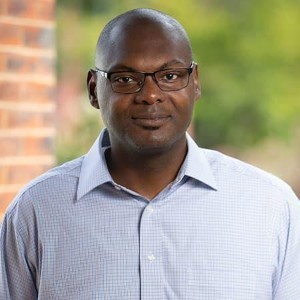
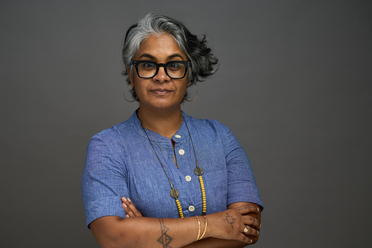
Sandra Stauffer is a Professor of Music Education and Interim Dean of the Herberger Institute for Design and the Arts at Arizona State University (ASU). She holds a Ph.D., M.M., and B.S. in Music Education from the University of Michigan and West Chester University. Her research focuses on children’s musical creativity, place-conscious pedagogy, narrative inquiry, and technology integration in music education. Stauffer’s academic roles include coordinating graduate studies in music education and leading the Music, Learning, and Society Research Group. Her work includes collaborations with composer Morton Subotnick on educational software development and co-authoring influential books such as Narrative in Music Education (2009) and Narrative Soundings (2012). She has received grants totaling over $900,000 for projects addressing music education equity and curriculum innovation. Her teaching spans undergraduate and graduate courses in music education, including Art of Teaching Children Music and research seminars. She actively contributes to K-12 curriculum development through textbook series like Silver Burdett Making Music and serves on national and international educational boards.
Associate Professor Anna Eriksson is an international leader in comparative penology and criminal justice reform at Monash University's Department of Criminology. She holds roles as Convenor of the Criminology program and previously led the Bachelor of Criminology degree. Her work bridges empirical research with interdisciplinary theory, focusing on Nordic penal exceptionalism, neurodisabilities in criminal justice systems, and veterans' transitions between military and correctional environments. Research highlights include a 2012 DECRA Fellowship exploring 'othering' in Australian and Norwegian prisons, and an ARC Discovery Grant (2021–2026) on social infrastructure in prisons. Collaborations span Canada, the UK, and Germany, addressing prison staff dynamics and neurodisability policy. She co-edited Neurodisability and the Criminal Justice System (Edward Elgar, 2021) and advises the Open Door network on veteran integration. Key awards include the 2009 New Scholar Award and a 2013 High Commendation for her book Contrasts in Punishment . Her media engagement includes podcasts and expert commentary on youth detention design and prison reform. Research Themes: Nordic penal systems, restorative justice, veterans in criminal justice, arts-based interventions. Grants: ARC DECRA (2012), SSHRC Insight (2020), ARC Discovery (2021). Publications: Over 50 articles/chapters, including works on prison staff interactions, neurodisability policy, and cross-cultural penology.
Piet Desmet is a full professor at KU Leuven's Faculty of Arts, serving as vice rector of KU Leuven, Kulak Kortrijk Campus, and academic director of the Office of the Academic Director, Bruges Campus. He leads multiple research divisions including itec and its Language and Technology subdivision, and is a member of Leuven.AI - KU Leuven Institute for Artificial Intelligence. As general coordinator of itec and academic director of the imec smart education research program, he oversees significant research initiatives spanning multiple campuses. Desmet's research focuses on the intersection of language learning and technology, with particular expertise in Second Language Acquisition and Technology, Computer-assisted Language Learning (including AI-based chatbots), Learning Analytics, and Language Technology and Corpus Linguistics. His work explores intelligent feedback systems, linguistic complexity prediction, adaptive testing, and natural language processing applications for educational contexts. His research spans theoretical linguistic frameworks to practical educational implementations, with a strong emphasis on empirical validation of technological interventions in language learning. Analysis of Desmet's recent publications reveals a strong trajectory toward integrating artificial intelligence with language education, particularly through conversational AI and learning analytics. His work increasingly focuses on chatbot-assisted language learning, adaptive assessment systems powered by large language models, and the application of computational linguistics to educational problems. The publications demonstrate a consistent methodological approach combining theoretical linguistics with empirical educational research, often employing eye-tracking, ERP studies, and learning analytics to evaluate effectiveness. Desmet actively supervises numerous PhD students and leads multiple major research projects including Smart Education at Schools (2025-2026), Enhancing EFL Learners' Speaking Ability through Chatbot-Assisted Dynamic Assessment Powered by LLMs (2024-2028), and the Flanders Ed Tech Hub (2022-2025). His research portfolio demonstrates significant funding success across multiple national and international initiatives focused on educational technology and language learning. As head of itec (an imec research team at KU Leuven), Desmet leads a substantial research ecosystem focused on smart education technologies. The itec team collaborates extensively with Leuven.AI and the KU Leuven Educational Research Institute (LIVO), creating a multidisciplinary environment that bridges computational linguistics, educational psychology, and artificial intelligence. Recent initiatives include the 'AI in Education' online training course and the network for Edtech and Learntech in Flanders.
Dr. Jane Park is a Senior Lecturer in Gender and Cultural Studies at The University of Sydney, specializing in race, diaspora, and media representation. Her work examines globalization's impact on East Asian and diasporic communities through film, education, and policy frameworks. She actively contributes to the Sydney Southeast Asia Centre and teaches undergraduate/postgraduate units including GCST1601 Introduction to Cultural Studies and INGS4002 Identity, Politics, Globalisation. BA, Brown University MA, University of California, Irvine PhD, University of Texas Her research centers on decolonial pedagogies, race/ethnicity studies, and transnational media, evolving from early analyses of Hollywood's Orientalism ( Yellow Future: Oriental Style in Hollywood Cinema , 2010) toward contemporary anti-racism policy. Current projects include an ARC-funded study on Australian anti-racism ideologies (2022–present) and a memoir on teaching and healing. Her 2025–2014 publications reveal a trajectory from cinematic representation to embodied pedagogy, with increasing focus on Australian racial discourse and student affective experiences. Jane supervises PhD candidates researching digital design bias (Diana CHAMMA) and Chinese Danmei fandom (Lynn ZHENG). Her 2022 ARC Discovery Project examines Australian anti-racism policies since the 1990s, while earlier grants include Korean cosmetic surgery media analysis (2011). As a core member of the Sydney Southeast Asia Centre, she bridges academic research with community engagement through interdisciplinary teams exploring diasporic identities and transnational cultural flows.
Mathieu Tillier is a Professor of Medieval Islamic History at the Faculty of Arts and Humanities, Sorbonne University. He specializes in early Islamic judicial systems, papyrology, and interfaith legal dynamics in the Middle East. Tillier holds a PhD from Université Lumière-Lyon 2 (2004) and has held academic positions at Aix-Marseille Université and Oxford University, supported by a Marie Skłodowska-Curie fellowship. His research explores the evolution of Islamic legal institutions, particularly focusing on the role of qadis and the integration of religious minorities. Notably, he received the Sheikh Zayed Book Award (2023) for his groundbreaking work The Invention of the Qadi , which examines judicial pluralism in 8th-century Egypt. His research extends to Fatimid legal practices, early Quranic codices, and material culture analysis through papyrus and silk documents. Tillier collaborates extensively with institutions like the Institut français du Proche-Orient and co-authored studies on devotional texts and legal anthropology. His work bridges historical analysis with interdisciplinary methods, emphasizing textual and material evidence to reconstruct social dynamics in early Islamic empires. Education: PhD in History, Université Lumière-Lyon 2 (2004) Aggregation in Arab Studies (1999) Accreditation to Supervise Research (2013) Research Focus: Tillier’s work centers on the judicial reforms under Umayyad and Abbasid caliphates, papyrus-based legal records, and the coexistence of Islamic, Jewish, and Christian legal frameworks. He has pioneered studies on Fatimid marriage contracts, Quranic codices, and the socio-political role of qadis in medieval Egypt. His methodologies integrate textual analysis, material science, and comparative legal history. Grants & Collaborations: Supported by European Marie Skłodowska-Curie grants, Tillier has collaborated with Oxford University and the Institut français du Proche-Orient. His recent projects include co-authoring analyses on devotional texts with Naïm Vanthieghem and examining ink composition in early Quranic manuscripts. Awards: The Sheikh Zayed Book Award (2023) recognizes his monumental contribution to understanding early Islamic judicial systems. His work has been translated into multiple languages, influencing global scholarship on medieval Islamic studies.
Benjamin Bergey is an Associate Professor of Music at Eastern Mennonite University (EMU), where he conducts the Orchestra, Chamber Singers, and University Choir, while teaching Music Theory and Conducting. He holds a Doctorate of Musical Arts (DMA) from James Madison University and a Master of Music and Bachelor of Arts from EMU. His research focuses on music as a tool for peacebuilding, particularly through ensemble collaboration to foster empathy and dialogue between diverse groups. He advises EMU’s new Music and Peacebuilding major and leads workshops globally on this topic. Prof. Bergey is active in the Mennonite Church, serving as Music Editor for Voices Together (the denomination’s hymnal) and contributor to its accompaniment editions. He also directs the Rapidan Orchestra and serves as assistant conductor for the Shenandoah Valley Bach Festival. His awards include Yamaha’s “40 Under 40” Music Educator Award (2024) and the American Prize for Choral Conducting (2023). His professional service spans roles in the College Music Society, American Choral Directors Association, and leadership in Mennonite worship initiatives. He has presented at global conferences, led retreats, and conducted ensembles across the U.S. and internationally, emphasizing accessibility and community engagement in music.
Pier Cesare Rivoltella is a Full Professor of Educational Technology at the University of Bologna's Department of the Arts. He holds leadership roles in academic organizations such as the Italian Society of Pedagogy (SIREM) and the Accademia Nazionale dei Lincei. His academic career spans over three decades, including roles as Associate Professor (2000–2005) and Full Professor (2005–2023) at the Catholic University of the Sacred Heart before joining Bologna in 2023. He earned a Philosophy degree from the Catholic University of the Sacred Heart and a PhD in Social Communication Sciences from the Pontifical Salesian University. His research focuses on media literacy, education technology, and pedagogical innovation, with notable contributions to neurodidactics and AI in education. Rivoltella founded the CREMIT research center (2006–2023) and co-leads editorial initiatives like REM – Research on Education and Media . He has received prestigious awards, including the Italian Pedagogy Prize (2014) and the REN Award for Educational Neuroscience (2021). His teaching includes courses on Media and Technologies for Teaching at the University of Bologna. He actively collaborates with institutions worldwide, including Brazilian universities through CNPq-funded projects.
Laura Antona is an Assistant Professor (Education) of Human Geography at the London School of Economics and Political Science (LSE), Department of Geography and Environment. Her work bridges feminist political economy, urban geography, and critical migration studies with a focus on gender, violence, and labour in Southeast Asia and Europe. She holds a PhD from LSE, an MSc and BSc from University College London. Her research explores forced migrant removal experiences in Southeast Asia, carceral domesticities in Singapore's labour regime, and the legacy of forced migration in Cyprus. She co-leads an abolition domesticities project with Sneha Krishnan (University of Oxford) and has conducted ethnographic fieldwork across Southeast Asia for a decade. Her ESRC Postdoctoral Fellowship at Oxford supported this work. Key research areas: migration, domestic labour, gender violence, Southeast Asia Methodological innovations: drawing-based ethnography, spatial visualization Current projects: Singapore's migrant domestic workers, carceral geographies, Cypriot forced migration Publications appear in Transactions of the Institute of British Geographers, Annals of the American Association of Geographers, and Environment and Planning D. Awards include an ESRC Postdoctoral Research Fellowship (2018-2020). Teaching focuses on human geography theory and critical migration studies. Office in CKK 3.05, reachable via l.f.antona@lse.ac.uk.
Dr. Manuela Angioi is a Reader in Sports and Exercise Medicine Education at Queen Mary University of London's Faculty of Medicine and Dentistry, leading the iBSC Sports and Exercise Medicine Course. She specializes in curriculum development for intercalated degrees, supervising student research projects and managing academic modules. Her research focuses on injury prevention in performing arts, particularly dance and judo, and the application of exercise in healthcare, such as dementia care. She collaborates with organizations like the National Centre for Circus Arts and Dancefit Prime. Teaching includes modules on research methods, exercise physiology, and dance medicine at levels 6 and 7. Research interests span physiological determinants of performance, musculoskeletal injury risk in dancers, and cardiovascular health interventions. She has contributed to high-impact journals and international conferences. Collaborations include the Royal Ballet School and NHS projects on dance-based therapies.
Tom Paulus serves as an Assistant Professor in the Department of Literature at the University of Antwerp, actively contributing to institutional governance through elected roles including the Departmental Council for Literature and multiple educational committees for Master's programs in History, Languages, Translation, and Theatre-Film Studies. His administrative duties extend to examination and research committees within the Faculty of Arts and Philosophy. His scholarly work bridges Film Studies, Art History, and Literary Theory, with concentrated expertise in pictorialism's influence on early cinema, messianic themes across literature and film, and spatial poetics in directors like Ozu and Godard. He examines how Beaux-Arts traditions shaped Hollywood aesthetics and analyzes stylistic evolution in transitional-era quality films through visual culture frameworks. Analysis of his 15 most recent publications (2009-2024) reveals consistent exploration of cinema's visual dimensions, including slapstick comedy historiography, neoclassical influences in Michael Mann's work, and the interplay between technological innovation and artistic expression in early film lighting. His research demonstrates particular attention to how photography movements informed cinematic techniques and how redemption narratives manifest across literary and filmic mediums.
Derrick R. Spires serves as Associate Professor of English in the College of Arts & Sciences at the University of Delaware, specializing in early Black print culture, citizenship studies, and African American intellectual history. His scholarly mission centers on recovering the rich imaginative worlds African-descended people generated through print media and how these imaginings facilitated material change, spanning from tragicomic expressions to mundane daily practices. Spires' research interrogates how Black writers articulated expansive, practice-based theories of citizenship through robust print networks including newspapers, the Colored Conventions movement, and ephemeral publications. His work reveals the centrality of seriality, pseudonymity, and collaborative performance in Black political thought, demonstrating how print culture enabled Black communities to navigate and reshape citizenship frameworks despite systemic exclusion. He examines how early African American literature cultivated aesthetic sensibilities that sustained resistance and community building. Analysis of his 2016-2024 publications reveals consistent thematic threads: the material conditions of Black bibliography, gendered dimensions of political expression, and the performance aspects of print culture. His scholarship increasingly engages with digital humanities methodologies while maintaining deep archival rigor, particularly regarding Dorothy Porter's bibliographic mission and liberation bibliography frameworks. Key publications map connections between early Black social media practices and contemporary digital activism. Spires' accolades include: Modern Language Association Prize for First Book (2020) St. Louis Mercantile Library Prize (2020) National Endowment for the Humanities Fellowship Ford Foundation Fellowship Social Science Research Council Fellowship Mellon/Mays Initiatives Fellowship American Antiquarian Society Fellowship His editorial leadership encompasses the Broadview Anthology of American Literature and the University of Pennsylvania Press series 'Black Print and Organizing in the Long Nineteenth Century.' Research has been supported by major fellowships examining Black print networks, though specific grant details beyond institutional fellowships aren't specified. Spires contributes significantly to recovering marginalized intellectual traditions through meticulous bibliographic work and theoretical innovation in citizenship studies.
Karen O'Brien is a Professor in the Department of Sociology and Human Geography at the University of Oslo, where she has been a full-time faculty member since 2005. She is internationally recognized for her work on the human and social dimensions of global environmental change, with a focus on climate change, adaptation, and transformative pathways to sustainability. She currently serves as co-chair of the IPBES transformative change assessment and has contributed to major scientific assessments including the IPCC Fifth Assessment Report. Her educational background includes a BA in International Relations from the College of William and Mary (1985), an MS in Environmental Studies from the University of Wisconsin-Madison (1990), and a PhD in Geography from Pennsylvania State University (1995). She completed a postdoc at the North American Commission for Environmental Cooperation in 1996 and was a Senior Research Fellow at CICERO from 1997 to 2005. Karen O'Brien's research centers on integrative and transdisciplinary approaches to sustainability, emphasizing the role of beliefs, values, and worldviews in driving social and systems change. She is a leading proponent of quantum social science as a framework for understanding and scaling transformative change. Her recent scholarly output explores youth activism, climate education, and the philosophical underpinnings of transformation in the Anthropocene. Her publications reveal a strong thematic focus on transformation, adaptation, and the intersection of climate change with social theory. Articles consistently engage with interdisciplinary frameworks, action research, and innovative methodologies such as SenseMaker, reflecting her commitment to bridging science, policy, and societal action. BBVA Foundation's Frontiers of Knowledge Award for Climate Change (2021) Member of Academia Europaea (2022) University of Oslo Student Parliament's Teaching Award (2015) Burtoni Prize for Adaptation Research (2011) AAG Meridian Book Award (2008) Shared in the 2007 Nobel Peace Prize as part of the IPCC Karen O'Brien has supervised numerous PhD and Master’s students, though specific names are not listed in the provided text. She has led significant research projects such as the AdaptationCONNECTS project and co-founded cCHANGE, an organization dedicated to sustainability transformations. Her advisory roles include membership on the Science Committees of Future Earth and Our Common Future in a Changing Climate, as well as leadership in the transition to global sustainability research initiatives. She has no reported grants listed, but her involvement in large-scale international assessments implies substantial funding support. She is affiliated with key research platforms including the Department of Sociology and Human Geography at the University of Oslo, where she has served on the Board, and the Research Center for Socially Inclusive Energy Transition (Include). Her work is deeply collaborative, involving networks such as IPBES, IPCC, and Future Earth, and she frequently publishes with interdisciplinary teams across Europe and North America.
Mimi (Paulomi) Bhatt, PhD, MPH, CNM, is an Assistant Professor at NYU Rory Meyers College of Nursing. She is a certified nurse-midwife, researcher, educator, and theorist whose work centers on birth equity, reproductive justice, and the integration of midwifery care in public health systems. She actively provides clinical care within NYC Health + Hospitals and contributes to national and global maternal health policy. PhD in Nursing Theory, NYU Meyers College of Nursing MSN, Frontier Nursing University MPH in Global Health Leadership, NYU Global Institute of Public Health BSN, NYU Steinhardt School of Education BA in Comparative Literature and English Education, NYU College of Arts & Science Dr. Bhatt’s research is grounded in critical feminist theory and qualitative methodologies. Her work investigates how midwifery models can advance health equity, particularly for Black, Indigenous, and other minoritized communities. She explores themes such as autonomy in childbirth, respectful maternity care, perinatal mental health, and systemic barriers faced by midwives of color. Her scholarship emphasizes anti-oppression frameworks and community-based participatory research. Her recent publications analyze experiential outcomes in maternity care, revealing that midwife-led care—especially in community settings—leads to higher autonomy, respect, and lower mistreatment. She has also published on the experiences of sexual and gender-diverse parents, cervical cancer screening in the Dominican Republic, and midwifery integration in India. Her work consistently highlights structural inequities and advocates for transformative change in maternal health systems. Scientific awards and honors include: NYU University-wide Dissertation Award – Allied Health & Social Services (2020) Jonas Nurse Leaders Scholar Award (multiple years) Johnson & Johnson Minority Faculty Nurse Scholar Award (multiple years) Herman Biggs Health Policy Fellow Women’s Leadership Initiative at NYU Dr. Bhatt mentors future nurse-midwives and contributes to policy through service on the NYC Maternal Mortality and Morbidity Review Committee and the International Confederation of Midwives’ Americas Regional Committee. She received postdoctoral training at the Birth Place Lab, University of British Columbia, and as a Provost Postdoctoral Fellow at NYU. Her clinical and academic work is deeply informed by her identity as a first-generation immigrant and her mother’s legacy as a nurse-midwife in India. She is affiliated with the Birth Place Lab and collaborates with multidisciplinary teams focused on respectful maternity care, midwifery practice climate, and global maternal health capacity building.
Carla Rice is a Professor in the Department of Family Relations & Applied Nutrition at the University of Guelph, and holds a Tier 1 Canada Research Chair in Feminist Studies and Social Practice. Her work bridges critical psychology, equity education, and disability studies, focusing on embodiment, social justice, and arts-based methodologies. She leads Re•Vision: The Centre for Art and Social Justice and the Revisioning Differences Media Arts Laboratory (REDLAB), leveraging digital storytelling and participatory research to challenge marginalization. Rice earned a Ph.D. in Women's Studies from York University (2004) and an M.Ed. in Applied Psychology from OISE (1993). Her research addresses topics like early puberty, body-based harassment, and the sexualization of girls, while centering intersectional and decolonial frameworks. Recent projects include Bodies in Translation (disability arts and technology) and Into the Light (countering eugenic legacies in education). Her awards include the SSHRC Tier 1 CRC, Royal Society of Canada membership, and the Lieutenant Governor’s Ontario Heritage Award. Rice’s work emphasizes community-engaged scholarship, training students in transformative methodologies and fostering inclusive policies in health care, education, and the arts. Key initiatives include Relaxed Performance (accessible theater), Re•Storying Autism (autistic narratives), and Stretching Our Stories (digital storytelling for marginalized groups). She currently supervises graduate students pursuing critical theories and arts-informed research.
Shelley Roff serves as Associate Professor of Architecture and Planning within the Margie and Bill Klesse College of Engineering and Integrated Design at The University of Texas at San Antonio (UTSA). Her academic appointment bridges historical scholarship with contemporary architectural discourse through rigorous analysis of pre-industrial built environments. Dr. Roff's research fundamentally challenges patriarchal narratives in architectural history by excavating women's contributions to medieval and early modern construction. Her work demonstrates how female laborers, merchants, and property owners shaped urban landscapes across Spain, Catalonia, and colonial territories through meticulous examination of tax records, guild documents, and material artifacts. This feminist reclamation of architectural history reveals complex gendered economies in construction trades while analyzing how urban prosperity narratives masked socioeconomic disparities. Analysis of her publication trajectory since 2009 shows consistent methodological innovation, evolving from case studies of specific cities (Barcelona, Valencia) to broader theoretical frameworks for understanding gender in global architectural history. Her scholarship increasingly incorporates comparative colonial perspectives while maintaining primary focus on Iberian contexts, with recent work interrogating how women navigated restrictive social structures to participate in building processes. Her scholarly impact is recognized through prestigious awards: Bogliasco Fellowship (2019) from the Bogliasco Foundation for advanced research in humanities Fulbright U.S. Student Program (1995) supporting international research with the U.S. Department of State While the source material provides no details about doctoral advisees or current research grants, Dr. Roff's sustained publication record in leading architecture/history venues indicates active mentorship and research leadership. Her work with the Virtual Archive of Medieval Barcelona project demonstrates commitment to digital scholarship methodologies that preserve and reinterpret historical architectural data for contemporary pedagogy.