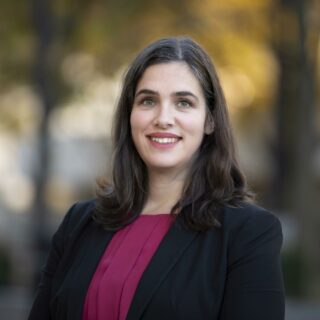
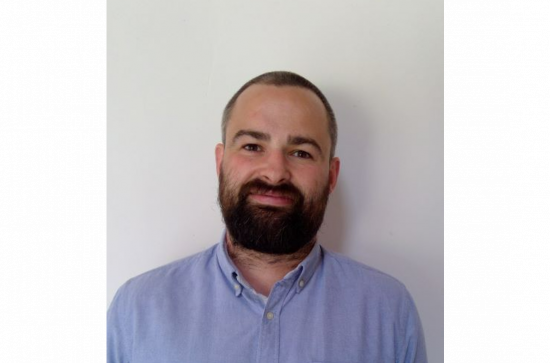
Thembi Mason is a Senior Lecturer in the School of Education at RMIT University, Australia. Her roles include Associate Dean (Education), Senior Advisor in Learning and Teaching, and Program Manager. She specializes in leadership for learning and teaching, digital technologies, and next-generation learning spaces. Her work emphasizes active learning, student agency, and innovative pedagogies. Education Experience: Secondary schools Adult education Vocational education Higher education Research Interests: Focuses on learning and teaching leadership, active learning, online learning strategies, educational technologies, and curriculum design. Her work addresses challenges in contemporary educational systems and promotes student-centered approaches. Research Themes: Her publications explore Associate Deans' roles, leadership in creative arts education, and professional development in next-generation learning spaces. Recent work includes analysis of virtual teaching models and post-COVID teacher training. Advising & Grants: Open to supervising Masters/PhD students in projects like remote teaching during lockdowns and post-pandemic professional learning. Active in national projects on academic development and technology-enabled learning. Labs/Teams: Collaborates through networks like createED to strengthen learning leadership in creative arts institutions.
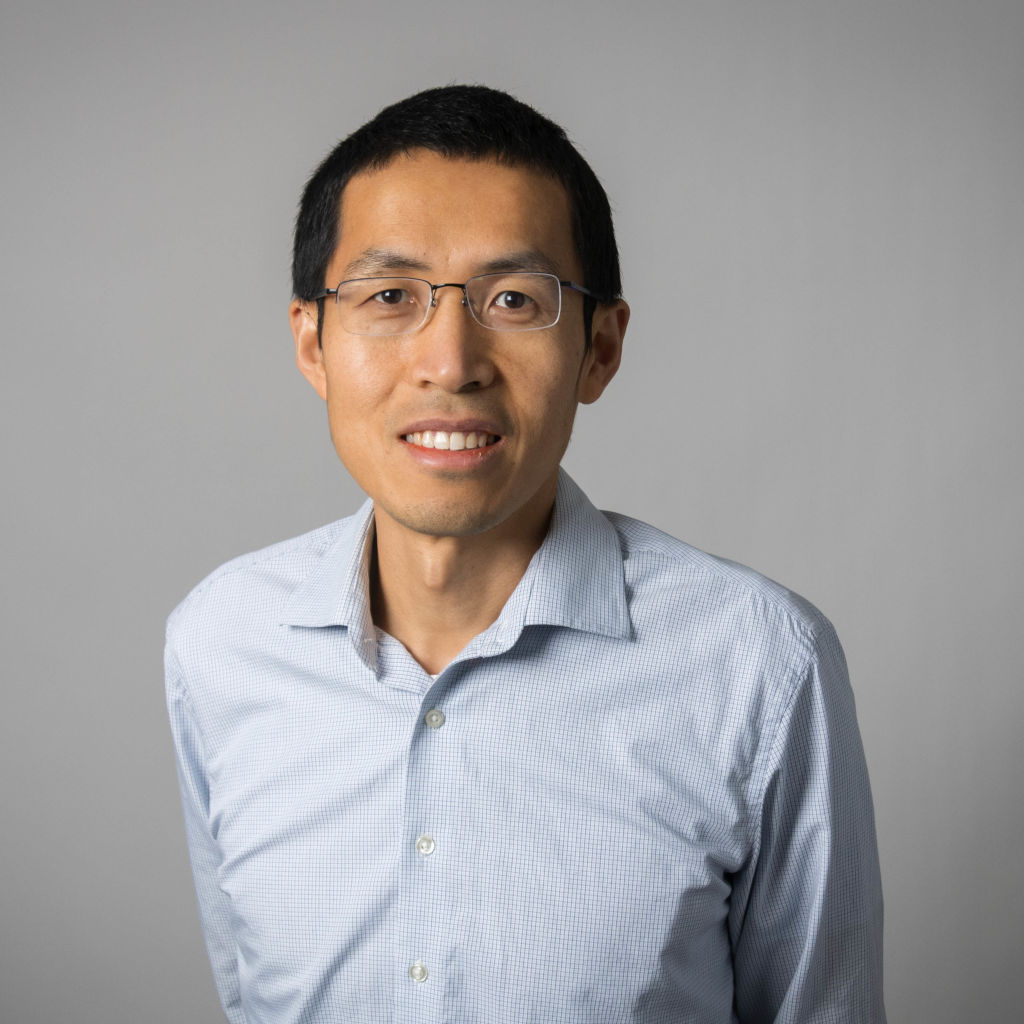
Yang Kuang is Professor of Mathematics at Arizona State University's School of Mathematical and Statistical Sciences, with joint affiliations with the CRESMET and Mathematical Computational Modeling Sciences Center. His research bridges mathematical biology, oncology, population dynamics, and delay differential equations. His cancer modeling investigates glioblastoma growth mechanisms, tumor-immune interactions, and prostate cancer treatment optimization. Ecological work pioneers stoichiometric modeling of producer-grazer systems and virus-host-environment interactions. He directs NSF-funded projects including 'Mathematical Classification of Complexity in Population Dynamics' and 'Predictive Modeling of Pattern Formation'. Publications demonstrate recurring themes: reaction-diffusion tumor models, wastewater-based epidemiology during pandemics, and ecological stoichiometry. His textbook Introduction to Mathematical Oncology establishes core frameworks for cancer modeling.
Dr. Katrina Bartow Jacobs is an Associate Professor in the Department of Teaching, Learning, and Leading at the University of Pittsburgh's School of Education. Her work focuses on sociocultural perspectives of literacy, critical pedagogy, and early childhood education. She holds a Ph.D. from the University of Pennsylvania and previously taught elementary education in California. Research Interests: Jacobs examines how literacy educators define their profession and classroom practices within urban contexts, particularly through sociocultural frameworks. She investigates children’s gender identity development through picture books and early career teachers’ adoption of critical literacy pedagogies. Her work bridges theory, practice, and policy in teacher preparation. Publications: Her recent scholarship includes studies on pre-service teachers’ emotional engagement with narratives (2022), gender representation in children’s literature (2020), and culturally relevant pedagogy in urban field experiences (2019). Notably, she received the Alan C. Purves Award in 2017 for her contributions to literacy research. Awards: Jacobs is the recipient of the 2017 Alan C. Purves Award, recognizing her impactful work in literacy education. Her research emphasizes equity and solidarity in literacy assessment and teacher preparation practices. Grants & Advising: While specific grant details are not listed, her CV indicates sustained engagement with educational equity initiatives. She mentors teacher candidates in critical literacy methodologies and urban education contexts. Labs/Teams: Collaborates with the Falk School on research partnerships enhancing teacher education through community engagement and critical inquiry.
Shoshanna Fine, PhD, is an Assistant Research Professor at the Johns Hopkins Bloomberg School of Public Health's Department of Mental Health. Her work focuses on mental health and psychosocial development among marginalized and culturally diverse populations globally, particularly adolescents in adversity. She leads the Global Early Adolescent Study (GEAS), investigating gender socialization impacts in low-resource urban environments across five continents. Education: PhD in Public Health, Johns Hopkins Bloomberg School of Public Health (2020) MPH in Public Health, Harvard T.H. Chan School of Public Health (2016) AB in Liberal Arts, Harvard College (2010) Research Interests: Mental health in conflict/displacement settings Violence and substance use interrelationships Culturally appropriate interventions in low-resource contexts Gender socialization's impact on adolescent health Awards: 2021 Charles E. Irwin New Investigator Award 2020 Alberta B. Szalita Award Multiple fellowships including Harvard's Center for Public Interest Careers (2010) Key Projects: GEAS, UNHCR mental health tracking, Burundian refugee adolescent interventions, and multi-country studies on emotional/behavioral problems. Active in Thailand, Indonesia, Kenya, Zambia, and Papua New Guinea.
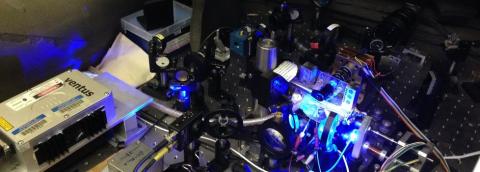
Simon Mochrie is a Professor of Physics and Applied Physics at Yale University, affiliated with the Department of Physics within the Faculty of Arts and Sciences. His research focuses on experimental biophysics and condensed matter physics, with emphasis on chromatin dynamics, nuclear mechanics, and super-resolution microscopy. He holds a Ph.D. from MIT (1985) and has pioneered techniques such as optical tweezers and STED microscopy to study biological systems like the ubiquitin-proteasome system in yeast. Current projects include single-molecule measurements on nucleosomes and developing novel imaging methods like LIVE-PAINT for live-cell super-resolution imaging. Educations: Ph.D., Physics, MIT (1985) Research interests center on understanding how chromatin organization influences nuclear mechanics, with studies on heterochromatin condensation, cohesin-driven loop extrusion, and chromatin-envelope interactions. His lab develops advanced microscopy techniques to visualize protein dynamics and subnuclear structures in real time. Recent work explores diffusive states of membrane proteins and the role of phase separation in heterochromatin mechanics. His articles demonstrate a focus on interdisciplinary approaches, combining biophysical experimentation with computational modeling to elucidate fundamental mechanisms in cell biology and soft matter physics. Notable themes include the interplay between chromatin structure and nuclear stiffness, loop extrusion dynamics, and quantitative analysis of intrachromosomal contacts. Teaching contributions include developing introductory physics courses tailored for life sciences students, emphasizing applications in biology and medicine. He actively participates in STEM education initiatives, including collaborative research networks for graduate students in physical biology. The Mochrie Lab also emphasizes instrumentation innovation, such as building fast-scanning STED microscopes and reversible peptide-based imaging systems.
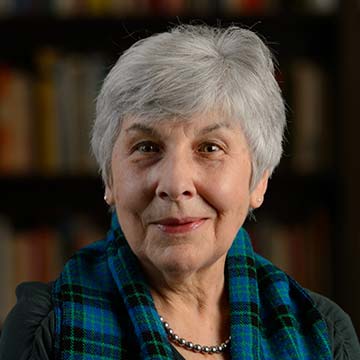
Professor Sheila Fitzpatrick is a leading historian of modern Russia and the Soviet Union, currently based at the Institute for Humanities and Social Sciences at Australian Catholic University (ACU) in Melbourne. She previously held distinguished academic positions in the United States, including Bernadotte E. Schmitt Distinguished Service Professor at the University of Chicago, before returning to Australia in 2012. She holds full HDR supervision accreditation and is actively engaged in research on Soviet and transnational history, migration, and life writing. Research Interests: Her work spans transnational history , social history of the Soviet Union , migration and displacement , life writing and autobiography , and Russian music . She emphasizes the lived experiences of individuals under Stalinism and explores the movement of people across political and cultural borders during and after WWII. The most recent publications and projects reflect a strong focus on Soviet displaced persons, repatriation, anti-communism in Australian immigration policy, and Cold War transnational histories. Her articles over the past decade reveal consistent engagement with themes of identity, memory, migration, and state surveillance. Scientific Awards and Honors: Prime Minister’s Literary Award for Non-Fiction (2016) for On Stalin’s Team American Historical Association Award for Scholarly Distinction (2012) Elected Fellow, Australian Academy of Humanities (1996) Elected Fellow, American Academy of Arts and Sciences (2005) John Simon Guggenheim Fellowship (1988) MacArthur Foundation Research & Writing Award (1987–8) Grants and Supervision: She has been a Chief Investigator on multiple ARC Discovery Projects, including studies on Russian immigrants in Cold War Australia and postwar displaced persons. She serves as a full HDR supervisor and has mentored numerous scholars through collaborative research. Her editorial roles include long-term service on the Journal of Modern History and several international journals in Soviet and Russian studies. Public Engagement: She is actively involved in public history, contributing to London Review of Books , The Guardian , and The Conversation , and participating in writers’ festivals, radio interviews (ABC, BBC), and public lectures across Australia, the US, Europe, and Asia.
Konstantinos Avramidis is an Assistant Professor at the Department of Architecture of the University of Cyprus , where he focuses on architectural design, urban cultural studies, and visual communication. He earned his PhD in Architectural Design from the University of Edinburgh as a fellow of the Edinburgh College of Art, following a Master's in Architecture and Spatial Design with distinction from the National Technical University of Athens and undergraduate training at Aristotle University of Thessaloniki. Current position: Assistant Professor, University of Cyprus Previous teaching: Drury University, University of Portsmouth Academic honors: Fellow of UK Higher Education Academy His research explores intersections between architectural design, graffiti/street art, and urban spatial practices. He has co-edited the book Graffiti and Street Art: Reading, Writing and Representing the City (Routledge, 2017) and founded the Drawing On research journal and Routledge Advances of Graffiti and Street Art Research series. His work analyzes urban inscriptions as critical spatial practices, examining how crises reshape architectural representation. Scientific distinctions include first prizes in the 'Kozani x4' and 'Thesprotia Chamber of Commerce' architectural competitions. His research has been presented at institutions like TU Delft, ICA, and University College London, with publications in journals such as City: Analysis of Urban Change and The Design Journal . He actively supervises student projects that have won multiple awards.
Vlad Butucea is a Lecturer in Drama and Performance at the School of Media, Culture and Performing Arts, Queen Margaret University. He holds a PhD in Theatre Studies from the University of Glasgow and is an active member of the Culture in Society Research Centre at QMU. His research focuses on the intersection of technology and performance, with core interests in: Digital Theatre and Performance Artificial Intelligence and Virtual Reality in artistic practices Queer Theory and New Materialism Phenomenological and practice-based research methods Vlad is also an accomplished writer for stage and screen, with works commissioned by the National Theatre of Scotland and the Edinburgh International Festival. His play Silkworm received a 2022 Fringe First Award. His creative work often explores human-technological collaboration and bodily interactions in performance. His scholarly publications and creative outputs are available through the QMU eResearch profile, reflecting a growing body of work at the forefront of digital and queer performance studies. Notable recognition includes: Fringe First Award (2022) for Silkworm Vlad contributes to both academic and artistic communities through his dual role as researcher and practitioner. He is involved in interdisciplinary projects that bridge performance, technology, and critical theory. While specific details of supervision or grants are not provided, his affiliation with the Culture in Society Research Centre suggests active participation in research initiatives and knowledge exchange.
Professor Daniel Chicksand is a faculty member in the Department of Management at Birmingham Business School, University of Birmingham , where he holds the rank of Professor of Operations and Supply Management . He also serves as the Director of the Distance Learning MBA programme. Daniel has held academic positions at Warwick Business School and Aston Business School prior to joining Birmingham in 2016 as a Reader, being promoted to full Professor in 2021. Education: PhD in Commerce, University of Birmingham (2009) MBA in Business Strategy & Procurement, University of Birmingham (2003) MSc in Industrial Logistics, University of Central England (1996) BSc in Industrial Information Technology (2:1 hons), University of Central England (1995) Postgraduate Certificate in Academic and Professional Practice, University of Warwick (2011–2013) Daniel’s research is centered on Operations and Supply Chain Management , with a strong theoretical foundation in Resource Dependency Theory (RDT) . His work explores power dynamics , value appropriation , and relationship management in buyer-supplier interactions across sectors such as food, construction, and sustainable supply chains. He has a growing interest in servitization and its impact on value creation. His methodological approach is primarily qualitative, using case-based research. The recent publications reflect a consistent focus on power and negotiation in procurement , resilience and disruption in supply chains (including simulation modeling), and sustainability reporting . His research spans both private and public sectors and often involves international collaboration with institutions in the UK, Europe, and the US. Scientific Engagement and Awards: Visiting Lecturer at Audencia Nantes School of Management (France) Visiting Lecturer at Ecole des Ponts ParisTech and Solvay Business School (France/Belgium) Educator for Duke Corporate Education Collaborator with leading researchers from Aston, Cardiff, Cranfield, Loughborough, Linkoping, and Fox Business School Daniel supervises multiple doctoral students and is involved in pilot research projects funded by the British Academy and the Chartered Institute of Logistics and Supply. He also leads two consultancy firms— DDC Solutions Ltd and Opsworks Ltd —delivering bespoke training and education programmes to corporate clients like UBS, KPMG, and Adams Foods. His prior experience as a business owner in African arts and crafts importation provides practical insights into supply chain and operations management, enriching his teaching and research. Laboratories and Research Teams: Member of the Aston Centre for Seritization Research and Practice (2015–present) Collaborative research network across UK, European, and US universities Lead on projects involving discrete-event simulation and gamification in SCM
Prof. Paweł Frąckiewicz is a Professor at the Academy of Art and Design in Wrocław (ASP Wrocław), serving as Chairperson of the Election Committee of the Faculty of Graphics and Media Art (2020-2024). He holds a position in the Department of Printmaking, specifically in the Studio of Lithography and Printmaking Promotion. His academic career includes teaching courses such as Printmaking and Fundamentals of Printmaking. Education: Graduated from the State Higher School of Visual Arts in Wrocław (now ASP Wrocław) in 1982. His artistic philosophy focuses on nature-inspired imagery, emphasizing individualized approaches to each creative situation. He avoids traditional synthesis/analysis methods, favoring variant-based processes that condense matter into 'boiling' states. Contours serve as sketches, with each work acting as a study for future pieces. Research Interests : Lithography techniques, printmaking innovation, contemporary art expression, material studies, and the intersection of nature and artistic form. Awards: Notable recognitions include the 2019/2020 Honorary Distinction in LITHO-Kielce, a 2005 Mayor of Pilsen Award, and a 1989-1990 U.S. State Department Scholarship at the Tamarind Institute. Exhibitions and Conferences: Active in international exhibitions (e.g., individual shows in Wrocław, Nuremberg, and collective shows in China, Korea, India, and Portugal) and conferences (e.g., Impact 5 in Tallinn, Tidaholm Lithographic Symposium).
Ciarán Ó Gallchóir is an Assistant Professor/Lecturer in Education at Maynooth University, specializing in initial teacher education, educational leadership, and public policy. He is affiliated with the Department of Education within the Faculty of Arts and Humanities. His research explores the intersection of identity and policy in educational contexts, emphasizing how these dynamics manifest in institutional practices. He currently leads the full-time and part-time Masters of Education programs. Key research initiatives include the HEA-funded PATH programme (supporting marginalized groups in teacher education), the Erasmus+ SUP4PCL project (Egyptian school-university partnerships), and the NCCA-funded evaluation of Junior Cycle implementation. His work spans peer-reviewed articles, conference presentations, and policy reports, addressing topics like teacher identity, digital learning frameworks, and global citizenship education. Ó Gallchóir’s publications analyze tensions in educational leadership, policy enactment, and the impact of technology on learning. He has contributed to interdisciplinary collaborations across Ireland and internationally, focusing on systemic reforms and pre-service teacher development. While no formal awards are listed, his extensive contributions to educational policy and pedagogy reflect significant scholarly impact. He leads research teams and has advised on projects such as the longitudinal study of Junior Cycle reforms. His work emphasizes bridging theoretical frameworks with practical educational challenges, particularly in marginalized communities and policy implementation.
Hayley Berman is a Teaching Professor and Programme Leader for the MA in Art Therapy at the University of Hertfordshire's School of Creative Arts. She holds a PhD in Psychosocial Studies from the University of the West of England (2012). Her work integrates art psychotherapy with social entrepreneurship, focusing on psychosocial change, trauma recovery, and social justice. She founded Lefika La Phodiso, a nonprofit addressing mental health disparities in South Africa, training over 200 Community Art Counsellors. Her research explores embodied methodologies, including social dreaming matrices and group art psychotherapy. Her research interests span applied psychoanalytic frameworks, relational dynamics in art therapy, and materiality in artistic practice. Collaborative projects include work with governmental and NPO entities in South Africa and the UK. She has exhibited artwork in venues like the Johannesburg Art Gallery and published through Lefika Publications. Recent projects include partnerships on child health in Stevenage and medical humanities training for empathy in healthcare. Her work bridges clinical practice, community development, and educational innovation.
Dr. Chao Hu is the Collins Aerospace Professor in Engineering Innovation and Associate Professor at the University of Connecticut's Department of Mechanical Engineering within the College of Engineering. His research focuses on engineering design under uncertainty, battery health diagnostics, and structural health monitoring. He holds a B.E. from Tsinghua University (2007) and a Ph.D. from the University of Maryland (2011), with prior roles at Medtronic and Iowa State University. Research interests emphasize physics-informed machine learning for prognostics, battery degradation modeling, and reliability-based design optimization. Key publications include work on digital twin models for lithium-ion batteries, federated learning for fleet-wide fault diagnosis, and probabilistic machine learning pipelines for real-time state estimation. He has received awards like the ASME Design Automation Young Investigator Award and highly cited paper recognitions. Dr. Hu serves as Senior Editor for Engineering Optimization and Review Editor for Structural and Multidisciplinary Optimization . His work spans academic leadership in journals and industrial collaborations. Current projects include battery aging datasets (UConn-ILCC and UConn-ISU-ILCC), design for remanufacturing frameworks, and high-rate structural health monitoring techniques.
Jaime Napier is an Associate Professor of Psychology at New York University and a Global Network Associate Professor at NYU Abu Dhabi. She is actively engaged in research and teaching in the field of social psychology, with a focus on gender, inequality, and ideological belief systems. Her work bridges psychological theory and real-world social issues, contributing to both academic and public discourse. Her research interests include gender, inequality, heteronormativity, system justification, political ideology, and subjective well-being . She investigates how social structures influence individual beliefs and behaviors, particularly how ideologies can both reflect and reinforce social hierarchies. Her work often explores the psychological mechanisms that sustain inequality, including prejudice, stereotyping, and identity management among marginalized groups. The recent articles highlight a consistent focus on ideology, gender, and well-being , with an emphasis on how psychological processes maintain or challenge social systems. Her research combines experimental methods with statistical rigor, often examining cross-cultural and interdisciplinary dimensions of social attitudes. Themes include the happiness gap between liberals and conservatives, the palliative function of system justification among LGBTQ+ individuals, and the role of power in reducing benevolent sexism. Early Career Contribution Award, International Society of Social Justice Research, 2018 Dr. Napier mentors undergraduate students through the Capstone Project in Psychology, supervising original research and guiding students in scientific writing and presentation. She has taught a range of courses including Prejudice , Psychology of Sex and Gender , and Lab in Psychology of Inequality . She has not disclosed external grant funding in the provided text, but her publications suggest active research engagement. She is affiliated with the Department of Psychology within the Faculty of Arts and Science at NYU. She teaches and conducts research at NYU Abu Dhabi, contributing to the global academic mission of NYU. While no formal lab or research team is named, her collaborative publications indicate active engagement with scholars in social and political psychology.
Dr. Christopher S. Hlas is a Professor of Mathematics Education at the University of Wisconsin-Eau Claire within the College of Arts and Sciences Department of Mathematics. With a doctorate from the University of Iowa, he specializes in mathematics pedagogy, technology integration, and cross-disciplinary connections between math and foreign languages. Ph.D. in Mathematics Education (University of Iowa, 2005) B.S. in Mathematics and Computer Science (University of Iowa, 2001) His research focuses on teaching through problem solving , student motivation , and technology-enhanced mathematics instruction . He has developed innovative formative assessment probes and conducted extensive studies on homework design, flow theory, and creativity in K-12 education through grants like the ESEA Title II Mathematics and Science Partnerships. His work spans curriculum development, professional development for teachers, and mathematical modeling. Recent publications highlight his exploration of creativity assessment in language education and the application of game mechanics to classroom engagement. He serves as an AP Calculus Reader and Table Leader, while maintaining active roles in the Wisconsin Mathematics Council and National Council of Teachers of Mathematics. Bilingual education initiatives GeoGebra integration in geometry instruction Formative assessment frameworks Game-based learning strategies Scientific Awards CARE Award (2015) ACTFL Research Priority Grant (2010) Multiple teaching scholarships UWEC student-nominated award (2007) Outstanding teaching assistant recognition (2004) Mentoring over a dozen student research projects and securing more than $4 million in federal and state grant funding, Dr. Hlas has supervised numerous collaborative research initiatives. He maintains open-source educational tools like interactive Pascal's Triangle and rational functions resources at math.hlasnet.com while serving on multiple university committees and grant review panels.