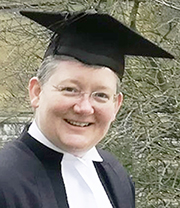
Guy Edward Toh Emerson is a computational semanticist currently serving as an Academic Fellow at the Department of Computer Science & Technology and a College Lecturer in Computer Science at Gonville & Caius College, University of Cambridge. He will transition to an Assistant Professor role in Natural Language Processing at the Department of Theoretical and Applied Linguistics in October 2025, while also acting as Executive Director of Cambridge Language Sciences to advance interdisciplinary research. His educational background includes: Undergraduate studies in Mathematics at Trinity College, Cambridge (2009). Master's in Computer Science with a focus on Computational Linguistics. PhD in 2018 from the University of Cambridge under Ann Copestake. His research integrates computational linguistics, natural language processing, and artificial intelligence, emphasizing language technology, machine learning, and multilingualism. He actively supports the revitalization of the Hokkien language through interdisciplinary approaches. Additional professional activities include academic leadership and policy engagement in language sciences. Fluent in English, German, French, Hokkien, and Mandarin, with intermediate knowledge of Greek, Georgian, Swedish, Dutch, and Rhine-Franconian, he balances academic pursuits with ballroom and Latin dancing.
Karen Ottewell is a Professor of Contrastive Rhetoric and Written Articulacy at the University of Cambridge , serving as Acting Director of The Language Centre and Director of Academic Development & Training for International Students (ADTIS). She is a Fellow & Tutor of Lucy Cavendish College and contributes to academic governance through roles like Senate House Syndicate and Prevent & Freedom of Speech committee memberships. Education: Ed.D. (2021) and PhD (2000) from the University of Cambridge, MPhil in European Literature (1995), and MA in German Language & Literature (1994) from the University of St. Andrews Her research focuses on cultural influences on writing , contrastive rhetoric , and academic literacy , particularly for second-language postgraduate writers. She has pioneered frameworks for transitional support in written articulacy and consults internationally on academic literacy assessment practices. Recent publications and presentations highlight her work on English language testing for higher education admissions, assessment design , and cross-cultural academic communication . She has served as an External Examiner at multiple universities and received the Pilkington Teaching Prize for excellence in education. Current projects include developing academic literacy workshops for L2/L1 postgraduates and international consultancy on language assessment reform. She chairs panels on stakeholder collaboration in language testing and advocates for improved academic literacy support systems.
Samuel McDermott is an Associate Teaching Professor at the Department of Chemical Engineering and Biotechnology , University of Cambridge. He serves as the Sensor CDT Programme Manager , focusing on interdisciplinary research in healthcare, biotechnology, and open-source hardware. His research spans machine learning applications in medical imaging , laboratory automation , and web-of-things (WoT) integration for scientific equipment. Recent work emphasizes federated learning in healthcare, blood cell morphology classification, and low-cost diagnostic tools. Key article trends include: deep diffusion models for malaria detection , open-source microscopy platforms like OpenFlexure, and AI-driven clinical data generalization . His projects often combine 3D-printed hardware and IoT-enabled laboratory systems .
Andrew O'Malley is a Senior Lecturer in the School of Medicine at the University of St Andrews, where he serves as Deputy Programme Director of the Scottish Graduate Entry Medical Programme (ScotGEM) and Deputy Director of Teaching. His work focuses on the intersection of medical education and technology, particularly in the areas of anatomical sciences, digital health, and artificial intelligence. Dr. O'Malley holds a Doctor of Philosophy in Anatomy & Human Identification and a Bachelor of Science in Forensic Anthropology, both from the University of Dundee. His educational background as an anatomist and forensic anthropologist informs his teaching across various subjects in the School of Medicine, including ScotGEM Case Based Learning, medical ethics, and generative artificial intelligence. His research interests center on the use of technology in health professions education, with specific focus on Technology-Enhanced Learning (TEL), telehealth, and generative artificial intelligence. Dr. O'Malley's work contributes to UN Sustainable Development Goals related to quality education and good health. Dr. O'Malley's publications demonstrate a strong trend toward exploring AI applications in medical education, with particular emphasis on diagnostic accuracy, question generation, bias mitigation, and simulation technologies. His recent work shows increasing sophistication in prompt engineering for medical AI applications and attention to equity issues in AI-generated medical content. #TopDownloadedArticle Prize (2024) Best Poster (2023) CELPiE Research Fund Award (2024) Dr. O'Malley actively supervises postgraduate research students and has been involved in multiple research projects including ComSIM: Community Orientated Simulation, and research on AI diagnostic accuracy. He has presented his work at international conferences including the 1st International Conference on Artificial Intelligence in Medical Education in Kuala Lumpur and contributed written evidence to the House of Lords UK Engagement with Space Committee. Dr. O'Malley is affiliated with the St Andrews SETI Post-Detection Hub, reflecting his interest in broader applications of technology and scientific methodology beyond traditional medical education.
Sir Harshad Bhadeshia is a renowned Indian-British metallurgist and Professor of Metallurgy at Queen Mary University of London since 2022. Previously, he held the Emeritus Tata Steel Professorship at the University of Cambridge, where he worked from 1980 until his move to Queen Mary. His research focuses on the theory of solid-state transformations in multicomponent steels , aiming to create novel alloys and processes with minimal resource use. Education: BSc from City of London Polytechnic, PhD from University of Cambridge (1980) under David V. Edmonds Research Areas: Phase transformations in steel, computational modeling, neural networks, Bainite, welding technology, hydrogen embrittlement resistance, nanostructured materials Scientific Awards: Bessemer Gold Medal (2006), Hume Rothery Prize (1992), Rosenhain Medal (1994), Knight Bachelor (2015), Adolf Martens Medal (2017), William Menelaus Medal (2025) Editorial Roles: Editor for Materials Science and Engineering: A , Materials Science and Technology , and Science and Technology of Welding and Joining Students: Roger Reed, Rachel Thomson His Google Scholar publications (over 650) cover topics in metallurgy, phase transformations, computational modeling, hydrogen resistance, and AI in materials science, with a significant emphasis on Bainite, welds, and nanostructured steels. The SKF University Technology Centre (2009-2019) and Computational Metallurgy Laboratory (2005-18) highlight his leadership in industrial collaborations and international research. His scientific awards and fellowships (Royal Society, Royal Academy of Engineering, Institute of Materials, Minerals and Mining) underscore his global recognition.
Professor Ulysses Sengupta is a leading academic and practitioner in architecture and urbanism at the Manchester School of Architecture , where he holds the Professor of Architecture and Urbanism title. He is the founding director of the [CPU]lab (Complexity Planning and Urbanism Research Laboratory) and leads the [CPU]ai master’s design atelier, which integrates data-driven design and computational thinking into architectural education. His work bridges academic research, pedagogy, and practice through Softgrid Limited , an internationally networked architecture and urban research firm. Founding director of [CPU]lab Leader of [CPU]ai atelier Director of Softgrid Limited International collaborations with institutions like the Architectural Association and University of Westminster Research Interests focus on cities as complex adaptive systems, utilizing big data, IoT, and machine learning to address urban sustainability and governance. Key themes include: Smart cities and digital urban disruption Agile governance and participatory planning Complexity-based design methodologies Global South urbanism and resource-limited settings Interdisciplinary tools for urban data analysis Eco-architecture and futureproofing urban systems Articles highlight his work on urban data analysis, mobility-as-a-service, transdisciplinary systems mapping, and the intersection of social/environmental justice in smart cities. His Google Scholar profile reflects a consistent focus on computational urbanism and sustainable transformation frameworks. Scientific Awards include shortlisting for the Colvin Prize (2025), a prestigious honor in architectural research. His projects span ESRC, H2020, and Innovate UK grants, including leadership in the DACAS network and Synchronicity EU initiative. Professional Contributions encompass advisory roles for international organizations like RIBA, policy briefs for the United Nations University, and design competitions in China, India, and the UK. His [CPU]ai atelier redefines architectural education through computational complexity.
Dimitri Darzentas is a Lecturer at the School of Computing Engineering and the Built Environment , Edinburgh Napier University. His work bridges Interaction Design , Internet of Things , and Cultural Informatics , focusing on hybrid digital-physical experiences in museums and sustainable technology practices. Research Themes: Museum technology, hybrid gifting, IoT sustainability, data-driven co-design Projects: Library of Inspiration (Royal Academy of Engineering grant), UbiFix (repairability in smart devices) His design practice emphasizes emotional interpretation, temporal engagement, and ethical technology use. Recent work explores substitutional reality with museum objects and user-generated content in historical games. PhD Supervision: Guided students in Digital Storytelling (Gengyi Wang) and Mixed Reality Education (Suzi Cathro).
Prof. Evina Katsou is a Chair Professor at Imperial College London in the Department of Civil and Environmental Engineering, Faculty of Engineering. She leads the Resilience & Sustainability group, focusing on AI and digital tools for sustainable solutions in water, wastewater, and industrial sectors. Research Interests include wastewater treatment processes, circular economy frameworks, greenhouse gas mitigation, and sustainability methodologies. Her work bridges digital innovation with environmental engineering, advancing net-zero pathways and ISO standards for circular economy. Professional Engagement : Co-leads the Intelligent and Smart Systems Action Group in the ICT4Water Cluster, chairs two Cost Action working groups, co-chairs IWA Small Water & Wastewater Systems Specialist Group, and contributes to ISO 59020 standards. Projects & Leadership : Coordinated 27 R&D projects, including EU-funded initiatives like SMART-Plant, DEEP-Purple H2020, HYDROUSA H2020, and SAFELOOP Horizon Europe. These focus on resource recovery, renewable energy, and decision-making tools. Labs & Teams : Leads a multidisciplinary group of 25 postdoctoral researchers and PhD students at Imperial College London.
Tobias Ritschel is a Professor of Computer Graphics at University College London . His research spans advanced rendering techniques, perceptual modeling, and data-driven graphics, with a focus on bridging physical accuracy and artistic flexibility in visual computing. Key research themes include: Interactive Global Illumination : Real-time simulation of complex lighting effects on GPUs Perceptual Graphics : Human vision-driven rendering and display optimization Non-physical Graphics : Beyond-photorealistic techniques for artistic expression Data-driven Graphics : Leveraging large datasets for novel rendering and modeling approaches His recent work emphasizes neural rendering , differentiable graphics , and X-ray tomography , with applications in 3D reconstruction , NeRF manipulation , and holographic imaging . Notable scientific achievements include the Eurographics Young Researcher Award 2014 and Eurographics Thesis Award 2011 . He has advised multiple PhD students including Philipp Henzler (EG PhD Award 2024) and Thomas Leimkühler (Otto Hahn Medal 2019), while actively contributing to conference leadership as co-chair for EGSR 2024 and Pacific Graphics 2024 . His team collaborates on X-ray reconstruction with Pablo Villanueva-Perez and works on 3D perception with Anthony Steed.
Jesse Sowell is an Associate Professor at the University College London (UCL) in the STEaPP (Science, Technology, Engineering and Public Policy) department. His work intersects internet governance , cybersecurity policy , and public policy analysis , with a focus on emerging technologies like artificial intelligence and the Internet of Things. He contributes to the Sustainable Development Goal 11 (Sustainable Cities and Communities) through digital policy research. Email: j.sowell@ucl.ac.uk Collaboration Network: Active in international policy and cybersecurity research Research interests span: AI-driven policy crafting and systematic review methodologies Security lifecycle of IoT devices and networks Adaptive governance frameworks for digital risks Competition dynamics in internet infrastructure Transnational cybersecurity norms and incident response IPv4-IPv6 transition policy comparisons Publication trends reveal a focus on internet governance , cybersecurity , and AI policy , with increasing attention to IoT security (2017-2021) and AI integration in policymaking (2025). His work bridges technical and policy dimensions, emphasizing network resilience and multi-stakeholder collaboration .
Professor Karen O'Brien joined Durham University as Vice-Chancellor and Warden in January 2022, overseeing its educational and research mission. Prior roles include Head of Humanities Division at the University of Oxford and Vice-Principal for Education at King’s College London. Oxford scholar and philanthropy-driven academic leader Architect of £150m Schwarzman Centre for Humanities Founder of Oxford's Institute for Ethics of Artificial Intelligence Her research focuses on Enlightenment-era literature and intellectual history, with significant contributions to higher education policy and ethics in technology. Awards include: British Academy Rose Mary Crawshay Prize Fellowships from RSA, English Association, and Oxford/Cambridge colleges A regular media commentator (BBC Radio 4/World Service), she emphasizes global research growth and sustainable development goals.
Sadie Creese is Professor of Cybersecurity in the Department of Computer Science at the University of Oxford. She serves as Director of the Global Cyber Security Capacity Centre at the Oxford Martin School and Director of the Oxford Martin Programme on AI Threat Detection. Additionally, she is a Governing Body Fellow at Worcester College and Chair of Examiners for the MSc in Computer Science. Professor of Cybersecurity, Department of Computer Science, University of Oxford Director, Global Cyber Security Capacity Centre, Oxford Martin School Director, Oxford Martin Programme on AI Threat Detection Governing Body Fellow, Worcester College Chair of Examiners for MSc in Computer Science Sadie Creese holds a DPhil in Computer Science from the University of Oxford, an MSc in Computation, and a BSc (Hons) in Mathematics and Philosophy. Her academic background bridges theoretical computer science with practical applications in security. Her research spans multiple domains of cybersecurity including cyber situational awareness, visual analytics for cybersecurity, predicting organizational cyber-value-at-risk, agent-based simulations for malware propagation, threat modeling and detection, network defense, and cyber-resilience strategies. She also studies national cybersecurity capacity, working with countries and international organizations worldwide. Her interdisciplinary approach integrates insights from computer science, social sciences, and policy studies to address complex security challenges in an interconnected digital world. Analysis of her recent publications reveals a consistent focus on practical cybersecurity applications with strong emphasis on human factors in security systems. Her work bridges technical security mechanisms with organizational and human elements, particularly in areas like insider threat detection, risk communication, and security operations. The research demonstrates a trajectory toward more integrated security frameworks that consider both technical vulnerabilities and human behaviors within complex systems. Sadie Creese has been recognized as one of The 50 most influential women in cyber-security UK . Her work with the Global Cyber Security Capacity Centre has influenced national cybersecurity strategies worldwide, and she actively contributes to policy discussions through platforms like the World Economic Forum's AI Governance Alliance. The 50 most influential women in cyber-security UK Professor Creese has supervised numerous PhD and Master's students including Mary Bispham, Rodrigo Carvalho, Elizabeth Phillips, Marcel Stolz, and Meredydd Williams. Her research has been supported by significant grants including AXIS-sponsored projects on cyber-risk modeling, World Economic Forum collaborations on cybersecurity futures, and Lloyds Register Foundation funding for cyber security research related to the Industrial Internet of Things. She leads major interdisciplinary projects that bridge technical security research with policy implications. Principal Investigator on AXIS-sponsored project 'Analysing Cyber-Value-at-Risk, Residual Risk and models for Systemic Cyber-Risk' Collaboration with World Economic Forum's Shaping the Future of Cybersecurity Platform Co-Chair of Lloyds Register Foundation sponsored Foresight review of cyber security for the Industrial Internet of Things Professor Creese founded and directs the Global Cyber Security Capacity Centre (GCSCC) at the Oxford Martin School, which conducts research into national cybersecurity capacity. She was also the founding Director of Oxford's Cybersecurity Network (now CyberSecurity@Oxford), established in 2008. Her team includes senior researchers like Ioannis Agrafiotis, Louise Axon, and Michael Goldsmith, who collaborate on projects spanning cyber analytics, security protocols, and identity management. The GCSCC works with governments and international organizations to build cybersecurity capacity globally, while the Oxford Martin Programme on AI Threat Detection focuses on emerging security challenges posed by artificial intelligence technologies.
Carl Benedikt Frey is the Dieter Schwarz Associate Professor of AI & Work at the Oxford Internet Institute and a Fellow of Mansfield College, University of Oxford. He serves as Director of the Future of Work Programme and Oxford Martin Citi Fellow at the Oxford Martin School. His career spans roles such as Senior Fellow at the Institute for New Economic Thinking (University of Oxford) and Associate Fellow at Lund University’s Department of Economic History. His research focuses on technological change, automation, and their societal impacts , drawing parallels between historical industrial revolutions and current AI-driven disruptions. He is best known for the 2013 paper The Future of Employment: How Susceptible Are Jobs to Computerisation? (with Michael Osborne), which has shaped global discourse on automation risk. His 2019 book The Technology Trap expands on these themes, examining the economic and political consequences of technological progress. The articles section highlights Frey’s work on AI’s influence across domains: from Generative AI’s role in reshaping work to geopolitical implications of automation and demographic transitions in aging societies. His analysis often bridges historical economic patterns and modern technological challenges , emphasizing the need for policy adaptation. Scientific awards include the Princeton University Richard A. Lester Prize (2019) and fellowships at the Royal Society of Arts and Oxford Martin School. He advises governments (e.g., UK House of Lords Digital Skills Select Committee, Swedish Government’s Digitalisation Commission), international organizations (OECD, UN), and Fortune 500 companies. Media outlets like The Economist , New York Times , and BBC frequently feature his insights on AI and labor markets.
Professor Alan Penn is a leading academic at University College London's The Bartlett School of Architecture , where he holds the title of Professor in Architectural and Urban Computing. He previously served as Dean of the Bartlett Faculty of the Built Environment from 2009 to 2019 and has been instrumental in establishing Space Syntax Ltd , a UCL knowledge transfer spin-out company. His affiliations include membership in the Space Syntax Laboratory, board membership of UCL Consultants Ltd, and trustee status at Shakespeare North Trust. Education: BSc (1978), Dip Arch (1980), MSc (1983) - all from University College London Alan Penn’s research investigates how spatial design influences social and economic behaviors through innovative space syntax methodologies . Key areas include: Agent-based simulations of human behavior Spatio-temporal representations of built environments Urban spatial network analysis Urban sustainability across multiple dimensions Cognitive markers in architectural design Historical urban growth modeling His recent publications demonstrate a strong focus on computational urbanism, evolutionary city patterns, and behavioral architecture. Research trends show interdisciplinary approaches combining architectural theory with: Machine learning applications Network science analysis Behavioral psychology insights Historical GIS techniques Complex systems modeling Public health considerations Scientific recognition includes: HEFCE Business Fellowship (2001-2005) KTP SE Region Award (2010) Multiple UCL Enterprise awards ‘Spirit of Enterprise’ Award (2008) As Principal Investigator he leads the £5m EPSRC-funded Urban Dynamics Lab , demonstrating sustained research excellence. His work extends to public engagement through: Shakespeare North Trust educational theatre development Media appearances (New Scientist, Slashdot) Public policy contributions
Dr. Philippe Morel is an Associate Professor at the Bartlett School of Architecture , University College London, where he directs the MSc in Architectural Computation. He previously held academic positions at École nationale supérieure d'architecture Paris-Malaquais, The Berlage Institute, and Architectural Association School of Architecture, establishing himself as a leading figure in computational architecture. Doctor of Design, Florida International University (2024) Co-founder, EZCT Architecture & Design Research Founding CEO, XtreeE (2015-2017) His research focuses on computational architecture , artificial intelligence , and radical design theories , exploring intersections between digital technologies, architectural theory, and socio-economic models. Key contributions include Disruptive Technologies: The Convergence of New Paradigms in Architecture (2023) and Computational Politics and Architecture (2017). Recent publications analyze 3D printing economics , parametric design , and AI-driven architectural production . He has received the Pierre Cardin Prize (2007) and joined Phi Kappa Phi (2024). Supervised PhDs at ETH Zurich, EPFL, and Université Paris-Sud Developed curriculum on algorithmic urbanism and machine learning in architecture