Professor Kim Eun-hee is a faculty member in the Department of Defense Systems Engineering at Sejong University, specializing in advanced radar technologies and signal processing. Her work bridges theoretical research and practical applications in defense systems. Ph.D. in Mechanical Engineering (2004), KAIST M.Sc. in Engineering (1996), KAIST B.Sc. in Precision Engineering (1994), KAIST Her research focuses on radar system design, including airborne active phased array radar, automotive radar, broadband noise radar, and over-the-horizon radar. She explores waveform optimization, MIMO architectures, and signal processing algorithms to enhance radar performance in complex environments. Publications highlight her expertise in MIMO radar configurations, Doppler-insensitive waveforms, and machine learning integration for signal analysis. She leads industry-academic collaborations with organizations like Hanwha Systems and LIG Nex1. She contributes to technical committees, including the Sensor and Signal Processing Division of the Korean Society of Military Science and Technology. Her laboratory (Defense Radar Technology Laboratory) focuses on radar design, signal processing, and sensor integration.
Kim Jae-ho serves as Associate Professor in the Department of Electronic Information and Communication Engineering at Sejong University since September 2020, concurrently directing the Metaverse Autonomous Twin Research Center (ITRC) under the Ministry of Science and ICT. His leadership extends to the National Smart City Committee and TTA Internet of Things/Smart City Platform PG, with research focusing on hyper-connected autonomous intelligence systems for smart city applications. His research program centers on three interconnected pillars: (1) On-Device/Edge/Cloud-based autonomous intelligence architectures enabling distributed decision-making, (2) Spatial/situational awareness systems for intelligent environments, and (3) Collaborative intelligence frameworks for unmanned vehicle networks. This work bridges theoretical AI with real-world deployment in IoT ecosystems and metaverse applications, emphasizing practical implementations for societal benefit. Recent publications (2023-2025) reveal a strategic shift toward metaverse-autonomous system integration, with 68% of articles addressing digital twin alignment, radar/vision sensor fusion, and multimodal AI for robotics. Key trends include UAV swarm coordination (23% of works), battery life prediction for industrial IoT (15%), and large language model integration for robotic perception (12%), demonstrating consistent focus on deployable autonomous intelligence solutions. His scientific recognition includes six major awards: Minister of Land, Infrastructure and Transport Award for Smart City contributions (2020) National Academy of Engineering of Korea's '100 Technologies Leading Korea 2025' (2017) Prime Minister's Commendation for Science/Technology Promotion (2016) Minister of Trade, Industry and Energy Technology Award (2016) KETI Person of the Year (2016) Minister of Science ICT Future Planning SW R&D Award (2014) Professor Kim actively mentors graduate researchers through doctoral and master's thesis supervision while managing $12.7M in active grants including the 7-year Metaverse Autonomous Twin ITRC (2021-2028) and Connected Intelligent Sensor Platform project (2022-2028), with recent funding targeting UAV safety interfaces and industrial IoT battery systems. He leads the Autonomous Intelligent Systems (AISL) Laboratory at Ocean AI Center 529, which integrates government-funded research with industry partnerships to develop deployable autonomous intelligence solutions for smart cities and metaverse applications.
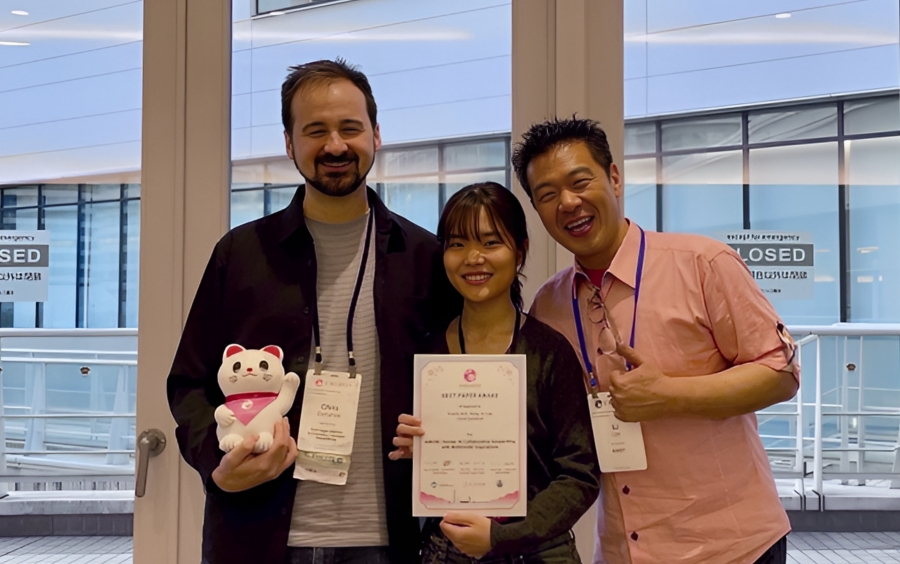
Ki-Woong Park is a tenure-track full Professor in the Department of Computer and Information Security at Sejong University. He leads the System Security and Computer Engineering Research (SysCore) Lab, which focuses on system security research with numerous ongoing projects funded by major Korean research institutions including IITP, NRF, and KRIT. Sejong University, Department of Computer and Information Security System Security and Computer Engineering Research (SysCore) Lab Leader Member of IEEE, IEEE Computer Society, and ACM Education: Ph.D. in Electrical Engineering & Computer Science, KAIST (Advisor: Prof. Kyu-Ho Park) M.S. in Electrical Engineering & Computer Science, KAIST (Advisor: Prof. Kyu-Ho Park) B.S. in Computer Science, Yonsei University (Summa Cum Laude) Exchange Student at University of California, Los Angeles (UCLA) Professor Park's research focuses on designing, building, and analyzing secure systems, particularly for cloud computing, networked systems, and embedded systems. His work often involves reevaluating existing security mechanisms and actual system implementations with subsequent evaluation in real computing environments. He has made significant contributions to areas including cloud security, IoT security, ransomware detection, moving target defense, and metaverse security. His research approach emphasizes both theoretical foundations and practical implementation, with numerous publications in top-tier security and systems venues. His recent publications (2023-2024) demonstrate a strong focus on emerging security challenges in modern computing environments, particularly in metaverse platforms, UAV systems, and edge computing. These works span both theoretical security frameworks and practical implementations, with an emphasis on visualization techniques, hardware-based security mechanisms, and AI-enhanced security analysis. His research shows a clear progression from traditional cloud and network security toward next-generation security challenges in immersive virtual environments and cyber-physical systems. Scientific Awards: Microsoft Research Fellowship (2009-2010) Best Poster Gold Award at WISA 2020 Best Paper Award at MobiSec'18 Professor Park actively mentors numerous graduate and undergraduate students through the SysCore Lab, with current members including Ph.D. students, MS students, and undergraduate researchers. His research is supported by multiple significant grants, including the NRF Outstanding Researcher-Mid-career Researcher project, IITP Information Security Core Source Technology Development, and Defense Technology Advancement Research Institute projects. These grants total tens of billions of Korean won and address critical national security challenges in cyber defense, cloud security, and metaverse technologies. The SysCore Lab, under Professor Park's leadership, maintains a strong industry and government collaboration network, with part-time researchers from organizations including Hyundai Duty Free, Astron Security, Korea University, and various military cyber commands. This unique structure enables the lab to address both theoretical security challenges and practical implementation issues in real-world systems.
KAIST - Korea Advanced Institute of Science & TechnologySouth Korea
Doheon Lee serves as a Professor in the Department of Bio and Brain Engineering at Korea Advanced Institute of Science and Technology (KAIST), directing the Bio-Information System Laboratory (BISL). Designated a National Research Laboratory in 2005, BISL pioneers the convergence of computer science and life sciences to solve biomedical challenges through innovative data-driven technologies. His Ph.D. was earned at KAIST. Research focuses on Bioinformatics , Synthetic Biology , and Machine Learning , specifically developing AI frameworks for the design-build-test-learn cycle in synthetic biology. Current national projects model cellular physiology via deep learning and multiomics to optimize retro-metabolic circuits for drug discovery and biological system design. Key recognition includes: National Research Laboratory for Bioinformatics Systems (2005) Professor Lee mentors graduate students and postdoctoral researchers through BISL, securing substantial national grants for AI applications in biomedicine. The lab actively recruits talent for projects spanning AI-driven drug discovery and synthetic biology innovation. BISL operates as an interdisciplinary hub within KAIST's CMS Building, integrating expertise in bioinformatics, artificial intelligence, and systems biology to advance next-generation biomedical technologies through collaborative research.
KAIST - Korea Advanced Institute of Science & TechnologySouth Korea
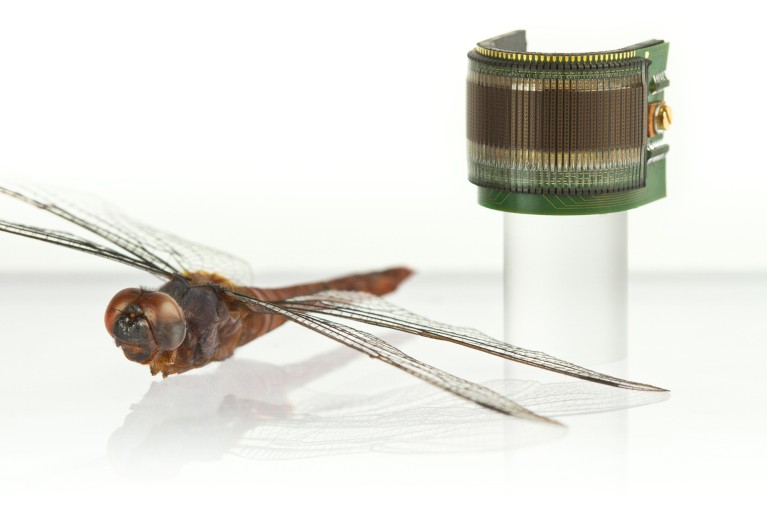
Professor Song Young-min is joining the Department of Electrical Engineering at Korea Advanced Institute of Science and Technology (KAIST) as a Professor, with his appointment beginning July 1, 2025. His research focuses on developing innovative bio-inspired optical systems for robotics, with particular expertise in biomimetic cameras and neuromorphic vision systems. Professor Song's research interests span flexible optoelectronic devices and nanophotonics, with specific applications in biomimetic cameras for intelligent robots , optoneuromorphic devices and systems , nanophotonics-based reflective displays , and infrared-controlled radiative cooling devices . His work bridges electrical engineering, materials science, and biological inspiration to create energy-efficient vision systems that reduce computational demands. His recent publications demonstrate significant advancements in bio-inspired vision technology, particularly in feline-inspired vertical pupil systems that improve object tracking stability and cuttlefish-inspired W-shaped pupil designs for uneven lighting conditions. These innovations show how hardware improvements can substantially reduce energy consumption in robotic vision systems. Professor Song has established significant research collaborations with institutions including MIT (working with Frédo Durand on the Artificial Compound Eyes with Artificial Intelligence project), EPFL, and Northwestern University. His work has been published in high-impact journals including Nature, Science Robotics, and Science Advances. His laboratory focuses on developing next-generation vision systems that integrate biological inspiration with cutting-edge optical engineering, with applications ranging from surveillance robots to autonomous vehicles. Current projects include improving wide-angle imaging capabilities and developing more efficient optic flow processing systems for drone navigation.
KAIST - Korea Advanced Institute of Science & TechnologySouth Korea
Kihong Heo is an Associate Professor at the School of Computing and Graduate School of Information Security, KAIST, Republic of Korea. He leads the Programming Systems Laboratory and has held academic positions since 2017, including Assistant Professor (2017-2020) and Associate Professor (2020-2024). His research focuses on developing program reasoning systems for safe and reliable software, with key contributions in AI-based program analysis, program simplification, and scalable synthesis systems. His educational background includes a Ph.D. and B.S. in Computer Science & Engineering from Seoul National University (2009 and 2005 respectively). He has served as a post-doctoral researcher at the University of Pennsylvania (2009-2017) before transitioning to KAIST. Research interests span AI-driven program analysis for deep semantic bug detection, program debloating systems for security optimization, and synthesis frameworks using probabilistic models. His work bridges undecidability in static analysis with external information integration. Recent publications analyze logic-based verification for mobile agents, compiler fuzzing , and data dependency guided fuzzing . Trends show a focus on security-critical systems, reinforcement learning for code reduction, and probabilistic models. Scientific awards include the ACM SIGSOFT Distinguished Paper Award (FSE 2025) , Amazon Research Award (2024) , and multiple KAIST teaching honors . He has also received ACM SIGPLAN Distinguished Paper (PLDI 2019) and Best Artifact Awards. He has mentored numerous Ph.D. and Master’s students and contributes to program committees for leading conferences like SOAP (PC Co-Chair) , ICSE , and SAS . His work is supported by grants and collaborations with institutions including Facebook and Seoul National University.
Professor Jang Yoon is a faculty member in the Department of Computer Engineering at Sejong University, South Korea. He currently holds the position of Daeyang Distinguished Professor and leads the Data Visualization Lab. His academic journey includes postdoctoral research at the Swiss National Supercomputing Center (2007-2009), ETH Zurich (2009-2011), and Purdue University (2011-2012). His educational background includes a Bachelor's degree from Seoul National University in Electrical Engineering (2000), and Master's and Doctoral degrees from Purdue University in Electrical and Computer Engineering (2002 and 2007). His academic progression at Sejong University shows his appointment as Assistant Professor (2012-2016), Associate Professor (2016-2022), and Professor (2022-present). Professor Jang's research spans multiple domains within data science and visualization, with primary focus on data visualization, visual analytics, and their applications in various domains. His work bridges theoretical computer science with practical applications in traffic analysis, healthcare, and smart city infrastructure. He has developed innovative techniques for spatiotemporal data visualization, volume rendering, and causal analysis in complex datasets. His recent publications (2023-2025) demonstrate a strong focus on integrating deep learning with visualization techniques, particularly in traffic analysis, volume rendering, and large language model interpretability. His work shows a clear trajectory toward combining causal inference with visual analytics, applying these methods to urban traffic systems, structural health monitoring, and public relations analysis. Professor Jang has served in numerous leadership roles in major visualization conferences including IEEE VIS, IEEE PacificVis (as General Chair in 2023), EuroVis, and HCI Korea conferences. His service contributions include program committee memberships and chair positions across multiple prestigious conferences in the visualization field. His laboratory work focuses on practical applications of visualization techniques with numerous patents registered in Korea. His research has resulted in multiple practical systems for traffic analysis, VR sickness detection, data quality improvement, and eye-tracking applications. The lab maintains strong industry connections through applied research projects addressing real-world problems.
Professor Shin Ji-seon is affiliated with Sejong University's Department of Information Security, conducting research in smartphone security, IoT authentication protocols, smart car security, and keystroke dynamics-based authentication. She earned her Ph.D. in Computer Science from the University of Maryland at College Park (2009) after completing her bachelor's degree in Computer Engineering at Seoul National University (2001). Her recent work includes federated intrusion detection frameworks (2025), SR-Tree optimization for nearest neighbor search (2025), and machine learning-based intrusion detection systems (2024). She explores blockchain applications in drone rental mechanisms (2023) and privacy-preserving ID registration systems (2021). Professor Shin leads the Information Security Lab, focusing on secure authentication UI development and IoT security challenges. Her patents include GPS location integrity verification methods (2024), smart city positioning systems (2022), and multi-factor authentication systems (2022).
Professor Kwon Oh-jin is affiliated with Sejong University , where he serves in the Department of Electronic Engineering . His academic career spans over three decades, including a PhD in Electrical and Computer Engineering from University of Maryland (1994) and MS in Signal/Image Processing from University of Southern California (1991). His research focuses on image/video analysis , compression algorithms , watermarking systems , and steganography . Recent work explores machine learning-driven compression , 360-degree imaging , and JPEG standards implementation . His 15 most recent articles address topics like cybersecurity using CNNs , dynamic gesture recognition , and novel multimedia platforms for emerging standards. Professor Kwon leads the Visual Communication Research Lab (Chung923), supervising numerous PhD and MS students working on point cloud coding , JPEG privacy , and AI-based image coding . He has received multiple government and industry grants from organizations including the Agency for Defense Development and Ministry of National Defense .
KAIST - Korea Advanced Institute of Science & TechnologySouth Korea
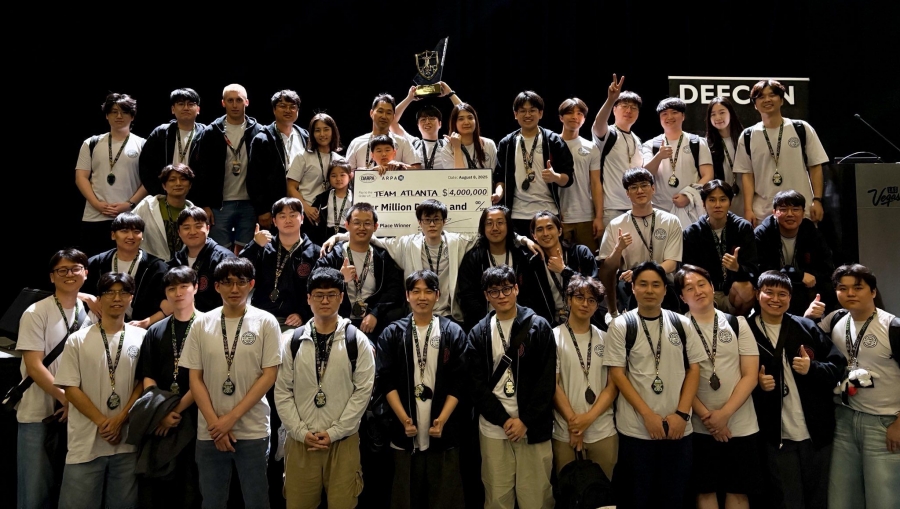
Professor Yoon In-soo is a faculty member in the Department of Electrical Engineering at Korea Advanced Institute of Science and Technology (KAIST), where he leads research at the intersection of artificial intelligence and cybersecurity. His research focuses on: Cybersecurity Artificial Intelligence AI Security Technology Cyber Defense Systems Software Vulnerability Analysis Autonomous Security Solutions Professor Yoon's work centers on developing AI-powered Cyber Reasoning Systems capable of automatically analyzing, detecting, and remediating software vulnerabilities without human intervention. His research bridges cutting-edge AI techniques with practical cybersecurity applications to protect critical infrastructure. Professor Yoon recently led Team Atlanta to victory in the DARPA AI Cyber Challenge (AIxCC) at DEF CON 33, demonstrating exceptional capabilities in autonomous cyber defense technology. Notable achievements: DARPA AI Cyber Challenge Winner (2025) - Led a research team that won the $4 million prize at DEF CON 33 for developing an AI-based Cyber Reasoning System that successfully detected and patched software vulnerabilities Professor Yoon actively collaborates with researchers from Samsung Research, POSTECH, and Georgia Institute of Technology. His team's CRS technology successfully detected 77% of injected vulnerabilities and patched 61% of them in real time during the competition, while also uncovering 18 previously unknown vulnerabilities in real-world software. This work has significant implications for strengthening security of critical infrastructure including hospitals, water supply, and electricity systems globally.
Professor Shin Dong-gyu is a faculty member in the Department of Computer Engineering at Sejong University, where he leads research in cybersecurity, cyber warfare, and machine learning applications. He is affiliated with both the Cyber Warfare Research Institute and the Smart Convergence Technology Research Institute, directing the Multimedia & Internet Lab which has produced over 100 graduates since its founding in 1998. His students have gone on to work at government research institutes, corporate research centers, and mid-sized technology companies. Professor Shin's research focuses on cybersecurity with particular emphasis on cyber resilience, intrusion detection systems, malware analysis, cyber range development, and the application of machine learning to security challenges. His work bridges theoretical security frameworks with practical defense mechanisms, often incorporating military and national security applications. The research spans both defensive cybersecurity measures and offensive cyber operations analysis. His recent publications (2023-2025) demonstrate a consistent research trajectory in cyber resilience metrics, data sanitization against poisoning attacks, DNS security, layered defense approaches for critical infrastructure, and the integration of Zero Trust architecture with threat modeling frameworks like MITRE ATT&CK. His work shows increasing sophistication in applying deep learning techniques to security problems while maintaining focus on practical, implementable security solutions. Professor Shin actively mentors graduate students through doctoral dissertation research, master's thesis research, and specialized courses including Algorithms and Practice, Computer Vision and Deep Learning for Drones, and Special Topics in Smart Computing Technology. His teaching schedule indicates regular engagement with both master's and doctoral students.
Dr. Park Ki-ho is an Associate Professor at the Department of Computer Engineering, Sejong University. His research focuses on computer architecture, embedded systems, IoT systems, and low-power design methodologies. Academic Background: PhD in Computer Science from Yonsei University Professional Experience: Senior Engineer at Samsung Electronics, Post-Doctoral Research Associate at University of Utah Research Interests: Develops innovative solutions for sensor hub design , memory systems , and machine learning hardware acceleration . Key areas include: Non-Volatile Memory (NVM) management 3D Integrated Circuit memory bandwidth optimization Intelligent Edge Device architectures Hybrid Cache Architectures Model Compression Techniques On-Device AI Processing Recent Publications demonstrate expertise in in-memory acceleration , sparse matrix representation , and large language model inference . His work bridges theoretical advancements with practical implementations for IoT and AI applications.
KAIST - Korea Advanced Institute of Science & TechnologySouth Korea
Professor Lee Seong-ju serves in the Department of Electrical and Electronic Engineering at Korea Advanced Institute of Science and Technology (KAIST), where he leads innovative research at the intersection of artificial intelligence and creative processes. His work focuses on developing human-centered AI systems that augment rather than replace human creativity, particularly in musical composition. His research interests span human-AI collaboration frameworks , multimodal input processing for creative applications , and designing AI systems that respect creative workflows . Professor Lee specifically investigates how large language models can be integrated with music data-trained AI to create tools that respond to textual, visual, and audio inspirations while maintaining the creator's initiative in the artistic process. His recent publication on Amuse demonstrates a clear trend toward creator-centered AI design that addresses copyright concerns in generative systems. Rather than producing final content, his approach generates harmonic structures that serve as starting points for human refinement, representing a significant shift from conventional generative AI paradigms. Best Paper Award at ACM CHI Conference (top 1% recognition) Funded by National Research Foundation of Korea (NRF) grant RS-2024-00337007 Professor Lee actively advises doctoral candidates including Yewon Kim and maintains international collaborations with institutions like Carnegie Mellon University. His laboratory focuses on developing practical AI tools for creative professionals, with emphasis on systems that enhance rather than automate the creative process. The Amuse project exemplifies his commitment to building AI that serves as a collaborative partner in artistic creation.
KAIST - Korea Advanced Institute of Science & TechnologySouth Korea
Dr. Jaehong Kim has been appointed as an Assistant Professor in the Department of Artificial Intelligence Engineering at the College of Software Convergence, Inha University, effective September 1, 2025. He is currently transitioning from a postdoctoral position at Carnegie Mellon University's Department of Computer Science. His educational background includes: Ph.D. from KAIST (August 2024) Dr. Kim's research focuses on Artificial Intelligence applications in video streaming, immersive media, and network systems. His work includes neural network-based video quality enhancement, 3D live streaming, 5G network optimization, and 3D Gaussian Splatting compression. He has made significant contributions to AI-driven media delivery systems, with particular emphasis on real-time transmission protocols and neural rendering techniques for immersive experiences. His notable scientific awards include: Gold Prize (1st place in Communications and Networks) at 2022 Samsung HumanTech Paper Awards KAIST Breakthrough of the Year in 2021 Dr. Kim's research has been supported by the National Research Foundation of Korea's Overseas Outstanding Young Researcher Program during his postdoctoral fellowship at CMU. His work has been presented at premier conferences including SIGCOMM, CoNEXT (Best Paper Finalist), OSDI, and EuroSys, establishing him as a rising expert in AI-enhanced networked media systems.
KAIST - Korea Advanced Institute of Science & TechnologySouth Korea
Dr. Lee Sang-min has been appointed as an Assistant Professor in the Department of Computer Science at Korea University, effective September 2025. Prior to this appointment, he completed his Ph.D. in Electrical Engineering from KAIST in 2023 and conducted postdoctoral research at the University of Illinois at Urbana-Champaign and Georgia Institute of Technology. Education: Ph.D. in Electrical Engineering, KAIST (2023) Dr. Lee's research focuses on multimodal learning and its application to social interactions, particularly in the emerging field of Social AI. His work leverages multimodal technologies to understand and predict human social behavior, with a strong emphasis on computer vision as evidenced by publications in top-tier conferences such as CVPR. His research demonstrates global technological competitiveness in integrating vision systems with social interaction modeling.