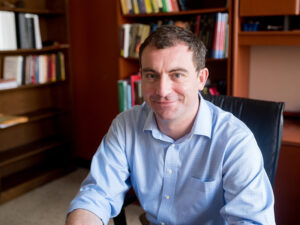
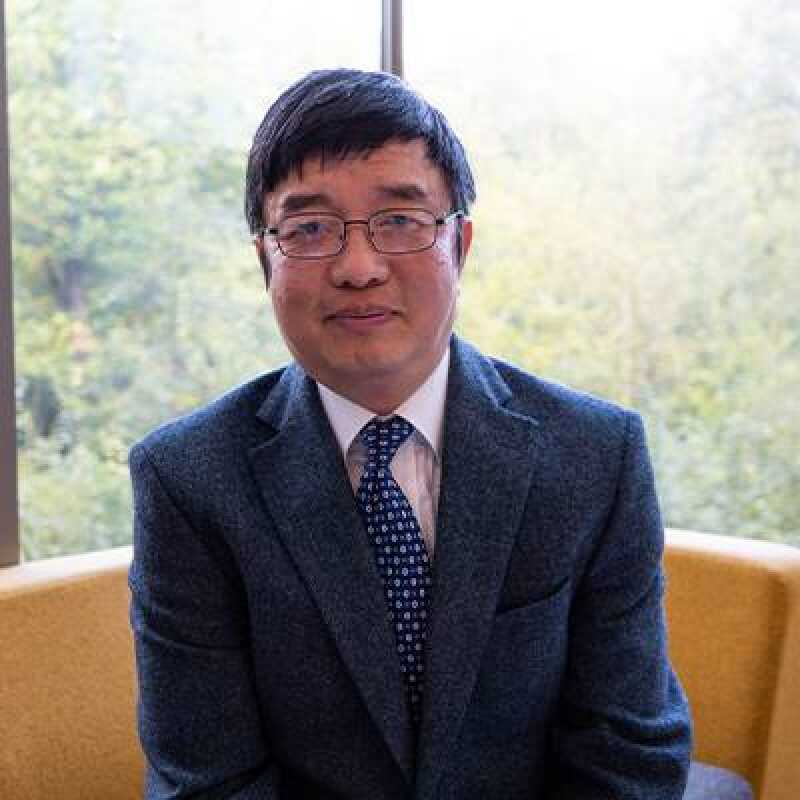
Ram Rajagopal is an Associate Professor of Civil and Environmental Engineering and Electrical Engineering at Stanford University, and a Senior Fellow at the Precourt Institute for Energy. He leads the Stanford Sustainable Systems Lab (S3L), focusing on large-scale monitoring, data analytics, and stochastic control for infrastructure networks, particularly power systems. His research emphasizes renewable energy integration, smart distribution systems, and demand-side data analytics. Education: PhD in Electrical Engineering and Computer Sciences & MA in Statistics (UC Berkeley), MS in Electrical and Computer Engineering (UT Austin), and BEng in Electrical Engineering (Federal University of Rio de Janeiro). Research interests include power grid optimization, renewable energy systems, and data-driven approaches to infrastructure challenges. He has pioneered work in grid flexibility, distributed energy resources, and machine learning applications for energy systems. His lab develops technologies like Smart Dim Fuses and the EV-EcoSim platform for EV charging infrastructure optimization. Received NSF CAREER Award, Powell Foundation Fellowship, and Berkeley Regents Fellowship Over 30 patents and best paper awards Advises/founded companies in sensor networks, power systems, and data analytics Labs/Teams: Stanford Sustainable Systems Lab (S3L), Powernet Project. His work spans grid resilience, energy equity, and scalable energy solutions.
Dr. K. Max Zhang is a Professor in the Sibley School of Mechanical and Aerospace Engineering at Cornell University. He is the director of the Energy and the Environment Research Laboratory (EERL) and a fellow at the Atkinson Center for a Sustainable Future. His research is deeply interdisciplinary, focusing on sustainable energy systems, air quality, and environmental justice, with significant impacts on policy and community development in New York and beyond. Ph.D., Mechanical Engineering, University of California-Davis, 2004 B.S., Thermal Engineering, Tianjin University, 1998 B.A., English Language, Tianjin University, 1998 Dr. Zhang’s research centers on the integration of energy and environmental systems. He investigates air pollution dynamics using advanced numerical models like CTAG, with applications in near-source pollution, indoor air quality, and environmental justice. His work on renewable energy systems includes designing sustainable solar farms and managing distributed energy resources such as heat pumps to enhance grid flexibility. He also leads a pioneering initiative to create the first statewide public IoT network in the U.S., enabling hyperlocal weather forecasting and microclimate monitoring. His recent publications reflect a strong trend toward agrivoltaics, peer-to-peer energy markets, and IoT-based environmental monitoring. These works demonstrate a consistent focus on data-driven modeling, community-scale energy solutions, and the integration of social considerations into technical systems. The keywords across his articles highlight expertise in sustainability, machine learning, air quality, and energy transition. Cornell Town-Gown Achievement Award (2022) Engaged Scholar Prize, Cornell University (2017) People's Choice Sign of Sustainability Award, Sustainable Tompkins (2016) Scientific and Technological Achievement Award, Environmental Protection Agency (2015) Fellow of the American Society of Mechanical Engineers Dr. Zhang is actively involved in mentoring students and securing research grants from agencies such as the National Science Foundation (NSF) and the New York State Energy Research and Development Authority (NYSERDA). His projects often involve interdisciplinary collaboration across eight Cornell colleges and 16 academic departments. He has led initiatives such as the Cornell Atkinson Academic Venture Fund projects and the development of a county-level energy roadmap for Tompkins County. He also teaches courses in engineering thermodynamics, future energy systems, and air quality, emphasizing experiential and community-based learning. Dr. Zhang leads the Energy and the Environment Research Laboratory (EERL) and collaborates with the Atkinson Center for a Sustainable Future. His lab functions as a hub for innovation in sustainable communities, combining advanced modeling with real-world applications. Through partnerships with community organizations, government agencies, and industry, his team develops science-driven solutions to urban and rural sustainability challenges.
Daniel E. Ho holds multiple prestigious positions at Stanford University: William Benjamin Scott and Luna M. Scott Professor of Law Professor of Political Science Professor of Computer Science (by courtesy) Senior Fellow, Stanford Institute for Economic Policy Research Senior Fellow, Stanford Institute for Human-Centered Artificial Intelligence Faculty Fellow, Center for Advanced Study in the Behavioral Sciences He serves on the National Artificial Intelligence Advisory Commission (NAIAC), as Senior Advisor on Responsible AI at the U.S. Department of Labor, and as a Public Member of the Administrative Conference of the United States (ACUS). Ho earned his J.D. from Yale Law School and Ph.D. from Harvard University, completing a clerkship with Judge Stephen F. Williams on the U.S. Court of Appeals for the District of Columbia Circuit. His research bridges artificial intelligence, law, and public policy with emphasis on: Regulatory governance frameworks for AI systems Fairness and bias mitigation in algorithmic decision-making Environmental enforcement using satellite imagery and computer vision Methods for estimating racial disparities without direct demographic data Legal AI reliability and statutory research systems Analysis of his 2025 publications reveals a consistent focus on practical AI governance tools addressing real-world regulatory challenges. Key themes include developing benchmarks for legal applications, mitigating hallucination in legal AI tools, and creating systems for statutory research. His work demonstrates strong integration of technical AI methods with policy implementation, particularly in environmental enforcement and fairness assessment. As Director of the Regulation, Evaluation, and Governance Lab (RegLab), Ho leads interdisciplinary research partnerships with government agencies. While specific grant details aren't provided, RegLab's operational model indicates substantial research funding for policy-relevant AI projects. No student advisees are mentioned in available materials. Ho's leadership extends to national advisory roles where he shapes federal AI policy through evidence-based recommendations, particularly regarding environmental protection and civil rights enforcement mechanisms.
Michael Baldea is an Associate Professor in the Department of Chemical Engineering at the University of Texas at Austin . He holds a Ph.D. in Chemical Engineering from the University of Minnesota (2006), with prior degrees from 'Babeş-Bolyai' University in Romania (M.Sc. 2001, Diploma 2000). His research group develops theoretical and computational methods for Process and Energy Systems Engineering , focusing on integrated decision-making, performance optimization, and process intensification with industrial validation. Education: Ph.D., Chemical Engineering, University of Minnesota (2006) M.Sc., Interface Process Engineering, 'Babeş-Bolyai' University (2001) Diploma, Chemical Engineering, 'Babeş-Bolyai' University (2000) Research Thrusts: Integrated decision-making in chemical/energy supply chains Process performance monitoring and optimization Process integration and intensification Key applications include grid-responsive chemical plants, intensified distillation/column designs, and renewable energy integration for building systems. Scientific Awards: Frank A. Liddell, Jr. Fellowship NSF CAREER Award (2015-2020) Moncrief Grand Challenges Faculty Award (2014) AIChE Outstanding Young Researcher Award (2017) Implementation : His group has translated research into commercial tools through partnerships with industrial test beds and is working to integrate methods into commercial simulators. They explore predictive approaches for building energy management and strategic capital investment analysis in next-generation energy systems.
Frede Blaabjerg is a Professor at Aalborg University (AAU Energy) , affiliated with the Faculty of Engineering and Science . Since 1998, he has pioneered power electronics research in applications such as wind turbines , photovoltaic (PV) systems , reliability engineering , and Power-2-X technologies. Education : PhD in Electrical Engineering (1995, Aalborg University) Honorary Degrees : Honoris Causa at University Politehnica Timisoara (2017) and Tallinn Technical University (2018) His research focuses on power electronics control , system optimization , and reliability for renewable energy and electric mobility . Recent work includes grid-forming converters , virtual synchronous generators , and smart EV charging systems. Key publication trends span 15+ years , with over 3,733 peer-reviewed articles and 900+ journal papers in power electronics , renewables , and energy storage . Notable book series: Control of Power Electronic Converters and Systems (4 volumes, Elsevier). Scientific Awards : 46 IEEE Prize Paper Awards 2020 IEEE Edison Medal 2019 Global Energy Prize 2014 IEEE William E. Newell Power Electronics Award Leadership Roles : Editor-in-Chief, IEEE Transactions on Power Electronics (2006–2012) Chairman, Danish Council for Research and Innovation Policy (2020–) President, IEEE Power Electronics Society (2019–2020)
Magdy M. A. Salama is a Professor and University Research Chair at the University of Waterloo's Department of Electrical and Computer Engineering, Faculty of Engineering. He holds a P.Eng. license and is a Fellow of the IEEE. His research spans Energy Systems (Power Quality, Smart Grids, Renewable Energy) and Biomedical Engineering (Medical Imaging, Sleep Analysis). He has authored/co-authored over 460 publications and supervised numerous graduate students. Education: PhD (University of Waterloo), M.Sc. and B.Sc. (Cairo University). Awards include the IEEE Fellow distinction, University Research Chair, and multiple teaching/research awards from the University of Waterloo. Research trends in his articles focus on Smart Grid resiliency, renewable integration, cyber-physical security, and biomedical applications of AI. Notable projects include voltage sag mitigation, EV fleet electrification, and blockchain-based energy trading platforms. Scientific Awards: IEEE Fellow, University Research Chair, Teaching Excellence Award (2000) Grants/Consultation: Extensive industry and institutional collaborations on power systems and biomedical tech. Labs/Teams: Active in High Voltage Lab, Smart Grids Research Group, and Medical Image Processing Lab.
Vijay Laxmi is a Professor in the Department of Computer Science and Engineering at Malaviya National Institute of Technology (MNIT) Jaipur, India. With over a decade of active research publication from 2014-2024, Dr. Laxmi has established themselves as a prominent researcher in network security, Android security systems, and Network-on-Chip architectures. Their work demonstrates consistent collaboration with Manoj Singh Gaur and numerous doctoral students at MNIT Jaipur. Dr. Laxmi's research interests span Network Security, Android Security, Malware Analysis, Network-on-Chip Architectures, Routing Protocols, Side-Channel Attacks, Wireless Networks, and Mobile Security. Their work bridges theoretical security frameworks with practical implementations, particularly in mobile and embedded systems. Recent publications indicate a growing focus on AI-based security approaches including GAN applications for fuzzing and deep learning for image dehazing. The research trajectory shows increasing sophistication in security analysis techniques, evolving from basic malware detection to advanced side-channel attack analysis and sophisticated network security protocols. Recent publications demonstrate expertise in both theoretical frameworks and practical implementations with applications in real-world security challenges. Dr. Laxmi has mentored numerous graduate students including Vineeta Jain, Anugrah Jain, Sonal Yadav, Mohit Singh, and Gaurav Singal, who appear as co-authors across multiple publications. Their collaborative network extends to researchers at international institutions, indicating strong academic connections beyond their home institution.
Anil Madhavapeddy serves as Professor of Planetary Computing at the University of Cambridge's Department of Computer Science and Technology and directs the Cambridge Centre for Carbon Credits (4C). A Fellow of Pembroke College, he integrates systems research with environmental conservation through the Computer Laboratory's Environment and Energy Group. His career spans industry leadership (NetApp, Citrix, Intel), academic appointments (Cambridge, Imperial, UCLA), and entrepreneurial ventures (XenSource, Unikernel Systems, Docker). Madhavapeddy earned his PhD at Cambridge's Computer Laboratory in 2006. His research bridges computational systems and planetary-scale environmental challenges, with deep expertise in open-source development (OCaml, Xen, Docker, OpenBSD) and technology strategy advising for organizations including Zededa, Tezos Foundation, and Tarides. His work centers on environmental computing and climate informatics, leveraging distributed systems and functional programming to develop sensing infrastructure for conservation. Recent projects focus on carbon credit systems, AI-driven biodiversity monitoring, and sustainable computing architectures that minimize ecological footprints while maximizing analytical capability. Analysis of his 2025 publications reveals a concentrated effort on AI-integrated conservation tools, privacy-preserving carbon accounting, and energy-efficient computing. Key themes include spatial networking for ecological data, LLM-enhanced evidence retrieval in conservation science, and novel metrics for extinction risk assessment—demonstrating computational innovation applied to urgent planetary boundaries. No scientific awards were documented in the source material. Madhavapeddy advises multiple technology firms on strategic development while leading the Cambridge Centre for Carbon Credits, though specific grant funding details remain unreported. He actively contributes to the Environment and Energy Group at Cambridge's Computer Laboratory and directs the interdisciplinary Cambridge Centre for Carbon Credits (4C). His open-source leadership spans critical infrastructure projects including OCaml, Xen, and Docker, fostering collaborative development communities that underpin modern cloud and container technologies.
Anamitra Pal is an Associate Professor at Arizona State University's School of Electrical, Computer and Energy Engineering. His work focuses on power system resilience, renewable energy integration, and time-synchronized measurement analytics. He leads research initiatives combining artificial intelligence with grid modernization challenges. Ph.D. Electrical Engineering, Virginia Tech (2014) M.S. Electrical Engineering, Virginia Tech (2012) B.E. Electrical and Electronics Engineering, Birla Institute of Technology (2008) Prior to ASU, Pal conducted postdoctoral research at Virginia Tech's Network Dynamics and Simulation Science Laboratory (2014-2016). His research interests center on enhancing grid stability through: Advanced synchrophasor data analytics AI-driven power system security frameworks Renewable generation integration strategies Critical infrastructure protection during extreme events Recent publications demonstrate his focus on grid resilience during wildfires, deep learning-based state estimation, and innovative PMU applications. Pal has received multiple accolades including the NSF CAREER Award (2022) and IEEE Phoenix Section's Outstanding Young Professional Award (2019).
Professor Shaomin Wu is a faculty member at the University of Kent's Kent Business School, where he holds the academic rank of Professor of Business/Applied Statistics. He earned an MSc and PhD in applied statistics and has extensive industry experience, including a five-and-a-half-year stint at a global manufacturer in Shanghai before moving to the UK in 2001. He has held roles as a postdoctoral researcher and lecturer before joining Cranfield University and later the University of Kent. His research focuses on recurrent event data analysis, machine learning, and reliability mathematics, with funding from the EPSRC and ESRC. His research projects include managing risk in warranty servicing policies, smart data analytics for local government, and sustainable supply chain demand forecasting. He teaches modules such as risk analysis, reliability engineering, and machine learning. Currently supervising PhD students in time series forecasting, explainable AI, and recurrent event data analysis, he also serves as a co-chair of international conferences, editorial board member, and external examiner for doctoral degrees. Notably, he ranks among the top 2% of global scientists by Stanford University. His work integrates machine learning with business analytics, resilience engineering, and environmental sustainability. Key contributions include IoT-driven resilience methodologies for smart grids and unmanned systems, as well as frameworks for corporate carbon disclosure and maintenance optimization under uncertainty.
Xuemin (Sherman) Shen is a University Professor in the Department of Electrical and Computer Engineering at the University of Waterloo. He is a Fellow of the Institute of Electrical and Electronics Engineers (IEEE), the Royal Society of Canada, the Canadian Academy of Engineering, and the Engineering Institute of Canada. Professor Shen serves as Editor-in-Chief of multiple prestigious journals including the IEEE Internet of Things Journal and Springer Peer-to-Peer Networking and Applications. Dr. Shen received his Doctorate in Electrical Engineering from Rutgers University in 1990, following a Master of Applied Science from the same institution in 1987. His undergraduate degree is a Bachelor of Applied Science in Electrical Engineering from Dalian Marine University, China (1982). Professor Shen's research spans wireless communications and networking, with particular expertise in resource allocation, mobility management, wireless network security, and privacy preservation. His work extends to IoT applications, connected and automated vehicles, network digital twins, and satellite-terrestrial networks. His research has been applied to vehicular networks, wireless body area networks, remote e-healthcare systems, and smart grid technologies, demonstrating both theoretical depth and practical impact across multiple domains. His recent publications reveal strong trends in AI-assisted networking, security and privacy preservation for IoT applications, and energy management in vehicular and smart grid systems. The research shows an increasing focus on integrating AI techniques with traditional networking approaches, addressing critical challenges in security, privacy, and resource management for next-generation wireless systems. R.A. Fessenden Award (2019) from IEEE Canada James Evans Avant Garde Award (2018) from the IEEE Vehicular Technology Society Joseph LoCicero Award (2015) from the IEEE Communications Society Education Award (2017) from the IEEE Communications Society West Lake Friendship Award from Zhejiang Province (2023) President's Excellence in Research from University of Waterloo (2022) Canadian Award for Telecommunications Research (2021) Professor Shen has mentored over 100 graduate students and postdoctoral fellows throughout his career, with many now holding prominent academic positions at top universities worldwide. His supervision has been recognized with multiple awards including the Award of Excellence in Graduate Supervision (2006) from the University of Waterloo. He has served in numerous leadership roles including Past President of the IEEE Communications Society and has chaired major international conferences including IEEE Globecom 2024.
Sri Kolla, Ph.D. is a tenured Professor in the Department of Electronics and Computer Engineering Technology at Bowling Green State University (BGSU) , where he has served since August 2002. He also served as a Visiting Professor at the Indian Institute of Science (2017) and as a Fulbright Research Scholar (2008-2009). His academic career spans faculty roles at Penn State University, University of Toledo, and consortium graduate faculty at Indiana State University. Education: Ph.D. in Electrical Engineering and Computer Science (University of Toledo, 1989) M.S. in Electrical and Computer Engineering (University of Saskatchewan, 1986) M.E. in Electrical Engineering (Indian Institute of Science, 1983) B.E. in Electrical Engineering (Andhra University, 1981) Research Interests: Dr. Kolla specializes in Electrical Power and Energy Systems with Smart Grid applications, Control Systems for networked environments, and Machine Learning techniques for power system diagnostics. His work focuses on fault detection in microgrids using LSTM networks, stability robustness of discrete-time systems, and multi-agent protection schemes for power infrastructure. Scientific Contributions: Developed robust control frameworks for microgrid systems under parameter variations (2023-2025) Pioneered AI-based fault identification in induction motors and transformers (1995-2000) Advanced networked control system designs addressing time delays (2002-2012) Published 82+ technical articles in IEEE, ISA Transactions, and conference proceedings Honors and Recognition: Recipient of the Fulbright-Nehru Academic and Professional Excellence Award and Whiteford Scholarship . Senior member of IEEE and ISA , with listings in Marquis Who’s Who and fellowships in The Institute of Engineers (India) .
Veysel Murat İstemihan Genç is a Professor in the Department of Electrical Engineering at Istanbul Technical University (ITU), College of Engineering. His research is centered on modern power systems, with a focus on transient stability, cybersecurity, and integration of renewable energy sources. He actively leads multiple research projects and supervises graduate students in advanced power system technologies. Research Interests: His work spans key areas including transient stability assessment, machine learning applications in power systems, cyber-attack detection in AGC systems, and dynamic security evaluation under high renewable penetration. He employs cutting-edge techniques such as ensemble learning, deep neural networks, and hybrid optimization algorithms. Publication Trends: Recent publications (2023–2025) highlight a strong trend toward integrating AI and machine learning for real-time transient stability prediction, cybersecurity in distributed energy systems, and performance optimization of solar and wind-integrated grids. His work frequently addresses challenges in low-inertia systems and false data injection attacks. Scientific Projects: Strengthened Machine Learning-Based Dynamic Security Evaluation for Transient Stability under False Data Injection Attacks (BAP, 2025) Analysis and Control Methods for Stability of Large-Scale Low-Inertia Power Systems (BAP, 2023–2024) Dynamics Security Evaluation of Renewable-Rich and Cyber-Attacked Power Systems (BAP, 2022–2024) Risk-Based Stability Assessment and Corrective Control Methods in Power Systems (BAP, 2019–2022) Wide-Area Monitoring Protection and Control System Design Using Advanced Signal Processing and Machine Learning (TÜBİTAK, 2018–2020) Advising and Grants: He is the principal investigator (PI) on multiple funded research projects from BAP and TÜBİTAK, indicating strong grant acquisition and leadership. His supervision of 27 ongoing theses reflects an active role in mentoring graduate students in electrical engineering and power systems. Labs and Teams: While specific lab names are not mentioned, his projects suggest leadership in a research group focused on smart grid technologies, AI-enabled power system security, and renewable integration at Istanbul Technical University.
Antonello Monti is a Professor and Director of the Institute for Automation of Complex Power Systems at RWTH Aachen University. His research focuses on modern power systems, including smart grid technologies, hybrid AC-DC grids, and quantum computing applications in energy systems. Recent publications demonstrate innovations in grid resilience, EV charging optimization, quantum-assisted power system planning, and advanced simulation techniques. His team develops open-source tools like JuliaGrid for power system analysis and validates concepts through real-time testing platforms. Research addresses energy transition challenges including renewable integration, grid modernization, cyber-physical security, and next-generation optimization methods combining quantum computing with traditional power engineering approaches.
Eleonora Vacca is a PhD student and Research Fellow in the Department of Automatic Control and Computer Science (DAUIN) at the Polytechnic University of Turin. She holds a B.S. in Electronic Engineering from the University of Palermo (2018) and an M.S. in Electronic Engineering-Embedded Systems from Politecnico di Torino (2021). Her research focuses on digital hardware design, reliability engineering, reconfigurable devices, and AI applications in aerospace and safety-critical systems. She is a member of the Aerospace and Safety Computing Lab and the CAD - Electronic CAD & Reliability Group (DAUIN). Her work addresses challenges such as radiation effects mitigation in space missions, fault-tolerant AI accelerators, and real-time anomaly detection in satellite telemetry. She has contributed to projects like the RAMSES CubeSat-1 Development (2025-2026), funded by commercial contracts. In 2024, she won the Best Student Paper Award at the NEWCAS Conference for her research on radiation effects in space missions. Vacca collaborates on teaching, including assisting in the course 'Electronic Calculators' for Computer Engineering students. Her recent publications explore AI resilience in RISC-V ecosystems, radiation environment analysis for space missions, and gesture recognition systems for smart cities. She actively contributes to conferences such as the ACM International Conference on Computing Frontiers and the IEEE International Smart Cities Conference.