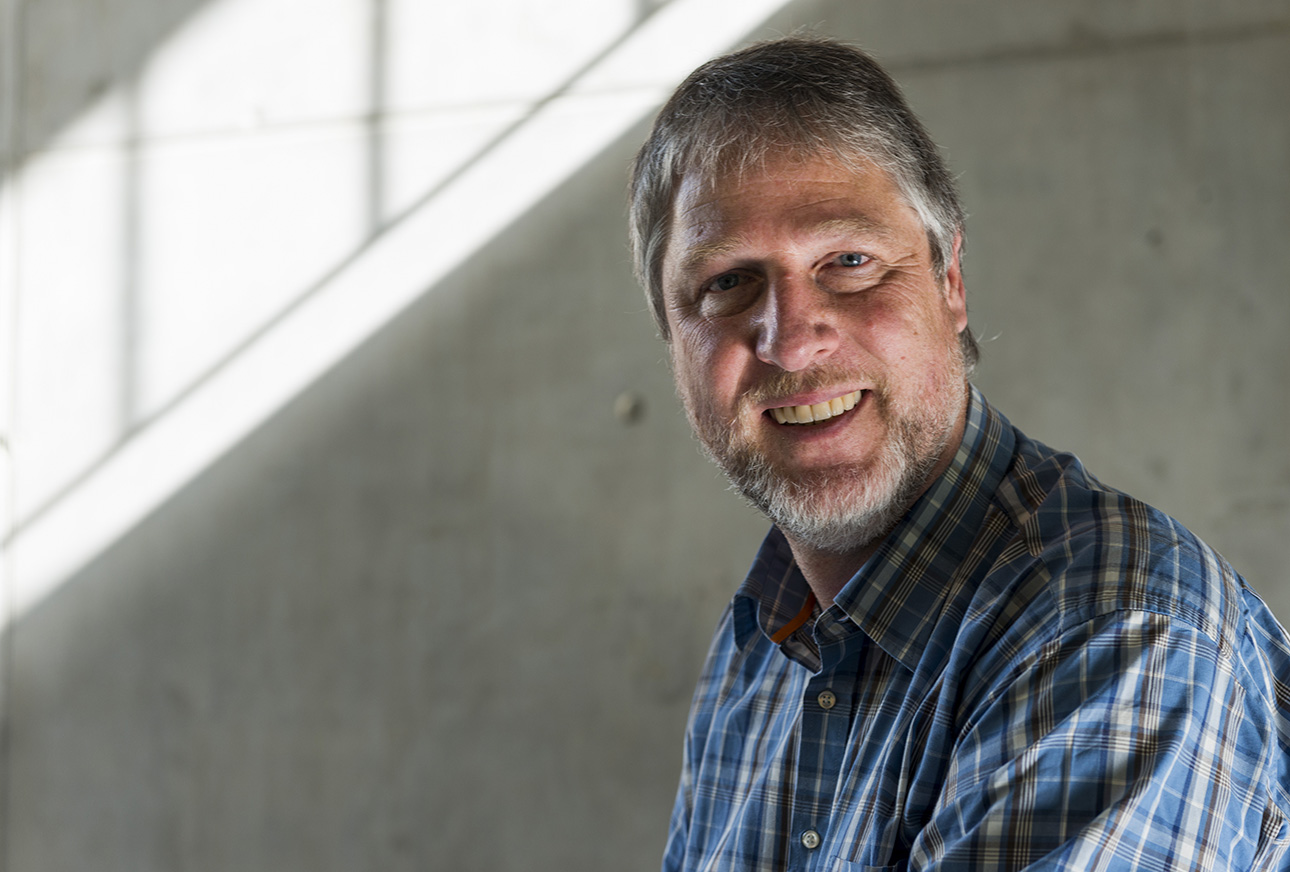
Professor Bernd Möbius is a leading academic in Phonetics and Phonology at the Department of Language Science and Technology, Saarland University. His research bridges phonetic theory with speech technology applications, focusing on text-to-speech systems, prosody modeling, and computational simulations of speech processes. Current research projects: DFG SFB 1102, C1: Information density and phonetic structure predictability DFG SFB 1102, C4: Slavic intercomprehension and surprisal theory (INCOMSLAV) Research Themes: Key areas include text-to-speech synthesis, speech prosody analysis, experimental methods in speech production/perception, information density in phonetics, and cross-linguistic studies of Slavic-Germanic languages. Scientific Contributions: Recent work explores Parkinson-induced dysarthria detection, breath noise acoustics, surprisal-driven speech behaviors, multilingual BERT models for idiomaticity, and perceptual consequences of acoustic adjustments.
Prof. Marianne Pouplier is a Professor at the Institute of Phonetics and Speech Processing (IPS) at Ludwig Maximilian University of Munich. Her research focuses on speech production mechanisms, particularly coarticulation, phonetic universals, and language-specific variations. She investigates articulatory timing, speech errors, and cross-linguistic differences in consonant clusters using advanced methodologies like real-time MRI and electromagnetic articulography. Her work bridges theoretical models (e.g., Articulatory Phonology) with empirical data, emphasizing the interplay between phonological representation and motor execution. Key contributions include studies on nasal coarticulation, larynx dynamics, and the role of articulatory effort in speech production. Selected publications highlight her expertise in analyzing speech motor control through interdisciplinary approaches. She collaborates internationally, contributing to projects like the Bavarian Archive for Speech Signals (BAS). No awards or grants are explicitly listed, but her extensive publication record underscores her scholarly impact.
Max Planck Institute of Colloids and InterfacesGermany
Shrikanth (Shri) Narayanan is University Professor and Niki & C. L. Max Nikias Chair in Engineering at the University of Southern California (USC), with appointments spanning Electrical & Computer Engineering, Computer Science, Linguistics, Psychology, Neuroscience, Pediatrics, and Otolaryngology-Head & Neck Surgery. He serves as Research Director of the Information Sciences Institute and Director of the Ming Hsieh Institute. PhD in Electrical Engineering (UCLA, 1995) Engineer and MS in Electrical Engineering (UCLA, 1992 and 1990) BE in Electrical Engineering (Anna University, India, 1988) His interdisciplinary research focuses on human-centered signal processing and machine intelligence , addressing societal challenges in health, education, defense, and media arts. Key areas include: Behavioral signal processing Affective computing Multimodal signal processing Computational speech science Biomedical applications Scientific Awards : IEEE James L. Flanagan Speech and Audio Processing Award (2025) Edward J. McCluskey Technical Achievement Award (2024) ISCA Medal for Scientific Achievement (2023) Claude Shannon-Harry Nyquist Technical Achievement Award (2023) ACM ICMI Sustained Accomplishment Award (2020) USC Distinguished Faculty Service Award With over 1,000 publications and 19 patents , his work has been commercialized through startups like Behavioral Signals Technologies and Lyssn . He leads transformative university initiatives and has served in editorial roles for top journals including Computer Speech and Language and IEEE Transactions on Affective Computing .
Felicitas Kleber is Professor of Speech Science in the Department of Language Science and Technology at Saarland University (Universität des Saarlandes). Her research profile demonstrates extensive expertise in experimental phonetics and laboratory phonology with a particular focus on German dialects and sound change phenomena. She maintains active research collaborations, most notably with J. Harrington and Ulrich Reubold, resulting in numerous high-impact publications in leading linguistics and phonetics journals. Her research interests span experimental phonetics and laboratory phonology with specific expertise in speech production and perception , sound change processes, German dialectology , phonological acquisition , and prosody and intonation analysis. Her work frequently examines the acoustic, perceptual, and articulatory dimensions of speech, particularly focusing on vowel and consonant quantity phenomena in German varieties. Analysis of her publication record reveals consistent methodological rigor with emphasis on acoustic analysis, perception experiments, and longitudinal studies. Her research often investigates sound changes in progress, particularly examining vowel fronting phenomena in both German and English varieties, and the relationship between speech production and perception mechanisms. Much of her work employs apparent-time analyses to track diachronic changes through synchronic variation across age groups. Professor Kleber serves as an Associate editor for the Journal of the Acoustical Society of America, reflecting her standing in the field. She has secured significant research funding including the DFG-funded project "Typology of vowel and consonant quantity in South German varieties: acoustic, auditory, and articulatory analyses of adult and child speakers" (2016-2024) and the DAAD-supported "Form and function of prosodic structure in Hungarian and German" (2015-2016). Her research methodology typically combines acoustic analysis with perception experiments and sometimes articulatory measurements to provide comprehensive insights into phonetic phenomena.
Dr. Jacek Kudera is a post-doctoral researcher in the Department of Phonetics at the University of Trier, coordinator of the LODinG project at the Trier Center for Digital Humanities, and adjunct faculty at WSB Merito University in Wrocław. His work bridges phonetics, Slavic linguistics, digital humanities, and forensic speech science. Education 2022 – PhD, Department of Language Science and Technology, Saarland University, Germany 2019 – MA (Linguistics), Department of Linguistics, Cognitive Science and Semiotics, Aarhus University, Denmark 2015 – Magister (Slavic Philology), Institute of Slavic Studies, University of Wrocław, Poland Research Interests His research focuses on phonetic and prosodic aspects of Slavic languages , cross-linguistic speech perception , forensic automatic speaker recognition , and human-robot interaction . He employs experimental methods such as eye-tracking, articulatory measurements (EMA), and large-scale digital corpora to investigate how speakers of closely related languages understand one another and how machines can replicate or support this process. Publication Trends Across more than 25 peer-reviewed articles (2014-2025), Kudera has consistently explored Slavic intercomprehension , speech technology evaluation , and digital humanities infrastructure . Recent work (2024-2025) targets voice cloning security , linked open data for linguistics , and mismatch conditions in forensic speaker recognition . Scientific Awards & Fellowships Visegrad Fellowship, University of Presov (2025) Erasmus+ Fellowships (Ostrava 2025, Zagreb 2014, Rijeka 2012-2013) NAWA Fellowship, Polish Academy of Sciences (2022) Nordlys Fellowship, University of Eastern Finland (2018-2019) CEEPUS & additional Central-European mobility grants (2014-2018) Projects & Funding Coordinator : “Mismatch conditions in machine speaker identification” (University of Trier Research Fund, 2024-2025) Coordinator : LODinG – Linked Open Data in the Humanities (Trier Center for Digital Humanities, ongoing) Coordinator : “Patterns: Linguistic Creativity and Variation” (Trier Center for Language and Communication, 2022-2024) Member : SFB 1102 “Information Density and Linguistic Encoding” (Saarland University, DFG, 2019-2022) Member : Digital Atlas of Dialects of Bosnia and Herzegovina (2017-2018) Member : CLARIN-PL & European Roadmap for Research Infrastructures (2014-2017) Labs & Teams He conducts research within the Phonetics Team at the University of Trier , collaborates closely with the Trier Center for Digital Humanities , and maintains affiliations with the Phonetics Group at Saarland University and the WSB Merito University in Wrocław.
Felicitas Kleber is a Professor of Speech Science at the Department of Language Science and Technology, Saarland University. Her research focuses on experimental phonetics and laboratory phonology, emphasizing the interplay between speech production and perception in sound change processes. Research Areas : experimental phonetics, laboratory phonology, coarticulation dynamics, prosody and intonation, diachronic sound change, German dialects. Projects : Directed DFG-funded research on vowel/consonant quantity typology in Southern German varieties (2016–2024); DAAD-funded study on prosodic structure in Hungarian and German (2015–2016). Collaborations : Key partnerships with Jonathan Harrington (phonetics), Ulrich Reubold (acoustic analysis), and interdisciplinary teams in computational linguistics and sociophonetics. She serves as Associate Editor for the Journal of the Acoustical Society of America , integrating cognitive and social dimensions into sound change models.
Prof. Dr. Bernhard Schröder holds the full professorship (W3) of German Studies/Linguistics at the University of Duisburg-Essen , where he leads research at the Institute of German Studies (Faculty of Humanities). His academic career includes a Magister in Linguistics from University of Bonn (1991), PhD in Philosophical Linguistics (1997), and Habilitation in Language and Communication Sciences (2003). Education: Magisterabschluss (1991), University of Bonn Dr. phil. (1997), University of Bonn Habilitation (2003), University of Bonn His research bridges computational linguistics with cognitive science, focusing on prosodic analysis in mathematical proof texts, autism spectrum disorder communication studies, and corpus-based linguistic resource development. He directs the Naproche Project for computational proof checking and the AEET institute for early modern text digitization. Key projects include: Mathematical proof text modeling with frame semantics Prosody perception in autism through speech synthesis Corpus portal korpora.org development German-Namibia institute partnership Media-intensive linguistics training modules (MiLCA) He collaborates across institutions like University Hospital Freiburg, TU Dresden, and University of Bonn, with leadership roles in the European Society for Philosophy and Psychology and German Society for Computational Linguistics . His work involves speech synthesis uncertainty modeling, Kant text digitization, and Frege's arithmetic analysis.
Dr. Johannes Twiefel is a Researcher at the Knowledge Technology Research Group within the Department of Informatics at the University of Hamburg. His work focuses on speech recognition, language understanding, and brain-inspired models using echo state networks. He leads the LemonSpeech project, funded by the German Federal Ministry for Economic Affairs and Energy, which aims to develop German automatic speech recognition (ASR) systems for local hardware deployment. His research spans noise robustness in ASR, robotic interaction, and multimodal learning. Education: Doctor rerum naturalium (Dr. rer. nat.) in Computer Science, University of Hamburg (2020) Master's degree in Computer Science, University of Hamburg (2014) Research Interests: Reservoir Computing and Echo State Networks Machine Learning and Neural Networks Speech Recognition and Language Understanding Human-Robot Interaction Robotics and Multimodal Systems Grants and Projects: EXIST Scholarship (2021–present) for LemonSpeech DOCKS Project (post-processing ASR hypotheses) Labs/Teams: Active in the Knowledge Technology Research Group, collaborating on neuro-inspired architectures and ASR systems.
Dr. Rasmus Puggaard-Rode is a Researcher at the Spoken Language Processing Group within the Institute of Phonetics and Speech Processing (IPS) at Ludwig Maximilian University of Munich. His work focuses on phonetics, speech processing, and linguistic analysis, with a particular emphasis on Danish dialects, articulatory phonetics, and cross-linguistic studies. He employs advanced methodologies like electromagnetic articulography and functional data analysis to investigate phonological and phonetic phenomena. Research interests include sound change dynamics, prosodic patterns in Australian languages, and the interplay between phonetic detail and phonological systems. His recent articles explore topics such as stop consonant articulation, vowel duration in indigenous languages, and the development of computational tools for speech analysis. He has contributed to projects like the DanTIN initiative, advancing the study of Danish talk-in-interaction. His publications span phonetic education, language acquisition, and the application of statistical methods to speech data. While no awards or grants are listed, his extensive body of work demonstrates significant contributions to experimental phonetics and theoretical linguistics.
Catholic University of Eichstätt-IngolstadtGermany
Heiner Böttger is a Full Professor of English Didactics and EFL (English as a Foreign Language) at the Catholic University of Eichstätt-Ingolstadt, Germany, where he has served since 2007. He holds the Professorship for Didactics of English Language and Literature within the Faculty of Languages and Literature. His academic journey includes positions at the University of Erlangen-Nuremberg and visiting professorships at institutions including Akdeniz University in Turkey, Aristotle University in Greece, and Long Island University in New York. Professor Böttger's research focuses on the intersection of language education and neuroscience, with particular expertise in foreign language anxiety (xenoglossophobia), sensitive phases of language development, multilingual didactics, and evidence-based foreign language teaching. His work bridges theoretical knowledge with practical classroom applications, emphasizing how insights from neuroscience can transform language teaching methodologies. He has pioneered approaches to early foreign language learning, corporate language instruction, and the psychological aspects of language acquisition including memory, resilience, and mindfulness. His extensive publication record demonstrates a clear trajectory toward integrating neuroscientific findings with language education. Recent works focus on language educational neurosciences (LEN), outdoor language learning, storytelling techniques, and the neuromotor foundations of speaking skills. Böttger's research shows increasing sophistication in connecting brain-based learning principles with practical language teaching strategies across diverse contexts from primary education to corporate settings. As an active academic, Böttger serves as Chairman of the Early language learning advisory board BIG (foundation Lernen, Munich) and as an External Academic Reviewer to the Greek state. His professional activities demonstrate a commitment to advancing evidence-based language education through both theoretical contributions and practical implementation.
Adrian P. Simpson is a full Professor of Speech Science at the Department of German Linguistics, Friedrich Schiller University Jena, where he has held a professorship since 2003. He is a leading researcher in phonetics, with a focus on gender, spontaneous speech, and nonpulmonary sound production. He is affiliated with the International Phonetic Association (Council member), Acoustical Society of America, and other key academic organizations. Friedrich Schiller University Jena – Professor of Speech Science (2003–present) University of Kiel – Habilitation (1998), Scientific Assistant (1992–2001) University of York – DPhil (1992), BA Hons (1981–1985) Saarland University – Visiting Representative (1999) His research centers on the phonetic expression of gender , acoustic and articulatory analysis of speech , and nonpulmonary sound production such as ejectives in German and English. He investigates how social identity, sexual orientation, and developmental factors influence voice. His recent work emphasizes children's voices, parental speech adaptation, and cross-linguistic phonetics. His 15 most recent publications (2024–2019) reveal a consistent focus on sociophonetics, gender perception, and articulatory mechanisms. Themes include hormonal effects on voice, acoustic cues to gender and sexual orientation, and longitudinal studies of child speech. He frequently collaborates with Melanie Weirich, Riccarda Funk, and Sven Kachel. World's Top 2% Scientists 2021 (Scopus Stanford list) Simpson leads multiple funded projects on gender in children’s voices, ejective production, and infant-directed speech. He advises PhD students and postdoctoral researchers, and his lab at Jena is active in experimental phonetics and open data initiatives. He has contributed to major reference works and promotes open science in phonetics. He is involved in several research groups and collaborates internationally. His lab focuses on articulatory and acoustic analysis using ultrasound, acoustic modeling, and perception experiments. He advocates for open data policies and reproducibility in phonetic research.
Sebastian Otte is a Professor at the Institute for Robotics and Cognitive Systems at the University of Lübeck, where he leads the Adaptive AI research group. Prior to this, he was a postdoctoral researcher and substitute professor at the University of Tübingen, contributing significantly to the Cognitive Modeling and Distributed Intelligence groups. University of Lübeck, Professor (since 2023) University of Tübingen, Postdoc and Substitute Professor (2016–2023) Centrum Wiskunde & Informatica (CWI), Humboldt Fellow (2022–2023) His research focuses on recurrent and spiking neural networks, bio-inspired computing, efficient learning, and adaptive AI systems. He explores how neural models can perform online learning, handle multiple time scales, and solve complex cognitive tasks such as binding, prediction, and motor control. His work bridges machine learning with cognitive science and robotics. The recent publications show a strong trend toward physics-informed neural networks, finite volume methods for PDE modeling, and explainable AI via counterfactual reasoning. His work integrates deep learning with scientific computing, emphasizing robust, interpretable, and efficient models for real-world applications. Scientific awards include: Best Paper Award at ICANN 2019 Humboldt Research Fellowship Editor's Highlight in Water Resources Research He has supervised over 70 bachelor’s and master’s theses and actively mentors students in areas such as spiking neural networks, reservoir computing, and robotics. His teaching includes core computer science and advanced neural network courses. He has been involved in research projects with industry partners like Daimler AG and Mercedes-Benz AG. Otte leads the Adaptive AI research group, which focuses on developing next-generation AI systems that learn efficiently, adapt dynamically, and model complex cognitive and physical processes using biologically inspired architectures.
Judith Schweppe is Professor of Digital Learning Environments Didactics at the University of Erfurt's Faculty of Educational Sciences. Her research bridges cognitive psychology and educational practice, focusing on how memory processes influence learning in educational contexts. She maintains an active research program with numerous publications in top-tier journals. Her research interests span educational psychology, cognitive psychology, working memory, multimedia learning, and educational technology. Schweppe investigates how cognitive principles can inform instructional design, particularly examining how memory processes like retrieval practice, testing effects, and cognitive load impact learning outcomes. Her work often employs experimental methodologies to test theoretical claims in authentic educational settings. Analysis of her recent publications reveals a strong focus on retrieval practice effects, particularly examining open-book versus closed-book testing, interleaved practice in language learning, and the combination of retrieval practice with generative learning strategies. Her research consistently applies cognitive psychology principles to practical educational challenges, with a growing emphasis on digital learning environments and educational technology integration. Professor Schweppe has established herself as a significant contributor to the field of educational psychology through her theoretically grounded experimental work. Her publications appear consistently in high-impact journals such as Journal of Educational Psychology, Memory & Cognition, and Applied Cognitive Psychology, demonstrating both scholarly rigor and practical relevance. Her research program shows a clear trajectory from fundamental cognitive processes toward applied educational contexts, with increasing attention to digital learning environments. She collaborates with researchers across multiple institutions, suggesting an active research network and engagement with the broader scholarly community.
Max Planck Institute for Evolutionary AnthropologyGermany
Tihomir Rangelov is a postdoctoral researcher at the Department of Linguistic and Cultural Evolution at the Max Planck Institute for Evolutionary Anthropology in Leipzig, Germany. He is a member of the Comparative Oceanic Linguistics (CoOL) group . His work focuses on language documentation, description, and revitalization of endangered Oceanic languages, particularly Ahamb spoken in Vanuatu. His research integrates historical linguistics, phonetics, and typology to explore sound systems and grammatical structures. Education: PhD in Linguistics (2020), University of Waikato, New Zealand (Thesis: A Grammar of Ahamb) MA in Computational Linguistics (2013), University of Iceland/Reykjavík BA in Icelandic Studies (2008), University of Iceland MA in Scandinavian Studies (2007), Sofia University Research Interests Rangelov’s research emphasizes: Documenting endangered languages of Vanuatu, especially Ahamb Phonetic analysis of rare sounds like prenasalized bilabial trills Historical linguistics and Oceanic language phylogeny Community-driven language revitalization strategies Publications Trends His articles explore: Unusual phonetic phenomena (e.g., bilabial trills) Grammatical structures in Austronesian languages Technological tools for language maintenance Comparative methods in Oceanic linguistics Advising & Grants Rangelov has led fieldwork projects in Vanuatu and participated in international conferences. His work is supported by the Max Planck Society and collaborative grants with institutions like the University of Waikato. Lab/Team Active member of the CoOL group , focusing on comparative analyses of Oceanic languages and their typological features.
Marzena Żygis is a Senior Researcher in the Laboratory Phonology Research Area at the Leibniz Centre for General Linguistics (ZAS), Berlin. She holds a habilitation in General Linguistics from Humboldt-Universität zu Berlin (2017) and a Dr. phil. in German Linguistics (summa cum laude, 1999). Her research focuses on phonetics and phonology, particularly segmental/prosodic representations, facial expressions in speech, whispered speech acoustics, and socio-phonetic aspects of German-Polish bilingualism. She leads the ATTIT project (2023–2026), funded by the German-Polish Science Foundation, investigating attitudes toward foreign accents in Polish-German contexts. Key projects include PROSPER (2020–2023, DFG-funded) on whispered speech prosody and GRANITUS (2020–2023) on grammatical tinnitus in accent perception. She has held research stays at the University of Kent (2014–2017) and UniTech Institute of Technology, Auckland (2019). Her work bridges theoretical and experimental linguistics, with contributions to journals like Language and Cognition and Journal of the International Phonetic Association . Zygis serves as an Associate Editor for the Journal of the International Phonetic Association (since 2020) and reviewer for ERC grants. She actively participates in academic committees and international conferences, including Interspeech and Laboratory Phonology meetings. Her research emphasizes interdisciplinary methods, integrating acoustic analysis, experimental psychology, and sociolinguistics.