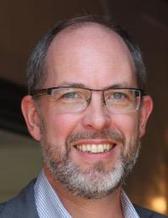
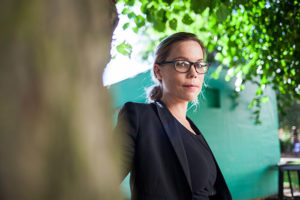
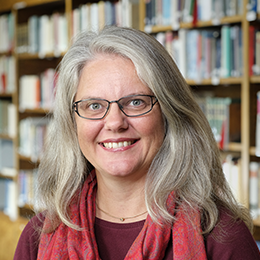
Tobias Pettersson is a Senior Lecturer at the Department of Pedagogy: Music, Dance and Drama , University of Gothenburg . His roles include Undergraduate Teaching Coordinator and Education Coordinator for both first/second cycle education and teacher training programs. He works at the intersection of musicology , gender studies , and pedagogical traditions . Current position since 2015 Active in teacher education since the 1990s Doctoral degree in musicology (2004) Research Focus: Analyzes the origins and persistence of musical traditions , gender equality in music life , and education for sustainable development . Led projects at the Centre for Environment and Sustainability (2012-2014) and developed web-based educational toolboxes. Key Contributions: Publications on Beethoven's canonization in Swedish education (2004), gender dynamics in performing arts (2006), and critical analyses of musicological epistemology (2005). His work bridges historical musicology , pedagogical theory , and sustainability education . Contact: Email: tobias.pettersson@gu.se Office: Eklandagatan 86, 41259 Göteborg
Costanza Beltrami is a Senior Lecturer at Stockholm University in the Department of Culture and Aesthetics. She is a dedicated art historian with a focus on Gothic art and architecture of the late fifteenth and early sixteenth centuries, particularly in the Spanish region of Castile and its international connections. Her research interests include architectural drawings, collaboration, transculturation, and temporality in architecture. Dr. Beltrami teaches courses on Medieval and Renaissance art and architecture from Cordoba to Florence. Her academic background includes studying Art History at the Courtauld Institute of Art in London and working at the University of Oxford/St Catherine's College before joining Stockholm University. Her research has focused on late-Gothic architecture, including a monumental drawing of a tower from Rouen cathedral and ornament prints as artists' models. She is Reviews Editor for the Journal of the British Archaeological Association and has completed her PhD thesis on Juan Guas (active 1453–1496), the leading architect of late fifteenth-century Spain. She is currently working on a book project about collaboration, artistic identity, and the geographies of exchange in late-Gothic Castile. Her co-edited volume "Art, Travel and Exchange between Iberia and Global Geographies, 11400–1550" challenges traditional narratives about Iberian art history and emphasizes multi-directional cultural exchange. Dr. Beltrami's recent research includes editing a special issue on portable drawings and paper in Medieval and Gothic architecture. Her work explores how architectural practices in Castile demonstrate fascinating questions regarding migrant networks, cultural contact, the meanings of architecture, and the role of art in debates on national identity from the 15th century to the present.
Peo Hansen is a Professor of Political Science at Linköping University's REMESO research institute, part of the Department of Culture and Society (IKOS) within the Faculty of Arts and Sciences (FILFAK). He serves as Director of the PhD Programme in Ethnic and Migration Studies and the Swedish Research Council’s Graduate School in Migration and Integration. His work critically examines European integration, colonialism, and EU migration policy through a geopolitical lens. Research Interests: Hansen specializes in the colonial origins of EU integration, modern migration theory, and the political economy of migration. He challenges orthodox economic assumptions about migration's fiscal impact, advocating for Modern Monetary Theory (MMT) as a transformative framework. Key themes include Eurafrica's historical role in shaping post-war European expansion and the EU's current 'geopolitical turn' amid declining global influence. Awards: Received the 2023 EUSA Honorable Mention for his book *A Modern Migration Theory*, which redefines migration's economic contributions to welfare states. His work has been published in journals such as *Journal of Common Market Studies*, *European Political Science*, and *History of the Present*. Visiting Roles: Senior Fellow at NYU's Remarque Institute (2006), Visiting Professor at the Max Planck Sciences Po Center (2018), and Simone Veil Fellow at the European University Institute (2023, 2025). He co-authored *Eurafrica: The Untold History of European Integration and Colonialism* with Stefan Jonsson. Labs/Teams: Active in the Institute for Research on Migration, Ethnicity and Society (REMESO), focusing on transnational migration, ethnicity, and citizenship. His research integrates historical analysis with contemporary policy critique, emphasizing decolonial perspectives in EU studies.
Peter Aronsson is the Rector of Linnaeus University since 2017, reappointed until 2026. He holds a professorship in History and has served as Pro Vice-Chancellor, Deputy Vice-Chancellor, and Dean of the Faculty of Arts and Humanities. His research focuses on local/regional history, democratic political culture, history education, and cultural heritage utilization. He coordinates international projects exploring national museums' roles in shaping historical narratives and has authored/co-authored over 100 publications, including books such as National Museums: Studies from around the World . He chairs the Swedish Council for Higher Education's board and sits on the transparency council for Kalmar and Kronoberg County Administrative Boards. His work emphasizes the societal relevance of cultural heritage and history education, advocating for museums as agents of democratic dialogue. Key contributions include founding the Center for Applied Heritage at Linnaeus University, which explores heritage's transformative societal potential. Education: PhD in History from Lund University (1992) Research Groups: Center for Applied Heritage, EuNaMus project Key Projects: EUNAMUS, HistCon, Nordic Spaces Leadership Roles: Vice-Chancellor (2017–present), Pro-Rector (2016–2017), Dean (2013–2015) His articles analyze historical consciousness, museum politics, and heritage management. Recent work addresses post-war Baltic cultural heritage, Nordic identity construction, and the political dimensions of historical narratives. He actively blogs on Open Science and academic governance, emphasizing universities' role in societal challenges.
Johan Eriksson is an Associate Professor and Senior Lecturer at Uppsala University's Department of Art History, serving as Head of Department and Program Manager for the Master's Program in Digital Art Studies. His work integrates traditional art historical scholarship with cutting-edge digital methodologies, focusing on cultural heritage reconstruction and virtual museum development. His research spans digital art history , visual communication , and Renaissance studies , with specialized expertise in Italian and Japanese art traditions. Eriksson pioneers digital pedagogy through projects like The Digital Seminar 2.0 , examining how virtual reconstructions of historical sites (e.g., Royal Palace Stockholm) transform art historical methodology and public engagement with cultural heritage. His scholarship reveals strong interdisciplinary connections between art history, computer science, and urban studies. Eriksson's publication trends demonstrate consistent focus on virtual museum development as both research tool and preservation strategy, with growing emphasis on cross-cultural exchange (particularly Sweden-Japan collaborations) and sustainable heritage tourism. His work bridges technical innovation with deep art historical analysis, notably in reconstructing historical display contexts and examining visual rhetoric in Renaissance courts. No scientific awards are documented in the provided materials. As Program Manager for the Master's Program in Digital Art Studies and Chair of JSPS SAC, Eriksson actively mentors graduate students while securing research funding for major projects including The Virtual Museum and Visual Communication in Early Modern Japan . His grant portfolio reflects strong institutional support for digital humanities initiatives at Uppsala University. Through leadership of JSPS SAC and project teams like Renaissance Rooms , Eriksson coordinates international research networks focused on digital reconstruction methodologies. His current initiatives emphasize collaborative development of virtual environments that integrate art historical research with immersive technologies for both scholarly and public applications.
Axel Andersson is a Senior Lecturer in Art History and Deputy Vice-Chancellor for Research at the Royal Institute of Art. He teaches in the Text Area, focusing on years one and two. His research explores Historiography, Colonialism, and the concept of Nature, with recent work on European post-war Exoticism, nuclear waste aesthetics, and deep time philosophy. He has authored five monographs, including Negative Geology (2021) and Absolut farmakon (2019), and co-edited Framtidens kritik (2018). Between 2016-2021, he led Kritiklabbet, a project investigating criticism in the digital age. His current project examines art and surplus. Education: Ph.D. in Art History from the European University Institute (2007) Research interests span postcolonial theory, environmental philosophy, and cultural history. His work bridges art, science, and colonial legacies, particularly through analyses of body techniques, nuclear waste, and deep time narratives. He contributes to Swedish and international publications as an essayist and critic. Publications include anthologies on art, colonialism, and criticism. His books explore intersections of aesthetics with environmental and colonial themes. He has no listed awards but is active in academic and editorial roles. As Deputy Vice-Chancellor for Research, he oversees institutional research strategy. His advisory and grant activities are not detailed, but his editorial work with Kritiklabbet highlights his engagement with critical discourse in digital spaces. He collaborates with interdisciplinary teams and is part of the Royal Institute of Art’s academic leadership, focusing on contemporary art and cultural critique.
Anna Sofia Rossholm is an Associate Professor in Cinema Studies and Deputy Head of the Department of Media Studies at Stockholm University. Her work bridges film studies, literary adaptation, and gender studies, with a focus on Swedish cinematic heritage, including the works of Astrid Lindgren and Ingmar Bergman. She teaches courses on gender in moving images, Swedish film culture, and ecocriticism, and supervises students at bachelor's, master's, and PhD levels. Her research explores screenwriting practices, transmedial storytelling, and the intersection of cinema with nature and memory. Current projects investigate authors like Lindgren and Bergman, film tourism, and eco-critical analyses of postwar wildlife documentaries. Recent publications include studies on women’s screenwriting in Swedish cinema and Bergman’s legacy in tourism. Rossholm’s interdisciplinary approach combines archival analysis with theoretical frameworks from eco-criticism and childhood studies. She has authored a monograph on Ingmar Bergman’s creative process and contributes to debates on film pedagogy and HIV representation. Her work highlights the transmedia dimensions of storytelling and the cultural significance of Swedish cinema history.
Irina Rasmussen is an Associate Professor (Docent) at the Department of English , Stockholm University, specializing in modernist literature across British, American, Irish, and Russian traditions. Her research extends to the history of aesthetics , dialectical materialism , and world literature from the 19th to mid-20th century. As a member of Forum Modernism , she explores both mainstream and marginalized expressions of modernism while critically interrogating the concept itself. Primary research areas: British/American/Irish/Russian modernism, aesthetics history, dialectical materialism Current book project: "Vernacular Modernisms: Poetics of the World" Published in: James Joyce Quarterly , Modernism/modernity , James Joyce Broadsheet Her scholarship emphasizes: Form-sensitive readings of modernist texts Intersection of nationalism and internationalism in Joyce's work Political implications of archival practices (e.g., Gumby Collection analysis) Curatorial approaches in modernist documentation For thesis supervision in literary theory, postcolonial criticism, or world-literature frameworks, contact: irina.rasmussen@english.su.se
Sara Tanderup Linkis serves as Senior Lecturer in Publishing Studies and Associate Professor in Digital Cultures at Lund University's Department of Arts and Cultural Sciences, Faculty of Humanities and Theology. Her academic work bridges literary scholarship with contemporary digital media analysis, focusing on how technological transformations reshape literary production, distribution, and consumption. Her research program centers on several interconnected domains: Audio literature and audiobook culture in the digital age Intermediality and transmedia storytelling practices Serial narrative forms across media platforms Social media literary communities, particularly BookTok Publishing economics in the streaming era Memory representation in contemporary literature Dr. Linkis's recent publications reveal a methodological commitment to interdisciplinary approaches, combining publishing studies, literary theory, sound studies, and digital culture analysis. Her work demonstrates how literary experiences are being fundamentally reshaped by audio formats and social media platforms, with particular attention to the material and economic dimensions of these transformations. Her scholarly contributions have been recognized through: Inga och John Hains Stiftelse för Vetenskaplig Humanistisk Forskning stipend (2024) International postdoctoral funding from the Independent Research Fund Denmark (2018-2020) As a research leader, Dr. Linkis currently directs the Swedish Research Council-funded project "Between Sound and Text: Production, Content and Experiences of Multimodal Audio Literature" (2024-2026) and contributes to the multi-year project "Lyssningsnjutningar: Sexuell hälsa och ljudfiktion i den digitala intimitetens tid" (2024-2028). She actively supervises doctoral research, including M. Uhlmann Lindberg's work on Swedish self-publishing history. Dr. Linkis maintains an active presence in both academic and public discourse, regularly contributing to media discussions about literary trends and participating in international research networks focused on digital literary cultures and publishing studies.
Fredrik Fällman is a Senior Lecturer at the Department of Languages and Literatures, University of Gothenburg. His academic background includes a PhD from Stockholm University (2004) and extensive research in China, including visiting roles at the Chinese Academy of Social Sciences and Renmin University of China. He has held adjunct positions, such as Distinguished Adjunct Researcher at Renmin University (2010-2014), and served as co-ordinator at the Nordic Confucius Institute in Stockholm (2005-2006). His research focuses on religion in modern China, propaganda language, and cultural exchange between China and the West. Notable interests include the role of Christian communities among Chinese intellectuals, Uyghur cultural history, and the sinicization of religious practices. He has published widely on topics ranging from missionary history to contemporary religious policies. Fällman teaches Chinese language, history, and cultural studies at all academic levels. He has been recognized as a Member of The Royal Society of Arts and Sciences in Gothenburg (2022). His work often bridges historical analysis with contemporary socio-political dynamics, including panel discussions on Hong Kong and invited lectures at institutions like SOAS, University of London.
Anja Kraus is a Professor in Arts and Culture Education at Stockholm University, Department of Teaching and Learning. She has held academic positions at the University of Education Ludwigsburg (2003-2013), Linnaeus University Växjö (2013-2019), and joined Stockholm University in 2018. Her academic journey began with studies in Philosophy and Educational Sciences at Free University Berlin and Arts Education at the University of the Arts Berlin, Germany. Her research focuses on Pedagogical Anthropology, with special emphasis on tacit knowledge, corporeality, aesthetic education, and multimodal learning. She has developed systematic approaches to understanding tacit knowing in educational contexts, particularly examining how corporeality, aesthetic learning, and inclusivity function in schools. Her work bridges phenomenological, ethnographical, and body-phenomenological approaches with practical educational applications. She has made significant contributions to understanding how materiality, performativity, and imaginaries shape educational practices. Her recent publications reveal strong trends in embodiment studies, with particular attention to kinesthetic learning, spatial pedagogy, and the relationship between aesthetics and sustainability. Her work increasingly explores educational practices within the Anthropocene context, examining how arts education can address environmental concerns through embodied approaches. The recurring theme across her publications is the exploration of how tacit knowledge manifests in educational settings and how this understanding can transform teaching practices. As head convenor of the international scientific network 'Tacit Dimensions of Pedagogy,' she has organized numerous workshops and conferences addressing pedagogical terminologies across languages. Her collaborative projects span Scandinavia, Europe, Asia, and North and South America, demonstrating her commitment to transcultural approaches in educational research. Her teaching spans multiple languages (German, English, Swedish, Spanish) and covers diverse areas including Classroom Education, Cultural and Media Education, Sciences of Bildung, Elementary Education, and Vocational Training. Her pedagogical approach emphasizes practice-oriented competence, inclusive school development, and aesthetic learning environments with a comparative perspective.
Charlotta Krispinsson is a Senior Lecturer in Art History at Umeå University, Sweden. She specializes in 17th-century art and visual culture with a focus on copying practices, portraiture, and the use of prints in Northern Europe. Previously, she held positions at Södertörn University, Uppsala University, and completed a postdoctoral fellowship at Humboldt University in Berlin funded by the Swedish Research Council. Her educational background includes a PhD in Art History from Stockholm University (2016) with a dissertation on national portrait collections and late 19th- and early 20th-century art historical writings on early modern portraiture. She has also been a research fellow at the Rubenianum in Antwerp (2023). Krispinsson's research centers on how prints functioned as vehicles for artistic transmission in 17th-century Sweden and Norway, examining how painters like Gottfried Hendtzschel and Elias Fiigenschoug used prints after Rubens' designs for church commissions. Her work challenges traditional art historical narratives by highlighting the importance of copying practices rather than originality in peripheral European contexts. Her recent publications demonstrate a clear trajectory from her doctoral work on portrait collections toward increasingly specific studies of copying practices in Northern European art. She examines how prints after Rubens were used as templates for religious paintings in Norwegian churches, revealing how artistic production functioned in regions distant from major artistic centers. Postdoctoral Fellowship funded by Swedish Research Council (Vetenskapsrådet) Krispinsson has presented her research at numerous international conferences including NORDIK meetings across Scandinavia. She teaches art history at multiple Swedish universities and has been actively involved in conference organization, particularly sessions on pre-modern art histories of migration and exchange. Her current research continues to explore the widespread use of prints as models for painting in seventeenth-century Sweden.
Victoria Van Orden Martinez is a Researcher at Lund University's Department of History and Department of Arts and Cultural Studies, specializing in Holocaust studies, refugee experiences, and postwar knowledge production. Her work bridges history, migration studies, and gender studies, with a particular focus on how survivors of Nazi persecution who became refugees documented atrocities and shaped historical memory. She is affiliated with multiple research networks including NORAH (North European Center for Research on Antisemitism and the Holocaust), the Migrant Knowledge Network at the German Historical Institute, and the Nordic Jewish Studies Network. Education: Ph.D. in History from Linköping University (2024) Dissertation: 'Afterlives: Jewish and Non-Jewish Polish Survivors of Nazi Persecution in Sweden Documenting Nazi Atrocities, 1945-1946' Dr. Martinez's research centers on the intersection of Holocaust studies, gender, and refugee experiences, particularly focusing on how survivors became knowledge actors in documenting Nazi atrocities. Her work examines the Polish Research Institute in Lund (PIZ) archive, which was recently added to the UNESCO Memory of the World Register, analyzing how emotions functioned as vehicles of knowledge in survivor testimonies. She investigates how women survivors of Nazi persecution who were medical professionals navigated their careers after the war, and how displacement shaped historical memory and knowledge production. Her scholarly output reveals a consistent focus on the materiality of Holocaust memory, the psychological dimensions of testimony, and the epistemic value of emotions in historical documentation. Martinez's work demonstrates how refugee communities created knowledge networks that documented atrocities while simultaneously processing trauma, with particular attention to how gender shaped these experiences. Her research bridges European and American scholarly traditions, connecting Swedish archival materials with broader Holocaust studies. Scientific Awards: Nils Karlebys stiftelse för Skånsk Kultur och Historia, Stipendium (2025) As an editorial board member of Collections: A Journal for Museum and Archives Professionals and an Affiliated Non-residential Scholar at the USC Shoah Foundation, Martinez actively contributes to the development of methodologies for preserving and interpreting Holocaust testimony. Her work with the Ravensbrück archive at Lund University demonstrates her commitment to innovative approaches in historical research that center survivor experiences while examining the institutional frameworks that shape memory. She frequently presents at international conferences on topics ranging from Nazi concentration camps to refugee medical labor in postwar Sweden. Dr. Martinez is deeply embedded in collaborative research networks including the Migrant Knowledge Network at the German Historical Institute and the National Network for Holocaust Studies in Sweden. Her work with the Polish Research Institute in Lund (PIZ) archive has positioned her as a key scholar examining how displaced persons documented their experiences and contributed to historical knowledge production. Through her participation in multiple international research initiatives, she continues to expand our understanding of how trauma, displacement, and knowledge intersect in the aftermath of genocide.
Simo Vehmas is Professor of Special Education at Stockholm University's Department of Special Education. He is currently on research leave for the academic year 2024-2025 at the Paris Institute for Advanced Study, with plans to resume departmental activities from July 2025. His academic work spans theoretical and empirical approaches to disability studies, with particular focus on profound intellectual and multiple disabilities. Professor Vehmas's research interests center on theoretical and ethical issues related to disability, examining the ontological formation as well as the moral and political significance of disability. His work bridges philosophical inquiry with practical educational concerns, particularly regarding persons with profound intellectual and multiple disabilities. Recent publications demonstrate his commitment to exploring the intersection of language, identity, and rights within disability contexts. His scholarship engages deeply with questions of personhood, moral status, and the social construction of disability, while also addressing practical implications for education and policy. Analysis of Vehmas's recent publications reveals a consistent thematic trajectory exploring the philosophical foundations of disability while increasingly incorporating empirical research methods. His work spans multiple disciplines including philosophy, ethics, linguistics, education, and social policy, with particular attention to Swedish disability contexts. The publications demonstrate growing engagement with interdisciplinary approaches to disability studies, moving from purely theoretical frameworks toward more applied research on music therapy, educational interventions, and everyday experiences of people with profound intellectual disabilities. Vehmas has made significant contributions through book publications including 'Narrowed Lives: Meaning, Moral Value, and Profound Intellectual Disability' (2021), 'Vaikeasti kehitysvammaisten arki ja ihmisyys' (2022), and co-editing the 'Routledge Handbook of Disability Studies: Second Edition' (2020). His scholarly output reflects deep engagement with both international disability scholarship and specifically Nordic approaches to disability. While specific grant information is not provided in the available materials, Professor Vehmas's research leave at the Paris Institute for Advanced Study indicates active engagement with international research networks. His collaborative work with researchers like Riitta Mietola suggests participation in research teams focused on profound intellectual disabilities. His publications suggest ongoing work in developing pedagogical interventions and theoretical frameworks for understanding disability experiences.
Meike Wagner serves as a Professor in Theatre Studies at Stockholm University, where she is affiliated with the Department of Culture and Aesthetics. She previously held a position in Theatre Studies at Ludwig-Maximilians-Universität in Munich before joining Stockholm University. Professor Wagner also holds the distinguished position of Secretary General of the International Federation for Theatre Research (IFTR), demonstrating her significant standing in the international academic community. Her research expertise spans multiple interconnected domains within theatre studies, with particular emphasis on mediality and theatre, performative bodies, performance art and contemporary theatre practices. She has made substantial contributions to reception theories, theatre theories, and the historical analysis of 19th century theatre. Her work frequently examines the relationship between theatre and revolution, exploring how theatrical practices both reflect and shape political consciousness and social transformation. Professor Wagner's interdisciplinary approach bridges historical scholarship with contemporary theoretical concerns, making her work relevant across multiple humanities disciplines. Professor Wagner has secured significant research funding, most notably an ERC Advanced Grant in 2020 for her project "Performing Citizenship. Social and Political Agency in Non-Professional Theatre Practice in Germany, France, Britain, Sweden and Switzerland (1780-1850)." This project investigates how amateur theatre around 1800 helped individuals develop their understanding of citizenship in emerging democracies. She previously led the "Performing Premodernity. Exploring Cultural Heritage through the Drottningholm Court Theatre" research project from 2013 to 2017, demonstrating her sustained commitment to historical theatre practices and their contemporary relevance. ERC Advanced Grant 2020 for "Performing Citizenship" research project Project leader for "Performing Premodernity" (2013-2017) Secretary General of the International Federation for Theatre Research (IFTR) As Secretary General of IFTR, Professor Wagner plays a pivotal role in shaping international theatre research agendas and facilitating global scholarly exchange. Her ERC-funded project represents a significant contribution to understanding the relationship between theatrical practice and civic identity formation during a critical historical period. Her leadership in these substantial research initiatives demonstrates her capacity to direct complex, multinational scholarly collaborations that bridge historical and contemporary concerns in theatre studies.