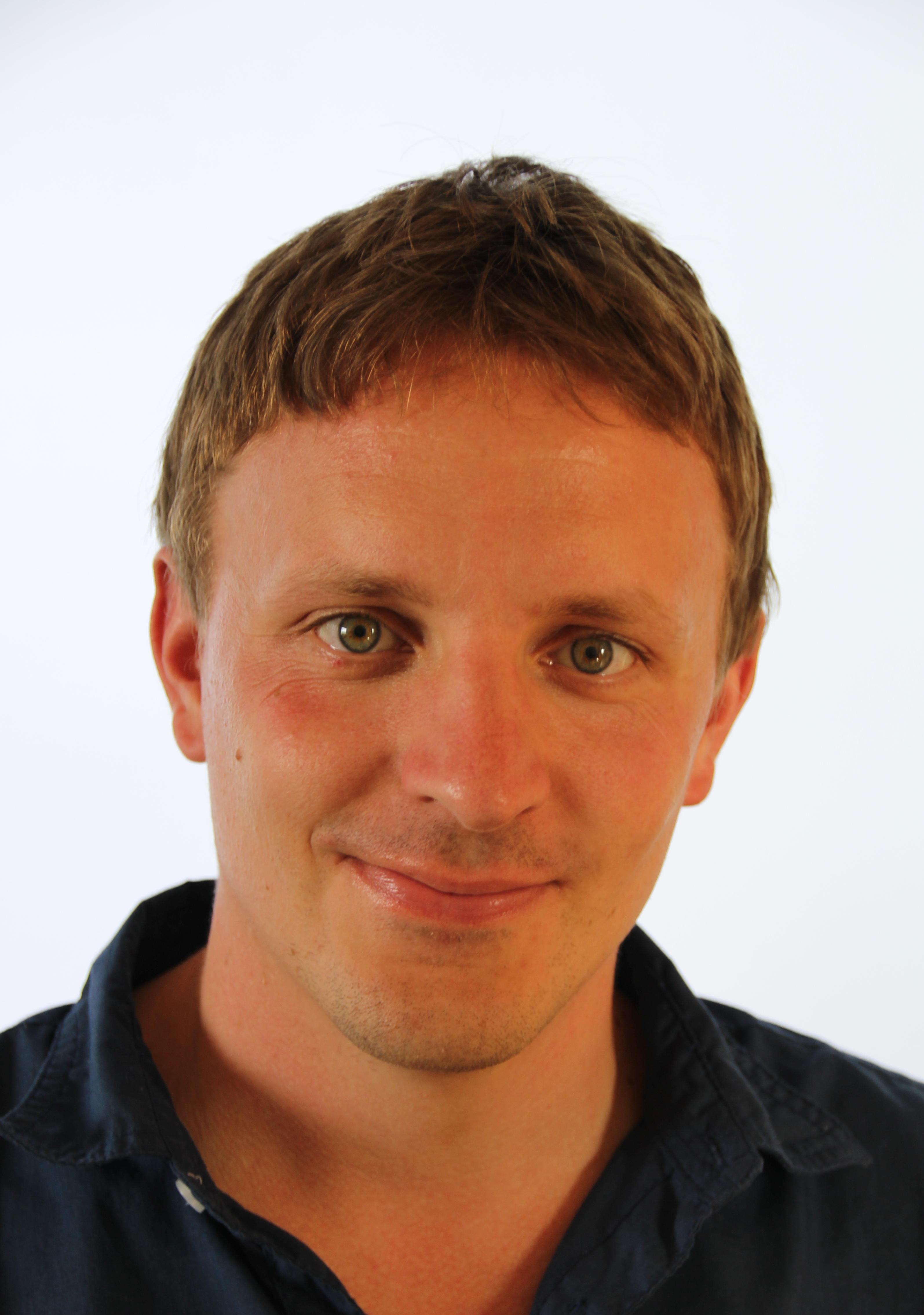
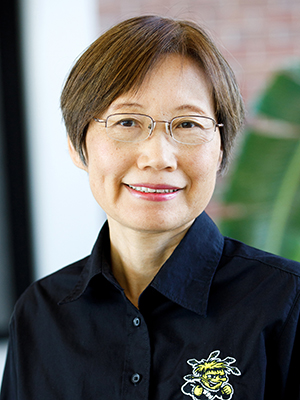
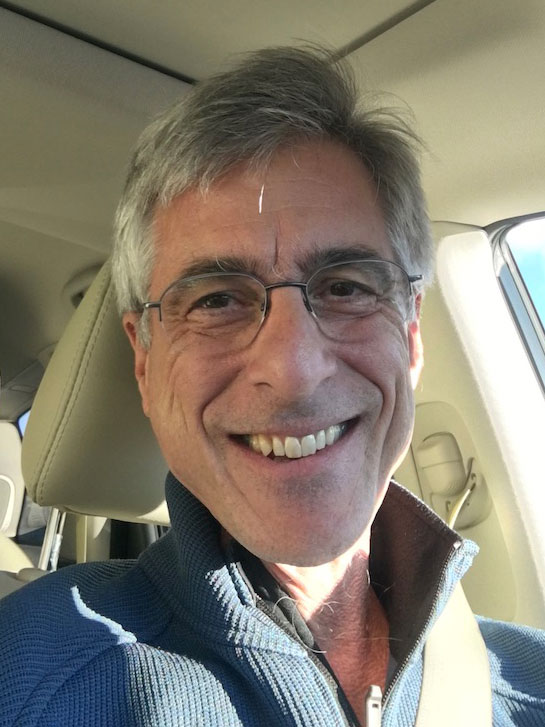
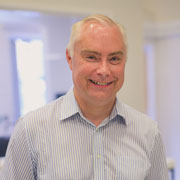
Juan Carlos Merlano Duncan is a researcher at the University of Luxembourg, affiliated with the Interdisciplinary Centre for Security, Reliability and Trust (SnT). His work focuses on satellite communications, signal processing, and synchronization techniques for distributed systems.
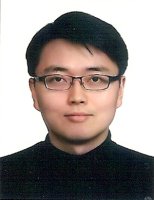
Kouei Yamaoka is an Assistant Professor in the Department of Electrical Engineering and Computer Science at Tokyo Metropolitan University's College of Engineering, specializing in advanced audio signal processing techniques. With over 24 publications from 2017-2024, Yamaoka has established a strong research presence in the international signal processing community. Yamaoka's research focuses on innovative beamforming techniques, time delay estimation methods, and speech enhancement algorithms. Their work consistently addresses challenging problems in multichannel audio processing, particularly in underdetermined scenarios where the number of sources exceeds available microphones. Key contributions include causal distortionless response beamforming, minimum-spanning-tree-based time delay estimation robust to outliers, and sound field interpolation for rotation-invariant processing. Analysis of Yamaoka's publication trends reveals a consistent focus on practical audio processing solutions with applications in source separation, speech enhancement, and acoustic scene analysis. The research demonstrates strong theoretical foundations combined with practical implementation considerations, particularly for real-time and online processing scenarios. Recent work has expanded into deep learning applications for bioacoustic analysis, as evidenced by the 2023 publication on marmoset vocalization analysis. Yamaoka maintains a productive collaboration network, with frequent co-authorship with Nobutaka Ono (20 joint publications), Shoji Makino (9 joint publications), and other researchers in the Japanese signal processing community. Publications appear consistently in top venues including IEEE/ACM Transactions on Audio Speech and Language Processing, APSIPA, EUSIPCO, and ICASSP.
Peter H. Aaen is a Reader in Microwave Semiconductor Device Modeling at the University of Surrey, with expertise in RF and microwave device modeling and characterization. His work focuses on developing advanced methodologies for high-power and high-frequency electronic devices, with applications in telecommunications and quantum technologies. Dr. Aaen received his B.A.Sc. in Engineering Science and M.A.Sc. in Electrical Engineering from the University of Toronto, Canada, and his Ph.D. in Electrical Engineering from Arizona State University, USA, in 1995, 1997, and 2005 respectively. Prior to joining the University of Surrey, he was the manager of the RF Modeling and Measurement Technology team at Freescale Semiconductor Inc (formerly Motorola Inc.), bringing significant industry experience to his academic work. Dr. Aaen's research spans several critical areas in microwave engineering, with a particular emphasis on developing multi-physics based modeling methodologies for high-power and high-frequency electronic devices. His expertise includes calibration techniques for microwave measurements, package modeling, development of compact models for microwave power transistors and RFICs, and efficient electromagnetic simulation methodologies for complex packaged environments. He has made significant contributions to understanding frequency dispersion in RF LDMOS transistors, electro-thermal modeling, and the development of measurement techniques for extreme impedance devices. His publication record demonstrates a clear progression from fundamental device modeling to advanced measurement techniques and applications in next-generation communications systems. Recent work has focused on multiphysics measurements, electro-optic field imaging, and the application of nanowire technologies to microwave switches, reflecting the evolving challenges in 5G and beyond communications infrastructure. Dr. Aaen is a Senior Member of the IEEE and active in several technical committees including the IEEE Technical Committee (MTT-1) on Computer-Aided Design, the technical program committee of the IEEE Conference on Electrical Performance of Electronic Packaging and Systems (EPEPS), and the executive committee of the Automatic RF Techniques Group (ARFTG). Dr. Aaen has supervised numerous PhD students whose research has advanced the field of microwave engineering, particularly in areas related to measurement uncertainty, multiphysics characterization of high-power transistors, and nanoscale device integration. His collaborative work spans multiple institutions and has resulted in significant advancements in understanding device behavior under complex operating conditions. His laboratory work focuses on developing novel measurement techniques that combine electro-optic systems with nonlinear vector network analyzers and load-pull measurement systems, enabling unprecedented visualization of electromagnetic field distributions within operating transistors. This work has led to breakthroughs in understanding oscillation mechanisms and thermal behavior in high-power devices.
Ram Dixit is a Professor and Chair of Biology at Washington University in St. Louis. He holds a PhD from Cornell University and leads research in plant cell morphogenesis, focusing on cortical microtubule dynamics and cell wall construction in Arabidopsis. His lab integrates molecular genetics, live-cell imaging, and computational modeling to study how microtubules regulate plant growth. He teaches courses in cell biology and microscopy, and co-developed the cross-disciplinary 'Cellular Transformations' course with Sung Ho Kim, exploring links between biological structure and design applications. Education: PhD in Biology from Cornell University. Research interests include mechanisms of microtubule array organization, cell wall deposition, and the role of kinesins in plant development. His work emphasizes single-molecule analysis and in vitro reconstitution to study molecular interactions. Recent publications highlight kinesin function, microtubule severing by katanin, and computational models of microtubule behavior. Advising and grants: No specific student names or grant details listed, but his lab focuses on mentoring graduate students through courses like the Plant and Microbial Bioscience seminar. The lab is part of the Center for Engineering MechanoBiology, emphasizing interdisciplinary collaboration. Labs/Teams: Lead investigator at the Dixit Lab and affiliated with the Center for Engineering MechanoBiology, advancing studies on plant cell mechanics and design-inspired biology.
Markus Hehn is a Researcher at the Chair of High Frequency Engineering within the Department of Electrical Engineering, Electronics and Information Technology (EEI) at Friedrich-Alexander-University Erlangen-Nuremberg. He holds a Dr.-Ing. (PhD) in Electrical Engineering, awarded with 'sehr gut' in November 2021. His work focuses on hardware design and signal processing for indoor positioning systems, including radar systems, low-frequency magnetic field localization, inertial navigation, and RFID technologies. Education: 2004-2007: Training as an Electronics Technician for Automation Technology 2008-2010: State-Certified Electrical Engineering Degree from Erlangen Technical College 2011-2014: B.Sc. in Electrical Engineering, Electronics, and Information Technology (FAU) 2014-2016: M.Sc. (with distinction) in the same field (FAU) Research interests span hardware development, radar systems, and signal processing for indoor navigation. Recent work emphasizes sequential sampling impulse radar, synthetic aperture imaging, and Kalman filter-based synchronization in networked systems. Collaborations include projects on UHF-RFID localization for mobile robots and 5G/6G antenna arrays. Labs/Teams: Active in the Institute of Microwaves and Photonics (LHFT) and the Chair of High Frequency Engineering. Seeks students for theses in hardware/circuit design, signal processing, and system design.
Safieddin Safavi-Naeini was a Professor in the Department of Electrical and Computer Engineering and Director of the Centre for Intelligent Antenna and Radio Systems (CIARS) at his university. He specialized in advanced antenna systems, microwave engineering, radar technologies, and biomedical sensor design. His work emphasized high-frequency systems, phased array antennas, and mm-wave applications. Research Focus: His research spanned antenna design (e.g., defected ground structures, SIW-integrated arrays), mm-wave radar systems (including FMCW and SAR imaging), non-invasive biomedical sensors (e.g., glucose monitoring via microwave sensors), and satellite communication systems. He contributed to RFIC design, power amplifier technologies, and novel metamaterial-based components. Technological Contributions: Key innovations included tunable phase shifters, low-cost phased arrays for 5G/SATCOM, and compact high-gain antenna arrays. His work in graphene-based nonlinear optics and THz sources expanded into emerging applications like terahertz integrated circuits. Awards & Recognition: While no specific awards are listed, his prolific publication record and leadership in CIARS highlight his impactful contributions to the field. Advising & Labs: As director of CIARS, he oversaw research in intelligent antenna systems and radar imaging. His team developed cutting-edge systems like the 3D-printed scanning lens antenna and mm-wave FMCW target simulators.
Yanwu Ding is an Associate Professor in the Department of Electrical and Computer Engineering at Wichita State University's College of Engineering. His research focuses on signal processing, satellite communications, wireless networks, and electromagnetic interference mitigation. He holds a Ph.D. and has published extensively on topics such as Doppler-based localization, channel estimation, and interference detection in satellite and terrestrial systems. Research interests include optimizing satellite navigation systems, developing robust algorithms for EMI geolocation, and enhancing wireless network performance through advanced signal processing techniques. His work spans both theoretical contributions (e.g., Doppler signatures, Kalman filter applications) and practical applications (e.g., 5G channel modeling, RIS-aided systems). Recent publications emphasize satellite-borne localization, semi-passive RIS systems, and distributed antenna array optimizations. No awards or grants are explicitly listed, though his prolific output indicates significant scholarly contribution. No advising or student information is provided. His work contributes to improving satellite communication reliability, EMI detection capabilities, and next-generation wireless infrastructure design.
Aleksei Fedorov is a Researcher at the Department of Communications Engineering, Lund University, affiliated with the LTH Profile Area on AI and Digitalization and ELLIIT. His work contributes to UN Sustainable Development Goals related to Industry, Innovation, and Infrastructure. Fedorov specializes in advanced communication systems, antenna design, and sensing technologies. Research interests include Massive MIMO systems, antenna array characterization, maritime channel modeling, and 6G network deployments. He has collaborated on projects such as SIVERT (Swedish Government-funded simulation of wireless technologies) and developed open-source tools for network simulation. Recent contributions focus on integrating communication and sensing in industrial environments, autonomous vehicle safety frameworks, and practical 6G solutions. His work bridges theoretical research with practical implementations, emphasizing real-world applications in industrial IoT and vehicular systems. Notable collaborations include projects with Linköping University (via ELLIIT) and international conferences on antennas, propagation, and intelligent vehicles. Fedorov's research emphasizes cross-disciplinary approaches to next-generation wireless systems.
Michael Bleyer is a Researcher in the Department of Computer Vision at the Technische Universität Wien (TU Wien), affiliated with the Faculty of Informatics. His work focuses on advanced imaging technologies, particularly in stereo matching, sensor design, and applications in augmented/mixed reality. He has contributed to projects funded by the Vienna Science and Technology Fund (WWTF), Austrian Science Fund (FWF), and the Federal Ministry of Transport, Innovation, and Technology (bm:vit). Education: Diplom-Ingenieur (Dipl.-Ing.) from TU Wien (2002), followed by a Dr.techn. (PhD) thesis on 'Segmentation-based stereo and motion with occlusions' (2006). He has supervised four students, including Armin Haßlacher (2012), Gregor Braun (2011), Roman Gross (2009), and Christian Rhemann (2005). Research Interests: Bleyer’s work bridges theoretical computer vision and practical sensor engineering. Recent trends emphasize SPAD-based imaging systems for low-light environments and head-mounted displays, addressing challenges like dark current compensation and temporal filtering. Earlier contributions include global stereo matching algorithms, optical flow estimation, and 3D scene reconstruction. Grants and Advising: Projects include Temporal-Consistent Stereo Matting (2009–2015, WWTF) Energy Functions for Global Stereo Matching (2007–2012, FWF) Video Engine Design Methodology (2006–2015, bm:vit) His advising spans topics like color in stereo matching and image filtering optimization.
John Robert Potter is a Professor in the Department of Electronic Systems at NTNU's Faculty of Information Technology and Electrical Engineering. He holds expertise in marine physical science with multidisciplinary backgrounds in mathematics, physics, polar oceanography, and glaciology. His work integrates environmental conservation principles with advanced technology development. Education includes degrees in mathematics, physics, and specialized fields in polar oceanography and glaciology. His research focuses on underwater acoustics, ambient noise analysis, and marine mammal behavior. He pioneers applications of distributed acoustic sensing (DAS) for ocean monitoring, autonomous vehicles, and sustainable practices. His recent work explores fiber-optic networks for tracking whales, seismic activity, and storms in Arctic environments. Teaching responsibilities include courses on bioacoustics, acoustic signal processing, and electronic systems design. Outreach activities include international conferences and workshops, such as IEEE OES lectures in Singapore and Pisa. Publications emphasize DAS innovation, underwater communication, and multi-sensor systems. Key collaborations involve institutions like IEEE, EAGE, and international research groups.
David Brady is a Teaching Professor in the Department of Electrical and Computer Engineering at Northeastern University. His research focuses on signal processing, wireless communications, underwater acoustics, and renewable energy systems. Key contributions include work on cognitive radio networks, photovoltaic inverter optimization, and scattering system analysis using Cramer-Rao bounds. He has extensive experience in underwater acoustic communication systems and multiuser detection techniques. His work spans theoretical analysis and practical implementations in communication systems. Education details are not explicitly provided in the text, but his professional roles indicate advanced academic qualifications in electrical engineering. His research interests emphasize interdisciplinary applications of signal processing, with notable contributions to photovoltaic grid integration and ontology-driven cognitive radio systems. Recent articles highlight advancements in transmitter/receiver imbalance compensation, multipath channel modeling, and collaborative network adaptation. His publications span over three decades, demonstrating sustained contributions to communication technologies and renewable energy systems. No scientific awards are listed, but his prolific publication record speaks to his research impact. Brady has advised no formally listed students, though his teaching role likely involves mentoring engineering students. His work involves collaborations in SAR (Synthetic Aperture Radar) waveform design and acoustic telemetry systems, indicating involvement in applied research teams. He maintains an active presence in both academic and applied engineering domains.
Srinivas Tadigadapa is a Professor of Electrical and Computer Engineering and Senior Vice Provost for Institutes, Centers, and Impact Engines at Northeastern University. He leads the Cross-College Magnetics Center and has held prior positions at Pennsylvania State University. With a PhD from the University of Cambridge (1994), his research focuses on MEMS-based sensor systems, including biomedical applications, magnetic technologies for neural interfaces, and nanomaterial integration. Notable honors include IEEE Fellow, NAI Senior Member, and Alexander von Humboldt Fellowship. Educations: PhD, Cambridge University, 1994 His research explores micro/nano-sensor fabrication, thermoelectric materials, and plasmonic light emitters. Key projects include NSF-funded work on mid-IR light emitters, magnetic resonance imaging systems, and biomarker detection via quartz resonators. Over 50+ publications span journals like Nanotechnology and Biosensors and Bioelectronics . Major awards include the 2020 IEEE Sensors Council Meritorious Service Award. He has secured NSF grants for neurodisease treatment via ultrasound and kidney function monitoring. As Founding Editor-in-Chief of IEEE Sensors Letters , he contributes to interdisciplinary research dissemination. Grants/Awards: NSF EAGER Grants ($250K-$110K), COE Collaborative Research Projects, TIER 1 Interdisciplinary Seed Funding Labs/Teams: Cross-College Magnetics Center, Northeastern Sensor Systems Lab
Dr. Md Rokunuzzaman Robel is a Research Fellow at the School of Engineering, RMIT University, specializing in the Department of Electrical and Computer Engineering. His research focuses on antenna design for biomedical applications, metamaterials, wireless power transfer, and novel materials for wearable devices. He holds an ORCID identifier (0000-0001-9715-4652) and is actively supervising PhD/Masters projects in flexible wearable communications and bio-sensor technologies. Research interests include communications technologies, biomedical engineering, and advanced antenna systems. Recent projects involve metamaterial-based antennas for IoT, wearable bio-sensors, and flexible circuits. His work bridges electrical engineering with medical applications, emphasizing practical implementations in healthcare and wireless systems. Supervision includes projects like 'Transparent electronic patches: Wearable oxide-based bio-sensors' and 'Flexible and Wearable Communications Devices.' No scientific awards are explicitly mentioned in available records. His research outputs span antennas for medical diagnosis, RFID technologies, and metamaterial innovations, published in journals like IEEE Transactions and Advanced Intelligent Systems.
Professor David Grace is a Research Professor at the University of York, leading the Communication Technologies Research Group and co-directing the York-Zhejiang Lab for Cognitive Radio and Green Communications. He holds additional roles as Head of the Communication Technologies Discovery Theme, Director of the Centre for High Altitude Platform Applications, and pillar lead for Advanced Communications at the Institute for Safe Autonomy. His expertise spans intelligent networks, cognitive radio, and non-terrestrial systems like High Altitude Platforms (HAPs). Grace has authored over 280 publications and two books, and led major projects including the FP6 CAPANINA initiative and EPSRC HiQ quantum communications research. Education: MEng (First Class) and DPhil from the University of York, with BT-sponsored placements. His research focuses on 6G architectures, AI-driven radio resource management, and green communications. Key projects include developing quantum key distribution via HAPs (HiQ project) and 5G trials in rural areas (MANY project). Research Interests: Application of AI to wireless networks, 6G system design, dynamic spectrum access, aerial platform-based communications, and cognitive networks. His work emphasizes energy-efficient solutions and regulatory policy for emerging technologies. Awards include WUN CogCom Best Paper Awards (2012-2013) and recognition for contributions to green communications. He has supervised over 40 PhD/MSc students and actively participates in international conferences as a speaker, reviewer, and organizer. External roles include Guest Professor at Zhejiang University and leadership in IEEE technical committees. Grants and collaborations include EPSRC funding (HiQ, Radio Networks ITwins), EU H2020 projects (SPOTLIGHT), and industry partnerships with Huawei. His lab activities focus on aerial platform networks, cell-free MIMO systems, and 5G/6G testbed development.
Dr. Youngwook Ko is a Senior Lecturer in the Department of Electronic Engineering at the University of York. He holds a B.S.E. from Hannam University (South Korea), an M.Sc. from Arizona State University (USA), and a Ph.D. in Electrical Engineering from Arizona State University. His research focuses on applying machine learning and signal processing to wireless communications, including multi-dimensional index modulation, NOMA-ALOHA systems, and reinforcement learning-driven networks. Dr. Ko has authored/co-authored over 50 publications in top-tier IEEE journals and conferences. Educational Background Bachelor of Science in Information and Communications Engineering, Hannam University, South Korea Master of Science in Electrical Engineering, Arizona State University, USA Ph.D. in Electrical Engineering, Arizona State University, USA Research Interests Dr. Ko's work centers on machine learning and signal processing for advanced wireless systems. Key areas include: Machine learning for 6G communications NOMA-ALOHA systems and reinforcement learning applications Multi-dimensional index modulation (IM) techniques Edge computing and network autonomy Awards & Grants Recipient of the EPSRC First Grant Award and member of the EPSRC Peer Review College. His editorial roles include the IEEE Open Journal of Vehicular Technology and Elsevier Journal on Physical Communications. Grants & Collaborations EPSRC-funded project on smart farm radio technology International collaborations in 6G NTN, reinforcement learning, and digital twins Labs & Teams Conducts research within the Department of Electronic Engineering, focusing on next-generation wireless systems and AI-driven communication technologies.