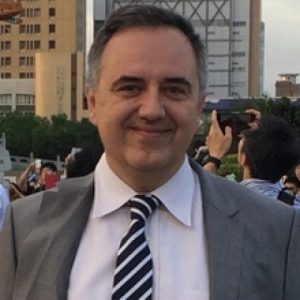
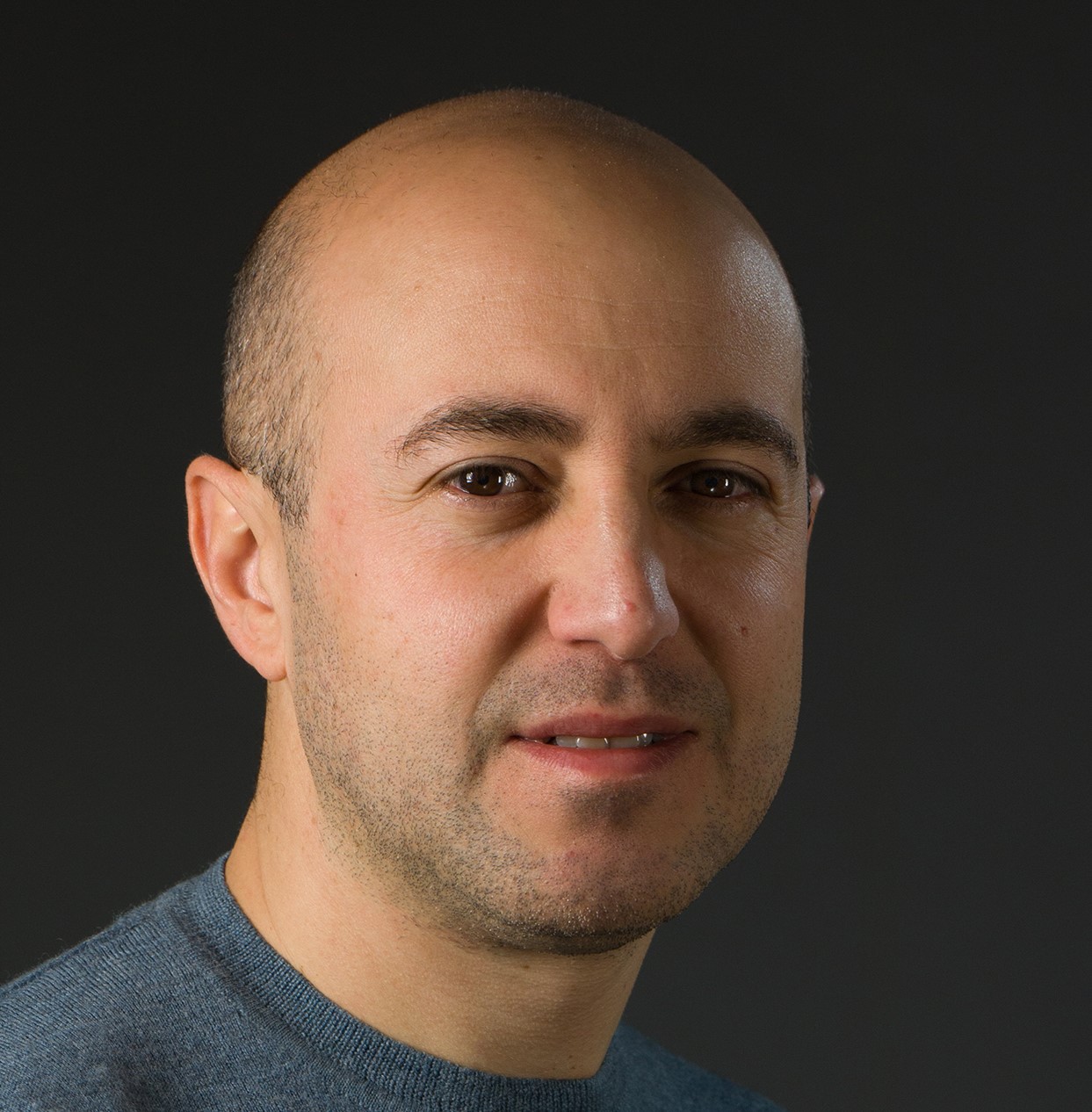
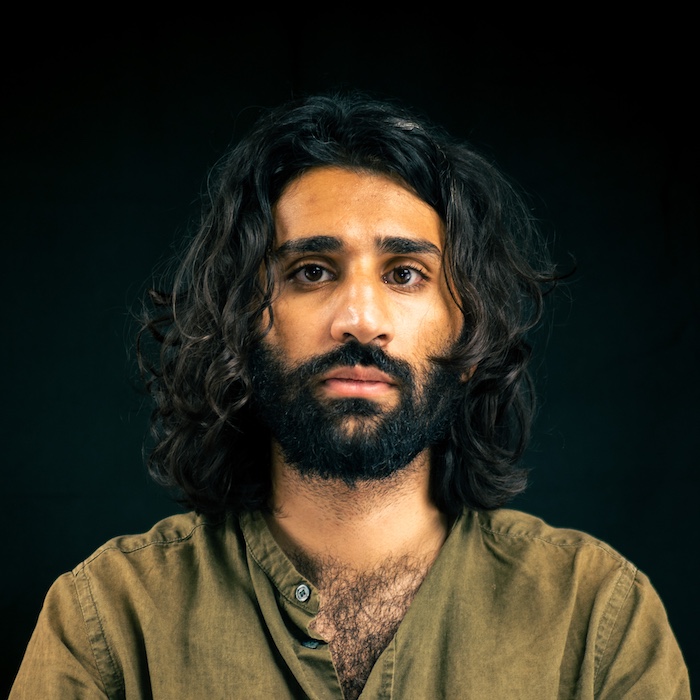
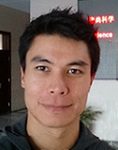
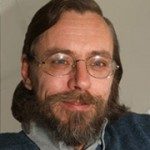
Marco Di Renzo is a CNRS Research Director (Professor) and Head of the iPhyCom group at the Laboratory of Signals and Systems (L2S) at Paris-Saclay University, France. He is affiliated with both CNRS and CentraleSupélec. His roles include: Member of L2S Management Committee and Board Council Member of the Ph.D. School Admission Committee Academic Vice Chair, ETSI Industry Specification Group on RIS Editorial and leadership roles in IEEE communications journals Education: Laurea (cum laude) and Ph.D. in Electrical Engineering from University of L’Aquila (2003, 2007) Habilitation à Diriger des Recherches from Paris-Saclay University (2013) Research focuses on 6G networks , reconfigurable intelligent surfaces (RIS) , and integrated sensing and communications (ISAC) . He explores electromagnetic theory, machine learning applications, and energy-efficient wireless systems. His work addresses challenges in near-field communications, multi-user MIMO, and holographic beamforming. He advocates for physics-driven design principles in next-gen networks. Key awards include IEEE/IEE Fellowships, the Michel Monpetit Prize, and multiple IEEE Best Paper Awards. He holds international visiting professorships at institutions like the University of Oulu (Finland) and Nanyang Technological University (Singapore). Active in standardization via ETSI ISG RIS and contributes to global initiatives like the ITU 6G Vision. His research bridges theoretical models with practical implementations, emphasizing interdisciplinary collaboration between physics, signal processing, and AI.
Khalifa Aguir is a Professor at Aix-Marseille University, affiliated with the Department of Detection, Radiation and Reliability (DETECT) and the Microsensor Instrumentation (MCI) Team. His research focuses on gas sensing technologies , particularly metal oxide semiconductors , nanomaterials , and thin films for environmental and biomedical applications.
Vladan Koncar is a Full Professor and Research Supervisor at École Nationale Supérieure des Arts et Industries Textiles (ENSAIT), where he directs the GEMTEX laboratory and international relations. His research spans smart textiles, e-textiles, wearable sensors, and energy-harvesting systems, with applications in healthcare, military, and environmental monitoring. Research Interests: Koncar's work focuses on three primary themes: (1) Smart textile design for medical/safety applications; (2) Energy harvesting via textile NFC antennas and metamaterials; (3) Standardization of e-textile reliability and testing. His innovations include textile-based ECG monitors, airflow sensors, and photodynamic therapy fabrics. Projects & Grants: He coordinates major EU initiatives (e.g., ETEXWeld, MAPICC 3D) and industrial collaborations with Petit Bateau and @Health. Key projects involve developing instrumented textiles for healthcare, dynamic lighting systems, and filtration monitoring. Honors: Ordre des Palmes Académiques, Chevalier (French Prime Minister Award, 2019) IPC Golden Gnome & Rising Star Awards (2021-2022) Doctor Honoris Causa (Gheorghe Asachi University, 2010) Annual PEDR Award for PhD supervision since 1995 Labs & Teams: Leads the Human Centered Design Group at GEMTEX, specializing in textile-electronics integration. The lab focuses on structural health monitoring, smart composites, and washable e-textile systems.
Slim Essid is a Full Professor at Télécom Paris, leading the Audio Data Analysis and Signal Processing (ADASP) group. He holds a Doctorat (Ph.D.) and Habilitation from Université Pierre et Marie Curie (UPMC). With 15+ years of research experience, he has advised 15 PhD graduates and currently co-advises 10 others. His work focuses on machine learning, signal processing, and multimodal systems, publishing over 150 peer-reviewed papers. He serves as a reviewer for top journals/conferences (e.g., IEEE Transactions) and research funding agencies. Education: State Engineering Degree, École Nationale d’Ingénieurs de Tunis (2001) M.Sc. (D.E.A.) in Digital Communication Systems, École Nationale Supérieure des Télécommunications, Paris (2002) Ph.D., Université Pierre et Marie Curie (2005) Habilitation (HDR), UPMC (2015) Research Interests: Multimodal learning, self-supervised representations, audio-visual segmentation, music structure analysis, domain generalization, and speech enhancement. Recent publications highlight innovations like TACO (training-free sound-prompted segmentation) and CLOUDS (domain-generalized semantic segmentation framework using foundation models). His work bridges audio processing with vision and language models, emphasizing unsupervised/zero-shot approaches. Key achievements include state-of-the-art methods in sound event detection, speaker diarization, and music segmentation. He collaborates with 14 post-docs and leads projects funded by French/EU agencies.
Maxime Ferreira Da Costa is an Associate Professor at CentraleSupélec, Université Paris-Saclay, affiliated with the Laboratory of Signals and Systems (L2S). His research focuses on theoretical and algorithmic foundations of data science, particularly in inverse problems, structured signal processing, and physical layer security. Key research areas include super-resolution, system calibration, and privacy-enhancing communication schemes. He holds a Ph.D. from Imperial College London (2018), and previously worked at USC and Carnegie Mellon University. Notable achievements include an ANR Young Researcher Grant (2023) for projects on data science and physical layer security. He actively contributes to conferences and workshops, with recent presentations at Institut Henri Poincaré and Université Paris-Saclay. Education: Ph.D. in Electrical Engineering, Imperial College London (2018) M.Sc. Electrical Engineering, Imperial College London (2012) Engineer Diploma, CentraleSupélec (2012) Research interests span continuous inverse problems, off-the-grid methods, wireless security, and sensing systems. Current projects explore goal-oriented resource allocation, fake path injection for privacy, and preconditioned optimization techniques. His work bridges signal processing theory with practical applications in imaging, telecommunications, and sensing.
Ammar Mian is an Associate Professor at Université Savoie Mont Blanc, affiliated with the LISTIC lab and Polytech Annecy-Chambéry. He holds a PhD from CentraleSupélec (2016-2019) and conducted postdoctoral research at Aalto University (2019-2020). His research focuses on statistical signal processing, machine learning, and Riemannian geometry with applications in remote sensing and frugal computations. He leads the Qanat project, an experiment tracking tool for reproducible research. Research interests include covariance-based methods for SAR image analysis, robust detection algorithms for sonar and GPR systems, and optimization on Riemannian manifolds. His work emphasizes reproducibility in ML and efficient computational techniques for resource-constrained environments. Key contributions include real-time SAR time-series change detection, robust classification using second-order deep learning models, and novel methods for handling missing data in EEG signals. His recent articles (2023-2025) explore reproducibility frameworks, GPR-based object classification, and Riemannian geometry applications. No awards listed, but maintains active collaborations through LISTIC and industry partnerships. Advises students via internship programs (e.g., Federated ML energy cost analysis). Lab work involves developing open-source tools like Qanat for experiment management and reproducibility.
Florian Kaltenberger is a Professor in the Communication Systems department at EURECOM, a leading research institute in digital technology based in France. He actively contributes to research and teaching in wireless communications, with a focus on 5G/6G technologies, massive MIMO, and OpenAirInterface-based prototyping. Research Affiliation: EURECOM - Communication Systems Key Projects: SOLDER FP7, Newcom++, COST 2100 Professional Memberships: IEEE, reviewer for major journals and conferences His research centers on signal processing for wireless communications, MIMO systems, channel modeling, and hardware implementation. He specializes in exploiting channel reciprocity in TDD systems and developing practical testbeds for next-generation networks. Recent publications highlight a strong trend toward AI-integrated RAN, open-source 5G/6G testbeds (e.g., OpenAirInterface, X5G), UAV-aided localization, and real-time control using decentralized applications. His work bridges theoretical innovation with field deployment in programmable living labs. Award Highlights: Neal Shepherd Best Propagation Award (2013) He leads research grants under EU frameworks like FP7 and collaborates internationally on open RAN and 6G innovation. Though no formal student list is provided, his role as project lead and frequent co-authorship suggests active mentorship. He also manages EURECOM’s contributions to large-scale collaborative projects. Kaltenberger is deeply involved in lab development, particularly around OpenAirInterface, where he leads efforts in creating end-to-end, multi-vendor, private 5G O-RAN testbeds with real-time AI control and green networking capabilities.
Pierrick Lotton serves as a CNRS Research Director at Le Mans University's Institute of Acoustics (LAUM), a joint research unit between CNRS and the university. He leads critical work within LAUM's Transducers team, focusing on fundamental and applied research in electroacoustics and thermoacoustics. His institutional affiliation places him at France's premier acoustics research laboratory, which maintains extensive facilities for acoustic measurements, ultrasonic experimentation, and transducer development across multiple specialized domains including materials science, opto-acoustics, and bioacoustics. Lotton's research program centers on two interconnected pillars: electroacoustics and thermoacoustics. His electroacoustic investigations pioneer advanced modeling, development, and characterization of audio transducers with particular emphasis on nonlinear behaviors in loudspeakers and electric guitar pickups. Simultaneously, his thermoacoustic research explores acoustic refrigeration systems, complex couplings between acoustic and thermal energy fields, and transient nonlinear phenomena. This dual focus enables innovative cross-pollination between audio engineering and thermal physics, driving advancements in both fundamental understanding and practical applications of acoustic energy conversion. Analysis of his 2019-2024 publications reveals a consistent trajectory in transducer physics, particularly MEMS-based piezoelectric speakers, voice coil dynamics in magnetic environments, and digital acoustic projection systems. His work demonstrates exceptional methodological diversity spanning analytical modeling, experimental validation, and educational innovation. Notable contributions include the ASKNOWN project's open-access acoustics courseware and breakthroughs in understanding transducer nonlinearities for both consumer audio and specialized applications like fish sound localization. No major scientific awards were documented in the available institutional materials, though his sustained publication record in high-impact journals and presentations at European Acoustics Association forums indicate significant peer recognition. His collaborative research network spans France, Germany, Italy, and the Czech Republic, reflecting strong international engagement. Lotton's academic supervision activities aren't explicitly detailed, but his educational initiatives like the ASKNOWN project demonstrate commitment to pedagogy. His research is supported through LAUM's institutional framework and collaborative projects including European initiatives and ANR-funded programs. Current work appears concentrated on advancing MEMS transducer technology, refining thermoacoustic cooling systems, and developing next-generation educational resources for acoustics. As a core contributor to LAUM's Transducers team, Lotton operates within one of Europe's leading acoustics laboratories. His current projects align with LAUM's strategic focus on transducer innovation and thermoacoustic applications, positioning him at the forefront of both theoretical acoustics research and practical engineering solutions. The laboratory's comprehensive infrastructure supports his work from fundamental wave propagation studies to applied device development.
José Picheral is a Professor at CentraleSupélec, affiliated with the Laboratory of Signals and Systems (L2S). He holds a PhD (2003) and HDR (2017) in high-resolution signal processing methods and inverse problems. His research focuses on array processing, source localization, acoustic imaging, and vibration analysis, with applications in aeroacoustics, automotive systems, and industrial monitoring. He has supervised multiple PhD students and contributed to projects like Valeo’s smartphone-based car key replacement system. Education: Engineering Degree: Supélec (1999) and Politecnico di Milano (1999, Erasmus-TIME) PhD: Paris Sud University (2003) Habilitation (HDR): Université Paris Sud (2017) Research Interests: High-resolution methods for distributed sources, sparse signal processing, acoustic imaging, asynchronous measurements, and sensor array design. Current projects include spatial source covariance estimation, EEG spectrum analysis, and automotive applications using smartphone localization. Key Contributions: Over 50 publications in top journals/conferences (e.g., IEEE Transactions, ICASSP). Notable work on MUSIC algorithm robustness, DAMAS optimization, and sparse approaches for tip-timing signals. Advising & Collaboration: Supervised 7 PhD students. Collaborations with SAFRAN, Valeo, and academic teams in Bayesian inference and inverse problems. Active in L2S’s Inverse Problems Group and SYCOMORE team. Labs/Teams: Member of L2S’s Signal Processing and Statistics group, leading research in systems and control, telecommunications, and energy systems.
Dr. Paul Thevenon is an Assistant Professor at ENAC (National Civil Aviation School) in Toulouse, France, since July 2013. He holds a Habilitation à Diriger les Recherches (2023) and focuses on GNSS signal processing, integrity monitoring, and hybrid sensor systems. His research integrates advanced algorithms for cycle slip detection, multipath mitigation, and hybrid navigation filters using 5G/ LTE signals. Education: Bachelor's in Electronic Engineering from École Centrale de Lille (2004) Master's in Space Telecommunications from ISAE (2007) PhD in Signal Processing from ENAC (2010) Research Themes: GNSS robustness against malicious signals (e.g., evil waveforms) Multi-receiver systems for RTK positioning enhancement Integration of non-GNSS signals (5G, LTE) for hybrid navigation Factor graph approaches for carrier phase processing Awards: 2023: Habilitation à Diriger les Recherches Technical Contributions: Developed CNN-based multipath detection systems Advanced RTK ambiguity resolution via multi-rover arrays Validated TDCP measurements in low-cost PPP-IMU filters Labs/Teams: Core member of the SIGNAV lab, specializing in signal processing and navigation systems.
Patrice PAJUSCO is a Professor and Head of the Microwave Department at IMT Atlantique's Brest campus. He holds an engineering degree from École Supérieure d'Electricité (SUPELEC) and has extensive experience in telecommunications research, including roles at CNET and Orange Labs. His work focuses on channel modeling, MIMO systems, and millimeter-wave communication technologies. He leads research in railway communication systems, 5G networks, and antenna array design. Patrice is affiliated with CNRS Lab-Sticc and Pracom, contributing to advanced communication systems and propagation studies. Research interests include MIMO channel sounding, space-time modeling, ray tracing, and UWB applications. His contributions span experimental channel characterization, radio planning, and time reversal techniques. Recent work emphasizes 5G applications in railway environments and millimeter-wave propagation analysis. Collaborations involve developing resilient communication systems and optimizing antenna configurations for dynamic environments. Patrice has advised multiple projects within IMT Atlantique and contributes to interdisciplinary teams in Lab-Sticc. His research addresses challenges in high-frequency communication, urban wireless networks, and energy-efficient systems. Despite no listed awards, his extensive publication record reflects impactful contributions to telecommunications and signal processing.
Mathias FINK is a Professor at ESPCI Paris on the Georges Charpak chair. His research focuses on fundamental wave physics in complex media with major applications in medical imaging, telecommunications, and geophysics. He pioneered time-reversal mirrors for wave focusing and co-founded 6 technology companies. Key Institutions: ESPCI Paris, Collège de France Research Themes: Wave physics, time-reversal techniques, matrix imaging, metasurface design His work spans multi-echo wave systems , ultrasonic therapeutic devices , and adaptive electromagnetic communication systems . Recent publications emphasize 3D matrix imaging in biological tissues and space-time interface dynamics . Scientific recognition includes: First academic elected at Collège de France (2008) Over 400 peer-reviewed publications 70+ patents and 6 start-ups Collaborations extend to Institut des Hautes Études Scientifiques , Langevin Institute , and Hong Kong University of Science and Technology . His team's volcanic imaging work with seismic noise has revolutionized subterranean mapping.
Romain Feron is a researcher at the Laboratoire d'Acoustique de l'Université du Mans (LAUM) and a teacher-researcher within the ESEO Group , where he leads the GSII team . His work focuses on optical instrumentation , signal processing , and data analysis for geophysical applications. Key affiliations: LAUM, ESEO Group, PREST Project, EPOS-France Research specialties: Optical seismometers, Volcanic hazard monitoring, Geophysical instrumentation His publications demonstrate expertise in optical sensor development for extreme environments, including deployments at La Soufrière volcano and Caribbean subduction zones . Recent work (2024) details the first cabled optical ocean-bottom seismometer installation, combining 1.5km fiber optics with real-time seismic monitoring . Collaboration networks include IPGP , GEOAZUR , and OVSM-IPGP-PREST consortia. He has contributed to ANR projects on optical geohazard monitoring and participated in marine seismic campaigns like FIBROSAINTES-2021 .
Mohammed Nabil EL KORSO is a Professor at CentraleSupélec, part of the University of Paris-Saclay. He is affiliated with the Laboratoire des Signaux et Systèmes (L2S). His research focuses on statistical signal processing, machine learning, detection/estimation theory, and robust signal processing, with applications in radioastronomy, radar systems, and source localization. He has contributed extensively to methodologies like Kalman filtering, covariance estimation, and array processing. His work emphasizes robust techniques for handling non-Gaussian noise and interference, particularly in radio interferometry and SAR imaging. Key contributions include algorithms for array calibration, RFI mitigation, and subspace estimation. His research also addresses challenges in distributed and adaptive signal processing, with applications to vital signs monitoring and robotic systems. He has published over 50 journal articles and conference papers, focusing on performance bounds (Cramér-Rao, Weiss-Weinstein), Bayesian methods, and practical implementations for large-scale systems. His recent work includes advancements in low-cost interferometric imaging and phase estimation for SAR time series. EL KORSO collaborates with international projects like the Square Kilometre Array (SKA), contributing to technological developments in radio astronomy. He supervises research in signal processing labs and actively participates in academic conferences such as EUSIPCO and ICASSP.
Pedro Alzari is a leading researcher and Head of the Structural Microbiology Unit within the Department of Structural Biology and Chemistry at the Institut Pasteur in Paris, France. He is a Principal Investigator actively leading research on the structural biology of bacterial pathogens, with a primary focus on Mycobacterium tuberculosis and other Actinobacteria. His work is central to understanding microbial physiology, pathogenesis, and cell signaling mechanisms. His research interests lie at the intersection of structural biology, biochemistry, and microbiology. Dr. Alzari's work focuses on elucidating the three-dimensional structures and functional mechanisms of proteins involved in critical bacterial processes such as cell division, cell wall synthesis, and metabolic regulation. His group employs a wide array of techniques, including X-ray crystallography, cryo-electron microscopy (cryo-EM), and biophysical methods, to study key systems like the PknA/PknB serine/threonine kinases and the divisome-elongasome machinery in Corynebacteriales. A significant theme in his recent work is the discovery of eukaryotic-like signaling and structural systems in bacteria, such as the repurposed gephyrin-like protein in cell division. The trends in Dr. Alzari's recent publications (2023-2025) reveal a strong emphasis on integrative structural biology to solve complex problems in antimicrobial resistance and infectious disease. His work bridges fundamental science with drug discovery, particularly in developing new inhibitors for M. tuberculosis DNA gyrase and Plasmodium proteases. The research consistently involves high-resolution structural analysis (cryo-EM and crystallography) to understand enzyme mechanisms, inhibitor binding, and protein-protein interactions at the atomic level, providing a rational basis for therapeutic intervention. Dr. Alzari has secured significant funding for his research, leading major projects such as the ongoing 'PknA/PknB in mycobacterial cell division' and the completed 'MM4TB' project. He mentors a dynamic team of researchers, including PhD students, postdoctoral fellows, and research engineers, fostering the next generation of scientists in the field. His laboratory is a hub for structural microbiology, contributing to a deeper understanding of bacterial cell biology. The group's work on the divisome and elongasome in Actinobacteria has revealed crucial crosstalk between these machineries, identifying potential new targets for anti-mycobacterial drugs. The team's use of the Institut Pasteur's core facilities, such as the nanoimaging Cryo-EM core facility, underscores their commitment to cutting-edge methodology.