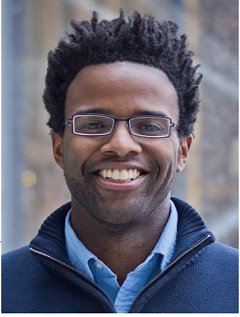
Michael Carbin is the Jamieson Career Development Assistant Professor of Electrical Engineering and Computer Science at the Massachusetts Institute of Technology (MIT) and leads the MIT Programming Systems Group. His research focuses on programming systems that address system uncertainty to enhance performance, energy efficiency, and resilience, particularly in environments involving neural networks , approximate computing , and unreliable hardware . His work spans probabilistic programming , quantum computing , and machine learning systems . Articles highlight contributions in pruning neural networks , quantum data structures , and compiler optimization , reflecting trends in deep learning , formal verification , and language-driven systems . Scientific Awards : MIT Frank E. Perkins Award (2020) Sloan Research Fellowship (2020) Facebook Research Award (2019) NSF CAREER Award (2018) Best Paper Awards at OOPSLA (2013, 2014) He has advised numerous graduate students and postdocs including Eric Atkinson, Cambridge Yang, and Charles Yuan, and served on program committees for conferences like POPL, OOPSLA, and ICLR. His group collaborates with institutions such as MIT CSAIL and explores applications in quantum algorithms and probabilistic inference .
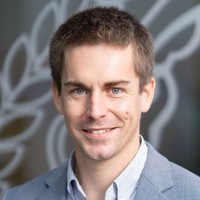
Christoph Keplinger serves as Managing Director of the Max Planck Institute for Intelligent Systems (MPI-IS) in Stuttgart, Germany, leading the Robotic Materials Department since 2020 and assuming overall institute leadership in 2023. He holds dual academic appointments as Honorary Professor at the University of Stuttgart and Eminent Visiting Professor of Soft Robotics at the University of Colorado Boulder, establishing him as a pivotal figure in bridging fundamental materials science with advanced robotics. His interdisciplinary approach integrates physics, chemistry, and engineering to pioneer breakthroughs in soft robotic systems. Keplinger's academic foundation includes a PhD in Soft Matter Physics from Johannes Kepler University Linz, Austria, followed by postdoctoral research at Harvard University focusing on mechanics and chemistry of soft materials. This unique background enabled his transition into robotics innovation, particularly in electrohydraulic actuation systems. His research program centers on three synergistic pillars: (I) soft robotics development through novel actuator technologies like HASEL artificial muscles; (II) energy capture mechanisms using soft materials; and (III) functional polymers engineered for robotic applications. This work produces transformative hardware that mimics biological functionality, with significant implications for human-robot interaction, medical devices, and sustainable robotics systems. His group employs cutting-edge materials synthesis and characterization techniques to create lifelike robotic components. Analysis of recent publications reveals dominant trends in wearable haptic interfaces, electrohydraulic actuation systems, and tremor-suppression technologies. The research consistently leverages HASEL (Hydraulically Amplified Self-healing Electrostatic) technology to achieve muscle-like performance in soft actuators, with applications spanning from fingertip haptic feedback to underwater manipulation systems. This trajectory demonstrates a clear progression from fundamental material properties toward practical implementations in medical rehabilitation and human augmentation. His exceptional contributions have earned prestigious recognition: 2017 Packard Fellowship for Science and Engineering, awarded for high-impact interdisciplinary research 2021 Alexander von Humboldt Professorship (declined to remain at MPI-IS), Germany's most valuable international research award 2013 EAPromising European Researcher Award from the European Scientific Network for Artificial Muscles As principal investigator, Keplinger leads a dynamic interdisciplinary research group while securing competitive funding for frontier projects. His entrepreneurial vision materialized in 2018 through co-founding Artimus Robotics, where he serves as Chief Science Officer to commercialize HASEL technology. This dual commitment to academic research and industry translation exemplifies his dedication to real-world impact, particularly in creating biodegradable and sustainable soft robotic solutions. The Robotic Materials Department operates state-of-the-art facilities for materials fabrication, robotic integration, and haptic interface development. The team maintains strong collaborations across MPI-IS departments and external institutions including the University of Colorado Boulder, fostering innovation in sustainable robotics through initiatives like biodegradable electrohydraulic actuators. Current projects focus on wearable tremor suppression systems, electrohydraulic locomotion platforms, and energy-autonomous soft robots that address critical challenges in medical rehabilitation and human augmentation.
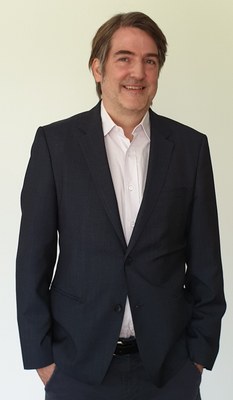
Stefanie Mueller is the TIBCO Career Development Associate Professor at MIT's Electrical Engineering and Computer Science Department, with joint affiliation in Mechanical Engineering. She leads the HCI Engineering Group at the Computer Science and Artificial Intelligence Laboratory (CSAIL), focusing on advancing fabrication techniques through hardware/software innovations that enable novel object interactions. Develops computational fabrication methods combining photochromic dyes, lenticular lenses, birefringent materials, and optical illusions Co-chaired ACM CHI 2023 and ACM UIST 2020 program committees Recipients of 9 MIT EECS Best Undergraduate Researcher Awards among mentees Her research spans four key directions: Appearance-changing Objects: Photo-Chromeleon (ACM UIST 2019), Lenticular Objects (ACM UIST 2021), and Polagons (ACM CHI 2023) demonstrate reprogrammable surfaces through advanced materials and optical engineering. Tracking Systems: InfraredTags (ACM CHI 2022) and G-ID (ACM CHI 2020) enable passive object tracking via infrared markers and slicing artifacts. Embedded Sensing: MechSense (ACM CHI 2023) and Sprayable User Interfaces (ACM CHI 2020) integrate sensing capabilities into complex geometries. Curved Surface Prototyping: FlexBoard (ACM CHI 2023) and CurveBoard (ACM CHI 2020) develop specialized tools for non-planar electronics. Her recent publications focus on functionality segmentation (UIST 2023), fluorescent markers (UIST 2023), and machine-knitted haptics (UIST 2023). These works combine machine learning, material science, and interactive design principles to push fabrication boundaries. Scientific recognition includes: 2022 MIT Technology Review Innovators Under 35 2020 Microsoft Research Faculty Fellowship 2020 Alfred P. Sloan Research Fellowship 2019 ACM UIST Best Paper Award 2019 NSF CAREER Award 2018 MIT EECS Outstanding Educator Award 2017 Forbes 30 Under 30 in Science Mentoring 9 PhD students and over 20 master's students, her lab has produced 20+ publications at top HCI conferences. She redesigned MIT's 6.810 Engineering Interactive Technologies course during the pandemic, maintaining hands-on learning through home electronics kits and Slack-based collaboration.
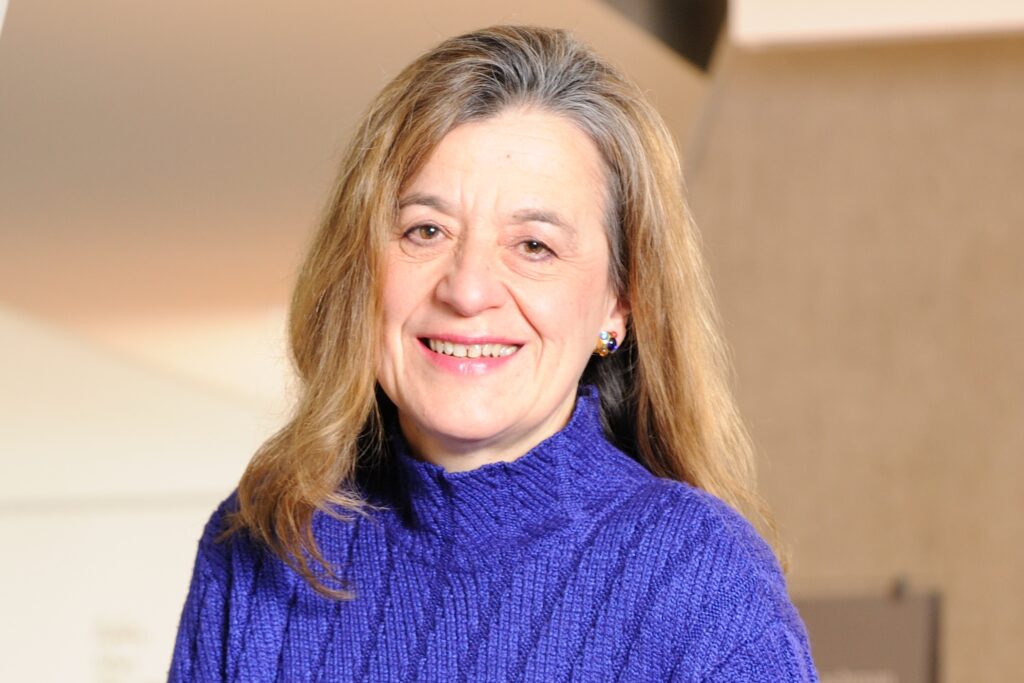
Prof. Dr. Christian Breitsamter is a Professor at the Technische Universität München (TUM), leading the Chair of Aerodynamics and Fluid Mechanics within the TUM School of Engineering and Design. He has held this position since 2007 and has been a member of key committees such as the ICAS Programme Committee and STAB-Programmleitung. His research focuses on aerodynamics of aircraft and rotorcraft configurations, including vortex dynamics, aeroelasticity, and fluid-structure interaction. Education: PhD in Aerodynamics (1997) Master’s in Aerospace Engineering (1989) Research Interests: Prof. Breitsamter’s work spans experimental and numerical studies of high-agility aircraft, helicopter aerodynamics, and advanced wing designs. Key areas include leading-edge vortices, gust load mitigation using flexible wings, and flow control techniques. His group investigates cutting-edge topics like deep learning for buffet prediction and hybrid neural networks for aerodynamic modeling. Awards: Willy Messerschmitt Preis (1999) AIAA Associate Fellow (2007) Advising & Grants: While specific student names are not listed, his research involves collaborative projects with industry partners (e.g., RACER Compound Helicopter) and EU initiatives like the FURADO program. His team contributes to the NFDI4ING infrastructure for engineering data. Labs/Teams: Active in the Aerodynamics Wind Tunnel facilities (Windkanäle A/B/C) and leads the SAGITTA flying wing demonstrator project. His group also explores membrane wings and elasto-flexible morphing technologies.
Dongwoo Kim is a researcher affiliated with Hanyang University, ERICA Campus (Department of Electronics and Communication Engineering) and has previously collaborated with institutions like POSTECH , Chungnam National University , and Microsoft . His work spans interdisciplinary domains in Computer Science and Engineering . Hanyang University, ERICA Campus - Department of Electronics and Communication Engineering POSTECH - Power Analog Electronics & Semiconductor Devices Lab Microsoft Chungnam National University Kim's research focuses on formal verification of automotive control software, deep learning applications in environmental monitoring, 3D modeling for indoor positioning, and machine learning for signal processing. His recent publications highlight advancements in graph neural networks (GNNs), including analyzing oversmoothing and gradient dynamics, as well as developing geometric vision-language models with domain-agnostic encoders. His 15 most recent articles (2023-2025) address topics like: Optimizing hybrid electric vehicle engine performance 3D modeling for indoor localization GNN training stability UAV-based environmental monitoring Algorithm difficulty prediction for programming problems Millimeter-wave antenna design Kim collaborates with researchers in software engineering , signal processing , and environmental science domains. His work intersects formal methods , applied machine learning , and embedded systems research.
Günter Rote is a Professor in the Department of Computer Science at Freie Universität Berlin, specifically within the Theoretical Computer Science group (Arbeitsgruppe Theoretische Informatik). He holds a formal academic title of Professor Dr. and is affiliated with the Faculty of Mathematics and Computer Science. His research focuses on theoretical computer science, computational geometry, algorithms, and discrete mathematics. Key research interests include geometric algorithms, optimization problems (e.g., shortest paths, traveling salesman problems), and algorithm design for parallel computing systems. His work spans topics such as systolic arrays, convex hulls, and combinatorial optimization. Rote’s contributions include foundational studies on computational geometry problems, algorithmic complexity, and practical applications in energy equity and infrastructure design. Publications highlight contributions to solving extremal equations, polygon transformations, and the quadratic assignment problem. He has been active in academic leadership, mentoring students, and contributing to computational science communities. His email is rote@inf.fu-berlin.de, and his office is located at Takustraße 9 in Berlin.
Prof. Oliver Seitz leads the Bioorganic Synthesis research group at the Department of Chemistry, Faculty of Mathematics and Natural Sciences, Humboldt University of Berlin. His lab focuses on cutting-edge chemical biology approaches for protein/nucleic acid interrogation, with recent work advancing DNA/RNA-programmed assemblies for cellular imaging and therapeutic applications. Research spans chemical protein synthesis, glycoprotein/phosphoprotein engineering, and nucleic acid-templated reactions. Key innovations include Forced Intercalation (FIT) probes for wash-free RNA imaging, loss-of-affinity principles for catalytic efficiency, and peptide-PNA conjugates for targeted cellular delivery. The group actively develops tools for live-cell protein labeling and biomolecular spatial screening. Recent publications (2021-2024) emphasize fluorescence-based detection systems, catalytic templated reactions, and therapeutic peptide synthesis. Trends show increasing sophistication in multi-dye probes, glycan engineering, and RNA-triggered pro-drug activation. Scientific awards include: Max Bergmann Award (2019) Prof. Seitz actively advises doctoral students, with recent graduates Marvin Björn Stutz (2023, magna cum laude ), Dino Gluhacevic von Krüchten (2023, summa cum laude ), and Sophie Schöllkopf (2023, magna cum laude ). Current PhD candidates include Ekaterina Kazakova (glycoprotein synthesis), Alina Herfort (phosphoproteins), and Lina-Marie Beck (peptide-nucleic acid conjugates), with postdocs like Dr. Mandana Oloub (viscosity sensors). The Bioorganic Synthesis lab operates within Berlin's vibrant chemical research ecosystem, utilizing specialized techniques for chemical protein synthesis and nucleic acid detection. Recent team growth reflects ongoing projects in RNA imaging, catalytic templated reactions, and therapeutic conjugate development, supported by open positions for new researchers.
Prof. Dr. Roland Zengerle serves as Full Professor for Application Development at the Institute of Microsystems Technology within the Faculty of Engineering at Albert Ludwigs University of Freiburg, concurrently holding the position of Director at Hahn-Schickard Institute for Microanalysis Systems in Freiburg. His academic leadership spans microsystems engineering with a focus on translational research bridging fundamental science and clinical applications. Zengerle's research expertise centers on Microfluidics, Lab-on-a-Chip systems, Bio-MEMS, Electrochemical Energy Systems, and Tomographic Reconstruction of Mesoporous Materials. He pioneers hybrid manufacturing techniques integrating molten metal printing with polymer processing to develop point-of-care diagnostic platforms and advanced energy systems. Current projects include UTI-Diag for urinary tract infection diagnosis and PhotonMed, a 32-million-euro medical technology initiative where his MEMS Applications Laboratory develops centrifugal microfluidic solutions. Analysis of his recent publications reveals a dominant trend toward multi-technology integration: centrifugal microfluidics combined with 3D bioprinting for organoid-based drug testing, molten metal printing for flexible electronics, and bead-based immunoassays for infectious disease detection. The work demonstrates strong clinical translation focus, particularly in cancer diagnostics (circulating tumor cell isolation), infectious disease testing (TB diagnostics), and regenerative medicine (spheroid/organoid handling). His laboratory has secured significant funding for high-impact projects including: UTI-Diag: Molecular diagnostics for urinary tract infections PhotonMed: Medical technology innovation consortium livMatS: Living, Adaptive and Energy-autonomous Materials Systems Zengerle actively mentors researchers through Freiburg's Master Lab program and Writer's Studio initiative while promoting young talent via Bootcamp training. His group maintains strategic alliances with Hahn-Schickard spin-offs and industry partners, leveraging university cleanroom facilities and specialized service centers for microfabrication. The MEMS Applications Laboratory operates as a hub for interdisciplinary innovation, combining microfabrication expertise with clinical insights to develop commercializable diagnostic solutions. Current infrastructure supports centrifugal microfluidic cartridge development, 3D-bioprinting of tissue models, and electrochemical sensor integration, with ongoing work focused on automating complex biological workflows for point-of-care applications.
Anna C. Balazs is Distinguished Professor and John A. Swanson Chair of Engineering in the Department of Chemical Engineering at the University of Pittsburgh, with an adjunct appointment in Chemistry and visiting professorships at Scripps Research Institute, UT-Austin and Oxford University. In 2025 she receives the €10,000 Gutenberg Research Award from Johannes Gutenberg University Mainz (JGU) for her pioneering theoretical work on smart soft materials. She earned an A.B. in Physics from Bryn Mawr College (1975) and a Ph.D. in Materials Science from MIT (1981), followed by post-doctoral research at Brandeis, MIT and UMass. Research interests span theoretical and computational soft-matter physics, focusing on: Statistical-mechanical modelling of polymer blends and composites Self-oscillating and chemo-responsive hydrogels Active matter, enzyme-powered swimmers and self-propelling sheets Self-healing, shape-morphing and bio-inspired materials Computer simulation of colloidal and interfacial phenomena Recent publications (2023-2025) demonstrate a clear trend toward integrating chemistry, fluid mechanics and elasticity to create life-like, autonomous soft machines. Key contributions include: Harnessing enzyme pumps to drive macroscopic sheet locomotion Designing chemically communicating micro-post arrays Creating dissipative materials with programmable, hierarchical 3-D architectures Scientific awards include: Gutenberg Research Award 2025 Polymer Physics Prize, American Physical Society SF Boys-A. Rahman Award, Royal Society of Chemistry Langmuir Lectureship Award, American Chemical Society Election to the U.S. National Academy of Sciences (2021) She serves on the Advisory Board of the DOE-BES Materials Council and on editorial boards for Langmuir , Soft Matter and Polymer Reviews . Her group collaborates closely with experimental teams world-wide, including the DFG-NSF “Confine” partnership with JGU and the CoM2Life Cluster of Excellence initiative.
Prof. Laura Na Liu is a Professor and Director at the 2nd Physics Institute, University of Stuttgart, with a dual affiliation at the Max Planck Institute for Solid State Research. Her research bridges nanophotonics, DNA nanotechnology, and plasmonics, focusing on dynamic systems for biomedical applications, optical metamaterials, and synthetic biology. Key contributions include DNA-templated plasmonic architectures, reconfigurable metasurfaces, and synthetic cell components using DNA nanotechnology. Academic training includes advanced work in physics and materials science, with a career spanning leading institutions. Research interests emphasize the interplay between nanoscale structures and optical/chemical functionalities. Recent publications highlight innovations in programmable nanomaterials, real-time molecular tracking, and high-performance holography systems. Her work integrates experimental and theoretical approaches, addressing challenges in biophotonics, nanoelectronics, and smart materials. Awards and recognitions are listed in institutional records, while her lab actively collaborates with industry on applied photonics solutions.
Prof. Dr.-Ing. Martin Hoffmann is a Professor of Microsystems Technology at the Faculty of Electrical Engineering and Information Technology, Ruhr University Bochum. His academic career began at the University of Dortmund, where he earned his doctorate in high-frequency technology and later habilitated in microsystems technology (2003). He held roles as a private lecturer and industry researcher before becoming a university professor at TU Ilmenau (2006). He joined Ruhr University in 2017, specializing in cutting-edge microsystems research. His research focuses on MEMS, THz technology, microactuators, and nanoimprint lithography. Key projects include cooperative microactuator systems, THz biosensors, and energy-autonomous sensors. He collaborates with institutions like TU Ilmenau, Purdue University, and Nagoya University through international programs like Double Degree and Erasmus. His work spans academic advising, grants, and industry partnerships (e.g., HL Planartechnik GmbH, Silicon Manufacturing Itzehoe GmbH). Notable contributions include silicon grass nanostructuring, palladium-based gas sensors, and wafer-scale MoS₂ deposition. His lab develops micromechanical systems for biomedical, environmental, and defense applications.
Professor He Bin is Dean of the Department of Materials Science and Engineering at the Shenzhen University of Technology , where he has served since 2025.01. He is a core member of the Guangdong Provincial Higher Education Crystal Growth and Application Engineering Technology Center and recognized as a Shenzhen Overseas High-Level Talent . Previously, he was an Associate Professor at Shenzhen University of Technology (2018-2025) and held research positions at Southern University of Science and Technology and University of Hong Kong. PhD in Materials Physics and Chemistry from Beijing University of Technology (2008) Bachelor in Materials Forming and Control Engineering from China University of Petroleum (1998) His research focuses on diamond and related materials , thin film technology , and nanostructures , with applications in thermal management , photoelectrocatalysis , precision tooling , cultured diamond , 3D printing , and ultra-wide bandgap semiconductors . Recent publications highlight advancements in photoelectrochemical systems , electrocatalytic water splitting , and surface engineering . Scientific achievements include: Shenzhen University of Technology Major Project and Scientific Research Platform Construction Award (2019) First Prize for High-level Paper (2018) Peacock Talents Category C (2018) He has secured over 20 research grants, including projects from the Shenzhen Higher Education Stable Support Program and Guangdong Province Characteristic Innovation Projects. His work spans 12 representative papers , 3 book chapters , and 6 national patents in diamond-based technologies and heterojunction systems.
Heiner Giefers is a Professor for Cloud Computing at the Department of Computer Science and Natural Sciences at Southwestphalia University of Applied Sciences since 2018. Prior to this position, he worked as a Research Staff Member at IBM Research - Zürich (2013-2018), focusing on hardware acceleration in cloud environments, implementation of big data algorithms on FPGAs, and development of hardware platforms for approximate and in-memory computing. Dr. Giefers received his doctorate (Dr. rer. nat.) from Universität Paderborn in 2012 with a dissertation titled "Design and Programming of Reconfigurable Mesh based Many-Cores." His academic journey at Universität Paderborn includes serving as an Academic Council Member (Akademischer Rat a.Z.) from 2008-2013 and as a Scientific Staff Member from 2006-2012, where he taught digital technology and computer architecture. Professor Giefers' research focuses on energy-efficient computing, particularly through hardware acceleration using FPGAs for cloud and AI workloads. His work spans cloud computing infrastructure, hardware-software co-design, approximate computing, in-memory computing, and energy-efficient implementations of machine learning algorithms. He has made significant contributions to the field of reconfigurable hardware for high-performance computing applications. His recent publications show a strong trend toward applying hardware acceleration techniques to artificial intelligence and machine learning workloads, with a particular focus on energy efficiency. His work bridges the gap between theoretical computer science and practical hardware implementation, often resulting in patented technologies that address real-world computing challenges in cloud environments. Best Paper Award for "Stochastic Matrix-Function Estimators: Scalable Big-Data Kernels with High Performance" (2016) Best Paper Award Nomination for "Energy-Efficient Stochastic Matrix Function Estimator for Graph Analytics on FPGA" (2016) Best Paper Award Nomination for "Analyzing the energy-efficiency of dense linear algebra kernels by power-profiling a hybrid CPU/FPGA system" (2014) Best Paper Award Nomination for "A Triple Hybrid Interconnect for Many-Cores: Reconfigurable Mesh, NoC and Barrier" (2010) Professor Giefers actively supervises numerous Bachelor's and Master's students, with over 50 completed theses covering topics from machine learning and cloud computing to IoT systems and hardware acceleration. He leads the "Energy-efficient AI" project (eki), which aims to increase the energy efficiency of AI systems through approximation techniques for FPGA implementation. Additionally, he collaborates with Prof. Dr. Christian Plessl on the "Digital teaching materials with Jupyter Notebooks" project, creating interactive learning materials that integrate teaching content, program code, and results into a single document. His work extends to practical applications through multiple patents related to FPGA implementations, neural networks, and memory systems, demonstrating his commitment to translating research into real-world solutions.
Johannes Maly is an Assistant Professor at the Bavarian AI Chair for Mathematical Foundations of Artificial Intelligence at LMU Munich. He previously held postdoctoral positions at Catholic University of Eichstaett-Ingolstadt and RWTH Aachen University, and completed his PhD at TUM Munich under Prof. Massimo Fornasier. PhD in Mathematics (2019, TUM Munich) M.Sc. in Mathematics (2015, TUM Munich) B.Sc. in Mathematics (2013, TUM Munich) His research focuses on mathematical data science and machine learning, specifically addressing: Robust covariance estimation under quantization Neural network approximation properties Implicit bias in gradient descent training Multi-structured signal recovery Quantization effects in deep learning and compressed sensing His recent publications analyze dithered quantization in covariance estimation, implicit regularization in overparameterized models, and multi-structured data recovery. He applies mathematical rigor to practical challenges in wireless communications (e.g., MIMO systems) and neural network training. Scientific recognition includes: relAI Fellow MCML Associate He supervises code/toolbox development for reproducibility and teaches graduate courses in convex optimization, high-dimensional probability, and mathematical data science. His work bridges theoretical mathematics and applied signal processing.
Prof. Dr.-Ing. Bastian Welsch serves as a Professor in the Department of Civil and Environmental Engineering at Bochum University of Applied Sciences, where he holds key leadership roles including Head of the Renewable Energy Systems program, Chairman of the Renewable Energy Systems Committee, and member of both the Departmental Council and founding board of the Energy Transition Institute (EnWI). His academic focus centers on geothermal energy systems and renewable energy integration within sustainable infrastructure frameworks. Welsch's research expertise spans medium-deep borehole thermal energy storage, geothermal probe modeling, and renewable energy system optimization. His work addresses critical challenges in seasonal heat storage, district heating integration, and groundwater interaction with geothermal systems. He has pioneered simulation tools like BASIMO for optimizing borehole heat exchanger arrays and investigated permeability changes affecting regulatory approvals. His research bridges technical engineering with environmental and economic sustainability assessments. Analysis of his 15 most recent publications (2015-2020) reveals a strong trajectory toward practical implementation of geothermal storage solutions, with increasing emphasis on economic viability, environmental impact metrics, and integration with 4th generation district heating grids. His work consistently combines numerical modeling with real-world system design, demonstrating growing sophistication in optimization algorithms and multi-system coupling approaches. As an educator, Welsch teaches across both bachelor's and master's programs, covering foundational courses like Geology and Georesources alongside specialized subjects including Geothermal Energy Systems, Renewable Energies and Energy Supply, and advanced Geothermal Systems courses focusing on heating/cooling storage and electricity generation. He maintains regular consultation hours for students during academic terms.