James Emil Avery is an Associate Professor at the Department of Computer Science, Faculty of Science, University of Copenhagen. His research spans abstract interpretation, termination analysis, and quantum chemistry applications using Coulomb Sturmians. He actively contributes to program analysis, computational methods in physics, and discrete mathematics. Research areas: Formal languages, operator algebra, quantum theory, and computational nanoscience Academic activities: VILLUM Young Investigator Program (2017), Editor for IET Nanobiotechnology (2017-2021) Technical publications: 15+ works on quantum chemistry methods, graph theory, and parallel computing His recent work includes simulating fullerene formation, solving wave equations on non-Euclidean surfaces, and developing symmetry-adapted basis sets. He has presented at international conferences on topics ranging from wave equation modeling to carbon nanostructure analysis. Scientific Awards: VILLUM Young Investigator Program grant recipient As an active researcher, Avery has participated in collaborative projects like the ERC Starting Grant evaluation and contributed to programming language development through the Bohrium framework. His editorial work at IET Nanobiotechnology demonstrates commitment to scientific peer review.
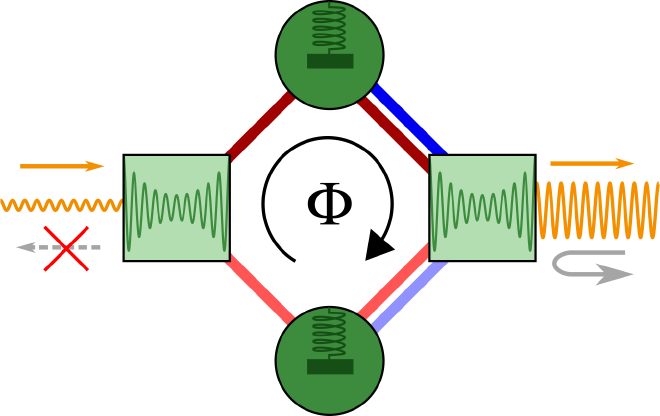
Daniel Hendrik Malz is an Assistant Professor in the Department of Mathematical Sciences at the University of Copenhagen. His research focuses on theoretical aspects of quantum technology, with particular emphasis on quantum information theory, quantum optics, and many-body physics. He is embedded in the Quantum for Life center and QMATH research group, and maintains strong collaborations with experimental groups at the nearby Niels Bohr Institute. Dr. Malz received his PhD from the University of Cambridge (2015-2018) under the supervision of Andreas Nunnenkamp, following his BA and MMath at Trinity College, Cambridge (2011-2015). He held postdoctoral positions at the Max Planck Institute of Quantum Optics (2018-2022) working with Ignacio Cirac, and at the Technical University of Munich (2022-2023) with Johannes Knolle, before joining the University of Copenhagen as an Assistant Professor in April 2023. His research program spans several interconnected areas in quantum physics. In quantum optics, he investigates many-body phenomena in open quantum systems, particularly collective effects like superradiance in waveguide QED and chiral systems. His work in quantum information theory focuses on the computational complexity of quantum many-body problems, random quantum circuits, and the boundary between classically simulable and quantum-computationally hard problems. He has made significant contributions to tensor network state preparation, developing efficient methods for creating these important quantum states. In quantum simulation, he explores novel approaches to simulating complex quantum systems, particularly using atomic arrays and superconducting circuits. Dr. Malz's publication record shows a strong focus on theoretical quantum physics with increasing engagement with experimental implementations. His recent work demonstrates a trend toward more applied research that bridges theoretical concepts with experimental feasibility, particularly in the areas of photonic quantum computing and superconducting circuit implementations. The breadth of his work spans fundamental theoretical questions to potential applications in quantum simulation and computation. Dr. Malz is actively building his research group at the University of Copenhagen and is hiring both PhD students and postdoctoral researchers. He maintains strong connections with experimental groups, particularly in the quantum optics section of the Niels Bohr Institute, and is part of Copenhagen's vibrant quantum research ecosystem, which includes the Novo Nordisk Quantum Computing Programme. His research group operates within the Department of Mathematical Sciences but is deeply integrated with Copenhagen's broader quantum research community, including collaborations with the Niels Bohr Institute and participation in the Quantum for Life center. This interdisciplinary environment allows for close interaction between theoretical and experimental researchers across multiple quantum platforms.
Hans Hüttel is an Associate Professor in the Department of Computer Science at Aalborg University's Technical Faculty of IT and Design. His research focuses on theoretical foundations of computer science with emphasis on programming languages and formal methods. His research interests span process calculi, type systems, concurrency theory, program synthesis, and security protocols. The fingerprint analysis of his work shows strong emphasis on Type Systems (100%), Process Algebra (27%), Cryptographic Protocols (22%), and Branching Time (18%). His recent work demonstrates a growing interest in the intersection of formal methods with emerging technologies like large language models. Hüttel's publication trend shows consistent output with 97 research outputs including 56 articles in proceedings, 17 journal articles, and 9 conference articles in journals. His most recent work (2024-2025) focuses on type systems for programming languages, program synthesis with LLMs, and functional array programming. Scientific Awards: CONCUR Test-of-Time Award (Sept 2020) Hüttel has participated in multiple research projects including TREsPASS (Technology-supported Risk Estimation by Predictive Assessment of Socio-technical Security), BETTY (Behavioural Types for Reliable Large-Scale Software Systems), and educational initiatives like PBL Exchange. He has 35 media appearances where he discusses topics ranging from AI ethics to university education reform. He leads research within the Distributed, Embedded and Intelligent Systems group and has been active in educational development through problem-based learning (PBL) initiatives at Aalborg University.
Tim McRae is an Associate Professor at the University of Southern Denmark's Institute of Mechanical and Electrical Engineering, specializing in high-frequency power electronics and energy conversion systems. His research focuses on advancing DC-DC converter technologies through geometric programming and optimizing energy efficiency in drone systems interacting with high-voltage environments. Power Electronics and Power Conversion High-Frequency Electronics Drone Safety Systems Recent research outputs demonstrate his expertise in sensor-free current measurement architectures, electromagnetic discharge modeling for aerial robotics, and geometric programming applications in energy conversion. His work spans hardware design, algorithm development, and safety-critical system validation. In projects like ZEELA (Zero Electrical Energy Leakage Architecture), he explores energy recovery techniques, while collaborations with industry partners focus on green energy integration and specialized converter topologies for hydrogen systems. Teaching roles include lecturing and supervising students in power electronics fundamentals and high-frequency converter design.
James William Bryson serves as Assistant Professor at the University of Copenhagen's Biotech Research & Innovation Centre (BRIC), leading the Lund Group LEAD. His research focuses on developing CRISPR-based synthetic biology tools for mammalian cell engineering with significant industry relevance. His primary research interests include Synthetic Biology , CRISPR Gene Editing (specializing in Cas12/Cas13 variants), Mammalian Cell Engineering , and Academic Leadership . He pioneers techniques for crRNA array design and multiplexed transcriptional activation systems, while also investigating leadership development frameworks for postdocs and principal investigators. Analysis of his 2022-2025 publications reveals consistent innovation in CRISPR-Cas systems for precise genome manipulation, with increasing emphasis on therapeutic applications and leadership competency models. His work bridges molecular engineering and academic development through both technical tools and institutional frameworks. Dr. Bryson directs the Lund Group LEAD at BRIC, which maintains active collaborations across biotechnology sectors as evidenced by patent references and social media engagement (X, Bluesky). The group's research demonstrates strong translational potential in gene therapy and academic training methodologies.
Nikolaj Hey Hinnerskov is a PhD Fellow in the Programming Languages and Theory of Computation (PLTC) section at the Department of Computer Science, University of Copenhagen. His research is embedded within DIKU's PLTC group, focusing on foundational and applied programming language systems. His core research spans: Programming Language Theory and Type Systems Compiler Design for Array-Based Languages Automatic Differentiation Techniques GPU-Accelerated Algorithm Development Rank-Polymorphic Function Inference Time Series Analysis Optimization Recent work demonstrates a strong convergence of programming language theory and high-performance computing, particularly in advancing compiler techniques for functional array languages like Futhark and optimizing scientific computations on GPUs. His publications address critical challenges in type inference, automatic differentiation, and parallel time-series decomposition. No scientific awards are documented in available sources. As a doctoral researcher, he operates under faculty supervision without independent advisees or grant leadership. His contributions align with DIKU's PLTC projects, including language design and performance optimization initiatives. He actively collaborates within the PLTC research ecosystem, contributing to GPU-based computational methods and programming language innovations alongside DIKU faculty and international researchers.
Torben Ægidius Mogensen is an Associate Professor at the Department of Computer Science, University of Copenhagen, where he leads research in the Programming Languages and Theory of Computation section. His office is located at Universitetsparken 5, Copenhagen. His primary research focuses on: Automatic program analysis and transformation (especially partial evaluation and semi-inversion) Compiler technology for functional languages Domain-specific language design Reversible computing systems and languages Algorithms, complexity theory, and automata theory Applications in graphics and fractal generation His recent publications demonstrate a strong focus on reversible computation systems, including specialized programming languages like Hermes for encryption, reversible processor architectures, and functional programming extensions. His textbook publications on compiler design (2024) and programming language implementation (2022) indicate significant contributions to computer science education and foundational knowledge. He teaches courses on compilers, programming language technology, and game development, and maintains active research collaborations internationally. He is fluent in Danish and English, with working knowledge of German and Romanian.
Anne Klitsch is a Guest Researcher at the Niels Bohr Institute, DARK Centre of Excellence, University of Copenhagen. Her research focuses on observational astronomy, particularly using the Atacama Large Millimeter/submillimeter Array (ALMA) and Multi Unit Spectroscopic Explorer (MUSE) to study galaxies and their circumgalactic medium. Her primary research interests include: Galaxy formation and evolution Circumgalactic medium studies Molecular gas in low-redshift galaxies Dusty star-forming galaxies ALMA calibration data analysis Statistical analysis of galaxy properties Dr. Klitsch's research demonstrates expertise in analyzing large astronomical datasets from ALMA and MUSE instruments. Her work often focuses on the relationship between galaxies and their surrounding environments, with particular attention to gas content, distribution, and the stellar properties of gas-rich systems. She has developed innovative approaches to utilizing ALMA calibration data for scientific discovery through the ALMACAL survey project. Her scientific contributions have been published in leading astronomy journals including Monthly Notices of the Royal Astronomical Society and Astronomy & Astrophysics, demonstrating her active research program and international collaborations in the field of observational astrophysics.
Henrik Clausen is a Professor in the Department of Cellular and Molecular Medicine at the University of Copenhagen's Faculty of Health and Medical Sciences. He leads the Copenhagen Center for Glycomics and is actively engaged in developing innovative technologies to advance the field of glycomics. His work focuses on transforming glycosciences from a specialist field into a mainstream 'Omics' discipline comparable to genomics and proteomics. Dr. Clausen earned his DDS in 1981 and Dr.odont (D.Sc.) in 1990, both from the School of Dentistry, Faculty of Health Sciences at the University of Copenhagen. His academic journey includes positions at the University of Washington in Seattle and the Biomembrane Institute, before returning to Copenhagen where he became Professor at the Institute of Cellular and Molecular Medicine in 2005. His primary research focuses on glycans that coat proteins in nature, with particular expertise in blood type conversion (transforming blood types A, B, and AB to blood type O) and cancer biomarkers. Through projects like GlycoDisplay, GlycoCRISPR, GlycoDesign, and GlycoView, his laboratory develops tools and community resources to make glycoscience more accessible to non-specialists. His current research includes a Lundbeck Foundation-funded program (2017-19) to develop a cell-based platform displaying all human glycans for high-throughput screening. Analysis of his recent publications reveals a strong focus on glycan-protein interactions, particularly in cancer and infectious disease contexts. His work spans structural biology, enzymology, and cell signaling, with applications in immunology, virology, and oncology. The research demonstrates how glycosylation affects receptor function, cell signaling, and pathogen-host interactions, with significant implications for therapeutic development. The Benzow Prize (1994) The Thureus Prize (1998) Mizutani Prize (1999) The Carlsberg Biotechnology Prize (2008) Professor Clausen serves on the editorial boards of Glycoconjugate Journal (since 1995) and Journal of Biological Chemistry (since 2004). He has organized numerous international conferences including Benzon Symposia, Nordic Glycobiology Symposia, and International Glycosyltransferase Symposia. His industry collaborations include advisory roles at Aptein Inc, Neose Inc, ZymeQuest Inc, and Millennium Pharmaceuticals. He directs the Copenhagen Center for Glycomics, which develops extensive glycopeptide libraries representing cancer-associated glycoforms of membrane glycoproteins. These libraries are printed on microarray slides to detect antibodies against cancer antigens in patient samples, with the goal of identifying autoantibody signatures as sensitive and specific cancer markers.
Carl-Johannes Johnsen is a Ph.D. student and Guest Researcher in the Department of Computer Science at the University of Copenhagen, specializing in reconfigurable computing and machine learning acceleration for X-ray food inspection systems. His research integrates FPGA-based hardware acceleration with compiler design for high-performance computing, focusing on programming models for Field-Programmable Gate Arrays and optimization of machine learning pipelines. Additional interests include concurrent and distributed programming education methodologies that prioritize conceptual understanding over formal proofs. Publication analysis (2019-2022) reveals consistent contributions to FPGA acceleration of scientific workloads (molecular dynamics), novel compiler vectorization techniques, and minimalist hardware implementations. His work bridges computer architecture, parallel computing, and practical applications in food safety inspection through cross-disciplinary collaboration. No scientific awards were documented in the source material. As an active doctoral candidate, Johnsen has no advisory responsibilities. Research grant details were not specified in the provided information. He operates within the Programming Languages and Theory of Computation research environment at the Department of Computer Science, engaging in international collaborations focused on hardware-software co-design as indicated by network analysis metrics.