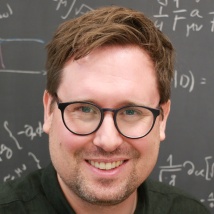
Prof. Julia Hearts is a Professor at the Technical University of Munich (TUM) , affiliated with the School of Natural Sciences . Her research focuses on biomedical imaging , particularly advancing X-ray computed tomography through phase-contrast and dark-field radiography for clinical and biological applications. Developing spectral detection techniques to enhance diagnostic accuracy Quantitative imaging for element-specific parameter extraction Utilizing synchrotron radiation and standard X-ray tubes Her recent publications demonstrate expertise in dark-field radiography for lung and breast imaging, phase-contrast tomography for tissue characterization, and multi-spectral X-ray analysis for material decomposition. Collaborative work spans oncology , pulmonology , and materials science . Contact: julia.herzen@tum.de
Prof. Tim Güneysu is a full Professor and Head of the Security Engineering department at the Faculty of Computer Science, Ruhr-Universität Bochum. He serves as Vice Dean for Strategy and Finances (since 2023) and previously as Speaker of the Horst-Görtz Institute for IT-Security (2020-2023). His academic journey includes roles as Associate Professor at the University of Bremen (2015-2017) and Assistant Professor at Ruhr-Universität Bochum (2011-2015). He also holds positions at the German Research Center for Artificial Intelligence (DFKI) and has conducted postdoctoral research at UMass Amherst. His research focuses on Security-by-Design principles, CAD for Security, and countermeasures against physical attacks. He emphasizes efficient cryptographic implementations and system-level hardware security. Key areas include post-quantum cryptography, side-channel resistant designs, and secure embedded systems. He has contributed over 200 publications in top venues, with recent work on FPGA-based cryptographic accelerators, secure hardware extensions (e.g., KeyVisor), and post-quantum algorithms for IoT. His research themes include agile signature acceleration, fault attack mitigation, and hardware-software co-design for security. Notable projects include CONVOLVE (edge-AI security) and QuantumRISC (quantum-safe systems). His work bridges theoretical cryptography with practical hardware implementations, emphasizing real-world security applications.
Prof. Philipp Reiss is a Professor of Lunar and Planetary Exploration Technologies at the Technical University of Munich (TUM), part of the TUM School of Engineering and Design. His academic journey includes a doctorate in lunar exploration (2018) and postdoctoral leadership of a research group, followed by ESA work on lunar mission instruments. He was appointed to his current role in 2022. Education: Bachelor's/Master's in Aerospace Engineering from Bremen University of Applied Sciences and TUM Doctorate in Lunar Exploration (TUM, 2018) Research Focus: Development of instruments for in-situ resource characterization (e.g., water detection on the Moon) Simulation of heat/mass transport in extraterrestrial environments Technologies for extreme environment exploration Legal and ethical frameworks for space resource utilization Recent Article Trends: Recent work emphasizes lunar water cycle analysis, space resource extraction technologies, and ESA mission instrument development. Key projects include PROSPECT payload design and thermal extraction of volatiles from regolith. Awards and Roles: ERC Grant Awardee (2024), Honorary Fellow at TUM Institute for Advanced Study Principal Investigator at ORIGINS Excellence Cluster (2022–present) Member of ESA’s PROSPECT science team (2019–present) Contributions to UN space resource legal discussions Advising & Grants: Supervises research projects on lunar rover systems and resource utilization. Secured funding through ERC grants and ESA collaborations. Advises on international space policy initiatives. Labs/Teams: Leads the Lunar and Planetary Exploration Professorship group at TUM, collaborating with ESA, JAXA, and the European Lunar Symposium. Active in developing planetary exploration tools like the PROSPECT permittivity sensor and MULE instrumentation.
Prof. Laura Na Liu is a Professor and Director at the 2nd Physics Institute, University of Stuttgart, with a dual affiliation at the Max Planck Institute for Solid State Research. Her research bridges nanophotonics, DNA nanotechnology, and plasmonics, focusing on dynamic systems for biomedical applications, optical metamaterials, and synthetic biology. Key contributions include DNA-templated plasmonic architectures, reconfigurable metasurfaces, and synthetic cell components using DNA nanotechnology. Academic training includes advanced work in physics and materials science, with a career spanning leading institutions. Research interests emphasize the interplay between nanoscale structures and optical/chemical functionalities. Recent publications highlight innovations in programmable nanomaterials, real-time molecular tracking, and high-performance holography systems. Her work integrates experimental and theoretical approaches, addressing challenges in biophotonics, nanoelectronics, and smart materials. Awards and recognitions are listed in institutional records, while her lab actively collaborates with industry on applied photonics solutions.
Prof. Dr. agr. Kaspar Bienefeld is an Honorary Professor at the Humboldt University of Berlin within the Albrecht Daniel Thaer-Institute of Agricultural and Horticultural Sciences. His research focuses on honeybee genetics, breeding optimization, and disease resistance mechanisms. Research Interests: Honeybee population genetics, Varroa mite resistance, genomic selection, and behavioral ethology. Key Contributions: Development of SNP assays for resistance traits, simulation studies for breeding schemes, and conservation strategies like Europe’s first honeybee gene bank. Publications: Over 40 peer-reviewed articles spanning honeybee breeding, genetic parameter estimation, and stress biomarker analysis.
Prof. Dr. Michael Kramer is a Professor of Astrophysics at the University of Manchester and a Scientific Member (Managing Director) at the Max Planck Institute for Radio Astronomy. He leads the COMPACT Research Group and specializes in radio astronomical fundamental physics. University of Manchester: Professor for Astrophysics Max Planck Institute for Radio Astronomy: Managing Director, Radio Astronomical Fundamental Physics Research Interests: Dr. Kramer focuses on pulsars , neutron stars , and gravitational physics , using these as tools to test general relativity , detect gravitational waves , and study transients in the Milky Way. Recent Research Trends: His 15 most recent publications emphasize fast radio bursts (FRBs) , axion dark matter searches , black hole imaging , and pulsar timing arrays for gravitational wave detection. Studies include the M87 jet, Galactic Center magnetars, and MeerKAT telescope optimizations.
Prof. Johannes Zeiher is a Professor at Ludwig Maximilian University (LMU) and leads the independent research group Quantum Matter Interfaces . His work focuses on studying quantum systems of laser-cooled atoms coupled to optical resonators, aiming to advance quantum error correction and quantum many-body physics. He secured €3.3 million from Germany's BMBF for the SNAQC project on scalable neutral atom quantum computing. Research interests include quantum interfaces between atoms and photons, Rydberg arrays in optical tweezers, and hybrid architectures for quantum technologies. His group explores non-destructive measurements, feedback mechanisms, and entanglement generation in quantum systems. Key experimental tools include high-resolution microscopy and resonator-coupled systems. Prof. Zeiher's lab is located at the Max Planck Institute of Quantum Optics, collaborating on cutting-edge quantum technologies. He holds dual affiliations with LMU and the MPQ, advancing both theoretical and experimental frontiers in quantum computing and quantum simulation. His work bridges atomic physics, quantum optics, and condensed matter systems to realize practical quantum devices.
Prof. Dr.-Ing. Marc Reichenbach serves as the Chair of Integrated Systems at the Institute for Applied Microelectronics and Data Technology at the University of Rostock. His office is located at Albert-Einstein-Straße 26, 18059 Rostock, Room 102 (1st floor), with contact information including telephone (0381) 498 7270 and email marc.reichenbach@uni-rostock.de. Professor Reichenbach's research focuses on the intersection of hardware design and artificial intelligence, with particular expertise in memory technologies and computing architectures. His work spans several key areas: Development of specialized computer architectures for deep learning applications Advanced VLSI design and CPU architecture Emerging memory technologies, particularly RRAM (Resistive Random-Access Memory) FPGA-based acceleration systems Hardware implementations for neural networks and AI applications Analysis of Professor Reichenbach's recent publications (2023-2025) reveals a strong focus on memory computing technologies, particularly RRAM-based systems. His work demonstrates expertise across multiple dimensions of computer architecture including ASIC design, FPGA acceleration, and novel memory systems. The publications show a clear trajectory toward implementing AI and machine learning capabilities directly in hardware, with applications ranging from edge computing to satellite systems. A significant portion of his recent work addresses the challenges of implementing neural networks using emerging memory technologies, focusing on efficiency, reliability, and performance optimization. Professor Reichenbach teaches several advanced courses including: Computer architectures for deep learning applications Project seminar Embedded Systems Advanced VLSI Design (Advanced CPU Design) His research group appears to be actively engaged in several cutting-edge projects related to hardware acceleration for AI applications, memory computing, and embedded systems design. The group collaborates on projects involving digital twins for hardware systems, real-time operating systems for heterogeneous architectures, and specialized computing systems for various applications from medical devices to drone technology.
Joachim Ritter is apl. Professor of Geophysics at the Karlsruhe Institute of Technology (KIT) , Geophysical Institute (GPI). He has been with KIT since 2002, after completing his habilitation at the University of Göttingen. His research integrates experimental seismology with field experiments across Europe and Africa. Education Diplom in Geophysics, University of Karlsruhe (TH), 1985–1991 Doctorate (Dr. rer. nat.), Faculty of Physics, University of Karlsruhe, 1996 Habilitation, Faculty of Physics, University of Göttingen, 2002 Research Interests Ritter’s work spans experimental seismology , seismic tomography , seismic anisotropy , and induced seismicity . He operates mobile broadband arrays to image Earth’s interior, studies deformation in the mantle and lithosphere, and monitors volcanic regions such as the Eifel volcanic field and the East African Rift. Additional foci include wind-turbine-induced ground motion and urban seismology . Publication Trends Recent publications (2022–2025) concentrate on volcano-seismic monitoring in Germany and Greece, wind-energy seismic emissions , shear-wave splitting beneath Central Europe, and fault imaging of active tectonic zones. The breadth reflects both methodological advances and targeted regional studies. Scientific Awards 2017 Faculty Teaching Award, KIT Advising & Committees Ritter has supervised numerous master theses and PhD projects, and he leads the KArlsruhe BroadBand Array (KABBA). He has served on national and international committees including the European Seismological Commission, AlpArray Science Council, and the German Geophysical Society Board. Labs & Teams He heads the Working Group on Analysis of Wind Turbines and previously acted as Spokesperson for the KIT Competence Field "Geosphere and Risk Management". His team operates dense seismological networks across Germany and Europe.
Andrew R. Gibson is a Professor and Head of the Biomedical Applied Plasma Technology research group at Ruhr-Universität Bochum , Germany. His work bridges plasma physics with biomedical applications, using surface dielectric barrier discharges for environmental remediation and water treatment. He is affiliated with the Faculty of Electrical Engineering and Information Technology. Department: Biomedical Applied Plasma Technology Email: gibson@aept.rub.de Research interests focus on plasma chemistry, biomedical plasma technology, and environmental engineering. His team investigates reactive oxygen/nitrogen species (ROS/RNS) generation, gas-liquid interactions, and plasma-based pollution control systems. Recent publications (2025-2023) analyze flow field dynamics in DBDs, radical transport mechanisms in plasma-treated water, and advanced diagnostics for low-pressure inductively coupled plasmas. These studies often integrate experimental and computational approaches. Laboratory : Leads the Biomedical Applied Plasma Technology group, developing scalable plasma systems for VOC conversion and microbial inactivation (e.g., B. subtilis spores).
Prof. Dr. rer. nat. Rainer Leupers is a faculty member at RWTH Aachen University, chairing the Department of Software for Systems on Silicon. His research focuses on embedded systems, hardware-software co-design, virtual prototyping, and security in computing-in-memory architectures. He has published extensively on RRAM accelerators, logic locking, and neuromorphic security. Chair of Software for Systems on Silicon Research in hardware security and deep learning accelerators Recent publications on cross-tool virtual frameworks and thermal side-channel attacks His work bridges system-level modeling with practical security implementations, emphasizing reliability and performance in heterogeneous computing environments. Key trends in his 2025-2023 articles include compute-in-memory optimization, neural network inference efficiency, and security vulnerabilities in emerging hardware. Awards and formal recognitions are not explicitly detailed in the provided materials. He has not directly mentioned advising students or research grants in the given text fragments. The chair's contact information includes an office at ICT Cube 1, Electrical Engineering, Aachen, with direct email and website links.
Kai Schmitz is a theoretical physicist affiliated with the University of Münster, specializing in the intersection of particle physics and cosmology. His research focuses on understanding fundamental aspects of the early universe, dark matter, and gravitational phenomena through theoretical frameworks. His primary research interests include: Cosmological implications of particle physics models Axion physics and its role in dark matter and inflation Gravitational wave signatures from cosmological phase transitions Leptogenesis and baryon asymmetry of the universe Neutrino physics and its cosmological implications Analysis of his recent publications reveals a strong focus on connecting theoretical particle physics with observable cosmological phenomena. His work often explores how physics beyond the Standard Model could leave detectable imprints in gravitational wave experiments like LISA and pulsar timing arrays. He has made significant contributions to understanding how axion physics could explain dark matter and baryon asymmetry, and how cosmic strings might produce detectable gravitational wave signals. Dr. Schmitz has received recognition through numerous publications in high-impact journals including: Journal of High Energy Physics Physical Review Letters Physical Review D Journal of Cosmology and Astroparticle Physics His collaborative work extends across international boundaries, with contributions to major projects like the LISA Cosmology Working Group and the International Pulsar Timing Array Collaboration. His research bridges theoretical developments with potential observational tests, positioning him at the forefront of modern theoretical cosmology.
Prof. Dr.-Ing. Ingo Viering is an Honorary Professor at TU Munich's Chair of Communications Engineering and Co-Founder/CEO of Nomor Research GmbH. He also serves as a consultant at Nokia Bell Labs. His academic role focuses on system aspects in communications, particularly in 5G networks, self-organizing networks (SON), and LTE evolution. Viering holds a PhD from the University of Ulm (2003) and a Diploma in Electrical Engineering from TU Darmstadt (1999). His research spans 5G mobility, heterogeneous networks, antenna concepts (e.g., MIMO), and cognitive radio systems. Over 50+ publications highlight his contributions to radio resource management, network slicing, and SON algorithms. Notable work includes frameworks for slice-aware resource management using AI and beamforming optimizations in 5G. His academic leadership includes guiding diploma theses in MIMO systems and antenna array concepts. Current affiliations include active teaching and research at TU Munich.
Cristiano Porciani is Professor of Astrophysics at the University of Bonn's Argelander Institute for Astronomy, specializing in cosmological structure formation and galaxy evolution. He leads a research group working on numerical simulations of large-scale structure and theoretical cosmology. His research focuses on dark matter distribution, galaxy bias, and cosmological parameter estimation using perturbation theory and high-performance computing. Recent work examines relativistic effects in large-scale structure and intensity mapping techniques. Publications show strong emphasis on Euclid mission science, including instrument characterization, survey simulations, and cosmological tests. Article trends reveal consistent development of statistical methods for analyzing next-generation sky surveys. Supervises 9 graduate students working on cosmological simulations, galaxy clustering statistics, and radiative transfer modeling. Leads research projects within the Euclid Consortium and Transregional Collaborative Research Centre.
Heiner Giefers is a Professor for Cloud Computing at the Department of Computer Science and Natural Sciences at Southwestphalia University of Applied Sciences since 2018. Prior to this position, he worked as a Research Staff Member at IBM Research - Zürich (2013-2018), focusing on hardware acceleration in cloud environments, implementation of big data algorithms on FPGAs, and development of hardware platforms for approximate and in-memory computing. Dr. Giefers received his doctorate (Dr. rer. nat.) from Universität Paderborn in 2012 with a dissertation titled "Design and Programming of Reconfigurable Mesh based Many-Cores." His academic journey at Universität Paderborn includes serving as an Academic Council Member (Akademischer Rat a.Z.) from 2008-2013 and as a Scientific Staff Member from 2006-2012, where he taught digital technology and computer architecture. Professor Giefers' research focuses on energy-efficient computing, particularly through hardware acceleration using FPGAs for cloud and AI workloads. His work spans cloud computing infrastructure, hardware-software co-design, approximate computing, in-memory computing, and energy-efficient implementations of machine learning algorithms. He has made significant contributions to the field of reconfigurable hardware for high-performance computing applications. His recent publications show a strong trend toward applying hardware acceleration techniques to artificial intelligence and machine learning workloads, with a particular focus on energy efficiency. His work bridges the gap between theoretical computer science and practical hardware implementation, often resulting in patented technologies that address real-world computing challenges in cloud environments. Best Paper Award for "Stochastic Matrix-Function Estimators: Scalable Big-Data Kernels with High Performance" (2016) Best Paper Award Nomination for "Energy-Efficient Stochastic Matrix Function Estimator for Graph Analytics on FPGA" (2016) Best Paper Award Nomination for "Analyzing the energy-efficiency of dense linear algebra kernels by power-profiling a hybrid CPU/FPGA system" (2014) Best Paper Award Nomination for "A Triple Hybrid Interconnect for Many-Cores: Reconfigurable Mesh, NoC and Barrier" (2010) Professor Giefers actively supervises numerous Bachelor's and Master's students, with over 50 completed theses covering topics from machine learning and cloud computing to IoT systems and hardware acceleration. He leads the "Energy-efficient AI" project (eki), which aims to increase the energy efficiency of AI systems through approximation techniques for FPGA implementation. Additionally, he collaborates with Prof. Dr. Christian Plessl on the "Digital teaching materials with Jupyter Notebooks" project, creating interactive learning materials that integrate teaching content, program code, and results into a single document. His work extends to practical applications through multiple patents related to FPGA implementations, neural networks, and memory systems, demonstrating his commitment to translating research into real-world solutions.