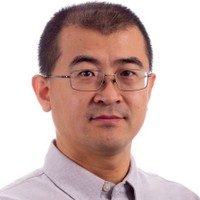
Zhibo Pang is an Adjunct Professor at KTH Royal Institute of Technology's Department of Intelligent Systems (EECS) and Senior Principal Scientist at ABB Corporate Research Sweden. His work focuses on digital transformation in industry and healthcare, spanning robotics, AI, control systems, and wireless communication. He leads projects in embodied intelligence, Industry 4.0, and Healthcare 4.0, with 23 granted patents and over 120 journal papers. Education: PhD in Electronic and Computer Systems (KTH, 2013), MBA in Innovation & Growth (University of Turku, 2012). Key Roles: IEEE Technical Committee Chair, Editor of 6 IEEE journals, ABB Inventor of the Year (2016, 2018, 2021). Research Interests: Robotics safety, wireless automation, federated learning, digital twins, and IoT security. Recent Projects: Cloud-fog automation frameworks, robot skin systems for healthcare, and latency-aware industrial control. His work bridges academia and industry through cross-functional collaborations.
Marianna Ivashina is a Professor and Head of the Antenna Systems Research Group at Chalmers University of Technology's Department of Electrical Engineering . Her work focuses on array antennas , antenna integration with electronics , optimal beamforming , and over-the-air measurement methods . The group has achieved international recognition for innovations in ultra-wideband (UWB) feeds , Gap waveguide antennas , and Doherty-power-amplifier-integrated antennas for 5G/6G and radio telescope applications. Key projects include the SSF Sweden-Taiwan collaboration , EU Horizon 2020 MyWave , and VINNOVA ENERGETIC initiatives. Her recent publications emphasize millimeter-wave (mmWave) communication and reconfigurable intelligent surfaces (RIS) , with applications in 5G/6G networks , satellite communication (SatCom) , and advanced antenna testing chambers . She explores beamforming optimization , self-interference mitigation , and hybrid OTA environments to enhance wireless system performance. The group's work bridges theoretical advancements with practical implementations, including RFSoC testbeds and high-efficiency antenna arrays . Marianna leads major research programs funded by Ericsson , VINNOVA , and EUREKA EURIPIDES2 , addressing challenges in beamforming , antenna-IC integration , and automated design for 5G/6G . These projects highlight her role in advancing millimeter-wave communication and sensor integration technologies.
Joachim Oberhammer is a Professor in Microwave and THz Microsystems at KTH Royal Institute of Technology in Stockholm, Sweden. He leads research in radio-frequency/microwave/terahertz micro-electromechanical systems (MEMS) and has held academic roles since 2005. His work includes pioneering advancements in THz communication, sub-THz radar concepts, and MEMS-based components. Oberhammer has been awarded the 2023 Young Engineer Award by the European Microwave Association and holds multiple grants, including an ERC Consolidator Grant (2013) and SSF framework grants (2014–2025). He has authored over 200 peer-reviewed publications and holds four patents in MEMS and THz technology. Education: M.Sc. in Electrical Engineering (Graz University of Technology, 2000), Ph.D. in Microwave Engineering (KTH, 2004). Postdoctoral research at Nanyang Technological University (2004) and Kyoto University (2008). Guest professorships at Universidad Carlos III de Madrid (2019–2020) and NASA-JPL (2014). Research focuses on MEMS fabrication, THz systems integration, and radar technologies. Key projects include the EU-funded M3TERA and Car2TERA projects, and leadership in SSF framework grants for electronics research. He coordinates the EU RIA projects TeraMeasure and TESLA, advancing terahertz applications. Teaching responsibilities include MSc and PhD courses in MEMS engineering, radar systems, and integrated circuits. His lab develops high-performance THz components, including waveguide switches, antennas, and filters, with applications in communication, sensing, and aerospace.
Tommy Svensson is a Professor of Communication Systems at Chalmers University of Technology, where he leads research on wireless systems on air interface and wireless backhaul network technologies. He received his Ph.D. in information theory from Chalmers in 2003 and has extensive industry experience from Ericsson AB, working with core, radio access and microwave networks. His primary research interests include: Design and analysis of mobile communication systems Physical storage algorithms Multi-user access and resource allocation Cooperative/context-aware/secure communication mm-wave/sub-THz communication C-V2X and JCAS Satellite networks Sustainable design and comprehensive architecture Professor Svensson has been actively involved in numerous European research projects including WINNER I/II/+, ARTIST4G (contributing to 3GPP LTE standards), METIS, mmMAGIC, and 5GCar (towards 5G), and Hexa-X, RISE-6G, SEMANTIC, ROBUST-6G, and ECO-eNET (towards 6G). He also contributes to the Chase/ChaseOn and WiTECH antenna systems center of excellence at Chalmers, focusing on mm-wave and (sub)-THz solutions for various wireless scenarios. His publication record is extensive, with 6 books, 111 journal papers, 151 conference papers, and 80 public EU project deliverables to his name. Professionally, he serves as: Founding member/editor of the IEEE JSAC Series on Machine Learning in Communications and Networks Chair of the award-winning IEEE Sweden Vehicular Technology/Communications/Information Theory Societies chapter Editor of IEEE Transactions on Wireless Communications and IEEE Wireless Communications Letters Lead local organizer of EuCNC & 6G Summit 2023 Coordinator of the Communication Engineering Master's Program at Chalmers
Claes Beckman is a part-time senior researcher in the Division of Communication Systems at KTH Royal Institute of Technology. He was appointed Professor in antenna systems at KTH in 2013 and previously served as Professor in microwave engineering at HIG in 2004. Beckman was the founding director of the research center Wireless@kth in 2001. His career spans over 40 years across academia, government, and industry, with significant contributions to wireless communications, antenna systems, and spectrum management. Beckman's research interests focus on wireless communications systems, particularly antenna design, MIMO technology, 5G networks, and mobile connectivity solutions for challenging environments including transportation systems and remote regions. His work bridges theoretical research with practical implementation, resulting in numerous patents, products, and industry standards. Recent research has examined satellite-cellular integration, high-reliability communication for transportation systems, and private 5G networks for industrial applications. Analysis of his recent publications reveals a strong focus on practical wireless communication challenges, with particular emphasis on real-world implementation issues in mobile and transportation environments. His work spans theoretical antenna design, field measurements, network performance analysis, and spectrum policy considerations, reflecting his unique position at the intersection of academic research, industry application, and regulatory frameworks. Beckman has advised close to 100 M.Sc. students, 7 licentiate, and 3 PhD theses throughout his career. He has secured over $30 million in research funding through multiple Vinnova, KK-foundation, and SSF projects, including serving as KTH's Principal Investigator for the EU FP7 METIS project on 5G. His industry experience includes roles as a microwave design engineer for Ericsson and research manager for Allgon Systems. Beckman serves as a technical expert for Icomera AB and technical consultant to Proan t AB. He has significant regulatory experience, having served on international standards committees (ETSI and 3GPP) and consulted for the Swedish National Regulator for Post- and Telecommunications (PTS), the Swedish Competition Authority, Swedavia, Teracom, and the Swedish Armed Forces.
Nikolaos Kolomvakis is a researcher in the Division of Communication Systems at KTH Royal Institute of Technology in Sweden. He is also a visiting researcher at Ericsson AB in Stockholm. Previously, from 2017 to 2023, he held positions as Systems Engineer and Senior Researcher at Ericsson. His research focuses on wireless communications and signal processing, particularly on developing baseband physical-layer algorithms for distributed/cell-free massive MIMO, holographic MIMO, and large intelligent surfaces. Education: Ph.D. in wireless communications from Chalmers University of Technology , supervised by Prof. Mats Viberg with co-supervision from Prof. Thomas Eriksson and Prof. Michail Matthaiou M.Sc. in information technology & electrical engineering from ETH Zurich (2012) Research Interests: Wireless communications Signal processing Distributed/cell-free massive MIMO Holographic MIMO Large intelligent surfaces Publications: Recent work includes analyzing nonlinear distortion in large arrays and active reconfigurable intelligent surfaces (2025) Exploring spatial frequencies in near-field communications (2025) Investigating 6G performance through gigantic MIMO (2025)
Mariana Dalarsson is an Associate Professor in Electromagnetic Theory at the Division of Electromagnetic Engineering and Fusion Science (EMF) within the School of Electrical and Computer Engineering (EECS) at KTH Royal Institute of Technology. She holds an MSc (2010), PhD (2016), and Docent (2019) from KTH, where she is recognized as the (shared) second youngest woman ever to receive a PhD degree from the institution. Her research spans electromagnetic scattering and absorption, inverse problems, electromagnetics of stratified media, double-negative metamaterials, electromagnetics in medicine, antenna theory, and mathematical physics. She has authored approximately 102 peer-reviewed publications, including 51 journal papers, with recent work focusing on gold nanoparticles for biomedical applications, waveguide theory for artificial materials, and plasmonics. Analysis of her recent publications reveals a strong focus on graded metamaterials, electromagnetic wave propagation in complex media, and biomedical applications of electromagnetic theory. Her work bridges fundamental electromagnetic theory with practical applications in medical technology, particularly in the areas of nanoparticle-based treatments and diagnostic systems. Honorary Grant ("Honnörsstipendiet") for best graduate of her program (2011) L'Oréal-Unesco For Women in Science Sweden Prize (2020) Göran Gustafsson Prize for Young Researchers at UU/KTH (2024) Teaching Assistant of the Year from Engineering Physics students (2015) Mariana is highly active in teaching, serving as course responsible and examiner for EI1222 Electromagnetic Theory, EI2405 Classical Electrodynamics, and FEI3304 Integral Equation Methods in Electromagnetics. She also co-teaches several other courses and regularly supervises multiple BSc/MSc theses annually. Her research is primarily funded through her own project grants from the Swedish Research Council, including "Waveguide theory for artificial materials and plasmonics" (2019) and "Gold nanoparticles for high-frequency deep brain stimulation" (2023).
Johan Sidén is a Lecturer and Associate Professor at Mid Sweden University , employed in the Department of Computer and Electrical Engineering (DET) . His work focuses on RFID technology , antenna design , and printed/flexible electronics , with a particular emphasis on industrial IoT and welfare technology applications. Research Keywords : Radio Frequency Identification, Antenna Design, Flexible Electronics, Wireless Sensor Networks, Microwave Engineering, Electronic Design Key Projects : DRIVEN (data-driven industrial transformation), SmartArea (functional surfaces), Pressure (ulcer monitoring), MakeSense! (welfare technology) Publications : 15+ recent works on wearable antennas, smart packaging, UWB antenna design, and RFID sensor integration Collaborations include partnerships with industrial and academic institutions, focusing on sustainable electronics, sensor systems, and smart infrastructure. His technical expertise spans antenna optimization , printed circuits , and edge computing for harsh environments.
Emil Björnson is a Professor of Wireless Communications and Head of the Communication Systems Department at KTH Royal Institute of Technology since 2024. He received his Master of Science in Engineering Mathematics from Lund University (2007) and PhD in Telecommunications from KTH (2011). After postdoctoral work at SUPELEC, France (2012-2014), he held faculty positions at Linköping University (2014-2021) before returning to KTH in 2020. Research Focus: MIMO communications, reconfigurable intelligent surfaces, radio resource allocation, machine learning for communications, and energy efficiency Editorial Roles: Editor for multiple IEEE transactions and magazines His research has significantly advanced wireless communication technologies, particularly in Massive MIMO and cell-free systems. He has authored four textbooks, including Massive MIMO Networks (2017) and Introduction to Multiple Antenna Communications and Reconfigurable Surfaces (2024). Scientific awards include: IEEE Fellow Clarivate Highly Cited Researcher Wallenberg Academy Fellow Digital Futures Fellow Multiple IEEE and EURASIP awards (2014-2024)
Joakim Jaldén is a Professor at the Division of Information Science and Engineering, School of Electrical Engineering and Computer Science (EECS), KTH Royal Institute of Technology. He holds a Ph.D. in Electrical Engineering from KTH (2007) and completed post-doctoral studies at Vienna University of Technology (2007-2009). With affiliations at Stanford University and ETH Zürich, his academic journey reflects global expertise. 2002: M.Sc. in Electrical Engineering, KTH 2007: Ph.D. in Electrical Engineering, KTH 2007-2009: Post-Doctoral Researcher, Vienna University of Technology Jaldén's research spans Signal Processing , Wireless Communications , and Biomedical Data Analysis . He pioneered MIMO communications and later developed ELISpot/FluoroSpot analysis algorithms commercialized by Mabtech AB. His work on cell migration tracking (IEEE ISBI 2012) and distributed optimization (ECO-PANDA method) demonstrates interdisciplinary impact. Key publication trends include Hidden Markov Models for DNA sequencing, Reinforcement Learning in communication systems, and Low-Complexity Beamforming for MU-MIMO networks. His 2024 work on mmWave MIMO beam coherence showcases continued leadership in wireless channel modeling. Scientific recognition includes: IEEE Signal Processing Society 2006 Young Author Best Paper Award Ingvar Carlsson Career Award 2009 (Swedish Foundation for Strategic Research) IEEE ISBI 2012 Best Paper Award Bitplane Awards (2013-2015) for cell tracking challenges As Program Director of KTH's 5-year Electrical Engineering Degree Program (CELTE) since 2016 and Vice-Chair of EECS Faculty Board , Jaldén leads academic initiatives. His collaborations with industry (e.g., Mabtech AB) and roles as examiner for advanced courses in communication systems highlight his educational impact.
Artem Vilenskiy is a researcher in the Antenna Systems group at Chalmers University of Technology since 2019. His work focuses on developing active integrated array antenna concepts, 100+ GHz beam-steerable antennas and circuits, MMIC design, computational electromagnetics methods for radiation and scattering problems, and collaboration with Chalmers industrial partners. His educational background includes: MSc Degree (Specialist) in Electrical Engineering from Bauman Moscow State Technical University (BMSTU) in 2011 PhD Degree (Eng.) in "Antennas, Microwave Devices and Its Technology" from BMSTU in 2014 Dr. Vilenskiy's research spans multiple cutting-edge areas in microwave and antenna engineering, with particular emphasis on millimeter-wave and sub-THz frequency ranges. He specializes in reconfigurable intelligent surfaces (RIS), beam-steering technologies, and integrated antenna solutions for next-generation wireless communication systems. His work bridges theoretical electromagnetics with practical implementation challenges, often involving close collaboration with industry to address real-world telecommunications and radar applications. His expertise encompasses both novel antenna architecture design and associated microwave integrated circuits, with significant contributions to mmWave phased arrays and wireless power transfer systems. Analysis of his recent publications reveals a strong and consistent focus on millimeter-wave antenna systems, particularly in developing reconfigurable intelligent surfaces for 5G/6G applications, advanced beamforming techniques, and innovative antenna array architectures. His research spans frequencies from W-band (75-110 GHz) into the sub-THz range, addressing critical challenges in high-frequency wireless communication systems. The publications demonstrate a consistent emphasis on practical implementation, with many papers detailing circuit models, measurement techniques, and experimental validation of theoretical concepts across multiple application domains including satellite communications, wireless backhaul, and quantum computing interfaces. Dr. Vilenskiy has been actively involved in multiple significant research projects: Low-Thermal-Conductance and High-Density Microwave Interconnects for Cryogenic Quantum Computers (2024-2025) Energy Efficient, Beamforming Antenna-IC Integration Solutions for Future 100+GHz Telecommunication Systems (2021-2023) Antenna technologies for beyond 5G Wireless Communication (2020-2025) MyWave - Efficient Millimetre-Wave Communications for mobile users (2019-2023) Integrated Antenna Arrays (2016-2023) Prior to joining Chalmers, Dr. Vilenskiy worked at Samsung Research Institute Russia from 2011-2019 in various engineering roles including research engineer, expert engineer, and project leader. During 2015-2019, he also held a part-time Associate Professor position at BMSTU where he coordinated the MSc course "Applied Electrodynamics of Composite Media". His industry experience in mobile communication, automotive radar, robotics, and wireless power transfer provides valuable practical insights that complement his academic research in antenna systems.
Jan Stake is a Professor of Terahertz Electronics and head of the Terahertz and Millimeter-Wave Laboratory at Chalmers University of Technology. He holds a MSc (1994) and PhD (1999) in electrical engineering and microwave electronics from Chalmers. His research focuses on terahertz technology for space missions, climate science, and industrial applications. Key projects include developing THz components for the Jupiter Icy Moons Explorer (Juice) and MetOp satellites, and creating sensors for pharmaceutical manufacturing. He has authored 388+ publications, served as Editor-in-Chief of IEEE Transactions on Terahertz Science and Technology , and is an IRMMW-THz board member. Current work emphasizes integrated THz components for space science and wireless communication. Awards include visiting research fellowships at the UK’s National Physical Laboratory (2023). Teaching includes semiconductor physics and microwave engineering, with a weekly journal club for PhD students. Research Interests: Terahertz fundamental science and applications Space instrumentation (e.g., SWI instrument for Juice mission) Climate monitoring via atmospheric THz measurements Graphene-based THz detectors and amplifiers THz radar systems for industrial process monitoring Recent Work Trends: Recent articles (2023–2025) emphasize high-precision quantum-cascade lasers , antenna alignment optimization , industrial THz sensing systems , and space-borne receiver reliability . Key themes include improving THz component integration, enhancing spectral resolution for molecular analysis, and advancing THz applications in manufacturing and environmental science. Awards & Roles: Editor-in-Chief, IEEE Transactions on Terahertz Science and Technology (2016–2018) Chair, IEEE THz Best Paper Award Committee (2019–2021) Elected IRMMW-THz Board Member (2017–2024) Visiting Research Fellow, UK National Physical Laboratory (2023) Grants & Collaborations: Active in EU and industry partnerships for space instrumentation (e.g., Juice mission) and pharmaceutical sensing. Lab develops THz components with companies in aerospace and medical sectors. Labs/Teams: Leads the Terahertz and Millimeter-Wave Laboratory, collaborating with National Physical Laboratory (UK) and ESA on space instrument development.
Christian Fager is a Full Professor at the Department of Microwave Electronics, Chalmers University of Technology, Sweden. He has been affiliated with Chalmers since completing his Ph.D. there in 2003. As Head of the Microwave Electronics Laboratory, his research focuses on nonlinear transistor modeling, energy-efficient power amplifier architectures, and distributed MIMO systems. He has co-invented 8 patents and published over 250 papers, including a seminal book on Nonlinear Transistor Model Parameter Extraction Techniques (Cambridge University Press, 2011). Dr. Fager holds editorial roles as Associate Editor of IEEE Microwave Magazine and member of the MTT-S Technical Coordination Committee on Wireless Communications. He is a Board Member of the European Microwave Association (EuMA) and has chaired multiple IEEE topical conferences. His awards include the Chalmers Supervisor of the Year (2018), inaugural Area of Advance Award (2010), and IEEE IMS Best Student Paper (2002). He leads research initiatives in distributed antenna systems, digital pre-distortion, and GaN/SiGe-based high-efficiency amplifiers, with projects involving testbed development for 5G/6G applications. His work bridges theoretical modeling and practical implementation in RF/microwave systems, emphasizing thermal and multi-physical simulation integration.
Daniel Rönnow is a Professor of Electronics at the University of Gävle since 2011. Previously, he held roles such as lecturer at the University of Gävle (2004–2006), researcher at Acreo (1998–2000), and postdoc at the Max Planck Institute (1996–1998). He earned his MSc and PhD in Engineering Physics from Uppsala University (1991–1996). His research focuses on RF/microwave components, including phase noise characterization, nonlinear system linearization, metamaterials, and measurement technology. Key areas include MIMO systems, thin-film optics, and seismic sensors. Recent work emphasizes ultrawideband radar for nondestructive testing and antenna design for industrial applications. Rönnow has authored/co-authored over 50 publications, with notable contributions in IEEE Transactions and other journals. His work bridges theoretical models (e.g., behavioral amplifiers) with practical applications like sensor development and radar systems.
Liqin Ding is a Research Fellow at the Department of Electrical Engineering at Chalmers University of Technology . She holds a Marie Skłodowska-Curie Fellowship and is actively involved in EU-funded projects like VoiiComm and Hi-Drive , focusing on vehicular communication systems and cellular positioning integrity. Previously, she was a postdoctoral researcher at Harbin Institute of Technology (Shenzhen) and a visiting researcher at Chalmers before transitioning to her current MSCA-IF position. Research Interests : Her work spans large antenna array-based communication , wireless propagation , vehicular networks , and cellular positioning . Key themes include 5G/6G protocols , channel modeling , and information theory for automated transportation systems. She specializes in Massive MIMO , DFT spreading , and integrity monitoring to enhance network reliability. Scientific Contributions : Recent publications address challenges in PAPR reduction for IoT, 3D antenna array bandwidth , UAV swarm communication , and Bayesian positioning algorithms . Her work bridges theoretical models (e.g., Shannon capacity) with practical applications in automotive connectivity and spaceborne antennas . Awards and Grants : European Union's H2020-MSCA-IF-2019 fellowship for VoiiComm project Funding from the European Commission (EC) for mobility research