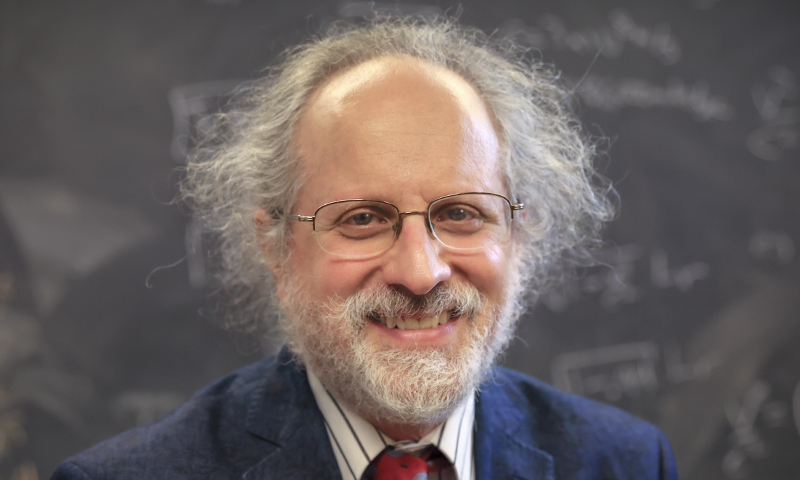
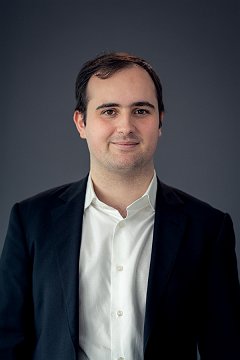
Timothy Gowers holds the prestigious Chair of Combinatorics at Collège de France in Paris, where he actively teaches and conducts research. His position represents one of the highest academic appointments in the French scholarly system. His research interests span multiple mathematical domains: Combinatorics as a paradoxical field that is simultaneously simple and complex, pure and applied Graph theory with applications to real-world networks including website connections and epidemiological modeling Additive combinatorics focusing on integer set structures and arithmetic progressions Intersections between entropy and combinatorial mathematics Philosophical examination of mathematical practice Professor Gowers delivered his inaugural lecture on January 6, 2021, and remains highly active with scheduled courses through late 2025. His current work demonstrates combinatorics' rich applications across computer science, economics, and epidemiology while maintaining deep theoretical foundations. He regularly presents at the Marcelin Berthelot Site in Paris, specifically in the Mireille Delmas-Marty Amphitheater, indicating his ongoing institutional presence and academic engagement.
Andrey Smirnov is an Associate Professor of Mathematics at the University of North Carolina at Chapel Hill, where he also holds the distinguished position of William R. Kenan, Jr. Scholar. He is based in the Department of Mathematics within the College of Arts and Sciences, conducting research at the intersection of algebraic geometry, mathematical physics, and representation theory. His research spans several interconnected areas including enumerative geometry , mathematical physics , representation theory , combinatorics , and number theory . A particular focus of his work involves quantum K-theory, mirror symmetry, and integrable systems, where he has made significant contributions to understanding the deep connections between algebraic geometry and quantum physics. His recent publications demonstrate a consistent focus on quantum geometric methods and their applications to enumerative problems . The work prominently features themes of 3D mirror symmetry , quantum difference equations , and stable envelopes , establishing new bridges between algebraic geometry, representation theory, and mathematical physics. These contributions have advanced our understanding of quantum cohomology and K-theory of algebraic varieties. Scientific Honors: William R. Kenan, Jr. Scholar - a prestigious endowed professorship recognizing outstanding contributions to research and scholarship Contact Information: Email: asmirnov@live.unc.edu Office: 307A Phillips Hall, University of North Carolina at Chapel Hill Department: Department of Mathematics, College of Arts and Sciences
Dr. Ernestas Filatovas is a Senior Researcher and Chief Researcher in the Project at Vilnius University's Institute of Data Science and Digital Technologies (formerly Institute of Mathematics and Informatics), where he has been affiliated since 2013. He leads the Blockchain and Quantum Technologies Group, focusing on cutting-edge research at the intersection of quantum computing, blockchain, and artificial intelligence. Previously, he served as an Associate Professor and Lecturer at Vilnius Gediminas Technical University's Faculty of Fundamental Sciences from 2013 to 2019. Dr. Filatovas earned his Doctor of Technology in Computer Science Engineering from Vilnius University Institute of Mathematics and Informatics in 2012. His dissertation, supervised by Prof. Dr. Olga Kurasova, focused on the interactive solution of multi-criteria optimization problems. His research spans multiple high-impact domains, with particular expertise in blockchain technologies, quantum computing, artificial intelligence, and machine learning. He has pioneered work in quantum blockchain implementations, reproducibility of AI research through blockchain verification, and quantum machine learning applications. His research bridges theoretical computer science with practical applications in financial markets, healthcare, and distributed systems. His extensive publication record—over 50 scientific papers, with more than 25 in Clarivate Analytics-indexed journals—demonstrates consistent productivity and international collaboration. Recent work shows a clear trajectory toward quantum-enhanced AI systems, blockchain-based research verification frameworks, and quantum algorithms for practical problems. Laureate of the 4th LMA Young Scientists' Conference (2014) INFOBALT scholarship 2nd place winner (2014) Lithuanian State Science and Studies Foundation funding recipient (2009, 2010) Recognized as one of Lithuania's most active doctoral students Master's degree with honors (2006) Dr. Filatovas leads multiple significant research projects, including the 2021-2024 project 'Solving the problems of reproducibility of scientific research in the field of artificial intelligence using blockchain technologies' as team leader, and the 2023-2027 project 'Development and validation of quantum machine learning methods using prepared datasets' as Chief Researcher. He has also contributed to international collaborations such as the Spanish-funded 'High Performance Solutions for Modern Scientific Computing Challenges' (2019-2021). His popular science contributions, including the VU news portal article 'Quantum Computing: Who and Why?', demonstrate his commitment to science communication. As a key member of Vilnius University's Blockchain and Quantum Technologies Group, Dr. Filatovas contributes to Lithuania's growing reputation in quantum computing research and blockchain innovation, working closely with international collaborators across Europe.
Dino Festi serves as an Associate Professor in the Department of Mathematics at the University of Naples Federico II since December 2024, specializing in the Algebraic Geometry research group. His academic focus lies at the intersection of pure mathematics and theoretical geometry within the university's scientific campus at Monte S.Angelo. His research investigates fundamental properties of algebraic surfaces with particular emphasis on K3 surfaces, exploring their arithmetic structures, geometric classifications, and moduli spaces. This work bridges number theory and complex geometry, contributing to broader understanding of surface singularities and birational transformations in higher-dimensional varieties. Festi actively engages with the global mathematics community through major international collaborations, including the Sympaan 2025 symposium in Poland, Pragmatic 2025 research school in Catania, and ICERM thematic semesters in Providence focused on computational aspects of K3 surfaces and Calabi-Yau threefolds. His participation in these cutting-edge initiatives demonstrates leadership in advancing geometric computation methodologies and mirror symmetry applications.
Teruhisa Koshikawa serves as an Assistant Professor at Kyoto University's Research Institute for Mathematical Sciences (RIMS), focusing on fundamental intersections of algebraic geometry, number theory, and representation theory with significant implications for modern arithmetic geometry. His specialized research portfolio includes: Heights of pure motives Integral p-adic Hodge theory, particularly logarithmic prismatic cohomology K3 surfaces and their moduli spaces Shimura varieties and locally symmetric spaces The categorical local Langlands conjecture No scientific awards or honors were documented in the provided materials. Information regarding graduate student mentorship, research grants, or collaborative projects was not included in the available text.
Wojciech Porowski is a Project Assistant Professor at the Research Institute for Mathematical Sciences (RIMS) , affiliated with Kyoto University . His work intersects algebraic geometry and number theory. Email: porowski@kurims.kyoto-u.ac.jp Research Focus: Porowski specializes in Anabelian Geometry , examining Galois sections for algebraic varieties over global and local fields. His research bridges arithmetic and algebraic geometry through Galois-theoretic methods.
Emmylou Haffner is a Research Officer at CNRS, affiliated with the Institute of Modern Texts and Manuscripts (ITEM) at École normale supérieure - PSL. She leads the Scientific Manuscripts Team and serves as Editor-in-Chief of the Journal of the History of Science . Her work focuses on the intersection of mathematics, philosophy, and archival practices, particularly in 19th-20th century contexts. Her research explores the history of mathematical rigor , editorial reconstruction of mathematicians' drafts, and the role of materiality in mathematical texts. She investigates figures like Richard Dedekind and Bernhard Riemann, analyzing their editorial decisions and conceptual frameworks. Recent publications examine the genesis of Dedekind's Dualgruppen , the archival practices at the Orsay Institute , and the philosophical implications of mathematical duality . These works reveal trends in 19th-20th century mathematical thought, emphasizing collaborative editorial processes and the evolution of foundational concepts. Previously, she held lecturing positions at Paris Diderot University and Paris 1 Panthéon Sorbonne University. Her educational background includes a 2014 doctorate from SPHERE, Université Paris Diderot, supervised by Karine Chemla and Michael Detlefsen. Haffner coordinates projects like the ANR BANANA Bourbaki project (2024-2028) and the Paris Emergence(s) project (2022-2026) on mathematical drafts. She collaborates with institutions such as the Henri Poincaré Archives and the National Network of Mathematics Libraries.
Satyadev Nandakumar is a Professor in the Department of Computer Science and Engineering at the Indian Institute of Technology Kanpur. He received his PhD from Iowa State University in 2009, following an MS from the same institution in 2003 and a B.Tech from REC Calicut in 2000. His research interests center on Theoretical Computer Science with a focus on Algorithmic Information Theory, Computable Analysis, and Symbolic Dynamics. His work bridges mathematical foundations with computational theory, exploring the intersection of randomness, dimension, and computation. His publication record shows a consistent research trajectory in foundational computer science, with significant contributions to understanding the relationship between finite-state complexity and number theory, predictive complexity of ergodic processes, and characterizations of constructive dimension. His work demonstrates a strong mathematical approach to theoretical computer science problems. As a faculty member at IIT Kanpur, he maintains an active research program within the Department of Computer Science and Engineering, contributing to the theoretical foundations of computing at one of India's premier technical institutions.
Jochen Mosbacher is a Research Fellow at the Department of Psychology, Karl Franzens University Graz. His work spans neuroscience, cognitive psychology, and human-technology interaction, with affiliations to the Faculty of Natural Sciences and Research Careers Campus consortia. Focus: Neuropsychology & Non-invasive Brain Stimulation Specialization: Arithmetic Learning & Cognitive Processes Active in interdisciplinary networks like "Gehirn und Verhalten" His recent research explores the intersection of AI, wearable biosensors, and cognitive resilience. Publications highlight applications of transcranial stimulation in arithmetic learning and stress monitoring in industrial settings. Current projects include gamified mental health interventions and explainable AI frameworks. Scientific recognition includes: Giselher Guttmann Preis (2022) Young Investigators Preis der Österreichischen Alzheimergesellschaft (2016, 2014) INGE St. Forschungspreis (2013) Mosbacher contributes to academic governance as ÖGP Jung-WissenschaftlerInnensprecher since 2017, advocating for early-career researchers in Austria.
Gregorio Baldi is a Research Fellow (Chargé de Recherche) at the French National Center for Scientific Research (CNRS), affiliated with the Institut de Mathématiques de Jussieu - Paris Rive gauche. His research centers on Arithmetic Geometry , with expertise in Shimura varieties, variational Hodge theory, and the Zilber-Pink conjecture. He also investigates connections between homogeneous dynamics, Teichmüller dynamics, and geometric Diophantine problems. Baldi has authored significant publications in premier mathematical journals, including: Annals of Mathematics (2023, 2025) Inventiones mathematicae (2024) Ergodic Theory and Dynamical Systems (2025) His recent work (2023–2025) focuses on Hodge loci distribution, non-arithmetic ball quotients, and o-minimality in Hodge theory, demonstrating consistent contributions to foundational problems in geometry and number theory.
Sinan Ünver serves as Associate Professor in the Department of Mathematics at Koc University, Istanbul, Turkey. His academic appointments include: Current primary position: Associate Professor, Department of Mathematics, Koc University Past affiliation: Humboldt Research Fellow, Freie Universität Berlin (2015-) Professor Ünver's research program focuses on fundamental problems at the intersection of Algebra, Number Theory, and Algebraic Geometry. His investigations explore multi-zeta values as extensions of classical zeta functions, additive polylogarithmus in algebraic settings, Bloch groups connecting to K-theory regulators, and heights of motives for Diophantine applications. These areas collectively address deep structural questions in arithmetic geometry and special values theory. His scientific recognition includes: Humboldt Research Fellowship for Experienced Researchers (2015) awarded for outstanding research potential and international collaboration capacity. Professor Ünver maintains active research at Koc University with documented international engagement through the Humboldt Fellowship. While specific advising details aren't provided, his fellowship indicates capacity for independent research leadership and mentorship within collaborative frameworks.
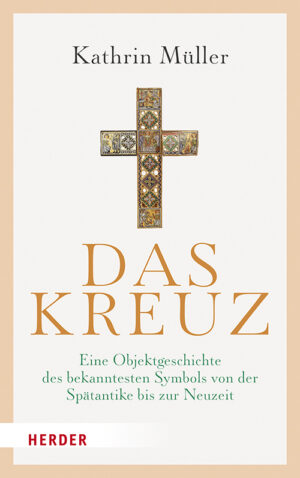
Kathrin Müller is a Professor of Visual Cultures of the Middle Ages at the Institute for Art and Visual History (Humboldt University Berlin). She explores intersections of medieval art with liturgy, theology, and scientific visualization, with particular expertise in astronomical diagrams and animal representations. Studied art history/history in Hamburg & New York Former Max Planck research scholar (2003-2005) Habilitated on late medieval animal depictions (2018) Research Themes include: Medieval diagrammatic knowledge systems Sacred object studies (crosses, reliquaries) Courtly visual culture (textiles, hunting motifs) Ornament theory and material semiotics Recent Publications analyze: Medieval cosmological diagrams (2025 article in preparation) Cultural duality in Italian silks (2024) Divine visualization through geometry (2014) Epigraphic practices on medieval objects (2014) Her 2022 monograph The Cross: A History of the Most Well-Known Symbol examines the Christian cross's paradoxical identity from late antiquity to modernity.
Donald A. Spector is a Professor of Physics at Hobart and William Smith Colleges, where he has been a faculty member since 1989. He earned his A.B. magna cum laude from Harvard in 1981, followed by an A.M. in 1983 and Ph.D. in 1986, with his thesis titled "Consequences of Supersymmetry" under advisor Howard Georgi. Prior to joining HWS, he was a Postdoctoral Researcher and Lecturer at Cornell University (1986-1988) and an NSF-NATO Postdoctoral Fellow at the University of Utrecht (1988-1989). Professor Spector's research spans theoretical physics with a focus on supersymmetry, quantum field theory, and the intersection of physics with mathematics and other disciplines. His scholarly interests include Supersymmetry in physics and mathematics, Particle Theory, Q-balls, Computational complexity and physics, Set theory and physics, Quantum field theory, Magnetic monopoles, and the applications of physics to computer science, biology, economics, and the arts. He has made significant contributions including the first proof that the Most Attractive Channel conjecture is false, applications of supersymmetry to arithmetic number theory, model-independent derivations of Bogomol'nyi bounds, and pioneering work applying set theoretic forcing to physics. Spector's research has been consistently supported by prestigious external funding from the National Science Foundation (multiple grants from 1982-2010), the Japan Society for the Promotion of Science (2004), the Kavli Institute for Theoretical Physics (as a KITP Scholar from 2005-2008), the North Atlantic Treaty Organization, and the Foundational Questions Institute (including a $50,000 grant in 2013 for "Set Theoretic Forcing and Information Theory"). His interdisciplinary work extends to physics and the arts, particularly theatre and music, where he has developed connections between quantum physics and artistic expression. Philip J. Moorad '28 and Margaret N. Moorad Professor of Science (2005-2010) KITP Scholar (2005-2008) Japan Society for the Promotion of Science visiting fellowship Teaching awards at Harvard and Cornell As an educator, Spector has taught a wide range of courses including Physics through Star Trek, Quantum Computing, Modern Physics, and several innovative first-year seminars exploring time travel, multiple universes, and the intersection of science and society. He has served as coordinator of the Engineering Program at HWS for over two decades and has chaired the Physics Department. Beyond his academic roles, he is a founding member and Board member of the Anacapa Society, dedicated to supporting theoretical physics research at primarily undergraduate institutions, and serves as President of Zeta of New York (the HWS Phi Beta Kappa chapter).
Alina Ostafe is an Associate Professor in the School of Mathematics and Statistics at The University of New South Wales (UNSW) in Sydney, Australia. She joined UNSW in 2013 as a Postdoc and has steadily progressed through the academic ranks to her current position as Associate Professor since January 2023. Her research focuses on the intersection of number theory and dynamical systems, with particular emphasis on arithmetic properties of polynomial iterations and Diophantine problems. Dr. Ostafe received her PhD in 2010 from the Institute of Mathematics at the University of Zurich, Switzerland, following an MSc from the University of Bucharest, Romania in 2007. Her academic journey includes postdoctoral positions at both UNSW and Macquarie University before her appointment to the faculty. Her research interests span several interconnected areas within number theory and dynamical systems. She investigates Diophantine problems, polynomials and rational functions over local and global fields, finite fields, and arithmetic statistics of matrices. Within dynamical systems, her work focuses on the arithmetic properties of elements in orbits and algebraic properties of iterates. This research bridges classical number theory with modern dynamical systems theory, yielding insights into the distribution of special points in algebraic dynamical systems. An analysis of her recent publications reveals a strong focus on counting problems in arithmetic statistics, particularly concerning matrices with number-theoretic constraints. Her work frequently examines multiplicative dependence in various contexts, including linear recurrence sequences, rational values modulo finitely generated groups, and superelliptic equations. She also investigates the distribution of special points in dynamical systems, with applications to quantum ergodicity and character sums. Dr. Ostafe has received significant recognition through multiple competitive grants: Australian Research Council Future Fellowship (2026-2029) Multiple Australian Research Council Discovery Projects (2018-2026) UNSW Science Faculty Research Grants (2015-2025) UNSW Start-up Grant (2017) UNSW Vice-Chancellor's Postdoctoral Fellowship (2013-2016) Swiss National Science Foundation Grants (2010-2013) As an advisor, Dr. Ostafe currently supervises PhD student Muhammad Afifurrahman and has mentored several postdoctoral researchers including Subham Bhakta, Kamil Bulinski, Ali Mohammadi, Ayreena Bakhtawar, and Jorge Mello. She is actively involved in the mathematical community through her editorial role at Research in Number Theory and her organization of numerous conferences and seminars, including the Number Theory Web Seminar and the UNSW Number Theory Seminar. Dr. Ostafe is a key organizer of the UNSW Number Theory Seminar, which has been running since 2015, and has co-organized multiple international conferences including workshops at BIRS, MFO, and CIRM. Her leadership in the number theory community extends to her role as co-organizer of the Number Theory Web Seminar, which has built an international platform for researchers in the field.
Denis Merigoux is a researcher at Inria specializing in the intersection of programming languages , formal verification , and computational law . As the lead of the Catala project, he focuses on translating legal texts into verifiable code to modernize tax and social welfare systems. His academic background includes a PhD in Computer Science from Université Paris Sciences et Lettres (2021) and a Master's thesis at École polytechnique.