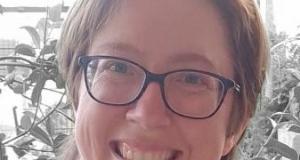
Lucy Amelia Jane Bell is a Research Fellow at Sapienza University of Rome's Department of European, American and Intercultural Studies. Previously, she served as a Senior Lecturer in Hispanic Languages and Cultures at the University of Surrey (2013–2022). Her work bridges literary analysis, social theory, and activist practices. University of Cambridge BA (2008), MPhil (2009), PhD (2013) Her research focuses on Latin American literature and culture as instruments for social transformation. Key areas include cartonera publishing , prison reform , waste studies , and decolonial theory . She collaborates across disciplines with social anthropologists in marginalized communities. Recent publications explore intersections of necropolitics , environmental justice , and gender resistance , with a focus on Mexico and Brazil. Her 2022 book Taking Form, Making Worlds won the LASA Book Prize and pioneered trans-formal methodologies combining literary analysis with action research. Grants: AHRC, Global Challenges Research Fund, BBC Arts, Secretaría de la Cultura (Mexico) Projects: 'Cartonera Publishing' (2017–2020), 'Prisoner Publishing' (2020–2022)
Vanesa Miseres is an Associate Professor of Spanish in the Department of Romance Languages and Literatures at the University of Notre Dame's College of Arts and Letters. Her academic home is complemented by affiliations with the Gender Studies Program, and fellowships at both the Nanovic Institute for European Studies and the Kellogg Institute for International Studies. Currently serving as Associate Editor for the Latin American Research Review (the academic journal of LASA), Professor Miseres maintains an active scholarly profile that bridges literary criticism, gender studies, and historical analysis. Professor Miseres earned her Ph.D. and M.A. from Vanderbilt University and completed her undergraduate studies at Universidad Nacional de Rosario in Argentina. Her research focuses on nineteenth- and early twentieth-century Latin American literature with specializations in travel writing, war literature, women writers, gender studies, food studies, and the intersections of women and science. Her work demonstrates particular expertise in analyzing how women navigated cultural and intellectual spaces during periods of social transformation. Her scholarly output reveals a consistent thread examining how women's writings challenged conventional gender roles and national narratives. Through her analysis of travelogues, war narratives, botanical knowledge, and domestic practices, Miseres illuminates how women created intellectual networks and shaped cultural discourse despite societal constraints. Her recent publications increasingly explore the connections between material culture, visual representation, and women's intellectual production. Professor Miseres's work has been recognized with prestigious awards including the 2018 Alfredo Roggiano Prize for Latin American Literary Criticism and an Honorable Mention for the Victoria Urbano Critical Monograph Prize. She has also received significant research support through a Mendel Fellowship from the Lilly Library, a Global Gateway Faculty Research Award from Notre Dame, and a Humboldt Fellowship for Experienced Researchers. Currently, Professor Miseres collaborates with Anthropology Professor Vania Smith-Oka on a project empowering Latinx women who experienced violence during pregnancy and childbirth through art and literature. This initiative, supported by Humanities Without Walls and the University of Notre Dame, has been selected by the Franco Institute for its New Research Innovation Collaboratives and has received additional support from the Notre Dame Arts Initiative.
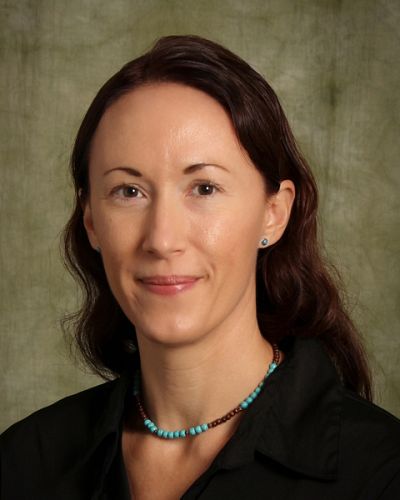
Inela Selimovic is an Associate Professor of Spanish and Portuguese at Wellesley College. Her research and teaching center on 20th-21st century Latin American literature and cinema , with a focus on Argentine women filmmakers , gender politics , cultural memory , and affect theory . Education: B.A., Sewanee: The University of the South M.A. and Ph.D., University of Kentucky Research Interests explore intersections of affect and emotion in Latin American cinema , particularly works by Albertina Carri , Lucrecia Martel , and Paula Markovitch . Her studies highlight political dissent , multisensorial storytelling , and marginalized communities in Argentine contexts. Article Trends demonstrate a trajectory from 2007 to 2023 , emphasizing intermediality , gendered trauma , and post-dictatorship narratives . Collaborative projects with scholars across UK , Holland , and Latin America expand her interdisciplinary impact. Service Roles include: Chair, International Study Committee (2020-2021, 2024-2025) Casa Cervantes Faculty Advisor/Director (2019-2021) Albright Faculty Research Affiliate (2025-2026) Contributor to Fulbright Committee (2020-present) Human Rights Projects have engaged organizations like the United Nations Security Council and ICTY , influencing her interdisciplinary research on memory and marginality .
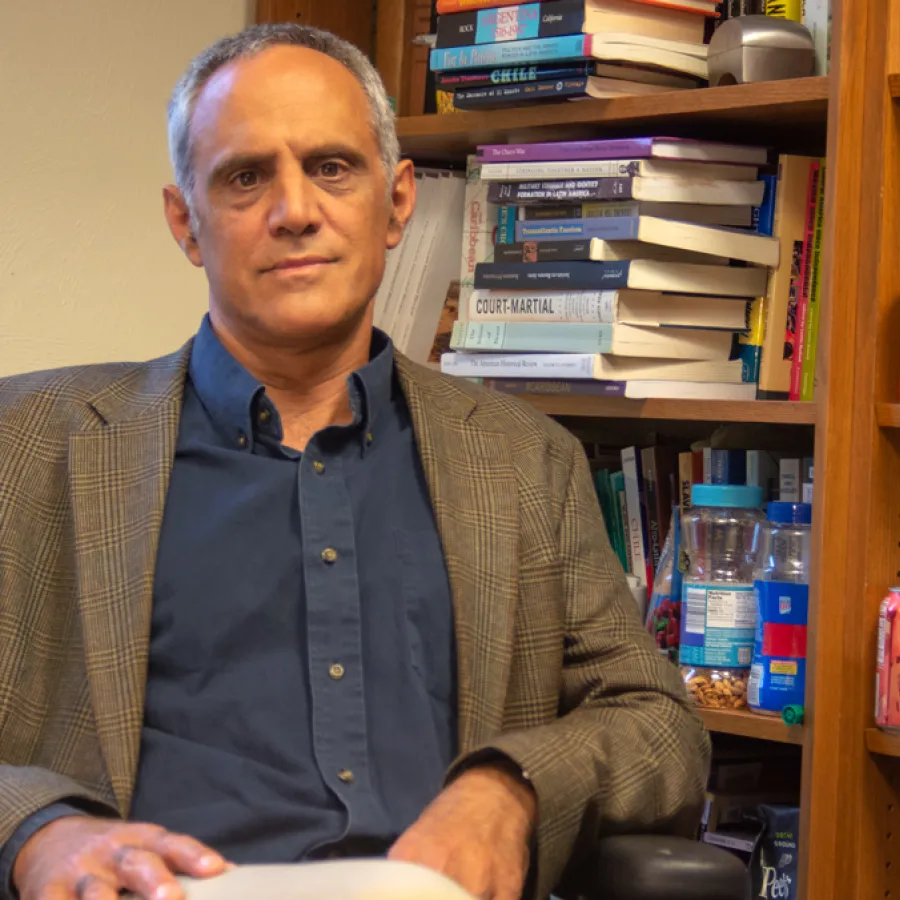
Jonathan Ablard is a Professor of History in the School of Humanities and Sciences at Ithaca College, specializing in Latin American and Caribbean history. His office is located in Muller Faculty Center 403, Ithaca, NY, and he teaches courses spanning public health, revolution and counterrevolution, literature and dictatorship, conspiracy theories, and commodities. Ablard emphasizes that understanding the United States requires knowledge of Latin America and the Caribbean, and advocates for viewing these regions within broader global narratives. His research focuses on Latin American historical intersections with public health, military institutions, psychiatric practices, and conspiracy theories. Ablard's work reveals how power structures shape societal narratives, particularly through studies of Argentine military conscription, obesity history, and psychiatric reform. He consistently examines marginalized perspectives within authoritarian contexts and challenges the omission of Latin American history in standard curricula. Ablard's publication trends demonstrate an evolving concentration on conspiracy theory historiography since 2020, building on earlier foundational work in psychiatric and military history. His recent scholarship connects historical rumor circuits to contemporary disinformation patterns, using Argentina as a critical case study. The multidisciplinary nature of his work bridges medical history, political science, and cultural studies while maintaining a distinctly Latin American framework.
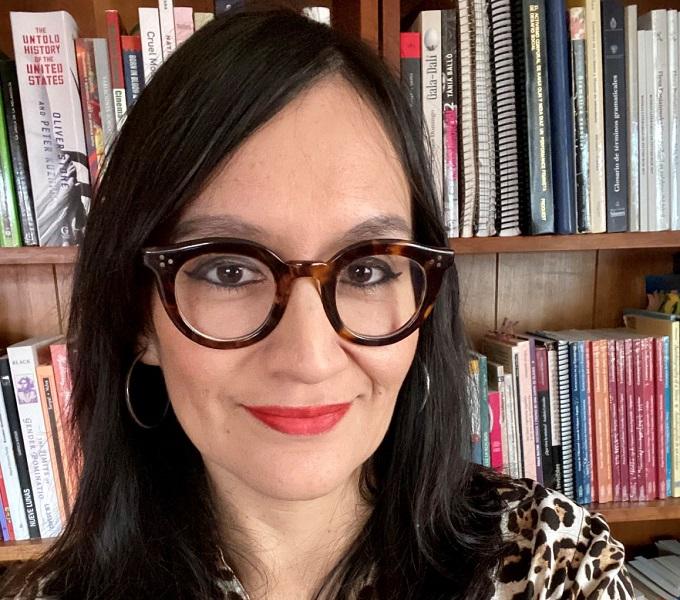
Liliana Colanzi is an Assistant Professor of Latin American Literature at Cornell University, appointed in the Latin American and Caribbean Studies Program. She is also a celebrated Bolivian writer and the founder of the independent press Dum Dum Editora. Her academic training and professional identity are anchored in literary studies, with a particular emphasis on modern and contemporary Latin American fiction. Colanzi’s scholarship interrogates popular genres—science fiction, horror, and the fantastic—while her creative practice encompasses short fiction and editorial work. Research Interests Modern and contemporary Latin American literature Popular genres: science fiction, horror, the fantastic Creative writing pedagogy Posthuman and corporeal studies Independent publishing and literary activism Across her recent publications, Colanzi explores the intersection of technology, animality, and market forces on the human body, the sinister semiotics of food in horror narratives, and the reimagining of Bolivian and regional histories through speculative lenses. Her work oscillates between rigorous scholarly analysis and creative experimentation, often blurring the boundaries between criticism and fiction. Awards & Honors Aura Estrada Literary Award, Mexico (2015) Bogota39 – Hay Festival Cartagena list of best Latin American writers under 40 (2017) Shortlist, Ribera del Duero Prize for best unpublished short-story collection (2022) Editorial Leadership & Outreach Beyond academia, Colanzi directs Dum Dum Editora, an independent Bolivian press fostering new literary voices. She has co-edited major scholarly volumes such as Latin American Speculative Fiction (2018) and Horror and the Supernatural in Latin America (2022), and curated the feminist essay anthology La desobediencia (2019).
Cheri Robinson is a Lecturer in the Department of Romance Languages and Literatures at Binghamton University. Her research spans transnational and interdisciplinary approaches to cultural studies, film, and literature in 20th and 21st-century Latin America, with additional focus on borderlands theory, child/adolescent protagonists in trauma narratives, and intersections between Holocaust memory and Latin American contexts. PhD in Hispanic Languages and Literatures (UCLA) MA in Spanish Literature (UCLA) Honors BA in French and International Studies (Oregon State University) Her publications explore themes of memory, political resistance, and trauma through cinematic and literary analysis, particularly in Argentine and Caribbean contexts. Recent articles examine documentary filmmaking, urban violence, and pedagogical uses of media. Civil Dialogue Teaching Fellow (2024-2025, inaugural cohort), Center for Civic Engagement She teaches courses on Spanish language, Latin American culture, and interdisciplinary topics at Binghamton University.
Dr. Monika Raic is a Postdoctoral Researcher (scientific collaborator) at the Institute of Romance Studies, Faculty of Languages and Literature, Humboldt University of Berlin. Her academic work focuses on Spanish-language literatures with particular emphasis on Mexican and Argentine literature. She maintains an active research agenda while teaching courses at both undergraduate and graduate levels. Dr. Raic's research interests span literary and film studies, gender studies, the history of emotions, psychoanalysis, and political philosophy. Her current habilitation project, "Politics of Loneliness – Problems of Recognition," examines loneliness as a phenomenon arising from disturbed recognition processes rather than clinical pathology. She works with Latin American recognition theorists including Adolfo Sánchez Vázquez and Bolívar Echeverría to critique traditional European and US recognition debates (Nancy Fraser, Axel Honneth, Jessica Benjamin) while analyzing 20th-century literature and film from Mexico and Argentina. Her scholarly work demonstrates consistent engagement with transnational themes including cosmopolitanism, world literature, globalization, translation processes, and the Anthropocene. She has organized numerous academic events on topics ranging from loneliness studies to race theory, and has presented lectures internationally at institutions including Yale, Harvard, and the University of Buenos Aires. Dr. Raic is an active member of several academic societies including the German Society for General and Comparative Literature (DGAVL), International Alfred Döblin Society, German Association of Romance Language Studies (DRV), and German Hispanist Association (DHV).
Koichi Hagimoto serves as Professor of Spanish in the Department of Spanish and Portuguese at Wellesley College, with significant contributions to the Latin American Studies program. He currently holds the position of department chair (2023–present) and participates in multiple institutional committees including the Slater International Board, Ruhlman and Tanner Conference Committees, and the Executive Board for Latin American Studies Program. His academic credentials include a B.A. from Soka University of America, and M.A. and Ph.D. degrees from the University of Pittsburgh. Hagimoto specializes in 19th and 20th century Latin American literature and culture through the lens of Transpacific Studies, examining historical connections between Asia and Latin America. His research explores anti-imperial literature, intercolonial alliances, and transpacific modernity, with particular focus on Nikkei (Japanese-Argentine) literary traditions and the cultural impact of Japan in Argentine modernity. This work bridges Hispanic Caribbean studies with broader hemispheric and transnational frameworks. His scholarly recognition includes: 2024 Marysa Navarro Best Book Prize for Samurai in the Land of the Gaucho Ana and Samuel Pinanski Teaching Prize (2012) Apgar Award for Teaching Excellence (2019) Hagimoto actively integrates research with teaching, offering courses ranging from elementary Spanish to advanced seminars on Cuba and Asia in Latin America. He has directed Wellesley's Wintersession program in Cuba and was featured in the American Association of Teachers of Spanish and Portuguese's Member Spotlight (2021). His service extends to campus-wide committees including Curriculum & Academic Policy and Minority Recruitment.
Dr. Paola Calahorrano serves as a Teaching Assistant Professor in the Department of Spanish and Portuguese at the University of Pittsburgh, where she has been a faculty member since 2018. She teaches over 25 course sections spanning advanced language instruction, literature, and culture studies in Spanish, while advising undergraduate Minors and the Pitt Club de Español. Her academic credentials include: PhD in Hispanic Languages and Literatures from Boston University MA in Hispanic Literatures and Cultures from the University of Arizona BA in Journalism and Literatures from Pontificia Universidad Católica del Ecuador Calahorrano's research interrogates the female body as a racialized and sexualized construct within Hispanic cultures, focusing on intersections between medical institutions and gender representation. Her scholarship bridges contemporary Latin American women's writing, visual culture analysis, feminist pedagogy, and health humanities, with particular emphasis on reproductive rights and disability narratives. This interdisciplinary approach manifests in courses like Mapping the Female Body and Disruptive Bodies , which examine menstruation, pregnancy, illness, and disability through cultural lenses. Her publication trajectory (2010-2025) reveals consistent engagement with feminist health humanities, evolving from analyses of poetic bodies (Pizarnik, Olin) toward contemporary critiques of medical institutions and reproductive politics. Recent works demonstrate increasing focus on amplifying marginalized narratives through literary and cinematic frameworks, connecting historical gender constructs to current health justice movements. As an academic advisor for Spanish/Portuguese Minors and faculty lead for the Pitt Club de Español, Calahorrano integrates mentorship with curriculum innovation. Her redesign of 8+ courses—including professional communication, film studies, and women's narratives—establishes interdisciplinary pathways connecting language instruction to social justice themes. She spearheads content-based course development that merges literary analysis with health humanities, notably creating Mapping the Female Body (exploring cultural dimensions of women's health) and Disruptive Bodies (centering illness/disability narratives), while restructuring film and literature courses around gender and identity frameworks.
Sara Park is Assistant Professor of Spanish (General Faculty) at the University of Virginia. She specializes in modern Latin American literature with emphasis on the Southern Cone region, particularly memory and identity narratives related to Argentina's military dictatorship. Her research examines works by Chilean women writers including Andrea Jeftanovic, Nona Fernández, and Lina Meruane. Education includes a Ph.D. from University of Virginia (2022), M.A. from Seoul National University (2016), and B.A. from Seoul National University (2013). She teaches courses ranging from Intermediate to Advanced Spanish.
Dr. Yolanda Melgar Pernias serves as a Lecturer at Humboldt University's Institute of Romance Studies within the Faculty of Languages and Literature. Her academic position (LkfbA - Lehrkraft für besondere Aufgaben) focuses on Hispanic literatures, particularly Spanish-language literary traditions. Based in Room 4.51 at Dorotheenstraße 65, she specializes in Mexican and Chicana literature, gender studies, and border theory. Her research interests center on contemporary Hispanic literary production with emphases on: Gender representation in Mexican/Chicana narrative Border consciousness and identity formation Memory studies in post-dictatorship literature Visual culture intersections with literary texts Spanish as a foreign language pedagogy Her scholarly output reveals consistent engagement with female authors from Mexico, Chile, and the US-Mexico border region, examining how literary works negotiate cultural identity, historical memory, and gendered experiences. Scientific recognition includes: Alexander von Humboldt Foundation Fellowship (2012) Her academic contributions extend to Spanish language teaching through textbook development for Klett publishers and educational resources for Spain's Ministry of Education. While specific grant details aren't provided, her Humboldt Fellowship indicates competitive research funding. Her institutional role includes developing curriculum for Spanish as a Foreign Language programs, reflecting dual expertise in literary scholarship and language pedagogy.
Christopher Krentz serves as Professor in the English and American Sign Language Program at the University of Virginia, maintaining active teaching duties with courses in American literature, disability studies, and world anglophone literature. His office is located in Bryan Hall 110, with current office hours held in person and via Zoom. Education: Ph.D. in English, University of Virginia, 2002 M.A. in English, University of Virginia, 1995 B.A. in English, Yale University, 1989 Professor Krentz's research fundamentally explores intersections between Disability Studies and Deaf Studies within American and Postcolonial Literature frameworks. He examines how disability, particularly deafness, manifests in literary representation, human rights discourse, and cultural identity formation. His scholarship consistently bridges literary analysis with social justice advocacy, emphasizing decolonization perspectives and the cultural enrichment derived from Deaf experiences. His 22-year publication trajectory reveals evolving scholarly focus: early work established foundations in 19th-century American Deaf literature, while recent contributions address postcolonial disability, blindness representation, and institutional decolonization of literary studies. Key thematic threads include the 'hearing line' concept, Deaf gain philosophy, and disability human rights frameworks across global anglophone contexts, with notable analyses of authors like Coetzee, Twain, and Borges. Awards and Honors: Finalist, 1998 Seven Society Graduate Fellowship for Superb Teaching, University of Virginia Professor Krentz has demonstrated significant academic leadership through co-directing UVA's Disability Studies Initiative (2015-2022) and coordinating the Annual ASL/Deaf Culture Lecture Series for nearly two decades. His editorial board service for Sign Language Studies and Journal of Literary and Cultural Disability Studies reflects sustained commitment to scholarly discourse, though specific student advising details and grant histories remain unpublicized in available materials. Through initiatives like the Disability Studies Initiative and ASL Lecture Series, Krentz has cultivated interdisciplinary academic communities examining disability rights, Deaf culture, and language politics. His collaborative work with scholars like Rebecca Sanchez on representation matters demonstrates ongoing engagement with contemporary theoretical debates in disability humanities.
Stephen Silverstein is an Associate Professor in the Department of Spanish at Baylor University (College of Arts and Sciences). His research and teaching focus on Latin American history, culture, and literature, particularly examining intersections of Jewish identity, colonialism, and abolitionist movements. Education: Ph.D. and M.A. in Spanish from University of Virginia (2012, 2007); Foreign Language Teacher Certification from Southern Connecticut State University (2003); Dual B.A./B.S. in Spanish and Finance from Rutgers University (2001). His scholarship analyzes literary representations of marginalized communities, mestizaje, and historical memory across Cuban, Mexican, and Caribbean contexts. Recent work includes studies of Leonardo Padura's narratives and Deleuzian theory in Latin American literature. Key research trends involve critical race theory, transatlantic slavery discourses, and postcolonial identity formation. His 2016 monograph The Merchant of Havana: The Jew in the Cuban Abolitionist Archive received the Best Book in Latin American Jewish Studies award (2017). Scientific Awards: Best Book in Latin American Jewish Studies 2017 (Latin American Jewish Studies Association) Contact: stephen_silverstein@baylor.edu | (254) 710-4385 | Office: Old Main 174
Pablo Martín Ruiz is an Associate Professor in Romance Studies at Tufts University's School of Arts and Sciences. His research examines 20th century Latin American fiction, poetry, songwriting, and experimental translation practices. Research specialties include: Borges studies Oulipo constraints Songwriting poetics Potential translation Literary composition Publications analyze musical dimensions of Argentine rock and narrative strategies in detective fiction. Creative projects include founding Outranspo collective exploring experimental translation and Holobiente platform examining human-nonhuman relationships. Teaching covers Latin American literature from colonial times to contemporary works, with courses on Borges, translation theory, and songwriting poetics.
J. Andrew Brown is a Professor of Spanish and Comparative Literature (by courtesy) at Washington University in St. Louis, where he also serves as Vice Dean of Faculty Affairs in the School of Arts & Sciences. He focuses on the interplay between science, technology, and Latin American cultural identity. His research spans themes such as: Technology and cultural narratives Science fiction in Latin America Ecoculture and horror studies Global popular culture analysis He has authored influential works including Test Tube Envy: Science and Power in Argentine Narrative and Cyborgs in Latin America . Scientific Awards: Living Earth Collaborative Biodiversity Fellow Contact: abrown@wustl.edu | Phone: 314-935-7058 | Office: Brookings Hall, A&S Dean’s Suite.