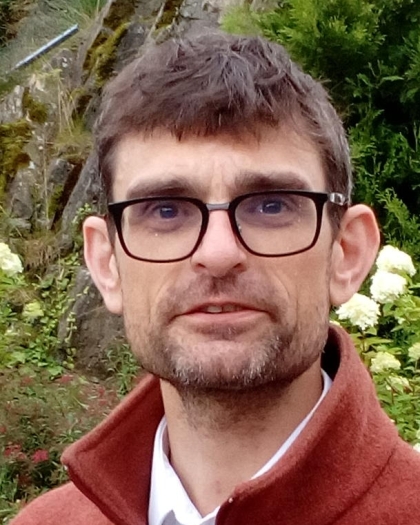
Hans Christopher Bernstein is a Professor at the Norwegian Fisheries College, UiT The Arctic University of Norway, and affiliated with the Arctic Centre for Sustainable Energy (ARC). His research focuses on biotechnology, microbial ecology, synthetic biology, and microalgal carbon capture and utilization. University: UiT The Arctic University of Norway School: Norwegian Fisheries College Research Group: Microalgae & Microbiomes Research Centers: Arctic Centre for Sustainable Energy (ARC) Bernstein’s work explores the intersection of biotechnology and microbial ecology, particularly in synthetic biology applications for carbon capture. His research includes modeling microbial processes, studying lipidome plasticity in Arctic diatoms, and developing engineered genetic circuits for microbial consortia. Key trends in his publications involve marine microbiome dynamics, cold seep ecosystems, and daylight-driven carbon exchange in structured microbial communities. Recent articles highlight advancements in microalgal biotechnology for industrial carbon capture, synthetic genetic circuits, and spatiotemporal metabolic network models. His work spans both theoretical modeling (e.g., neighbor-dependent interaction inference) and applied biotechnological solutions (e.g., EcoFABS fabricated ecosystems).
Britt Kramvig is a Professor at the School of Business and Economics , part of the Faculty of Biosciences, Fisheries and Economics (BFE) at UiT The Arctic University of Norway. Her research intersects decolonization , Indigenous (Sámi) studies, and creative industries , with a focus on storytelling, archive decolonization, and Arctic land-seascapes. She coordinates PhD studies in Tourism and Northern Studies and teaches courses on qualitative methods, climate change impacts on tourism, and knowledge co-production. Research Interests: Kramvig explores the decolonial potential of Indigenous archives , creative industries as decolonial praxis , and Arctic environmental humanities . Her work emphasizes ontology over epistemology , art-science collaborations (e.g., Dark Ecology, BAT), and indigenous survivance in tourism and cultural policy. She actively disrupts appropriation processes in Arctic landscapes through pluriversal storytelling. Key Collaborations: Kramvig contributes to international projects like Surviving the Unthinkable and The New Sámi Renaissance , advocating for indigenous data sovereignty and decolonial research ethics . She leads interdisciplinary efforts to integrate Sámi epistemologies into environmental science and policymaking. Recent Publications: Her 2023-2025 works address Arctic decolonization , indigenous archival practices , and co-creation in tourism , often published in journals like Environmental Research Letters and GeoHumanities . Notable topics include counter-mapping , indigenous survivance , and collaborative listening in Arctic soundscapes. Academic Affiliations: Member of the Norwegian Scientific Academy for Polar Research and the Indigenous Voices research group at UiT. She participates in the OKTA - Sami Art and Friction-Filled Communities on Festivals project.
Norwegian University of Science and TechnologyNorway
Vidar Hepsø is a Professor at the Department of Computer Technology and Informatics, Faculty of Information Technology and Electrical Engineering, Norwegian University of Science and Technology (NTNU). His work bridges anthropology of science and technology with practical challenges in digitalization, energy transition, and remote operations. Research focuses on digital infrastructures, socio-technical systems, and human factors in oil and gas industries Active in NTNU Applied Information Technology and NTNU Energy Transition Initiative Publications emphasize open-source ecosystems, autonomous systems, and environmental monitoring His scholarly output spans computer-supported collaborative work, IT infrastructure governance, and risk-informed anomaly detection in subsea systems. He leads projects connecting digital innovation with offshore wind and petroleum geoscience.
Eirik Valseth is an Associate Professor of Scientific Computing at the Norwegian University of Life Sciences (NMBU), Department of Data Science. He holds concurrent roles as a research associate at the Oden Institute, University of Texas at Austin, and an affiliated researcher at Simula Research Laboratory (Department of Numerical Analysis and Scientific Computing). His expertise lies in advanced finite element methods for PDEs with applications in flood modeling and hydropower systems. Current Affiliation: NMBU (Norwegian University of Life Sciences) Secondary Affiliations: Oden Institute (UT Austin), Simula Research Laboratory Research interests span numerical methods for challenging PDE systems, including: Stabilized finite element formulations Hurricane storm surge and riverine flood modeling Hydropower infrastructure analysis Computational mechanics and applied mathematics His recent publications (2024–2025) emphasize flood risk assessment (compound flooding, dam breaks, dredging impacts), advanced numerical methods (isogeometric analysis, stochastic finite elements, graph-grammar algorithms), and environmental applications (pollution transport, pathogen distribution, mosquito population dynamics after hurricanes). Key trends include cross-disciplinary integration of physics-aware machine learning and robust hydrodynamic simulation tools. Valseth's work extends to software development (e.g., WAVEx for spectral wave models, SWEMniCS for coastal circulation) and large-scale modeling frameworks like the ADCIRC unstructured mesh model for US coasts. Collaborative projects involve institutions such as University of Texas at Austin, Simula, and NOAA.
Dag Olav Hessen is a Professor at the University of Oslo , leading the Center for Biogeochemistry in the Anthropocene (CBA) . The center integrates expertise from the Department of Life Sciences, Earth Sciences, and Chemistry to investigate climate-carbon-ecosystem interactions in northern latitudes. Research Focus: Climate change impacts on freshwater and marine ecosystems Key Areas: Ecological stoichiometry, genome size, pelagic food webs, permafrost thaw Methodology: Interdisciplinary approaches combining fieldwork, lab experiments, and modeling His recent publications address critical issues like greenhouse gas dynamics in thawing permafrost , tipping points in lake ecosystems , and global change effects on zooplankton communities . Collaborative work spans Arctic char vulnerability, DOM-contaminant interactions, and climate governance frameworks.
Huu-Luat Do is a Research Fellow and PhD candidate in Natural Resource Economics at the Norwegian School of Fisheries , UiT The Arctic University of Norway. His work focuses on fisheries, aquaculture, and environmental economics within the SFI-funded DSolve project, addressing plastic pollution mitigation through biodegradable materials adoption.
Tom Arne Rydningen is an Associate Professor in the Department of Geosciences at UiT The Arctic University of Norway, specializing in Arctic marine geology. His research focuses on Cenozoic continental margin development, glacial history, and source-to-sink sedimentary systems in high-latitude environments. He actively contributes to understanding the evolution of the Arctic Ocean and its connections to global ocean circulation. Dr. Rydningen's research interests center on high-latitude continental margin development, particularly examining the large-scale evolution of ocean circulation in the Norwegian-Greenland Sea and Arctic Ocean during the Miocene. He investigates the buildup and retreat of marine-based ice sheets through the Quaternary in Fennoscandia, the Barents Sea, Svalbard, and northeastern Greenland. His work employs diverse methodologies including contourite studies , glacigenic deposits analysis , source-to-sink system modeling , and seismic stratigraphy using 2D/3D seismic data and multibeam echosounder data. Analysis of his 15 most recent publications reveals a strong focus on Arctic geological processes, particularly concerning the Barents Sea region. His work spans multiple disciplines including glaciology, paleoceanography, and sedimentology, with significant contributions to understanding Pleistocene glaciations, Cenozoic tectonic influences on sediment transfer, and microplastic pollution in Arctic marine sediments. Recent publications demonstrate increasing interdisciplinary approaches, connecting geological processes with contemporary environmental concerns. Dr. Rydningen is actively involved in several major research projects including DYPOLE (Dynamics of polar confined basins), Arven etter Nansen, TUNU, Euro-arctic marine fishes, iEarth, and GoNorth. He is a member of the Sedimentary Systems, Paleoclimates and Environments research group and contributes to science didactics in higher education. His teaching portfolio includes courses in marine geology, geological interpretation, and Arctic marine geology fieldwork. His research combines fieldwork, seismic data interpretation, and sediment core analysis to reconstruct past environmental conditions and ice sheet dynamics in the Arctic. This work has significant implications for understanding current climate change impacts on polar regions and provides crucial context for interpreting modern Arctic environmental changes.
Håkon Dahle is a Professor and Group Leader at the Computational Biological Unit (CBU) at the University of Bergen. He also leads the 'Energy and Life' work package at the K.G. Jebsen Centre for Deep Sea Research. His affiliation is with the Department of Biological Sciences (BIO). His research focuses on microbial ecology, investigating how natural and human-driven factors influence microbial communities and ecosystems across diverse environments, including hydrothermal vents, aquaculture systems, and marine ecosystems. Key research questions include understanding microbial community structure in hydrothermal systems, the interplay between geochemistry and microbial life, and optimizing recirculating aquaculture systems (RAS). Dahle employs bioinformatics, field observations, and population modeling to address these questions. He collaborates on projects like VIRVAR (NFR-funded), exploring algal-virus interactions, and MONITOR, advancing RAS microbial monitoring. His work spans microbial diversity in extreme environments such as Arctic hydrothermal vents and the impacts of deep-sea mining tailings. Notable contributions include studies on Zetaproteobacteria in hydrothermal mats and the microbiome dynamics in salmon farming. Dahle has supervised doctoral candidates like Jan Pieter Vander Roost (2018) and Runar Stokke, advancing microbial ecology and geobiology. Publications highlight interdisciplinary approaches, from viral genomics to aquaculture engineering. His research bridges fundamental microbiology with applied challenges in sustainable aquaculture and environmental stewardship.
Malgorzata Smieszek-Rice is a Postdoctoral Fellow at the Norwegian Fisheries College, UiT The Arctic University of Norway, based in Tromsø. She is an active member of the MARA research group, focusing on Arctic environmental and governance issues. Her research centers on Arctic governance, climate science policy, and marine environmental risks. Key areas include international cooperation through the Arctic Council, vulnerability assessment in the Arctic, and the ecological impacts of oil spills on polar cod. Her interdisciplinary work bridges environmental science and policy, contributing to sustainable development in the High North. The recent publications reflect a strong trend in Arctic environmental governance and climate science, with a focus on policy-relevant research, international collaboration, and ecological risk assessment. Her work combines political science, environmental toxicology, and sustainability studies. Scientific Contributions: Co-authored research in One Earth and Aquatic Toxicology Contributed to policy-forward reports on Arctic climate cooperation Active in interdisciplinary Arctic research networks She advises no students listed in the public data and is not noted to lead any grants or labs. Her institutional email is malgorzata.smieszek@uit.no.
Timo Szczepanska is a postdoctoral researcher at UiT The Arctic University of Norway , affiliated with the Norwegian College of Fishery Science . With expertise in computational modeling and social simulation, Szczepanska contributes to interdisciplinary research bridging technology, environmental science, and urban systems. Current member of the CRAFT research group Active participant in the FUTURES4Fish project Published extensively in journals like JASSS and Frontiers in Marine Science Research Focus: Szczepanska's work explores urban complexity through participatory simulations, develops agent-based models for human behavior analysis, and investigates climate change impacts on fisheries. Key methodological contributions include model reimplementations and integrating creative writing with future scenario planning. Recent Article Trends: Recent publications demonstrate a dual focus on decarbonisation strategies for urban mobility and innovative approaches to fisheries governance under climate change. Methodologically, Szczepanska combines agent-based modeling with game design and creative worldbuilding across multiple domains. Collaborative Networks: Collaborates with international researchers across institutions including Radboud University, Potsdam University of Applied Sciences, and various European research groups. Specializes in translating complex systems into interactive pedagogical tools and policy-relevant simulations. Technical Expertise: Proficient in computational platforms like NetLogo and Unity, with particular emphasis on model documentation, validation, and interdisciplinary translation of technological futures.
Jack Christopher Landy is an Associate Professor in the Department of Physics and Technology at UiT The Arctic University of Norway , specializing in Earth Observation and Arctic sea ice dynamics . His work integrates satellite altimetry , microwave backscatter , and data assimilation to study climate impacts on polar ice. Research Focus : Arctic sea ice thickness and freeboard estimation Snow depth modeling via CryoSat-2 and ICESat-2 Multi-decadal SAR analysis of ice types Climate change effects on ice roughness and transport Collaborations : Torgny Vinje Ice and Climate Laboratory INTERAAC (Norway-China air-snow-ice-ocean interactions) Multi-institutional Arctic climate projects
Kjetill Sigurd Jakobsen is a Professor at the Centre for Ecological and Evolutionary Synthesis (CEES) at the University of Oslo. He founded the Norwegian Sequencing Centre (NSC) in 2009 and has led CEES since 2018. His research focuses on evolutionary genetics and genomics, particularly exploring genetic forces shaping populations and bridging organismal and molecular biology. Key achievements include sequencing the Atlantic cod genome, revealing insights into immune system evolution, and studying genomic adaptations in species like Atlantic puffins and Svalbard reindeer. His work addresses ecological, evolutionary, and genomic questions across diverse systems, from bacteria to mammals. Research interests include endosymbiosis, horizontal gene transfer, and genome structure—particularly tandem repeats. He has contributed to projects funded by the Research Council of Norway (RCN), including studies on Atlantic cod population genomics and Arctic species adaptation. His lab, NSC, supports national genomic infrastructure.
Ole Arve Misund serves as a Professor at the Norwegian Fisheries College within UiT The Arctic University of Norway, Tromsø. His research spans polar science, Arctic marine ecology, fisheries management, and international relations in polar regions, with particular focus on Norway-Russia scientific cooperation dynamics following geopolitical shifts in 2022. His research interests center on climate change impacts on Arctic marine ecosystems, acoustic monitoring of marine organisms, and the geopolitical dimensions of polar research. Recent work examines boreal species migration into the Central Arctic Ocean, machine learning applications for backscatter analysis, and management frameworks for the Central Arctic Ocean. Analysis of his recent publications reveals strong interdisciplinary trends, integrating marine ecology with political science through studies of Russian-Norwegian scientific collaboration under sanctions, illegal fishing enforcement, and policy-relevant polar research. His work consistently bridges academic research with practical fisheries management and geopolitical considerations. Misund actively engages in science communication through Norwegian media outlets like Nordlys and Fiskeribladet, addressing topics from climate policy contradictions to Antarctic hydrological changes. His expeditionary work includes North Pole 2022 aboard the "Kronprins Haakon" research vessel. Professional activities demonstrate significant leadership in polar research infrastructure development and international scientific collaboration, particularly through the Norwegian Polar Institute where he contributes to strategic planning and policy advice. His work emphasizes evidence-based approaches to Arctic governance amid evolving geopolitical landscapes.
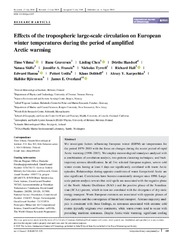
Klaus Dethloff is an active researcher specializing in Arctic climate science, with significant contributions to the international MOSAiC (Multidisciplinary drifting Observatory for the Study of Arctic Climate) expedition. His work spans atmospheric science, physical oceanography, and ecosystem studies in the polar regions, focusing on understanding the complex interactions between different components of the Arctic climate system. Dr. Dethloff's research interests center on Arctic climate dynamics, particularly examining how amplified Arctic warming affects broader climate patterns. His work investigates the connections between Arctic atmospheric processes and European winter temperatures, as well as the physical properties of sea ice and snow cover. Through the MOSAiC expedition, he has contributed to comprehensive year-round observations of Arctic climate systems, helping to advance our understanding of rapid climate changes in polar regions. His publications demonstrate expertise in analyzing large-scale atmospheric circulation patterns and their impacts on regional climate. The MOSAiC expedition papers represent major collaborative efforts involving dozens of international scientists across multiple disciplines, with Dr. Dethloff contributing to several key components of this landmark Arctic research initiative. While specific awards are not mentioned in the available publications, his involvement as a co-author on these significant multi-institutional research efforts indicates recognition within the climate science community. His work provides valuable data for improving climate models and understanding the far-reaching impacts of Arctic climate change.
Øyvind Fiksen is a Professor in the Department of Biological Sciences at the University of Bergen, specializing in biological oceanography and marine ecosystem dynamics. His work focuses on how individuals drive population and community dynamics in marine environments through mechanistic models, state-variable optimality theory, and trait-based ecosystem modeling. Professor Fiksen's research spans behavioral ecology, predator-prey interactions in fish, zooplankton, and microbes, investigating how these interactions structure marine ecosystems. His teaching portfolio includes Marine Ecology courses, and he has been instrumental in developing the Centre of Excellence in Biology Education (bioCEED) at the University of Bergen. During 2012-2015, he served as Head of Education and Deputy Head of Department at BIO, contributing to Bergen's recognition as a Centre of Excellence in Education. Analysis of his recent publications (2020-2024) reveals a strong emphasis on climate change impacts on marine systems, particularly how environmental changes affect fish phenology, distribution patterns, and ecosystem dynamics. His work integrates theoretical modeling with empirical data across multiple spatial and temporal scales, with notable contributions to understanding mesopelagic zone dynamics, tuna reproductive strategies, and cod-capelin interactions. A consistent theme throughout his research is the application of mechanistic models to predict ecosystem responses to environmental change. Excellent Teaching Practitioner from UiB Professor Fiksen has supervised numerous doctoral students including Johanna Myrseth Aarflot, Johanna Jennifer Elisabeth Fall, Tom Langbehn, Agurtzane Urtizbera Ijurko, Øystein Varpe, and Christian Jørgensen. His research has been supported by significant funding from EU, NFR (Norwegian Research Council), and NOKUT, including projects such as ETHOFISH, ADAPT, ECOBE, CLIMAR, TBECO, EGGVALUE, bioCEED, MARmaED, FILAMO, and PANDORA. As part of bioCEED, he has delivered over 40 invited talks on educational activities at local and national forums, demonstrating his commitment to both research and teaching excellence. His laboratory work focuses on theoretical ecology approaches to marine ecosystem modeling, with particular expertise in individual-based models that connect physiological processes to population dynamics. Current research directions include investigating how coastal water darkening affects marine phenology, optimizing tuna spawning strategies, and understanding the three-dimensional spatial dynamics of predator-prey interactions in marine environments.