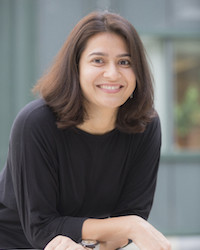
Shruti DevganView profile
Assistant Professor
Shruti Devgan is an Assistant Professor in the Department of Sociology at Bowdoin College, where she teaches and conducts research on narratives, memory, media, emotions, and transnational flows, with a focus on South Asia and the Sikh diaspora. Her work explores how digital technologies mediate trauma and identity across generations, particularly in relation to the 1984 anti-Sikh violence. Her educational background includes a PhD and MA in Sociology from Rutgers University, an MPhil and MA from Jawaharlal Nehru University, and a BA from Lady Shriram College, University of Delhi. This strong foundation supports her interdisciplinary research at the intersection of sociology, digital media, and postcolonial studies. Dr. Devgan’s research centers on how memory is formed, transmitted, and transformed in digital and diasporic contexts. She investigates the role of digital platforms in shaping counter-narratives of state violence, particularly through the lens of Sikh diasporic communities in North America. Her work emphasizes the emotional and embodied dimensions of identity, trauma, and justice. The trends in her publications reveal a consistent engagement with digital memory, intergenerational trauma, transnational activism, and the politics of representation. Her work spans academic journals, edited volumes, and public intellectual platforms, demonstrating a commitment to both scholarly and public discourse. Digital Crevices: Sikh Diasporic and Digital Memories of the 1984 Violence (2025) The Remains of the Disappeared: Digital Melancholia and Ensaaf (Justice) (2023) ‘Give in, cut your Hair…or it makes you a very strong person’: Diasporic Sikhs, Transnational Racialization and Embodied Identity (2022) Making the Disappeared Appear: Ensaaf’s Archive of Loss and Remains (2020) A Haunted Generation Remembers (2018) While no formal scientific awards are listed, her contributions to memory studies and public scholarship are significant. She has not disclosed specific grants or advising roles, but her publications suggest active mentorship and research leadership. She is engaged in building knowledge through collaborative academic networks and public platforms, contributing to conversations on justice, trauma, and digital culture. Her ongoing book project further solidifies her role as a leading scholar in diasporic memory studies.