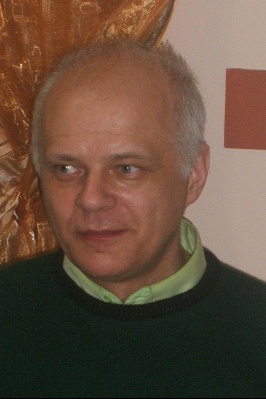
Dr. Edyta Chlebowska is an Assistant Professor at the Cyprian Norwid Research Center, John Paul II Catholic University of Lublin. Specializing in the visual art and literary legacy of Cyprian Norwid, she explores intersections between Polish Romanticism, art history, and cultural studies. Her work extends to album art analysis and interdisciplinary connections with music (e.g., Pink Floyd, Czesław Niemen). Her research focuses on Norwid's self-portraits, eschatological themes in his drawings, and comparative studies with 19th-century Warsaw painting. She reconstructs lost artworks, documents private collections (e.g., Konstancja Górska, Victor Gomulicki), and examines Norwid's reception in Florence and Odessa. Key projects include translating Studia Norwidiana and critical editing of Norwid's complete works. As editor-in-chief of multiple On Cyprian Norwid. Studies and Essays volumes and organizer of conferences like Niemen Non Stop and Colloquia Norwidiana , she bridges academic rigor with public engagement. Her publications span peer-reviewed books, journal articles, and popular science pieces, emphasizing Norwid's unpublished works and symbolic programs.
Rev. Dr. hab. Waldemar Żurek, Professor at the John Paul II Catholic University of Lublin, serves at the Center of Ecclesiastical Archives, Libraries and Museums (ABMK) within the Faculty of Theology. His academic career spans decades of dedicated research and publication in church history, particularly focusing on Eastern European Catholicism and the Salesian Order. As an active scholar, he continues to contribute significantly to ecclesiastical documentation and historical research. Professor Żurek's research interests center on ecclesiastical archives, parish documentation, and the history of religious orders, with particular emphasis on the Salesian Order's activities in Poland and Eastern Europe. His work explores the intersection of religious life with historical events, particularly during challenging periods like the communist era in Poland. He has developed expertise in analyzing parish inventories, visitation records, and chronicles to reconstruct religious life and administration across different historical periods. His extensive publication record demonstrates a consistent focus on documenting church history through meticulous examination of primary sources. The most recent works reveal trends toward comprehensive chronicles of religious institutions, detailed parish records analysis, and biographical studies of clergy members. His research spans multiple disciplines including religious studies, historical documentation, and Eastern European studies, with particular attention to regions like Pinsk, Lutsk, and Volhynia that have complex religious histories across changing political borders. Scientific Awards: Gold Medal for Long Service Professor Żurek has supervised numerous diploma theses including master's work on topics such as 'Social activities of Bishop Adolf Piotr Szelążek.' His editorial work includes significant publications like 'Kult Matki Bożej Ostrobramskiej w historii narodu polskiego' (The Cult of Our Lady of the Gate of Dawn in the History of the Polish Nation) and 'Ojciec Profesor Henryk Damian Wojtyska 1933-2009. Pasjonista, historyk Kościoła i dydaktyk' (Father Professor Henryk Damian Wojtyska 1933-2009. Passionist, Church Historian and Educator). He serves on the Scientific Council of the biannual journal 'Archives, Libraries and Church Museums' and is a member of the Theological Society of Józef Bilczewski in Ukraine. His work with the Center of Ecclesiastical Archives, Libraries and Museums represents a significant contribution to preserving and analyzing religious heritage. Through his leadership and scholarship, Professor Żurek has helped establish important methodologies for working with ecclesiastical documentation and has fostered international collaboration in church historical studies, particularly between Polish and Ukrainian scholars.
Prof. Tomasz Torbus is an Associate Professor at the University of Gdańsk's Faculty of History, Institute of Art History. His research focuses on medieval and early modern architecture in Central Eastern Europe, particularly Teutonic Order castles, Jagiellonian dynasty residences, and post-1945 monument reconstruction. He has directed the Institute of Art History since 2010. Fields of Interest: Medieval Architecture, Early Modern Architecture, Teutonic Order Studies, Nationalism in Art, Post-War Reconstruction Key Projects: Jagiellonian Residences Project (1990-1997), Saxon-Polish Union Architecture (2006-2011), Mannerist/Baroque Public Architecture Research His publications include monographs on Teutonic castles and collaborations on Polish-German cultural history. Current work includes synthesizing research on Golden Age public architecture through archival analysis. Contact: t.torbus@ug.edu.pl | Office: Room 52, Faculty of History
Professor Andrzej Aksamitowski serves at the Institute of Political and Security Sciences within the Faculty of Humanities at the University of Szczecin, where he maintains active research and academic duties. His distinguished career spans decades of scholarly contribution to military history and security studies, including prior leadership roles as Head of the Department of Conflict and Peace Studies (2012-2019) and significant positions at Poland's National Defence University and Military Historical Institute in Warsaw. Aksamitowski's research program centers on national security frameworks, historical military operations, and the specialized field of military cartography. His expertise in fortification systems and armed conflict analysis bridges historical scholarship with contemporary security applications, particularly through his innovative integration of geographic information into military history. This interdisciplinary approach has established him as a leading authority on 20th-century Polish military engagements and cartographic documentation of warfare. His publication trajectory from 1992-2014 reveals a sustained focus on World War II military campaigns, with particular emphasis on Polish defensive operations and North African theaters. Aksamitowski's signature contribution lies in historical atlases that combine rigorous archival research with precise cartographic representation, creating indispensable reference works for understanding battle dynamics and strategic decision-making. These publications consistently demonstrate his methodological innovation in visualizing complex military operations through specialized mapping techniques. Professional recognition includes: Silver Cross of Merit (1992) Gold Cross of Merit (2000) Medal of the National Education Commission (2005) Honorable Mention for Historical Book of the Year (2019) While specific graduate student mentorship details remain undocumented in public sources, Aksamitowski's institutional leadership roles—including departmental head positions and editorial responsibilities for major reference works—demonstrate substantial academic supervision capacity. His current work at the University of Szczecin continues to advance security studies through the Institute of Political and Security Sciences, where he contributes to both teaching and research infrastructure development in national security disciplines.
Prof. Marian Surdacki serves as Head of the Department of the History of Education and Social Welfare at the Catholic University of Lublin 's Faculty of Social Sciences. A historian specializing in early modern social history, his work bridges Polish and Italian archival studies, with 200+ publications including 7 monographs. PhD: History (KUL, 1987) Habilitation: Modern Social History (1998) Full Professor: 2008 His research spans child welfare systems , charitable institutions , and urban development , exemplified by works on Rome's Hospital of the Holy Spirit and Urzędów's 400-year history. He has directed 18 Ministry of Science publishing grants and mentored 8 PhD graduates. Key article themes include: Foundling homes in Enlightenment Europe Polish-Lithuanian hospital networks Religious charity in Catholic/Protestant contexts Regional governance in pre-partition Poland Scientific Recognition : Recipient of Silver Cross of Merit (2006) Multiple Rectoral Awards for monographs International publications in Italian/French journals Active in regional revitalization, he co-founded cross-border collaborations with Hungarian/Ukrainian towns and led Urzędów's 600th anniversary celebrations that restored its city status (2015).
Leszek Ludwik Gawrysiak is a Professor at the Department of Geology, Soil Science, and Geoinformatics , affiliated with the Faculty of Earth Sciences and Spatial Management at Maria Curie-Skłodowska University in Lublin, Poland. His academic career includes habilitation in Earth and Environmental Sciences (2019), a PhD in Geomorphology (2003), and a master’s in Physical Geography (1993), all from UMCS. Education: Master’s in Physical Geography (1993), UMCS PhD in Geomorphology (2003), UMCS Habilitation in Earth and Environmental Sciences (2019), UMCS His research focuses on Geomorphology , Geomorphometry , and Geoinformatics , with applications in Loess Erosion , Gully Dynamics , and Environmental Risk Assessment . He employs GIS, LiDAR, and remote sensing techniques to analyze terrain segmentation, forest cover changes, and geomorphological impacts on land use planning. Projects include studies on extreme meteorological events, geopark development, and Polish-Belarusian-Ukrainian water policy in the Bug River basin. Recent publications emphasize Loess Landscapes , Proglacial Valley Morphology , and Gully Erosion , with methodological advancements in Digital Terrain Modeling and Geomorphon Analysis . His work bridges computational methods (e.g., GPU-accelerated topographic parameter evaluation) with field-based geomorphological studies in Svalbard and Eastern Europe. Scientific Awards: Award from the Polish Geomorphological Society for best PhD thesis (2002) Team Award from the Rector of UMCS (2010) Individual Award from the Rector of UMCS (2013) He has contributed to understanding Loess Area Geomorphodiversity , Forest Cover Dynamics , and Climate Change Impacts on landscapes. His collaborations span interdisciplinary studies in gully erosion, geotourism, and Holocene soil erosion rates. Contact: leszek.gawrysiak@mail.umcs.pl | Phone: +48 81 537 68 71
Zbigniew Landowski is an Adjunct Professor at the University of Gdańsk within the Faculty of History , specifically the Division of Methodology of History, History of Historiography and Archival Science . His research focuses on the intersection of Islamic political thought with constitutional practices in the 19th and 20th centuries, the ideology and history of Hizb ut-Tahrir, and the integration of Islam into multicultural societies such as the Balkans, Southeast Asia, and China. Email: zbigniew.landowski@ug.edu.pl Research Interests include: History of Islamic Political Thought Constitutional Integration of Islam Hizb ut-Tahrir Ideology Islam in Multicultural Contexts Historiography of the Balkans, Southeast Asia, and China Recent Publications highlight his exploration of: Medieval Islamic bestiaries and cultural symbolism Polish Orientalist networks in interwar Vilnius and Gdańsk Historical epidemiology of cholera in Tsarist Russia Identity dynamics in Arab literature State-Islam relations in post-Soviet Kazakhstan Sociopolitical transformations in Ottoman-era women's daily life
Dr. Grzegorz Kiarszys serves as Assistant Professor in the Department of Archaeology within the Institute of History at the University of Szczecin, a position he has held since October 2011. His academic journey began with archaeology studies at Adam Mickiewicz University in Poznań (1999-2004), where he earned his Master's degree under Prof. Danuta Minta-Tworzowska, followed by doctoral research completed in 2010 under Prof. Włodzimierz Rączkowski. His educational background includes: Master of Archaeology, Adam Mickiewicz University (2004) PhD in History, Adam Mickiewicz University (2010) Kiarszys specializes in archaeological methodology with emphasis on conflict archaeology, landscape archaeology, and advanced geospatial technologies. His research integrates social theories with non-invasive methods including GIS, airborne laser scanning (LiDAR), aerial photography, and photogrammetry to analyze spatial organization and landscape transformation. His work particularly focuses on medieval and post-conflict landscapes in Poland, examining how cultural and political forces shape spatial perception and material heritage. This interdisciplinary approach bridges traditional archaeology with digital humanities and heritage conservation. Analysis of his 15 most recent publications reveals consistent focus on landscape palimpsests, aerial perspective limitations, and conflict-related heritage. Key trends include methodological innovation in point cloud analysis, critical examination of cartographic representations, and theoretical exploration of time-space relationships in archaeological contexts. His work increasingly addresses Cold War heritage and post-WWII landscape transformations. Scientific recognition includes: Individual award from the Minister of Science and Higher Education (2016) for monograph on Górowski County defensive settlements His grant leadership demonstrates significant research impact: the 2014-2015 Ministry of Culture-funded project on defensive settlements in Górowski County established new methodological frameworks, while the 2018-2019 project on Soviet nuclear warhead storage sites pioneers archaeological perspectives on Cold War heritage. These projects involve international collaborations with researchers from Serbia, UK, and Ireland, often incorporating student fieldwork components. Kiarszys actively participates in rescue excavations across Poland and has contributed to major infrastructure projects including Copenhagen Metro archaeological surveys. Though not explicitly mentioning dedicated labs, his work integrates with student research groups including the Student Archaeological Club and Media and Civilization Research Club at the University of Szczecin, where he supervises field methodology and spatial analysis components.
Rev. Dr. hab. Tomasz Moskal, Professor at the Department of Church History, Faculty of Theology, The John Paul II Catholic University of Lublin (KUL), is a distinguished scholar in Polish ecclesiastical history and archival studies. His career spans editorial leadership (e.g., ROCZNIK KOLBUSZOWSKI ), thematic editorship in Archives, Libraries and Church Museums , and extensive historical source analysis. Education : Doctorate habilitation (Dr. hab.), formal theological training Research focuses on Church history , historical source studies , liturgical evolution , and monastic archives . His work bridges medieval Poland with interwar Church reconstruction , analyzing parish inventories, diocesan structures, and liturgical practices across centuries. Key publications include studies on Sandomierz diocesan records, Koprzywnica church history, and 900th anniversary of Clairvaux monastery. Articles reveal expertise in archival science (e.g., 18th-century parish libraries), religious sociology , and Polish Catholic identity . Scientific Awards : Bronze Medal for Long-Term Service (2016), KUL Rector's Individual Award II stopnia (2006) As a reviewer and editor, he contributes to doctoral dissertations (e.g., Ursuline schools in PRL) and jubilee publications. His academic service includes scientific councils and thematic editorship in library science, shaping Polish theological historiography.
Dr. Agnieszka Gruszczyńska is a researcher specializing in paleoenvironmental studies at an academic institution in Poland, working within the Department of Dynamics of Past Landscapes. She completed her PhD in 2023 after conducting extensive research on the paleogeographic development of the Great Sertei Lake Basin in the Vitebsk Lake District, using paleoecological analyses as her primary methodology. Education: 2016-2023: PhD studies on Paleogeographic development of the Great Sertei Lake Basin in the Vitebsk Lake District in the light of paleoecological studies 2014-2016: Master's degree in Environmental Protection, Faculty of Biology and Environmental Protection, University of Lodz, specialization in ecology and water protection 2012-2014: Master's degree in Pedagogy with physical and health education, Faculty of Geographical Sciences, University of Lodz Dr. Gruszczyńska's research centers on ecosystem responses to violent and extreme events throughout geological history, with particular expertise in Chironomidae ecology where she investigates non-temperature factors influencing population dynamics and community quality. Her work spans paleoecological analysis of aquatic invertebrate remains and examines climate change patterns throughout the Pleistocene and Holocene epochs. She frequently employs multi-proxy approaches to reconstruct past environmental conditions, with fieldwork concentrated in Eastern Europe, particularly Western Russia's Serteya region and various Polish lake districts. Her extensive publication record demonstrates a methodological focus on paleolimnology and paleoenvironmental reconstruction using lake sediments, peat bogs, and other natural archives. Recent work shows increasing emphasis on human-environment interactions throughout history, particularly regarding historical land use practices like charcoal production and their long-term ecological impacts. Her collaborative research bridges Quaternary science, archaeology, and modern environmental concerns, often examining how past environmental changes can inform contemporary ecological challenges. Dr. Gruszczyńska actively participates in international research collaborations, particularly with institutions in Russia and other European countries, contributing to our understanding of long-term environmental changes and human adaptation to these changes across the East European Plain.
Dr. Grzegorz Misiura is an Assistant Professor at the Center for Research on the History of the Catholic University of Lublin (John Paul II Catholic University of Lublin). His work focuses on the history of the Roman Catholic Church in Poland post-1918, Lublin Diocese history, and the history of the Catholic University of Lublin (KUL). Education: PhD in History from John Paul II Catholic University of Lublin His research examines clergy-organist networks in Lublin, post-war academic recovery, and institutional archival practices. Recent publications analyze collaborations between Bishop Stefan Wyszyński and organists, KUL's academic rights journey, and private archives of Catholic scholars. Key projects include: Ministry of Education-funded source edition of Rev. Prof. Józef Kruszyński's Memoirs Electronic Archive of the Center for Research on John Paul II's Thought Historical monograph of KUL's Scientific Society He serves as editorial secretary for Polish Diaspora Studies and is a member of the 'Polish Community' Association.
Rev. Dr. Grzegorz Bujak is a Professor at the John Paul II Catholic University of Lublin, affiliated with the Department of Source Studies, Archival Studies and History Didactics within the Faculty of Humanities. His research focuses on church history, archival practices, and socio-religious transformations in Poland during the interwar period. Faculty of Humanities, John Paul II Catholic University of Lublin Department of Source Studies, Archival Studies and History Didactics His scholarly work examines diocesan administration , clergy political engagement , and archival systems from the Austrian partition era through the Second Polish Republic. He has contributed extensively to peer-reviewed journals and collective publications. Recent articles highlight trends in interwar religious reform , document circulation , and church-state interactions . Bujak also served as editor-in-chief for the centenary publication Catholic University of Lublin 1918-2018 . Member of the Historical Commission of the Polish Academy of Sciences (2015-2019) Reviewer for doctoral theses and scientific works Organizer of archival technology conferences Bujak has supervised diploma theses on topics including Galician nobility wills , parish archiving , and document management systems . He has analyzed ecclesiastical records through archival queries at institutions like the Max Planck Institute.
Dr hab. Małgorzata Gamrat is an Associate Professor at the Department of Religious Monody and Polyphony Research , Institute of Art Sciences , Faculty of Humanities , John Paul II Catholic University of Lublin (KUL), Poland. She is an internationally recognised scholar specialising in the interrelations between music and literature, with particular emphasis on the works of Franz Liszt, Hector Berlioz and Honoré de Balzac. Her habilitation (2017, University of Warsaw) and joint Ph.D. (2012, Jagiellonian University & École Pratique des Hautes Études, Paris) underpin a prolific research portfolio that spans Romantic music history, semiotics of music, and interdisciplinary studies. Education & Affiliations Ph.D. co-tutelle, Jagiellonian University & École Pratique des Hautes Études, Paris (2012) Habilitation, University of Warsaw (2017) M.A., Université Toulouse II Le Mirail (2007) M.A., Academy of Music in Bydgoszcz (2008) Research Focus Dr Gamrat’s work is situated at the intersection of musicology , literary studies and semiotics . She explores how nineteenth-century composers engaged with contemporary poetry and how literary figures reflected on music, creating a rich intermedial dialogue . Key topics include: Piano and vocal music of Franz Liszt, including genre hybridization and transcriptions Hector Berlioz’s dramatic symphonies and their literary subtexts Honoré de Balzac’s musical aesthetics and collaborative networks Polish composers in the interwar Parisian milieu (e.g., Tansman, Paderewski) Methodologies of musical semiotics and intertextual analysis Recent Publication Trends Since 2020, her articles have increasingly integrated semiotic theory with close analytical readings , addressing questions of meaning , intertextuality and translation between artistic media. Contributions appear in leading journals such as Annee Balzacienne , Czas Kultury , Nottingham French Studies and World Futures , reflecting a trajectory from archival/documentary work toward philosophical and methodological reflection. Scientific Awards & Honours Elected Fellow, International Communicology Institute, Washington, DC (2023) University Laurel “Father Idzi Radziszewski Award” – 1st Degree, KUL (2024) University of Warsaw “Clio” III Degree Award (2017) Prize of the Polish Composers’ Union for the monograph on Liszt’s piano music (2015) Research Grants & Leadership Principal Investigator, NCN FUGA: “Franz Liszt's Songs for Voice and Piano...” (2013–2016) Co-investigator, NCN OPUS: “Presence of Polish Music in Interwar Paris” (2017–2020) Vice-coordinator, Czech-Polish Forum Grant: “Joseph von Eichendorff...” (2018) Member, Scientific Committee, 16th World Congress of Semiotics, Warsaw (2023) Editorial & Scholarly Service Dr Gamrat sits on the editorial boards of Musicology Papers and Roczniki Humanistyczne , and is a peer reviewer for Muzyka , Teoria Muzyki , Studia Chopinowskie , Res Facta Nova , among others. She co-organised the international conferences “40 Years of Musical Semiotics” (2023) and “Zola’s Legacies” (2021).
Dr hab. Eryk Krasucki, Professor at the University of Szczecin, is a distinguished historian specializing in 20th century history with particular focus on communism, the Comintern, Polish People's Republic, and regional history of Western Pomerania. Affiliated with the Faculty of Humanities, Department of Humanities at the University of Szczecin, he has established himself as a leading scholar in Polish historical research. Professor Krasucki's research spans multiple critical areas of modern Polish history. His work examines the political, cultural, and social dimensions of communist rule in Poland, with special attention to Western Pomerania and the city of Szczecin. He has made significant contributions to understanding the mechanisms of communist power, cultural policies, and social responses during the Polish People's Republic period. His extensive publication record demonstrates consistent scholarly output across multiple decades, with recent works focusing on biographical studies, the history of the Comintern, and regional responses to political upheavals such as the December 1970 protests. Krasucki's research methodology combines archival work with theoretical analysis, often utilizing previously underutilized primary sources from security service archives and personal collections. Professor Krasucki's academic contributions have positioned him as a key figure in contemporary Polish historiography, particularly in the fields of communist studies and regional history. His work bridges national and international scholarly conversations, connecting Polish historical experience with broader European contexts of communist rule and post-communist transformation. As an active academic, Krasucki maintains professional profiles on ResearchGate and Academia.edu, demonstrating ongoing scholarly engagement. His research continues to influence contemporary understanding of Poland's communist past and its legacies in the present.
SWPS University of Social Sciences and HumanitiesPoland
Dr. Kinga Blaschke is a Polish art and design historian, sociologist, and academic at SWPS University of Social Sciences and Humanities , where she serves as the Representative for International Affairs in the Interdisciplinary Faculty in Krakow. She is affiliated with the Department of Design Research and Art Theory and actively contributes to research on art historiography, sociology, and graphic design. Research Interests : History and theory of art and graphic design, propaganda in art during the communist era, myths in art history, and sociology of art and design. Her work explores how social issues manifest in visual arts and critiques ideological narratives in historical scholarship. Teaching : Courses at SWPS University include art history, sociology of art and design, and history of graphic design. Scientific Awards & Scholarships : Rev. Szczęsny Dettloff Award (2012) for outstanding art historical research Ministry of Science and Higher Education Scholarship (2005–2007) Robert Anderson Research Charitable Trust Scholarship (2011) Creative Scholarship from the Minister of Culture and National Heritage (2016) Notable Publications span medieval art, sacred architecture, and political ideologies in art history. Her 2024 works focus on typographic theory and cross-disciplinary historiography.