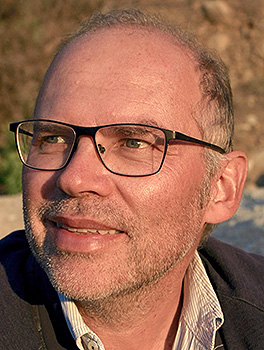
Prof. Willy Tinner is a leading academic at the University of Bern, serving as Head of the Paleoecology section and Vice Executive Director within the Institute of Plant Sciences. His research focuses on reconstructing past environmental changes through pollen analysis, vegetation dynamics, and human-ecosystem interactions. Tinner's work integrates paleoecological data with climatology, archaeology, and conservation biology to understand long-term ecological processes. His expertise spans Holocene climate impacts, Neolithic land use patterns, and biodiversity conservation challenges in alpine and Mediterranean ecosystems. Notable research includes studies on Fagus-Quercus forest coexistence in Italy, Abies alba climatic adaptations, and human-driven vegetation changes across Europe. Tinner collaborates internationally, contributing to projects in Greece, Ukraine, and the Balkans. He has published extensively on topics such as fire regimes, lake sediment archives, and the ecological consequences of ancient agricultural practices. His leadership positions reflect his role in shaping Switzerland's ecological research priorities through institutions like WSL Cadenazzo.
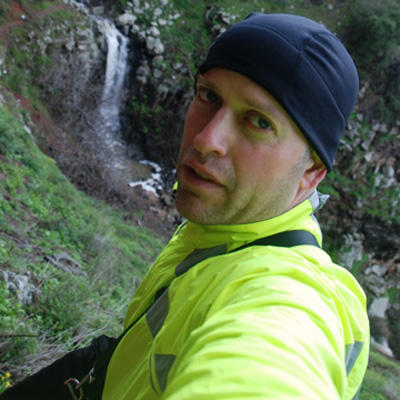
Søren Munch Kristiansen is an Associate Professor in the Department of Geoscience at Aarhus University, Faculty of Natural Sciences. His interdisciplinary research bridges geoscience and archaeology, focusing on the complex interactions between soil, water, and human societies across time. He is actively engaged in transdisciplinary projects involving geoarchaeology, groundwater, and public health. Research Interests: His work centers on how soil and groundwater have shaped human prehistory and continue to influence modern life. Key areas include safe drinking water from a lifelong perspective, geoarchaeological prospection, Viking Age settlements, and the application of geophysical and geochemical methods in archaeological contexts. He is particularly interested in novel, interdisciplinary methodologies. Recent Research Trends: His recent publications reveal a strong focus on integrating geophysical data (e.g., GPR, borehole databases) with archaeological interpretation, especially in 3D urban modeling and landscape change. Themes include Viking Age sites, interglacial deposits, and anthropogenic soil modifications. His work increasingly employs machine learning and large-scale data synthesis. Scientific Awards: No awards mentioned in the provided text. Advising and Grants: While specific students are not listed, he leads and participates in multiple funded research projects, indicating an active supervisory role. His grants span from 2016 to 2024, including projects like TITAN, SAGA, and 'Fingerprinting displaced molecular substances,' highlighting sustained funding and leadership in interdisciplinary geoscience-archaeology research. Labs and Teams: He is involved in collaborative networks such as the Soil Science & Archaeo-geophysics Alliance (SAGA), suggesting leadership in interdisciplinary research teams. His work often involves multi-proxy analyses and international collaborations, particularly in Scandinavian archaeological geophysics.
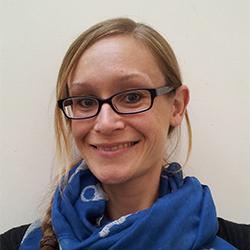
Darian Marie Totten is an Assistant Professor & Director of Classical Studies at McGill University's Department of History and Classical Studies. Her research focuses on Roman archaeology, environmental history, and the intersection of ancient and modern placemaking. She holds a PhD from Stanford University and specializes in Mediterranean regions from 2000 BCE to 600 CE. Education: PhD in Classics/Archaeology from Stanford University (thesis not specified). Research interests include Roman infrastructure, comparative imperial systems (e.g., Han China), urban resilience strategies, and the material culture of labor and exchange. She directs fieldwork at Salapia-Salpi in Apulia, Italy, exploring late antique urbanism and environmental adaptation. Her scholarship bridges archaeological material analysis with historical interpretation, emphasizing interdisciplinary approaches to ancient economies, landscapes, and cultural transitions. Recent work highlights cross-cultural comparisons between Rome and Han China, as well as the long-term dynamics of Mediterranean coastal settlements. Her publications consistently engage with methodological innovation in field archaeology, particularly in paleoenvironmental reconstruction and ceramic sourcing. She also critiques modern uses of Roman heritage in national identity formation, reflecting a commitment to critical archaeology. Current projects include ongoing excavations at Salapia, analysis of Apulian salt production networks, and investigations into late antique glass trade routes. She teaches courses on classical archaeology (CLAS 240) and specialized topics (CLAS 349).
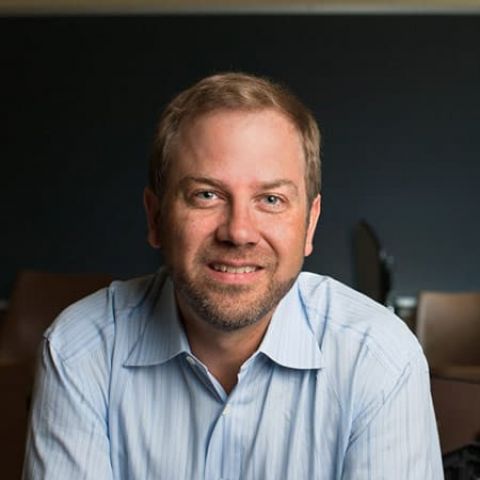
Dr Jan Woudstra is an Honorary Professor at the University of Sheffield's School of Architecture and Landscape. With a PhD in Landscape Architecture from University College London and a background in landscape design, horticulture, and conservation, he has taught landscape architecture and history since 1995 and part-time at the Architectural Association School of Architecture from 1988-2005. Education: PhD, MA (Conservation), Dip Hort (Kew) Research Focus: History and theory of modern movement landscape architecture, planting design, hard landscape detailing, and international design trends Supervision: Claudia Leticia Martínez Velarde, Lei Gao, Kairan Li, Sang Jung Yoon, Vivienne Rose Parrott, Jijun Zhao, Manoochehr Salahi Moghadam, Hossein Donyavi, Sally O’Halloran Contact: j.woudstra@sheffield.ac.uk | Arts Tower, Floor 12, Western Bank, Sheffield, S10 2TN His research emphasizes landscape conservation, sustainability, and social equitability, with case studies on designers like Christopher Tunnard, Peter Shepheard, and Robert Marnock. He explores the tension between memory and innovation in historic landscapes. Recent publications address Buddhist pilgrimage sites, Scandinavian design, and historical planting techniques. Collaborations with Peter Blundell Jones and others analyze the interplay between architecture and landscape.
Dyanna Jolly is a Senior Lecturer in the Department of Environmental Management at Lincoln University, Aotearoa New Zealand. She is of Whitebear First Nations (Cree, Saulteaux, Nakota, Dakota) heritage from Treaty 4 territory in Saskatchewan, Canada, and was adopted into the Kakakaway, Shepherd, Maxie family. Her work centers on Indigenous-led environmental decision-making processes grounded in Te Tiriti o Waitangi principles. Her educational background includes: PhD from University of Otago, Dunedin MNRM from University of Manitoba, Winnipeg BA (Hons) from University of Regina, Regina Jolly's research focuses on transformative engagement through Indigenous planning, environmental management, and impact assessment. She has over two decades of experience developing Iwi Management Plans and cultural impact assessments while collaborating with iwi, hapū, industry, and government. Her work bridges Western scientific approaches with Māori environmental knowledges (Mātauranga Taiao) and global Indigenous studies, emphasizing epistemic justice in environmental health risk assessment and soil science applications. Her publications reveal strong thematic trends in Indigenous authority within impact assessment frameworks, cultural impact assessment effectiveness in Aotearoa New Zealand, and knowledge-weaving methodologies connecting soil science with Indigenous land management practices. Recent works highlight decolonial approaches to environmental decision-making and the integration of Māori perspectives in horticultural land use studies. Key recognitions include: University of Otago Humanities Divisional List of Exceptional Doctoral Theses (2020) New Zealand Geographical Society Best Doctoral Thesis in Geography Award (2022) Jolly actively supervises Master's and PhD students while leading significant research initiatives including 'Te Rua o mahara - Stories stored in the depths' (2024) and 'Building the Autonomy of Indigenous Communities to Make their Data Work for Decision-Making' (2025). She serves as Programme Convenor for the Master of Planning Programme and maintains extensive professional engagement through the New Zealand Association for Impact Assessment Core Group, EIANZ Impact Assessment Special Interest Group, and as Chair of the Mana Whenua Advisory Group for Te Hapū o Ngāti Wheke and Lyttelton Port Company. Her collaborative work with the Tāwhaki Joint Venture demonstrates practical application of Indigenous planning theory in environmental management contexts, creating tangible pathways for community-led environmental governance.
Adam T. Smith is Distinguished Professor of Arts and Sciences in Anthropology at Cornell University, where he has been faculty since 2011. He is a leading scholar in Eurasian archaeology with a focus on the South Caucasus, particularly Armenia. Smith co-founded Project ArAGATS, a long-term archaeological program in Armenia, and co-directs the Aragats Foundation and Caucasus Heritage Watch, organizations dedicated to heritage preservation in the region. His educational background includes: Ph.D. (1996) in Anthropology from the University of Arizona M.A. (1993) in Anthropology from the University of Arizona M.Phil. (1991) in Social and Political Science from the University of Cambridge B.A. (1990) in Anthropology and Political Science from Brown University Smith's research centers on the role of material culture in political life, examining how objects, landscapes, and built environments shape political procedures and values. His work spans archaeological theory, political anthropology, and heritage studies, with a particular focus on the South Caucasus region. He investigates the long-term social and political dynamics from the Bronze Age to contemporary times, exploring themes of sovereignty, heritage preservation, and the political dimensions of material culture. His approach integrates theoretical frameworks with empirical fieldwork to understand political power through material evidence. His recent publications demonstrate a consistent focus on the archaeology of power and politics in Eurasia, with increasing attention to contemporary heritage issues. Smith's work bridges theoretical frameworks with empirical research, particularly through his long-term fieldwork in Armenia and the Caucasus region. His scholarship shows a progression from studies of ancient political systems to contemporary issues of cultural heritage and political violence, with a strong emphasis on ethical engagement with archaeological practice and heritage management. Smith has received numerous prestigious awards including: 2023-2025 Fellow, Milstein Program in Technology and Humanity, Cornell University 2023 Finalist, Falling Walls Science Breakthrough of the Year, Social Sciences and Humanities 2023 Certificate of Communal Partnership, St. James AME Zion Church, Ithaca NY 2010-2011 John Simon Guggenheim Memorial Foundation Fellow 2010-2011 Fellow, Cornell University Society for the Humanities 2006-2007 Fellow, Howard Foundation Smith has directed multiple field seasons and collaborative research projects in Armenia, involving both American and Armenian scholars. His work with Project ArAGATS has received continuous support over two decades, while Caucasus Heritage Watch represents a newer initiative addressing urgent heritage preservation needs through satellite monitoring. He has supervised numerous graduate students and secured significant research funding for his projects, demonstrating strong leadership in both academic and community-engaged research contexts. Smith leads several research initiatives including Project ArAGATS, the Aragats Foundation, and Caucasus Heritage Watch. His Landscapes and Objects Laboratory at Cornell serves as a hub for material culture studies, while his work with the St. James AME Zion Community Excavations demonstrates his commitment to community-engaged archaeology. These teams bring together interdisciplinary scholars to address complex questions about political power, material culture, and heritage preservation across time, with particular attention to how archaeological practice can engage with contemporary political issues and community needs.
Federica Spagnoli is an Associate Professor of Phoenician and Punic Archaeology at the Department of the Italian Institute of Oriental Studies (ISO), Faculty of Letters, Sapienza University of Rome. She teaches courses including "Archeologia fenicio-punica e del Mediterraneo," "The Phoenicians in Central Mediterranean," and "Pre-Classical Levant and Mediterranean." Her office is located in Building CU003, second floor, room 107 at Piazza Aldo Moro 5, Rome. Dr. Spagnoli obtained her PhD in Near Eastern Archaeology in 2008 under the supervision of Professors P. Matthiae and L. Nigro. She has been a member of the Rome "La Sapienza" Expedition to Motya since 2002, serving as supervisor of the ceramic Laboratory. Currently, she holds the position of RTDB in Phoenician and Punic Archaeology (L-OR/06). Her research focuses on Phoenician-Punic archaeology with particular emphasis on Mediterranean cultural interactions, religious practices, and material culture. Key areas of investigation include: Phoenician colonization in the central Mediterranean (Sicily, Sardinia, Malta, North Africa) Phoenician religious practices, particularly worship of Astarte Phoenician-Punic pottery technology and typology Mediterranean cultural interactions between Phoenicians and indigenous populations Sacred landscapes and coastal sanctuaries in the Mediterranean Environmental archaeology and human-environment interactions at Phoenician sites Dr. Spagnoli's recent scholarly output demonstrates a strong interdisciplinary approach, combining traditional archaeological methods with advanced scientific techniques. Her work increasingly incorporates archaeometric analyses, 3D documentation, and environmental studies to deepen understanding of Phoenician material culture, religious practices, and human-environment interactions. Key research sites include Motya in Sicily and Ras il-Wardija in Gozo, Malta, where she leads the Sapienza Archaeological Expedition. Her scholarly contributions span ceramic studies, religious archaeology, landscape studies, and archaeometry, reflecting the multifaceted nature of Phoenician-Punic studies in the contemporary academic landscape. Dr. Spagnoli actively supervises student theses and leads archaeological fieldwork, including the Sapienza Archaeological Expedition at Gozo - Ras il-Wardija Project. She also coordinates laboratory work, including ceramic analysis and digital documentation of archaeological finds. Her research team includes specialists in archaeobotany, archaeometry, digital documentation, and religious studies, reflecting the interdisciplinary nature of contemporary Mediterranean archaeology.
Gideon Hartman is an Associate Professor in the Anthropology Department at the University of Connecticut, where he conducts interdisciplinary research at the intersection of paleoenvironmental reconstruction, plant and animal eco-physiology, anthropology, and archaeology. His work primarily employs stable isotope methods to reconstruct past environments, human mobility patterns, paleodiets, and ancient economic systems. Dr. Hartman received his Ph.D. from Harvard University in 2008. His educational foundation in anthropology and archaeological science has enabled his innovative approach to stable isotope analysis. Rather than treating isotopic values as static markers, he investigates the mechanisms causing variability in stable isotope ratios as they move along foodwebs from soil and atmosphere to plants and then to animals and humans. Hartman's research program uniquely begins in the contemporary world to establish principles that can be reliably applied to archaeological settings. His work spans diverse geographical regions including the Eastern Mediterranean, Levant, Jordan Valley, and Armenian Highlands, with temporal coverage from the Middle Pleistocene to the Early Bronze Age. He has made significant contributions to understanding how environmental factors like water availability, temperature, and soil conditions affect isotopic signatures in modern ecosystems, creating robust models for archaeological interpretation. His publication record demonstrates consistent productivity in high-impact journals, with research trends showing increasing sophistication in multi-isotope approaches applied to complex archaeological questions about pastoralism, trade networks, human migration, and human-environment interactions. His work increasingly integrates zooarchaeological, archaeobotanical, and geochemical evidence to build comprehensive pictures of past societies. As director of the Stable Isotope Preparation Lab at UConn, Hartman leads a research team that processes and analyzes samples from archaeological sites worldwide. His laboratory serves as a hub for interdisciplinary collaboration between archaeologists, anthropologists, geoscientists, and biologists seeking to apply isotopic methods to their research questions. His work has been instrumental in refining methodologies for interpreting strontium, carbon, nitrogen, and oxygen isotope data in archaeological contexts, particularly regarding animal and human mobility patterns in the Eastern Mediterranean region.
Christopher Bronk Ramsey is Professor in Archaeological Science and Head of the School of Archaeology at the University of Oxford, affiliated with Merton College. As chair of the INTCAL committee, he oversees global radiocarbon calibration. His expertise spans archaeological science, Quaternary environmental research, and nuclear instrumentation development. Research focuses on radiocarbon dating, Bayesian chronological modeling, and AMS techniques. Key areas include Quaternary chronology, human evolution, climate change impacts, and archaeological applications in the eastern Mediterranean, Amazonia, and Anglo-Saxon England. He develops the OxCal software for statistical chronology analysis. Recent publications emphasize radiocarbon calibration advancements, pre-Columbian land-use in Amazonia, European Neolithic chronologies, and high-precision dating methods. His work integrates archaeology, environmental science, and data science to address chronological challenges across diverse temporal and spatial scales. No specific scientific awards were detailed in the source material. He supervises numerous doctoral students on topics ranging from dendrochronology to digital archaeology and Middle Stone Age chronology. Major projects include FeedSax (Anglo-Saxon agriculture) and HERCA (Amazonian human-environment interactions), securing research grants for interdisciplinary teams. Professor Ramsey directs the OxCal project and co-leads IntCal, IntChron, FeedSax, and HERCA initiatives. These teams develop calibration standards, integrate chronological data, and investigate past human adaptations to environmental change, particularly in Amazonia and Europe.
Dr. Emma Pomeroy is an Associate Professor in the Evolution of Health, Diet and Disease at the University of Cambridge's Department of Archaeology. She is an active researcher with expertise spanning anthropology, archaeology, biological anthropology, and paleoanthropology. Her work combines human bioarchaeology with human biology and paleoanthropology, conducting research across South America, South Asia, Europe, and the Near East. Dr. Pomeroy's research focuses on understanding how past and present variation in human health, growth, and morphology is influenced by evolutionary processes including adaptation, neutral variation, and plasticity, as well as interactions with natural and social environments. Her specific interests in reproduction include the evolution and adaptation of the human pelvis, impacts of evolutionary and environmental factors on pelvic morphology and birth complications, and how early life conditions affect later growth and health which may influence birth complication risks. A significant portion of her recent work has investigated the evolutionary origins of low lean tissue mass among contemporary South Asians, which is implicated in elevated risk of type 2 diabetes and other chronic diseases. Dr. Pomeroy leads important archaeological projects including serving as the paleoanthropologist at renewed excavations at Shanidar Cave in Iraqi Kurdistan since 2016, where her team has made significant new Neanderthal discoveries. She also co-directs the Old St Bernard's Hospital Project in Gibraltar with Dr. Kevin Lane and Professor Clive Finlayson, investigating health, diet, and migration among skeletons from a 16th-17th century mariner's hospital. Her recent publications demonstrate a strong focus on human skeletal variation, Neanderthal studies, human adaptation, and the developmental origins of health and disease. Her work spans multiple geographical regions including the Americas, Europe, Mesopotamia and the Near East, and South Asia, examining periods from the Paleolithic through to contemporary populations. Dr. Pomeroy contributes to interdisciplinary research networks including Cambridge Reproduction, where she investigates the evolutionary aspects of human reproduction. Her methodological approaches integrate skeletal biology, archaeological science, and evolutionary theory to address fundamental questions about human variation and adaptation.
Adam T. Smith is Distinguished Professor of Arts and Sciences in Anthropology at Cornell University, specializing in Archaeology, Political Theory, Landscape Studies , and Material Culture . He co-founded Project ArAGATS in Armenia and co-directs the Aragats Foundation , focusing on collaborative archaeological research in the South Caucasus. His work spans from the Bronze Age to contemporary heritage preservation issues. PhD (1996), MA (1993) - University of Arizona, Anthropology MPhil (1991) - University of Cambridge, Social & Political Science BA (1990) - Brown University, Anthropology & Political Science Research interests center on political anthropology through material culture , analyzing how objects shape political systems from ancient to modern contexts. His projects include Caucasus Heritage Watch for satellite monitoring of endangered sites and extensive studies of Late Bronze Age/Early Iron Age fortresses in Armenia. Key contributions involve redefining South Caucasus chronologies using radiocarbon dating and Bayesian modeling. Recent publications focus on 2023: Cultural heritage documentation during Nagorno-Karabakh conflicts 2022: Critiques of Armenian Genocide erasure in archaeological discourse 2018: Revised Bronze/Iron Age timelines for the Caucasus 2015: Sovereignty mechanisms in Urartian landscapes Scientific honors include 2023 Finalist - Falling Walls Science Breakthrough (Social Sciences) 2010-2011 Guggenheim & Cornell Humanities Fellowships 1997-1999 Michigan Society of Fellows He leads the Landscapes and Objects Laboratory and teaches courses like Archaeological Research Design while engaging in public archaeology through initiatives like St. James AME Zion Church excavations in Ithaca, NY.
Wiebke Kirleis is Professor for Environmental Archaeology and Archaeobotany at the Institute for Pre- and Protohistory, Faculty of Arts and Humanities, Christian-Albrechts-Universität zu Kiel (CAU). She has held this position since May 2014 and was previously a junior professor at the same university from 2008 to 2014. She is actively involved in major interdisciplinary research projects, including the Cluster of Excellence ROOTS and the Collaborative Research Centre 1266 'Scales of Transformation', where she serves as co-speaker and technical platform speaker. PhD in Natural Sciences, University of Göttingen (2002) Diploma in Biology, University of Göttingen (1998) Studies in Botany, Anthropology, and Environmental History, University of Göttingen (1990–1998) Wiebke Kirleis' research centers on the interaction between humans and plants during the late Pleistocene and Holocene, with a focus on plant economy, domestication, agricultural development, and landscape transformation. Her work explores how wild and cultivated plants were used for nutrition, ritual, and technical purposes, and how agricultural innovations such as ploughing and manuring impacted Central European landscapes. She has a strong geographical focus on Northern and Central Germany, Southeastern Europe, the Near and Middle East, and Southeast and East Asia, particularly Indonesia. Her methodological expertise includes archaeobotany (analysis of charred and waterlogged plant remains), palynology (pollen and spore analysis from sediment cores), and anthracology (study of charcoal remains). Her recent research includes studies on broomcorn millet diffusion, early farming in Scandinavia and Russia, and plant use in Bronze Age settlements across Europe and Turkey. She leads and collaborates on numerous interdisciplinary projects, emphasizing the integration of botanical data into broader archaeological narratives. Her publications reflect a consistent trend in environmental archaeology, focusing on plant domestication, agricultural transitions, and human-induced landscape change. Keywords across her recent work include archaeobotany, palynology, Neolithic and Bronze Age subsistence, and environmental reconstruction. Her research spans subfields such as food security, cultural transmission of plant use, early monumentality, and socio-economic aspects of prehistoric agriculture. Board member, Cluster of Excellence ROOTS Co-speaker, CRC 1266 'Scales of Transformation' Speaker, ROOTS Technical Platform Board member, Johanna-Mestorf-Akademie Chair, Scientific Advisory Board, Dithmarschen Stone Age Park (since 2023) Full member, German Archaeological Institute (DAI) Elected member, Commission for Archaeology of Non-European Cultures (KAAK) Wiebke Kirleis has supervised numerous research projects funded by the DFG and other agencies, including the Graduate School 'Human Development in Landscapes'. She has advised students and collaborated internationally with institutions in Italy, Norway, Indonesia, and Australia. Her leadership roles in academic self-administration include serving on planning, budget, and equality committees at CAU Kiel. She is committed to science communication, having launched the digital exhibition 'Alles bleibt anders' and produced educational films on archaeobotany. She is also involved in mentoring female postdocs through the via:mento program. She leads the archaeobotanical component in the 'Superfood' module of the SFB 1266 digital exhibition and is actively involved in the ROOTS Cluster’s Subcluster 'Dietary ROOTS'. Her lab and research team operate within the Institute for Pre- and Protohistory, contributing to the university’s strong focus on interdisciplinary landscape archaeology.
Shanti Morell-Hart is an Associate Professor of Anthropology at Brown University, specializing in anthropological archaeology and paleoethnobotany with a focus on Mesoamerican societies. She serves as Director of the Integrated Laboratory for Archaeological Sciences (ILAS) and the Paleoethnobotany Laboratory at Brown (PEBLAB). Her research examines ancient agriculture, plant use in ritual and healthcare, and human-environment interactions, particularly in contexts of societal 'collapse' and resilience. Education: PhD in Anthropology (2011, UC Berkeley), MAs (2003 UC Berkeley; 2002 UT San Antonio), BA (1998 Wesleyan University). Major Research Areas: Ancient agriculture, ethnoecology, foodways, Maya studies, and archaeological science. Her funded projects include studies on Maya agricultural practices, resilience in pre-Hispanic landscapes, and interdisciplinary analyses of plant residues. She has received the Sophie Coe Prize (Special Mention) for contributions to food history writing. Teaching includes courses on the anthropology of food, environmental archaeology, and paleoethnobotanical methods. Collaborations involve projects in Guatemala, Mexico, and Honduras, leveraging lidar, phytolith analysis, and spatial technologies to explore ancient lifeways.
Xinyi Liu is a Professor of Archaeology and Associate Chair of the Department of Anthropology at Washington University in St. Louis. She holds a PhD from the University of Cambridge. Her research focuses on plant domestication, agricultural origins, and prehistoric food globalization, with a particular emphasis on millet and the prehistory of China. She leads fieldwork projects across the Tibetan Plateau, Hexi Corridor, Inner Mongolia, Central Asia, and Eastern Europe. Her work bridges archaeology with environmental science, using stable isotope analyses, archaeobotanical methods, and geospatial modeling. She is affiliated with the Laboratory for the Analysis of Early Food-Webs (LAEF), which examines nutrition-ecology interactions in diverse environments including the Tibetan Plateau and the Lower Yangtze region. Dr. Liu serves on editorial boards for journals like Environmental Archaeology and Archaeological Research in Asia and chairs the International Work Group for Paleoethnobotany. Her recent studies highlight millet's ecological significance and its role in achieving modern food security. Her publications (2020-2024) analyze prehistoric crop management strategies, animal domestication genetics, and the socio-environmental impacts of early food globalization. These works emphasize East Asian contributions to global prehistory and the interplay between ancient culinary practices and biodiversity. Dr. Liu's lab collaborates internationally, combining bioarchaeological data with modern ecological insights to address contemporary sustainability challenges. She has advised numerous graduate students and contributes to courses on environmental archaeology, bio-molecular approaches, and culinary globalization's deep history.
Gyoung-Ah Lee is a Professor in Anthropology at the University of Oregon, specializing in environmental archaeology, paleoethnobotany, and the origins of agriculture in East Asia. She has conducted fieldwork across Asia, Australia, Canada, and North America, focusing on the transition from foraging to farming and cultural niche construction. Education: B.A., Seoul National University (1992) M.S., University of Toronto (1997) Ph.D., University of Toronto (2003) Her research spans Neolithic to early historic societies, with expertise in phylogenetics of crops, traditional farming technologies, and quantitative archaeology. She teaches courses on food origins, East Asian archaeology, archaeobotany, and plant-human interactions. Recent publications examine Neolithic dietary patterns in Jeju Island, niche construction in Korea, and land use transformations in North China. These works integrate isotope analysis, soil micromorphology, and interdisciplinary methodologies. Active grants include the Korean Studies Promotion Service Grant (2015-20) and National Geographic Science & Exploration Grant (2015-16). Her fieldwork in Northeast China and Jeju Island reflects global research scope.