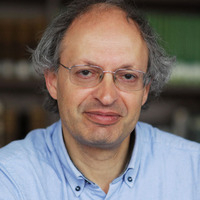
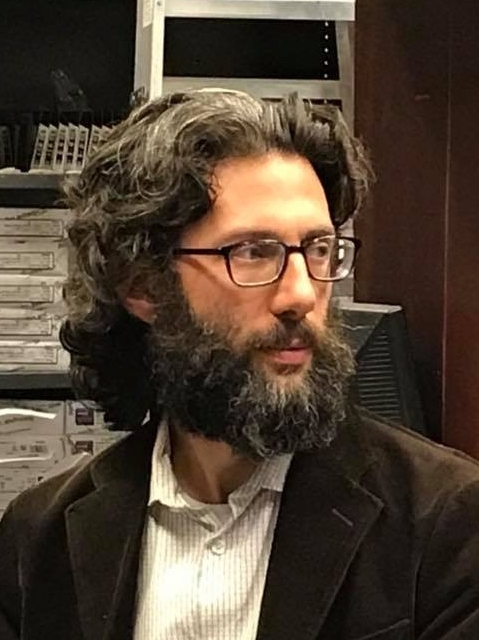
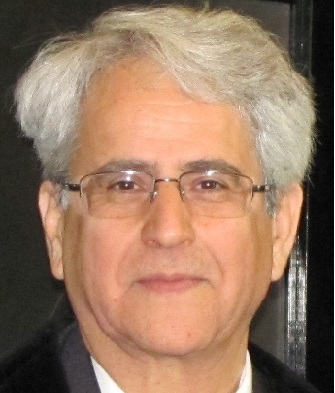
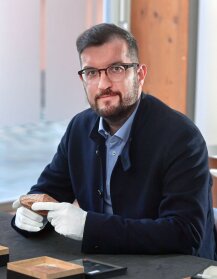
Dr Aaron D. Hornkohl is an Associate Professor in Hebrew and Bye-Fellow at Girton College, University of Cambridge. He serves as Director of Studies in Asian and Middle Eastern Studies at Girton and Homerton Colleges. His academic background includes a BA from Biola University, MA from The Hebrew University of Jerusalem, and PhD (2012) on the linguistic analysis of the Book of Jeremiah. His research focuses on ancient Hebrew philology, linguistic periodization, and exegesis, with a particular interest in the diachronic development of Hebrew and textual criticism of biblical manuscripts. Teaching responsibilities include courses on ancient and modern Hebrew literature, language history, and Middle Eastern culture. He co-organizes initiatives like the Sutton Trust Summer School and leads AHRC-funded research on critical editions of Hebrew texts, including the Kaufmann MS of the Mishna. Recent publications explore Tiberian reading traditions, Masoretic vocalization, and linguistic features in Qumran manuscripts. Research projects include Grammar of Biblical Hebrew Books (2024) and Studies in the Masoretic Tradition (2022). His work bridges linguistic analysis with historical context, addressing questions of language evolution and textual authenticity in Hebrew biblical and rabbinic corpora.
Na'ama Pat-El is a Professor in the Department of Middle Eastern Studies at the University of Texas at Austin, affiliated with the College of Liberal Arts and the Middle Eastern Languages and Cultures Graduate Studies Committee (MELC GSC). She holds a Ph.D. (2008) in Semitic Philology from Harvard University, preceded by studies at Hebrew University under Gideon Goldenberg and Harvard under John Huehnergard. Education: Ph.D., 2008, Harvard University (Semitic Philology) B.A. and M.A., Hebrew University of Jerusalem Her research focuses on Comparative Semitic Linguistics, Historical Linguistics, Syntax, and Language Contact , with a particular emphasis on syntactic change and morphological evolution. She investigates phenomena such as the development of verbal paradigms, plural morphemes, and copulae across Semitic languages, including Akkadian, Hebrew, and Aramaic. Recent publications address topics like the nondevelopment of third-person nominative pronouns in Semitic perfect/stative paradigms, the diachronic shift of East Semitic subordination markers into West Semitic indicative markers, and the reevaluation of Hebrew 'sign' terminology through epigraphic and comparative evidence. Her work also challenges assumptions about paired body part gender assignment in Semitic languages. Selected Publications (2025–2020) explore: Proto-Semitic verbal morphology Historical syntax in Akkadian and Neo-Assyrian Plural-gender mismatches in Hebrew Substrate influences in Levantine Arabic Biblical text linguistics
Dr. Mara Nicosia is a Postdoctoral Research Fellow at the University of Padua (Department of Historical and Geographic Sciences and the Ancient World) under the ERC Starting Grant FragArist. Previously, she held a British Academy Newton International Fellowship at Durham University (Department of Classics and Ancient History), focusing on Syriac rhetoric's intersection with Greco-Roman and Arabic traditions. Her research explores Syriac intellectual history, Semitic languages, and the transmission of Aristotelian thought. She earned her PhD from the University of Naples 'L'Orientale' with a thesis on Syriac rhetorical vocabulary between Greek and Arabic influences. Her work integrates philological analysis with historical linguistics, emphasizing language contact between Greek, Syriac, and Arabic. Notable contributions include the edited volume Syriac Lexis and Lexica (2024) and studies on Antony of Tagrit's rhetorical treatise. Nicosia has taught courses on ancient rhetoric and co-organized conferences like 'Syriac Studies in the UK' (2024). She holds grants exceeding £114k and has been awarded the Seal of Excellence (2025) and the Gorgias Book Grant (2019).
Professor Geoffrey Khan serves as the Regius Professor of Hebrew at the University of Cambridge, affiliated with the Faculty of Asian and Middle Eastern Studies. He has held this prestigious position since 2012, following his academic progression from Lecturer in Hebrew and Aramaic (1993), to Reader in Semitic Philology (1999-2002), and Professor of Semitic Philology (2002-2012). His scholarly journey began with B.A. and Ph.D. studies in Semitic Languages at the School of Oriental and African Studies, University of London. Professor Khan's academic foundation includes a B.A. in Semitic Languages (1980) and a Ph.D. (1984) for his thesis "Extraposition and Pronominal Agreement in Semitic languages." His career at Cambridge commenced in 1983 with the Taylor-Schechter Genizah Research Unit, where he has remained a central figure in Semitic scholarship. Professor Khan's research spans three major domains within Semitic linguistics. His work on Hebrew encompasses comprehensive studies of Biblical Hebrew syntax, the Tiberian Masoretic tradition, and medieval Hebrew grammatical thought, particularly Karaite contributions. In Aramaic studies, he has conducted extensive documentation of endangered North-Eastern Neo-Aramaic dialects through fieldwork across northern Iraq, southeastern Turkey, and western Iran. His Arabic research focuses on editing medieval documentary corpora, including materials from the Cairo Genizah and early Islamic regions. He serves as editor-in-chief of the comprehensive Encyclopedia of Hebrew Language and Linguistics, containing approximately 1,000 articles on Hebrew language traditions. Professor Khan's publication trajectory reveals consistent scholarly productivity across multiple Semitic language traditions. His recent works demonstrate particular focus on the Tiberian pronunciation tradition of Biblical Hebrew (2020), Neo-Aramaic dialect documentation (2021-2024), and medieval Arabic documents from Nubia (2024). His scholarship bridges traditional philological approaches with contemporary linguistic theory, addressing both historical and contemporary aspects of Semitic languages. Professor Khan's scholarly distinction is reflected in numerous prestigious honors: Election as Fellow of the British Academy (1998) Election as Honorary Fellow of the Academy of the Hebrew Language (2011) Election as Fellow of Academia Europea (2014) Election as Honorary Member of the American Oriental Society (2015) Extraordinary Professor (Honorary) by University of Stellenbosch (2016) Lidzbarski Gold Medal for Semitic philology (2004) Honorary doctorates from Hebrew University of Jerusalem (2017) and University of Uppsala (2018) Professor Khan actively supervises graduate research, currently guiding Lina Brüssel's work on "The Medieval Karaite Transcriptions of Hebrew into Arabic Script." His leadership extends to multiple major research initiatives including the "Documentation of North-Eastern Neo-Aramaic Dialects" project, "Arabic Documents from Fatimid Nubia," and the preparation of the "Oxford Grammar of Biblical Hebrew" for Oxford University Press. His scholarly contributions have been supported by various funding bodies enabling extensive fieldwork and publication projects across multiple continents.
Aaron J. Koller is Professor of Near Eastern Studies at Yeshiva University. His scholarship bridges Semitic languages , Jewish intellectual history , and writing system evolution , with particular focus on ancient Hebrew and Aramaic contexts. Education: BA from Yeshiva University, PhD from Revel Graduate School (2009) Affiliations: Bye-Fellow at Cambridge University (2022-2023), Visiting Scholar at Oxford's Centre for Hebrew and Jewish Studies Research explores: Writing Systems : Evolution from cuneiform to alphabetic scripts , including vowel marking and word division mechanisms Dead Sea Scrolls : Reconstructing Persian period Aramaic literature and analyzing language contact between Hebrew and Aramaic Biblical Interpretation : Gender dynamics in Genesis narratives and ethical frameworks in Ezekiel and Deuteronomy Recent publications examine Qur'anic references to Mishnah , alphabetic order historiography , and ancient scribal practices . He has edited five academic volumes including Studies in Mishnaic Hebrew and Semitic, Biblical, and Jewish Studies in Honor of Richard Steiner . Key collaborations include research at Cambridge University , Oxford University , and with scholars like Steven Fine and Mordechai Cohen . His work has been featured in 38 academic books and 25 journal articles .
Amir Harrak is Professor of Aramaic and Syriac in the Department of Near and Middle Eastern Civilizations at the University of Toronto. He is based at the St. George campus and is a leading scholar in Syriac studies, with expertise in epigraphy, chronography, art, and the history of Middle Eastern Christianity. Education: Diploma in Classical Philosophy, Syro-Chaldean Dominican Seminary, Iraq (1973) Diploma in Theology, Syro-Chaldean Dominican Seminary, Iraq (1973) Licence in Semitic Philology, Catholic University of Louvain, Belgium (1980) Licence in Archaeology and Art History, Catholic University of Louvain, Belgium (1980) MA and PhD in Assyriology and Aramaic Studies, University of Toronto (1987) His research centers on Syriac language and literature, with a focus on Syriac chronography, legal texts, inscriptions, and the art and architecture of Christian sites in Iraq. He also explores the relations between Syriac Christianity and Islam, and the use of Syriac script for writing other languages like Kurdish (Garshuni). His teaching includes Biblical Aramaic, Aramaic epigraphy, and Syriac historical and exegetical texts. The 15 most recent articles reflect a sustained focus on Syriac manuscripts, chronicles, inscriptions, and cultural history. They span disciplines such as historical linguistics, religious studies, art history, and Middle Eastern archaeology, with recurring themes in Syriac Orthodox historiography, Christian-Muslim interactions, and the material culture of Eastern Christianity. Scientific Awards: No awards mentioned in the provided text. Advising and Grants: No information provided on students or advisees. No grants or funding sources are mentioned in the text. Labs and Teams: No specific research labs, teams, or collaborative groups are mentioned in the source material.
Konstantin Klein is a Visiting Professor at the University of Amsterdam 's Faculty of Humanities, specializing in History, European Studies, and Religious Studies. His research focuses on Late Antiquity, particularly the intersection of epigraphy, religious history, and urban development in Constantinople and Jerusalem. Research interests include: Epigraphic analysis of ancient Semitic inscriptions Digital humanities applications in text restoration Urban spatial organization in religious contexts Material culture of Late Antique cities Gender roles in epigraphic patronage Recent publications demonstrate expertise in: Machine learning for damaged inscription recovery Comparative urbanism of Byzantine capitals Analysis of Palmyrene funerary art Epigraphic patterns in Christian holy sites Interpretation of Late Antique decay processes Gender-regulated epigraphic expressions
Ronald Kim is an Associate Professor of Linguistics in the Department of Older Germanic Languages within the Faculty of English at Adam Mickiewicz University in Poznań, Poland. Born and raised in New Jersey, USA, he completed his undergraduate studies at Princeton University in 1996 before earning his Ph.D. in Linguistics from the University of Pennsylvania in 2002. After a postdoctoral fellowship at Cornell University, he taught at several US institutions including Penn, Temple, and Swarthmore before joining Adam Mickiewicz University in 2009 as a Visiting Professor, eventually securing his current position as Associate Professor. Kim's academic credentials include an AB in Astrophysical Sciences from Princeton University (1996), a Ph.D. in Linguistics from the University of Pennsylvania (2002), and a D. Litt. in English Linguistics from Adam Mickiewicz University in Poznań (2015). His research spans multiple areas of historical linguistics with particular focus on Indo-European languages including Tocharian, Iranian, Balto-Slavic, Greek, Celtic, and Anatolian, as well as Semitic languages like Aramaic. His work encompasses sociolinguistics, language variation, language contact phenomena, dialect geography, phonology (particularly autosegmental, nonlinear, and prosodic approaches), morphology, and pidgin and creole linguistics with emphasis on English-based contact languages of the Pacific. Analysis of Kim's recent publications reveals a clear trajectory in his scholarly work, with increasing focus on Iranian languages, particularly Ossetic, while maintaining strong connections to broader Indo-European studies. His work demonstrates sophisticated integration of comparative linguistic methods with computational approaches to language evolution, particularly evident in his contributions to phylogenetic studies of Indo-European languages. There's also a consistent thread of interest in suppletion phenomena across multiple language families. His research often bridges theoretical linguistic concerns with historical and geographical contexts, particularly the linguistic landscape of Central Asia and the Silk Road region. Erasmus+ teaching exchange, Ludwig-Maximilians-Universität München, January 2020 Heiwa Nakajima Foundation fellowship, Graduate School of Humanities and Sociology, The University of Tokyo, Spring 2017 AMU research travel grant, Department of Linguistics, University of Pennsylvania, September 2013 Junior Research Grant, Swarthmore College, Spring 2007 Mellon Postdoctoral Fellowship in the Humanities, Cornell University, 2002-03 University of Pennsylvania Graduate School of Arts and Sciences Dissertation Fellowship, 2001-02 William Penn Graduate Fellowship, University of Pennsylvania, 1996-2000 Adam Mickiewicz University rector's prize for publications, 2019 Kim serves in multiple editorial capacities, including General Editor of Indo-European Linguistics (with Joseph F. Eska) and Chatreššar: International Journal for Indo-European, Semitic, and Cuneiform Languages (with Petr Zemánek). He also sits on the Editorial Board of Brill's Studies in Indo-European Languages & Linguistics, the Editorial Advisory Board of Lingua Posnaniensis, and serves as a Board of Reviewer for Tocharian and Indo-European Studies and the Academic Journal of Modern Philology. His research has been supported by numerous grants including projects on Ossetic Historical Grammar funded by the National Science Centre Poland (2020-23), The Historical Morphology of the Old Armenian Verb funded by the Czech Science Foundation (2017-19), and participation in the Indo-European Cognate Relationships project at the Max Planck Institute for the Science of Human History (2015-). Kim maintains an active international presence through frequent conference participation and invited lectures at major institutions worldwide including University of Pennsylvania, Princeton University, Harvard University, Kyoto University, and Ludwig-Maximilians-Universität München. His scholarly network spans multiple continents, reflecting the international nature of Indo-European linguistic research.
University of California, Los AngelesUnited States
Yona Sabar is a Professor of Near Eastern Languages and Cultures at the University of California, Los Angeles (UCLA). He holds a PhD in Near Eastern Languages and Literatures from Yale University (1970) and a BA in Hebrew and Arabic from the Hebrew University of Jerusalem (1963). His research focuses on Semitic languages, Jewish studies, and the linguistic and cultural preservation of Kurdish Jewish communities. Education: PhD, Yale (1970); BA, Hebrew University (1963) Affiliation: UCLA Department of Near Eastern Languages and Cultures Teaching: Undergraduate and graduate courses in Hebrew, Neo-Aramaic, Syriac, Judeo-Arabic, and Biblical Aramaic Sabar’s work examines Neo-Aramaic dialects, biblical translations, folklore, and multilingualism among Kurdish Jews. His publications include dictionaries, critical editions of religious texts, and comparative linguistic studies. His recent articles (2017–2002) address topics like cultural transmission in Kurdish Jewish communities, dialectal evolution, and endangered languages. Key trends include Aramaic-Hebrew interaction, liturgical translation, and ethnographic documentation of oral traditions.
Johannes Hackl serves as Professor of Ancient Near Eastern Studies at the University of Jena's Institute for Oriental, Indo-European Studies & Prehistoric and Early History Archaeology since December 2021. Previously, he held academic positions at the University of Leipzig (2015-2021) and University of Vienna (2006-2013), culminating in his habilitation with venia legendi from Leipzig in 2021. His research centers on the linguistic evolution of Akkadian during the first millennium BCE, particularly examining language contact with Aramaic and the socio-economic contexts of Babylonian legal documentation. Specializing in charter studies, seal analysis, epigraphy, and paleography, Hackl investigates Babylonian economic, social, and legal history during the late Achaemenid and Hellenistic periods through cuneiform archives. His publication portfolio demonstrates expertise in Late Babylonian textual analysis, with significant contributions to understanding administrative practices, temple economies, and linguistic transitions. Recent work includes editorial leadership on the Achaemenid History series and critical editions of Babylonian legal texts. International Association for Assyriology Prize for Best First Assyriological Article Written after PhD (2017) Hackl directs the Chair of Ancient Near Eastern Studies at Jena, supervising research on Babylonian cuneiform documentation and linguistic history. His current projects include analyzing the Professor Hilprecht Collection of Babylonian Antiquities and investigating scribal practices in Hellenistic Babylonia through archival materials. He regularly presents at international conferences on topics including diplomatics, sealing practices, and multi-ethnic societies in ancient empires. Hackl maintains active research collaborations across European institutions, frequently working with scholars like M. Jursa and J. Oelsner on Babylonian economic history and textual analysis. His work bridges linguistic, historical, and archaeological methodologies to reconstruct Babylonian societal structures during imperial transitions.
Stefan Weninger is a University Professor and Head of the Department of Semitic Studies at the Center for Near and Middle Eastern Studies (CNMS) at Philipps University of Marburg. He has held a C4-Professorship for Semitistics in Marburg since 2001 and served as Managing Director of the CNMS from 2016-2020. His distinguished career includes leadership roles as 2nd Vice President (2015-2020) and subsequently 1st President (2021-2026) of the German Oriental Society, where he also serves as Speaker of the Semitistics Section. Weninger earned his doctorate in 1991 from Ludwig-Maximilians-Universität München with a dissertation on Qana'a in Arabic literature, followed by his habilitation in 1997 on the verbal system of Old Ethiopic. His academic journey includes research assistant positions at LMU from 1991-2001 before his appointment to Marburg. His scholarly work spans Semitic linguistics with particular expertise in Ethiopic languages, Classical Arabic, and Ancient South Arabian studies. Weninger's research interests focus on comparative Semitic grammar, historical linguistics, epigraphy, and lexicography. His work demonstrates exceptional depth in Ge'ez (Classical Ethiopic) studies, where he has produced foundational scholarship on its verbal system, grammar, and lexicon. His research extends to Arabic-Ethiopic language contact phenomena, Sabaean epigraphy, and the history of Orientalist scholarship. He has made significant contributions to understanding the linguistic relationships between Semitic languages and the historical development of writing systems in the Near East. Analysis of Weninger's recent publications reveals consistent focus on Ethiopic linguistics, particularly Ge'ez grammar and discourse structures, while also maintaining strong engagement with Classical Arabic studies and Ancient South Arabian epigraphy. His work shows a methodological blend of historical-comparative linguistics with textual criticism and philological analysis. The publications demonstrate increasing attention to the history of Orientalist scholarship alongside his core linguistic research, reflecting a mature scholarly perspective that bridges historical and linguistic approaches. 2nd Vice President of the German Oriental Society (2015-2020) 1st President of the German Oriental Society (2021-2026) Speaker of the Semitistics Section in the German Oriental Society (2017-present) As an academic leader, Weninger has supervised numerous doctoral students and research projects, including DFG-funded projects on Arabic and Ethiopic texts of the Testament of Abraham and Secundus Taciturnus. His editorial work includes serving on the advisory boards of Middle East - Topics & Arguments, Aethiopica, and Orientalistische Literaturzeitung, where he acts as section editor for Semitics. He has been instrumental in advancing Semitic studies through his leadership in academic societies and his comprehensive reference work, The Semitic Languages: An International Handbook.
Rutgers, The State University of New JerseyUnited States
Charles G. Häberl is a Professor at Rutgers University, affiliated with the Department of African, Middle Eastern, and South Asian Languages and Literatures (AMESALL) and the Department of Religion. He holds dual roles as a scholar and administrator, having served as Chair of AMESALL (2013–2019), Undergraduate Director (2023–2024), and Director of the Center for Middle Eastern Studies (2009–2012). His academic background includes a Ph.D. in Near Eastern Languages and Civilizations from Harvard University (2006), an A.M. from Harvard (2003), and an A.B. from Brown University (1998). Dr. Häberl’s research focuses on Middle Eastern languages (ancient and modern), linguistic minorities, and constructed languages like Volapük and Esperanto. He has conducted extensive fieldwork with speakers of Semitic and Iranian languages, and his work spans disciplines such as palaeography, epigraphy, and documentary linguistics. Key contributions include the first detailed account of the Neo-Mandaic dialect of Khorramshahr (2009) and a critical edition of the Mandaean Book of John (2020). His awards include the Anna-Maria Kellen Fellowship (2016), Willis F. Doney Membership at the Institute for Advanced Study (2022), and a three-year term as President of the International Linguistic Association (2021–2023). He has secured grants from the National Endowment for the Humanities (NEH) and the U.S. Department of Education, including a historic Title VI grant for Iranian Studies (2007). Teaching and mentorship are central to his career. He offers courses on Middle Eastern languages (Arabic, Aramaic), folklore, and religious minorities, and has advised graduate students in Jewish Studies and Neo-Aramaic dialects. He also teaches at international institutions, including Ukraine’s National University Ostroh Academy and Russia’s Higher School of Economics. Dr. Häberl’s affiliations include the American Oriental Society, Middle East Studies Association, and the North American Conference on Afroasiatic Linguistics. He has organized conferences such as the NACAL annual meetings in 2007, 2008, and 2012, and is a frequent speaker at academic gatherings.
Holger Gzella is a Full Professor (tenured) at Leiden University since 2005, holding the Chair of Hebrew and Aramaic. He has held academic positions at University of Heidelberg (Privatdozent, Post-Doctoral Fellow), University of Erlangen (Visiting Professor), and Pontifical Biblical Institute (Doctoral Fellow). Current affiliations include Classics & Oriental Studies at the Academy of Europe. University of Heidelberg (Habilitation, 2004) Pontifical Biblical Institute, Rome (Licentiate, 2002) University of Münster (Ph.D., 2001) Oxford University (B.A., 1997) His research focuses on Semitic epigraphy, Hebrew Bible, Dead Sea Scrolls, Historical Linguistics, and the cultural history of Syria-Palestine. Publications analyze Semitic language structures, Northwest Semitic dialects, and ancient Near Eastern textual interpretation. Recent articles address topics in Aramaic linguistics, Biblical Hebrew syntax, Qumran text dating, and Semitic language interactions. Notable works include A Cultural History of Aramaic (2015) and contributions to The Semitic Languages: An International Handbook (2011). Member of The Young Academy (2010-2015) Fritz Thyssen Foundation Post-Doctoral Fellowship (2002-2005) Cusanuswerk Scholarship (1999-2001) Oxford University Ireland/Craven Scholarships (1997) Gaisford Prize for Greek Prose Composition (1996) Chancellor's Prizes for Latin Composition (1995, 1997) He has received multiple grants including the Fritz Thyssen Foundation fellowship and Cusanuswerk scholarship, supporting his research in Semitic languages and Biblical studies.
Prof. Dr. Osman DÜZGÜN is a faculty member at Ankara Yıldırım Beyazıt University , serving as Professor in the Department of Eastern Languages and Literatures under the Faculty of Humanities and Social Sciences . He has held various administrative roles including Head of Department since 2017 and Deputy Head of Department since 2018. Doctorate (2011): "Society, Family, and Religion in Abu'l-'Ala al-Ma'arrî's Ludûmiyyât" at Ankara University Master's (2006): "Muwashshahas of Muhyiddin Ibn 'Arabi" at Ankara University Bachelor's (2003): Arabic Language and Literature at Ankara University His research focuses on translation studies, Arabic dialects, migration education, and cultural/educational aspects of Arabic literature. His work examines translation losses in literary texts, cultural affinity in translation, and contemporary methods in Arabic translation programs. Recent publications address translation challenges in Arabic-Turkish contexts, cultural preservation in folk literature, and pedagogical approaches to simultaneous interpretation. He has supervised 9 thesis students across postgraduate levels, contributing to studies on Arabic literature, translation losses, and sociocultural themes in novels. Professional engagements include coordinating international exchange programs (Mevlana, Erasmus) and serving on scientific committees for academic institutions.
Dorota Molin is a Lecturer in Classical Hebrew Language at the Faculty of Asian and Middle Eastern Studies , University of Oxford. She specializes in Biblical Hebrew, Neo-Aramaic, language contact, word order typology, and tense-aspect-modal systems. Research Focus : Biblical Hebrew pronunciation traditions, Neo-Aramaic dialects, and cross-linguistic interactions between Neo-Aramaic/Kurdish and Modern Hebrew/Palestinian Arabic. Current Projects : Linguistic history of Near Eastern minorities (ERC-funded), collaborative work on a Neo-Aramaic database, and comparative grammar studies. Courses Taught : Beginner Biblical Hebrew and introductory texts for beginners. Her publications emphasize typological analysis, Semitic language preservation, and interference phenomena in multilingual contexts. She contributes to open-access academic resources and folklore documentation.