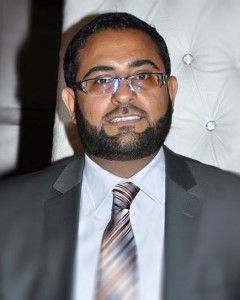
Assoc. Prof. Dr. Ihab Said Ibrahim IBRAHİM is a faculty member at the Faculty of Theology , Kastamonu University , Turkey, since 2014. His research focuses on Arabic Language and Rhetoric within Islamic Studies, with expertise in phonology, semiotics, and Quranic exegesis. PhD in Arabic Language and Literature (Tanta University, 2011) MA in Arabic Language and Literature (Menoufia University, 2005) BA in Arabic Language and Literature (Menoufia University, 2000) His research explores phonological patterns in classical Arabic texts, semantic shifts in Quranic interpretation, and interdisciplinary applications of linguistics in literary and religious contexts. Recent publications analyze syntactic deviations in Arabic poetry, lexical semiotics in dictionaries, and phonetic analysis of Quran recitations. He has supervised 12 graduate theses, including studies on stylistic innovations in pre-Islamic poetry and phonetic analysis of Quranic manuscripts. His work appears in journals like Turkish Studies and Harran Theology Journal .
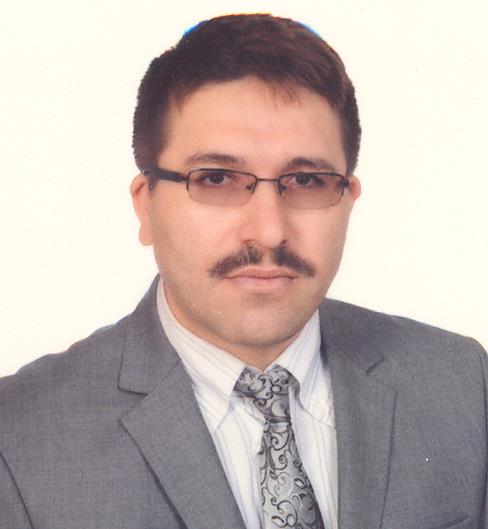
Dr. Hüseyin YUSUF is a Lecturer in the Department of Translation and Interpreting (Arabic) at 29 Mayis University. He holds a PhD in Arabic Language from Al-Azhar University (2013), following a Master's (2010) and Bachelor's (2005) from the same institution. His academic career includes roles as assistant professor (2014), researcher/supervisor for the Doha Historical Dictionary (2017), and supervisor of Arabic preparatory students in Jordan (2019). Education: B.A. in Arabic Language, Al-Azhar University (2005) M.A. in Arabic Language (2010) Ph.D. in Arabic Language (2013) His research focuses on Arabic grammar, historical lexicography, Quranic exegesis, and comparative analysis of classical texts. He has published extensively on topics including Prophetic Sunnah's linguistic influence, morphological irregularities in poetry, and grammatical mediation theories. His work with the Doha Historical Dictionary highlights his expertise in lexical evolution and historical semantics. Scientific awards and grants are not explicitly mentioned in available records. His publications demonstrate a strong emphasis on analyzing classical Arabic grammar through Quranic recitation variations, poetic structures, and historical dictionaries, with particular attention to particles like 'illa' (except) and syntactic mediation between opposites.
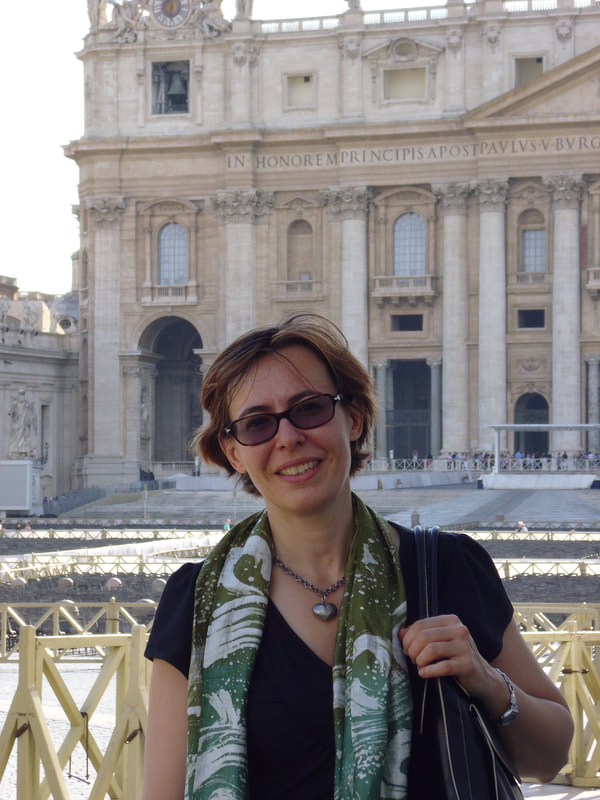
Laura Colantoni is a Professor of Hispanic Linguistics at the Department of Spanish and Portuguese, University of Toronto. Her research focuses on phonetics, phonology, and second language acquisition, particularly in the context of sound change and variable phonetic parameters. She holds a BA from the University of Buenos Aires and a PhD from the University of Minnesota. She has held administrative roles including Chair of the Department of Spanish & Portuguese (2014-2019) and Associate Chair of Undergraduate Studies (2022-present). Her research involves collaborative projects funded by SSHRC and U of T, exploring topics like phonetic variability in bilingual language acquisition and electropalatographic studies of consonant assimilation patterns. Key collaborations include projects on Spanish-English bilingual children's grammatical development and cross-linguistic studies of nasal and lateral consonants in French, Spanish, and other languages. Publications highlight her work on Argentine Spanish, second language speech production, and the interplay between prosody and morphology. She has edited volumes on Argentine Spanish (2013) and co-authored Second Language Speech: An Introduction (2015). Her recent work examines articulatory timing differences in French/Spanish clusters and intonation patterns across languages such as Jordanian Arabic and Lombard Italian. Her teaching and research emphasize evidence-based approaches to pronunciation pedagogy and the application of laboratory methods to phonological analysis. She actively collaborates with scholars in linguistics, speech pathology, and related fields to advance understanding of language variation and acquisition processes.
Mustafa ŞENTÜRK is a Professor of Quranic Studies and Fundamental Islamic Sciences at Trakya University's Faculty of Theology. He holds a Doctorate from Dokuz Eylül University (2009) with a thesis comparing Ibn Atiyya and Tabresi's Quranic approaches. His academic career includes roles as Department Head at Bayburt University (2013–present) and Vice Dean (2010–2012). He has served as a faculty member at both Trakya and Bayburt Universities since 2013. Education: Bachelor's in Theology: Dokuz Eylül University (1997) Master's in Sociology: Anadolu University (2013) Doctorate in Quranic Exegesis: Dokuz Eylül University (2009) Research Interests: His work focuses on Quranic exegesis (tafsir), historical and comparative approaches to Islamic texts, and sociological dimensions of religious practices. Key themes include Quranic language analysis, interfaith marriage in Islamic jurisprudence, and the role of tafsir in modern scholarship. Publications: Over 20 peer-reviewed articles and book chapters on topics like Quranic linguistics, Ottoman tafsir traditions, and the application of statistical methods to Quranic study. Notable works include analyses of Moses and Khidr's narrative, the concept of 'social change' in the Quran, and historical studies of Andalusian tafsir. Grants/Advising: Supervised six ongoing/completed theses, including studies on Quranic ethics, comparative tafsir methodologies, and women's rights in Islamic law. Administrative Roles: Served on multiple university boards, including the Faculty of Theology at Bayburt University and the Social Sciences Institute. Currently chairs the Department of Fundamental Islamic Sciences at Trakya University.
Mustafa Aksoy is an Assistant Professor at Gaziantep University , affiliated with the Faculty of Theology and the Department of Fundamental Islamic Sciences . His work bridges Quranic studies , Arabic linguistics , and Islamic theology , with a focus on recitation methodologies and comparative linguistic analysis. Educational Background: MSc in Fundamental Islamic Sciences (2014-2020), Gaziantep University MSc in Theology (2012-2013), Marmara University PhD in Fundamental Islamic Sciences (2020-), Gaziantep Islamic Science and Technology University His research explores the linguistic structures of the Quran , Tafsir techniques , and cross-linguistic comparisons between Arabic and Turkish. Recent publications analyze classical Arabic phonetics, rhetorical influences on Quranic interpretation, and historical developments in Semitic languages. Scientific contributions include 3 authored textbooks on Quran recitation (2007-2019) 6 peer-reviewed articles in journals like MÜTEFEKKİR and Alatoo Academic Studies Editorial roles in works on Islamic science and the Uluslararası İslâm ve Kardeşlik Sempozyumu Mentorship includes supervising 3 graduate theses on topics ranging from Quran recitation to Halal sustenance analytics. His administrative roles include Dean Assistant and Department Head at Gaziantep University.
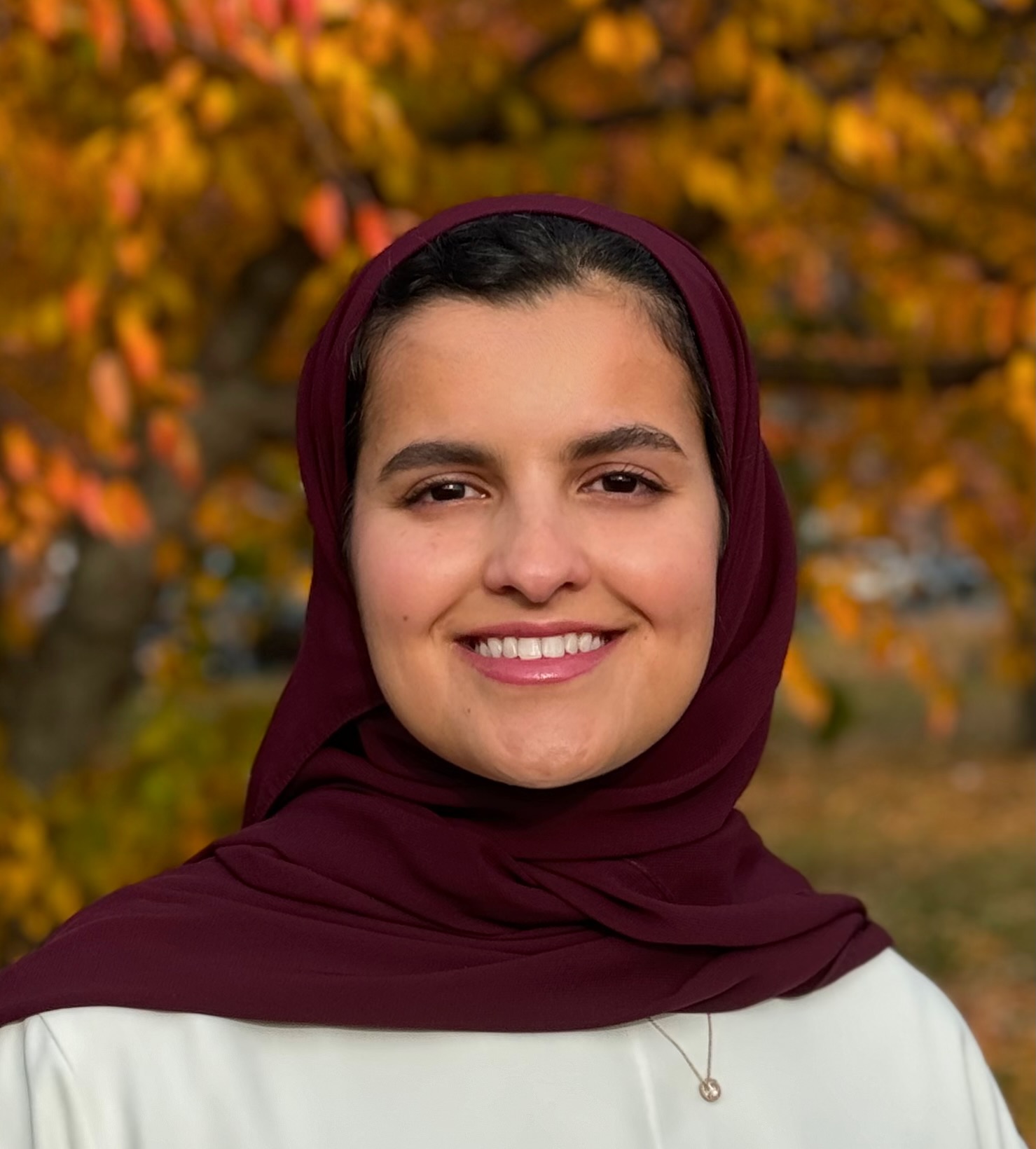
Hadeel Alnegheimish is a dual-affiliated academic serving as an Ibn Khaldun Postdoctoral Research Fellow at MIT's Computer Science and Artificial Intelligence Lab (CSAIL) and an Assistant Professor in the Department of Computer Science at King Saud University. Her research focuses on advancing machine learning and natural language processing, particularly in neuro-symbolic reasoning, model interpretability, and robust numerical reasoning. She holds a PhD from Imperial College London, advised by Alessandra Russo and Pranava Madhyastha, and completed an internship at DeepMind's Cognition team. Education: PhD in Computer Science, Imperial College London (2023) M.Sc. in Artificial Intelligence, Imperial College London B.Sc. in Computer and Information Sciences, King Saud University Research Interests: Compositional reasoning, model evaluation, and neuro-symbolic integration. She emphasizes transparent and reliable systems that demonstrate how answers are derived, alongside advancing evaluation methodologies. Current projects explore symbolic rule learning for LLMs and preserving word order sensitivity in neural models. Grants & Advising: Currently recruiting MIT UROPs for summer 2025. Collaborates actively with peers in neuro-symbolic NLP and evaluates model behavior through initiatives like Forced Invalidation. Labs & Teams: Participates in CSAIL's machine learning initiatives and leads pedagogical efforts at King Saud University, fostering interdisciplinary research in computational linguistics and AI.
Ellen Broselow is the Toll Professor in the Department of Linguistics at Stony Brook University. She holds a Ph.D. in Linguistics from the University of Massachusetts Amherst (1976). Her research focuses on phonology, second language acquisition, and the interfaces of phonology with phonetics, morphology, and syntax, with special attention to Arabic, Salish, Bantu, and Indonesian languages of Sulawesi. Her work examines second language phonology, including loanword adaptation and learner errors, as well as the phonetics-phonology interface. Broselow has served as editor for journals like Natural Language and Linguistic Theory and is currently on editorial boards of Bilingualism: Language and Cognition , Linguistic Inquiry , and others. She has received prestigious awards, including the Godfrey Excellence in Teaching Award and Fellowship in the Linguistic Society of America. Recent research explores factors influencing second language production errors, vowel insertion in foreign languages, and prosodic processing. Her studies highlight the role of perceptual biases in second language acquisition and the impact of vocal fry in intonation patterns among native and non-native speakers.
Stefan Weninger is a University Professor and Head of the Department of Semitic Studies at the Center for Near and Middle Eastern Studies (CNMS) at Philipps University of Marburg. He has held a C4-Professorship for Semitistics in Marburg since 2001 and served as Managing Director of the CNMS from 2016-2020. His distinguished career includes leadership roles as 2nd Vice President (2015-2020) and subsequently 1st President (2021-2026) of the German Oriental Society, where he also serves as Speaker of the Semitistics Section. Weninger earned his doctorate in 1991 from Ludwig-Maximilians-Universität München with a dissertation on Qana'a in Arabic literature, followed by his habilitation in 1997 on the verbal system of Old Ethiopic. His academic journey includes research assistant positions at LMU from 1991-2001 before his appointment to Marburg. His scholarly work spans Semitic linguistics with particular expertise in Ethiopic languages, Classical Arabic, and Ancient South Arabian studies. Weninger's research interests focus on comparative Semitic grammar, historical linguistics, epigraphy, and lexicography. His work demonstrates exceptional depth in Ge'ez (Classical Ethiopic) studies, where he has produced foundational scholarship on its verbal system, grammar, and lexicon. His research extends to Arabic-Ethiopic language contact phenomena, Sabaean epigraphy, and the history of Orientalist scholarship. He has made significant contributions to understanding the linguistic relationships between Semitic languages and the historical development of writing systems in the Near East. Analysis of Weninger's recent publications reveals consistent focus on Ethiopic linguistics, particularly Ge'ez grammar and discourse structures, while also maintaining strong engagement with Classical Arabic studies and Ancient South Arabian epigraphy. His work shows a methodological blend of historical-comparative linguistics with textual criticism and philological analysis. The publications demonstrate increasing attention to the history of Orientalist scholarship alongside his core linguistic research, reflecting a mature scholarly perspective that bridges historical and linguistic approaches. 2nd Vice President of the German Oriental Society (2015-2020) 1st President of the German Oriental Society (2021-2026) Speaker of the Semitistics Section in the German Oriental Society (2017-present) As an academic leader, Weninger has supervised numerous doctoral students and research projects, including DFG-funded projects on Arabic and Ethiopic texts of the Testament of Abraham and Secundus Taciturnus. His editorial work includes serving on the advisory boards of Middle East - Topics & Arguments, Aethiopica, and Orientalistische Literaturzeitung, where he acts as section editor for Semitics. He has been instrumental in advancing Semitic studies through his leadership in academic societies and his comprehensive reference work, The Semitic Languages: An International Handbook.
Levent Doğan is an Associate Professor at the Department of Turkish Language and Literature, Faculty of Arts and Sciences, Trakya University. He holds a PhD in Turkish Language from Trakya University (2000) and has been a faculty member since 2001. Dr. Doğan has served as Visiting Professor at Comrat State University (2000) and held administrative roles including Head of the Department of Balkan Studies (since 2022) and Deputy Director of the Institute of Social Sciences (2016-2019). Bachelor's: Trakya University, 1992 Master's: Trakya University, 1994 PhD: Trakya University, 2000 His research focuses on Turkic dialects, particularly Uyghur, Gagauz, and Turkmen Turkish, with emphasis on proverbs, idioms, morphological structures, and cultural terminology. He has analyzed mental verbs, body part terms, and color symbolism across Balkan Turkish dialects and Central Asian languages. Dr. Doğan's publications include comparative studies on proverbs and dialects from 2024 to 1996, with recent works on Bulgarian Turkish idioms, Uyghur proverbs, and Balkan Turkmen dialects. His articles span linguistics, cultural anthropology, and educational policy, often addressing cross-regional Turkic language patterns. Acted as Editor of Trakya University Journal of Social Sciences (2005-2010) Member of multiple university commissions (Internal Control, Research Projects, Legislation, etc.) Coordinated Scientific Journals Office (since 2022) Head of Romani Language and Culture Studies Department (since 2018)
Ludmila Ivanova Torlakova is an Associate Professor at the Department of Foreign Languages, University of Bergen, specializing in Arabic linguistics and phraseology. Her work explores idioms, figurative language, and metaphorical frameworks across political, literary, and educational contexts, with a focus on Modern Standard Arabic and its socio-cultural dimensions. Her research spans metaphor analysis in crisis communication (e.g., Oman's COVID-19 discourse), political rhetoric, and literary texts like Hanan al-Shaykh's novels. She investigates ʾiḍāfah constructions, body-part idioms, and pedagogical strategies for teaching multi-word expressions, contributing to lexicography and media studies. Torlakova’s publications highlight trends in Arabic phraseology, including the persistence of historical idioms in contemporary media and metaphorical framing in political and health-related discourses. Her academic lectures address topics such as curriculum design for Arabic programs and the intersection of language and cultural identity.
Charles G. Häberl is a Professor at Rutgers University, affiliated with the Department of African, Middle Eastern, and South Asian Languages and Literatures (AMESALL) and the Department of Religion. He holds dual roles as a scholar and administrator, having served as Chair of AMESALL (2013–2019), Undergraduate Director (2023–2024), and Director of the Center for Middle Eastern Studies (2009–2012). His academic background includes a Ph.D. in Near Eastern Languages and Civilizations from Harvard University (2006), an A.M. from Harvard (2003), and an A.B. from Brown University (1998). Dr. Häberl’s research focuses on Middle Eastern languages (ancient and modern), linguistic minorities, and constructed languages like Volapük and Esperanto. He has conducted extensive fieldwork with speakers of Semitic and Iranian languages, and his work spans disciplines such as palaeography, epigraphy, and documentary linguistics. Key contributions include the first detailed account of the Neo-Mandaic dialect of Khorramshahr (2009) and a critical edition of the Mandaean Book of John (2020). His awards include the Anna-Maria Kellen Fellowship (2016), Willis F. Doney Membership at the Institute for Advanced Study (2022), and a three-year term as President of the International Linguistic Association (2021–2023). He has secured grants from the National Endowment for the Humanities (NEH) and the U.S. Department of Education, including a historic Title VI grant for Iranian Studies (2007). Teaching and mentorship are central to his career. He offers courses on Middle Eastern languages (Arabic, Aramaic), folklore, and religious minorities, and has advised graduate students in Jewish Studies and Neo-Aramaic dialects. He also teaches at international institutions, including Ukraine’s National University Ostroh Academy and Russia’s Higher School of Economics. Dr. Häberl’s affiliations include the American Oriental Society, Middle East Studies Association, and the North American Conference on Afroasiatic Linguistics. He has organized conferences such as the NACAL annual meetings in 2007, 2008, and 2012, and is a frequent speaker at academic gatherings.
Reda Mohammed is a Full-time Lecturer in the Writing for Non-Native Speakers of English program at Case Western Reserve University's Department of English (College of Arts and Sciences). She holds a PhD in English Studies with a specialization in Linguistics and TESOL from Illinois State University and an MA in Literature from the University of Wyoming. Her interdisciplinary research bridges Linguistics, Composition Studies, and Literary/Cultural Studies, focusing on multiliteracies, identity negotiation in language use, and systemic inequities affecting heritage language maintenance. Key areas include Arabic heritage language development, family language policy, and linguistic diversity in educational contexts. She emphasizes equitable pedagogy and resource accessibility in her teaching. Her recent work (2021-2023) explores Midwestern language ideologies, Islamic school dynamics, and the intersection of identity, pedagogy, and cultural capital. Over 15 published articles reflect her commitment to understanding sociolinguistic challenges faced by marginalized language communities and improving educational practices for multilingual learners. Teaching focuses include creating inclusive environments that leverage students’ diverse linguistic backgrounds. While no specific grants or awards are listed, her research consistently addresses underrepresented topics in applied linguistics and multicultural education.
Roles & Affiliations: Laura Mori is a Full Professor of Glottology and Linguistics at the Faculty of Interpreting and Translation at the University of International Studies of Rome (UNINT). She currently serves as Pro-Rector for Teaching (2023–2026) and previously held roles as Pro-Rector for Research (2020–2023). She is Scientific Director of the Centre for Linguistic Research on Corpora and a key member of the CIRCgE board. Her teaching includes courses in Sociolinguistics and Textual Linguistics/Pragmatics. Education & Qualifications: Laura earned her PhD in Historical Linguistics (Experimental Phonetics) from Sapienza University of Rome (2006). She became a Researcher in 2008 and Associate Professor in 2015 before attaining her current Full Professor position in 2021. Her expertise spans over 16 years of teaching and research in glottology and linguistics. Research Focus: Her work centers on interlingual contact dynamics, multilingual sociolinguistics, and historical sociolinguistics. Notable areas include Maltese linguistics, Maltese English, Haitian Creole, and the pragmatic analysis of legislative texts. She leads the Eurolect Observatory Project , analyzing legal language hybridization in EU contexts, and co-coordinates the Fone.Ma project on Maltese speakers’ L2 Italian pronunciation. Grants & Projects: Key initiatives include the PRIN 2017 project on global Italian dynamics and an interdisciplinary neuromarketing study (FRSA 2021) linking linguistic organization to consumer behavior. She collaborates internationally with institutions like the University of Malta and Ghent University. Labs & Teams: She directs the UNINT’s Linguistic Research on Corpora Center and co-leads the Eurolect Observatory Group (24 European academics). Her work engages with the Italian Association of Theoretical and Applied Linguistics (AITLA) and the Maltese Linguistics Association (GĦILM).
Dr. Eşref İnan is an Assistant Professor at Bingöl University's Department of Arabic Translation and Interpreting within the Faculty of Arts and Sciences. He holds a PhD in Arabic Language and Rhetoric from Yüzüncü Yıl University (2020) and has extensive experience in religious and education sectors (1997-2022). His research focuses on Quranic language analysis, Arabic rhetoric, and translation studies. He teaches advanced Arabic grammar, classical prose, and Quranic storytelling techniques. Education: Dicle University (BA Education, 2004), Yüzüncü Yıl University (MA Tafsir, 2015; PhD Arabic Rhetoric, 2020) Research interests include Quranic narrative structures, Arabic linguistic concepts, and computational methods in religious text analysis. Authored 7 books and contributed 2 book chapters on Quranic linguistics and educational topics. Presented 16+ papers at international conferences on topics like Quranic language dynamics and interdisciplinary approaches to religious texts. Awards: Three 'Teşekkür Belgesi' certificates from education directorates (2007, 2010, 2018) Active in academic service as a referee for ŞARKİYAT journal and maintains advanced proficiency in Arabic (86.25 score). Current courses include Nahiv (Arabic grammar) and classical Arabic prose analysis at undergraduate and graduate levels.
Bünyamin AYDIN is an Associate Professor at Kastamonu University's Faculty of Theology, Department of Fundamental Islamic Sciences. He has held academic positions at Süleyman Demirel University (2012-2021) as a Research Assistant and at Kastamonu University (2021-present) as a Doctor Lecturer before his promotion to Associate Professor in 2024. His research focuses on Arabic language, linguistics, Quranic exegesis, and grammatical analysis , with a particular interest in semantics, rhetorical structures, and classical Islamic texts . PhD in Fundamental Islamic Sciences (2018), Süleyman Demirel University MA in Islamic Jurisprudence (2007), Erciyes University BA in Theology (2003), Marmara University Aydn's scholarly work spans comparative linguistic theories , including intersections between Aristotelian logic and Arabic grammar , and modern reinterpretations of classical Arabic poetic and grammatical traditions . His publications address contextual semantics in Quranic interpretation , grammatical puzzles in classical Arabic , and evolving morphological frameworks . He has contributed to TÜBİTAK-funded projects on topics like Quranic idiomatic expressions and grammatical ambiguity . Aydn serves as an advisor for master’s theses , editorial board member for journals like Hitit İlahiyat Dergisi , and conference organizer for international symposia on Islamic studies. His teaching portfolio includes courses on Arabic grammar, classical poetry (Muallakat), and linguistic theories in Islamic civilization .