Walter Armbrust is a Professor of Modern Middle Eastern Studies at the University of Oxford, affiliated with the Faculty of Asian and Middle Eastern Studies and St Antony's College. His research focuses on the intersection of mass media, popular culture, and political dynamics in the Middle East, with a particular emphasis on Egypt. Key research areas: Mass media, popular culture, revolutions, anthropology, neoliberalism Current projects: Cultural analysis of post-Mubarak Egypt and historical studies of new media in Egypt (1919-1975) Armbrust explores how media and cultural production reflect and shape political movements, including the January 25th Revolution. His work spans film, television, literature, and digital platforms, emphasizing the role of symbolic narratives in societal change. Recent publications analyze counter-revolutionary dynamics, neoliberalism, and Islamic cultural representation. He teaches undergraduate and graduate courses on topics including popular culture, social anthropology, and mass media in the Middle East. His academic contributions are linked to Oxford's Middle East Centre and interdisciplinary collaborations.
Professor Alberto Rigolio is a leading scholar of Classics and Ancient History at Durham University, specializing in the cultural and intellectual history of the Eastern Mediterranean during the Roman and late antique periods. He holds a D.Phil. from Oxford University and has held prestigious fellowships at Harvard Dumbarton Oaks, Princeton Society of Fellows, and All Souls College Oxford. His research focuses on Syriac literature, Greco-Syro-Arabic translation movements, and religious debates in late antiquity. Rigolio has published extensively, including his award-winning monograph Christians in Conversation (2019), and currently leads projects supported by the British Academy and the Institute for Advanced Study. He supervises PhD students across multiple institutions and mentors postdoctoral researchers like Dr. Karl Heiner Dahm and Dr. Mara Nicosia. His work bridges classical antiquity with early Christian and Islamic intellectual traditions, emphasizing literary and educational exchanges in late antique societies. Educations: D.Phil., University of Oxford (2014) MPhil/BA, University of Milan and Oxford Research Interests: Syriac literary emergence, Greek-Syriac-Arabic translation networks, late antique dialogues, early Christian theology, and the cultural history of the Roman Near East. Rigolio's current projects investigate how Syriac became a major literary language and its role in transmitting Graeco-Roman thought to early medieval cultures. Grants & Awards: British Academy Mid-Career Fellowship (2024) All Souls College Visiting Fellowship (2024) Princeton IAS Membership (2023) Advising & Mentoring: Supervised 9 PhD students, including Cédrik Michel (Lancaster University Lecturer) and Lila Knight (awarded 2024). Mentors postdoctoral scholars in areas like Syriac rhetoric and late antique religious conflict. Labs/Teams: Leads interdisciplinary research groups at Durham and collaborates with institutions like the Institute for Advanced Study, focusing on textual analysis and cultural history.
Prof Andrew Peacock holds the Bishop Wardlaw Professorship in the School of History at the University of St Andrews. His research focuses on Islamic and Middle Eastern history, with a particular emphasis on medieval Anatolia, Persian manuscripts, and the cultural exchanges in Southeast Asia and the Indian Ocean. He has supervised PhD students including Hebah Alheem, Ali Shapouran, and Weijie Xu. His recent publications explore Arabic literary culture in 17th-18th century Southeast Asia, Melaka’s historical sources, and the memoirs of Safavid ruler Shah Tahmasp I. Key projects include the ERC-funded 'IslamAnatolia' initiative (2012-2017) and a British Academy grant for studying Arabic language in early modern Southeast Asia. His work often bridges historical analysis with material culture, such as his edited volume on medieval Islamic inscriptions (2023). Prof Peacock’s research also engages with transnational themes, including Ottoman-Darfur diplomacy and the role of urban notables in medieval Anatolia.
Dr. Roy Fischel is a researcher at SOAS University of London within the School of History, Religions and Philosophies. Specializing in Islamic history , Deccan Sultanates , and persianate cultural exchange , his work bridges South Asian history and Middle Eastern political thought . Education : Not explicitly mentioned in provided texts Research Themes : Persianate cultural diffusion Islamic state formation Deccan sultanate legitimacy Comparative imperial dynamics Gender studies in Ottoman Palestine His academic output demonstrates deep engagement with manuscript circulation (1400-1700) and cosmopolitan language practices. Though no scientific awards appear in the dataset, his supervision of 5 doctoral theses shows significant academic mentorship. Key publications include: 2020: Local States in an Imperial World (monograph) 2019: The Niẓām Shāhīs (encyclopedia entry) 2017: Aḥmadnagar (encyclopedia article) 2008: Sultan Abdülhamid II and Palestine (journal article) His work often analyzes state formation processes through multilingual manuscript cultures and transregional networks .
Rodrigo García-Velasco is an academic staff member at the Department of History, University College London (UCL), specializing in medieval Iberian history, with a focus on economic and legal interactions between Jews, Muslims, and Christians. He leads the project Documentary Afterlives: Recycling the Past in Premodern Iberian Judiciaries, 1371-1600 , exploring how marginalized groups preserved and reused legal documents in Castile. He is also completing his first book, Jews and Muslims Before the Law in Christian Iberia, 1000-1200 , analyzing the emergence of legal distinctions for religious minorities in municipal laws. His research interests include medieval legal systems, religious minority treatments, Arabic-Latin literary exchanges, Mediterranean mobility, and the historiography of convivencia. He holds a PhD from the University of Cambridge (2019), and has worked as a Rothschild Foundation Post-Doctoral Fellow there. Publications span Medieval Encounters , al-Masaq , and edited volumes on Christian-Muslim relations. His work emphasizes the role of documentary practices in post-conquest societies, linking Islamicate legal knowledge to Christian institutional management of land and heritage.
Professor Ben Outhwaite serves as Head of the Taylor-Schechter Genizah Research Unit at Cambridge University Library, a position he has held since 2006 following seven years as a Genizah researcher. His academic career is centered on the linguistic and historical analysis of Hebrew manuscripts from the Cairo Genizah collection. His educational background includes a B.A. in Hebrew Studies, M.Phil. in Medieval Hebrew literature, and Ph.D. from Christ's College, Cambridge. Supervised by Professor Geoffrey Khan, his doctoral thesis examined the grammatical description of Hebrew letters in the Genizah. Professor Outhwaite's research focuses on Hebrew language transmission during the Middle Ages, encompassing Biblical Hebrew vocalization traditions, medieval Hebrew as a communication medium, the form and function of medieval Hebrew Bibles, and the documentary history of communities depositing manuscripts into the Cairo Genizah. His work bridges linguistic analysis with historical context to illuminate Jewish life under Islamic rule. His publication trends reveal consistent contributions to Genizah scholarship, with recent work emphasizing economic history (Nile water pricing), religious polemics, manuscript transmission, and cross-cultural Jewish communities. The articles demonstrate deep engagement with documentary fragments while expanding into broader historical and linguistic contexts. Research funding has been secured from prestigious institutions including the AHRC, British Academy, Wellcome Foundation, and Andrew W. Mellon Foundation. He serves as series editor for Brill’s ‘Cambridge Genizah Studies’ and has contributed to major exhibitions like ‘Discarded History: the Genizah of Medieval Cairo’. The Taylor-Schechter Genizah Research Unit operates within Cambridge University Library, maintaining one of the world's most significant collections of Hebrew and Jewish manuscripts. The unit collaborates internationally on digitization projects and hosts the annual Genizah Lecture, Fragment of the Month features, and scholarly symposia.
James McDougall is an Associate Professor of Modern History at the University of Oxford , affiliated with Trinity College . He specializes in: European and French imperial history in Africa Modern/contemporary Middle East and North Africa Global Islam since 1700 Historiography and critical theory Colonial and postcolonial studies His research explores: Colonialism's aftereffects in France and Africa Global Islam's social/political dimensions Comparative imperial histories Arab intellectual and political movements He supervises DPhil students including: Emilia Flack Sara Elizabeth Green Katharine Olson Taylor Christel Arlette Zunneberg Current projects include: "Everyday life of colonialism" studies Global Islamic history since the 18th century He has received funding from the Leverhulme Trust and is a Labour Party member.
Edward Zychowicz-Coghill is a Lecturer in the History of Asia at King’s College London, part of the Faculty of Arts & Humanities within the Department of History. His research focuses on early Islamic historiography, Arabic historical writing, and socio-political contexts of historical production. He holds a doctorate from the University of Oxford and has held appointments at the University of Cambridge, including a Leverhulme Early Career Fellowship. Education: Undergraduate/Graduate Studies in History, University of Oxford Doctorate in History, University of Oxford Research periods at Damascus, Chicago, and Princeton Universities Research interests include early traditions of Arabic historical writing, socio-political contexts of historiography, and the interplay between wealth, inequality, and social distinctions in early Islamic society. He co-convenes the Earlier Middle Ages Seminar at the Institute for Historical Research. Publications span topics such as Umayyad histories, Iranian reception of historical texts, and the formation of early Islamic historiography. He is affiliated with research hubs like the Medieval History Research Hub (400-1500 CE) and the Research Centre for Late Antique and Medieval Studies. Teaching focuses on Medieval History, Early Islamic History, and Historical Skills. Office hours are Mondays 4:15-5:15pm (S8.26) and Thursdays 12-1pm (online).
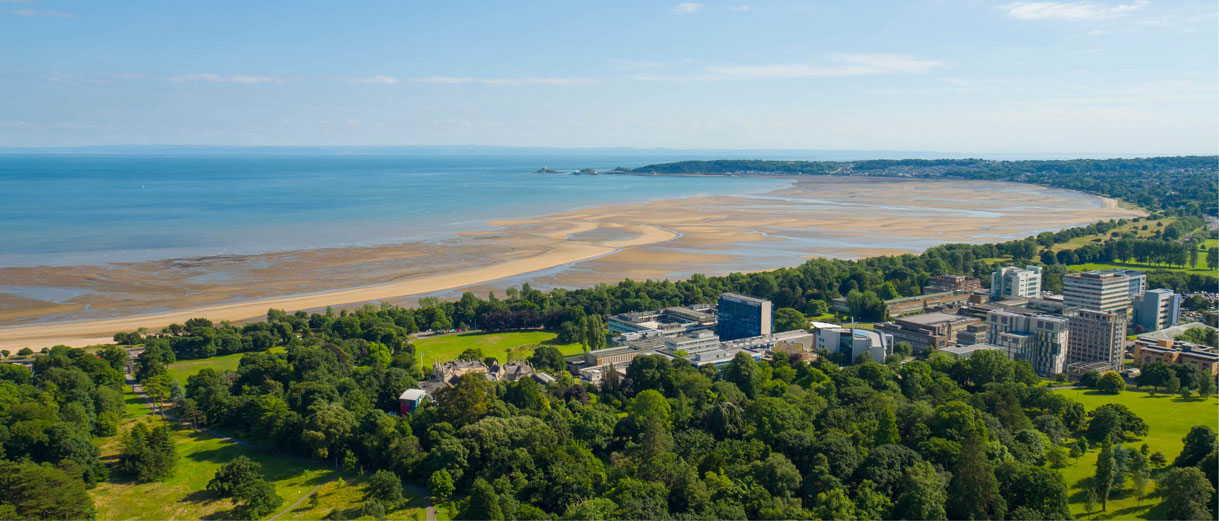
Dr. Salwa El-Awa is a Senior Lecturer in Arabic and Islamic Studies at Swansea University's School of Culture and Communication. She previously held positions at the University of Birmingham (2001-2010) and Ain Shams University in Cairo (2010-2015). Her academic roles include teaching Arabic linguistics, Qur’anic studies, and Hadith analysis, alongside supervising PhD students in translation and religious studies. Her research focuses on Qur’anic textuality, discourse markers, and Islamic movements. Key areas include textual coherence in the Qur’an, Arabic linguistic analysis, and the intersection of religion and counter-terrorism policy. Recent projects explore governance strategies engaging moderate Islamic groups to combat jihadism. El-Awa has published extensively on Qur’anic linguistics, including monographs like Textual Relations in the Qur'an (2005) and Al-Wujuh Wa al-Naza’ir (1998). Her work bridges religious studies, linguistics, and security studies, with notable contributions to Yale’s Dictionary of the Qur'an (2024) and interdisciplinary journals like International Journal of Law, Crime and Justice . She has secured £20,000 for the International Qur’anic Text Linguistics Conference (2020-2021) and served as an External Examiner for Westminster University’s Translation program (2019–2022). Her teaching includes advanced translation, healthcare interpreting, and world cinema studies.
Simon Swain is Professor of Classics and Greco-Arabic at the University of Warwick, concurrently serving as Vice-President (Engagement) at the university and Vice-President (Research and Higher Education Policy) at the British Academy. His leadership roles include former positions as Pro-Vice-Chancellor (International), Chair of the Faculty of Arts, and multiple terms as Head of the Department of Classics. His educational background includes: MA, Oxford (Pembroke College), 1980-1984 D.Phil., Oxford (Wolfson College), 1987 Swain's research centers on the reception of Greek thought in the Islamic Middle Ages and the social-cultural history of the Greek East during the Roman period. He investigates the transmission of ancient Greek science, medicine, and political thought into Islamic scholarship, employing interdisciplinary approaches that bridge Classics, History, and Islamic Studies. His work emphasizes textual transmission, cultural adaptation, and the socio-political contexts of knowledge transfer. Analysis of his publications reveals consistent engagement with Greco-Roman intellectual history and its Islamicate legacy. Key thematic trajectories include the evolution of medical knowledge from Galen to medieval Arabic texts, political theory in imperial contexts, and sociolinguistic dynamics of bilingualism. His editorial projects demonstrate increasing focus on cross-cultural transmission, particularly through critical editions of foundational texts like Ibn Abī Uṣaybiʿah's medical biographies. His honors include: Fellow of the British Academy (2015) Wellcome Trust Collaborative Investigator Award Swain supervises postgraduate research in Greek world studies, late antiquity, and Greco-Arabic scholarship. He has secured major funding from AHRC, Leverhulme, Wellcome, and EU bodies for collaborative projects examining ancient knowledge systems. Current initiatives like the "Streamlining Galen" project support early-career researchers while investigating how canonical medical texts were adapted for medieval Islamic pedagogy. He actively leads research collectives including the "Streamlining Galen" project team, which analyzes condensed medical texts that facilitated the teaching of Galenic medicine in medieval Islamic institutions. His collaborative approach extends to mentoring networks that connect Warwick with international scholars across Classics and Islamic Studies disciplines.
Professor Hugh N Kennedy is a distinguished academic at SOAS University of London, holding dual affiliations with the School of History, Religions and Philosophies and the School of Languages, Cultures and Linguistics. As a Professor of Arabic, he specializes in Early Islamic History (600-1100 CE), with particular focus on Arabic historiography, Islamic archaeology, and the historical geography of the Middle East. His research also examines castle building in the region and the history of al-Andalus. He holds a PhD (Cantab) and has supervised doctoral candidates including Ummugulsum Kurukol and Zhicheng Ye. His publications span authored books, edited volumes, and numerous articles exploring topics like the Abbasid Caliphate, Islamic economic systems, and comparative political histories. He is based at the Russell Square campus and can be contacted via hk1@soas.ac.uk. Research Interests: Kennedy’s work bridges textual analysis and material culture, investigating how political structures, military campaigns, and cultural exchanges shaped the early Islamic world. He examines themes such as the evolution of governance systems, the role of pilgrimage economies, and the interaction between religious and temporal authority. His scholarship frequently engages with primary sources like al-Baladhuri’s Futuh al-Buldan and Ibn Wāḍiḥ al-Yaʿqūbī’s writings, contextualizing them within broader historical narratives. Key Publications: Includes seminal works on the Abbasid Caliphate, the conquests of the Arab armies, and comparative analyses between Islamic and Byzantine governance. Teaching: Contributes to SOAS’s MA History program, focusing on the Global South through decolonial and interdisciplinary approaches. Professional Affiliations: Active in academic networks promoting the study of pre-modern Middle Eastern history and cultural heritage.
Gilbert Achcar is a Professor of Development Studies and International Relations at the Department of Development Studies, SOAS University of London. He holds a PhD in Social History/International Relations from Paris VIII University, alongside earlier degrees from institutions in France and Lebanon. His career includes teaching and research roles in Beirut, Berlin, and Paris before joining SOAS in 2007. His research focuses on globalisation, global power relations, the Middle East and North Africa (MENA), the sociology of religion, and revolutionary movements. Notable works include The Clash of Barbarisms , Perilous Power (co-authored with Noam Chomsky), and The New Cold War . His books have been translated into 20 languages, addressing themes like the Arab uprisings, US foreign policy, and the geopolitics of conflict. Dr. Achcar supervises PhD students such as Anne-Marie Misconi (on Iraqi Orientalism) and Bryony Wolff (on Egypt and Turkey’s political economy). He actively engages with contemporary issues like the Gaza crisis and the Syrian conflict, offering critical analyses of neoliberalism, global power structures, and revolutionary processes. His work bridges academic scholarship with public discourse on pressing geopolitical challenges.
Hugh Kennedy , Professor at SOAS University of London within the School of Languages, Cultures and Linguistics, is a leading scholar in early Islamic history. His research spans political structures, military systems, and cultural transitions in the Islamic world. Fields of Interest : Early Islamic History, Abbasid Caliphate, Sacred Space, Historical Geography, Islamic Law. Research Trends : His work explores the evolution of Islamic political terminology, frontier interactions, and the socioeconomic impacts of Muslim rule. He has published extensively on the Ḥajj, urban development, and manuscript production in the Abbasid era. Supervised Theses : Tanaka (zandaqah), Ye (ʿAbbāsid mysticism), Habib (sacred space), Khatun (trade networks), Manstetten (madrasa origins), Lodhi (hijra law), Webb (Arab origins).
Dr. Alfred Hiatt is a Professor of Medieval Studies at Queen Mary University of London's School of English and Drama. He holds a BA from the University of Sydney and a PhD from the University of Cambridge. His research focuses on medieval textual cultures, particularly spatial representation and the reception of classical geography in the Middle Ages. He has authored influential works such as Terra Incognita: Mapping the Antipodes before 1600 (2008) and Dislocations: Maps, Classical Tradition, and Spatial Play (2020). His current projects explore comparative medieval Arabic-Islamic and Latin-European geography, informed by a Leverhulme Trust-funded international network. Teaching responsibilities include courses on medieval literatures, Chaucer, Arthurian literature, and research methods at both undergraduate and postgraduate levels. He is a member of the Centre for Renaissance and Early Modern Studies (CREMS) and actively supervises doctoral students in his research areas. His work bridges historical cartography, classical reception, and the analysis of medieval forgeries, contributing to interdisciplinary dialogue across literary, historical, and cultural studies.
Professor Ziad Elmarsafy serves as Professor of Arabic and Comparative Literature at the University of St Andrews, where he is affiliated with the School of Modern Languages and the Arabic and Persian Centre for the Critical Reimagining of Human Rights. His academic profile demonstrates a strong commitment to postgraduate research supervision as indicated by his status as 'Accepting Postgraduate Research Students.' Elmarsafy's research profile reveals a distinctive intellectual fingerprint spanning French Arts and Humanities (100%), Esoteric Islam (75%), Sufism (75%), Idol Studies (75%), Koran/Qur'anic Studies (75%), Genre Theory (37%), and Autobiography (37%). His scholarly work bridges Arabic literature, French intellectual history, and religious studies with particular emphasis on esoteric dimensions of Islamic thought. His research output demonstrates consistent engagement with the intersection of literature, religion, and political thought. Analysis of his 23 research outputs shows a consistent pattern of scholarly contributions exploring the relationships between Islamic thought and Western intellectual traditions, particularly French philosophy. His publications reveal significant attention to translation studies, postcolonial theory, and the representation of Islamic concepts in Western contexts. The thematic coherence across his work demonstrates a sustained intellectual project examining how Islamic thought has been interpreted, translated, and reimagined in modern European contexts. Professor Elmarsafy maintains an active role in the academic community through editorial work and peer review activities. His service includes reviewing manuscripts for prestigious journals such as MLN, Religiographies, Forum for Modern Language Studies, Journal of Arabic Literature, and Middle Eastern Literatures. Since 2023, he has served on the editorial board of Forum for Modern Language Studies, demonstrating his standing within the scholarly community.