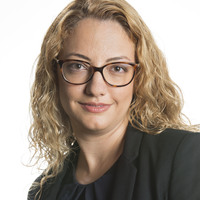
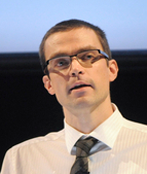
Renjie Feng is a Research Fellow in Mathematics and AI at the School of Mathematics and Statistics and the Sydney Mathematical Research Institute , University of Sydney. His work bridges probability theory, statistics, and applications in machine learning, deep learning, and artificial intelligence. His research interests focus on probability theory and its applications to machine learning , random matrix theory , and statistical physics . He investigates extreme value problems, spectral properties of random matrices, and topological features of random fields over Riemannian manifolds. Recent publications highlight trends in random matrix theory (GUE, GOE, GSE), extreme gap problems , determinantal point processes , and Wiener chaos . Collaborative works with F. Götze, D. Yao, and R. Adler emphasize U-statistics , multivariate linear statistics , and random topology inspired by Poisson point process studies.
Scientia Professor Robert Kohn is a distinguished academic at the University of New South Wales, holding a position in the School of Economics within the UNSW Business School. With a career spanning several decades, Professor Kohn has established himself as a leading expert in statistical methodology and econometric modeling. His research has significantly contributed to Bayesian statistics and computational methods for complex data analysis. Professor Kohn's research focuses on advanced statistical methodologies including Bayesian methodology, variable selection and model averaging, nonparametric regression models, time series modeling, multivariate Gaussian and non-Gaussian regression, and Markov chain Monte Carlo simulation algorithms. His work bridges theoretical statistics with practical applications across economics, finance, and cognitive science. His research demonstrates a consistent trajectory toward developing more efficient computational methods for complex statistical models, with recent work emphasizing variational Bayesian methods, particle filtering techniques, and applications to time series analysis. Analysis of his recent publications (2022-2025) reveals a strong focus on advancing computational statistical methods, particularly in Bayesian inference for complex models. His work shows increasing integration of machine learning techniques with traditional statistical methods, especially in handling high-dimensional data and complex time series structures. Professor Kohn has made significant contributions to variational inference methods, particle-based computational techniques, and applications to financial time series and cognitive modeling. Professor Kohn has maintained an exceptionally productive research career with continuous publication output since the 1970s, demonstrating remarkable longevity and adaptability in his research focus as statistical methodologies have evolved. His work shows strong international collaboration, particularly with researchers in Australia, the United States, and Europe, reflecting his standing in the global statistical community.
Professor Josef Dick serves as a Professor and Deputy Head in the School of Mathematics & Statistics at the University of New South Wales (UNSW). With a distinguished career in computational mathematics, he has established himself as a leading researcher in numerical integration methods and quasi-Monte Carlo theory. His work bridges theoretical mathematics with practical computational applications across various scientific domains. Dr. Dick earned his PhD in Mathematics from UNSW in 2004 and his MSc in Mathematics from the University of Salzburg in 2001. His academic journey reflects a strong foundation in both theoretical and applied mathematics, which has informed his subsequent research contributions. Professor Dick's research primarily focuses on numerical integration and quasi-Monte Carlo rules , employing techniques from number theory , abstract algebra (particularly finite fields), discrepancy theory , wavelet theory , and statistics . His work provides rigorous analysis of practical algorithms for computational problems, with implementations often provided in Matlab to bridge theory and application. His research has successfully addressed point distributions on the unit cube for numerical integration, completely uniformly distributed sequences for Markov chain quasi-Monte Carlo algorithms, and explicit constructions of uniformly distributed points on the sphere. Analysis of his recent publications (2022-2025) reveals a consistent focus on advancing quasi-Monte Carlo methods, with increasing integration of machine learning techniques and applications to complex computational problems. His work demonstrates strong interdisciplinary connections between pure mathematics, computational science, and practical engineering applications, particularly in uncertainty quantification and high-dimensional numerical integration. Discovery project from Australian Research Council (2012-2014): "Mathematics in the round - the challenge of computational analysis on spheres" Queen Elizabeth II Fellowship from Australian Research Council (2010-2014): "Algebraic methods for Markov Chain Monte Carlo and quasi-Monte Carlo" UNSW Vice Chancellor Fellowship (2006-2009) Professor Dick has supervised numerous PhD and Honours students working on topics including Quasi-Monte Carlo methods, Discrepancy Theory, Markov chain Monte Carlo, and Uncertainty Quantification. His research has been supported by significant grants from the Australian Research Council, including serving as Chief Investigator on multiple projects. Beyond his research, he serves as an Editor for the Journal of Complexity and Journal of Approximation Theory, demonstrating his leadership in the mathematical community. He teaches courses in Algebra and Mathematical Computing for Finance at UNSW.
Kavan Modi is a Professor at the School of Physics and Astronomy, Monash University. His research focuses on quantum information theory applied to dynamics, metrology, computation, thermodynamics, and relativity. He leads the Monash Quantum Information Science (MonQIS) group and serves as Director of the Centre for Quantum Technology at Transport for NSW (2022–2024). Education: B.Sc. Engineering Physics (Embry-Riddle Aeronautical University, 2001), M.A. Physics (University of Texas at Austin, 2004), Ph.D. Physics (University of Texas at Austin, 2008). Postdoctoral positions included the Centre for Quantum Technologies (Singapore, 2008–2011) and Clarendon Lab, Oxford (2011–2013). Joined Monash in 2014. Research interests center on quantum dynamics, non-Markovian processes, and their applications in quantum computing and information science. Projects include developing error correction codes, quantum algorithms for network analysis, and mitigating correlated noise in quantum systems. He has authored over 111 publications, with recent work emphasizing non-Markovian characterization, quantum process tomography, and topology-based quantum algorithms. Awards and grants include leadership in multiple Australian Research Council projects. Advising/Grants: Primary Chief Investigator in projects like 'Quantum Software Platform' (2023–2026) and 'Mitigating Correlated Noise in Quantum Machines' (2020–2021). Supervises graduate students and collaborates globally on quantum information science. Labs/Teams: MonQIS group focuses on foundational and applied quantum research, integrating theory and experimental collaborations.
Professor Daniel Oron is affiliated with the University of Sydney, where he joined in 2004 after completing his PhD in Operations Research at the Hebrew University of Jerusalem. His research focuses on Combinatorial Optimization, particularly Scheduling Theory, addressing challenges like batch scheduling with setups, customer delivery models, and scheduling under deteriorating conditions. He teaches courses such as Quantitative Business Analysis, Management Science, and Business Analytics Honours. His editorial role includes serving on the board of the Journal of Industrial & Management Optimization . Recent research contributions span multi-agent scheduling, energy recharging in scheduling, and coupled task optimization. He advises two current PhD students: Johnson (Two-agent scheduling problems) and Renjie Yu (Multi-agent scheduling with parallel batching). Publications highlight advancements in scheduling algorithms, resource allocation, and optimization under constraints. Notable works include minimizing late jobs with step-learning models and analyzing parameterized complexity in single-machine scheduling.
Fima Klebaner is Professor in the School of Mathematics at Monash University and Director of the Centre for Modelling of Stochastic Systems. His research spans stochastic processes, financial mathematics, and population biology, with emphasis on limit theorems, branching processes, and diffusion models. Current projects include ARC-funded work on stochastic population dynamics and financial derivatives pricing. Key research areas: 1) Population-dependent stochastic systems; 2) Large deviation principles; 3) Financial mathematics (Dupire formula, volatility); 4) Approximation methods for complex processes. Recent publications (2018-2025) show balanced focus on theoretical probability (45%) and applied modeling (55%), particularly in ecology and finance. Article analysis reveals advanced methodologies in: 1) Stochastic calculus applications (33% of recent works); 2) Limit theorems for interacting systems (27%); 3) Financial mathematics innovations (20%). Theoretical contributions frequently interface with biological and financial applications.
Dr. James Saunderson is a Senior Lecturer and Director of Education in the Department of Electrical and Computer Systems Engineering at Monash University. He holds a PhD in Electrical Engineering and Computer Science from MIT and has held postdoctoral roles at Caltech and the University of Washington. His expertise spans convex optimization, semidefinite programming, and quantum information theory. Education : PhD in EECS, MIT (2015) MS in EECS, MIT (2011) Bachelor of Engineering (Honours) and Bachelor of Science (Honours), University of Melbourne (2008) Research Interests : Convex optimization, quantum information theory, signal processing, and algorithm design. Focuses on algebraic and geometric aspects of optimization, with applications in engineering and quantum systems. Recent Projects : Exploiting duality in quantum relative entropy optimization Hyperbolic programming and conic optimization Applications in nanotechnology and bioinformatics Teaching : Courses include Control System Design, Signals and Systems, and Optimization for Engineers. Awards : SIAM Optimization Best Paper Prize (2020) Grants and Collaborations : Australian Research Council Discovery Early-Career Research Fellow (2020–2024) Leading projects in quantum optimization and bioengineering applications.
Dr. Leung Chan is a Lecturer in the School of Mathematics and Statistics at the Faculty of Science, University of New South Wales (UNSW). He is an active member of the School's Finance and Risk Analysis Research Group, which develops innovative methods for financial modelling, derivative pricing and risk analysis. Dr. Chan's research spans several interconnected areas within quantitative finance: Financial Mathematics Pricing and hedging of financial derivatives Stochastic implied volatility models Default risk modelling Modelling of credit migrations Valuation of credit derivatives Asset price dynamics Quantitative Risk His publication record demonstrates a strong focus on regime-switching models in financial mathematics. Over the past decade, Dr. Chan has published extensively on option pricing with regime switching, volatility modeling, and risk analysis. His work often combines sophisticated mathematical techniques with practical financial applications, particularly in derivative pricing and risk management. The consistent theme across his research is the application of advanced stochastic processes to model financial markets with changing regimes. Dr. Chan maintains active research collaborations with scholars including Song-Ping Zhu, Robert J. Elliott, and Tak Kuen Siu. His recent work continues to advance analytical methods for pricing complex financial derivatives under regime-switching frameworks. He is associated with the Quantitative Risk Solutions Lab at UNSW, which serves as a platform for applying theoretical research to practical financial risk management challenges.
David Frazier is a Professor in the Department of Econometrics & Business Statistics at Monash University, specializing in simulation-based inference, financial econometrics, and nonparametric/semiparametric modeling. He teaches ETC 1010: Data Modeling and Computing. His research focuses on robust statistical methods, Bayesian computation, and model misspecification. Key projects include 'Consequences of Model Misspecification in Approximate Bayesian Computation' (2020-2025) and 'Loss-based Bayesian Prediction' (2020-2025). Recent work addresses forecasting in misspecified models, weak identification in econometric frameworks, and robust variational Bayes techniques. His contributions align with UN Sustainable Development Goals related to economic and environmental sustainability. Projects: 4 active/funded projects with ARC, Brown University, and international collaborators. Publications: Over 37 peer-reviewed articles in journals like the Journal of the American Statistical Association and Journal of Econometrics. Research interests include advancing Bayesian methodologies for complex models, with applications in asset pricing and economic forecasting. His work emphasizes reliability in statistical inference under model uncertainty and computational efficiency.
Dr. Leila Moslemi Naeni is a Senior Lecturer at the University of Technology Sydney (UTS), School of Built Environment, with a dual appointment in the Faculty of Design, Architecture and Building. She previously served as a Lecturer at UTS (2016-2018) and Sessional Lecturer at Curtin University (2015-2016). PhD in Computer Science (University of Newcastle, 2017) MSc in Industrial Engineering (Sharif University of Technology, 2007) BSc in Industrial Engineering (Iran University of Science and Technology, 2004) Her research focuses on project management under uncertainty, integrating fuzzy systems and mathematical modeling with applications in construction, ESG reporting, and disruptive technologies. She developed innovative methods for statistical control charts in project monitoring and leads research on leveraging blockchain and digital tools for sustainable infrastructure. Recent publications highlight her work on resource-constrained scheduling algorithms, ESG integration in megaprojects, and gamification in project management education. She serves as Review Editor for Frontiers in Environmental Science and on the Editorial Board of Smart and Sustainable Built Environment . 2016 PMI NSW Research Award 2022 Walt Lipke Award 2013 FEBE Postgraduate Research Prize As an active research mentor, she supervises PhD students in machine learning applications, disaster management technologies, and social infrastructure investments. Her teaching emphasizes simulation-based learning, collaborating with Oulo University (Finland) to quantify educational value.
Professor Dingxuan Zhou is a distinguished academic serving as Professor and Head of School of Mathematics and Statistics at The University of Sydney, joining the institution on August 29, 2022. He is also a member of The Net Zero Institute and has held significant editorial positions, including editor-in-chief of the journal "Analysis and Application" of "Mathematical Foundations of Computing" and serving on the editorial boards of over ten international journals. Educational Background: BSc in Mathematics from Zhejiang University, China (1988) PhD in Mathematics from Zhejiang University, China (1991) Professor Zhou's research spans learning theory, neural networks, wavelet analysis, and approximation theory, with his current focus on the theory of deep learning. His work aligns with the Faculty of Science Research Strengths in Complex Systems, Precision and Digital Health, Data and Decisions, and National Security. His research demonstrates a consistent progression from foundational mathematical theory to cutting-edge applications in machine learning and artificial intelligence, with particular emphasis on understanding the theoretical underpinnings of neural networks and deep learning systems. His extensive publication record reveals a strong trend toward distributed learning frameworks, approximation theory for neural networks, and the mathematical foundations of deep learning. Recent work focuses on federated learning, transformers, physics-informed neural networks, and the theoretical analysis of over-parameterized networks, reflecting the evolving landscape of machine learning research with increasing emphasis on theoretical guarantees and practical applications. Scientific Awards: Humboldt Research Fellowship (1993) Fund for Distinguished Young Scholars from the National Science Foundation of China (2005) Highly-cited Researcher by Thomson Reuters/Clarivate Analytics (2014-17) World's Top 2% Scientist by Stanford University (2021, 2022, 2023) Professor Zhou has demonstrated exceptional leadership in research and mentorship, having conducted over 40 research grants as Principal Investigator, supervised more than 20 PhD students, and co-organized over 20 international conferences. His collaborative approach is evident in his extensive co-authorship network across multiple institutions globally. He has also served in significant administrative roles including Head of Department of Mathematics (2006-12), Associate Dean of School of Data Science (2018-22), and Director of the Liu Bie Ju Centre for Mathematical Sciences (2019-22) at City University of Hong Kong.
Dr. Alessandro Ottazzi is a Senior Lecturer in the School of Mathematics and Statistics at the University of New South Wales (UNSW). He earned his PhD from the University of Genoa (Italy) and held postdoctoral positions at the University of Bern (Switzerland), Università di Milano-Bicocca, and Università di Trento. His research spans geometric analysis, Lie groups, sub-Riemannian geometry, and CR structures, with a focus on the interplay between algebraic topology and analytic methods. Ottazzi's work consistently explores geometric rigidity, function spaces on non-Euclidean structures, and mappings in stratified groups. Recent publications emphasize Hardy spaces, Carnot group embeddings, and measure theory on metric trees. His research demonstrates deep connections between differential geometry, harmonic analysis, and operator theory.
Professor Scott Anthony Sisson is a leading academic at the University of New South Wales (UNSW) , holding the position of Professor of Statistics and Data Science in the School of Mathematics and Statistics . He serves as Director of the UNSW Data Science Hub (uDASH) and Deputy Director of the UNSW AI Institute (UNSW.ai) . Previously, he was Deputy Director of the Australian Centre of Excellence for Mathematical and Statistical Frontiers (ACEMS) and held leadership roles in the Australasian Society of Bayesian Analysis and Statistical Society of Australia . PhD in Statistics (Bristol University, 2002) MSc in Environmental Statistics and Systems (Lancaster University, 1997) BSc in Mathematics and Statistics (Lancaster University, 1996) His research focuses on computational statistics and Bayesian inference , with expertise in machine learning , extreme value theory , and high-dimensional data analysis . He develops simulation-based algorithms for complex statistical problems and applies these to diverse scientific challenges like seagrass decline, urban flood modeling, and drug delivery systems. His recent work spans quantum computing for statistics, graphon modeling, and synthetic likelihood methods. Scientific awards include: 2024 Fellow of the International Society of Bayesian Analysis 2023 Fellow of the Institute of Mathematical Statistics 2017 ARC Future Fellowship 2010 Queen Elizabeth II Research Fellowship 2006 John Yu Fellowship His advising team has mentored students in statistical modeling, Bayesian computation, and applied data science. Grants from the Australian Research Council and industry collaborations support his research in government and scientific applications. He contributes as Associate Editor for Journal of Computational and Graphical Statistics and Statistics and Computing .
Professor Anthony Burke is a Professor of Architecture in the Faculty of Design Architecture and Building at the University of Technology Sydney (UTS), where he currently serves as Course Director for the Master of Architecture program. Previously, he held significant leadership roles including Associate Dean of International and Engagement (2017-2019) and Head of the School of Architecture (2010-2016). Internationally recognized for his work in architectural design, curation and commentary, Burke specializes in contemporary design theory at the intersection of technology, urbanism and practice, with a particular focus on ethical considerations in smart city development. Burke holds an M.Sc. in Advanced Architectural Design from Columbia University (2000) and a B.Architecture (First Class Honors) from UNSW Australia (1995). Prior to his current position at UTS, he was an Assistant Professor in Architecture at the University of California, Berkeley between 2002 and 2007. He has also served as a Visiting Professor at the Beijing Institute of Technology (2018-2020) and Institut Teknologi Bandung (2018-2019). Professor Burke's research explores the complex relationship between architecture, technology, and urban environments, with particular emphasis on how design can address societal challenges while maintaining human-centered values. His work spans architectural theory, urban technologies, and innovative practice models, often bridging academic scholarship with practical applications through numerous funded research projects and industry collaborations. He has published extensively on topics including the ethics of smart cities, architectural restoration, and the evolving role of architects in contemporary society. His recent publications reveal a consistent exploration of architecture's role in contemporary society, with recurring themes including the intersection of technology and design, ethical considerations in urban development, and innovative approaches to architectural practice. This body of work demonstrates both theoretical depth and practical relevance, connecting academic discourse with real-world applications. 2024 ACTAA Award for Lifestyle Category - Grand Designs Australia Season 11 2024 Honorary Fellow Beyond traditional academic work, Burke actively supervises PhD students and has secured significant research funding from organizations including Cumberland Council, IKEA, and the NSW Office of the Government Architect. His projects frequently involve interdisciplinary collaboration, bringing together architects, urban planners, technologists, and policymakers to address complex urban challenges. He has also founded initiatives like Open Agenda, an annual speculative design research competition for emerging Australian architects. Professor Burke extends his impact through media engagements, serving as host and presenter for popular television programs including Grand Designs Australia (Seasons 4-11), Restoration Australia (Seasons 4-7), and Culture X Design. These platforms allow him to communicate architectural concepts to broad audiences, with Grand Designs Australia reaching approximately 1 million viewers per episode in Australia and more internationally. His public outreach includes regular contributions to The Conversation, ABC News, and other media outlets, making architecture and design accessible to the general public while showcasing innovative Australian architecture.
Professor Georg Gottwald is a distinguished academic in the School of Mathematics and Statistics at the University of Sydney, where he has been a faculty member since 2002, progressing from Lecturer to his current position as Professor since 2013. He also holds a Visiting Professor position at the University of Surrey in the UK since 2013. His extensive research career spans dynamical systems theory, geophysical fluid dynamics, and the intersection of machine learning with complex systems. Professor Gottwald's research focuses on dynamical systems theory as an abstract formalism for studying systems evolving in time and space. His work has significant applications across diverse fields including climate modeling, biological systems, and complex networks. He is particularly known for developing methods for model reduction of complex dynamical systems, stochastic modeling approaches, and the application of machine learning techniques to dynamical systems. His research aligns with the Faculty of Science Research Strengths in Understanding the Universe, Fundamental Laws of Nature, Complex Systems, Climate and Environmental Change, Data and Decisions, and National Security. His most recent publications demonstrate a strong trajectory toward integrating machine learning with dynamical systems theory, particularly in developing stable generative models, learning dynamical systems with random feature maps, and combining data assimilation with machine learning for forecasting. His work spans pure mathematical theory to practical applications in climate science, finance, and biological systems, showing remarkable breadth while maintaining deep mathematical rigor. Future Fellowship, 'Stochastic methods in mathematical geophysical fluid dynamics', Australian Research Council, 2010-2014 Australian Research Fellowship, 'Stochastic methods in mathematical geophysical fluid dynamics', Australian Research Council, 2010-2015 (declined) Australian Research Fellowship, 'Geometric methods in geophysical fluid dynamics', Australian Research Council, 2004-2009 Professor Gottwald has successfully supervised numerous PhD and Master's students who have gone on to academic and industry positions worldwide. His current research group includes postdocs and PhD students working on machine learning for dynamical systems, stochastic model reduction, physics-informed machine intelligence, and tensor methods for scientific machine learning. He has secured multiple ARC Discovery Project grants and has been involved in significant international collaborative research projects. He is actively involved with the Sydney Dynamics Group, which he co-founded in 2007, fostering collaboration between the University of Sydney and UNSW. Professor Gottwald maintains strong editorial commitments as Associate Editor for Geophysical and Astrophysical Fluid Dynamics, SIAM Journal of Applied Dynamical Systems, and Journal of Computational Dynamics, and serves on the Editorial Advisory Board for Chaos and the Editorial Board for Physical Review E. His professional activities demonstrate leadership in the dynamical systems community through organizing workshops, seminars, and special journal issues.