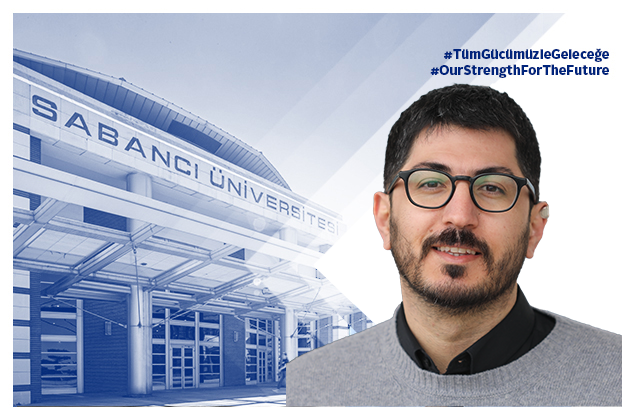
Fatih Ecevit is Full Professor of Mathematics at Boğaziçi University, serving as Vice Chair of the Mathematics Department. Former research associate at Max-Planck-Institut für Mathematik in den Naturwissenschaften, Leipzig (2005-2007). Research develops computational methods for high-frequency scattering problems, including: Boundary element methods for wave propagation Asymptotic analysis of scattering phenomena Galerkin formulations for integral equations Lattice sum evaluations in graph theory Principal investigator for TÜBİTAK-funded project: 'Hybrid integral equation methods for high-frequency scattering problems' (2017-2020). Teaches graduate and undergraduate courses in numerical analysis, partial differential equations, and real analysis.
Cem Say is a Professor in the Department of Computer Engineering at Boğaziçi University's Faculty of Engineering, where he has established himself as a leading researcher in theoretical computer science and artificial intelligence. His academic journey began with the completion of his doctoral dissertation titled Qualitative System Identification in 1992, which was the first thesis of Boğaziçi University's Computer Engineering PhD program. Professor Say's research interests span multiple domains of computer science, with significant contributions to quantum computing, artificial intelligence, and theoretical computer science. His early work focused on qualitative reasoning and simulation, particularly through the QSIM algorithm, where he made significant improvements to filtering techniques and addressed challenges in representing physical systems. Over time, his research evolved toward quantum computation, where he has made substantial contributions to quantum finite automata theory, space-bounded quantum computation, and quantum complexity classes. His recent work explores the energy complexity of computation, bridging theoretical computer science with thermodynamics. His publication record shows a clear evolution from classical AI and qualitative reasoning toward quantum computation. The most recent articles demonstrate his focus on space-bounded quantum computation, energy complexity of regular languages, and interactive proof systems with minimal resources. His work consistently addresses fundamental questions about computational limits, particularly in quantum and sublogarithmic-space models. Professor Say has also made significant contributions to science communication through several books written for general audiences, including 50 Soruda Yapay Zekâ (2018), Yeni Dünya, Yeni Ağ (2020), and En Hakiki Mürşit (2021), which explain complex concepts in artificial intelligence and scientific methodology in accessible terms. Throughout his career, Professor Say has been actively involved in the Turkish academic community, editing proceedings for multiple Turkish symposia on artificial intelligence and neural networks. His doctoral dissertation established foundational work in qualitative system identification, and his subsequent research has consistently pushed boundaries in theoretical computer science, particularly in quantum computation where he has collaborated extensively with Abuzer Yakaryılmaz and other researchers.
Dr. Morteza Ghorbani is a researcher and faculty member at Sabancı University's Faculty of Engineering and Natural Sciences (FENS), specializing in fluid mechanics and environmental engineering. He leads the AquaCav project, a collaborative effort with Oxford Brookes University, focused on developing sustainable water treatment solutions using hydrodynamic and acoustic cavitation. His research addresses global challenges such as PFAS pollution and wastewater management, with applications in biomedical devices and energy-efficient technologies. Key collaborations include projects funded by the International Science Partnership Fund (ISPF), leveraging his expertise in microfluidic systems and cavitation dynamics. Dr. Ghorbani's work combines experimental and numerical methods to optimize cavitation-based processes for environmental and biomedical applications. His contributions span from fundamental fluid dynamics studies to applied technologies like flexible cystoscopes and clot-on-a-chip platforms. Scientific achievements include the ISPF Research Collaboration Grant (2024) and advancements in PFAS removal, graphene exfoliation, and microalgae cultivation. His research group at Sabancı University explores interdisciplinary solutions at the intersection of engineering, nanotechnology, and sustainability.
Professor Cem Evrendilek is a faculty member in the Department of Computer Engineering at Izmir University of Economics, Turkey, holding the rank of Professor with current active status. His institutional email is cem.evrendilek@ieu.edu.tr. His research spans algorithmic complexity and geometric computation, with primary focus areas including: Computational Geometry (specializing in orthogonal polygon covering problems) Wireless Sensor Network Localization (energy-efficient methods and trilateration) NP-hard Problem Analysis (proving complexity for geometric and network problems) Approximation Algorithms for combinatorial optimization Analysis of his 2008-2018 publications reveals consistent work on geometric covering problems and sensor network localization. Key trends include proving NP-completeness for orthogonal polygon covering variants, developing energy-efficient mobile beacon localization techniques, and analyzing trilateration with noisy measurements. His work frequently intersects computational geometry with practical wireless network applications, demonstrating strong theoretical foundations applied to real-world constraints. Collaborative patterns show frequent co-authorship with Hüseyin Akcan (on localization algorithms), Burkay Genç, and Brahim Hnich (on computational geometry problems).
Betül Boz is an Assistant Professor at the Department of Computer Hardware, Faculty of Engineering, Marmara University. She holds a B.Sc. and M.Sc. in Computer Engineering from Marmara University, and a Ph.D. in Computer Engineering from Boğaziçi University. Her research focuses on computer architecture, optimization, and evolutionary computing. B.Sc., M.Sc., and Ph.D. in Computer Engineering Her research interests include computer architecture, parallel algorithms, optimization techniques, and evolutionary algorithms applied to graph coloring and scheduling. Recent work explores cloud computing scheduling, register allocation, and bioinformatics applications like circRNA-disease prediction. She has published extensively in these areas, utilizing evolutionary computing and machine learning. Key trends in her publications include evolutionary algorithms for graph coloring (2015–2025), register allocation (2004–2024), and cloud computing optimization (2023). She also investigates biomedical applications such as circRNA-disease association prediction. She has advised one thesis, managed one project, and her work aligns with UN Sustainable Development Goals. Her research outputs include 14 WoS-indexed publications, 11 WoS citations, and an h-index of 25 on WoS.
Burak Berk Üstündağ is a Professor in the Department of Computer Engineering at the Faculty of Computer and Informatics, Istanbul Technical University (ITU). He has been a key academic figure at ITU since the 1990s, progressing through the ranks from Research Assistant to full Professor, a position he attained in 2019. He has also held significant administrative roles, including Director of the Application and Research Center and membership in the ITU Informatics Institute Management Board. PhD, Control and Computer Engineering, Istanbul Technical University (2000) MSc, Control and Computer Engineering, Istanbul Technical University (1994) BSc, Electrical Engineering, Istanbul Technical University (1991) His research is deeply rooted in Artificial Intelligence , with a focus on Neural Networks , Wavelet-based models , and machine learning applications in environmental, agricultural, and maritime domains. He has developed frameworks like PECNET for multivariate time series forecasting and has pioneered work in cognitive communication systems, particularly for underwater and agricultural monitoring. His work bridges theoretical AI models with real-world applications in precision agriculture, water quality monitoring, and ionospheric forecasting. The most recent articles show a strong trend in applying deep learning (LSTM, DNNs) and hybrid models (Wavelet-NN) to complex, real-time systems. His research spans environmental data science , smart agriculture , underwater acoustics , and cognitive risk management . He emphasizes performance, real-time operation, and intelligence quantification in AI systems. His scientific awards include: Outstanding Young Scientist of the Year (2004) Junior Chamber International - Year's Professional Award (2003) Yılın Meslek Ödülü (2002) Service Award from Air Force Academy (2000) Gelişimine Katkı Ödülü from ITU (1996) Prof. Üstündağ has actively supervised research and led multiple projects as Principal Investigator, including national and institutional grants in AI-driven software systems, social media robots, real-time cognitive risk management, and elderly support devices. He has advised students in AI, neural networks, and intelligent systems, though specific names are not listed. His lab activities are centered around the Software Development Laboratory and cognitive systems research under various funded projects.
Assoc. Prof. Serife Yilmaz serves as an Assistant Professor in the Department of Mathematics at Karadeniz Technical University's Faculty of Science, a position she has held since 2017 following prior appointments as Lecturer PhD (2011-2017) and Lecturer (2010-2011) at the same institution. Her academic credentials include: Doctorate in Mathematics, Karadeniz Technical University (2005-2011) Postgraduate in Mathematics, Erciyes University (2002-2004) Undergraduate in Mathematics, Erciyes University (1998-2002) Dr. Yilmaz's research centers on Algebra, Number Theory, and Ordered Algebraic Structures with specialization in Fuzzy Mathematics, Lattice Theory, and Soft Set Theory. Her work investigates triangular norms, hyperstructures, and fuzzy logic applications, recently expanding into cryptographic implementations. She maintains active contributions to both theoretical foundations and practical applications in algebraic systems. Analysis of her 14 journal publications (2007-2025) reveals consistent focus on lattice-based structures and fuzzy algebraic systems, with notable evolution from foundational triangular norm research toward cryptographic applications. Her recent 2025 publications demonstrate integration of lattice theory with encryption methods, reflecting interdisciplinary expansion while maintaining core algebraic expertise. She has advised two graduate theses and participated in one research project. Academic service includes thesis jury memberships at Giresun University (2019) and assistant professorship appointment committees at Black Sea Technical University (2018). Additional professional activities include jury service for national folk dance competitions organized by the Turkish University Sports Federation and Turkish Folk Dance Federation (2013-2016), demonstrating engagement beyond core academic duties.
Erdal Erel is a Professor of Operations Management (OM) and currently serves as the Vice Rector in charge of administrative and financial affairs at Bilkent University's Faculty of Business Administration. He holds a B.S. in Industrial Engineering from Istanbul Technical University (1981), an M.S. from Stanford University (1983), and a Ph.D. from Virginia Polytechnic Institute and State University (1987). His academic career has been dedicated to advancing research in Production Operations Management, focusing on manufacturing systems design, assembly/disassembly line balancing, scheduling, and project management. Erel's educational background includes: B.S. in Industrial Engineering, Istanbul Technical University (1981) M.S. in Industrial Engineering, Stanford University (1983) Ph.D. in Industrial Engineering and Operations Research, Virginia Polytechnic Institute and State University (1987) His research interests span several critical areas of operations management, including manufacturing systems design, assembly and disassembly line balancing, scheduling and sequencing methodologies, and project management. He has made significant contributions to robust optimization techniques applied to time-cost trade-offs and stochastic modeling in production systems. His work emphasizes practical solutions for complex operational challenges through advanced algorithms like ant colony optimization and beam search methods. Erel's publications reflect a focus on optimization in production systems, scheduling algorithms, and decision models under uncertainty. His research bridges theoretical advancements with real-world applications in manufacturing and service industries, addressing issues such as cost minimization, robust scheduling, and efficiency improvements in assembly line operations. Erel has contributed extensively to his field but no specific scientific awards are mentioned in the provided text. No specific information about advising students or grants is provided in the text. Erel's involvement in collaborative projects, including work with colleagues like I. Sabuncuoglu and J.B. Ghosh, highlights his role in interdisciplinary research teams focused on operational efficiency and advanced manufacturing technologies.
Selin Aslan serves as an Assistant Professor in the Department of Mathematics at Koç University, Istanbul, Turkey, where she conducts research at the intersection of computational mathematics and imaging science. Her academic appointments and research activities are centered within the university's mathematics department, contributing to both undergraduate and graduate education in mathematical sciences. Her educational qualifications include: PhD in Mathematics from Virginia Polytechnic Institute and State University (2018) Master's in Mathematics from Rochester Institute of Technology (2013) B.A. in Mathematics from Ege University (2010) Dr. Aslan's research program focuses on developing advanced computational methods for solving inverse problems in imaging, with particular expertise in phase retrieval, tomographic reconstruction, and ptychography. Her work bridges theoretical mathematics with practical applications in medical imaging, microscopy, and materials science, emphasizing algorithmic innovation and computational efficiency. She integrates techniques from deep learning, optimization theory, and high-performance computing to address challenges in image reconstruction under physical constraints. Analysis of her publication record reveals a consistent trajectory toward solving complex imaging problems through hybrid approaches that combine physics-based models with data-driven techniques. Her recent work demonstrates increasing emphasis on scalability for large datasets, robustness in photon-limited scenarios, and real-time processing capabilities, with applications spanning biomedical imaging to advanced microscopy. No scientific awards were documented in the available sources. Information regarding student advising and research grant activities was not specified in the provided materials, though her publication record suggests active research collaboration. Her computational focus implies engagement with high-performance computing resources for large-scale image reconstruction tasks. While specific laboratory infrastructure details were unavailable, her research on multi-GPU implementations and distributed computing indicates utilization of advanced computational facilities for handling large-scale imaging datasets.
Faruk Polat is a Professor of Computer Science at the Department of Computer Engineering, College of Engineering, Middle East Technical University (METU) in Ankara, Turkey. He has been serving at METU since 1994, progressing from Assistant Professor (1994-1996) to Associate Professor (1996-2002) and then to full Professor (2002-present). He received his B.S. in Computer Engineering from METU in 1987, followed by M.S. and Ph.D. degrees from Bilkent University in 1989 and 1994 respectively, with a visiting scholar period at the University of Minnesota (1992-1993). His primary research interests include Artificial Intelligence, Reinforcement Learning, Multiagent Systems, Markov Decision Processes, and Partially Observable Markov Decision Processes. His work significantly contributes to computational biology applications, particularly in gene regulatory network modeling, and to multiagent path finding in virtual simulations and computer games. He has published extensively in top-tier journals and conferences, with recent publications extending into 2025. Professor Polat has supervised numerous graduate students who have gone on to successful careers in academia and industry, including positions at Meta, Google, Apple, Microsoft, and various universities. His research group continues to be highly active, with current PhD students working on reinforcement learning, multiagent path planning, and gene regulatory networks. His scientific contributions span multiple domains, with a clear trajectory from foundational work in multiagent systems to increasingly sophisticated applications in computational biology and autonomous systems. His recent publications indicate continued innovation in reinforcement learning techniques, particularly in handling partial observability and complex path planning problems. NATO Science Scholar at University of Minnesota (1992-1993) Member and Team Leader/Deputy Team Leader of National Informatics Olympiad Group (1995-2011) Professor Polat has advised numerous PhD and Master's students who have secured positions at leading technology companies and academic institutions worldwide. His research has been supported by grants including Tubitak 1001 Project (Grant No. 115G086). His work bridges theoretical advances in artificial intelligence with practical applications in computational biology and autonomous systems.
Professor Yücel Ercan is affiliated with the Department of Mechanical Engineering at TOBB University of Economics and Technology (TOBB ETÜ). He previously held academic positions at Middle East Technical University (METU) and Gazi University, including roles as assistant professor, associate professor, and professor of mechanical engineering. His career spans over 40 years, with a focus on system dynamics, control systems, and industrial applications. Education : B.Sc., M.Sc., and Sc.D. in Mechanical Engineering from MIT (1966, 1968, 1971) Leadership Roles : Vice-Chairman at METU (1974-1977), Vice-President of METU (1977-1978), Dean of Gazi University School of Engineering (1982-1992), and held similar roles at TOBB ETÜ. His research interests lie in system dynamics, control systems, fluid power control, and industrial emission control. He has developed advanced methodologies for nonlinear vibration analysis and time-suboptimal control of industrial manipulators, contributing significantly to manufacturing and mechanical systems optimization. The 8 recent publications demonstrate expertise in nonlinear vibrations, control algorithms, and computer-aided manufacturing. Key trends include modeling machine tool vibrations, optimizing robotic task sequencing, and enhancing industrial machinery control systems through innovative theoretical frameworks and software development. Scientific Awards : Alexander von Humboldt Fellowship (research in Germany, 1979-1981) Academic Leadership & Contributions : Supervised 28 master’s and 5 doctoral theses, led approximately 80 research projects, and provided consulting services to 250 industrial companies. He is a member of professional societies including TMMO, TOK, TIBTD, and MATİM.
Hüseyin Akcan is a Professor in the Department of Software Engineering at Izmir University of Economics, Turkey, specializing in algorithmic solutions for wireless sensor networks with emphasis on localization and calibration systems. His academic credentials include: Ph.D. in Computer Science from NYU Tandon School of Engineering (2008) M.S. in Computer Science from NYU Tandon School of Engineering (2005) B.S. in Control and Computer Engineering from Istanbul Technical University (1999) Research focuses on computationally complex problems in sensor networks, particularly energy-efficient localization techniques without GPS infrastructure, calibration algorithms for embedded systems, and NP-hard problem resolution through genetic and approximation methods. His work bridges theoretical computer science with practical network applications in distributed systems. Publication trends (2010-2022) reveal consistent development in wireless localization methodologies, evolving from foundational GPS-free techniques to advanced mobile beacon systems and genetic algorithm implementations, with recent expansion into virtual reality applications for body anthropomorphism studies.
Prof. Dr. Gökhan Apaydin is a full Professor at the Department of Electrical and Electronics Engineering, Faculty of Engineering and Natural Sciences, Uskudar University. He holds a PhD from Bogazici University (2007) and has held academic positions at institutions including the University of Technology Zurich and a visiting role at the University of Illinois at Urbana-Champaign. His research focuses on computational electromagnetics, radio wave propagation, and numerical modeling techniques. Education: BSc (2001), MSc (2003), PhD (2007) in Electrical and Electronics Engineering from Bogazici University Research Interests: Electromagnetic diffraction modeling, MATLAB-based simulations, numerical methods (FDTD, MoM), surface wave propagation, and renewable energy systems. His work emphasizes practical applications in radio wave modeling and environmental impact assessments. Publications: His articles focus on diffraction phenomena, waveguide analysis, and tool development (e.g., PETOOL). Recent trends include hybrid numerical methods and real-world terrain modeling for radiowave prediction. Awards: Received TÜBİTAK Publication Incentive Awards (2021). Administration & Leadership: Serves as Deputy Head of the Electrical Engineering Department, chairs international committees (URSI), and oversees projects like the Electromagnetic Wave Propagation Package. Active in academic governance and Bologna Process coordination. Labs/Teams: Leads the Electromagnetic Research Group, focusing on wave propagation and measurement validation.
Prof. Dr. Yusuf Tansel İç is a Professor in the Industrial Engineering Program at Başkent University, Turkey. His research focuses on manufacturing systems optimization, fuzzy logic applications, and multi-criteria decision-making methodologies. With over 155 publications and extensive collaboration with scholars like Prof. Dr. Mustafa Yurdakul, he contributes to advanced manufacturing technologies and engineering education assessment tools. Fields of Expertise: Financial Engineering, Fuzzy Logic, Computer-Aided Design, Multi-Criteria Decision Making Research Trends in his recent articles (2023-2025) emphasize: Numerical simulations for ballistic impact resistance Fuzzy logic integration in manufacturing process optimization Decision support systems for material selection and facility layout Mechanical modeling of springback minimization in metal forming Applications of neural networks in machining center selection His scientific contributions span 15 years of collaborative studies with institutions across Turkey.
Belgin Ergenç Bostanoğlu is an Associate Professor in the Computer Engineering Department at Izmir Institute of Technology (Turkey). Her research focuses on query optimization in distributed databases, association rule mining, privacy-preserving data mining, and graph-based algorithms. She leads the Dworld research laboratory and has held academic and industry roles since the 1980s. Education: B.Sc. in Computer Engineering, Middle East Technical University (1983) M.Sc. in Computer Engineering, Izmir Institute of Technology (2002) Ph.D. in Computer Engineering, Paul Sabatier University, France (2008) Research Interests: Dynamic frequent itemset mining and hiding under multiple support thresholds Subgraph mining in evolving graphs Federated query processing over linked data Privacy-preserving techniques in distributed databases Medical NLP applications (e.g., TurkMedNLI dataset) Her recent work emphasizes large-scale graph analysis, medical NLP dataset development, and adaptive join operators for federated SPARQL queries. She has contributed to over 30 peer-reviewed publications and led projects like the TÜBİTAK ARDEB 3501 platform for dynamic frequent itemset mining. Teaching: Courses include Advanced Database Management Systems, Knowledge Discovery, and Privacy-Preserving Data Mining. Labs & Projects: Manages Dworld lab and coordinates projects such as 'Turkish Medical NLP Model Development' (BAP-funded) and the Behavioral Next Generation Wireless Networks COST Action.