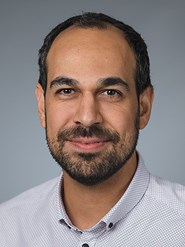
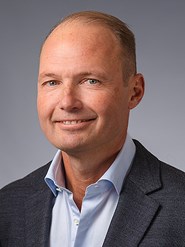
Professor Per Stenström is affiliated with the Department of Computer Science and Engineering at Chalmers University of Technology . His research focuses on computer architecture , memory systems optimization , and energy-efficient computing , with significant contributions to DNN accelerator design and cache management . Research Trends : His recent publications emphasize Memory compression techniques for energy efficiency Hardware-software co-design for DNN acceleration Security in microarchitectural optimizations Hybrid memory systems for near-memory computing These works span both theoretical and applied aspects of computer architecture, with a particular focus on data redundancy elimination , parallel processing , and quality-of-service constraints . His work has influenced the development of energy-aware resource management frameworks and resilient EU HPC systems , as evidenced by his long-standing contributions to the field since the early 2010s.
Torbjörn Larsson is a Professor in the Department of Mathematics at Linköping University, affiliated with the Division of Applied Mathematics (TIMA). His work bridges theoretical and applied optimization with significant impact in healthcare, logistics, and finance. His research interests include Mathematical Optimization , Operations Research , Brachytherapy Treatment Planning , Vehicle Routing , and Portfolio Optimization . He develops advanced algorithms such as Lagrangian heuristics, metaheuristics, and feasible direction methods to solve complex decision problems. The recent publications indicate a strong focus on developing bounding techniques and heuristic frameworks for discrete and multi-objective optimization, with applications ranging from radiation therapy to transportation logistics. His work emphasizes both theoretical rigor and practical implementation. Scientific Contributions: Development of novel optimization methods for brachytherapy treatment planning Advancement of Lagrangian and metaheuristic frameworks Application of optimization in finance (portfolio selection) and scheduling He collaborates extensively on research projects involving mathematical modeling and algorithm design. While specific advising roles are not listed, his co-authorship with junior researchers suggests mentorship activity. He has contributed to projects on decision support systems for scheduling and large-scale optimization in finance. Laboratories and Research Groups: Applied Mathematics (TIMA), Department of Mathematics, Linköping University Research environment focused on optimization and its applications in medicine and logistics
Marina Papatriantafilou is an Associate Professor in the Department of Computer Science and Engineering at Chalmers University of Technology and University of Gothenburg. Her research focuses on distributed computing, fault-tolerance, parallel algorithms, and concurrency control. She has contributed to methods for fault-tolerant distributed systems, visualization tools for distributed algorithms, and scalable overlay networks. Her academic roles include teaching advanced courses on distributed systems, computer communication, and operating systems. She advises graduate students in areas like distributed algorithms and parallel computing. Key research interests include lock-free synchronization, memory reclamation, and self-stabilizing systems. She has authored over 100 publications in top-tier conferences and journals, with recent work on data streaming frameworks, energy-sharing optimization, and vehicular network processing. Professional involvement includes roles in program committees for conferences like OPODIS, SWAT, and SSS, plus membership in research evaluation boards for Swedish and European funding agencies. She pioneered educational tools like the Lydian environment for distributed algorithm visualization.
Peyman Mashhadi is a Senior Lecturer at the School of Information Technology , Halmstad University. His research focuses on machine learning applications in predictive maintenance, automotive systems, and computational optimization. Position: Senior Lecturer University: Halmstad University Email: peyman.mashhadi@hh.se His work spans machine learning , deep learning , and predictive maintenance , with a particular emphasis on feature selection , optimization algorithms , and automotive diagnostics . He has contributed to multitask learning, domain adaptation, and industrial applications of neural networks. Recent publications highlight trends in automotive engineering (battery health estimation, turbocharger diagnostics), computational methods (genetic algorithms, metaheuristics), and machine learning (stochastic optimization, transfer learning). Key themes include robustness in predictive models and cross-domain adaptability. Contact details: peyman.mashhadi@hh.se
Ki Won Sung is an Associate Professor at KTH Royal Institute of Technology, specializing in wireless communication systems and network optimization. His research focuses on 5G/6G technologies, integrated sensing-communication systems, cell-free massive MIMO, and stochastic network modeling. Research interests include: Wireless network architecture design and optimization Resource allocation in multi-user communication systems Integrated sensing and communication (ISAC) Stochastic modeling of ultra-dense networks Energy-efficient communication protocols Millimeter wave and massive MIMO systems His recent publications demonstrate strong emphasis on beyond-5G systems, particularly cell-free massive MIMO deployments and URLLC applications. Research trends show consistent focus on network optimization through advanced signal processing, geometric decomposition methods, and cross-layer protocol design. Teaching activities include course management and examination for multiple degree projects and core courses: Communication Systems (IK2200) Mathematical Statistics (IX1501) Mobile Networks and Services (IK2560) Radio Networks (IK2510) Stochastic Simulation (II2206) Wireless Systems (IK1330)
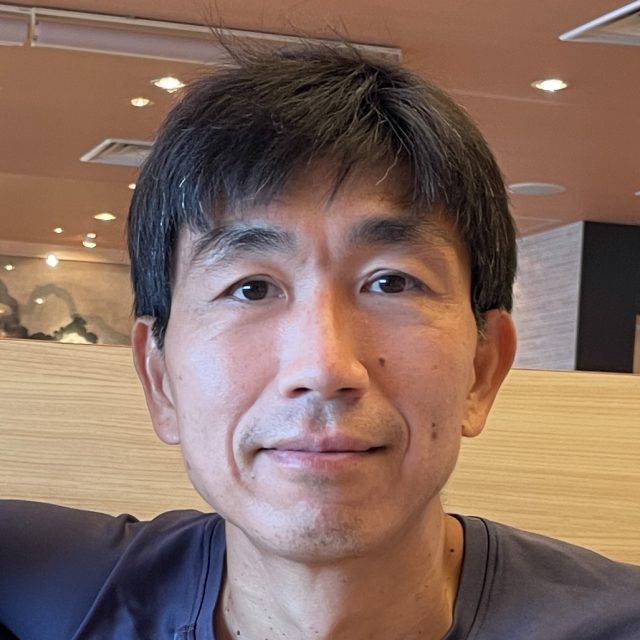
Takeshi Shirabe is an Associate Professor in the Division of Geoinformatics at KTH Royal Institute of Technology, Sweden. He holds positions in the Department of Urban Planning and Environment, School of Architecture and the Built Environment (ABE), and is part of the Digital Futures cross-disciplinary research center. His research focuses on spatial optimization, geographic information science (GIS), and geodesign, with particular emphasis on raster-based models for spatial decision support and route improvisation. He has taught numerous courses including GIS Architecture and Algorithms, Computational Methods in GIS, and Spatial Planning with GIS. Shirabe's academic journey includes a PhD from the University of Pennsylvania (USA), a Master’s in City and Regional Planning from the same institution, and a Bachelor of Engineering from the University of Tokyo. Before joining KTH in 2010, he served as an Assistant Professor at Vienna University of Technology, Austria, where he earned his Habilitation in Geoinformation. His research interests span combinatorial optimization in geography, spatial decision support systems, and GeoDesign. Notable projects include the Space Time Alarm Clock (STAC), an Android app for pedestrian route improvisation, developed with Adrian C. Prelipcean and Falko Schmid. This tool uses real-time spatial-temporal analysis to guide users toward destinations efficiently. Shirabe has contributed to over 30 peer-reviewed publications since 2002, focusing on raster-based GIS methods for corridor design, least-cost path analysis, and spatial allocation modeling. His work bridges theoretical computational geometry with practical urban planning applications. Courses he oversees emphasize algorithmic and computational foundations of geospatial technologies.
Pierre Nyquist is an Associate Professor and docent in the Department of Mathematical Sciences at Chalmers University of Technology and Gothenburg University. His research is sponsored by the Swedish Research Council, the Swedish e-science Research Center (SeRC), and the Wallenberg Artificial Intelligence, Autonomous Systems and Software Program (WASP). He is also an elected member of the Young Academy of Sweden for the period 2024-2029 and has served as a scientific ambassador for EURANDOM since November 2021. Dr. Nyquist's research interests lie at the intersection of probability theory, mathematical statistics, and applied mathematics. His main expertise is in probability theory, with a focus on large deviations theory and stochastic numerical methods. He has a general interest in all aspects of probability theory and much of what is categorized as applied mathematics, particularly questions related to partial differential equations, optimization, and stochastic optimal control. Recently, he has become increasingly interested in the mathematical foundations of complex data analysis and modeling, and the interplay with ideas from physics. His current research interests include large deviations, gradient flows and their generalizations, stochastic numerical methods, statistical learning theory, stochastic processes, and random dynamical systems. Pierre Nyquist has received research funding from several prestigious sources including the Swedish Research Council, the Swedish e-science Research Center (SeRC), and the Wallenberg Artificial Intelligence, Autonomous Systems and Software Program (WASP). His publications demonstrate a consistent focus on theoretical aspects of probability with applications to computational methods and data analysis, showing increasing integration with machine learning techniques in recent years. elected member of the Young Academy of Sweden (2024-2029) scientific ambassador for EURANDOM (since November 2021) Dr. Nyquist is actively involved in mentoring the next generation of researchers. He currently supervises several PhD students including Cinja Arndt (starting Aug. 2025), Niki Wilhemlson (started Aug. 2024), and Viktor Nilsson (started Aug. 2020). He has previously supervised successful PhD students such as Federica Milinanni (Aug. 2020-May 2025) and Carl Ringqvist (Aug 2015-June 2021). He regularly teaches graduate-level courses including "Modern methods of statistical learning" and has supervised numerous MSc theses on topics ranging from deep learning for time-series radar signals to neural network embedding in insurance pricing. His research group is active in both theoretical developments and practical applications, with current projects spanning from mathematical foundations of probability to applications in machine learning and data science. Dr. Nyquist maintains strong international collaborations, as evidenced by his frequent travel for conferences and research visits to institutions such as Brown University and TU Delft.
Roles and Affiliations: Alexander Herbertsson is a Senior Lecturer in Statistics and Quantitative Finance at the University of Gothenburg, affiliated with the CFF-Centre for Finance. He is based in the Department of Economics with Statistics, located at Vasagatan 1, Gothenburg. His work focuses on financial risk management, credit risk modeling, and quantitative finance methodologies. Education: Ph.D. in Economics: Quantitative Finance (2007), University of Gothenburg Licentiate of Engineering in Industrial Mathematics (2005), Chalmers University of Technology M.Sc. in Engineering Physics (Applied Mathematics specialty) (2001), Chalmers University of Technology Research Interests: Herbertsson's research emphasizes applied financial mathematics and statistical methods in finance. Key areas include credit risk modeling (default contagion, systemic risks), financial engineering, and the development of dynamic models for portfolio credit risk. His work often integrates Markov chain models, phase-type distributions, and stochastic processes to analyze dependency structures and pricing of credit derivatives. Recent studies explore saddlepoint approximations for portfolio risk analysis and risk management under exogenous shocks. Teaching: He teaches advanced courses in credit risk modeling, quantitative finance, and applied probability theory, emphasizing practical applications in risk management and financial markets. Grants and Labs: While specific grants are not detailed in the text, his affiliation with the CFF-Centre for Finance suggests involvement in collaborative financial research projects. His work often addresses real-world applications of theoretical models in systemic risk and portfolio hedging.
Andrew Winters is a Senior Associate Professor in the Department of Mathematics at Linköping University, Sweden. He is affiliated with the Division of Applied Mathematics (TIMA), where he conducts research in computational mathematics and numerical methods for partial differential equations. His research focuses on the design and analysis of high-order numerical schemes, particularly nodal discontinuous Galerkin (DG) methods with summation-by-parts (SBP) properties, for solving hyperbolic and mixed hyperbolic-parabolic PDEs such as shallow water, Euler, Navier-Stokes, and magnetohydrodynamic (MHD) equations. His work emphasizes conservation, entropy stability, and thermodynamic consistency in numerical approximations. The recent publications highlight a strong trend in developing robust, high-order, entropy-stable methods for nonlinear conservation laws, with applications in fluid dynamics and geophysical modeling. His work integrates theoretical analysis with high-performance computing, particularly through the development of the FLUXO and Trixi.jl simulation frameworks. Energy Bounds for Discontinuous Galerkin Spectral Element Approximations Entropy Stable Hydrostatic Reconstruction Efficient Implementation of Entropy Stable DG Methods Adaptive Simulations with Trixi.jl Subcell Finite Volume Shock Capturing Andrew Winters is actively involved in software development and scientific computing education, including an introductory Fortran course for MATLAB users. He contributes to international collaborations, such as a four-way research and exchange program between Linköping University and Washington State University. He has no listed scientific awards in the provided text. He advises students in computational mathematics, though specific names are not mentioned. He is a core developer of the FLUXO (Fortran/MPI), Trixi.jl (Julia), and HOHQMesh.jl projects, which support high-order simulations and mesh generation.
Stefano Sarao Mannelli is a tenure-track Assistant Professor in the Department of Computer Science and Engineering at Chalmers University of Technology and University of Gothenburg. He also holds a Visiting Lecturer position at the University of the Witwatersrand. His research group focuses on fundamental aspects of learning in biological and artificial systems, with emphasis on bias generation, optimization dynamics, and comparative neuroscience. Education: Ph.D. in Theoretical Physics, Université Paris-Saclay (2020) M.Sc. in Electronic Engineering, Politecnico di Torino (2017) M.Sc. in Physics of Complex Systems, Politecnico di Torino/SISSA (2016) M2 in Physique Théorique, Paris Diderot/UPMC/ENS Cachan (2016) B.Sc. in Mathematics for Engineering, Politecnico di Torino (2014) Research: Dr. Mannelli develops model-based approaches to reduce complex machine learning problems into analytically tractable frameworks. His core interests include: 1) Bias amplification mechanisms in AI systems, 2) Learning differences between biological and artificial neural networks (continual/transfer/curriculum learning), and 3) Optimization in high-dimensional landscapes. His work bridges statistical physics, neuroscience, and deep learning theory. Publication Trends: Recent articles (2024-2025) predominantly analyze curriculum learning dynamics, bias propagation in optimization, and theoretical comparisons between biological and artificial learning systems. Methodologically, they combine statistical physics frameworks with control theory and high-dimensional analysis. Awards: Academic Grant (CM Lerici Foundation, 2025) Travel Grants (Guarantor of Brains, G-Research 2024) UK–IT Trustworthy AI Exchange Programme (Alan Turing Institute, 2023) SCGB Conference Award (Simons Foundation, 2023) Ph.D. Scholarship (CEA, 2017-2020) Team & Funding: Leads a research group with 2 PhD students and 1 postdoc. Secured significant funding for international workshops including Analytical Connectionism (£42K, 2023; $152K, 2024) and High-Dimensional Methods (135,500 SEK, 2025).
Alp Yurtsever serves as an Assistant Professor in the Department of Mathematics and Mathematical Statistics at Umeå University, Sweden, where his research pioneers end-to-end optimization frameworks bridging theoretical modeling and practical algorithm design for data science challenges. His work fundamentally rethinks traditional black-box system approaches by integrating problem formulation with solution methodologies. His academic journey includes: PhD in Computer and Communication Sciences from École Polytechnique Fédérale de Lausanne (EPFL) under Prof. Volkan Cevher Postdoctoral fellowship at MIT's Laboratory for Information and Decision Systems (LIDS) with Prof. Suvrit Sra Dual BSc in Electrical and Electronics Engineering and Physics from Middle East Technical University Yurtsever's research centers on optimization theory for machine learning, with groundbreaking contributions in federated learning systems, convex programming, and scalable semidefinite solvers. He champions a unified perspective where modeling and algorithmic development inform each other, yielding methods with proven theoretical guarantees and real-world efficiency. His work particularly addresses communication bottlenecks in distributed systems and non-convex landscapes in neural network training, with applications spanning privacy-preserving AI and edge computing. Analysis of his publication trajectory reveals dominant themes in federated optimization and Frank-Wolfe variants, where he consistently develops communication-efficient algorithms for heterogeneous device networks. His recent work demonstrates increasing sophistication in handling multi-tier architectures and personalized learning objectives, while maintaining rigorous convergence guarantees. The integration of quantum-classical hybrid approaches in his 2022 ECCV paper signals expanding methodological boundaries. His scientific recognition includes: Thesis Distinction for PhD dissertation "Scalable Convex Optimization Methods for Semidefinite Programming" (EDIC program committee) Yurtsever actively contributes to Umeå University's Mathematical Programming Group and Statistical Learning for Spatio-Temporal Data initiative, though specific grant awards remain undisclosed in available materials. His collaborative network spans EPFL, MIT, and multiple European institutions as evidenced by co-authorship patterns. While no formal advisees are listed, his publications show mentorship of junior researchers through joint conference presentations. His laboratory operations are embedded within Umeå University's Department of Mathematics and Mathematical Statistics in the MIT-huset building, leveraging institutional resources for high-performance optimization research while maintaining strong international connections through his post-PhD affiliations.
Mats G Larson is a Professor at the Department of Mathematics and Mathematical Statistics at Umeå University. He holds the research qualification of Docent and specializes in computational mathematics, numerical analysis, and finite element methods. His work focuses on advancing numerical techniques for partial differential equations, including CutFEM, Isogeometric Analysis (IGA), and hybridized methods for complex geometries and multiphysics problems. Research interests include error estimation, stabilized finite element methods, computational mechanics, and applications in engineering and fluid-structure interaction. Larson leads projects such as the 2022–2025 'Multi-shell CutFEM for problems with mixed dimensions' and the 2017–2021 project on computational methods for elliptic problems. His publications appear in top journals like Computer Methods in Applied Mechanics and Engineering . Key contributions include developments in CutFEM for embedded surfaces, augmented Lagrangian methods for contact problems, and geometric modeling with CAD integration. His research bridges theoretical analysis and practical applications, addressing challenges in mesh generation, stability, and high-performance computing.
Peter Berling is a Lecturer in Logistics and Supply Chain Management at the School of Business and Economics , Linnaeus University. He extends his expertise to the Engineering School at Lund University and the Zaragoza Logistics Center , teaching across academic levels and serving as a guest lecturer in European institutions.
Professor Balázs Adam Kulcsár is a faculty member in the Automatic Control research group at the School of Electrical Engineering and Computer Science, Chalmers University of Technology. With 104 publications and involvement in 34 research projects, he is a prominent researcher in intelligent transportation systems. His work spans multiple domains within transportation engineering and control theory, with significant contributions to traffic flow modeling, electric vehicle routing, and advanced control systems. Professor Kulcsár's research primarily focuses on intelligent transportation systems design, traffic flow modeling for control, Linear Parameter Varying systems, and failure diagnostics. His work demonstrates a strong integration of control theory with practical transportation challenges, particularly in the context of electric mobility and sustainable transportation. Recent research shows a growing emphasis on machine learning applications for transportation optimization, electric vehicle infrastructure, and urban traffic management. Analysis of his recent publications reveals a clear trajectory toward sustainable transportation solutions, with electric vehicle charging infrastructure, fleet management, and public transit optimization as dominant themes. His work increasingly incorporates machine learning techniques, particularly graph neural networks and reinforcement learning, to address complex transportation challenges. The research demonstrates strong interdisciplinary collaboration across engineering disciplines, with a focus on practical implementation of theoretical advances. Professor Kulcsár leads and participates in numerous research projects focused on future transportation systems, including projects on electric mobility, traffic optimization, and intelligent transportation infrastructure. His research group collaborates extensively with industry partners like Volvo and Heart Aerospace, as well as with other academic institutions. Current projects include Rethinking the Sustainability of V2G, Quantum computing for future mobility solutions, and Digital Twin for Energy Prediction. His research group maintains strong connections with transportation industry stakeholders and contributes to major initiatives such as the Transport Area on Advance project, which aims to achieve leading competence in future green, safe, and efficient transport systems. The team operates at the intersection of theoretical control systems and practical transportation applications, with particular expertise in modeling complex traffic phenomena and developing implementable control solutions.
Arianit Kurti is a full professor of informatics at Linnaeus University, where he serves as Head of both the Informatics Department and the Computer Science and Media Technology Department. With over 20 years of international academic experience across Sweden, Kosovo, and North Macedonia, Prof. Kurti brings extensive expertise in digital technologies and sustainable innovation. He previously held research leadership positions at RISE Research Institutes of Sweden. Prof. Kurti's research focuses on data-driven approaches for business innovation to achieve sustainable digitalization. His work spans multiple domains including forestry (Forest 4.0), furniture industry digital transformation (APPEND, STELLA), education technology (Edutain, IGNITE), and social inclusion (STEFORA). He leads the Data-driven Business Innovation research group and is active in the Interaction Design Research Group, DISA research center, and LNU Systems Community. His recent publications reveal a strong emphasis on practical applications of AI, IoT, and data analytics across diverse sectors. The research trajectory shows progression from mobile learning and context-aware systems in early career to current focus on sustainable digitalization, business model innovation, and domain-specific applications in forestry and manufacturing. Key themes include human-centered technology design, data ecosystems, and bridging academic research with real-world industry challenges. Prof. Kurti has secured approximately €8.5 million in research funding from prestigious sources including EU EACEA, EU H2020, Swedish Knowledge Foundation, Vinnova, Wallenberg Foundation, and FORMAS. He currently leads two major EU Horizon projects focused on AI and IoT technologies for forestry management. He has published over 70 peer-reviewed works spanning journals, conferences, and books, with recent output showing strong international collaboration patterns. His research groups maintain active partnerships with industry and academic institutions across Europe, with particular strength in Scandinavian countries and the Balkans.